 AboutMy Child questionnaire: translation and psychometric properties of the Brazilian version
Abstract
Objective This study aimed to translate the About My Child questionnaire into Brazilian Portuguese and evaluate its psychometric properties. Standardized instruments that assess health and everyday life impacts in children with neurological or developmental disabilities are essential for clinical and research settings.
Method The translation process followed the stages of translation, back-translation, semantic analysis, and content analysis. A pre-test was conducted with calculation of the content validity index, resulting in the final version. The psychometric properties were analyzed using the agreement index for semantic and content analyses (>80% agreement). Internal consistency and test-retest reliability were examined for the “concerns” and “perceived impact” domains.
Results After adjustments to specific expressions, all items reached the expected agreement level (100%). The About My Child questionnaire showed satisfactory internal consistency for both domains (“concerns”: α = 0.888; “perceived impact”: α = 0.913). Test-retest reliability showed Cohen’s kappa coefficients for the “concerns” domain ranging from 0.19 to 0.4750, with agreement between 24.44% and 76.12%.
Conclusion Further studies with more diverse samples and additional validation procedures are recommended to strengthen the understanding of the instrument’s psychometric properties. Nevertheless, the findings indicate that the Brazilian version of the About My Child has adequate internal consistency and preliminary evidence of test–retest reliability. These results support the feasibility of using the Brazilian version of the About My Child in clinical and research settings in Brazil.
Keywords:
International Classification of Functioning; Disability and Health; Translating; Validation Study; Child; Family
Resumo
Objetivo Este estudo teve como objetivo traduzir o questionário About My Child para o português do Brasil e avaliar suas propriedades psicométricas. Instrumentos padronizados que avaliam os impactos na saúde e no cotidiano de crianças com deficiências neurológicas ou do desenvolvimento são essenciais para contextos clínicos e de pesquisa.
Método O processo de tradução seguiu as etapas de tradução direta, retrotradução, análise semântica e análise de conteúdo. Foi realizado um pré-teste com cálculo do índice de validade de conteúdo, resultando na versão final. As propriedades psicométricas foram analisadas por meio do índice de concordância para as análises semântica e de conteúdo (> 80% de concordância). A consistência interna e a confiabilidade teste-reteste foram examinadas nos domínios “preocupações” e “impacto percebido”.
Resultados Após ajustes nas expressões específicas, todos os itens alcançaram o nível de concordância esperado (100%) . O questionário About My Child apresentou consistência interna satisfatória em ambos os domínios (“preocupações”: α = 0,888; “impacto percebido”: α = 0,913). A confiabilidade teste-reteste apresentou coeficientes kappa de Cohen para “preocupações” variando de 0,19 a 0,4750, com concordância entre 24,44% e 76,12%.
Conclusão Recomenda-se a realização de estudos adicionais com amostras mais diversificadas e procedimentos complementares de validação para fortalecer a compreensão das propriedades psicométricas do instrumento. Ainda assim, os achados indicam que a versão brasileira do About My Child apresenta consistência interna adequada e evidências preliminares de confiabilidade teste-reteste aceitável. Esses resultados sustentam a viabilidade de uso da versão brasileira do About My Child em contextos clínicos e de pesquisa no Brasil.
Palavras-chave:
Classificação Internacional de Funcionalidade; Incapacidade e Saúde; Tradução; Estudo de Validação; Crianças; Família
Introduction
Health-related problems impact the quality of life of children and adolescents with disabilities (i.e., neurological or developmental) and of their parents (Law & Jaffer, 2007). According to Brehaut et al. (2009), parents of children and adolescents with disabilities have high levels of worry and stress compared with parents of children and adolescents without disabilities. Health involves the absence of diseases and the combination of physical, mental, and social well-being (Fleck, 2000). Based on this perspective, the World Health Organization (WHO) published the International Classification of Functioning, Disability, and Health (ICF) in 2001 (Dornelas et al., 2014; World Health Organization, 2001). This biopsychosocial approach highlights the importance of assessing the individual complexity to integrate all its components and prioritize functioning. Although the family is the main environmental influence on childhood and child development (Barnett et al., 2019; Ketelaar et al., 2017; Sania et al., 2019), evidence on the factors that influence the health condition of children, based on the perception of parents, is limited (Rosenbaum & Gorter, 2012).
Family-centered care (FCC) involves the family in the child’s health care decisions, considering what is important for them in health care decision-making (Franck & Callery, 2004). The FCC approach reveals the need for instruments that assess the perspectives of the family and factors that may impact participation levels. However, instruments addressing these constructs and culturally adapted to Brazilian Portuguese (based on rigorous methodology) are scarce.
Questionnaires that assess the everyday lives children based on the perception of parents were translated and adapted for the Brazilian population, e.g., Assessment of Life Habits – LIFE-H (Silva et al., 2020), Pediatric Evaluation of Disability Inventory – PEDI (Mancini, 2005), and The Participation and Environment Measure for Children and Youth – PEM-CY (Galvão et al., 2018). These instruments primarily assess the performance and participation of children in activities of daily living (ADL), but do not consider the concerns of parents about the impact of the disability.
To fill this gap, the About My Child (AMC) questionnaire was developed by the CanChild Centre for Childhood Disability Research in Canada. The instrument assesses aspects of children's daily lives that may concern caregivers of children and adolescents with neurological or developmental disabilities, e.g., the ability to use their hands and arms, feed/eat, perform toileting, and others (Ritzema et al., 2016). The AMC aims to understand what concerns parents or caregivers and how much they believe these issues impact the participation of children and adolescents in activities of daily living (Williams et al., 2018). Therefore, the AMC assesses complexity, which comprises the biological, psychological, social, and environmental factors that affect the health and care of children and their families (Brehaut et al., 2009).
Considering the importance of the AMC, and that there is still no translation and validation into Brazilian Portuguese, this study aimed to translate it into Brazilian Portuguese and assess its psychometric properties. Therefore, this study aimed to provide a validated measure in Brazilian Portuguese, expanding the standardized instruments available for assessing children and adolescents with neurological or developmental disabilities in Brazil. The results of this study will provide a holistic view based on the concepts of the ICF, specifically on aspects involving the concerns of parents and the factors that impact participation in ADL.
Method
Study design
This study was conducted at the Federal University of São Carlos (UFSCar), Brazil, from 2019 to 2023. The study was approved by the Research Ethics Committee under protocol no. 54845421.1.0000.5504, and all participants signed an Informed Consent Form. This study followed the Consensus-based Standards for Selection of Health Measurement Instruments (Mokkink et al., 2010) and the recommendations of Guillemin et al. (1993) and Beaton et al. (2000). The original authors gave formal authorization for the translation process.
The study was disseminated among several associations and centers that care for children with disabilities. Because of partnerships previously established by the authors in institutions that care for children with Down syndrome, this group constituted the majority population of the study.
About My Child (AMC) questionnaire
The AMC comprises 20 items with a similar structure, divided into two parts: the “concerns” and “perceived impact” components in each aspect. Concern refers to parents’ perception about issues that affect the functioning of the children (i.e., whether they are concerned about the aspect). If the answer is “yes”, the parent proceeds to the second part, which asks “If yes, does this impact their ability to participate in ADL?"; the scale ranges from low to high impact. If the answer is “no”, the parent skips to the next question about “concerns”. The AMC can be used with children and adolescents aged 0 to 18 years, with any health condition characterized by neurological or developmental disabilities, including physical or intellectual disabilities.
The instrument has eight pages. The first describes general questions about aspects of children’s lives. The following pages present instructions for completing the questionnaire. Next, 20 questions address several aspects, such as “ability to move around at home, school and community” (if the child can move around the house), “ability to perform functions such as feeding/eating” (if feeding or being fed), and “ability to perform toileting” (if the child can use the bathroom alone). It also involves aspects related to sleep, mood, behavior, and pain. Moreover, parents can describe other aspects that were not included in the questionnaire.
The AMC score encompasses two components. The first component (i.e., concerns) refers to the number of situations that concern parents about the child or adolescent. Response options are dichotomous (yes or no); only “yes” responses are counted. The first score can range from 0 to 20 points; higher scores indicate a greater number of concerns. The second component (i.e., perceived impact) is based on concerns answered “yes”. The score ranges from 1 (not at all) to 4 (a lot). The perceived impact score is not counted when the concern is answered with “no”. If the concern is answered “yes”, its value is multiplied by the score in perceived impact. Thus, the total score can range from 0 to 80 points, with higher scores indicating greater perceived impacts by parents or caregivers.
The AMC can be fully completed in about five minutes. All items are based on the “body functions and activity and participation” domain of the International Classification of Functioning, Disability and Health (ICF). The psychometric properties (internal consistency and test-retest reliability) of the original version are considered satisfactory (Williams et al., 2018). The instrument can be purchased at McMaster University (2025) website.
This study was primarily based on the initial version of the AMC with 19 items. After data collection, this version was updated by the original authors to 20 items. The change concerned the last item (participation at school and in the community), which was divided into two, one for school and the other for community. The authors were consulted about using the data collected with the 19-item questionnaire to support and make the updated 20-item version available for use in Brazil, and this request was approved because the conception of the item is the same in both versions.
Translation procedures
Authorization for the translation process was requested from CanChild Dr. Peter Rosenbaum, one of the authors of the instrument, and Ms. Rachel Teplicky, responsible for the institution’s material translation procedures, which approved the process and checked the results of the back-transition described below. The procedures followed six steps.
Translation and back-translation
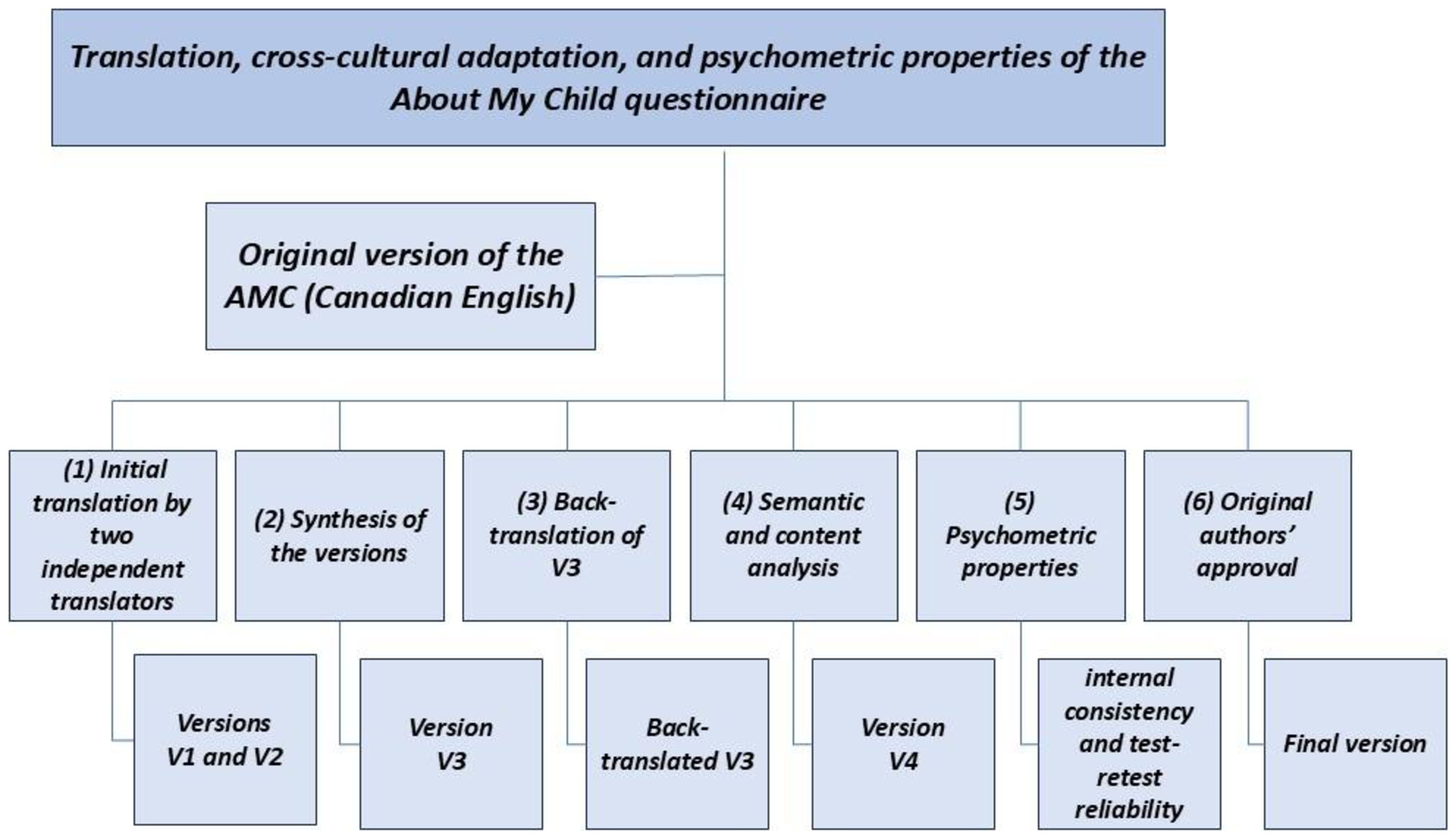
Two physical therapists, one with doctorate and the other with a master’s degree in progress in the neuropediatric area, translated the AMC. They were Brazilian and fluent in English. One was involved in research related to the constructs of the instrument (participation, environmental factors, and ICF), and the other was involved in another area of research (body function and education and assessment of activities). They independently created two initial translated versions in Brazilian Portuguese (V1 and V2) (Step 1). After this process, the translators compared the two versions, resulting in a third version (V3) based on V1 and V2 (Step 2). This stage was important to assess the difficulty of understanding the translation or any failure to describe the content correctly.
The V3 was back-translated into English by a health professional fluent in English and Portuguese with no previous contact with the instrument (Beaton et al., 2000). The V3 and the back-translation were sent to CanChild to analyze the consistency of the content with the original version. The original authors suggested some changes in the back-translated version. Based on these suggestions, the V3 was revised, resent for back-translation, and sent to CanChild for another verification. A new stage of readjustments was conducted, leading to the approval of a final version (Step 3).
The final version (V3 revised) was analyzed for semantic and content adequacy as described below (Step 4). In this stage, participants were invited via an invitation letter and received the Informed Consent Form explaining the study procedures. Those who agreed to participate received the AMC evaluation forms by e-mail or WhatsApp®. The following procedures were performed.
Semantic and content analysis
An evaluation form addressed the semantic analysis to verify the clarity of the terms (Menegasso, 2005; Silva et al., 2020). Participants were asked whether the translation was clear, coherent, well written, and whether the content was understandable and applicable to the Brazilian population. For semantic analysis, an evaluation form was prepared to verify the clarity of the terms used. The table asked, for each item, whether it was understandable or not and, if not, why. A content analysis form was created to verify whether the instrument items addressed what they proposed to address, with the options for each item: relevant, not relevant, and justification (Menegasso, 2005; Silva et al., 2020).
This analysis was performed by at least five participants from a low stratum and at least five participants from a high stratum (Hiratuka, 2009). The low stratum represented the potential users less familiar with applying or responding to the instrument: undergraduate research assistants, physical therapy interns, pediatric rehabilitation professionals without contact with the academic environment, and parents or caregivers of children and adolescents with disabilities. The high stratum included those with the highest ability to use the instrument (e.g., principal investigators, PhD students, and postdoc researchers in the pediatric neurorehabilitation field).
After the analysis, the following formula for the concordance index was applied: (concordant items/total number of items) * 100, with a minimum desired value of 80%. The terms or examples suggested by most participants were considered the most appropriate, i.e., 50% plus one of the participants should have agreed with the suggested term.
A form enabled the content analysis, verifying whether the items referred to their purpose (Menegasso, 2005; Silva et al., 2020). The same participants from both strata conducted the content and semantic analyses, receiving the form by e-mail or WhatsApp®. This analysis aimed to verify the relationship between the items and the aspects assessed by the AMC.
After the analysis, an agreement index was applied, expecting a minimum of 80% agreement for each item to be considered relevant. If this agreement index was not achieved, the terms were changed until the expected agreement was obtained. A new AMC version (V4) was available after the semantic and content analyses. The V4 was pre-tested by five professionals instructed on the use of the instrument in clinical practice. The professionals were asked to report difficulties and whether they considered the instrument relevant to the Brazilian cultural context.
Cross-cultural adaptation
Cross-cultural adaptation is a process used to culturally adapt questionnaires to make them applicable and understandable to the specific context through the necessary changes. Therefore, it is a process that follows the literal translation of words, with the aim of verifying whether there is a need to adapt any content to the Brazilian context.
Psychometric properties
Regarding reliability, Cronbach’s α determined internal consistency. Test-retest reliability (15 days between the assessments) was estimated using intraclass correlation coefficients. The test-retest interval was based on the original AMC publication (Williams et al., 2018). Participants in the translation phase were randomly invited to participate in the second evaluation (retest) until reaching at least 34 participants (a priori calculation considering the parameters effect size = 0.4; alpha = 0.05; power 0.8) (Step 5). The final version was sent to the original authors for approval (Step 6).
Figure 1 illustrates the methodological summary.
Methodological summary of the translation process, cross-cultural adaptation, and psychometric properties of the About My Child questionnaire.
Statistical analysis
Text-editing software (Word – Microsoft®), spreadsheet creation software (Excel – Microsoft®), and SPSS (version 24.0) were used for data storage and analysis. The sample had more than 100 participants, which is considered very good, and 40 participants completed the test-retest analysis, which is considered adequate (Guillemin et al., 1993). An agreement index was applied for semantic and content analysis, corresponding to the proportion of agreements found in relation to the total number of possible agreements. The reliability (i.e., internal consistency) was verified using Cronbach’s α, with values ≥0.70 considered acceptable (Cronbach, 1951). Test-retest reliability was assessed using the Kappa coefficient, with values ≥0.20 considered acceptable (Cohen, 1960). Bland–Altman’s graphical approach was used to evaluate the agreement between test-retest results.
Results
Participants
A total of 135 parents or caregivers (mean age 42.93 ±8.57) of children and adolescents with disabilities (mean age 8.50 ±4.89) participated. Table 1 shows the sample characteristics.
Translation
Two translated versions (V1 and V2) were created, compared, analyzed, and merged, resulting in V3. The differences between V1 and V2 comprised grammatical aspects, the initial description of the instrument, the grading options for the answers, and some of the questions. In a face-to-face meeting, the translators discussed which terms should be used to make the instrument as clear, concise, and accurate as possible for the Brazilian users. After the meeting, all translators agreed with V3.
Semantic and content analysis
Ten potential participants were initially invited based on the established criteria (five from the high stratum and five from the low stratum). Due to the delay in responding to the invitation, another five were invited, totaling 15 (eight from the high stratum and seven from the low stratum). Of these, 13 agreed to participate in the study (seven from the high stratum and six from the low stratum).
Among the 13 participants, 12 (six from each stratum) returned the completed form. In the low stratum, two were mothers of children with disabilities, and four were undergraduate research assistants. The high stratum comprised one master’s student, one PhD student, one postdoc researcher, and three professors specialized in pediatric physical therapy.
Regarding the first semantic analysis, the low stratum showed 100% agreement regarding understanding all items. The high stratum obtained agreement below 80% in three items. This fact may have occurred because the original instrument uses short, nonspecific sentences. Also, the questionnaire lacks examples to facilitate respondent understanding. In the content analysis, items obtained 100% agreement.
After applying the raw concordance index, all items obtained concordance >80% in both groups (high and low strata). The participants made some suggestions; most were related to adding examples to the questions. The original authors were asked for permission to add examples and whether they would like to guide the group in this request.
The addition of examples was authorized; however, the original authors suggested that the examples needed another semantic analysis. Therefore, the researchers prepared and sent suggestions to the participants to verify their understanding of the examples; the participants were encouraged to suggest other examples.
The participants requested the addition of the word “well” in some items (e.g., Ability to hear well). However, the original authors did not approve because the AMC is focused on whether that aspect concerns the caregiver instead of the quality or ability to do the things asked about. Thus, the word was removed.
The suggestions enabled modifications and additions, generating the new version (V3’). This version was back-translated and sent to the original authors for approval. Although the authors authorized the addition of examples, they disagreed with V3’. Therefore, all examples were removed, returning to V3 (revised), which was approved by the authors as the final version (V4).
Cross-cultural adaptation
After analyzing the translation, considering (i) the questions and subjects they approach, (ii) the discussions with the participants, (iii) the judgment of the researchers who conducted the present study, and (iv) the original authors’ recommendation, everyone agreed with the current final version, with no need for cross-cultural adaptation. This decision was made because all the questions and expressions used were understandable or applicable in Brazilian culture. In particular, the instrument uses simple, neutral, and universally applicable language, including terms related to everyday activities, caregiver concerns, and perceived impact, which are broadly understood across cultural contexts. Therefore, cross-cultural adaptation of the AMC was not needed, since it contained items related to nonspecific situations, without any relevant differences between Canadian and Brazilian cultures.
Additionally, the results from the semantic and content analyses demonstrated high levels of agreement among experts and participants, with no indication of misunderstanding or need for culturally specific modifications. The analysis of the psychometric properties was satisfactory, reinforcing that the instrument translated into Brazilian Portuguese is adequate for use in Brazil. Thus, the process of translation and cross-cultural adaptation was concluded with no need for changes in cultural aspects.
Psychometric properties
Internal consistency for both AMC “concerns” and “perceived impact” aspects presented satisfactory Cronbach’s α (“concerns”: α = 0.888; “perceived impact”: α = 0.913) for the 135 participants. For the “concerns” aspect, the mean score was 9.81, with a variance of 28.32 and standard deviation of 5.32. For the “perceived impact” aspect, the mean was 30.86, with a variance of 389.97 and standard deviation of 19.74.
Moreover, 40 of the 135 participants completed the retest after 15 days (mean (SD) for “concerns” = 8.33 (5.89) and for “perceived impact” = 24.63 (21.4). The Kappa coefficient values ranged from 0.19 to 0.475, indicating slight to moderate agreement between assessments depending on the item assessed. According to the commonly used Landis and Koch classification, values below 0.20 are considered slight, while values between 0.21 and 0.40 indicate fair agreement, and values from 0.41 to 0.60 reflect moderate agreement. The percentage agreement ranged from 24.44% to 76.12%, showing variability in how consistently responses were classified between assessments. Although percentage agreement may appear high in some cases, the Kappa statistic adjusts for agreement occurring by chance and provides a more conservative estimate of test-retest reliability.
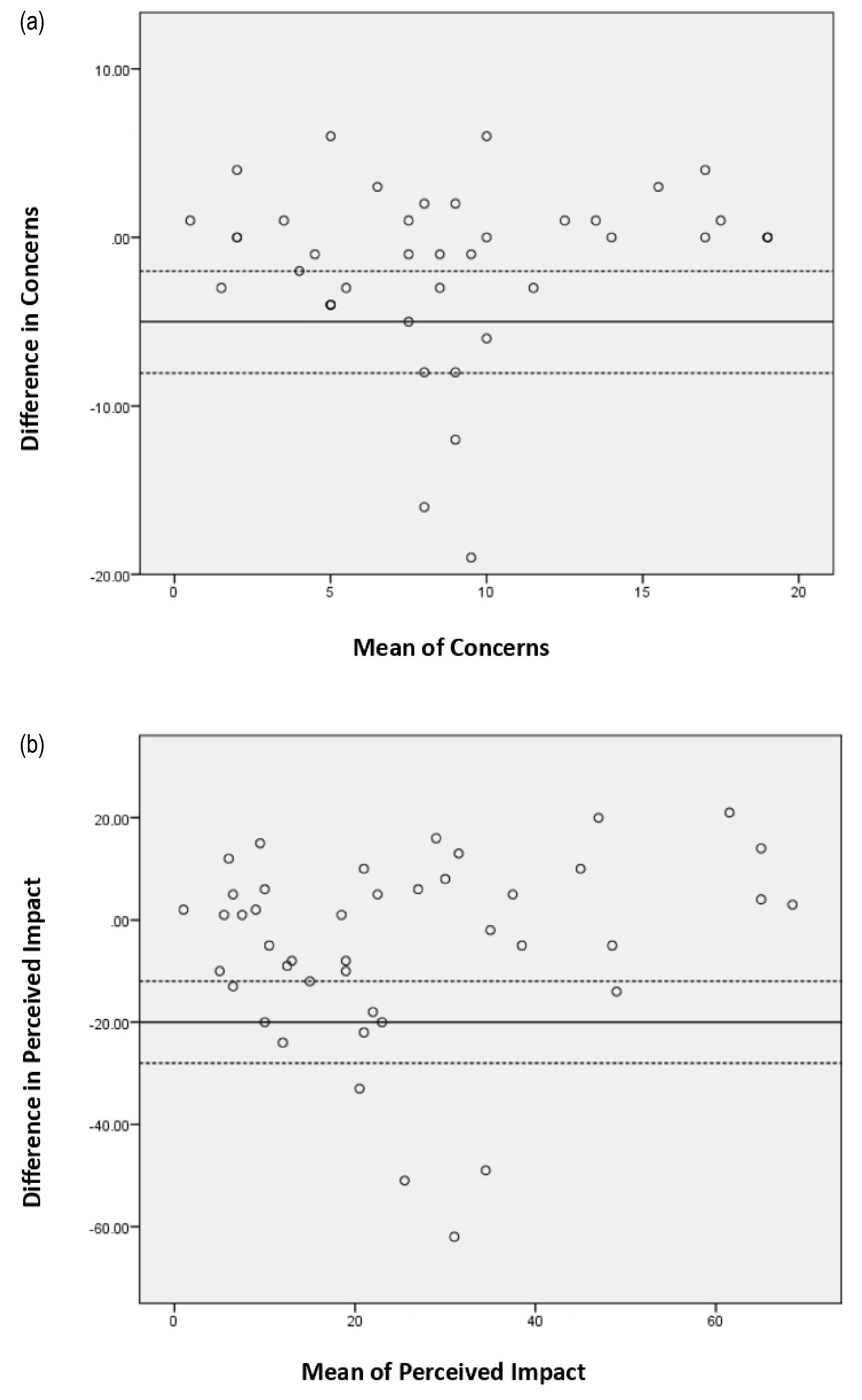
The Bland-Altman plots for “concerns” and “perceived impact” are shown in Figures 22b. Bland-Altman plots were used to assess the agreement between test and retest measurements for the constructs “concerns” and “perceived impact”. For “concerns”, the plot revealed a low mean bias, and most values fell within the limits of agreement, suggesting acceptable consistency between the assessments and no evident proportional bias. Only a few outliers were observed, indicating isolated discrepancies. For “perceived impact”, the plot showed a modest negative bias, with the majority of points falling within the limits of agreement. Although a few differences extended beyond the lower limit, the overall distribution suggests a generally consistent pattern. There was a slight indication of proportional bias at higher average values, which may warrant further investigation, but the agreement between assessments can still be considered reasonable within the context of the data.
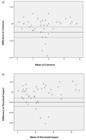
Bland–Altman plots of the agreement for Concerns (a) and Perceived Impact (b) in the test-retest results.
Discussion
This study described the translation process of the AMC questionnaire from English to Brazilian Portuguese and the psychometric properties of the translated version. The participants considered the items relevant, evidencing the utility of the AMC for the Brazilian population. This fact was expected because the AMC items describe activities and situations present in the everyday lives of families.
Cross-cultural translations and adaptations are relevant as they provide new tools in other languages more easily than creating new tools (Silva-Filho et al., 2020). In addition, they allow comparison between different samples using the same tool (Arthur et al., 2018), as long as they follow all the theoretical steps of the established procedures (Coster et al., 2011). The decision not to undertake a full cross-cultural adaptation process should be considered in light of the characteristics of the original instrument. In the case of the AMC translation, the items are formulated using simple, neutral, and universally applicable language, focusing on general aspects of child functioning and caregiver perceptions rather than culturally specific practices or context-dependent expressions. For example, terms referring to everyday activities, emotional concerns, and perceived impact are broadly understood across different cultural settings and do not require contextual modification during the translation process. Furthermore, no items from the AMC included idiomatic expressions, culturally bound references, or health system–specific terminology that would necessitate deeper cultural adaptation. This is supported by the results of the semantic and content analyses, which demonstrated high levels of agreement among experts and participants, suggesting adequate comprehension within the target population. Therefore, the adopted translation approach was considered sufficient for this context, although future studies may further explore cross-cultural applicability in more diverse settings.
During the procedures, no difficulties occurred, and all steps were followed in a rigorous methodological manner. Even though this study was conducted with the 19-item version, the results extend to the current 20-item version because the only change was the division of the last item into two separate questions.
The results of the psychometric analyses (Cohen’s kappa) indicate that the items of the Brazilian Portuguese version of the AMC demonstrate acceptable agreement between assessments, reflecting reliability and consistency in categorical classifications. This result supports the quality of the assessment using the scale in Brazilian Portuguese. Furthermore, the values found indicate that the data are reliable and consistent over repeated measurements. An important aspect to consider when interpreting the findings of this study is the composition of the sample, which consisted predominantly of children with Down syndrome. This characteristic may limit the generalizability of the results to other populations with different neurological or developmental conditions. Children with Down syndrome often present with relatively homogeneous and clinically stable developmental profiles compared to more heterogeneous or fluctuating conditions, which may influence both caregiver perceptions and the consistency of responses. Therefore, the psychometric properties observed in this study reflect this specific sample context, characterized by relative clinical stability, and should be interpreted with caution when applied to populations with more clinically variable health conditions. It remains unclear whether similar levels of agreement would be observed in contexts involving greater clinical variability. Future research, including more diverse and clinically heterogeneous samples, is warranted to further evaluate the applicability and robustness of the instrument across different diagnostic groups and contexts.
Therefore, the translation of the AMC is important in the current context for professionals, children, and adolescents with neurological or developmental disabilities, and their families. This study provides an innovative questionnaire in Brazil, introducing the biopsychosocial concept recommended by the ICF. In addition, it provides a questionnaire to be implemented as an initial contact for families in health services, guiding health professionals regarding various areas that generate concerns in families, considering that the evaluating process involves multiple factors (Mazak et al., 2021). Finally, based on the findings of the AMC, interdisciplinary, biopsychosocial, and family-centered work is encouraged, which represents a challenge in the Brazilian context (Longo et al., 2020).
Future studies
Future studies could examine changes in caregivers’ concerns over the lifespan, considering children’s age and health status. They could also compare caregivers’ concerns in the role of mother and other relationships with the child, such as fathers or siblings. The health service in which families receive care should also be explored to understand the role of family-centered services in the concerns that families have regarding the child. Finally, future research could explore whether the families’ support network is associated with concerns and the impact on everyday life.
Strengths and limitations
The strengths of this study include the involvement of the original authors of the study, whose expertise in the questionnaire assisted in the process. They also include the participation of people with lived experience, both families of children with disabilities and professionals who use the instrument in their clinical practice. This enabled us to obtain real perspectives from those who will use the AMC. This study also has some limitations. First, the sample was not equally distributed among the different health conditions (consisting mostly of children with Down syndrome) and ages (mean age 8.5 ±4.89), which may have biased the results. Furthermore, because the tool presents a current concept of holistic thinking in health, this may not yet be widely recognized by professionals and family members, which may create difficulties in answering the questionnaire, even if no cultural differences were identified between countries.
Conclusion
The Brazilian version of the AMC showed adequate internal consistency and test-retest reliability for children with neurological or developmental disabilities, providing an FCC instrument for use in Brazil. Thus, this study concluded that the translation and psychometric properties of the AMC were satisfactory. The AMC provides an FCC instrument based on the ICF, supporting adequate communication across different professionals and enabling multidisciplinary actions. In addition, the AMC is an instrument that assesses complexity, which includes the contextual factors of the ICF, unlike most instruments translated and culturally adapted to Brazilian Portuguese.
-
How to cite:
Brugnaro, B. H., Costa, I. G. R., Santana, C. A. S., Campos, A. C., Pfeifer, L. I., & Rocha, N. A. C. F. (2026). About My Child questionnaire: translation and psychometric properties of the Brazilian version. Cadernos Brasileiros de Terapia Ocupacional, 34, e4178. https://doi.org/10.1590/2526-8910.cto422841782
-
Data Availability
The data that support the findings of this study are available from the corresponding author upon reasonable request.
-
Funding Source
This work was supported by the São Paulo Research Foundation (FAPESP) [grants 2019/13716-0 and 2021/15016-6] (Beatriz Helena Brugnaro), the National Council for Scientific and Technological Development (CNPq) [grant 128495/2020-0] (Isabelle Gansella Rocha da Costa), and the Coordination for the Improvement of Higher Education Personnel (CAPES) [financial code 001].
References
- Arthur, J. P., Mantovani, M. F., Ferraz, M. I. R., Mattei, A. T., Kalinke, L. P., & Corpolato, R. C. (2018). Tradução e Adaptação Transcultural da Hipertension Knowledge-Level Scale para uso no Brasil. Revista Latino-Americana de Enfermagem, 26, 1-7.
- Associação Brasileira de Empresas de Pesquisa – ABEP. (2019). Critério de Classificação Econômica Brasil (CCEB). São Paulo.
-
Barnett, L. M., Hnatiuk, J. A., Salmon, J., & Hesketh, K. D. (2019). Modifiable factors which predict children’s gross motor competence: a prospective cohort study. The International Journal of Behavioral Nutrition and Physical Activity, 16(1), 129. https://doi.org/10.1186/s12966-019-0888-0
» https://doi.org/10.1186/s12966-019-0888-0 -
Beaton, D. E., Bombardier, C., Guillemin, F., & Ferraz, M. B. (2000). Guidelines for the process of cross-cultural adaptation of self-report measures. Spine, 25(24), 3186-3191. https://doi.org/10.1097/00007632-200012150-00014
» https://doi.org/10.1097/00007632-200012150-00014 -
Brehaut, J. C., Kohen, D. E., Garner, R. E., Miller, A. R., Lach, L. M., Klassen, A. F., & Rosenbaum, P. L. (2009). Health among caregivers of children with health problems: findings from a Canadian population-based study. American Journal of Public Health, 99(7), 1254-1262. https://doi.org/10.2105/AJPH.2007.129817
» https://doi.org/10.2105/AJPH.2007.129817 - Cohen, J. (1960). A coefficient of agreement for nominal scales. Educational and Psychological Measurement, 20, 37-46.
-
Coster, W., Bedell, G., Law, M., Khetani, M. A., Teplicky, R., Liljenquist, K., Gleason, K., & Kao, Y. C. (2011). Psychometric evaluation of the Participation and Environment Measure for Children and Youth. Developmental Medicine and Child Neurology, 53(11), 1030-1037. https://doi.org/10.1111/j.1469-8749.2011.04094.x
» https://doi.org/10.1111/j.1469-8749.2011.04094.x -
Cronbach, L. J. (1951). Coefficient alpha and the internal structure of tests. Psychometrika, 16(3), 297-334. https://doi.org/10.1007/BF02310555
» https://doi.org/10.1007/BF02310555 -
Dornelas, L. F., Lambertucci, M. S., Mello, M. L., & Deloroso, F. T. (2014). Aplicabilidade da Classificação Internacional de Funcionalidade, Incapacidade e Saúde (CIF) para a avaliação de crianças com paralisia cerebral: uma revisão sistemática. Cadernos de Terapia Ocupacional da UFSCar, 22(3), 579-590. https://doi.org/10.4322/cto.2014.080
» https://doi.org/10.4322/cto.2014.080 - Fleck, M. P. A. (2000). O instrumento de avaliação de qualidade de vida da Organização Mundial da Saúde (WHOQOL-100): características e perspectivas. Ciência & Saúde Coletiva, 5, 33-38.
-
Franck, L. S., & Callery, P. (2004). Re-thinking family-centred care across the continuum of children’s healthcare. Child: Care, Health and Development, 30(3), 265-277. https://doi.org/10.1111/j.1365-2214.2004.00412.x
» https://doi.org/10.1111/j.1365-2214.2004.00412.x - Galvão, E. R. V. P., Cazeiro, A. P. M., Campos, A. C., & Longo, E. (2018). Participation and Environment Measurement - Children and Youth (PEM-CY): cross-cultural adaptation for use in Brazil. Revista de Terapia Ocupacional da Universidade de São Paulo, 29(3), 237-245.
-
Guillemin, F., Bombardier, C., & Beaton, D. (1993). Cross-cultural adaptation of health-related quality of life measures: literature review and proposed guidelines. Journal of Clinical Epidemiology, 46(12), 1417-1432. https://doi.org/10.1016/0895-4356(93)90142-N
» https://doi.org/10.1016/0895-4356(93)90142-N - Hiratuka, E. (2009). Demands of mothers of children with cerebral palsy at different stages of child development (Master’s thesis). Universidade Federal de São Carlos, São Carlos.
-
Ketelaar, M., Bogossian, A., Saini, M., Visser-Meily, A., & Lach, L. (2017). Assessment of the family environment in pediatric neurodisability: a state-of-the-art review. Developmental Medicine and Child Neurology, 59(3), 259-269. https://doi.org/10.1111/dmcn.13287
» https://doi.org/10.1111/dmcn.13287 - Law, M., & Jaffer, S. (2007). Measuring the complexity of childhood disability, CanChild Centre for Childhood Disability Research. Hamilton: McMaster University.
-
Longo, E., Campos, A. C., & Schiariti, V. (2020). COVID-19 Pandemic: is this a good time for implementation of home programs for children’s rehabilitation in low- and middle-income countries? Physical & Occupational Therapy in Pediatrics, 40(4), 361-364. https://doi.org/10.1080/01942638.2020.1759947
» https://doi.org/10.1080/01942638.2020.1759947 - Mancini, M. C. (2005). Pediatric Disability Assessment Inventory (PEDI): adapted Brazilian version manual. Belo Horizonte: Editora UFMG.
-
Mazak, M. S. R., Fernandes, A. D. S. A., Lourenço, G. F., & Cid, M. F. B. (2021). Assessment tools of occupational therapy for children and adolescents in Brazil: a literature review. Cadernos Brasileiros de Terapia Ocupacional, 29, e2833. https://doi.org/10.1590/2526-8910.ctoar2143a
» https://doi.org/10.1590/2526-8910.ctoar2143a -
McMaster University. (2025). My Child (AMC) questionnaire. Hamilton, ON: CanChild Centre for Childhood-Onset Disability Research. Retrieved in 2025, July 16, from www.canchild.ca
» www.canchild.ca - Menegasso, L. R. (2005). Análise teórica de itens referentes a pessoas com deficiência da Infant Toddler Environment Rating Scale - revised edition (Master’s thesis). Universidade Federal de São Carlos, São Carlos.
-
Mokkink, L. B., Terwee, C. B., Patrick, D. L., Alonso, J., Stratford, P. W., Knol, D. L., Bouter, L. M., & de Vet, H. C. (2010). The COSMIN study reached international consensus on taxonomy, terminology, and definitions of measurement properties for health-related patient-reported outcomes. Journal of Clinical Epidemiology, 63(7), 737-745. https://doi.org/10.1016/j.jclinepi.2010.02.006
» https://doi.org/10.1016/j.jclinepi.2010.02.006 -
Ritzema, A. M., Lach, L. M., Rosenbaum, P., & Nicholas, D. (2016). About my Child: measuring ‘Complexity’ in neurodisability. Evidence of reliability and validity. Child: Care, Health and Development, 42(3), 402-409. https://doi.org/10.1111/cch.12326
» https://doi.org/10.1111/cch.12326 -
Rosenbaum, P., & Gorter, J. W. (2012). The ‘F-words’ in childhood disability: I swear this is how we should think! Child: Care, Health and Development, 38(4), 457-463. https://doi.org/10.1111/j.1365-2214.2011.01338.x
» https://doi.org/10.1111/j.1365-2214.2011.01338.x -
Sania, A., Sudfeld, C. R., Danaei, G., Fink, G., McCoy, D. C., Zhu, Z., Fawzi, M. C. S., Akman, M., Arifeen, S. E., Barros, A. J. D., Bellinger, D., Black, M. M., Bogale, A., Braun, J. M., van den Broek, N., Carrara, V., Duazo, P., Duggan, C., Fernald, L. C. H., Gladstone, M., Hamadani, J., Handal, A. J., Harlow, S., Hidrobo, M., Kuzawa, C., Kvestad, I., Locks, L., Manji, K., Masanja, H., Matijasevich, A., McDonald, C., McGready, R., Rizvi, A., Santos, D., Santos, L., Save, D., Shapiro, R., Stoecker, B., Strand, T. A., Taneja, S., Tellez-Rojo, M.-M., Tofail, F., Yousafzai, A. K., Ezzati, M., & Fawzi, W. (2019). Early life risk factors of motor, cognitive and language development: a pooled analysis of studies from low/middle-income countries. BMJ Open, 9(10), e026449. https://doi.org/10.1136/bmjopen-2018-026449
» https://doi.org/10.1136/bmjopen-2018-026449 -
Silva, F. P. S., Brugnaro, B. H., & Rocha, N. A. C. F. (2020). Brazilian translation and cultural adaptation of the Assessment of Life Habits for Children assessment instrument. Revista de Terapia Ocupacional da Universidade de São Paulo, 30(1), 37-44. https://doi.org/10.11606/issn.2238-6149.v30i1p37-44
» https://doi.org/10.11606/issn.2238-6149.v30i1p37-44 -
Silva-Filho, J. A., Cazeiro, A. P. M., Campos, A. C., & Longo, E. (2020). Medida da Participação e do Ambiente - Crianças Pequenas (YC-PEM): tradução e adaptação transcultural para o uso no Brasil. Revista de Terapia Ocupacional da Universidade de São Paulo, 30(3), 140-149. https://doi.org/10.11606/issn.2238-6149.v30i3p140-149
» https://doi.org/10.11606/issn.2238-6149.v30i3p140-149 -
Williams, U., Rosenbaum, P., Gorter, J. W., McCauley, D., & Gulko, R. (2018). Psychometric properties and parental reported utility of the 19-item ‘About My Child’ (AMC-19) measure. BMC Pediatrics, 18(1), 174. https://doi.org/10.1186/s12887-018-1147-2
» https://doi.org/10.1186/s12887-018-1147-2 - World Health Organization – WHO. (2001). International Classification of Functioning, Disability and Health Geneva: WHO.
Edited by
-
Section editor
Prof. Michael Palapal Sy
The data that support the findings of this study are available from the corresponding author upon reasonable request.