
 Integrative and Complementary Practices in Primary Health Care in Brazil between 2013 and 2018 and associations with characteristics of teams, health units and municipalities: a longitudinal study
Background: Integrative and Complementary Health Practices expand health care.
Objective: To analyze the offer of Integrative and Complementary Practices in Health (ICPH) in Primary Health Care between 2013 and 2018 and its associations with characteristics of teams, health units and municipalities.
Method: Longitudinal study using data from the National Program for Improving Access and Quality of Primary Health Care. Descriptive analysis, multiple logistic regression and McNemar test were performed.
Results: A total of 30,523 teams from 24,498 Health Units were analyzed. The supply of ICPH rose from 18.6% (2013) to 29,0% (2018). Expanding the offer of ICPH was related to teams that had a multidisciplinary reception room (odds ratio — OR=1.07; 95% confidence interval — 95%CI 1.01–1.14); participated in permanent education actions (OR=1.41; 95%CI 1.27–1.57); offered educational and health promotion actions (OR=1.25; 95%CI 1.06–1.47); were located in medium-sized (OR=1.19; 95%CI 1.10–1.29) or large (OR=1.98; 95%CI 1.82–2.15) and medium-sized (OR=1.22; 95%CI 1.07–1.40) or had high coverage of Primary Health Care (OR=1.53; 95%CI 1.34–1.74).
Conclusion: The increase in the supply of ICPH was associated with characteristics of the team and the municipality.
Keywords:
complementary therapies; primary health care; health promotion; health services research; epidemiology, descriptive
 Thumbnail
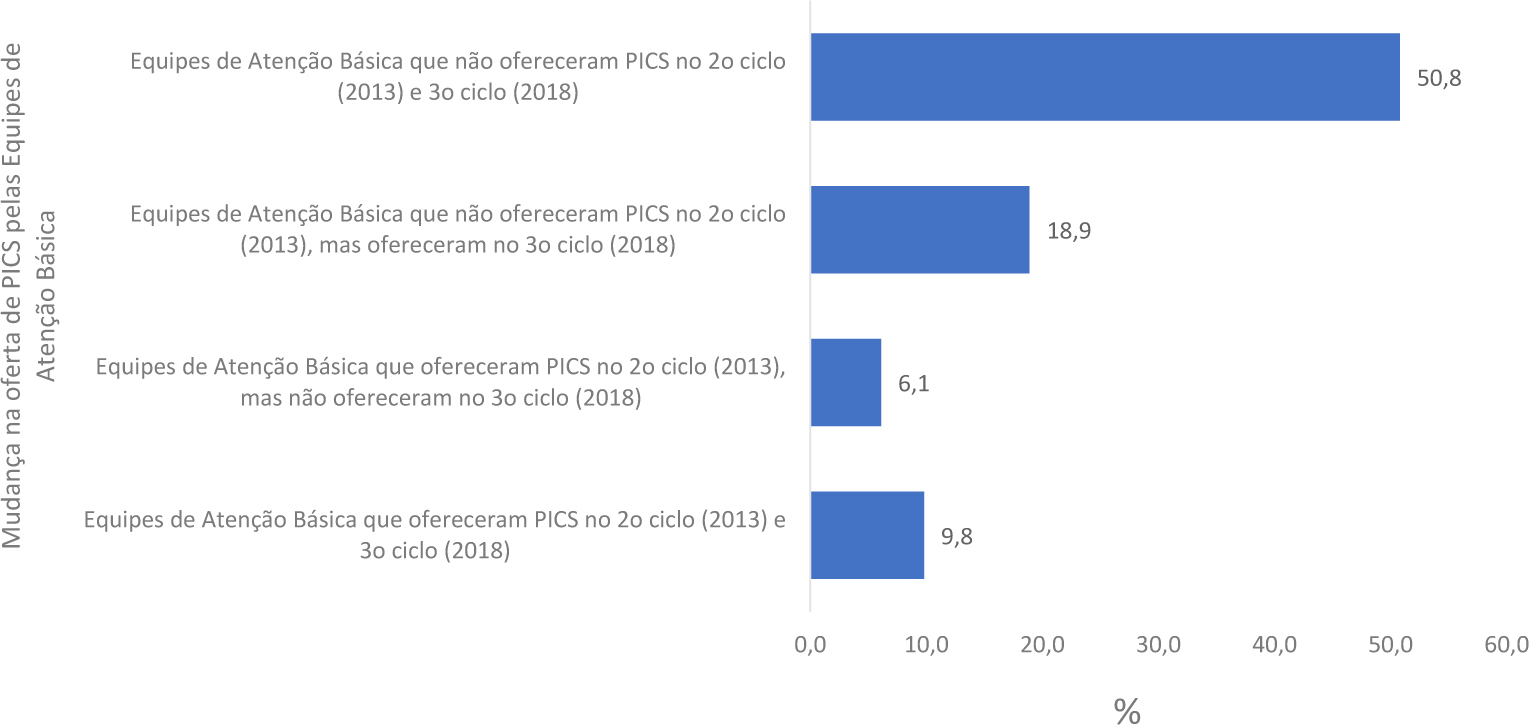 Fonte: Elaborados pelos autores.