 Physical activity practice among adolescents who live in rural quilombola and non-quilombola communities of southwest Bahia
Background: Physical activity (PA) tends to decline throughout life, especially from adolescence onwards. Encouraging PA during this phase can promote a healthier lifestyle with long-lasting effects. However, quilombola adolescents face greater vulnerabilities, exacerbated by discrimination, which can negatively impact their health outlook and behaviors.
Objective: To describe the practice of physical activity and associated factors among adolescents who live in rural quilombola and non-quilombola communities in a municipality in the southwest of Bahia.
Method: The practice of physical activity was described using the median and interquartile range, and non-parametric methods were used to assess their difference.
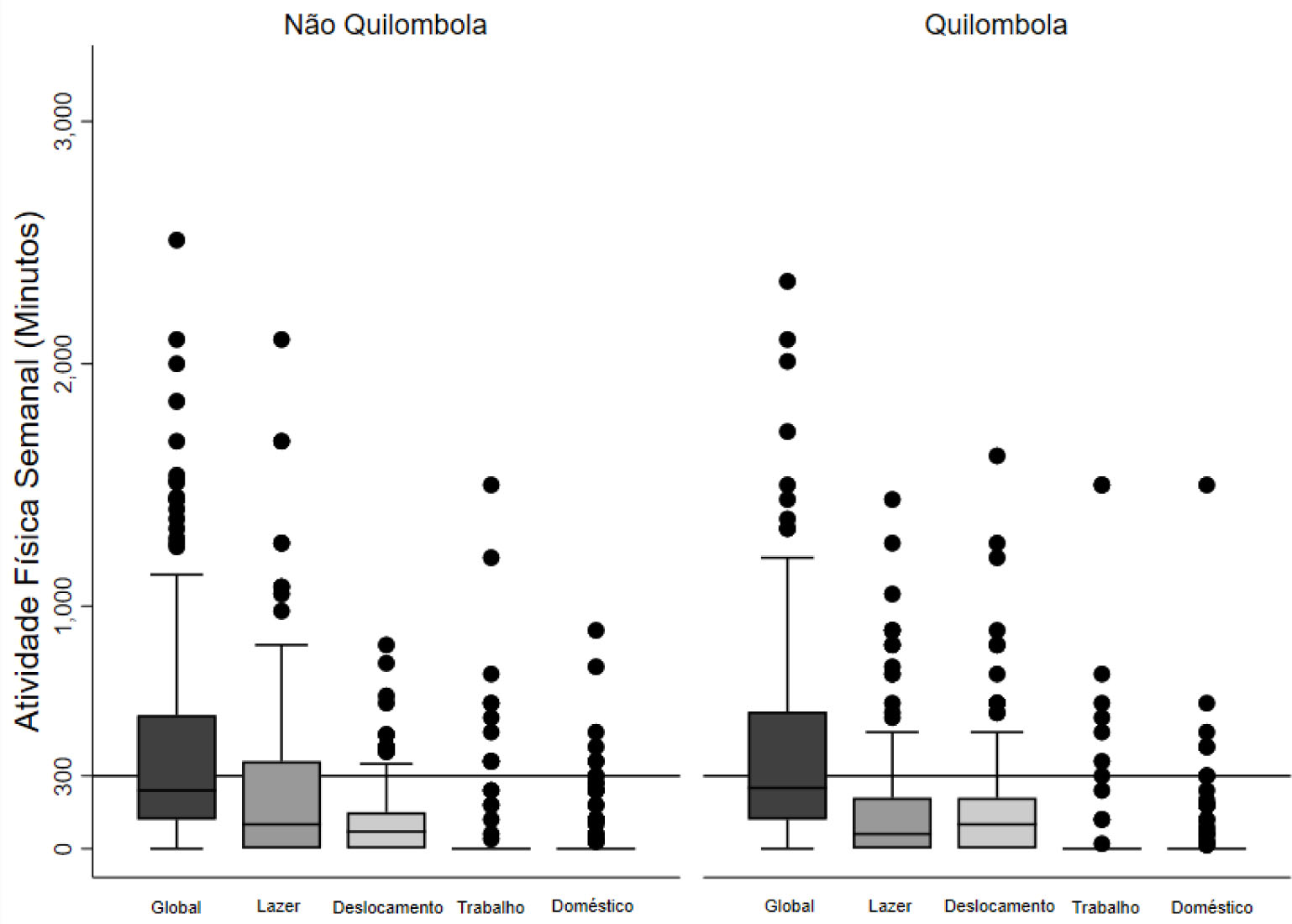
Results: It was found that 45.3% of non-quilombolas and 46.7% of quilombolas were active, and the domains that contributed most were leisure and displacement. For both strata, physical activity was higher among boys, those who worked, and who reported the existence of public venues. It was higher among non-quilombolas who attended school and knew public programs.
Conclusion: Less than half of the rural adolescents surveyed were active. The importance of public venues and programs to encourage the practice of physical activity and the need for intervention strategies aimed at girls was highlighted. In this context, the school presents itself as an environment that can encourage healthy behaviors, such as regular physical activity.
Keywords:
adolescent; adolescent health; exercise; rural areas; epidemiological studies
 Thumbnail