
 Theory, methodology and reporting: a view on systematic reviews and meta-analysis
Background: Theoretical models are characterized as a guiding thread for research. However, they are rarely used and reported in depth by researchers, which can negatively impact scientific quality and reproducibility.
Objective: Identify the use profile and level of depth of theories and/or theoretical models, methodological and reporting qualities of systematic reviews (SR) with or without meta-analysis, and to correlate the use of theories/models with the methodological and reporting qualities.
Method: Cross-sectional study, carried out from May to December 2019, composed of RS from the journals Revista de Saúde Pública (RSP) and Cadernos de Saúde Pública (CSP). There were no language restrictions. The selection of articles and data extraction was carried out in duplicate. To assess the use of theories, the questionnaire developed by Cabrera was used; to assess methodological quality, the Assessment of Multiple Systematic Reviews (AMSTAR-2); and for the report, the Preferred Reporting Items for Systematic Reviews and Meta-Analyses (PRISMA). Analysis was performed using statistical tests, at the level of significance p<0.05.
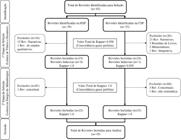
Results: Forty-five SR were included (22 RSP and 23 CSP). Only 24.4% of SR used theories/models and, of these, 54.5% only mentioned (Level 1) and 45.5% described (Level 2), there was no use in depth (Levels 3 and 4). The SRs presented limitations in methodological and reporting quality: only 37.5% of the items in AMSTAR-2 were attended by most of the SRs, and 66.6% of those in PRISMA. Positive correlations were observed between the use of theories and methodological and reporting qualities.
Conclusion: The use of theories/theoretical models may reflect better methodological and reporting quality of SR.
Keywords:
models; theoretical; methods; research report; systematic reviews as topic; meta-analysis as topic
 Thumbnail
