Underreporting of acute kidney injury in randomized trials of acute respiratory distress syndrome with mortality endpoints: a systematic review
ABSTRACT
Objective: To examine how acute kidney injury is represented and reported in randomized controlled trials of acute respiratory distress syndrome with mortality as the primary endpoint.
Methods: This descriptive systematic review included parallel-arm randomized controlled trials enrolling adult patients with acute respiratory distress syndrome, defined by American-European Consensus Conference or Berlin criteria, in which mortality was the primary outcome. The protocol was prospectively registered in PROSPERO (CRD420251043094). Searches were conducted in PubMed®/MEDLINE®, Embase, and Scopus for studies published between January 1st, 2005, and April 10, 2025. Two reviewers independently screened studies and extracted data by consensus. Data extraction focused on acute kidney injury reporting, use of standardized definitions, serum creatinine, renal replacement therapy, fluid balance, and kidney-related subgroup analyses.
Results: Twenty-seven randomized controlled trials met inclusion criteria. None applied standardized acute kidney injury definitions such as KDIGO, AKIN, or RIFLE. Serum creatinine was reported in two trials and renal replacement therapy in four, without details on timing or criteria. Organ dysfunction scores were commonly reported, but renal subscores were not specified. Fluid balance was reported in five trials but was not included in the adjusted analyses. No study performed mortality analyses stratified by acute kidney injury or baseline kidney function.
Conclusion: Acute kidney injury is inconsistently represented in randomized trials of acute respiratory distress syndrome evaluating mortality. This inconsistency limits the interpretation of extrapulmonary organ dysfunction. Recognizing the multisystem nature of critical illness may improve the clinical relevance of future trial designs.
Keywords:
Acute kidney injury; Multiple organ failure; Organ dysfunction scores; Respiratory distress syndrome; Renal replacement therapy; Mortality
INTRODUCTION
Acute respiratory distress syndrome (ARDS) is a major cause of morbidity and mortality in critically ill patients.(1) Defined by non-cardiogenic pulmonary edema, severe hypoxemia, and reduced lung compliance, ARDS often requires prolonged mechanical ventilation and intensive care.(2) While the syndrome is primarily pulmonary in presentation, its systemic implications are substantial; multiorgan dysfunction is common, and the kidneys are particularly vulnerable.(3) Despite this, the consideration of kidney-related outcomes in randomized trials designed to evaluate mortality in ARDS remains variable.
Acute kidney injury (AKI) occurs frequently in patients with ARDS and is associated with poor outcomes, including longer intensive care unit (ICU) stays, increased need for renal replacement therapy (RRT), and higher mortality.(4) The interplay between lung and kidney injury involves complex hemodynamic, inflammatory, and neurohormonal mechanisms.(5) Clinical management strategies such as fluid therapy, ventilator settings, and pharmacologic interventions can directly influence both pulmonary and renal function.(6) As such, the kidney is not just a bystander in ARDS but a key determinant of disease trajectory.(7) Consistent with this systemic perspective, ARDS is increasingly recognized as a biologically heterogeneous syndrome, with distinct subphenotypes characterized by different inflammatory profiles, degrees of extrapulmonary organ dysfunction, and clinical outcomes. Hyperinflammatory subphenotypes have been associated with a higher incidence of metabolic acidosis and increased creatinine levels, as well as worse clinical outcomes.(8)
Recent patient-level analyses from over 5,000 participants in 10 ARDS trials revealed a 43.7% incidence of AKI, with stable risk over time and an estimated 15.4% excess 90-day mortality attributable to AKI rising to 20.3% in severe cases.(9) Most AKI occurred early during critical illness and was linked to factors such as hemodynamic instability, inflammation, and ventilator-associated injury.(10) Despite advances in ICU care, no improvement in AKI incidence or renal recovery was observed, underscoring the need for consistent reporting and kidney-specific endpoints in ARDS trials.(11)
Taken together, these observations highlight the potential gap between the systemic nature of ARDS and the outcomes typically reported in trials that shape clinical practice. The aim of this systematic review was therefore to examine how AKI is captured in ARDS RCTs that use mortality as a primary endpoint. Specifically, we sought to determine how often AKI is reported as an outcome, whether standardized definitions are applied, and to what extent trials report RRT use, assess fluid balance, or include kidney-related subgroup analyses.
METHODS
Study design
This study is a descriptive systematic review of randomized controlled trials evaluating adult patients with ARDS in which mortality was the primary outcome, with a focus on AKI and related renal variables.
Review registration and reporting guidelines
The protocol was prospectively registered with PROSPERO on April 29, 2025, and formally registered on June 30, 2025 (PROSPERO registration number: CRD420251043094). Reporting followed the Preferred Reporting Items for Systematic Reviews and Meta-Analyses (PRISMA) guidelines.
Eligibility criteria
We included parallel-arm randomized controlled trials conducted in adult populations (≥ 18 years) with ARDS, as defined by either the American-European Consensus Conference (AECC) or Berlin criteria, published in English between January 1st, 2005, and April 10, 2025. Only trials reporting mortality as a primary endpoint were eligible. Review articles, editorials, observational studies, and non-randomized interventions were excluded. No restrictions were applied regarding intervention type, comparator, or ventilatory strategy; included trials evaluated any therapeutic or supportive intervention in the context of ARDS.
Outcomesa
The primary focus was on the representation and reporting of AKI. This included whether AKI was included as a secondary or exploratory outcome, whether formal definitions (such as Kidney Disease: Improving Global Outcomes [KDIGO], Acute Kidney Injury Network [AKIN], or RIFLE [acronym from Risk of renal dysfunction, Injury to kidney, Failure or Loss of kidney function, and End-stage kidney disease]) were used, whether serum creatinine or RRT was reported, whether AKI was classified as an adverse event, whether subgroup analyses by AKI status were performed, and whether fluid balance was reported in relation to renal function.
Search strategy, study selection and data extraction
A comprehensive search was conducted in PubMed®/MEDLINE®, Embase, and Scopus using controlled vocabulary (MeSH) and relevant keywords. The following terms were used: ("Acute Respiratory Distress Syndrome" [Title/Abstract] OR "ARDS" OR "acute lung injury") AND ("Mortality" [Mesh] OR mortality OR "Death") AND ("Randomized Controlled Trial" [Publication Type] OR "Randomized Controlled Trials" [Mesh] OR "randomized trial" [Title/Abstract]). The search included studies published between January 1st, 2005, and April 10, 2025, and was limited to English-language publications. Two reviewers independently screened all titles and abstracts for eligibility. Full-text articles were retrieved for potentially eligible studies and reviewed in detail. Discrepancies were resolved through discussion and consensus between the two reviewers. Data were independently extracted using a standardized data collection form. Extracted variables included study design, setting, intervention type, ARDS severity, COVID-19 status, reporting of AKI and its definitions, serum creatinine monitoring, RRT use, fluid balance reporting, and whether AKI was analyzed as an adverse event or in subgroup analyses.
Risk of bias assessment
As no meta-analysis was planned and effect sizes were not pooled, formal risk-of-bias tools were not applied. Instead, methodological completeness and the consistency of AKI-related reporting were qualitatively assessed across trials.
Data synthesist
Findings were synthesized descriptively. Reporting practices regarding AKI were compared across the included studies. Trends in AKI representation over time, by intervention type, and by coronavirus disease 2019 (COVID-19) versus non-COVID-19 status were evaluated narratively.
RESULTS
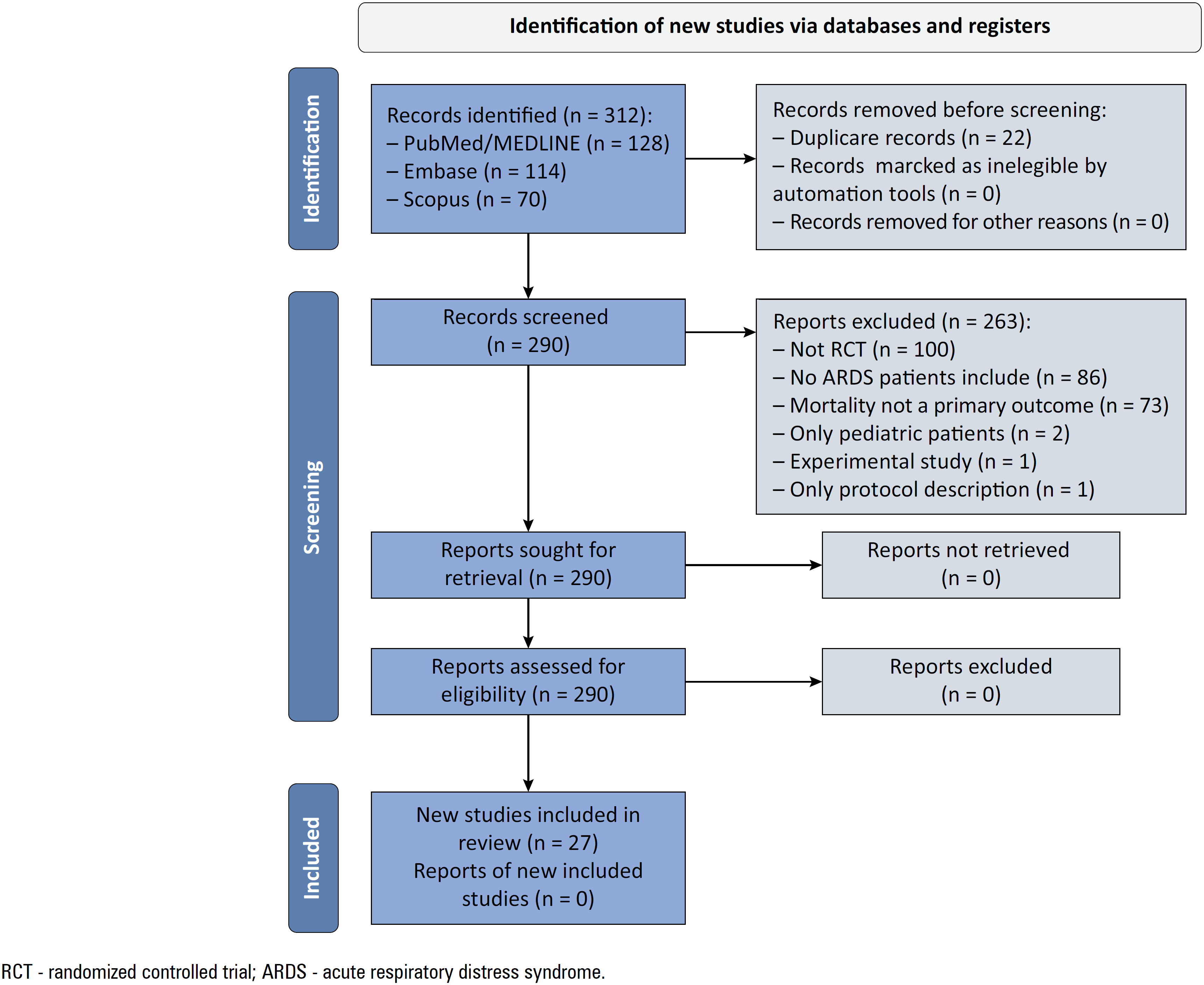
A total of 312 records were identified through database searching, including 128 records from PubMed®/MEDLINE®, 114 from Embase, and 70 from Scopus. After removal of 22 duplicate records, 290 studies remained for screening. Following title and abstract screening, studies that were clearly unrelated to the study objective were excluded. Full-text assessment was subsequently performed for potentially eligible articles. A total of 263 studies were excluded after full-text review, mainly because they were not randomized controlled trials, did not include ARDS populations, did not evaluate mortality as a primary outcome, involved pediatric patients, or consisted only of study protocols. Ultimately, 27 randomized controlled trials met all eligibility criteria and were included in the final qualitative synthesis. The complete study selection process is presented in figure 1.
Tables 1 and 2 present the characteristics of the included randomized controlled trials and the representation of AKI-related variables across studies.
Summary of randomized controlled trials investigating acute respiratory distress syndrome and mortality as primary outcome
Representation of acute kidney injury and renal outcomes in acute respiratory distress syndrome randomized controlled trials
Study characteristicst
Of the 27 included studies, 24 were conducted as multicenter trials,(12-32,34-36) and 3(33,37,38) were single-center. Two studies enrolled patients exclusively with COVID-19 related ARDS,(32,35) whereas 25 studies investigated ARDS of other etiologies. The classification of ARDS varied among the included studies. A total of 17 studies specifically enrolled patients with moderate and severe ARDS. Ten studies defined ARDS based on partial pressure of oxygen/fraction of inspired oxygen (PaO2/FiO2), thereby potentially including patients across the mild, moderate, and severe spectrum.(13,14,16,24,25,31,33,35,37,38) and only four studies explicitly focused on severe ARDS.(19,20,23,27)
The included randomized controlled trials investigated a wide range of interventions for ARDS. Ventilatory strategies were the most frequently studied, appearing in 12 trials.(12,15,16,17,22,26,29,30,31,34,36) Other commonly evaluated interventions included neuromuscular blockade (two trials),(19,28) prone positioning (two trials),(18,23) and corticosteroids (two trials).(37,38) All pharmacologic and supportive strategies are detailed in table 1.
Reporting of acute kidney injury and related renal variables
Acute kidney injury was infrequently specified as a standalone secondary outcome. Most studies reported kidney-related outcomes indirectly, embedded within composite measures such as organ failure-free days, Sequential Organ Failure Assessment (SOFA) scores, RRT-free days, or duration of RRT. Table 2 summarizes how AKI and related renal variables were reported across included trials. Only seven studies reported AKI or any kidney outcome as an adverse event. No study employed formal AKI definitions, such as those proposed by KDIGO, AKIN, or RIFLE. Renal dysfunction, when reported, was variably defined using RRT use, serum creatinine thresholds, or global organ failure frameworks Organ Dysfunctions and/or INfection (ODIN) score or Brussels Organ Failure Table). Serum creatinine values were reported in two studies,(24,28) either at baseline or during the follow-up period.
Renal replacement therapy use was reported in four studies.(15,16,24,27) In these, RRT was presented as the proportion of patients receiving therapy in each arm, without additional details regarding modality, timing, or criteria for initiation. No study reported the proportion of patients with AKI at enrollment or the incidence of AKI during the study follow-up. Similarly, none of the included studies reported a specific mortality analysis for the AKI subgroup.
Reporting of fluid balance
Fluid balance data were available in five studies, as shown in table 2.(17,20,24,30,35) In most cases, fluid balance was reported at early time points, such as within 24 to 48 hours after randomization. None of the included studies incorporated fluid balance into adjusted analyses or explored its association with mortality or organ dysfunction.
Mortality outcomes
The mortality endpoint was consistently reported across all included studies, although with variable time frames, as detailed in table 1. Most trials reported short- to mid-term mortality, with 28-day mortality being the most common endpoint,(16, 18,20,21,23,26,29,31,33,35,38) followed by 90-day(19,25,28,30,34) and 60-day mortality,(13,14,24,27) while a minority used hospital mortality.(17,37) This variability in mortality assessment was accompanied by the absence of predefined mortality analyses stratified by kidney-related variables, including AKI status, across the included trials.
DISCUSSION
This systematic review highlights a persistent and clinically relevant omission in the design of RCTs in ARDS. Although AKI is a frequent complication in moderate to severe ARDS and independently contributes to worse outcomes, kidney-specific endpoints were rarely incorporated. Most trials did not apply standardized AKI definitions, such as KDIGO, and reporting of renal outcomes, including serum creatinine trajectories or use of RRT, was inconsistent or absent. This lack of structured renal assessment limits the interpretability of multiorgan effects and hinders efforts to advance organ-supportive strategies in this population.
Importantly, part of this heterogeneity must be interpreted in light of the historical evolution of AKI definitions. The RIFLE criteria were first proposed in 2004, followed by the AKIN classification in 2007, while the KDIGO consensus - currently the most widely adopted framework - was published in 2012 and progressively incorporated into ICU research thereafter.(39) Consequently, many earlier ARDS trials could not have applied KDIGO-based definitions, and even post-2012 studies showed variable uptake of standardized criteria. While this temporal context may clarify some variability in reported renal outcomes across trials, it does not fully explain the continued lack of strict renal endpoints in recent studies.
Indeed, none of the included trials employed standardized AKI definitions such as KDIGO, despite their broad acceptance and incorporation into ICU research since 2012.(39,40) Instead, several studies referenced the SOFA score but failed to clarify whether and how the renal subscore was used. This ambiguity limits the clinical interpretability of renal dysfunction and precludes valid cross-trial comparisons.(40) Furthermore, reporting of serum creatinine and RRT was often incomplete, lacking key clinical details such as timing, modality, and initiation thresholds. These methodological gaps are particularly concerning given the well-established prognostic value of renal function and RRT parameters in critically ill populations.(41,42)
These findings should be interpreted within the broader context of critical care research, in which randomized trials have historically emphasized all-cause mortality as the principal marker of therapeutic benefit.(43) In syndromes characterized by complex and interacting pathophysiological processes, such as ARDS, interventions may exert heterogeneous or modest effects on survival, while substantially influencing other domains of organ dysfunction. The limited and inconsistent reporting of renal variables observed across the included trials likely reflects this historical prioritization of mortality, rather than an absence of renal involvement or clinical relevance. Our results suggest that, within this framework, kidney-related outcomes have not been systematically incorporated, even when AKI represents a frequent and prognostically relevant complication.
In parallel, growing recognition of ARDS as a biologically heterogeneous syndrome, together with ongoing efforts to refine ARDS definitions and improve patient classification, provides an important interpretative lens for our findings.(44) Distinct subphenotypes with differing inflammatory profiles and degrees of extrapulmonary organ dysfunction have been associated with divergent clinical trajectories and outcomes.(45) Our review indicates that this biological heterogeneity has rarely been accounted for in ARDS trials, as reflected by the absence of stratified analyses or structured assessment of kidney dysfunction. The limited characterization of extrapulmonary organ involvement may therefore contribute to incomplete interpretation of trial results and missed signals of differential treatment effects.(30)
Fluid balance - a key determinant of both pulmonary and renal outcomes in critical illness - was infrequently reported. Fewer than 20% of trials included data on cumulative fluid status, and only a minority incorporated it into adjusted analyses. This omission is particularly notable given evidence from the FACTT trial and subsequent cohort studies demonstrating fluid overload contributes to both pulmonary edema and AKI.(13,46) Failure to account for fluid dynamics may obscure the renal consequences of lung-targeted interventions and limit the detection of potential harm in susceptible subgroups.(6)
None of the included trials conducted stratified analyses by AKI status or examined potential heterogeneity in treatment effects by baseline kidney function.(47) This represents a missed opportunity to evaluate whether patients with impaired renal reserve respond differently to interventions in ARDS. Renal dysfunction is known to alter drug pharmacokinetics, modulate systemic inflammation, and influence hemodynamic responses.(48) These alterations may interact with fluid balance - a key determinant of both pulmonary and renal outcomes - as well as with therapies such as lung-protective ventilation, corticosteroids, and extracorporeal modalities.(46) Moreover, mechanical ventilation itself - particularly when associated with ventilator-induced lung injury - can propagate kidney injury through biotrauma and altered hemodynamics.(48) Identifying such cross-organ interactions is essential to advancing precision medicine and should be prioritized in future trial designs.(47,49) Furthermore, recent advances in AKI subphenotyping and personalized medicine may help identify biologically distinct patient groups that respond differently to therapeutic interventions, thereby improving future ARDS trial design and interpretation.(50) The broader issue reflected in these findings is the persistence of a single-organ approach in critical care trials. ARDS continues to be framed primarily as a pulmonary condition, despite growing recognition of its systemic implications. Lung-kidney crosstalk is well established and involves mechanical, inflammatory, and neurohormonal pathways. By neglecting kidney-specific endpoints, current RCTs risk overlooking meaningful effects or unintended harms, especially in patients with overlapping vulnerabilities.(5,6)
Renal replacement therapy, a high-cost, high-stakes intervention, was rarely analyzed despite being documented in several trials. Without reporting RRT timing or stratifying mortality by its use, trial conclusions may mask differences in severity or misattribute outcomes. This omission weakens both internal validity and external applicability, particularly for ICU clinicians managing patients with evolving multiorgan failure.(51,52)
Strengths and limitation
This review has several strengths. It is, to our knowledge, the first to systematically assess how AKI is reported in RCTs of ARDS with mortality endpoints. The review included trials identified from three major biomedical databases and covered more than two decades of randomized evidence in ARDS. By restricting the analysis to trials in which mortality was a central outcome, we focused on studies that have disproportionately influenced evidence synthesis and clinical practice in this field.
However, some limitations must be acknowledged. We limited inclusion to English-language studies, which may have excluded relevant international trials. We did not perform a formal risk-of-bias assessment, as the review was descriptive and not focused on treatment efficacy. Additionally, our analysis relied on reported data; some studies may have collected renal variables but chose not to report them due to space constraints or prioritization of respiratory endpoints. Finally, heterogeneity in ARDS and AKI definitions over time likely contributed to variability in study populations and outcome reporting across included studies.
CONCLUSION
Acute kidney injury is a frequent and clinically meaningful complication in acute respiratory distress syndrome, yet it remains inconsistently represented in randomized trials evaluating mortality. This pattern of reporting limits the interpretability of trial findings regarding extrapulmonary organ dysfunction, particularly in patients at higher risk of renal involvement. Future acute respiratory distress syndrome trials would benefit from the use of standardized acute kidney injury definitions, more consistent reporting of renal replacement therapy and fluid balance, and consideration of renal function in exploratory or stratified analyses. Recognizing the multisystem nature of critical illness is essential to designing trials that are both scientifically sound and clinically useful.
AVAILABILITY OF DATA AND MATERIALS
All data generated or analyzed during this study are included in this published article.
REFERENCES
- 1 Bos LD, Ware LB. Acute respiratory distress syndrome: causes, pathophysiology, and phenotypes. Lancet. 2022;400(10358):1145-56.
- 2 Matthay MA, Arabi Y, Arroliga AC, Bernard G, Bersten AD, Brochard LJ, et al. A new global definition of acute respiratory distress syndrome. Am J Respir Crit Care Med. 2024;209(1):37-47.
- 3 Zhou K, Qin Q, Lu J. Pathophysiological mechanisms of ARDS: a narrative review from molecular to organ-level perspectives. Respir Res. 2025;26(1):54.
- 4 Park BD, Faubel S. Acute kidney injury and acute respiratory distress syndrome. Crit Care Clin. 2021;37(4):835-49.
- 5 Mendes RS, Silva PL, Robba C, Battaglini D, Lopes-Pacheco M, Caruso-Neves C, et al. Advancements in understanding the mechanisms of lung-kidney crosstalk. Intensive Care Med Exp. 2024;12(1):81.
- 6 Joannidis M, Forni LG, Klein SJ, Honore PM, Kashani K, Ostermann M, et al. Lung-kidney interactions in critically ill patients: consensus report of the Acute Disease Quality Initiative (ADQI) 21 Workgroup. Intensive Care Med. 2020;46(4):654-72.
- 7 Husain-Syed F, Slutsky AS, Ronco C. Lung-kidney cross-talk in the critically ill patient. Am J Respir Crit Care Med. 2016;194(4):402-14.
- 8 Calfee CS, Delucchi KL, Sinha P, Matthay MA, Hackett J, Shankar-Hari M, et al.; Irish Critical Care Trials Group. Acute respiratory distress syndrome subphenotypes and differential response to simvastatin: secondary analysis of a randomised controlled trial. Lancet Respir Med. 2018;6(9):691-8.
- 9 Antonucci E, Garcia B, Chen D, Matthay MA, Liu KD, Legrand M. Incidence of acute kidney injury and attributive mortality in acute respiratory distress syndrome randomized trials. Intensive Care Med. 2024;50(8):1240-50.
- 10 Panitchote A, Mehkri O, Hastings A, Hanane T, Demirjian S, Torbic H, et al. Factors associated with acute kidney injury in acute respiratory distress syndrome. Ann Intensive Care. 2019;9(1):74.
- 11 Bellomo R, Ronco C, Mehta RL, Asfar P, Boisramé-Helms J, Darmon M, et al. Acute kidney injury in the ICU: from injury to recovery: reports from the 5th Paris International Conference. Ann Intensive Care. 2017;7(1):49.
- 12 Bollen CW, van Well GT, Sherry T, Beale RJ, Shah S, Findlay G, et al. High frequency oscillatory ventilation compared with conventional mechanical ventilation in adult respiratory distress syndrome: a randomized controlled trial [ISRCTN24242669]. Crit Care. 2005;9(4):R430-9.
- 13 Wiedemann HP, Wheeler AP, Bernard GR, Thompson BT, Hayden D, deBoisblanc B, et al.; National Heart, Lung, and Blood Institute Acute Respiratory Distress Syndrome (ARDS) Clinical Trials Network. Comparison of two fluid-management strategies in acute lung injury. N Engl J Med. 2006;354(24):2564-75.
- 14 Wheeler AP, Bernard GR, Thompson BT, Schoenfeld D, Wiedemann HP, deBoisblanc B, et al.; National Heart, Lung, and Blood Institute Acute Respiratory Distress Syndrome (ARDS) Clinical Trials Network. Pulmonary-artery versus central venous catheter to guide treatment of acute lung injury. N Engl J Med. 2006;354(21):2213-24.
- 15 Villar J, Kacmarek RM, Pérez-Méndez L, Aguirre-Jaime A. A high positive end-expiratory pressure, low tidal volume ventilatory strategy improves outcome in persistent acute respiratory distress syndrome: a randomized, controlled trial. Crit Care Med. 2006;34(5):1311-8.
- 16 Mercat A, Richard JC, Vielle B, Jaber S, Osman D, Diehl JL, et al.; Expiratory Pressure (Express) Study Group. Positive end-expiratory pressure setting in adults with acute lung injury and acute respiratory distress syndrome: a randomized controlled trial. JAMA. 2008;299(6):646-55.
- 17 Meade MO, Cook DJ, Guyatt GH, Slutsky AS, Arabi YM, Cooper DJ, et al.; Lung Open Ventilation Study Investigators. Ventilation strategy using low tidal volumes, recruitment maneuvers, and high positive end-expiratory pressure for acute lung injury and acute respiratory distress syndrome: a randomized controlled trial. JAMA. 2008;299(6):637-45.
- 18 Taccone P, Pesenti A, Latini R, Polli F, Vagginelli F, Mietto C, et al.; Prone-Supine II Study Group. Prone positioning in patients with moderate and severe acute respiratory distress syndrome: a randomized controlled trial. JAMA. 2009;302(18):1977-84.
- 19 Papazian L, Forel JM, Gacouin A, Penot-Ragon C, Perrin G, Loundou A, et al.; A CURASYS Study Investigators. Neuromuscular blockers in early acute respiratory distress syndrome. N Engl J Med. 2010;363(12):1107-16.
- 20 Spragg RG, Taut FJ, Lewis JF, Schenk P, Ruppert C, Dean N, et al. Recombinant surfactant protein C-based surfactant for patients with severe direct lung injury. Am J Respir Crit Care Med. 2011;183(8):1055-61.
- 21 Gao Smith F, Perkins GD, Gates S, Young D, McAuley DF, Tunnicliffe W, et al.; BALTI-2 study investigators. Effect of intravenous β-2 agonist treatment on clinical outcomes in acute respiratory distress syndrome (BALTI-2): a multicentre, randomised controlled trial. Lancet. 2012;379(9812):229-35.
- 22 Young D, Lamb SE, Shah S, MacKenzie I, Tunnicliffe W, Lall R, et al.; OSCAR Study Group. High-frequency oscillation for acute respiratory distress syndrome. N Engl J Med. 2013;368(9):806-13.
- 23 Guérin C, Reignier J, Richard JC, Beuret P, Gacouin A, Boulain T, et al.; PROSEVA Study Group. Prone positioning in severe acute respiratory distress syndrome. N Engl J Med. 2013;368(23):2159-68.
- 24 Truwit JD, Bernard GR, Steingrub J, Matthay MA, Liu KD, Albertson TE, et al.; National Heart, Lung, and Blood Institute ARDS Clinical Trials Network. Rosuvastatin for sepsis-associated acute respiratory distress syndrome. N Engl J Med. 2014;370(23):2191-200.
- 25 Willson DF, Truwit JD, Conaway MR, Traul CS, Egan EE. The adult calfactant in acute respiratory distress syndrome trial. Chest. 2015;148(2):356-64.
- 26 Cavalcanti AB, Suzumura ÉA, Laranjeira LN, Paisani DM, Damiani LP, Guimarães HP, et al.; Writing Group for the Alveolar Recruitment for Acute Respiratory Distress Syndrome Trial (ART) Investigators. Effect of lung recruitment and titrated positive end-expiratory pressure (PEEP) vs Low PEEP on mortality in patients with acute respiratory distress syndrome: a randomized clinical trial. JAMA. 2017;318(14):1335-45.
- 27 Combes A, Hajage D, Capellier G, Demoule A, Lavoué S, Guervilly C, et al.; EOLIA Trial Group, REVA, and ECMONet. extracorporeal Membrane Oxygenation for Severe Acute Respiratory Distress Syndrome. N Engl J Med. 2018;378(21):1965-75.
- 28 Moss M, Huang DT, Brower RG, Ferguson ND, Ginde AA, Gong MN, et al.; National Heart, Lung, and Blood Institute PETAL Clinical Trials Network. Early neuromuscular blockade in the acute respiratory distress syndrome. N Engl J Med. 2019;380(21):1997-2008.
- 29 Beitler JR, Sarge T, Banner-Goodspeed VM, Gong MN, Cook D, Novack V, et al.; EPVent-2 Study Group. Effect of titrating positive end-expiratory pressure (PEEP) with an esophageal pressure-guided strategy vs an empirical high PEEP-FiO2 strategy on death and days free from mechanical ventilation among patients with acute respiratory distress syndrome: a randomized clinical trial. JAMA. 2019;321(9):846-57.
- 30 Constantin JM, Jabaudon M, Lefrant JY, Jaber S, Quenot JP, Langeron O, et al.; AZUREA Network. Personalised mechanical ventilation tailored to lung morphology versus low positive end-expiratory pressure for patients with acute respiratory distress syndrome in France (the LIVE study): a multicentre, single-blind, randomised controlled trial. Lancet Respir Med. 2019;7(10):870-80.
- 31 Barrot L, Asfar P, Mauny F, Winiszewski H, Montini F, Badie J, et al.; LOCO2 Investigators and REVA Research Network. Liberal or conservative oxygen therapy for acute respiratory distress syndrome. N Engl J Med. 2020;382(11):999-1008.
- 32 Kumar S, De Souza R, Nadkar M, Guleria R, Trikha A, Joshi SR, et al. A two-arm, randomized, controlled, multi-centric, open-label phase-2 study to evaluate the efficacy and safety of Itolizumab in moderate to severe ARDS patients due to COVID-19. Expert Opin Biol Ther. 2021;21(5):675-86.
- 33 He H, Chi Y, Yang Y, Yuan S, Long Y, Zhao P, et al. Early individualized positive end-expiratory pressure guided by electrical impedance tomography in acute respiratory distress syndrome: a randomized controlled clinical trial. Crit Care. 2021;25(1):230.
- 34 McNamee JJ, Gillies MA, Barrett NA, Perkins GD, Tunnicliffe W, Young D, et al.; REST Investigators. Effect of lower tidal volume ventilation facilitated by extracorporeal carbon dioxide removal vs standard care ventilation on 90-day mortality in patients with acute hypoxemic respiratory failure: the REST randomized clinical trial. JAMA. 2021;326(11):1013-23.
- 35 Misset B, Piagnerelli M, Hoste E, Dardenne N, Grimaldi D, Michaux I, et al. Convalescent plasma for Covid-19-induced ARDS in mechanically ventilated patients. N Engl J Med. 2023;389(17):1590-600.
- 36 Richard JM, Beloncle FM, Béduneau G, Mortaza S, Ehrmann S, Diehl JL, et al.; REVA network. Pressure control plus spontaneous ventilation versus volume assist-control ventilation in acute respiratory distress syndrome. A randomised clinical trial. Intensive Care Med. 2024;50(10):1647-56.
- 37 Tiwari S, Kursange S, Goyal A, Safi D. Efficacy of pulse methylprednisolone in treatment of acute respiratory distress syndrome due to malaria: a randomized controlled clinical trial. J Assoc Physicians India. 2023;71(11):36-9.
- 38 Tongyoo S, Permpikul C, Mongkolpun W, Vattanavanit V, Udompanturak S, Kocak M, et al. Hydrocortisone treatment in early sepsis-associated acute respiratory distress syndrome: results of a randomized controlled trial. Crit Care. 2016;20(1):329.
- 39 Thomas ME, Blaine C, Dawnay A, Devonald MA, Ftouh S, Laing C, et al. The definition of acute kidney injury and its use in practice. Kidney Int. 2015;87(1):62-73.
- 40 Ostermann M, Lumlertgul N, Jeong R, See E, Joannidis M, James M. Acute kidney injury. Lancet. 2025;405(10474):241-56.
- 41 da Hora Passos R, Ramos JG, Gobatto A, Caldas J, Macedo E, Batista PB. Inclusion and definition of acute renal dysfunction in critically ill patients in randomized controlled trials: a systematic review. Crit Care. 2018;22(1):106.
- 42 Pickkers P, Darmon M, Hoste E, Joannidis M, Legrand M, Ostermann M, et al. Acute kidney injury in the critically ill: an updated review on pathophysiology and management. Intensive Care Med. 2021;47(8):835-50.
- 43 Granholm A, Alhazzani W, Derde LP, Angus DC, Zampieri FG, Hammond NE, et al. Randomised clinical trials in critical care: past, present and future. Intensive Care Med. 2022;48(2):164-78
- 44 Nasa P, Bos LD, Estenssoro E, van Haren FM, Serpa Neto A, Rocco PR, et al. Consensus statements on the utility of defining ARDS and the utility of past and current definitions of ARDS-protocol for a Delphi study. BMJ Open. 2024;14(4):e082986.
- 45 Nasa P, Bos LD, Estenssoro E, van Haren FM, Neto AS, Rocco PRM, et al.; DIOS investigators. Defining and subphenotyping ARDS: insights from an international Delphi expert panel. Lancet Respir Med. 2025;13(7):638-50
- 46 Sbaraini Zernini I, Nocera D, D’Albo R, Tonetti T. Acute respiratory distress syndrome and fluid management: finding the perfect balance. J Clin Med. 2025;14(6):2067.
- 47 Birkelo BC, Koyner JL, Ostermann M, Bhatraju PK. The road to precision medicine for acute kidney injury. Crit Care Med. 2024;52(7):1127-37.
- 48 Kellum JA, Romagnani P, Ashuntantang G, Ronco C, Zarbock A, Anders HJ. Acute kidney injury. Nat Rev Dis Primers. 2021;7(1):52.
- 49 Benites MH, Suarez-Sipmann F, Kattan E, Cruces P, Retamal J. Ventilation-induced acute kidney injury in acute respiratory failure: do PEEP levels matter? Crit Care. 2025;29(1):130.
- 50 Meersch M, Mayerhöfer T, Joannidis M. Acute kidney injury subphenotyping and personalized medicine. Curr Opin Crit Care. 2024;30(6):555-62.
- 51 Naorungroj T, Neto AS, Wang A, Gallagher M, Bellomo R. Renal outcomes according to renal replacement therapy modality and treatment protocol in the ATN and RENAL trials. Crit Care. 2022;26(1):269.
- 52 Wald R, Gaudry S, da Costa BR, Adhikari NK, Bellomo R, Du B, et al.; STARRT-AKI Investigators. Initiation of continuous renal replacement therapy versus intermittent hemodialysis in critically ill patients with severe acute kidney injury: a secondary analysis of STARRT-AKI trial. Intensive Care Med. 2023;49(11):1305-16.
Edited by
-
Responsible editor:
Bruno Adler Maccagnan Pinheiro Besen https://orcid.org/0000-0002-3516-9696