Minimum requirements for the design of Brazilian intensive care units: is it time for a change?
The Brazilian government's minimum requirements for intensive care unit design date back to 2002 and conflict with decades of scientific evidence that emphasize the environment's impact on patient healing and health care professionals’ performance and errors, jeopardizing patient, family member, and intensive care clinician outcomes. Using guidelines from the United States and Indian Society of Critical Care Medicine, the European Society of Intensive Care Medicine and the College of Intensive Care Medicine of Australia and New Zealand as comparators, this review showcase how Brazilian minimum requirements for intensive care unit design misalign with that scientific evidence, laying the groundwork for the development of evidence-based health policies by the national intensive care medicine society and government institutions. Five domains of intensive care unit design were addressed: patient visibility, bedside workspace, lighting, bedroom layout, and greenery and outdoor facilities. Under each domain, evidence is presented indicating that current national standards for intensive care unit design are associated with negative outcomes for patients, family members, and healthcare professionals, such as decreased safety for both patients and healthcare providers, delayed recovery, and increased work-related stress, absenteeism, and human errors. Therefore, updating Brazilian minimum requirements for intensive care unit design is an urgent and necessary step to improve critical care outcomes for patients, family members, and intensive care unit staff.
Keywords:
Intensive care units; Architectural drawing; Healing environment; Middle-income country
 Thumbnail
 Thumbnail
 Thumbnail
 Thumbnail
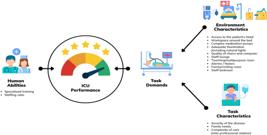
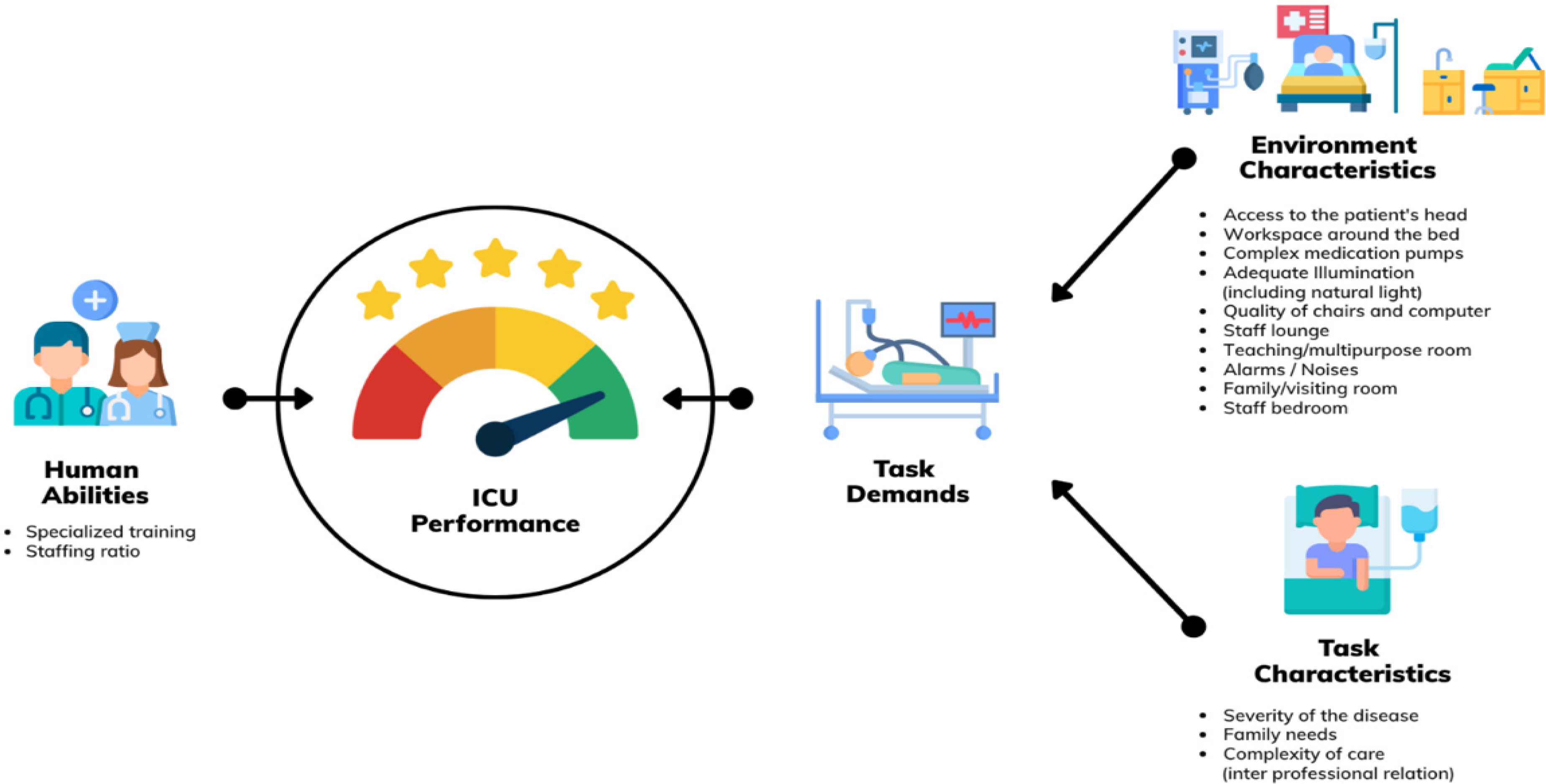 Source: based on the figure by Donchin et al.(