Tele-ICU platform model: point of care equipment telemetry and real-time remote critical assistance
Objective: To describe the requirements for modeling the tele-ICU platform, its development, the process, software, and hardware technologies employed. We also present its performance based on a proof-of-concept in a remote intensive care unit environment.
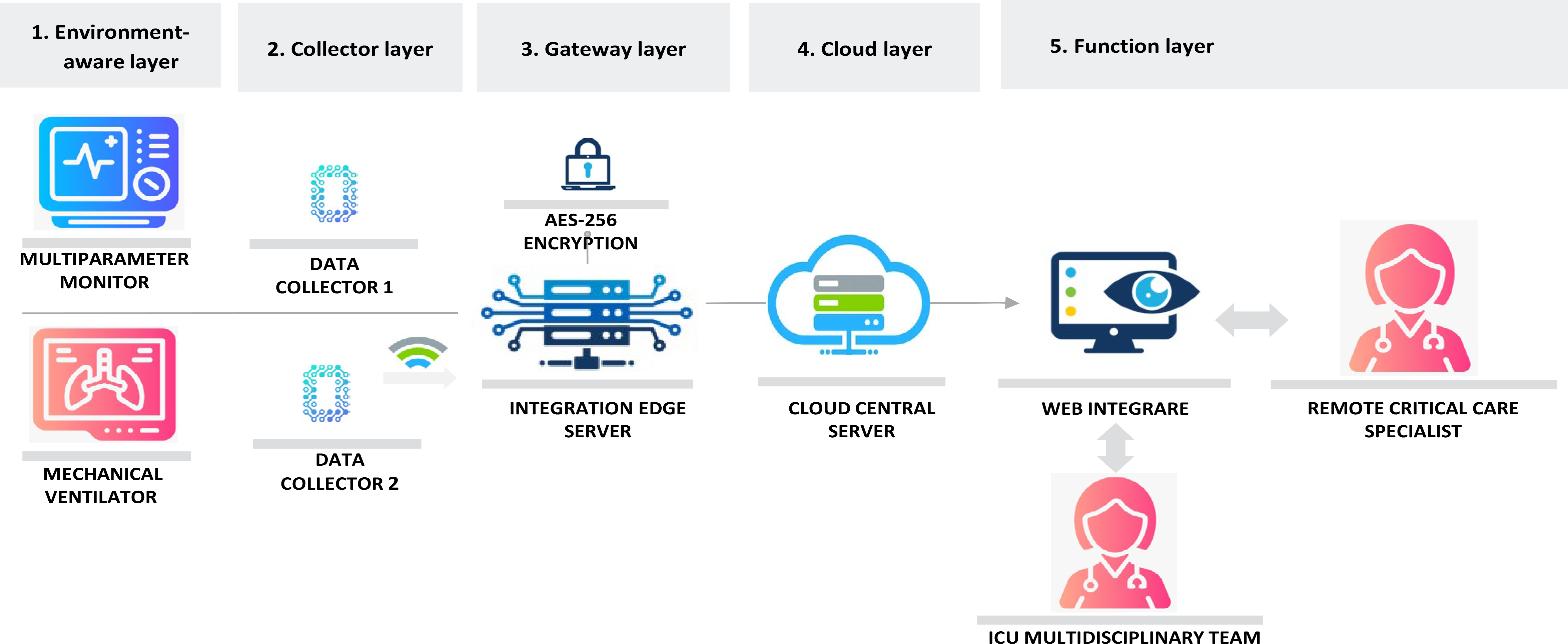
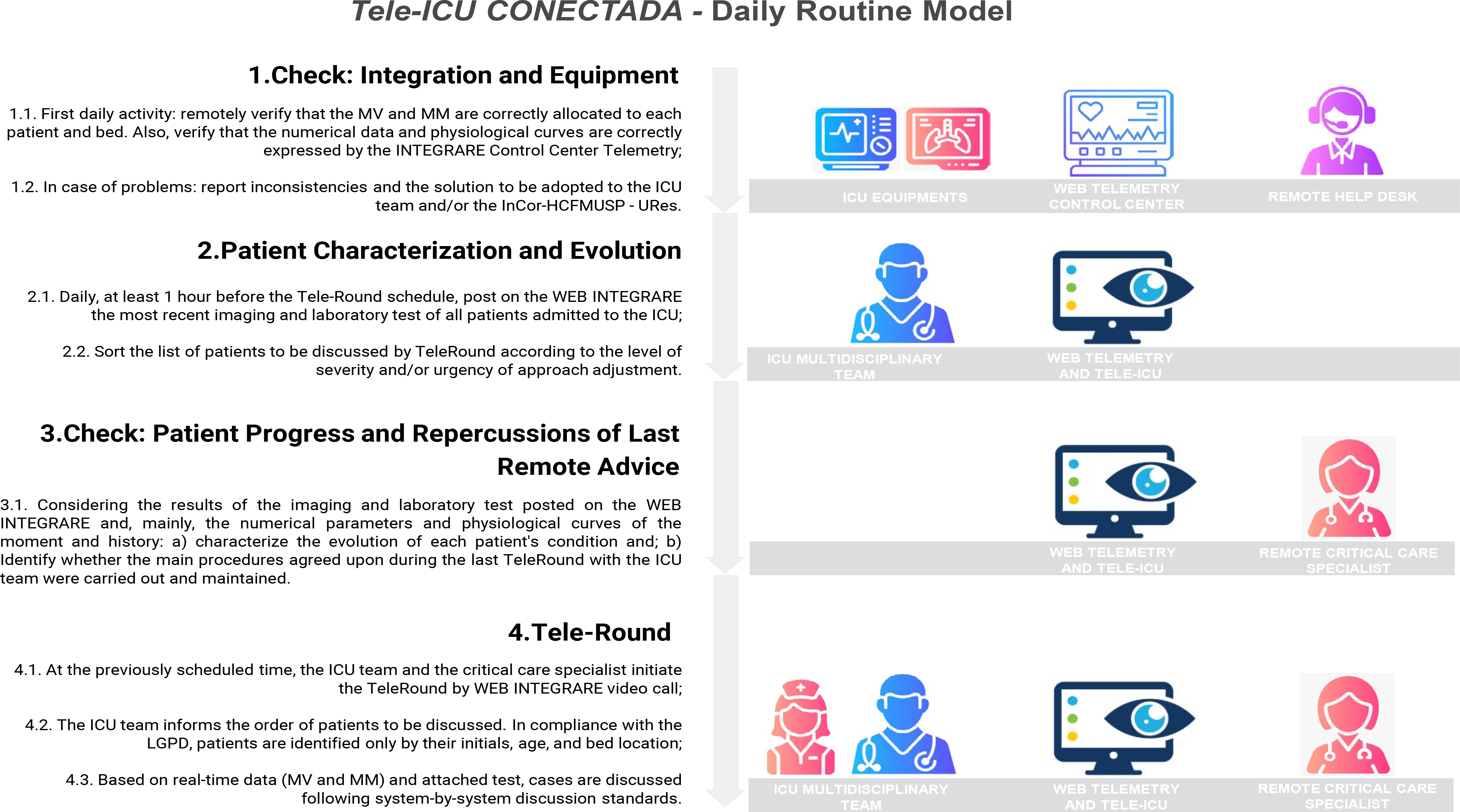
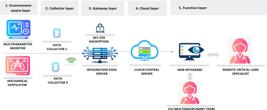
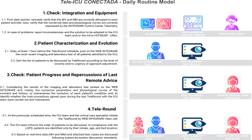
Methods: This multicenter, prospective implementation study was conducted in three Level III Intensive Care Units in distinct Brazilian regions between June 2021 and December 2022. The INTEGRARE®, an Internet of Medical Things-based hardware/software architecture enabling agnostic integration of multiparameter monitors and mechanical ventilators, was deployed to provide continuous high-frequency telemetry, a unified analytical dashboard, and synchronous audiovisual communication for tele-round sessions. The proof-of-concept comprised continuous multimodal monitoring, collaborative tele-round discussions, and structured knowledge transfer. Nineteen months of multiparameter monitors and mechanical ventilators data were processed through a four-step data workflow (edge server, cloud storage, preprocessing, and analytical layer). All clinical, operational, and performance metrics were automatically generated by the platform.
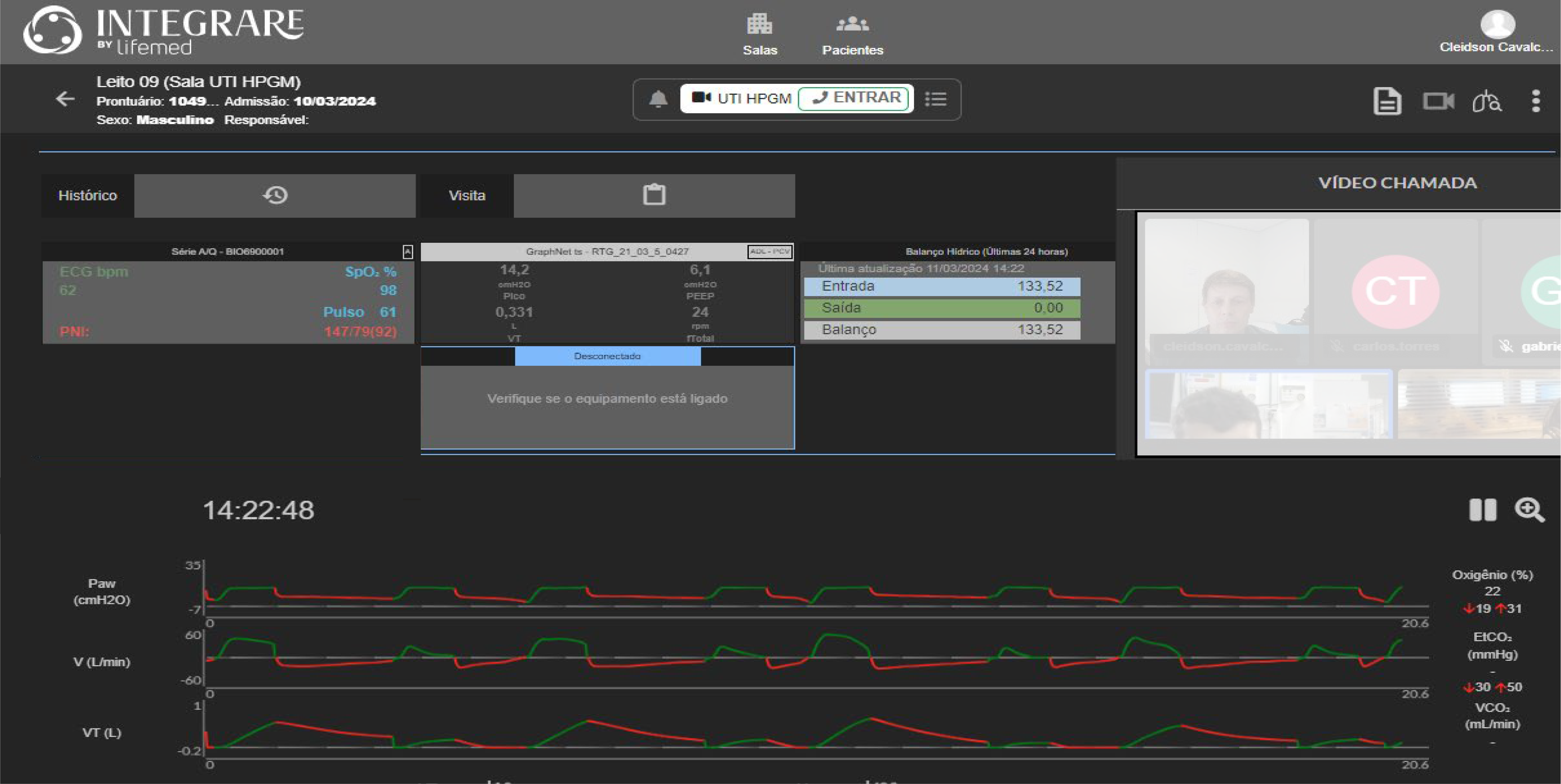
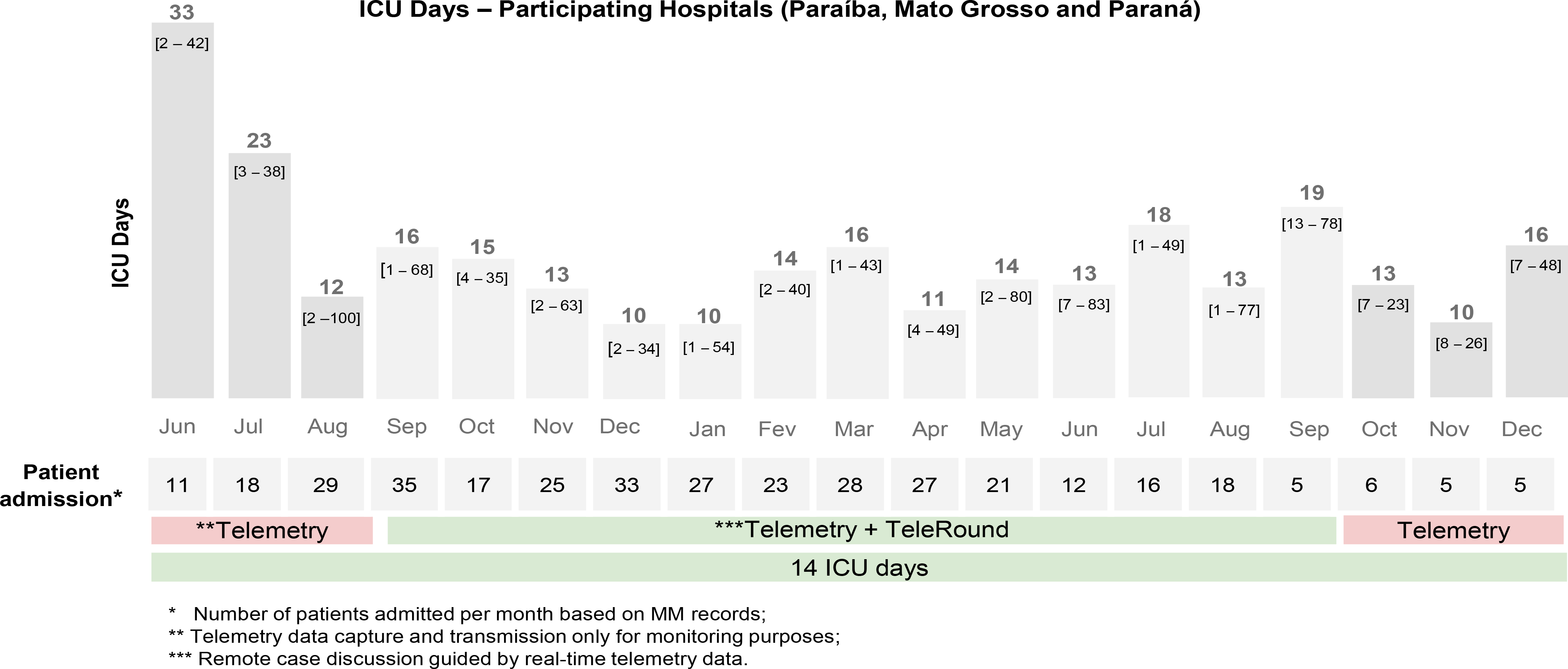
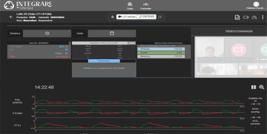
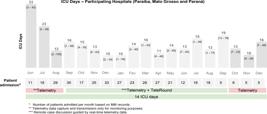
Results: The INTEGRARE® enabled integration of multiparameter monitors and mechanical ventilator devices across 30 intensive care unit beds, generating over 2 billion data points with a median acquisition frequency of ~1 second and cross-device synchronization under 5 seconds. A total of 361 patients were monitored (7,235 intensive care unit-days), with a median intensive care unit stay of 14 days and 11 days on mechanical ventilators among ventilated patients. Tele-round sessions completed 484 hours, with a median of 3 hours and 39 minutes per intensive care unit per week. The platform supported real-time visualization and retrospective review of physiological curves, ventilator mechanics, laboratory results, and imaging within a unified dashboard. High adherence to tele-round routines was observed across multidisciplinary teams, who spontaneously incorporated multimodal telemetry into case discussions. Immediate bedside impact was common, including rapid identification and correction of patients’ ventilator asynchrony.
Conclusion: The Tele-UTI Conectada model provides a technical infrastructure that supports standardization, situation awareness, and collaborative clinical decision-making by integrating real-time telemetry with synchronous audiovisual interaction across heterogeneous intensive care units. Multidisciplinary teams successfully adopted the platform and routinely used it to conduct structured case discussions.
Keywords:
Tele-ICU; Telemetry; Smart-ICU; Tele-rounds; Internet of things; Internet of Medical Things; Software; Telemedicine; Ventilators, mechanical; Clinical decision-making; Intensive care units
 Thumbnail
 Thumbnail
 Thumbnail
 Thumbnail