Synthesis and Characterization of Nb2O3 by Combustion Reaction for Catalytic Application in Biodiesel Production
Abstract
This work presents the synthesis and characterization of niobium pentoxide (Nb₂O₅) obtained by combustion reaction, as well as its application as a heterogeneous catalyst in the production of biodiesel via simultaneous transesterification and esterification reaction (TES). The choice of Nb2O5 is justified by the fact that it is a material with wide applications, as a catalyst for biodiesel production; few reports in the literature can be explored. The vast majority of natural Nb2O5 is extracted in Brazil, in the city of Araxá in Minas Gerais (MG) by the Brazilian Metallurgy and Mining Company (CBMM), as it holds 98.2% of the world’s reserves. The synthesis of Nb2O5 was carried out on a laboratory scale using urea as fuel and niobium ammonium oxalate as precursor. The material obtained was characterized by XRD, FTIR, DG, BET, and SEM, showing a polyphasic structure (T-orthorhombic and TT-pseudohexagonal), polydisperse particle size distribution, surface area of 14.59 m2·g, and predominance of mesopores with a mean diameter of 7.16 nm. Subsequently, Nb2O5 was applied as a catalyst in the production of biodiesel from soybean vegetable oil and residual frying oil, using ethanol and methanol. The conversions into ethyl and methyl esters, densities, and acidity values were analyzed and compared with the standards of the National Petroleum Agency (ANP). The highest conversions were observed for soybean oil using methanol (34.74±0.79%) and residual frying oil using methanol (42.54±1.09%). Although the parameters obtained were below regulatory requirements, the results demonstrated the potential of Nb2O5 as an efficient and low-cost catalyst. The production of biodiesel using alternative and renewable materials highlights the feasibility of applying Nb2O5 in sustainable processes, with the possibility of future optimizations in synthetic routes and reaction conditions.
Keywords:
Nb2O5 or niobium pentoxide; transesterification; microstructure; heterogeneous catalyst; biodiesel; sustainability; or environmental responsibility
INTRODUCTION
Niobium is a material extracted from the mineral columbite whose atomic number 41 occupies the periodic table, discovered in 1801 by the English chemist Charles Hatchett, where it was initially named “columbium”, later in 1844 it was baptized as Niobium by the chemist Heinrich Rose, researcher at the time and in 1950 it was made official by IUPAC (International Union of Pure and Applied Chemistry), facts cited by Lopes’ work et al.1
The extraction of niobium occurs in several regions of the world, but it is in Brazil that the largest mineable deposit of pyrochlore is found, located in Araxá, in the state of Minas Gerais. The Brazilian Metallurgy and Mining Company (CBMM) is a world leader in the production of this element. Due to its versatility, niobium is widely used in different sectors, such as in the composition of metal alloys, in batteries, in the manufacture of special glasses, and in catalytic processes, as highlighted by Bruziquesi et al.2. Niobium can exist in different oxidation states, with niobium pentoxide (Nb2O5) being the most common. This compound has a complex crystal structure, with up to nine recorded polymorphic forms. The most frequent phases include pseudohexagonal (TT-Nb2O5), orthorhombic (T-Nb2O5), tetragonal (M-Nb2O5), and monoclinic (H-Nb2O5) phases, as described by Lage et al.3
Niobium pentoxide can be obtained by different synthesis methods, such as calcination, as presented by Conceição et al.4, who carried out the production of Nb2O5 aiming at its application in the sorption of hydrogen in MgH2. Another technique is hydrothermal synthesis, used in the aldol condensation of carbonyl molecules derived from biomass, which is used as a precursor for fuels, according to Jing et al.5. Alternative methods, such as high-energy grinding, are also applied, as quoted by Barkhordarian et al.6, who synthesized Nb2O5 for use as a catalyst in the hydrogen-magnesium sorption reaction. In addition, routes such as sol-gel and precipitation are used to obtain Nb2O5, another way to obtain pentoxide is by the combustion method. There is a gap in the literature since its use.
Combustion synthesis is an efficient route for obtaining metal oxides, based on an exothermic redox reaction between an oxidizing agent (such as nitrates) and fuel (such as urea), typically self-ignited. This process enables the rapid formation of the crystalline phase at relatively low temperatures, while offering simplicity, low cost, and the production of materials with high surface area due to gas release. Studies such as that of Xing et al.7 demonstrate its effectiveness in the synthesis of structured oxides, indicating that, for Nb2O5, this approach may enhance catalytic properties and contribute to more sustainable and scalable synthesis routes.
In view of the current scenario of polluting gas emissions from the use of fossil fuels, especially in the industrial and automotive sectors, there is a need to search for alternatives based on renewable energy sources. However, conventional biofuel production currently faces limitations, such as low conversion efficiency, high feedstock costs, and limited fuel performance. In addition, the use of food crops in some categories raises concerns related to food security, as highlighted by Atofarati and Enweremadu8. Among the biofuels available, biodiesel is recognized for being environmentally friendly, non-toxic, and non-hazardous, making it a promising alternative to conventional diesel, according to Yang et al.9. However, challenges persist in its production, especially with regard to the efficiency of the transesterification process and the management of the glycerol by-product. In this context, the application of Nb2O5 as a catalyst in biodiesel production emerges as a promising solution, considering that niobium pentoxide can be obtained from sustainable sources and has the potential to improve process performance.
Currently, the application of Nb2O5 in biodiesel production is still little addressed in the literature. However, in the work of Lopes et al.10, it is demonstrated that this oxide is exploited as a catalyst in the valorization of glycerol, a by-product generated during the production of biodiesel by transesterification, due to its high surface area, abundance of Brønsted acid sites, and water tolerance. These characteristics make Nb2O5 promising in the conversion of glycerol into higher value-added compounds, such as acrolein, directly contributing to the use and sustainability of the biodiesel production process. In a complementary way, in the study of Abomohra et al.11, the use of Nb2O5 as a catalyst in the conversion of glycerol, also derived from the synthesis of biodiesel, into lactic acid (LA) is evidenced. In this study, the high Lewis acidity and layered structure of the material favored efficient catalytic reactions. The good performance was attributed to the combination of platinum nanoparticles and the acidic sites present in Nb2O5, which reinforces its applicability in processes integrated into the biodiesel production chain. Finally, in Wu’s study et al.12, Nb2O5 was used as a mesoporous support in a multifunctional catalyst Pt-WOₓ/Nb2O5, to promote the direct conversion of cellulose into ethanol and propanol. The results revealed yields of 50.3% for ethanol and 20.2% for propanol, showing that Nb2O5 was effective in the catalytic process, favoring both the accessibility of the reactants and the stability of the system under mild reaction conditions.
This work aims to study Nb2O5 as a heterogeneous catalyst in the synthesis of sintered biodiesel by combustion reaction at the laboratory scale. The material will be characterized for crystal structure, particle size, porosity, and morphology, correlating them with its catalytic activity. Then, its efficiency in the production of biodiesel from soybean oil and residual oil will be evaluated, in simultaneous reactions of transesterification and esterification (TES) against ethanol and methanol. The study seeks to fill gaps in the method of synthesis and application of Nb2O5, contributing to the development of sustainable and low-cost catalysts.
METHODOLOGY
MATERIALS
For the synthesis of niobium oxide (Nb2O5), urea (CO(NH2)2, 99%, Neon) was used as the fuel agent. The niobium precursor was ammonium niobium oxalate, with the general formula NH4[NbO(C2O4)2(H2O)2], supplied as an aqueous solution by CBMM (Brazilian Metallurgy and Mining Company), Brazil. Distilled water (H2O) was used as the solvent.
For the catalytic tests, commercial soybean oil (Soya) with a general triglyceride composition (C3H5(OCOR)3), residual frying oil obtained from a local commercial establishment, methanol (CH3OH, 99%, Dinâmica), and ethanol (C2H5OH, 99%, Dinâmica) were used.
METHODS
Synthesis of the Nb2O5 catalyst
The combustion synthesis was carried out based on the propellant chemistry approach described by Jain (198113. Initially, 56.26 g of ammonium niobium oxalate NH4[NbO(C2O4)2(H2O)2] and 1.50 g of urea (CO(NH2)2) were mixed in a stainless steel container. Subsequently, 30 mL of distilled water was added, and the mixture was stirred until complete homogenization. The resulting solution was heated on a resistive plate system at approximately 500ºC for 40 min to promote the combustion reaction, leading to the formation of Nb2O5. The temperature was monitored using an infrared pyrometer at regular intervals. The synthesis procedure followed the methodology described in the device patented by Costa and Kiminami, 201214
Thus, the synthesis of the Nb2O5 can be described by the following chemical equation A:
Catalytic evaluation
The final stage of the research involved the production of biodiesel on a laboratory scale, using the Nb2O5 catalyst in simultaneous transesterification and esterification (TES) reactions. Two reaction routes were explored: the first consisted of the use of ethanol, initially with residual frying oil and then with soybean vegetable oil; The second route used methanol, also starting with residual frying oil and, later, with soybean vegetable oil.
The reactions were conducted in a pressurized stainless steel reactor (Parr 4848, 100 mL capacity) under constant stirring at 600 rpm. For each experiment, 30 g of oil were mixed with alcohol at a molar ratio of 1:15 (oil:alcohol), corresponding to 16.49 g of methanol (CH3OH) or 23.74 g of ethanol (C2H5OH). The catalyst loading was 4 wt.% relative to the oil mass (1.20 g).
The reaction mixture (oil+alcohol+catalyst) was heated to 200ºC and maintained at this temperature for 1 h. After the reaction, the system was rapidly cooled by thermal shock. The resulting biodiesel was separated by centrifugation at 3500 rpm to remove the catalyst, followed by purification with warm distilled water (~75ºC). Finally, the product was dried in an oven at 110ºC for 30 min, with manual stirring every 5 min.
Finally, the biodiesel obtained was characterized in relation to density, acid value (AI), and composition, using gas chromatography (GC). The density was determined according to ASTM D4052 using a portable hydrometer from Anton Paar, model DMA 35, Version 3 (Anton Paar, Graz, Austria). The acidity value was determined by the official AOCS method, Cd 3d-63.
CHARACTERIZATION
The crystalline structure of the Nb2O5 catalyst was analyzed by X-ray diffraction (XRD) using a BRUKER D2 PHASER diffractometer with Cu-Kα radiation (λ=1.54 Å), operating at 30 kV and 10 mA. Data collection was performed over a 2θ range of 10º to 70º, with an angular step of 0.016º and a counting time of 1.000 s per step. Phase identification and crystallinity determination were conducted using the ICDD PDF-2 (2019) database and processed with DiffracPlus Suite Eva software. The MAUD software15 was used to perform the Rietveld refinement of the Nb2O5 powder. This process included determining the concordance factors (Rwp and GOF (S)).
Particle size distribution was evaluated using the laser diffraction technique with an SZ-100 series nanoparticle analyzer, HORIBA Scientific. Fourier-transform infrared (FTIR) spectroscopy was performed using a BRUKER Vertex 70 spectrometer. Spectra were recorded in transmittance mode over a wavenumber range of 2000 to 200 cm-1, with a total of 64 scans.
The textural properties of the Nb2O5 catalyst were evaluated through nitrogen adsorption-desorption analysis using a Micromeritics AutosorbIQ system. The specific surface area was determined by the Brunauer-Emmett-Teller (BET) method, while pore volume and diameter were assessed using the Barrett-Joyner-Halenda (BJH) method. The morphological characteristics of the catalyst were examined using scanning electron microscopy (SEM) with a Tescan Vega3 microscope.
The composition of the feedstock and the percentage of ethyl esters were analyzed using gas chromatography on a VARIAN 450c chromatograph, equipped with a flame ionization detector. A capillary column (Varian Ultimetal ‘Select Biodiesel Glycerides RG’; dimensions: 15m x 0.32mm x 0.45mm) served as the stationary phase. The initial injection and oven temperatures were set at 100ºC and 180ºC, with the detector maintained at 380ºC.
RESULTS AND DISCUSSIONS
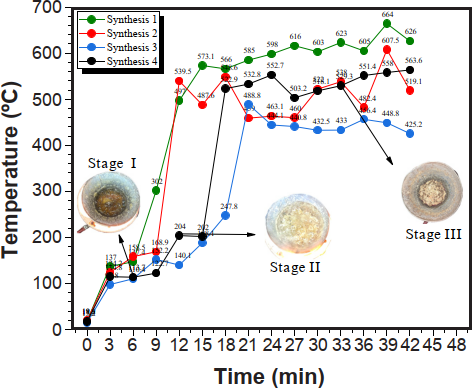
Figure 1 illustrates the variation in temperature as a function of time, constructed from measurements taken every three minutes during each of the syntheses of the Nb2O5 catalysts conducted in the laboratory.

Time x temperature graph of the process of four syntheses of the Nb2O5 catalysts by combustion reaction.
The syntheses of the Nb2O5 catalysts were performed using the combination of two reagents, with niobium ammonium oxalate as the precursor source of the Nb ion and urea as fuel. The reactions showed endothermic characteristics related to the dilution of the reagents, with initial temperatures of approximately 18ºC. As the temperature increased over time, it was possible to identify three stages of the reaction, where there was a variation in its physicochemical state.
In the first stage, around 110ºC, the process of eliminating humidity occurs; with the continuous increase in temperature, the second stage begins, where the mixture begins to expel gases at approximately 204ºC, including ammonia, after the emission of gases begins, the phenomenon of transition from the liquid to the viscous state. From this, with the progressive increase in temperature, there is an increase in viscosity for the solid state (powder), at temperatures close to 470ºC, being identified as stage three of the reaction in the graph.
The thermal behavior recorded during the experiment is in line with the literature. In the work of Lopes et al.1, it was mentioned that Nb2O5 can assume three main phases: TT (pseudohexagonal) (up to 900ºC), T (orthorhombic) (from 900 to 1100ºC), and M (monoclinic) (above 1100ºC), associated with the polymorphism of the material. These variations are directly related to the synthesis conditions, such as heating time, temperature, and type of reagent used, influencing the structure of the oxide.
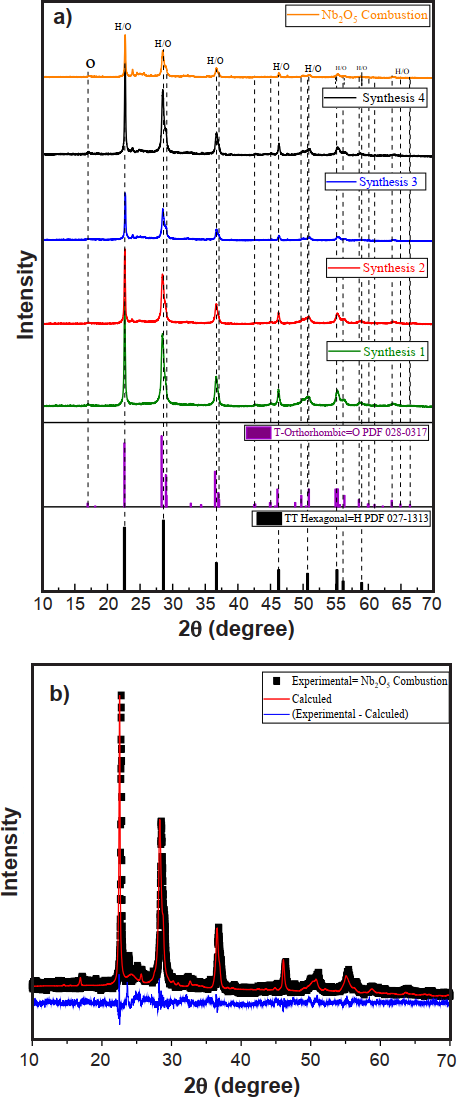
Figure 2 illustrates the X-ray diffractograms of the Nb2O5 catalysts obtained in the combustion syntheses carried out in a pilot plant, as well as the respective crystal structures present.
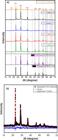
(a) X-ray diffractograms of Nb2O5 synthesized by combustion reaction, (b) X-ray diffractogram (XRD) of the Nb2O5 mixture, together with the calculated pattern obtained by Rietveld refinement.
The analysis of Figure 2 (a) revealed that the materials obtained presented two distinct crystalline configurations: one orthorhombic and the other pseudohexagonal of Nb2O5. These phases were confirmed based on the standard forms of the PDF database: nº 00-028-0317 and nº 00-027-1313, respectively. The Rietveld refinement results (Figure 2 (b)) demonstrated that the Nb2O5 sample exhibits a biphasic character, consisting of hexagonal (54.33%) and orthorhombic (45.67%) phases, evidencing the coexistence of crystalline polymorphs in similar proportions. This behavior is in agreement with the study by Shao et al.16, in which it was reported that the ratio between the hexagonal and orthorhombic Nb2O5 phases can be modulated by synthesis conditions and thermal treatment, directly influencing the structural and functional properties of materials obtained by the sol-gel method. The slight predominance of the hexagonal phase observed in the present work suggests that the synthesis route employed favored the formation of metastable structures or phases associated with lower crystallization temperatures, whereas the significant presence of the orthorhombic phase indicates partial progression of structural reorganization toward the thermodynamically more stable phase.
Regarding the statistical refinement parameters, the obtained values of Rwp=15.25% and Sig (S) or (GOF)=1.39 indicate good agreement between the experimental and calculated profiles, especially considering that this is a biphasic system with complex structures and overlapping reflections. According to classical Rietveld refinement criteria, Rwp values in the range of 10-20% are often considered acceptable for laboratory X-ray diffraction applied to multiphase ceramic materials. Furthermore, the Sig value close to unity reinforces the overall consistency of the adopted model17.
Thus, together with the literature, these results confirm that the material synthesized by the combustion reaction presents a mixed crystalline Nb2O5 structure composed of hexagonal and orthorhombic phases, and that the performed refinement adequately represents the biphasic nature of the obtained catalyst.
Although the syntheses were performed with different proportions of reactants, the patterns obtained by XRD indicated similar structural behaviors. Based on this compatibility, the products of the different syntheses were gathered in a single ceramic sample, without any change in the previously observed structural characteristics.
Tail et al.18, synthesized Nb2O5 using the Pechini and sol-gel methods. In the first method, 5 g of Nb(OC2H5)5 dissolved in 90 mL of absolute ethanol were used under vigorous agitation; then, 5 mL of ammonium hydroxide was added, initiating the precipitation process. In the second method, the same mass of Nb(OC2H5)5 was maintained, dissolved in 94 mL of absolute ethanol, with the addition of 1 mL of distilled water to the system.
The XRD results revealed that the samples obtained by the Pechini method, heat-treated at 500ºC, showed low crystallinity, with patterns corresponding to the low-temperature pseudohexagonal phase (TT-Nb2O5). The samples prepared via the sol-gel method showed a progressive increase in crystallinity with the increase in the calcination temperature, and the orthorhombic phase of Nb2O5 was identified in the samples calcined at 650ºC and 750ºC. The XRD patterns of the samples at 500ºC, both by Pechini and by sol-gel, did not show well-defined peaks, indicating the absence of well-developed crystalline phases at this temperature. In general, the data indicate that both synthesis routes lead to the obtaining of pure Nb2O5, free of impurities from the starting precursors, and the crystalline phase is dependent on the heat treatment temperature and the degree of crystallinity reached. Thus, our results corroborate the existing literature. The product obtained by combustion reaction was Nb2O5, a material with a polyphase structure with the presence of orthorhombic and pseudohexagonal crystalline phases.
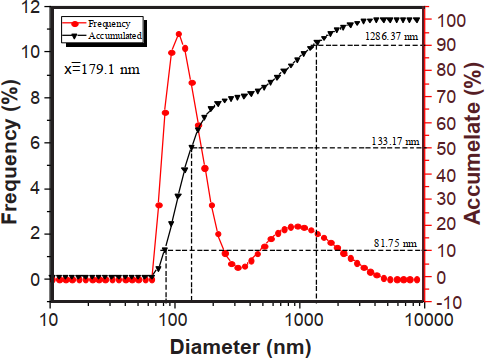
Figure 3 illustrates the particle size distribution curve of the Nb2O5 catalyst, showing the variation in particle size as a function of the catalyst microstructure.
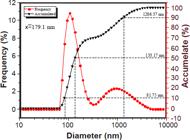
Analyzing Figure 3, it is observed that the frequency curve presents a polymodal configuration, indicating significant variations in particle size. The cumulative curve reveals that the particle sizes corresponding to d10 (10%), d50 (50%), and d90 (90%) are 81.75 nm, 133.17 nm, and 1286.37 nm, respectively. These values suggest that the material is predominantly composed of fine particles. The accumulated curve profile also indicates a relatively narrow size distribution, which can be beneficial for the consistency of catalyst performance in chemical reactions. In addition, it was determined that the average particle size is 179.1 nm.
On the other hand, in the study by Davi et al.15, Nb2O5 was synthesized by the Pechini method and heat-treated between 500ºC and 700ºC. The sample calcined at 500ºC had a mean diameter of 827.63 nm, while the sample at 600ºC showed a smaller mean diameter, of 642.17±37 nm, indicating a greater tendency to cluster formation. The sample calcined at 700ºC had a significant increase in particle size, reaching 1022.57±46.8 nm, due to a more intense sintering at high temperatures.
The difference between the mean particle size obtained in this study and the values observed by Raba-Páez et al.19, can be attributed to the synthesis method and heat treatment conditions. Our proposal resulted in predominantly finer particles, while the study by Raba-Páez et al. suggests that higher temperatures and the Pechini method may lead to the formation of larger and less homogeneous clusters.
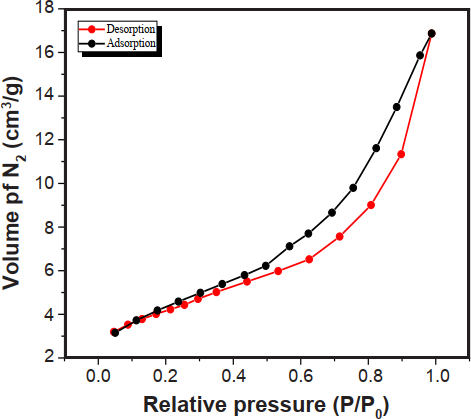
Figure 4 illustrates the N2 adsorption-desorption isotherms of the Nb2O5 catalyst.
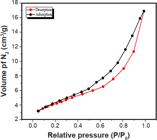
The material has a type IV isotherm profile, with a loop of H3 hysteresis, characteristic of systems formed by agglomerates of particles that result in porous structures in the mesopores range (2-50 nm), according to the classification of the International Union of Pure and Applied Chemistry (IUPAC) (Donohue and Aranovich)20), (21.This characteristic is corroborated by the results obtained by SEM (Figure 6).
The combination of the data obtained by the N2 adsorption-desorption isotherms with the BET and BJH measurements reveals that the Nb2O5 catalyst has a total pore volume of 0.02610 cm3·g-1, pore diameter 7.16 nm, and a specific surface area of 14.59 m2·g-1. indicating a structure with the potential for significant interactions on the surface, which is important for its effectiveness as a catalyst.
Similar results were observed in Chen’s study et al.22, in which Nb2O5 was synthesized by evaporation-induced self-assembly (EISA) and calcined at 400ºC, 450ºC and 500ºC. The samples had pore sizes of 8.0 nm and 12.3 nm. These data demonstrate that, even using different synthesis routes, the production of Nb2O5 at moderate temperatures favors the formation of mesoporous structures with dimensions comparable to those observed in this study.
On the other hand, in Raba’s study et al.18, Nb2O5 was synthesized by sol-gel and Pechini routes, being calcined at 750ºC, which resulted in the formation of the orthorhombic crystalline phase. Under these conditions, BET analyses revealed surface areas of less than 10 m2·g-1. This result was attributed to the coalescence of the particles and the growth of pores induced by high temperatures, which compromises the porosity of the material.
The results obtained in this work demonstrate that the synthesis by combustion reaction is more efficient in preserving the porosity and surface area of the Nb2O5 compared to the sol-gel and Pechini routes used by Raba et al.18.
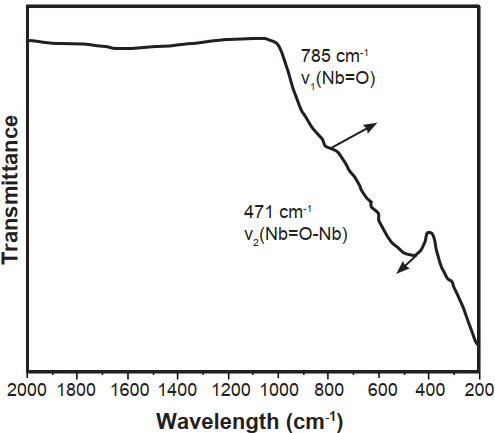
Figure 5 illustrates the FTIR spectrum of the Nb2O5 catalyst, showing the main patterns of infrared vibrational bands with characteristic positions, specifically in the wavenumber range from 2000 cm-1 to 200 cm-1.
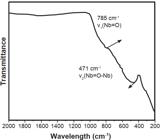
The vibration band at 1628 cm-1 can be attributed to the presence of water molecules adsorbed (Nb-OH) on the surface of the material. The band observed at 785 cm-1 is associated with the stretching of the terminal bonds of the Nb=O group, a characteristic frequently found in distorted octahedra. The band at 471 cm-1 corresponds to the symmetric stretching vibrations of the Nb-O-Nb group, related to the network of NbO2 octahedra that share vertices or edges. Together, these bands constitute the structural fingerprint of Nb2O3, confirming the presence of interconnected metal-oxygen (Nb-O) units. Thus, the observed vibrational patterns are in agreement with those reported in the literature10), (23 and24.
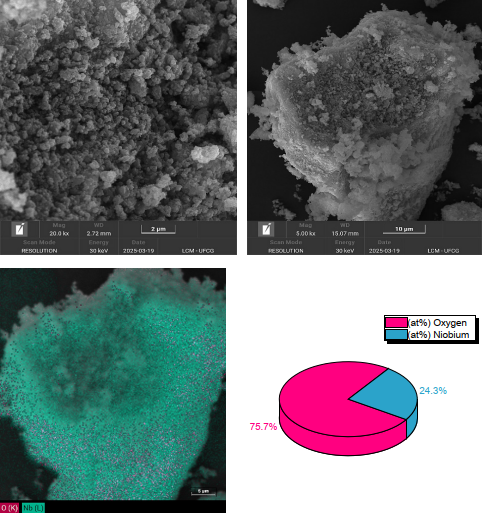
Figure 6 illustrates the SEM images with EDS mapping of the Nb2O5 catalyst.
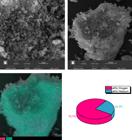
The analysis of the mycographies in Figure 6 (a-b) indicates that the catalyst Nb2O5 presents a morphology composed of an agglomeration of particles of varying sizes. This characteristic is related to the simultaneous presence of orthorhombic and pseudohexagonal crystal structures, as identified in the XRD (Figure 2b). Although many particles do not have well-defined geometric shapes, there is a tendency towards spherical morphology, typical of polydisperse materials. These observations are consistent with Soares’ results et al.25, which report that the Nb2O5 sample prepared by solid-state reaction and by the Laser Float Zone technique, sintered up to 800ºC, also exhibited predominantly spherical particles of varying sizes.
Thus, a similarity in morphology between our oxide and Nb2O5 obtained by Soares is evident et al.25, regardless of the synthesis route used. In addition, Soares et al. suggest that spherical morphology may be associated with the presence of the orthorhombic phase of Nb2O5.
Figure 6 (c-d) shows the EDS spectrum of the Nb2O5 catalyst. The identified elements corroborate the crystallographic phases detected by XRD (Figure 1). The catalyst is composed predominantly of niobium (Nb) and oxygen (O), with no other elements detected, confirming the efficiency of the combustion method.
Table I summarizes the preliminary results obtained from the conversion into esters, density, and acidity index (A.I) of the biodiesels produced through the simultaneous TES reactions. The reactions were conducted by the ethyl and methyl routes, using soybean vegetable oil and frying residual oil as triglyceride sources, in the presence of the catalyst Nb2O5 obtained by combustion reaction.
Catalytic tests in the production of biodiesel by the TES method, at 1 h and 200ºC, using Nb2O5 Combustion.
According to ANP Resolution No. 894/2022 (National Agency of Petroleum, Natural Gas and Biofuels), commercial biodiesel must meet specific quality criteria, including: minimum conversion of 96.5% into esters (m/m), acidity index less than 0.50 mg KOH/g, and density between 880 and 900 kg/m3 at 20ºC according to ANP technical standard26.
In the present study, none of the reactions reached the minimum conversion required by the ANP, with values ranging from 1.95 to 42.54%. The highest conversion was observed in the reaction with methanol and frying residual oil (RE04), while the lowest occurred in the reaction with ethanol and soybean vegetable oil (RE01). These results indicate that, under the conditions employed, the methyl route was more efficient than the ethyl route, and that the use of frying oil did not necessarily compromise the conversion performance, which ratifies its potential as an alternative and sustainable raw material. Although the parameters do not yet meet the regulatory requirements, the results are promising, especially considering the use of a low-cost and easy-to-obtain catalyst, as well as economically viable raw materials, such as residual frying oil. Further studies should evaluate several reaction parameters, such as time, temperature, and molar ratio between the reactants, among others, in order to optimize the conditions for obtaining biodiesel using this catalytic system.
The density of the esters obtained varied between 909.9 kg/m3 and 918.1 kg/m3, with all samples outside the typical range for biodiesel, according to the specifications of the ANP standard (which allows values between 850 and 900 kg/m3 for pure biodiesel. The samples produced with soybean vegetable oil (RE01 and RE02) showed slightly higher densities, especially the reaction with ethanol (RE01), which may be related to the lower conversion into esters and greater presence of residual compounds of the original oil of high molecular weight.
As for the acidity index (A.I.), there is a marked contrast between soybean and frying oils. The reactions with soybean oil (RE01 and RE02) showed very low acidity values (0.54%), which indicates good quality of the final product in terms of chemical stability, in addition to a lower content of free fatty acids. On the other hand, the products obtained from frying oil (RE03 and RE04) exhibited high acidity values (7.92% and 6.01%), suggesting a lower efficiency in the conversion of free fatty acids into esters, possibly due to the greater degradation of the oil by previous use, which hinders the conversion reaction into ester.
Table II lists recent studies found in the literature using the heterogeneous catalyst of Nb2O5 in reactions for biodiesel production.
Selection of articles focused on the application of Nb2O5-supported catalysts for the processing of biodiesel, followed by its raw material and respective conversion into esters.
Based on Table II, although the conversion into esters obtained in this study (42%) was lower than that observed in other studies listed, this result should be interpreted in the light of the particularities of the catalyst and the experimental conditions employed. Synthesis via the combustion method, applied to Nb2O5, has advantages such as simplicity, low cost, and potential scalability, but also results in specific textural and morphological characteristics that may require additional optimization to maximize catalytic activity. In addition, the use of a mixture of residual raw materials (soybean oil and residual oil) introduces high variability in composition and impurity content, a factor that can impact conversion efficiency. Even so, the relevance of this work lies in demonstrating the feasibility of a catalyst produced by a more sustainable synthetic route, paving the way for future studies of structural modification and adjustment of reaction parameters that can significantly increase the conversion, reinforcing the potential for practical application of the developed material.
CONCLUSION
The heterogeneous catalyst based on Nb2O5, synthesized by combustion reaction at approximately 500ºC, showed a polyphasic crystal structure, with pseudohexagonal and orthorhombic phases, an average particle size of 179.1 nm, specific surface area of 14.59 m2·g, irregular morphology, and microstructure with mixed porosity, including mesopores. When applied in simultaneous transesterification and esterification (TES) reactions using soybean oil and frying oil as raw materials, the catalyst showed conversions into esters below the limits established by the ANP. However, the results demonstrated the potential of the process, highlighting the use of renewable raw materials and a low-cost and easy-to-obtain catalyst. Future studies can focus on optimizing the reaction conditions and adjusting the catalytic properties to improve the efficiency of the system.
ACKNOWLEDGMENTS
The authors wish to thank CAPES (Coordination for the Improvement of Higher Education Personnel), CNPq (National Council for Scientific and Technological Development) for the scholarships process [168744/2023-6 and 407850/2022-8] and CBMM (Brazilian Metallurgy and Mining Company).
DATA AVAILABILITY
The data that support the findings of this study are available from the corresponding author upon reasonable request.
REFERENCES
- 1 O.F. Lopes, V.R.d. Mendonça, F.B. Silva, E.C. Paris, C. Ribeiro, Química Nova, 38 (2015) 106-117.
- 2 C.G.O. Bruziquesi, J.G. Balena, M.C. Pereira, A.C. Silva, L.C.A. Oliveira, Química Nova, 42 (2019) 1184-1188.
- 3 M.D.A. Lage, G.T.M. Alvarenga, D.B. F. Neto, G.C. Silva, C.R. Souza, S.D.F. Rocha, Química Nova, 48 (2025).
- 4 M.O.T. da Conceição, M.C. Brum, D.S. dos Santos, M.L. Dias, Journal of Alloys and Compounds, 550 (2013) 179-184.
- 5 Y. Jing, Y. Xin, Y. Guo, X. Liu, Y. Wang, Chinese Journal of Catalysis, 40 (2019) 1168-1177.
- 6 G. Barkhordarian, T. Klassen, R. Bormann, Scripta Materialia, 49 (2003) 213-217.
- 7 S. Xing, S. Song, J. Xiang, Optik, 208 (2020) 164526.
- 8 E.O. Atofarati, C.C. Enweremadu, Fuel, 403 (2026) 136100.
- 9 J. Yang, S. Tao, Y. Bai, M. Dou, G. Chen, Y. Tang, Fuel, 404 (2026) 136211.
- 10 A.M.S. Lopes, M.A.d. N. Júnior, A. Valentini, S.B.C. Pergher, T.P. Braga, Catalysis Today, 451 (2025) 115228.
- 11 A.E.-F. Abomohra, M. Elsayed, S. Esakkimuthu, M. El-Sheekh, D. Hanelt, Progress in Energy and Combustion Science, 81 (2020) 100868.
- 12 D. Wu, Y. Liu, X. Zhang, J. Liu, Q. Zhang, L. Ma, L. Chen, Applied Catalysis A: General, 699 (2025) 120275.
- 13 S. Jain, K. Adiga, V.P. Verneker, Combustion and flame, 40 (1981) 71-79.
- 14 A. Costa, R. Kiminami, Revista de Propriedade Industrial-RPI, depositada em 25 (2012) 002181-002183.
- 15 A.I. Saville, A. Creuziger, E.B. Mitchell, S.C. Vogel, J.T. Benzing, J. Klemm-Toole, K.D. Clarke, A.J. Clarke, Integrating materials and manufacturing innovation, 10 (2021) 461-487.
- 16 R. Shao, Z. Cao, Y. Xiao, H. Dong, W. He, Y. Gao, J. Liu, RSC Advances, 4 (2014) 26447-26451.
- 17 L. McCusker, R. Von Dreele, D. Cox, D. Louër, P. Scardi, Applied Crystallography, 32 (1999) 36-50.
- 18 A.M. Raba, J. Bautista-Ruíz, M.R. Joya, Materials Research, 19 (2016).
- 19 A.M. Raba-Páez, C. Falcony-Guajardo, M. Rincón-Joya, Respuestas, 21 (2016) 80-91.
- 20 M.D. Donohue, G.L. Aranovich, Advances in Colloid and Interface Science, 76-77 (1998) 137-152.
- 21 D. Havard, R. Wilson, Journal of Colloid Interface Science, 57 (1976) 276-288.
- 22 X. Chen, T. Yu, X. Fan, H. Zhang, Z. Li, J. Ye, Z. Zou, Applied Surface Science, 253 (2007) 8500-8506.
- 23 G. Aimaiti, Y. Ma, Y. Shi, X. Wang, S. Wang, Z. Wang, Y. Li, J. Li, X. Qi, X. Chen, Materials Science in Semiconductor Processing, 160 (2023).
- 24 R.D.M. Ferreira, R. Brackmann, E.B. Pereira, R.D. Costa da Rocha, Biocatalysis and Agricultural Biotechnology, 30 (2020).
- 25 M.R.N. Soares, S. Leite, C. Nico, M. Peres, A.J.S. Fernandes, M.P.F. Graça, M. Matos, R. Monteiro, T. Monteiro, F.M. Costa, Journal of the European Ceramic Society, 31 (2011) 501-506.
- 26 G.N.e.B. Agência Nacional do Petróleo, Especificações nacionais do biodiesel B100, 2022.
- 27 H.-W. Chao, C.-Y. Hsu, H.-C. Hsu, S.-D. Tsai, Y.-X. Liu, T.-H. Chang, Applied Catalysis O: Open, 207 (2025) 207066.
- 28 D.C. Cubides-Román, A.F. Constantino, G.F. David, L.F. Martins, R.B.d. Santos, W. Romão, A. Cunha, V. Lacerda, Journal of the Brazilian Chemical Society, 30 (2019).
- 29 C.C.A. Loures, M.S. Amaral, P.C.M. Da Rós, S.M.F.E. Zorn, H.F. de Castro, M.B. Silva, Fuel, 211 (2018) 261-268.
- 30 S.B. Putla, P. Subha, B. Swapna, N. Singh, P. Sudarsanam, Catalysis Communications, 186 (2024) 106827.
- 31 Rozina, O. Emmanuel, M. Ahmad, S. Jabeen, S. Ahmad, A.A. Ahuchaogu, Waste Management Bulletin, 2 (2024) 288-301.
- 32 V.L. de Brito, M.A. Gonçalves, H.C.L. dos Santos, G.N. da Rocha Filho, L.R.V. da Conceição, Renewable Energy, 215 (2023) 118947.
- 33 Y.-M. Dai, Y.-Y. Li, L. Jia Hao, B.Y. Chen, C.-C. Chen, Journal of Environmental Management, 299 (2021) 113592.
-
*
Paper presented at the 69th CBC (https://abceram.org.br/69cbc/)