
 Impact of COVID-19 on cognitive function of survivors after intensive care hospitalization: prospective cohort
ABSTRACT
Objective: To analyze the impact of COVID-19 on cognition in adults at 14, 30, and 90 days after discharge from the Intensive Care Unit.
Method: Prospective cohort study with 167 patients aged 18 years or older, assessed using Pfeiffer’s Short Portable Mental Status Questionnaire, with data from hospitals in the Eastern region of the state of Paraná, Brazil, between 2021 and 2022. For data analysis, Friedman’s Test was used to compare paired samples across the three collection points, and the Mann-Whitney Test was used to compare cognitive performance between men and women.
Results: The mean age was 49.3 years, with the most frequent age group being 40-49 years; 52.7% were male, and the mean length of hospitalization was 16.6 days. Cognitive alterations persisted, and female participants showed a worse recovery profile.
Conclusion: Recovery was satisfactory. Three months after ICU discharge, 4.1% of participants still presented mild impairments considering the limitations reported at the beginning of the study.
KEYWORDS:
COVID-19; Intensive Care Units; Cognition; Cognitive Dysfunction; Mental Status and Dementia Tests
HIGHLIGHTS
Longitudinal behavior of cognitive dysfunction after the acute phase of COVID-19.
Worse cognitive trajectory among women.
Satisfactory cognitive recovery three months after ICU discharge.
RESUMO
Objetivo: Analisar o impacto da COVID-19 sobre a cognição em adultos aos 14, 30 e 90 dias após alta da Unidade de Terapia Intensiva.
Método: coorte prospectiva com 167 pacientes maiores de 18 anos, avaliados, por meio do Short Portable Mental Status Questionnaire de Pfeiffer, com dados de hospitais da região Leste no Estado do Paraná - Brasil, no período entre 2021 e 2022. Para a análise dos dados, utilizou-se o Teste de Friedman, para comparar amostras pareadas nos três momentos de coleta, e o Teste de Mann-Whitney, para comparar o comportamento cognitivo entre homens e mulheres.
Resultados: Apurou-se uma média de idade de 49,3 anos, faixa etária de 40 a 49 anos, sendo 52,7% do sexo masculino, com tempo médio de internação de 16,6 dias. Persistiram alterações cognitivas e o sexo feminino apresentou pior perfil evolutivo.
Conclusão: A recuperação foi satisfatória. Após três meses de alta de Unidade de Terapia Intensiva, 4,1% dos participantes apresentavam incapacidades leves considerando as limitações relatadas no início do estudo.
DESCRITORES:
COVID-19; Unidades de Terapia Intensiva; Cognição; Disfunção Cognitiva; Testes de Estado Mental e Demência
HIGHLIGHTS
Comportamento longitudinal da disfunção cognitiva após fase aguda da COVID-19.
Pior perfil de evolução cognitiva entre as mulheres.
Recuperação cognitiva satisfatória após 3 meses de alta de UTI.
RESUMEN
Objetivo: Analizar el impacto de la COVID-19 sobre la cognición en adultos a los 14, 30 y 90 días después del alta de la Unidad de Cuidados Intensivos.
Método: Cohorte prospectiva con 167 pacientes mayores de 18 años, evaluados mediante el Short Portable Mental Status Questionnaire de Pfeiffer, con datos de hospitales de la región este del estado de Paraná (Brasil), en el periodo comprendido entre 2021 y 2022. Para el análisis de los datos, se utilizó la prueba de Friedman para comparar muestras emparejadas en los tres momentos de recogida, y la prueba de Mann-Whitney para comparar el comportamiento cognitivo entre hombres y mujeres.
Resultados: Se calculó una edad media de 49,3 años, con un rango de edad de 40 a 49 años, siendo el 52,7 % del sexo masculino, con una estancia media de 16,6 días. Persistieron los cambios cognitivos y las mujeres presentaron un peor perfil evolutivo.
Conclusión: La recuperación fue satisfactoria. Tras tres meses de alta de la Unidad de Cuidados Intensivos, el 4,1 % de los participantes presentaban discapacidades leves teniendo en cuenta las limitaciones descritas al inicio del estudio.
DESCRIPTORES:
COVID-19; Unidades de Cuidados Intensivos; Cognición; Disfunción Cognitiva; Pruebas de Estado Mental y Demencia
HIGHLIGHTS
Comportamiento longitudinal de la disfunción cognitiva tras la fase aguda de la COVID-19.
Peor perfil de evolución cognitiva entre las mujeres.
Recuperación cognitiva satisfactoria tras 3 meses del alta de la UCI.
INTRODUCTION
COVID-19 has become the fifth documented pandemic since the influenza pandemic of 1918 and spread rapidly worldwide1-2, with more than 522 million confirmed cases and over 6 million deaths reported globally by May 20223.
With the progression to more severe forms of the disease, characterized by lower oxygen saturation, hospitalization in Intensive Care Units becomes inevitable4-5. Survivors of severe critical illness following intensive care commonly develop a combination of cognitive dysfunction associated with fatigue, with up to 80% of patients experiencing new or worsened cognitive alterations after hospital discharge6. This condition is intensified in the context of COVID-19, where cognitive changes and delirium have been shown to result from the systemic inflammatory response to SARS-CoV-27.
Although most individuals infected with COVID-19 recover, a significant proportion continue to experience symptoms and complications beyond the acute illness. Patients with “long COVID” present a wide range of physical, mental, and psychological symptoms8-9, disturbances that had previously been associated with a different patient population than that observed during the pandemic10.
Thus, the world continues to face the diverse clinical manifestations of SARS-CoV-2 infection, with patients experiencing persistent symptoms that extend beyond four weeks after the initial episode, among which cognitive impairment is a frequent complaint11-12.
Cognitive assessment is essential to better guide care practices for populations subjected to sensory deprivation resulting from acute or chronic illness. In this context, Pfeiffer’s Short Portable Mental Status Questionnaire (SPMSQ) stands out as a cognitive screening and diagnostic support tool that is easy to administer and demonstrates high validity and reliability, particularly in the prevention of dementia13. This instrument was used in the present study to analyze the impact of COVID-19 on cognition at 14, 30, and 90 days after discharge from the Intensive Care Unit (ICU).
METHOD
This was a quantitative, prospective cohort study that assessed cognitive impairment in patients recovering from COVID-19 who required admission to Intensive Care Units (ICUs). The study was conducted and reported in accordance with the Strengthening the Reporting of Observational Studies in Epidemiology (STROBE) guidelines for cohort studies. The STROBE checklist items were considered to ensure transparency and quality in reporting, from study design and participant selection to data collection, analysis, presentation, and interpretation of results.
The initial approach to potential participants was carried out by telephone contact after ICU discharge. At that time, individuals were invited to participate in the study and were informed about its objectives, methods, and ethical implications. Data collection was conducted through telephone interviews administered by a trained research team, at three time points: 14, 30, and 90 days after ICU discharge.
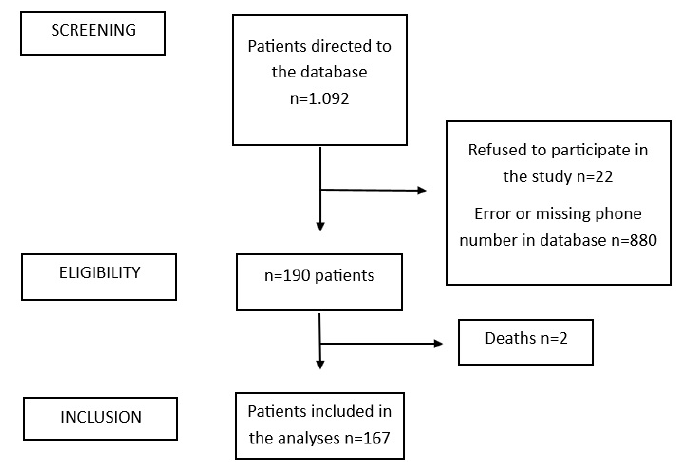
Figure 1 presents the flowchart describing the screening, eligibility, inclusion, and follow-up stages of the patients who comprised the study sample.
Initially, patients admitted to ICUs were identified after authorization from all hospitals involved in the research, following the signing of the Cooperation Agreement. Subsequently, the principal investigator accessed hospital databases and clinical records from each institution, from which patients’ telephone contacts and clinical-epidemiological information were obtained to characterize the health profile during their ICU stay.
The interviews were conducted using a validated instrument, the SPMSQ, composed of 10 questions. This instrument serves as a screening and monitoring tool for therapeutic measures and the progression or persistence of cognitive deficits13-14. The questionnaire assesses short- and long-term memory, orientation, and concentration through simple questions such as: date (day, month, and year), day of the week, current location, telephone number, age, place of birth, name of the current and previous presidents, mother’s maiden name, and performing a countdown13-14. This instrument allows classification into preserved cognitive capacity (0-2 errors), mild cognitive impairment (3-4 errors), moderate (5-7 errors), or severe (8 or more errors), considering the participant’s educational level13,15.
For the construction of the study, data were obtained from the Center for Studies and Research in Intensive Care (CEPETI), which holds the records of patients discharged after ICU hospitalization for COVID-19 treatment in six public and private hospitals located in Curitiba, Paraná, Brazil. The participating hospitals were: Hospital Marcelino Champagnat, Hospital das Nações, Hospital Santa Casa de Curitiba, Centro Hospitalar do Trabalhador, Instituto de Neurologia de Curitiba (INC), and Hospital Vita Batel. The sample consisted of 167 patients of both sexes, assessed between January 2021 and March 2022, all of whom were discharged from the hospital following post-COVID-19 ICU admission.
Inclusion criteria were patients aged 18 years or older, admitted to an ICU due to COVID-19 infection in one of the participating hospitals, who survived to hospital discharge, were available for telephone contact at the stipulated times, and agreed to participate in the study by providing informed consent (ICF) during the telephone contact.
Patients who, after hospital discharge, remained tracheostomized, hindering verbal communication, or who presented other impairments preventing participation at the initial contact (D14 segment)-since the questionnaire must be answered by the patient-were contacted later within the pre-established timeframe for the D14 segment or, alternatively, at the next follow-up point (D30 segment).
Patients with preexisting language and/or cognitive disorders that rendered them unable to respond to the telephone interview were excluded. This information was provided by a family member or caregiver during the first telephone contact, 14 days after ICU discharge.
Data were entered into Microsoft Excel® spreadsheets and analyzed using the Statistical Package for the Social Sciences-SPSS® (IBM® SPSS®, Statistics v.25.0, SPSS Inc., Chicago, USA). Results were expressed as means, medians, minimum and maximum values, and standard deviations (quantitative variables) or as frequencies and percentages (qualitative variables).
To evaluate levels of cognitive impairment, McNemar’s Test was applied. The Chi-square Test was used to compare cognitive impairment between the D30 and D90 segments, and Friedman’s Test was used to compare paired samples at the three collection points. Ninety-five percent confidence intervals were calculated for parameters of interest. A p-value <0.05 was considered statistically significant.
The project was submitted to and approved by the Research Ethics Committee for Human Subjects at the Pontifical Catholic University of Paraná (approval no. 4.293.030). Informed consent was obtained either at the time of ICU discharge or by telephone.
RESULTS
When using cross-tabulation to evaluate the interaction between two segments of SPMSQ scores (D14/D30, D14/D90, and D30/D90) with McNemar’s Test to assess paired levels of cognitive impairment, statistical significance was observed only between the D14/D90 segments (p<0.05). When applying the Chi-square Test to compare cognitive impairment between the D30 and D90 segments, statistical significance was observed (p=0.00). Inferential analysis across the three collection points indicated statistical significance (p<0.05).
Patients with a confirmed diagnosis of COVID-19 who were hospitalized had a mean age of 49.3 years ± 13.9. The minimum and maximum ages were 20 and 85 years, respectively. The most frequent age group was 40-49 years (24.7%), followed by 50-59 years (22%), 30-39 years (20.2%), and 60-69 years (18.6%).
The mean length of ICU stay was 16.6 days ± 16.5, with a minimum of 1 day and a maximum of 128 days (Table 1). Among the participants, 52.7% were male, and the most common level of education was high school completion (19.2%); 77.7% of participants had at least completed elementary school.
Seventy-five patients participated in all three follow-up segments. The mean SPMSQ score at D14 was 1.63 ± 1.91 (minimum = 0; maximum = 10). At D30, the mean score was 0.88 ± 1.28 (minimum = 0; maximum = 7). At D90, the mean score was 0.47 ± 0.97 (minimum = 0; maximum = 5).
Table 1 presents the number of participants in each isolated segment. At D14, 109 patients participated, with a mean of 1.72 ± 1.97 (minimum = 0; maximum = 10). At D30, 139 patients participated, with a mean of 1.12 ± 1.59 (minimum = 0; maximum = 8). At D90, 121 patients participated, with a mean of 0.46 ± 1.03 (minimum = 0; maximum = 6).
When comparing SPMSQ scores by sex, a homogeneous pattern was observed between groups; however, female participants demonstrated a worse cognitive recovery profile, with statistically significant differences across all segments (Table 2).
Table 2 also shows cognitive outcomes in relation to ICU length of stay, using the data from Table 1 categorized as “ICU Stay Cluster,” dichotomized into two groups: up to 11 days in the ICU and 12 days or more, to enable statistical comparison.
Analysis of the mean values across all segments showed that the sample, as a whole, evolved similarly over the follow-up period. Patients who remained in the ICU for 12 days or more had higher mean SPMSQ scores, reflecting greater cognitive impairment. However, statistical significance was not reached, suggesting that length of stay was not a determining factor for cognitive decline in this group. The results are summarized in Table 2.
Data regarding the classification of scores obtained with the Short Portable Mental Status Questionnaire (SPMSQ) were organized and presented in absolute (frequency) and relative (percentage) values, according to the instrument’s criteria. This classification allowed for identifying the degree of cognitive impairment-preserved, mild, moderate, or severe-based on the number of errors, adjusted for educational level. Detailed information is presented in Table 3.
At D14, 83 patients (76.1%) showed preserved cognitive capacity, 15 (13.8%) mild impairment, and 10 (9.2%) moderate impairment. Only one patient (0.9%) had severe cognitive impairment.
At D30, 121 patients (87.1%) had preserved cognitive capacity, 12 (8.6%) mild impairment, 4 (2.9%) moderate impairment, and 2 (1.4%) severe impairment.
At D90, 116 patients (95.9%) had preserved cognitive capacity, 3 (2.5%) mild impairment, and 2 (1.7%) moderate impairment. In this segment, no patient presented with severe impairment.
DISCUSSION
In this cohort study, patients were evaluated at three distinct time points, following a temporal evolution to assess and monitor cognitive deficits after ICU stays due to COVID-19. This objective aligns with other studies that have observed and reported changes in the cognitive status of patients recovering from this disease.15-17 These findings are consistent with other reports describing mild, moderate, or severe cognitive impairment in patients with respiratory distress caused by COVID-1918-19. Scientific evidence indicates a possible association between the clinical variables of acute COVID-19 infection, including respiratory symptoms, and the cognitive and functional deficits that persist in the post-infection phase20.
Similar to the present study, where the ICU setting is central, a cohort study involving 140 patients admitted to the ICU due to acute respiratory distress syndrome caused by SARS-CoV-2 concluded that 118 of them developed a combination of delirium (altered levels of consciousness) and cognitive disorders, secondary to the systemic inflammatory response triggered by the virus4.
Of the 139 participants effectively included in the D30 segment, it was observed that 30 days after ICU discharge, 13% still presented some degree of impairment (mild, moderate, or severe). These findings are in line with other studies that also reported cognitive deficits 30 days after hospitalization11.
Compared to the D30 results of this study, a cohort conducted in New York evaluated 45 critically ill COVID-19 patients admitted to the ICU. Of these, 30 participants underwent cognitive assessment 30 days after hospital discharge using another screening tool, the Telephone Montreal Cognitive Assessment (T-MoCA). Twenty percent scored below 19, indicating some level of cognitive impairment21.
Another study assessing cognition at an average of 30-40 days after COVID-19 recovery evaluated 20 patients using the in-person Montreal Cognitive Assessment (MoCA). Seventy percent still showed cognitive deficits, corroborating findings related to impairment in the D30 segment22.
Consistent with the literature, cognitive performance in post-COVID-19 patients has been reported as below optimal. A narrative review covering two to seven months post-discharge identified deficits in attention, reduced information-processing speed, and short-term memory impairment, particularly among ICU survivors9. These temporal trends, as observed in the present study, highlight the prevalence of cognitive deficits among previously hospitalized patients23.
Although hospitalized patients, especially those admitted to ICUs, are at greater risk of developing cognitive symptoms, these manifestations have also been reported in patients with mild COVID-19 and even in asymptomatic individuals23. Young patients with a positive COVID-19 diagnosis who were not hospitalized have also presented with these deficits24,25. Different levels of cognitive impairment in patients who experienced COVID-19, likely triggered by underlying inflammatory processes9, may persist longer than other symptoms, with a distinctive course of progression10.
Supporting the present study’s findings, which identified women as having worse cognitive profiles across all follow-up segments, other studies have also described that women are twice as likely to develop cognitive impairment as a symptom of long COVID26-27. Female sex has been considered a risk factor in this context28-29.
To some extent, these findings contribute to understanding the complex construct of cognitive alterations associated with COVID-19. One aspect that deserves attention, although not explored in this study but closely related to the hospital environment, particularly the sensory deprivation typical of ICUs, and with high potential to exacerbate COVID-19-related cognitive alterations, is the presence of cognitive impairment associated with complaints of depression, anxiety, and reduced functional capacity. This is a highly relevant theme that should be addressed in future studies11-30.
Given the uncertainties surrounding treatment of cognitive deficits in unexpected contexts such as post-COVID-19 recovery, participation in cognitive stimulation centers has generally been recommended. However, any form of intervention will only be successful if it is based on a valid and reliable assessment of cognitive status.
It is important to emphasize the multidimensional nature of the cognitive domain and its repercussions on other areas of life, such as mobility, self-care, and emotional balance. These findings should be reflected upon to design interventions that mitigate the consequences of cognitive impairment.
One of the main limitations of this study was the large number of nonexistent or incorrect telephone contacts in patient records, which hindered participant recruitment. Partial participation in follow-up segments was also due to patients’ inability to verbalize, hospitalization without telephone access, unavailability for scheduled contact, lack of time or interest in continuing participation, and deaths.
The research team attempted to conduct video call interviews, assuming this strategy could provide participants with greater security through visual contact with the interviewer. However, this approach did not succeed as expected. Only one patient accepted this option. The others declined, citing personal appearance concerns-especially at 14 days post-ICU discharge-or discomfort with the visibility of their physical environment. At D30 and D90 follow-ups, some participants had already returned to work and refused the option of video call interviews.
CONCLUSION
The evidence found in this study demonstrates the longitudinal behavior of a highly impactful disorder on global health after the acute phase of COVID-19: cognitive dysfunction.
The SPMSQ results revealed cognitive alterations in a portion of patients who remained in Intensive Care Units due to COVID-19; however, it was not possible to establish that ICU length of stay directly influenced their recovery trajectory. Female participants consistently exhibited higher mean scores across all follow-up segments, suggesting a worse cognitive recovery profile among women. Overall, cognitive recovery was satisfactory three months after ICU discharge, with only a small proportion of patients (4.1%) remaining symptomatic. Even among those who reported cognitive complaints, impairments were milder compared with those identified at the beginning of data collection.
References
-
1 Mojica-Crespo R, Morales-Crespo M. Pandemia COVID-19, la nueva emergencia sanitaria de preocupación internacional: una revisión. Semergen [Internet]. 2020 [cited 2024 Aug 2]; 46(1):72-84 Available from: https://doi.org/10.1016/j.semerg.2020.05.010
» https://doi.org/10.1016/j.semerg.2020.05.010 -
2 World Health Organization (WHO) [Internet]. Geneva: WHO; [2024] [cited 2024 Aug 2]. Coronavirus disease (COVID-19) outbreak;[about 2 screens]. Available from: https://www.who.int/emergencies/diseases/novel-coronavirus-2019
» https://www.who.int/emergencies/diseases/novel-coronavirus-2019 -
3 Helms J, Kremer S, Merdji H, Schenck M, Severac F, Clere-Jehl R, et al. Delirium and encephalopathy in severe COVID-19: a cohort analysis of ICU patients. Crit Care [Internet]. 2020 [cited 2024 Aug 2];24:491. Available from: https://doi.org/10.1186/s13054-020-03200-1
» https://doi.org/10.1186/s13054-020-03200-1 -
3 Singer AJ, Morley EJ, Meyers K, Fernandes R, Rowe AL, Viccellio P, et al. Cohort of four thousand four hundred four persons under investigation fse seor covid-19 in a New York hospital and predictors of ICU care and ventilation. Ann Emerg Med [Internet]. 2020 [cited 2024 Aug 2];76(4):394-404. Available from: https://doi.org/10.1016/j.annemergmed.2020.05.011
» https://doi.org/10.1016/j.annemergmed.2020.05.011 -
4 Hosey MM, Needham DM. Survivorship after COVID-19 ICU stay. Nat Rev Dis Primers. [Internet]. 2020 [cited 2024 Aug 3];6(1):60. Available from: https://doi.org/10.1038/s41572-020-0201-1
» https://doi.org/10.1038/s41572-020-0201-1 -
5 Altuna M, Sánchez-Saudinós MBS, Lleó A. Cognitive symptoms after COVID-19. Neurology Perspectives [Internet]. 2021 [cited 2024 Aug 3];1:S16-S24. Available from: https://doi.org/10.1016/j.neurop.2021.10.005
» https://doi.org/10.1016/j.neurop.2021.10.005 -
6 Woo MS, Malsy J, Pöttgen J, Zai SS, Ufer F, Hadjilaou A, et al. Frequent neurocognitive deficits after recovery from mild COVID-19. Brain Commun [Internet]. 2020 [cited 2024 Aug 3];2(2):fcaa205. Available from: https://doi.org/10.1093/braincomms/fcaa205
» https://doi.org/10.1093/braincomms/fcaa205 -
7 Tabacof L, Tosto-Mancuso J, Wood J, Cortes M, Kontorovich A, McCarthy D, et.al post-acute COVID-19 syndrome negatively impacts physical function, cognitive function, health-related quality of life, and participation. Am J Phys Med Rehabil [Internet]. 2022 [cited 2024 Aug 3];101(1):48-52. Available from: https://doi.org/10.1097/PHM.0000000000001910
» https://doi.org/10.1097/PHM.0000000000001910 -
8 Aiyegbusi OL, Hughes SE, Turner G, Rivera SC, McMullan C, Chandan JS, et al. Symptoms, complications and management of long COVID: a review. Journal of the Royal Society of Medicine [Internet]. 2021 [cited 2024 Aug 3];114(9):428-442. Available from: https://doi.org/10.1177/01410768211032850
» https://doi.org/10.1177/01410768211032850 -
9 Liu TC, Yoo SM, Sim MS, Motwani Y, Viswanathan N, Wenger NS. Perceived cognitive deficits in patients with symptomatic SARS-CoV-2 and their association with post-COVID-19 condition. JAMA Netw Open [Internet]. 2023 [cited 2025 Apr 3];6(5):e2311974. Available from: https://doi.org/10.1001/jamanetworkopen.2023.11974
» https://doi.org/10.1001/jamanetworkopen.2023.11974 -
10 Albu S, Zozaya NR, Murillo N, García-Molina A, Chacón CAF, Kumru H. What’s going on following acute COVID-19? Clinical characteristics of patients in an out-patient rehabilitation program. NeuroRehabilitation [Internet]. 2021 [cited 2025 Apr 3];48(4):469-480. Available from: https://doi.org/10.3233/NRE-210025
» https://doi.org/10.3233/NRE-210025 -
11 Garrigues E, Janvier P, Kherabi Y, Le Bot A, Hamon A, Gouze H, et al. Post-discharge persistent symptoms and health-related quality of life after hospitalization for COVID-19. J Infect [Internet]. 2020 [cited 2024 Aug 4];81(6):e4-e6. Available from: https://doi.org/10.1016/j.jinf.2020.08.029
» https://doi.org/10.1016/j.jinf.2020.08.029 -
12 Pfeiffer E. A short portable mental status questionnaire for the assessment of organic brain deficit in elderly patients. J Am Geriatr Soc [Internet]. 1975 [cited 2024 Aug 3];23(10):433-441. Available from: https://doi.org/10.1111/j.1532-5415.1975.tb00927.x
» https://doi.org/10.1111/j.1532-5415.1975.tb00927.x -
13 Teigão FCM, Moser ADL, Jerez-Roig J. Translation and cross-cultural adaptation of Pfeiffer’s Short Portable Mental Status Questionnaire (SPMSQ) for Brazilians older adults. Rev Bras Geriatr Geronto [Internet]. 2021 [cited 2024 Aug 4];23(4):e200128. Available from: https://doi.org/10.1590/1981-22562020023.200128
» https://doi.org/10.1590/1981-22562020023.200128 -
14 Alemanno F, Houdayer E, Parma A, Spina A, Del Forno A, Scatolini A, et al. COVID-19 cognitive deficits after respiratory assistance in the subacute phase: a COVID-rehabilitation unit experience. PloS ONE [Internet]. 2021 [cited 2024 Aug 4];16(2):e0246590. Available from: https://doi.org/10.1371/journal.pone.0246590
» https://doi.org/10.1371/journal.pone.0246590 -
15 Sasannejad C, Ely EW, Lahiri S. Long-term cognitive impairment after acute respiratory distress syndrome: a review of clinical impact and pathophysiological mechanisms. Crit Care [Internet]. 2019 [cited 2024 Aug 4];23(1):352. Available from: https://doi.org/10.1186/s13054-019-2626-z
» https://doi.org/10.1186/s13054-019-2626-z -
16 Pistarini C, Fiabane E, Houdayer E, Vassallo C, Manera MR, Alemanno F. cognitive and emotional disturbances due to COVID-19: an exploratory study in the rehabilitation setting. Front Neurol [Internet]. 2021 [cited 2024 Aug 5];12:643646. Available from: https://doi.org/10.3389/fneur.2021.643646
» https://doi.org/10.3389/fneur.2021.643646 -
17 Garg M, Maralakunte M, Garg S, Doria S, Sehgal I, Bhalla AS, et al. The Conundrum of ‘Long-COVID-19’: a narrative review. Int J Gen Med [Internet]. 2021 [cited 2024 Aug 5];14:2491-2506. Available from: https://doi.org/10.2147/IJGM.S316708
» https://doi.org/10.2147/IJGM.S316708 -
18 Blomberg B, Mohn KGI, Brokstad KA, Zhou F, Linchausen DW, Hansen BA, et al. Long COVID in a prospective cohort of home-isolated patients. Nat Med [Internet]. 2021 [cited 2024 Aug 5];27:1607-1613. Available from: https://doi.org/10.1038/s41591-021-01433-3
» https://doi.org/10.1038/s41591-021-01433-3 -
19 Del Pueblo VMS, Serrano-Heras G, Sánchez CMR, Landete PP, Rojas-Bartolome L, Feria I, et al. Brain and cognitive changes in patients with long COVID compared with infection-recovered control subjects. Brain [Internet]. 2024 [cited 2025 Apr 3];147(10):3611-3623. Available from : https://doi.org/10.1093/brain/awae101
» https://doi.org/10.1093/brain/awae101 -
20 Hellmuth J, Barnett TA, Asken BM, Kelly JD, Torres L, Stephens ML, et al. Persistent COVID-19-associated neurocognitive symptoms in non-hospitalized patients. J Neurovirol [Internet]. 2021 [cited 2024 Aug 5];27(1):191-195. Available from: https://doi.org/10.1007/s13365-021-00954-4
» https://doi.org/10.1007/s13365-021-00954-4 -
21 Zhou H, Lu S, Chen J, Wei N, Wang D, Lyu H, et al. The landscape of cognitive function in recovered COVID-19 patients. J Psychiatr Res [Internet]. 2020 [cited 2024 Aug 6];129: 98-102. Available from: https://doi.org/10.1016/j.jpsychires.2020.06.022
» https://doi.org/10.1016/j.jpsychires.2020.06.022 -
22 Ortona E, Malorni W. Long COVID: to investigate immunological mechanisms and sex/gender related aspects as fundamental steps for tailored therapy. Eur Respir J [Internet]. 2022 [cited 2024 Aug 5];59(2):2102245. Available from: https://doi.org/10.1183/13993003.02245-2021
» https://doi.org/10.1183/13993003.02245-2021 -
23 Sivan M, Rayner C, Delaney B. Fresh evidence of the scale and scope of long covid. BMJ [Internet]. 2021 [cited 2024 Aug 6];373 :n853. Available from: https://doi.org/10.1136/bmj.n853
» https://doi.org/10.1136/bmj.n853 -
24 Sudre CH, Murray B, Varsavsky T, Graham MS, Penfold RS, Bowyer RC, et al. Attributes and predictors of long COVID. Nat Med [Internet]. 2021 [cited 2024 Aug 6];27(4):626-31. Available from: https://doi.org/10.1038/s41591-021-01292-y
» https://doi.org/10.1038/s41591-021-01292-y -
25 Rubin R. as their numbers grow, COVID-19 “Long Haulers” stump experts. JAMA [Internet]. 2020 [cited 2024 Aug 6];324(14):1381-1383. Available from: https://doi.org/10.1001/jama.2020.17709
» https://doi.org/10.1001/jama.2020.17709 -
26 Iodice F, Cassano V, Rossini PM. Direct and indirect neurological, cognitive, and behavioral effects of COVID-19 on the healthy elderly, mild-cognitive-impairment, and Alzheimer’s disease populations. Neurol Sci [Internet]. 2021. [cited 2024 Aug 6];42(2):455-65. Available from: https://doi.org/10.1007/s10072-020-04902-8
» https://doi.org/10.1007/s10072-020-04902-8 -
27 Alonso-Lana S, Marquié M, Ruiz A, Boada M. Cognitive and neuropsychiatric manifestations of COVID-19 and effects on elderly individuals with dementia. Front Aging Neurosci [Internet]. 2020 [cited 2024 Aug 6];12:588872. Available from: https://doi.org/10.3389/fnagi.2020.588872
» https://doi.org/10.3389/fnagi.2020.588872 -
28 Grigoletto I, Cavalheri V, de Lima FF, Ramos EMC. Recovery after COVID-19: the potential role of pulmonary rehabilitation. Braz J Phys Ther [Internet]. 2020 [cited 2024 Aug 6];24(6):463-64. Available from: https://doi.org/10.1016/j.bjpt.2020.07.002
» https://doi.org/10.1016/j.bjpt.2020.07.002 -
29 Hampshire A, Trender W, Chamberlain SR, Jolly AE, Grant JE, Patrick F, et al. Cognitive deficits in people who have recovered from COVID-19. EClinicalMedicine [Internet]. 2021 [cited 2025 Aug 4];39:101044. Available from: https://doi.org/10.1016/j.eclinm.2021.101044
» https://doi.org/10.1016/j.eclinm.2021.101044
-
*
Article extracted from the doctoral thesis: “Análise do impacto da COVID 19 sobre a funcionalidade e qualidade de vida após alta da Unidade de Terapia Intensiva”, Pontíficia Universidade Católica do Paraná, Curitiba, PR, Brasil, 2021.
-
Data availability:
The authors declare that the data are not available due to restrictions related to confidentiality, intellectual property rights and/or other legal impediments.
-
HOW TO REFERENCE THIS ARTICLE:
Kmita LC, Corleto LV, Tiba MN, Ruggieri KCR, Moser ADL, Bernardelli RS. Impact of COVID-19 on cognitive function of survivors after intensive care hospitalization: prospective cohort. Cogitare Enferm [Internet]. 2025 [cited “insert year, month and day”];30:e96346en. Available from: https://doi.org/10.1590/ce.v30i.96346en
-
FUNDING |
This study is derived from a doctoral dissertation research project funded through the Call for Emerging and Consolidating Graduate Programs in Priority Areas in the States (PDPG) - Call No. 18/2020, Project No. 88887.568437/2020-00.
The authors declare that the data are not available due to restrictions related to confidentiality, intellectual property rights and/or other legal impediments.

 Source: The authors (2025).