
 Yerba mate agroforestry system: an alternative for conserving the Atlantic Forest biome in Rio Grande do Sul
ABSTRACT
The Atlantic Forest has become Brazil’s most endangered biome. In the state of Rio Grande do Sul (RS), only 7.5% of the remaining areas of native vegetation are agroforestry systems (SAFs). Agroforestry systems (SAFs) are a sustainable alternative for occupying deforested areas, helping with the forest restoration process, and reconciling farming activities. One species adapted to grow in an SAF is yerba mate. Aiming to analyze the contribution of these systems to environmental conservation, we identified the yerba mate SAFs in RS, located in the Atlantic Forest biome, using the database of the online environmental licensing system. The influence of agroforestry on the properties was verified by identifying its origin, the characteristics of its surroundings, and possible areas for its implementation or expansion. According to the database accessed, RS has 37 yerba mate SAFs, 34 (92%) in the Atlantic Forest biome, and 21 (62%) providing vegetation increase in the agroforestry site. More than half (56%) of the properties with SAFs preserved and increased the other forest fragments inside their domain. SAFs’ implementation in strategic areas allows the connection of isolated forest fragments, ensuring gene flow and biodiversity. Therefore, they are a sustainable alternative for generating income and preserving the environment.
Keywords:
Biome; Environmental conservation; Sustainability; Agroforestry; Ilex paraguariensis
RESUMO
A Mata Atlântica se tornou o bioma brasileiro mais ameaçado de extinção. No estado do Rio Grande do Sul (RS) restam apenas 7,5% de áreas remanescentes de vegetação nativa. Uma alternativa sustentável para ocupar as áreas desmatadas e ajudar no processo de restauração florestal, além de conciliar atividades agropecuárias, são os Sistemas Agroflorestais (SAFs). Uma espécie adaptada a ser cultivada em um SAF é a erva-mate. Assim, com o objetivo de analisar a contribuição destes sistemas para a conservação ambiental, foram identificados os SAFs de erva-mate do RS, localizados no bioma Mata Atlântica a partir da base de dados do sistema online de licenciamento ambiental. Foi verificada a influência da agrofloresta sobre as propriedades, através da identificação de sua origem, das características do seu entorno e de possíveis áreas para sua implantação ou ampliação. De acordo com a base de dados consultada, o RS apresenta 37 SAFs de erva-mate, sendo 34 (92%) localizados no bioma Mata Atlântica. Identificou-se que 21 (62%) dos SAFs proporcionaram um aumento da vegetação no local da agrofloresta. Mais da metade (56%) das propriedades com SAFs preservaram e aumentaram os outros fragmentos florestais localizados no seu domínio. A implantação de SAFs em áreas estratégicas possibilita a conexão de fragmentos florestais isolados, garantindo o fluxo gênico e a biodiversidade. Sendo assim, são uma alternativa sustentável para geração de renda e preservação do meio ambiente.
Palavras-chave:
Bioma; Conservação ambiental; Sustentabilidade; Agrofloresta; Ilex paraguariensis
1 INTRODUCTION
The world is facing an environmental crisis because of human interference in nature. There is already evidence that the planet is on an unsustainable path (Martine; Alves, 2015). Sustainable development has therefore become a necessity, not a choice (Wu, 2013).
In rural areas, predatory farming has increased deforestation and brought in various consequences, such as fauna and flora species extinction, reduction in the quantity and quality of water, temperature increase, changes in rainfall patterns, soil erosion, and even desertification in some areas (Miccolis et al., 2016).
The Atlantic Forest is rich in biodiversity and of extreme biological importance (Branco et al., 2021). However, due to high deforestation rates, this Brazilian biome has become the most threatened with extinction, classified as the fifth most threatened area in the world and one of the richest in endemic species (IBGE, 2019). Rio Grande do Sul (RS) possesses only 7.5% of the remaining areas of native vegetation in the Atlantic Forest biome, with a high degree of fragmentation (Rio Grande do Sul, 2020). Virtually all native forests have been destroyed, cleared to be used for monocultures or pastures for animal husbandry, which end up not being sustainable in the long term, as they leave the land with few nutrients, making it impossible to grow new crops, as well as promoting pesticides use (Dubois, 2008).
Various international agendas have been presenting debates on sustainable development and searching for ways to preserve the environment. In 2019, the United Nations (UN) issued a document decreeing the United Nations Decade for Ecosystem Restoration from 2021 to 2030, with the aim of “supporting and intensifying efforts to prevent, halt and reverse ecosystem degradation worldwide and raise awareness of the importance of successful ecosystem restoration” (United Nations, 2019).
A sustainable alternative is Agroforestry Systems (SAFs) to occupy these deforested areas. These consist of agricultural and/or livestock activities that interact with trees and shrubs (forest areas) simultaneously, aiming for greater production and long-term sustainability, thus preserving and reducing the environmental impacts caused by deforestation (Dubois, 2008). Yerba mate (Ilex paraguariensis) is well suited to be grown in SAF, as it is a species native to the understory that is short in stature. It grows below the forest canopy and needs shade and a little sunlight for its development. Therefore, cultivating yerba mate in SAF means growing the species in its natural habitat (Baggio; Vilcahuamán; Correa, 2008).
Yerba mate belongs to the Aquifoliaceae family and can grow to 3 to 5 meters in height, but without management, it can reach up to 30 meters in the forest. Its geographical distribution encompasses the countries of South America, including Argentina, eastern Paraguay, northern Uruguay, and Brazil, where it is found in the states of Rio Grande do Sul, Santa Catarina, Paraná, Mato Grosso do Sul, Minas Gerais, São Paulo, and Rio de Janeiro. Its natural occurrence area is equivalent to 450,000 km2 or 5% of the Brazilian territory (Carvalho, 2003), and in RS, the production is organized into five herb poles: Missões Celeiro, Região dos Vales, Alto Uruguai, Nordeste Gaúcho, and Alto Taquari.
To analyze the contribution of the yerba mate SAFs to environmental conservation, a survey of these systems was carried out in RS, in the Atlantic Forest biome, verifying the influence of agroforestry on the property, identifying its origin, surroundings and possible areas for those SAFs implementation or expansion.
2 MATERIALS AND METHODS
The study was carried out in two stages. The first stage collected data and identified yerba mate SAFs and their location in RS and the second analyzed the SAFs’ data and maps. Five databases were used to carry out the study: the Online Environmental Licensing System - SOL, the National Rural Environmental Registration System - SICAR, MapBiomas, MapBiomas Alert, and the Google Earth Pro application.
2.1 Data collection
To identify, through agroforestry certification applications, how many licensed yerba mate SAFs there are in RS, we used the database of the Online Environmental Licensing System - SOL (www.sol.rs.gov.br), an official website used by the State Secretariat for the Environment and Sustainable Development - SEMA, and the Henrique Luis Roessler State Foundation for Environmental Protection - FEPAM, regulated by SEMA/FEPAM Joint Ordinance No. 32/2018.
The survey used the following codes, which correspond to the agroforestry activity: 10871.00 - Agroforestry System - General Properties; 10872.00 - Agroforestry System - Small Rural Properties and 10873.00 - Agroforestry System - No Rural Use. We analyzed the documents attached to the application to identify which SAFs have yerba mate management, especially the Agroforestry Certificate issued by the licensing body, which mentions the species being managed in that agroforestry.
After the identification, the polygons were downloaded in KML file format, with the size and spatial location of the SAF areas, later transmitted to the Google Earth Pro application to be mapped using geographical coordinates. Further, using the map of RS’s biomes, it was identified in which biome (Atlantic Forest or Pampa) the locations of the yerba mate SAFs, thus allowing their singling out.
To identify the properties where the yerba mate SAFs are located, we used the database of the National Rural Environmental Registry System - SICAR, which allows one to download the polygons in KML format of the total area of each property registered in the CAR (Rural Environmental Registry) through a public consultation by the municipality. We opened those files in the Google Earth Pro application, allowing us to visualize the property location and dimensions of the yerba mate SAFs.
2.2 Data analysis
By mapping the agroforests and using satellite images available on the Google Earth Pro application and the MapBiomas Brasil website (www.mapbiomas.org/), the size of these SAFs was identified. By adding up the areas, it was possible to see how many hectares of yerba mate agroforestry the state of RS has in the Atlantic Forest biome. The SAF area’s history and surroundings were also analyzed through visual interpretation, based on satellite images from 1985 to the last available image. The origin of the area certified as agroforestry was analyzed, identifying whether it originated from a forest area, which is currently preserved, or from an anthropized area, which has undergone recovery and planting of forest species.
To interpret the influence of agroforestry on the property, we checked whether there had been an increase in forest areas, whether these had been maintained over the years, or whether deforestation had occurred on the property, based on deforestation data from the MapBiomas website, which presents data from 1985 onwards, and images from Google Earth Pro.
Another point was to analyze 500 meters of the surroundings of each yerba mate SAF, classifying them as consolidated areas (such as crops), consolidated areas with isolated trees, living fences (corridors), or forest fragments.
To identify possible areas for new SAFs, the MapBiomas Alert database was used, which provides data and polygons of deforested sites from 2019 through the current year. Research refinement was achieved by analyzing data from June 2022 to May 2023, which included areas cleared without authorization since they are going through legal proceedings and have not yet been granted a conduct adjustment agreement. The areas were chosen by the possibility of identifying connecting forest fragments using satellite images available on Google Earth Pro. This survey was carried out in 03 (three) municipalities: Arvorezinha, Ilópolis, and Putinga, as these have yerba mate SAFs and stand out as the main producers of this plant species in RS.
3 RESULTS AND DISCUSSIONS
Rio Grande do Sul has 37 SAFs growing yerba mate with a certificate issued by SEMA. Of this total, 34 (92%) are in the Atlantic Forest biome totaling 157.78 hectares, and 03 (8%) are in the Pampa biome. The predominance of yerba mate SAFs in the Atlantic Forest biome results from the northern region of RS state, with the highest natural occurrence of yerba mate (Carvalho, 2003).
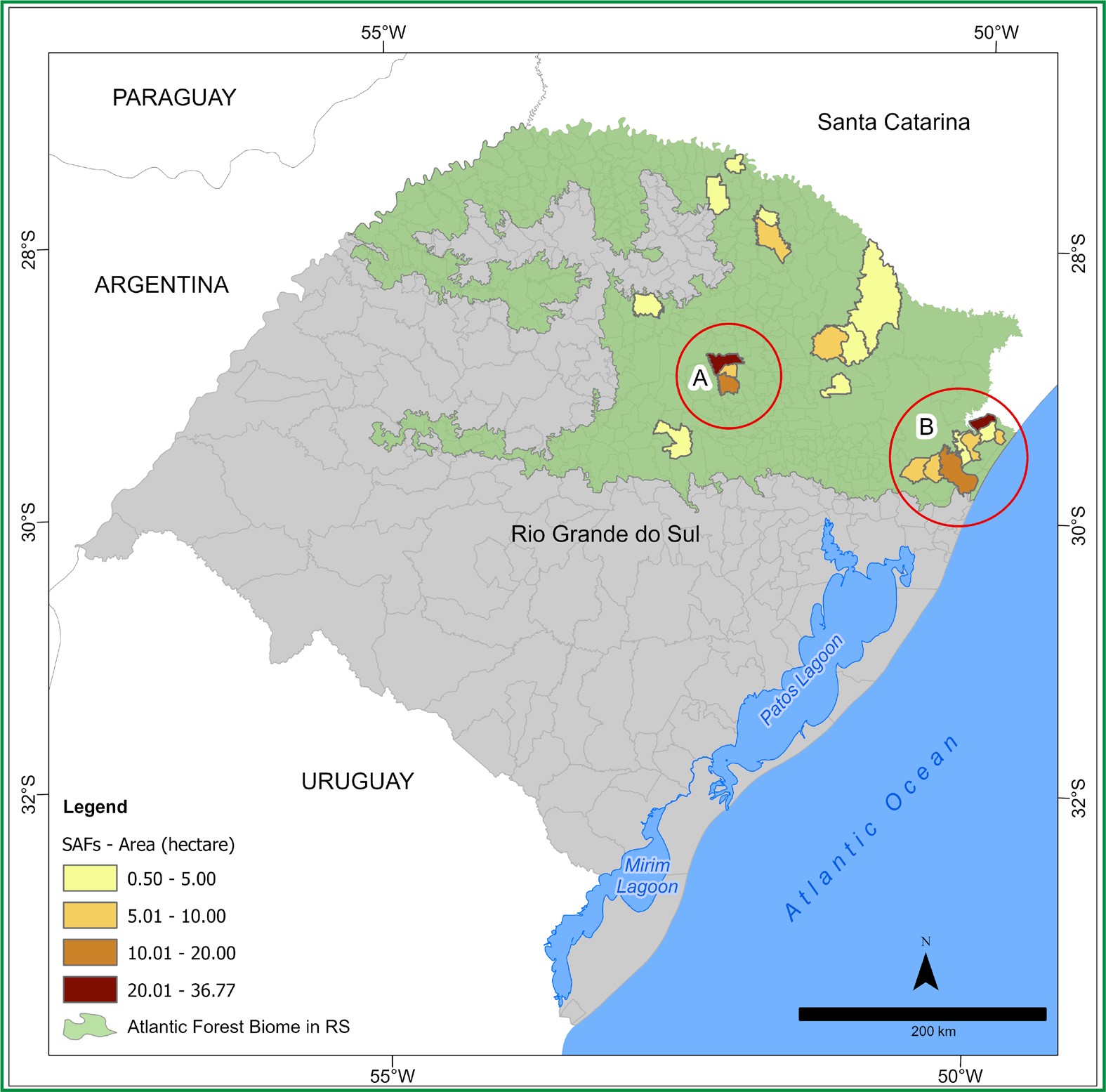
Yerba mate SAFs are distributed across 21 municipalities (Table 1). Of this total, two regions concentrate 77.5% of the SAF areas in the state (Figure 1). One is made up of municipalities in the Taquari River Upper Valley, Arvorezinha, Ilópolis and Putinga, which have 37.8% (59.7 ha) of the SAF area with yerba mate and the other region consists of five municipalities on the North Coast, Mampituba, Morrinhos do Sul, Dom Pedro de Alcântara, Itati, Maquiné, and two in the Sinos River Valley, Riozinho and Rolante, comprising 39.7% (62.7 ha).
Municipalities in Rio Grande do Sul in the Atlantic Forest biome with yerba mate agroforestry systems
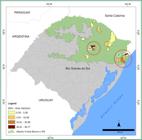
Distribution of SAFs’ area by classes in Rio Grande do Sul indicating the two regions where their implementations are concentrated
The first region, in the Taquari Valley, concentrates a large part of the state’s yerba mate production and processing, especially in Arvorezinha, where its production is one of the foundations of the municipality’s economy.
According to data from the IBGE Automatic Recovery System SIDRA/IBGE, the municipality of Arvorezinha produced 34,500 tons of yerba mate in 2022, one of the highest in RS (IBGE, 2022). The second region has many SAFs of different species, including yerba mate, and it has proved to be a hub for the conservation and restoration of the Atlantic Forest on the North Coast and in the Sinos River Upper Valley.
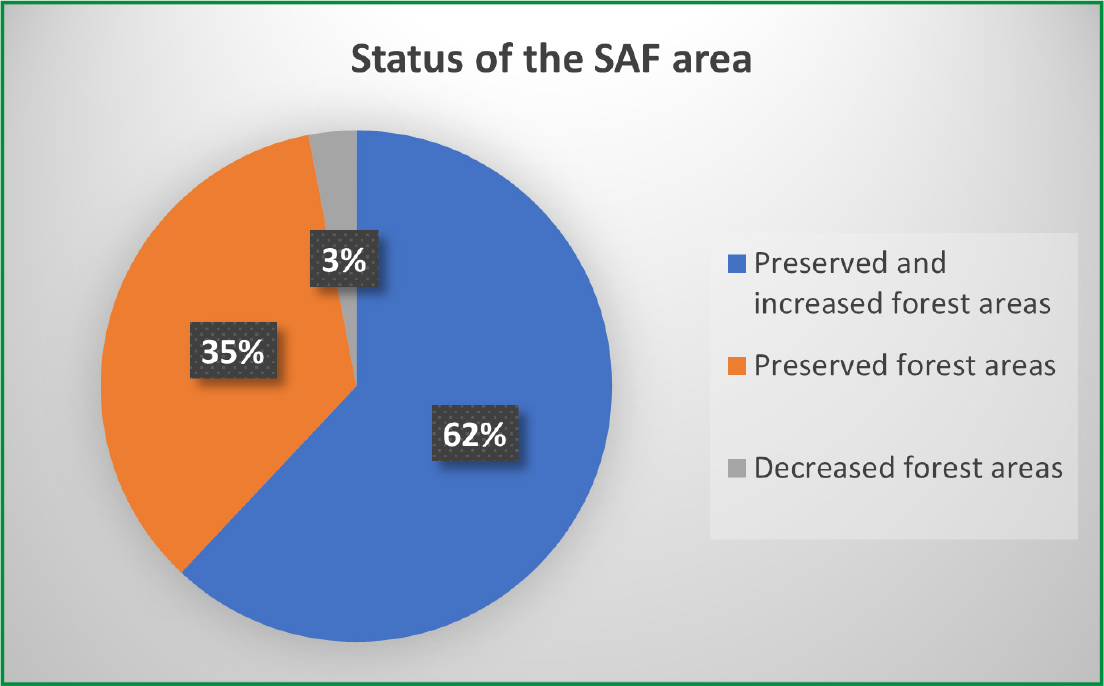
Analyzing the satellite images and comparing the area before and after the SAFs’ development, we found that its implementation provides forest preservation in the location, a circumstance found in 12 SAFs (35%). In 21 (62%), an enrichment of the forest area, with a vegetation increase in the site was also possible. Only in one of the SAFs analyzed there was a decrease in the forest area (Graph 1).
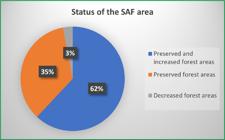
Situation of the area where the SAF is located, comparing before and after its implementation
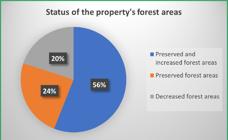
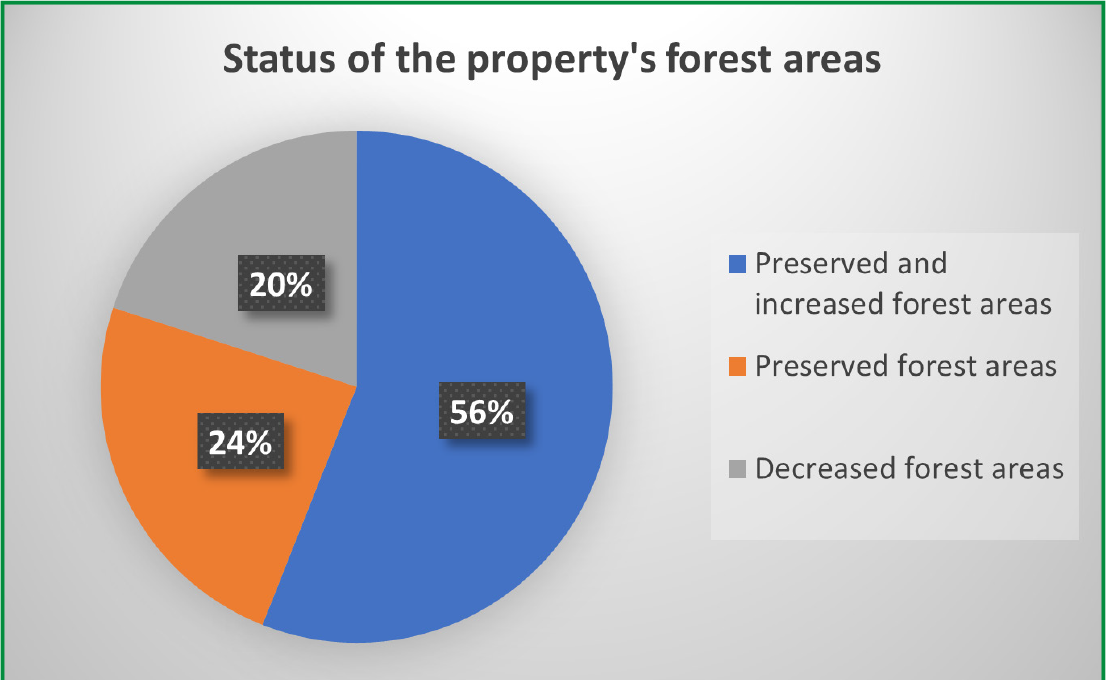
Situation of the forest areas on the property with a certified SAF, comparing before and after its implementation
In addition, properties with agroforestry tend to preserve and increase other forest fragments located in their domain, a situation that occurred in 27 (80%) of the 34 properties analyzed. Of these, 8 (24%) preserved the property’s forest areas and 19 (56%) even showed an increase in these areas. A decrease in the property’s forest areas was observed in 7 (20%) of the 34 studied. This can be seen from satellite images from the Google Earth Pro application and the MapBiomas website, which monitors and presents data on deforested areas since 1985.
One of the problems facing the Atlantic Forest biome is the fragmentation of its forest areas. Fragmentation consists of insulating continuous forest areas through other forms of land occupation. These barriers hinder the dispersal or movement of organisms between fragments, thus interfering with species richness and abundance, affecting biodiversity and environmental quality (Korman, 2003). Agroforestry can connect forest fragments, allowing this flow of species and guaranteeing biodiversity (Vieira, 2007).
By analyzing the maps, it is possible to identify that all the yerba mate SAFs have forest fragments in their surroundings, i.e., they enable connections between them and the exchange of gene flow. Besides, 28 SAFs have displayed a consolidated area with isolated trees surrounding them. Living fences (corridors) were also identified in 12 SAFs, facilitating connections with other areas, as it helps animals to pass through, or even as a resting point, in the case of isolated trees, and 25 SAFs had consolidated areas around them, with crops.
Developing new SAFs at strategic points can help connect isolated fragments. One way is to implement agroforestry in areas to be recovered due to unauthorized deforestation. Article 17 §2 of Federal Law 11.428/2006 prohibits environmental compensation for illegally suppressing native vegetation (Brasil, 2006). It is therefore necessary to develop a project to reclaim the degraded area, which can be recovered by developing an agroforest.
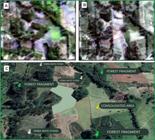
In the municipality of Arvorezinha, we pinpointed seven warning units of unauthorized deforestation, of which we depicted an area of 1.92 hectares nearly 500 meters away from the Guaporé River at coordinates 28°48’36.43“ S and 52°04’13.29” W in Figure 2. The analysis of the satellite images and deforested area surroundings, which show areas consolidated with crops, allowed us to identify that this deforestation was possibly carried out to increase crop areas, or even to join the two consolidated areas, thus disconnecting the forest fragments. Recovering this deforested area, which can be done through the development of an agroforest, will re-establish the connection between the forest fragments.
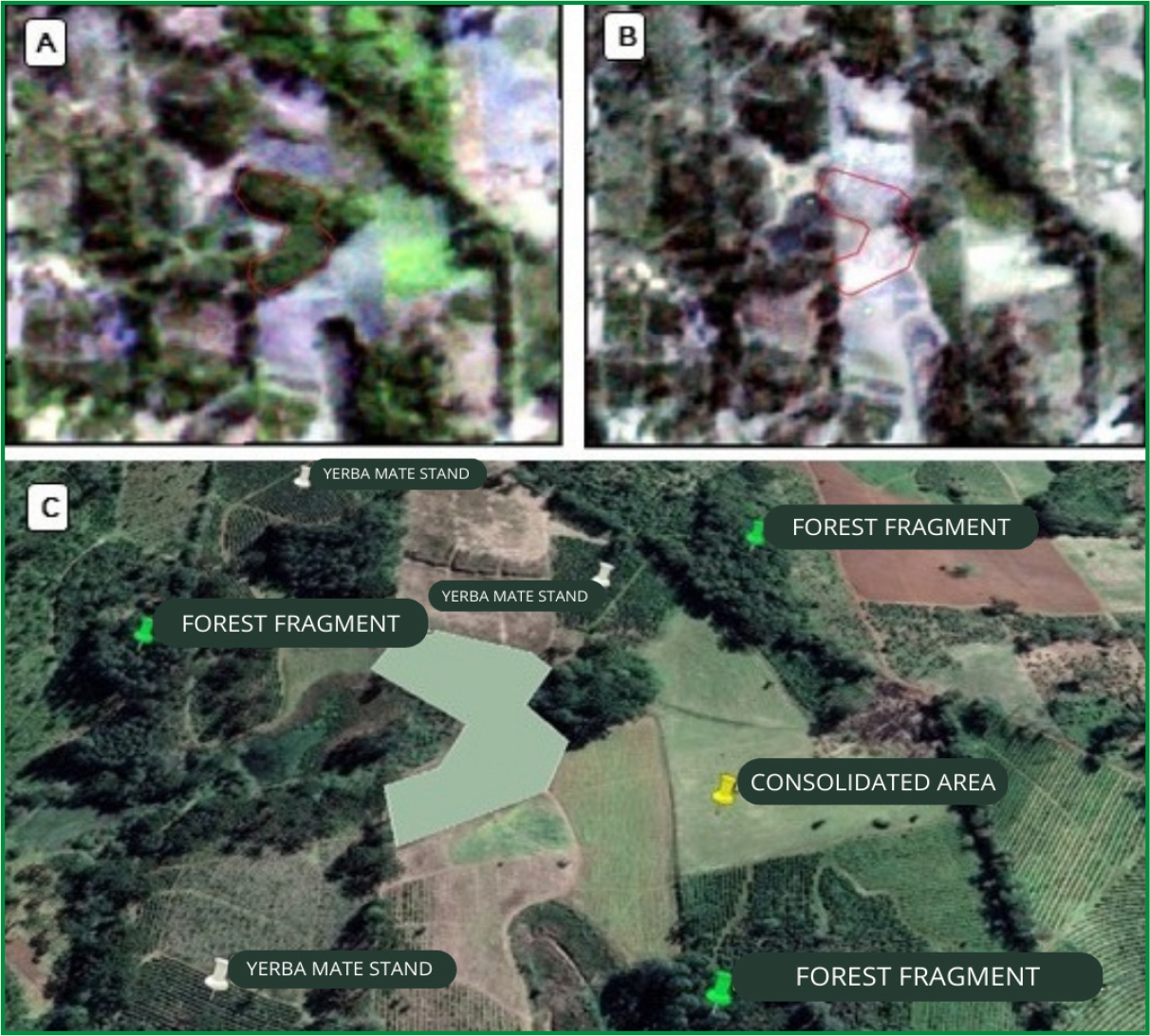
In the municipality of Ilópolis, no deforestation was identified during the research period. Therefore, previous data was sought and an area deforested in 2020 located at coordinates 28°56’16.49“S 52°10’16.84”W, covering 1.17 hectares was found. Small forest fragments were identified in the area’s surroundings, and areas with yerba mate growing in full sun. Nonetheless, they could also become SAFs, increasing the forest cover in that region (Figure 3).
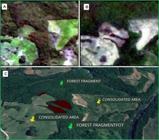
Eight deforestation alert units were identified in the municipality of Putinga, of which one is located at coordinates 29°05’24.44“S 52°10’45.30” W, covering 2.00 hectares. The deforestation of this area caused the division of a forest fragment, besides the suppression of the fragment edges, as shown in Figure 4. The advance of deforestation along the edges of a forest area is a common occurrence in agricultural areas, where virtually every year the crop area expands, suppressing the edges of the forest area (Viana; Tabanez; Martinez, 1992).
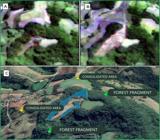
In where: Deforestation area, (A) before deforestation on 06/02/2020; (B) after deforestation on 08/10/2020; (C) around the deforested area.
Farmers conducting agroforestry on their property use techniques to enhance the existing native forest with crops, besides recovering the forest by planting tree species and/or shrubs. Therefore, besides preserving the local vegetation, they also promote the recovery of these areas, keeping the forest alive, helping the local fauna, and producing food without pesticides (Donato; Lima, 2013).
Agroforestry systems have the potential to recover fragments, restore degraded forest areas, interconnect corridors, recover riparian forests, and manage fragment edges (Amador; Viana, 1998). De Lacerda (2019) even mentions SAF as a productive restoration system that seeks to re-establish forest cover, in which the diversification of production with various species, as well as the management techniques used, optimize the ecological condition and sustainable production, providing multiple outputs from the system, generating income.
Farmers or landowners are an important issue to be considered in environmental management since they can help restore the environment in which they live. The aim is to find forms that include people in natural resource conservation and management, with the farmers no longer being agents creating problems but the ones coming up with solutions. SAFs present several opportunities to include humans in the restoration process and trees in agricultural landscapes while providing financial returns for the landowner (Miccolis et al., 2016).
Another point to consider is the development of SAFs in Permanent Preservation Areas (APP) and Legal Reserves, thus contributing to the preservation of these areas. The Forest Code states that “intervention or suppression of native vegetation in an APP will only occur in the cases of public utility, social interest or low environmental impact provided for in this Law”. Among the definitions of social interest is sustainable agroforestry; in addition, agroforestry, including the management of non-timber products, without de-characterizing the vegetation cover, falls under low environmental impact activities (Brasil, 2012).
Growing in SAFs also benefits the plants, such as reducing mechanical damage to the crop. Wind, for example, can tear off leaves or break branches, besides interfering with the environment’s moisture, making it colder in winter. The sum of these factors weakens plant development. In this case, some places implement windbreaks (planting trees in line), but in SAFs, the windbreak effect occurs naturally and is spread throughout the area. Another relevant factor is the mechanical damage caused by torrential rains, with large drops and hail, causing damage to plants and the soil. This damage can be mitigated by the tree canopies present in agroforests (Baggio; Vilcahuamán; Correa, 2008).
The agroforestry can also benefit yerba mate initial cultivation. The growth of seedlings, determined by the height, leaf area, and plant vigor is significantly better in shaded areas than in open areas exposed to full sun. In young plants, leaf area, stem height, and dry matter mass production are also better in shaded areas, as in agroforestry. It has also been inferred that, in shaded areas, the moisture content is higher and does not require full water replenishment to improve development (Mazuchowski; Da Silva; Maccari, 2007).
In addition, trade (or market) prices for yerba mate grown in full sun are usually lower than in shade. There is a claim that yerba mate grown in shaded areas has a “milder taste” than the ones grown in full sun, making them preferable, resulting in more popularity and higher prices on the market (Da Croce, 1996).
In a yerba mate SAF, we can also grow other species, including species threatened with extinction. One example is growing it together with Araucaria angustifolia, popularly known as the Brazilian pine, which since 2014 has been on the list of endangered species, classified in the endangered category (Brazil, 2022). Araucaria, a pioneering tree, invades the field and provides conditions for other species to occupy the space under its canopy (Carvalho, 2003). Therefore, matching yerba mate and araucaria in a consortium is successful since they do not compete for the same space and the araucaria helps the yerba mate development by shading its branches (Signor; Gomes; Watzlawick, 2015).
The importance of SAFs lies in their potential contribution to rural development, environmental protection, and the fight against poverty. They reduce the vulnerability of family farmers who opt to produce various products from the SAF while preserving forest areas. It is therefore necessary to encourage the development of new SAFs, combined with environmental awareness and preservation (Miccolis et al., 2011).
4 CONCLUSIONS
Yerba mate SAFs contribute to environmental conservation. It was found that, in those areas, they provide forest preservation and enrichment, by increasing the number of species. In addition, SAFs influence the properties by preserving and augmenting the forest fragments in their domain. A total of 34 SAFs were found, corresponding to 157.78 hectares of preserved areas in the state of RS, belonging to the Atlantic Forest biome. This number may be higher since only the SAFs listed in the Online Licensing System - SEMA and FEPAM - were studied. In addition, SAFs help minimize one of the problems the Atlantic Forest biome has been facing, which is forest fragmentation, by helping connect the fragments around it, ensuring the flow of species and biodiversity. In this way, the strategic development of SAFs in certain areas, such as deforested areas, not only allows for recovering the site but also ensures connections with other forest fragments, generating economic and environmental benefits.
ACKNOWLEDGEMENTS
We thank Dr. Allan de Oliveira de Oliveira for his help and availability in preparing the maps.
Data Availability Statement:
Datasets related to this article will be available upon request to the corresponding author.
REFERENCES
- AMADOR, D. B.; VIANA, V. M. Sistemas agroflorestais para recuperação de fragmentos florestais. Série Técnica. IPEF, v. 12, n.32, p. 105-110, 1998.
- BAGGIO, A. J.; VILCAHUAMÁN, L. J. M.; CORREA, G. Arborização na Cultura de Erva-Mate: Aspectos gerais, resultados experimentais e perspectivas. Colombo - PR: Embrapa Florestas, 2008.
- BRANCO, A. F. V. C.; LIMA, P. V. P. S.; MEDEIROS Filho, E. S.; COSTA, B. M. G.; PEREIRA, T. P. Avaliação da perda da biodiversidade na Mata Atlântica. Ciência Florestal, Santa Maria, v. 31, n. 4, p. 1885-1909, 2021.
-
BRASIL. Lei no 11.428, de dezembro de 2006 Available at: http://www.planalto.gov.br/ccivil_03/_ato2011-2014/2012/lei/l12651.htm Accessed in: 28 June 2023.
» http://www.planalto.gov.br/ccivil_03/_ato2011-2014/2012/lei/l12651.htm -
BRASIL. Lei no 12.651, de 25 de maio de 2012 Available at: http://www.planalto.gov.br/ccivil_03/_ato2011-2014/2012/lei/l12651.htm Accessed in: 26 June 2023.
» http://www.planalto.gov.br/ccivil_03/_ato2011-2014/2012/lei/l12651.htm - BRASIL. Portaria Ministério do Meio Ambiente no 148, de 7 de junho de 2022 2022
- CARVALHO, P. E. R. Espécies Arbóreas Brasileiras. 1ª ed. Brasília, DF: Embrapa Florestas, 2003.
- DA CROCE, D. M. Cadeia Produtiva da erva-mate em Santa Catarina. EPAGRI/CPPP, Chapecó, 1996.
- DE LACERDA, A. E. B. Série erva-mate sombreada: Sistema de restauração produtivo agroflorestal. Embrapa, Colombo - PR, 2019.
- DONATO, L.; LIMA, M. G.; Distribuição geográfica do sistema agroflorestal na região do Vale do Ribeira. Geografia (Londrina), v.22, n.3. p. 47-64, set/dez. 2013.
- DUBOIS, J.C.L. Classificação e breve caracterização de SAFs e práticas agroflorestais. In: DEITENBACH, A.; FLORIANI, G.S.; DUBOIS, J.C.L.; VIVAN, J.L. Manual Agroflorestal para a Mata Atlântica. Ministério do Desenvolvimento Agrário, Secretária de Agricultura Familiar. Brasília, Brasil. 2008. p. 20-49.
- IBGE - INSTITUTO BRASILEIRO DE GEOGRAFIA E ESTATÍSTICA. Biomas Brasileiros 2019.
- IBGE - INSTITUTO BRASILEIRO DE GEOGRAFIA E ESTATÍSTICA. Área destinada à colheita, área colhida, quantidade produzida, rendimento médio e valor da produção das lavouras permanentes - Erva-mate (verde em folha) 2022.
-
INSTITUTO BRASILEIRO DA ERVA-MATE. Origem da Erva-Mate 2017. Available at: https://www.ibramate.com.br/origem/ Accessed in: 2 June 2023.
» https://www.ibramate.com.br/origem/ - INSTITUTO BRASILEIRO DA ERVA-MATE. Estudo de mercado IBRAMATE p. 1-102, 2021.
- KORMAN, V. Proposta de integração das glebas do Parque Estadual de Vassununga (Santa Rita do Passo Quatro) 131 p. Dissertação (Mestrado) - Escola Superior de Agricultura “Luiz de Queiroz”, Universidade de São Paulo, Piracicaba, 2003.
- MARTINE, G.; ALVES, J. E. D. Economia, sociedade e meio ambiente no século 21: tripé ou trilema da sustentabilidade? R. bras. Est. Pop., v.32, n.3, p.433-460, set./dez. Rio de Janeiro, 2015.
- MAZUCHOWSKI, J. Z.; DA SILVA, E. T.; MACCARI, A. Effect of light and nitrogen on the growth of Ilex paraguariensis St. Hil. Revista Arvore, v. 31, n. 4, p. 619-627, 2007.
- MICCOLIS, A.; PENEIREIRO, F. M.; MARQUES, H. R.; VIEIRA, D. L. M.; ARCO-VERDE, M. F.; HOFFMANN, M. R.; REHDER, T.; PEREIRA, A. V. B. Restauração Ecológica com Sistemas Agroflorestais: como conciliar conservação com produção. Brasília: Instituto Sociedade, População e Natureza - ISPN/Centro Internacional de Pesquisa Agroflorestal - ICRAF, 2016.
- MICCOLIS, A.; VIVAN, A. L.; GONÇALVES, A. L. R.; MÉIER, M.; PORRO, R. Políticas públicas e Sistemas Agroflorestais: lições aprendidas a partir de cinco estudos de caso no Brasil. In: PORRO, R.; MICCOLIS, A. (org.). Políticas Públicas para o Desenvolvimento Agroflorestal no Brasil Belém: ICRAF, 2011. p. 1-24.
-
ORGANIZAÇÃO DAS NAÇÕES UNIDAS. United Nations Decade on Ecosystem Restoration (2021-2030) 2019. Available at: https://undocs.org/Home/Mobile?FinalSymbol=A%2FRES%2F73%2F284&Language=E&DeviceType=Desktop&LangRequested=False Accessed in: 28 May 2023.
» https://undocs.org/Home/Mobile?FinalSymbol=A%2FRES%2F73%2F284&Language=E&DeviceType=Desktop&LangRequested=False -
RIO GRANDE DO SUL. Atlas Socioeconômico Rio Grande do Sul 2020. Available at: https://atlassocioeconomico.rs.gov.br/biomas#:~:text=O%20dom%C3%ADnio%20do%20bioma%20Mata,em%20rela%C3%A7%C3%A3o%20a%20cobertura%20vegetal Accessed in: 24 May 2023.
» https://atlassocioeconomico.rs.gov.br/biomas#:~:text=O%20dom%C3%ADnio%20do%20bioma%20Mata,em%20rela%C3%A7%C3%A3o%20a%20cobertura%20vegetal - SIGNOR, P.; GOMES, G. S.; WATZLAWICK, L. F. Produção de erva-mate e conservação de Floresta com Araucária. Pesquisa Florestal Brasileira, v. 35, n. 83, p. 199-208, 2015.
- VIANA, V. M.; TABANEZ, A. J. A.; MARTINEZ, J. L. A. Restauração e manejo de fragmentos florestais Congresso Nacional sobre Essências Nativas. São Paulo - SP, 1992.
- VIEIRA, A. L. M. Potencial econômico-ecológico de sistemas agroflorestais para conexão de fragmentos da Mata Atlântica 70 p. Monografia (Graduação) - Universidade Federal Rural do Rio De Janeiro, Seropédica, RJ, 2007.
- WU, J. Landscape sustainability science: ecosystem services and human well-being in changing landscapes. Landscape Ecology New York, v. 28. p 999-1023, 2013.
-
Evaluators in this article:
Ivar Wendling, Section Editor
-
Editorial Board:
Prof. Dr. Cristiane Pedrazzi, Editor-in-ChiefProf. Dr. Dalton Righi, Associate EditorMiguel Fávila, Managing Editor

 Source: Authors (2023)
 Source: Authors (2023)
 Source: Authors (2023)
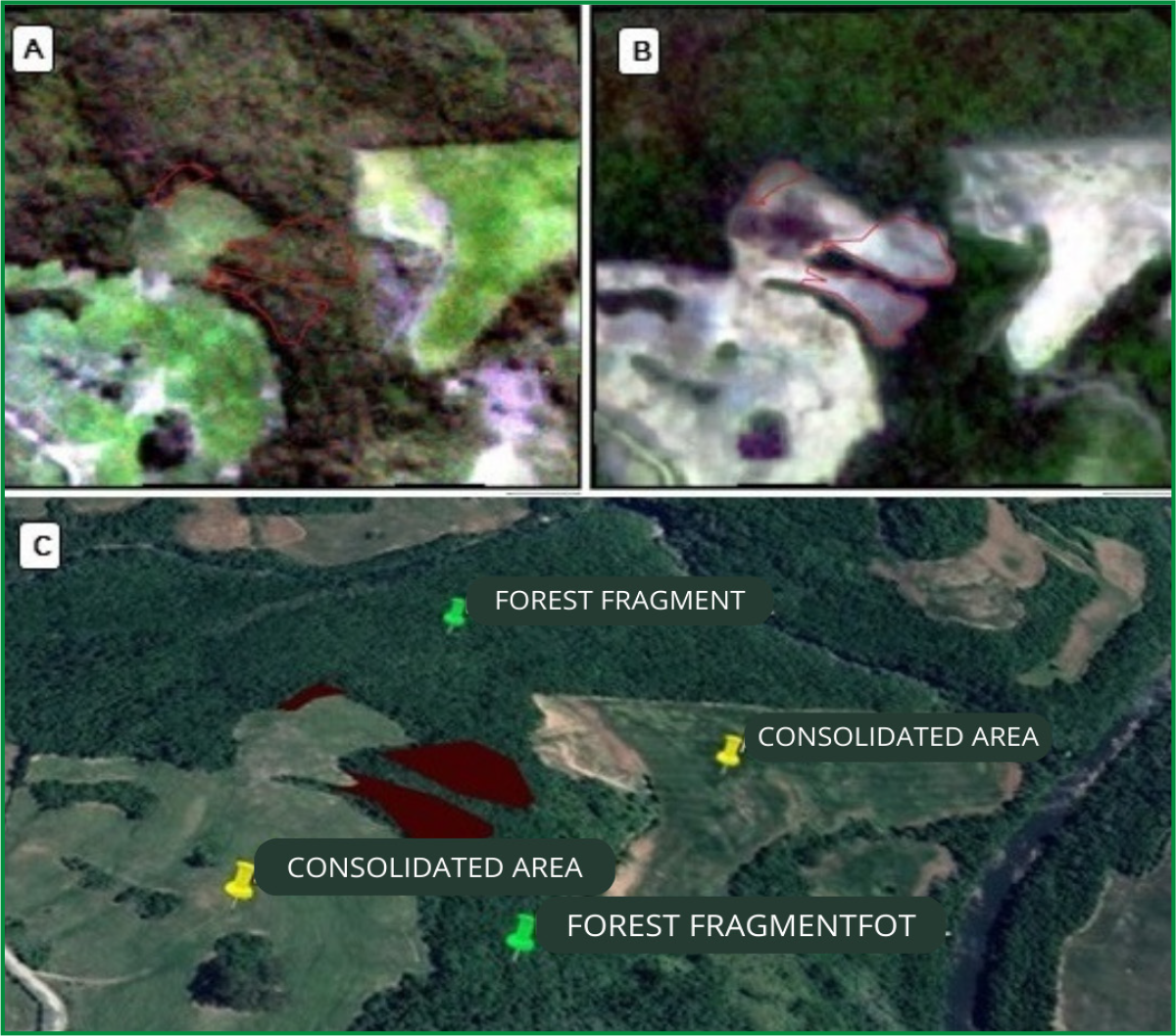 Source: Authors (2023)In where: Deforestation area, (A) before deforestation on 07/25/2022; (B) after deforestation on 11/20/2022; (C) around the deforested area.
 Source: Authors (2023)
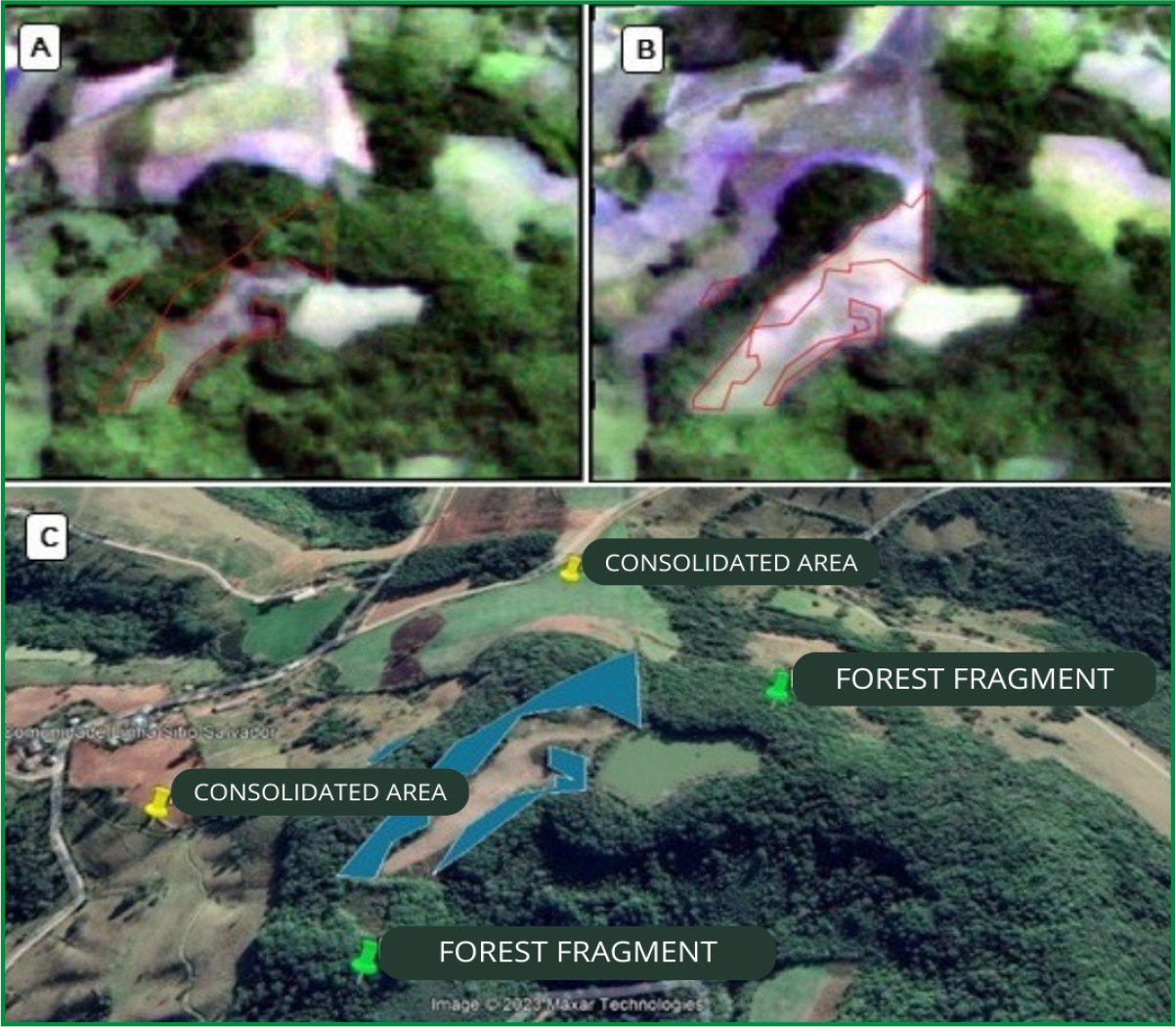 Source: Authors (2023)In where: Deforestation area, (A) before deforestation on 04/18/2022; (B) after deforestation on 09/29/2022; (C) around the deforested area.