 Yerba mate agroforestry system: an alternative for conserving the Atlantic Forest biome in Rio Grande do Sul
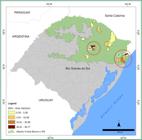
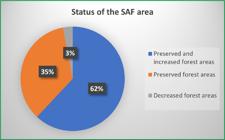
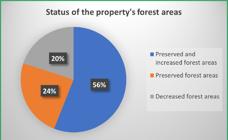
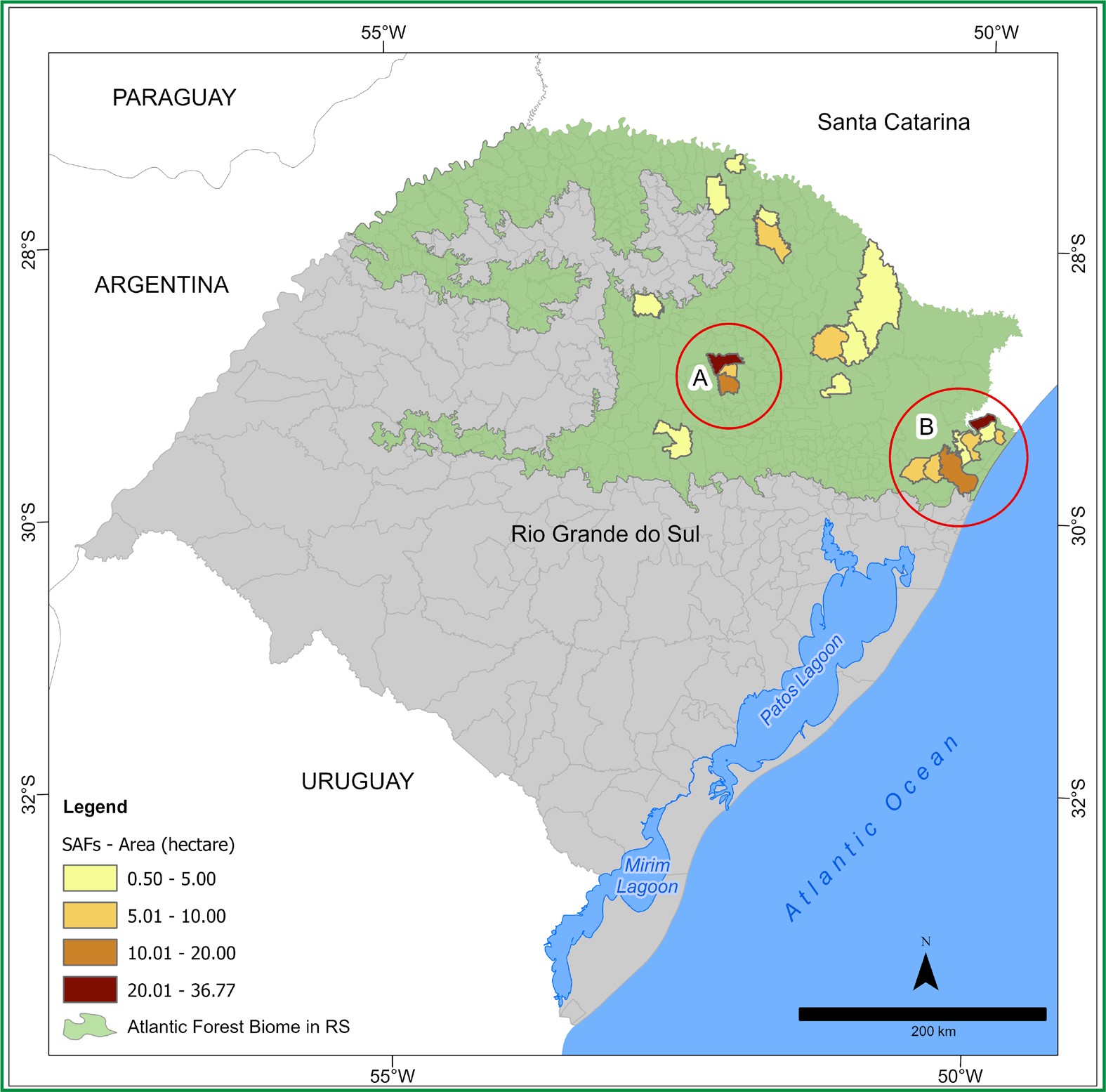
The Atlantic Forest has become Brazil’s most endangered biome. In the state of Rio Grande do Sul (RS), only 7.5% of the remaining areas of native vegetation are agroforestry systems (SAFs). Agroforestry systems (SAFs) are a sustainable alternative for occupying deforested areas, helping with the forest restoration process, and reconciling farming activities. One species adapted to grow in an SAF is yerba mate. Aiming to analyze the contribution of these systems to environmental conservation, we identified the yerba mate SAFs in RS, located in the Atlantic Forest biome, using the database of the online environmental licensing system. The influence of agroforestry on the properties was verified by identifying its origin, the characteristics of its surroundings, and possible areas for its implementation or expansion. According to the database accessed, RS has 37 yerba mate SAFs, 34 (92%) in the Atlantic Forest biome, and 21 (62%) providing vegetation increase in the agroforestry site. More than half (56%) of the properties with SAFs preserved and increased the other forest fragments inside their domain. SAFs’ implementation in strategic areas allows the connection of isolated forest fragments, ensuring gene flow and biodiversity. Therefore, they are a sustainable alternative for generating income and preserving the environment.
Keywords:
Biome; Environmental conservation; Sustainability; Agroforestry; Ilex paraguariensis
 Thumbnail
 Thumbnail
 Thumbnail
 Thumbnail
 Thumbnail
 Thumbnail
 Source: Authors (2023)
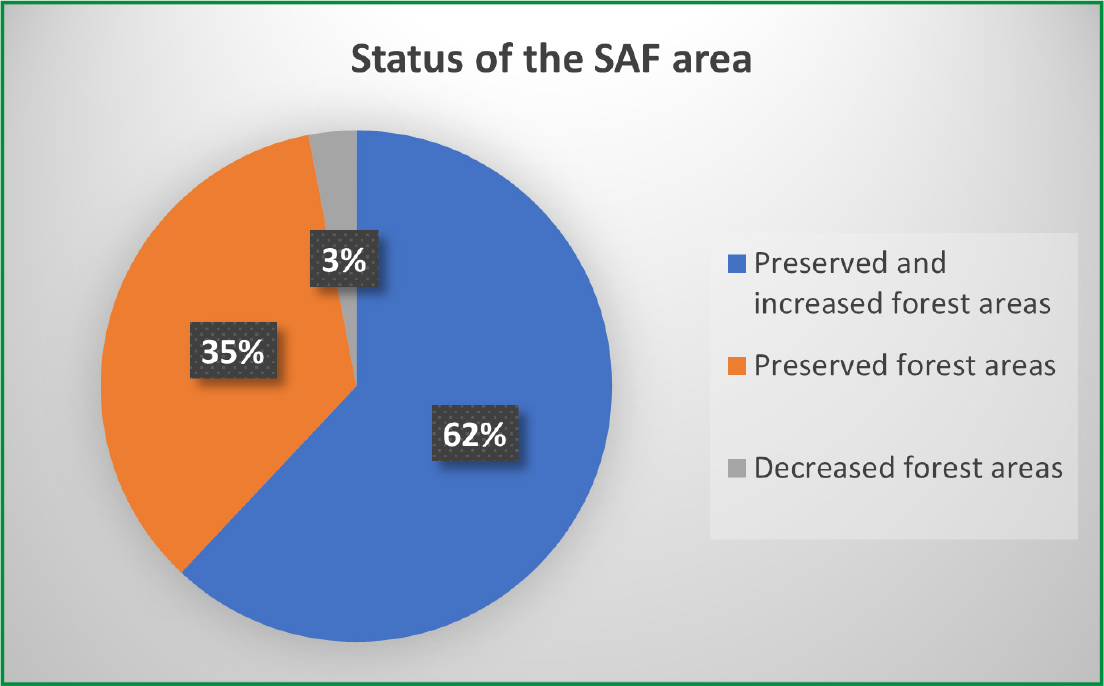 Source: Authors (2023)
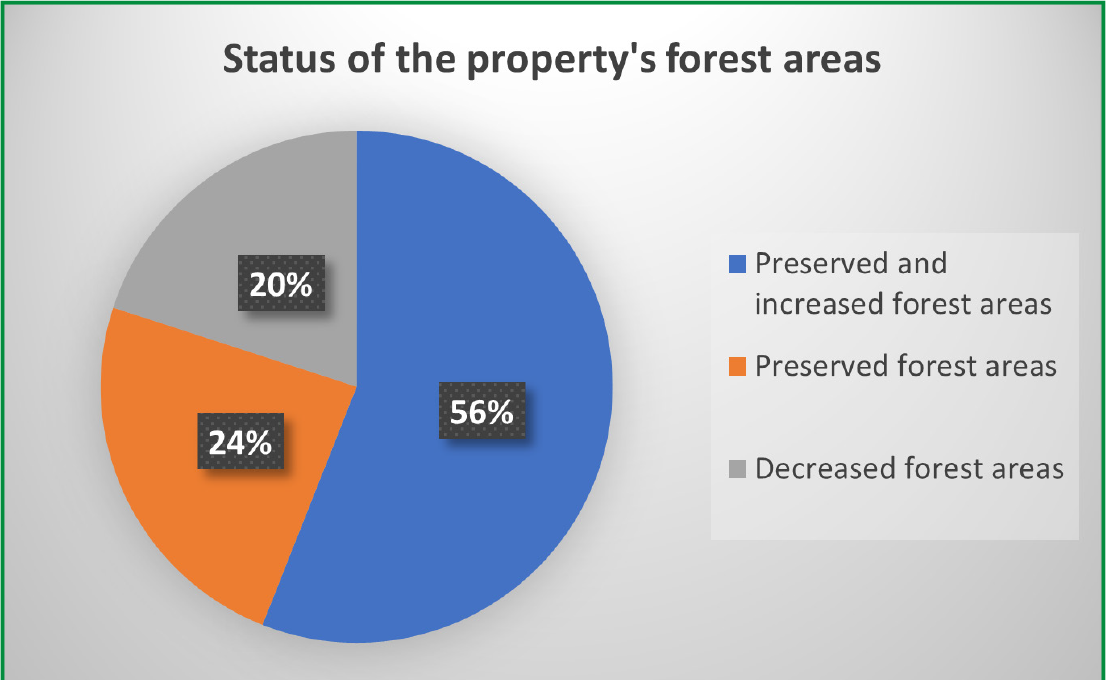 Source: Authors (2023)
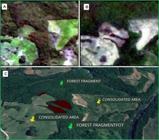
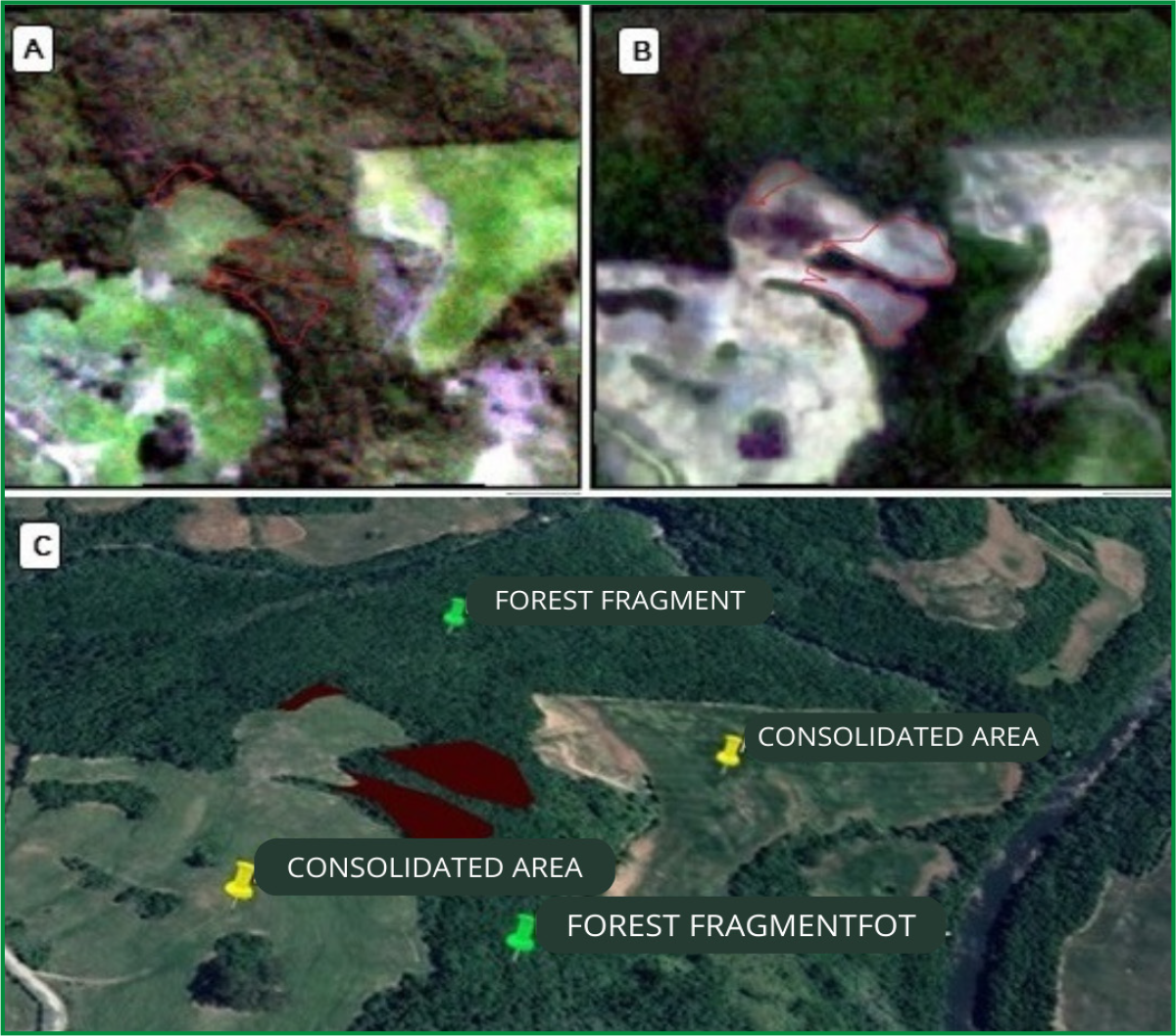 Source: Authors (2023)In where: Deforestation area, (A) before deforestation on 07/25/2022; (B) after deforestation on 11/20/2022; (C) around the deforested area.
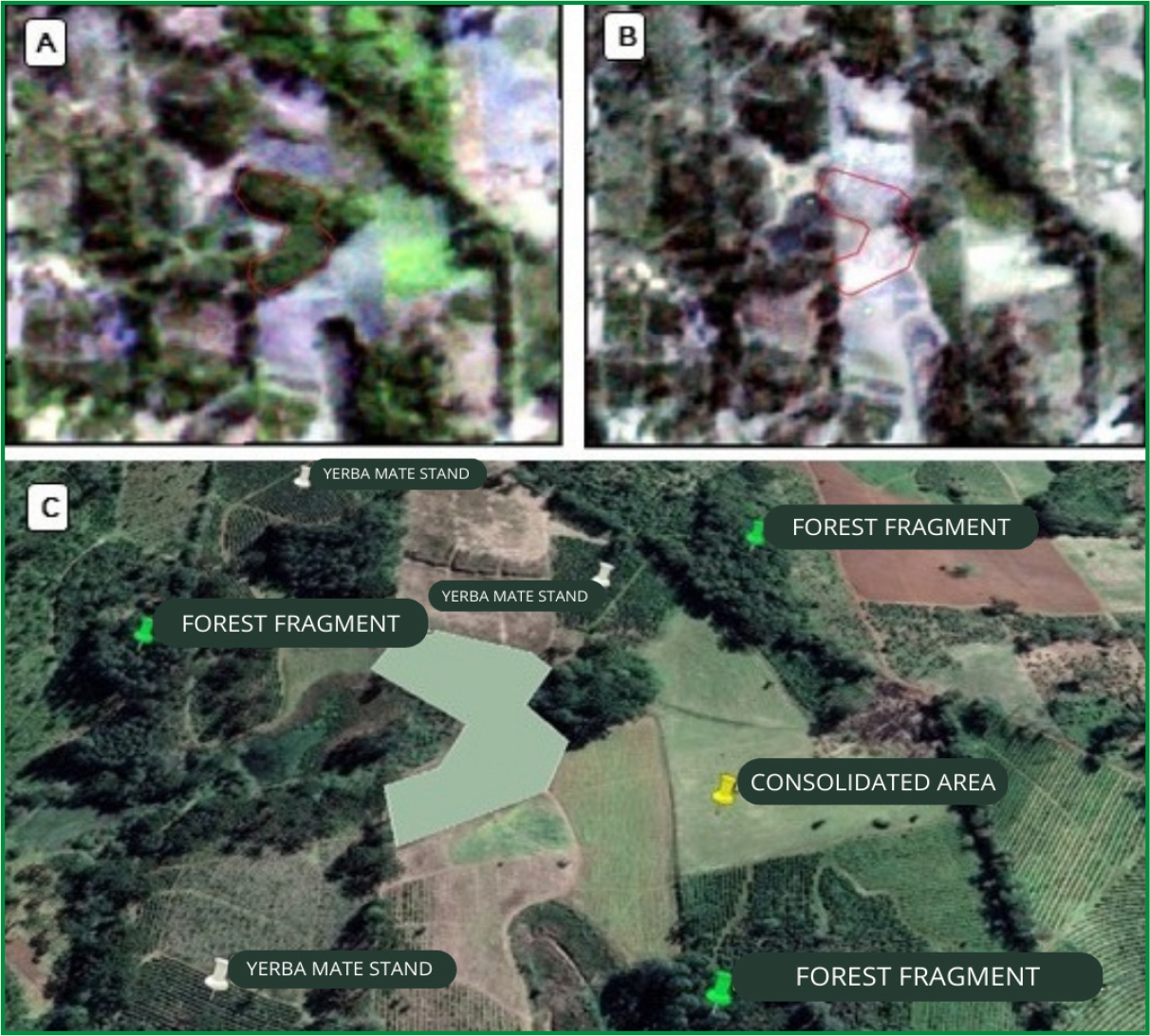 Source: Authors (2023)
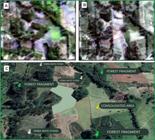
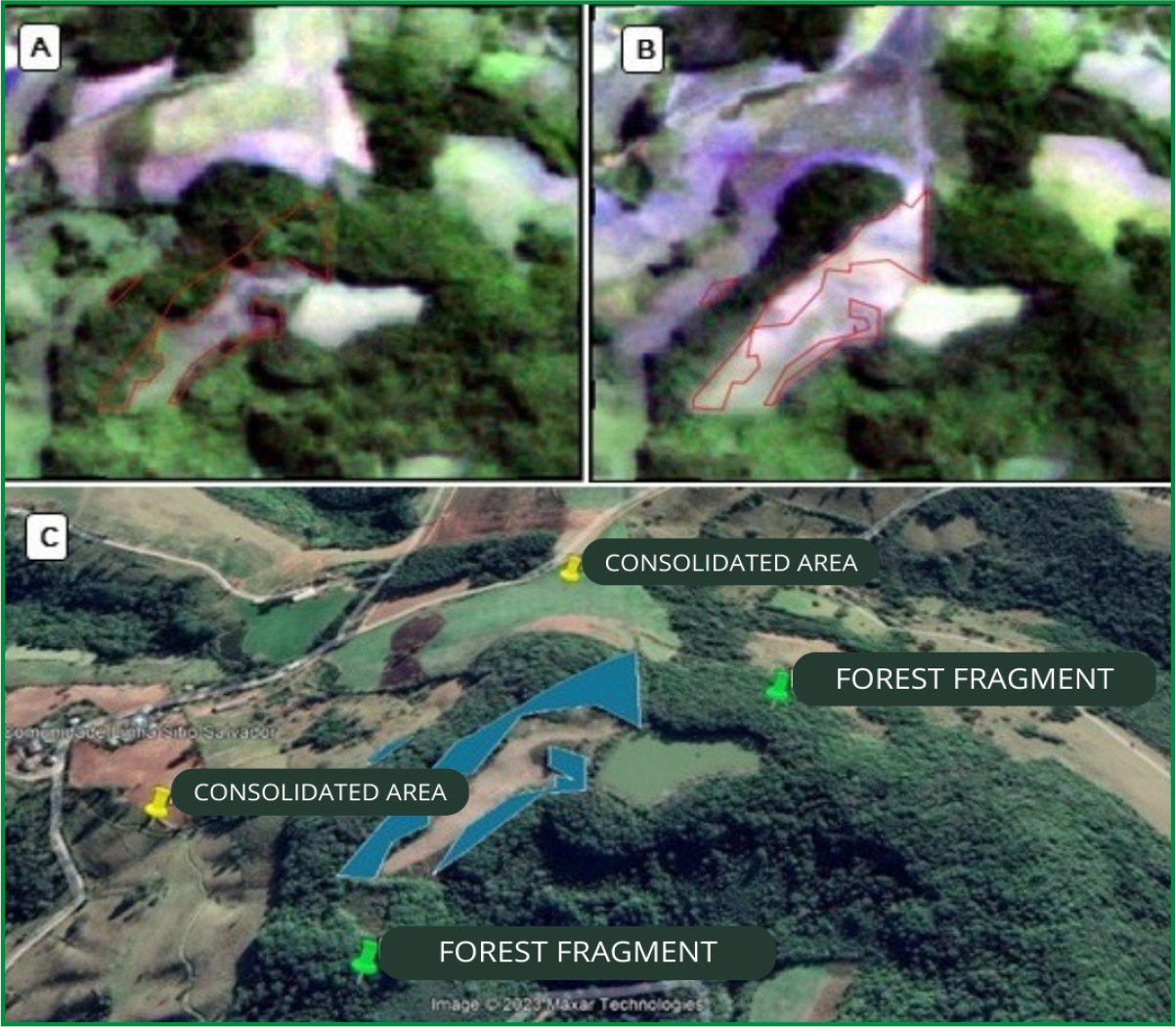 Source: Authors (2023)In where: Deforestation area, (A) before deforestation on 04/18/2022; (B) after deforestation on 09/29/2022; (C) around the deforested area.