
 Validation of a spatial model for the estimation of biomass and carbon storage in the clean shaft in the mangroves of the Gulf of Mexico
ABSTRACT
Mangroves are tropical and subtropical coastal ecosystems that play a crucial role in protection against erosion and sea level rise, as well as being important in mitigating climate change by storing large amounts of biomass and carbon. To estimate biomass and carbon storage in mangroves, using field and remote sensing methods. An inventory was carried out at 24 monitoring sites within the UMA, each with 30 x 10 m plots. Dasometric variables such as diameter at breast height and tree height were measured using measuring tapes and altimeters. Biomass was estimated using allometric equations specific to each mangrove species, and carbon content was calculated using a biomass-to-carbon conversion factor of 0.48. The vegetation index NDVI, obtained from images from the Sentinel 2A satellite, was used to assess vegetation health at the different sites. At site 3, L. racemosa had the highest average aboveground biomass (127.08 Mg ha-1), while site 18 had the lowest (8.18 Mg ha-1). For A. germinans, site 7 had the highest biomass (129.03 Mg ha-1), and site 5 the lowest (4.23 Mg ha-1). For R. mangle, site 21 had an average aboveground biomass of 53.88 Mg ha-1. NDVI values ranged from 0.68 to 0.88, being higher in areas of robust growth and lower in areas with less developed vegetation. The study validates a spatial model for estimating biomass and carbon storage in mangroves in the Gulf of Mexico, demonstrating the effectiveness of allometric equations and the use of NDVI as a tool to assess ecosystem health.
Keywords
NDVI; Ecosystem; Sentinel-2A; Remote sensing; Conservation
RESUMO
Os manguezais são ecossistemas costeiros tropicais e subtropicais que desempenham um papel crucial na proteção contra a erosão e o aumento do nível do mar, além de serem importantes na mitigação das mudanças climáticas, armazenando grandes quantidades de biomassa e carbono. Estimar a biomassa e o armazenamento de carbono em manguezais, usando métodos de campo e de sensoriamento remoto. Foi realizado um inventário em 24 locais de monitoramento dentro da UMA, cada um com parcelas de 30 x 10 m. As variáveis dasométricas, como o diâmetro à altura do peito e a altura da árvore, foram medidas usando fitas métricas e altímetros. A biomassa foi estimada usando equações alométricas específicas para cada espécie de mangue, e o conteúdo de carbono foi calculado usando um fator de conversão de biomassa para carbono de 0,48. O índice de vegetação NDVI, obtido de imagens do satélite Sentinel 2A, foi usado para avaliar a saúde da vegetação nos diferentes locais. No local 3, a L. racemosa apresentou a maior média de biomassa acima do solo (127,08 Mg ha-1), enquanto o local 18 apresentou a menor (8,18 Mg ha-1). Para A. germinans, o local 7 apresentou a maior biomassa (129,03 Mg ha-1) e o local 5, a menor (4,23 Mg ha-1). Para R. mangle, o local 21 teve uma biomassa média acima do solo de 53,88 Mg ha-1. Os valores de NDVI variaram de 0,68 a 0,88, sendo mais altos em áreas de crescimento robusto e mais baixos em áreas com vegetação menos desenvolvida. O estudo valida um modelo espacial para estimar a biomassa e o armazenamento de carbono em manguezais no Golfo do México, demonstrando a eficácia das equações alométricas e o uso do NDVI como uma ferramenta para avaliar a saúde do ecossistema.
Palavras-chave
NDVI; Ecossistema; Sentinel-2A; Sensoriamento remoto; Conservação
1 INTRODUCTION
Mangrove conservation is essential because of their role in climate change mitigation. These ecosystems act as carbon sinks by storing large amounts of carbon dioxide (CO2) in both their biomass and sediments. Some regions, such as Indonesia, possess the largest carbon stocks of all tropical forests (Arifanti et al., 2022). In addition, mangroves efficiently capture carbon-rich particles, which contribute to sediment accumulation and long-term carbon storage (Cuenca-Ocay, 2024). They also play a key role in regulating nitrogen cycles, influencing greenhouse gas emissions.
In Mexico, mangroves are dominated by three species: white mangrove (Laguncularia racemosa), black mangrove (Avicennia germinans) and red mangrove (Rhizophora mangle). Mexican mangroves tend to have a predominance of one mangrove species or a predominant association of two or three species depending on the area in which they are established. Mangrove distribution occurs across highly dynamic environmental gradients such as salinity, temperature, oxygen, redox potential, and different nutrient inputs from their environment. Mexico ranks fifth worldwide in terms of mangrove area (Hernández and Junca-Gómez, 2020).
Studies on quantification of aboveground forest biomass are divided into direct methods (actual measurement of all plant biomass in a known area) and indirect methods, for example, those based on allometric models developed from trees with known size and mass (Aparecida dos Reis et al., 2022; Santos et al., 2017). Forest biomass is an important variable for quantifying the role of mangroves in carbon storage; therefore, it can be estimated by allometric functions that relate biomass to physical parameters of the tree, such as diameter at breast height, tree height, crown diameter, basal area and density (Aye et al., 2022; Thuy et al., 2020). The clear stem is the length that exists along the stem from its base to the insertion of the first live branches of the tree crown (Romahn et al., 1994). Remote sensing provides methods to estimate biomass with satellite imagery at the landscape level using spectral vegetation indices (Barbosa-Ramos et al., 2023; Nguyen et al., 2019).
Due to the above, it is important to continue generating research aimed at estimating carbon storage in mangroves and thus collaborate with decision makers in generating strategies for the protection and recovery of these ecosystems. Therefore, the objective of this study is to estimate with dasometric variables and vegetation spectral indices the biomass and carbon storage of mangroves in the Environmental Management Unit "La Solución Somos Todos" in Paraíso, Tabasco, Mexico.
2 MATERIALS AND METHODS
2.1 Study sites
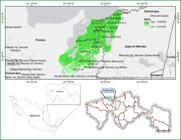
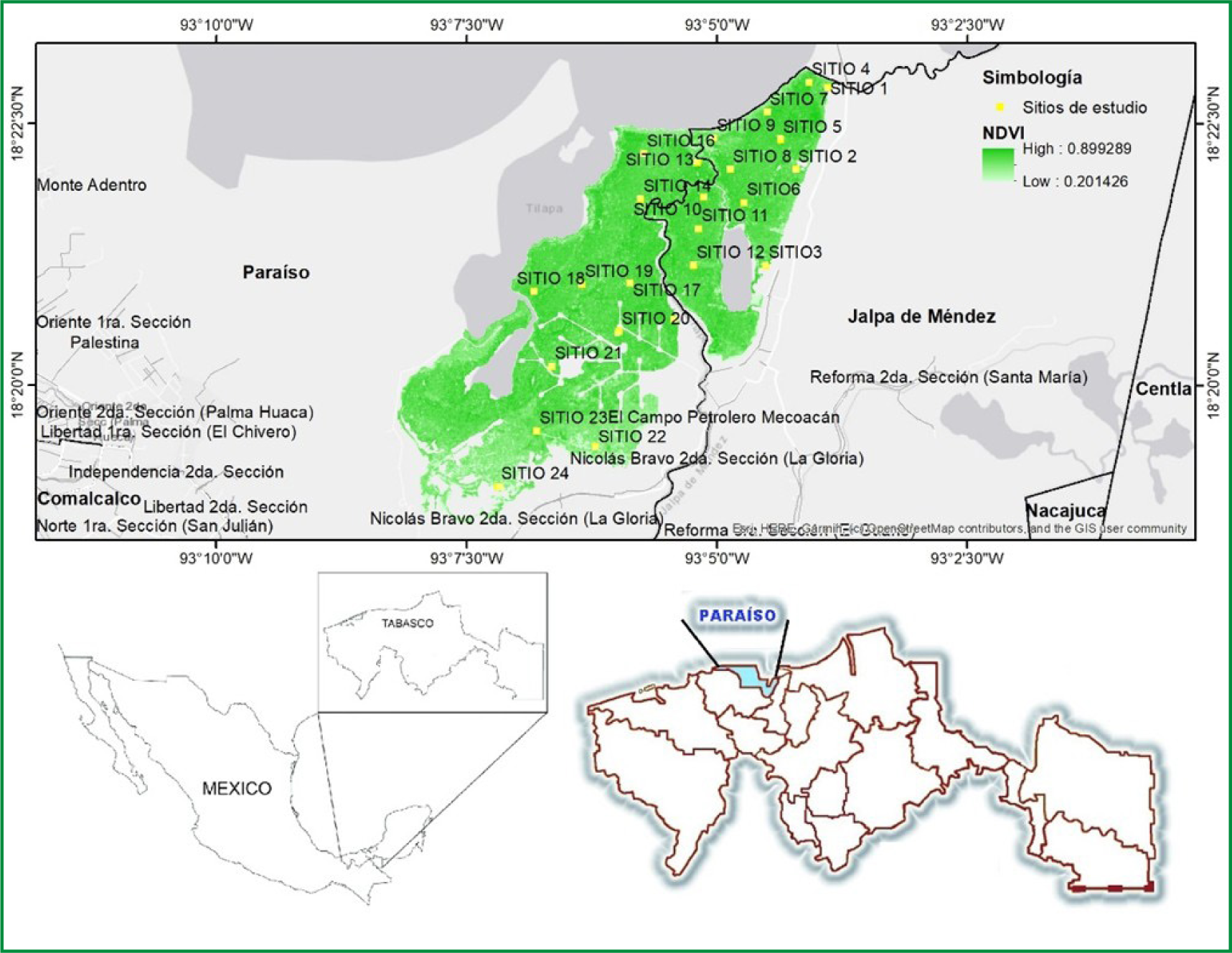
The study was carried out in the UMA (Unit for the Conservation, Management and Sustainable Use of Wildlife) La Solución Somos Todos, located in Paraíso Tabasco, Mexico (Figure 1). The mangrove forest cover is approximately 1,936 ha. The ecosystem of the UMA La Solución Somos Todos is composed of three species: red mangrove (R. mangle), white mangrove (L. racemosa), and black mangrove (A. germinans).
2.2 Data collection and inventory
The information to estimate the biomass and subsequently determine the carbon stored in the mangrove ecosystem was obtained through field measurements of the plots, with the support of the ejido members who know well the condition of each plot in the years 2020 and 2021, which comprised twenty-four monitoring sites, each plot was 30 x 10 m.
Biomass was estimated using the indirect method that involves the use of equations and mathematical models, which relate dasometric variables such as diameter and height.
2.3 Measurements of dasometric variables
For L. racemosa and A. germinans, the variable of normal diameter at 1.30 m from the ground with a diametric tape and the height of the mangrove trees with an altimeter was considered for L. racemosa and A. germinans. For R. mangle, the variable of the diameter 30 cm above the last aerial root with a diametric tape and the height of the mangrove trees with a haga gun (altimeter) were considered (Kauffman et al., 2013).
2.4 Estimation of aboveground biomass and carbon stocks
For L. racemosa, aboveground biomass was estimated using the equation by Chave et al. (2005) and Komiyama et al. (2005), as showed in Equation (1):
where: Ba = aerial biomass of trees in dry weight (kg); ρ = wood density (g cm) -3; D = tree diameter at a height of 1.30 m y; H = tree height (m).
The density value for L. racemosa was obtained from the international wood density database provided by the website (http://db.worldagroforestry.org//wd).
Tree biomass for A. germinans was quantified using the equations proposed by Fromard et al. (1998) for neotropical mangroves with high structural development, as follow in Equation (2):
where: BT: Total biomass; DBH: Diameter at breast height.
For R. mangle, tree biomass was quantified using the equations proposed by Fromard et al. (1998) for neotropical mangroves with high structural development, as showed in Equation (3):
where: BT: Total biomass; DR: Diameter above the last root.
The carbon store in the mangrove forest was obtained using the biomass to carbon conversion factor of 0.48 (Kauffman et al., 2013).
2.5 Estimation of the NDVI vegetation index
NDVI was estimated from images taken by the Sentinel 2A sensor. This sensor has adequate spatial resolution (10 x 10m), high temporal resolution (5 days) and cloudiness detection. The images were georeferenced and atmospherically corrected (Santa et al., 2013). NDVI is the ratio between the maximum red band length absorption (R) due to chlorophyll pigments and the maximum infrared wavelength reflectance (NIR) due to leaf cell structure, according to the following formula: NDVI= (NIR - R) / (NIR + R) Where NIR corresponds to the near infrared, and R to the red of the visible, of the electromagnetic spectrum. The index has a range between -1 and 1; values close to 1 indicate vigorous vegetation; negative values indicate absence of vegetation or senescent vegetation (Wahlang and Chaturvedi, 2020).
2.6 Regression Analysis between NDVI and Aerial Biomass
To analyze the relationship between normalized difference vegetation index (NDVI) and aboveground biomass of mangrove species, a simple linear regression approach was employed. The data used were obtained from average aerial biomass measurements (in Mg-ha-1) for three dominant species: Laguncularia racemosa, Avicennia germinans and Rhizophora mangle, together with the corresponding values of average NDVI per sampling site.
3 RESULTS AND DISCUSSIONS
3.1 Average aerial biomass and Stored carbon
For L. racemosa, site 3 presented the highest average aerial biomass (127.08 Mg-ha-1) of the twenty-four study sites, site 18 presented the lowest aerial biomass (8.18 Mg-ha-1). For A. germinans site 7 had the highest average aboveground biomass (129.03 Mg-ha-1) of the twenty-four study sites, site 5 had the lowest aboveground biomass (4.23 Mg-ha-1). For R. mangle, site 21 had the highest average aboveground biomass (53.88 Mg-ha-1) of the twenty-four study sites, site 5 had the lowest aboveground biomass (4.23 Mg-ha-1) (Table 1).
The present research took L. racemosa as a case study, where the highest amount of aboveground biomass obtained in the study sites was 127.08 Mg-ha-1 and vegetation carbon stocks 58.96 MgC-ha-1. Results achieved in this research are comparable, at the national level with the research conducted by Bautista-Olivas et al. (2018) in Bahía del Sargento in Sonora, Mexico, where the species L. racemosa obtained an aboveground biomass of 81.5 Mg-ha-1 and a carbon stock estimate of 40.7 MgC-ha-1 ; four years later, at the same study site Sargento Bay in Sonora, Mexico, Mendoza-Cariño et al. (2022) L. racemosa obtained an aboveground biomass of 104.1 Mg-ha-1 and a carbon stock estimate of 52.1 MgC-ha-1 . In La Paz Bay in Baja California Sur, México, Ochoa-Gómez et al. (2019) cited an average aboveground biomass value in study sites of 93.8 Mg-ha-1 and a carbon storage of 43.5 MgC-ha-1 for L. racemosa.
In this research, the aboveground biomass of all study sites obtained an average of 41.04 Mg-ha-1 and an average carbon storage of 19.70 MgC-ha-1 for a single species taken as a case study A. germinans. The results achieved in this research are comparable, at the national level, with the research conducted by Bautista-Olivas et al. (2018) in Bahía del Sargento in Sonora, Mexico, where the species A. germinans obtained an aboveground biomass of 47.9 Mg-ha-1 and an estimated carbon storage of 23.9 MgC-ha-1 ; four years later, in the same study site Bahía del Sargento in Sonora, Mexico, Mendoza-Cariño et al. (2022) mentions that A. germinans obtained an aboveground biomass of 71.7 Mg-ha-1 and an estimated carbon stock of 35.9 MgC-ha-1 . In the Bay of La Paz in Baja California Sur, México, Ochoa-Gómez et al. (2019) cited an average value of aboveground biomass in the study sites of 45.6 Mg-ha-1 and a carbon storage of 22.8 MgC-ha-1 for A. germinans.
In this research, the aboveground biomass of all study sites obtained an average of 10.64 Mg-ha-1 and an average carbon storage of 5.09 MgC-ha-1 for a single species taken as a case study R. mangle. The results achieved in this research are comparable, nationally and locally, with research conducted by Bautista-Olivas et al. (2018) in Bahía del Sargento in Sonora, Mexico, where the species R. mangle obtained an aboveground biomass of 0.038 Mg-ha-1 ; four years later, in the same study site Bahía del Sargento in Sonora, Mexico, Mendoza-Cariño et al. (2022) mentions that R. mangle obtained an aboveground biomass of 32.3 Mg-ha-1 and an estimated carbon stock of 16.2 MgC-ha-1 . In La Paz Bay in Baja California Sur, Mexico, Ochoa-Gómez et al. (2019) cited an average carbon storage value of 11.2 MgC-ha-1 for R. mangle.
3.2 Regression Analysis between NDVI and Aerial Biomass
Laguncularia racemosa
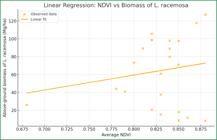
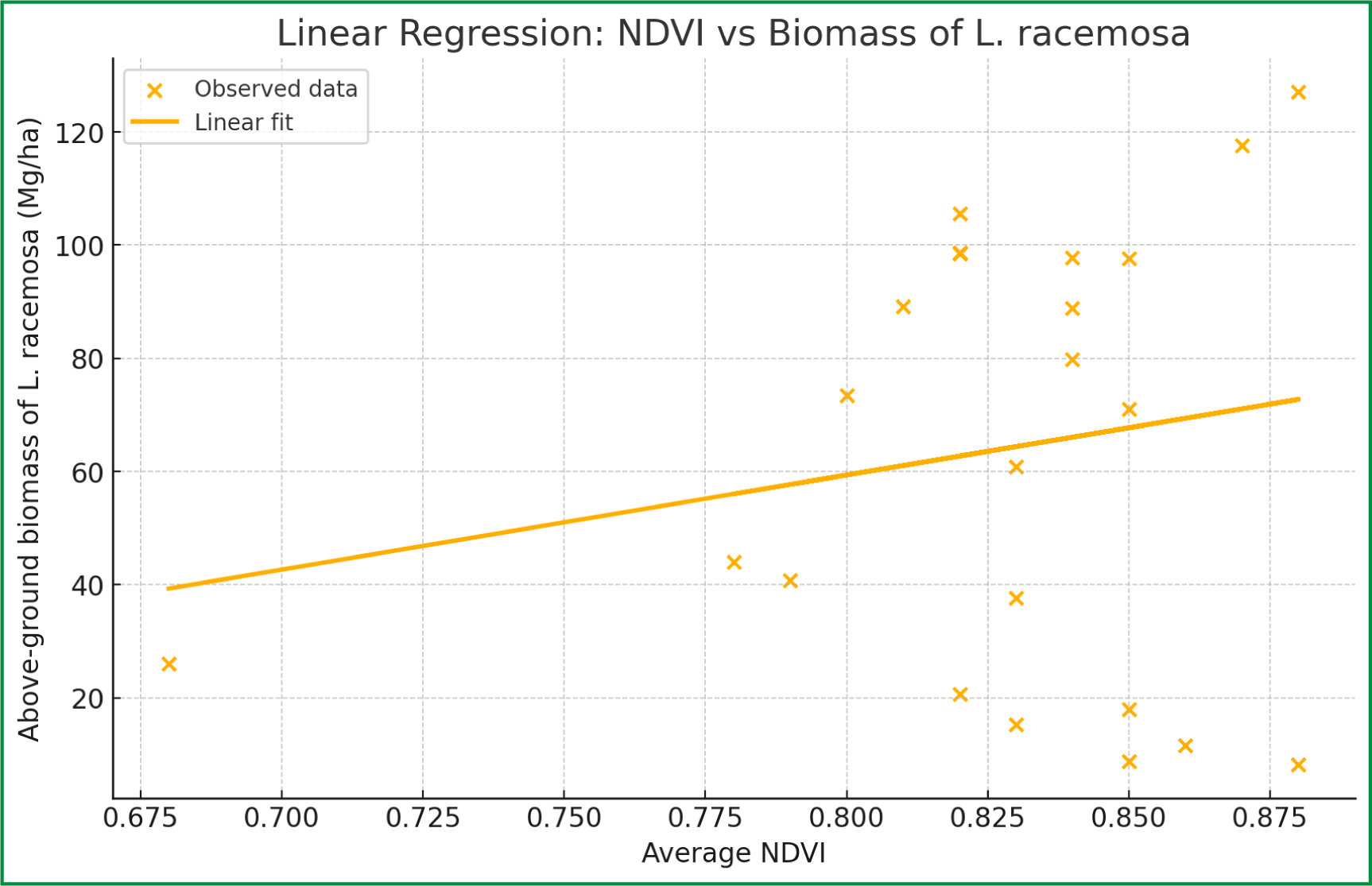
The adjusted model for this species presented the following Equation (4):
The coefficient of determination was R2 = 0.031, indicating that only 3.1% of the variability in biomass can be explained by NDVI values. Furthermore, the p-value associated with the NDVI coefficient was p = 0.414, indicating that the relationship is not statistically significant (p > 0.05). Therefore, there was insufficient evidence to affirm that NDVI significantly influences the aerial biomass of L. racemosa (Figura 2).
Avicennia germinans
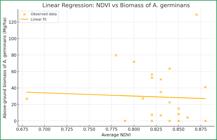
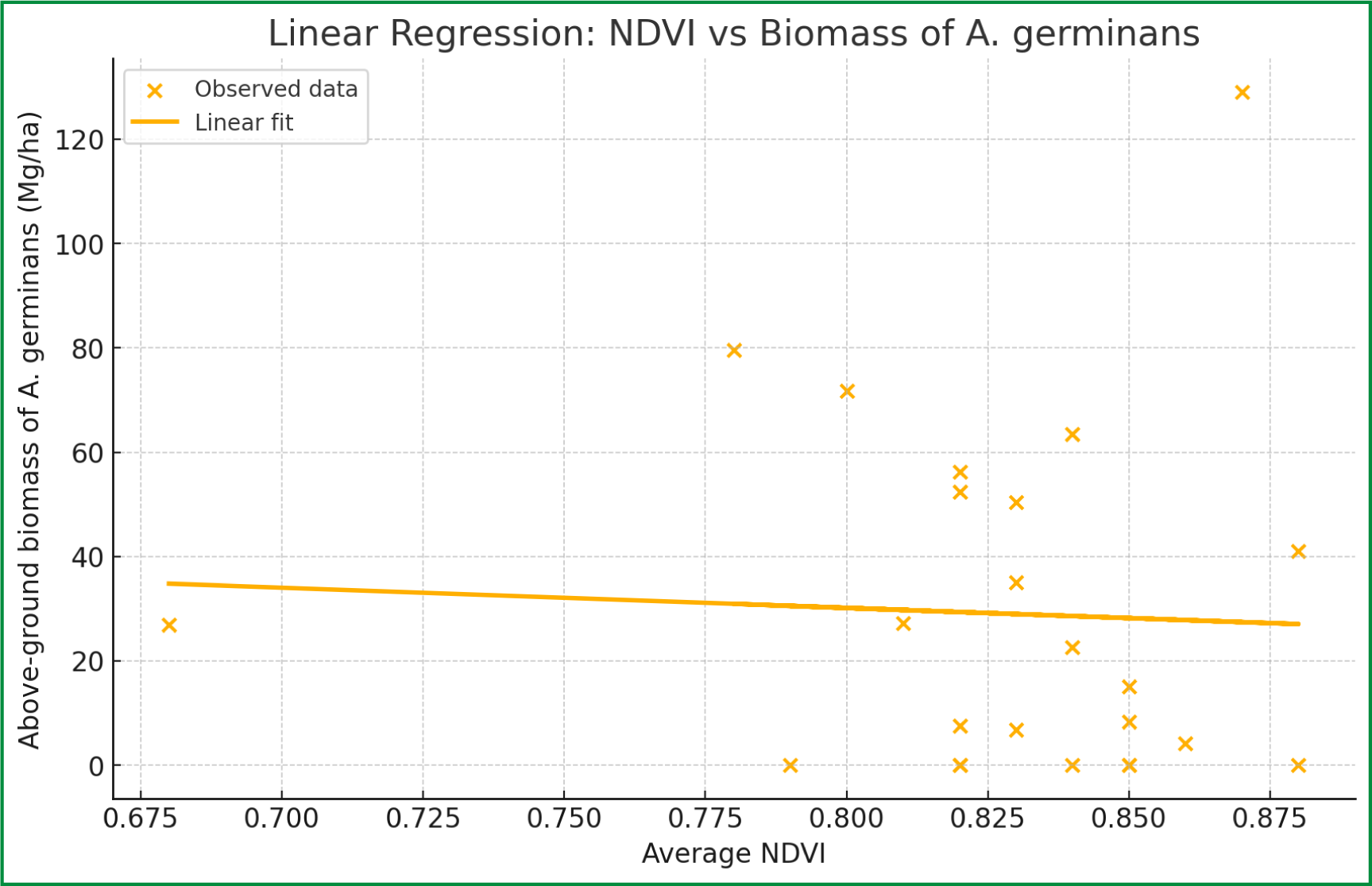
For this species, the model Equation (5) was:
The model presented a very low coefficient of determination (R2 = 0.002), indicating that only 0.2% of the variability in biomass is associated with NDVI. Also, the p-value of the coefficient was p = 0.827, so there was no significant relationship between NDVI and aerial biomass of A. germinans (Figure 3).
Rhizophora mangle
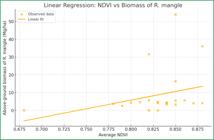
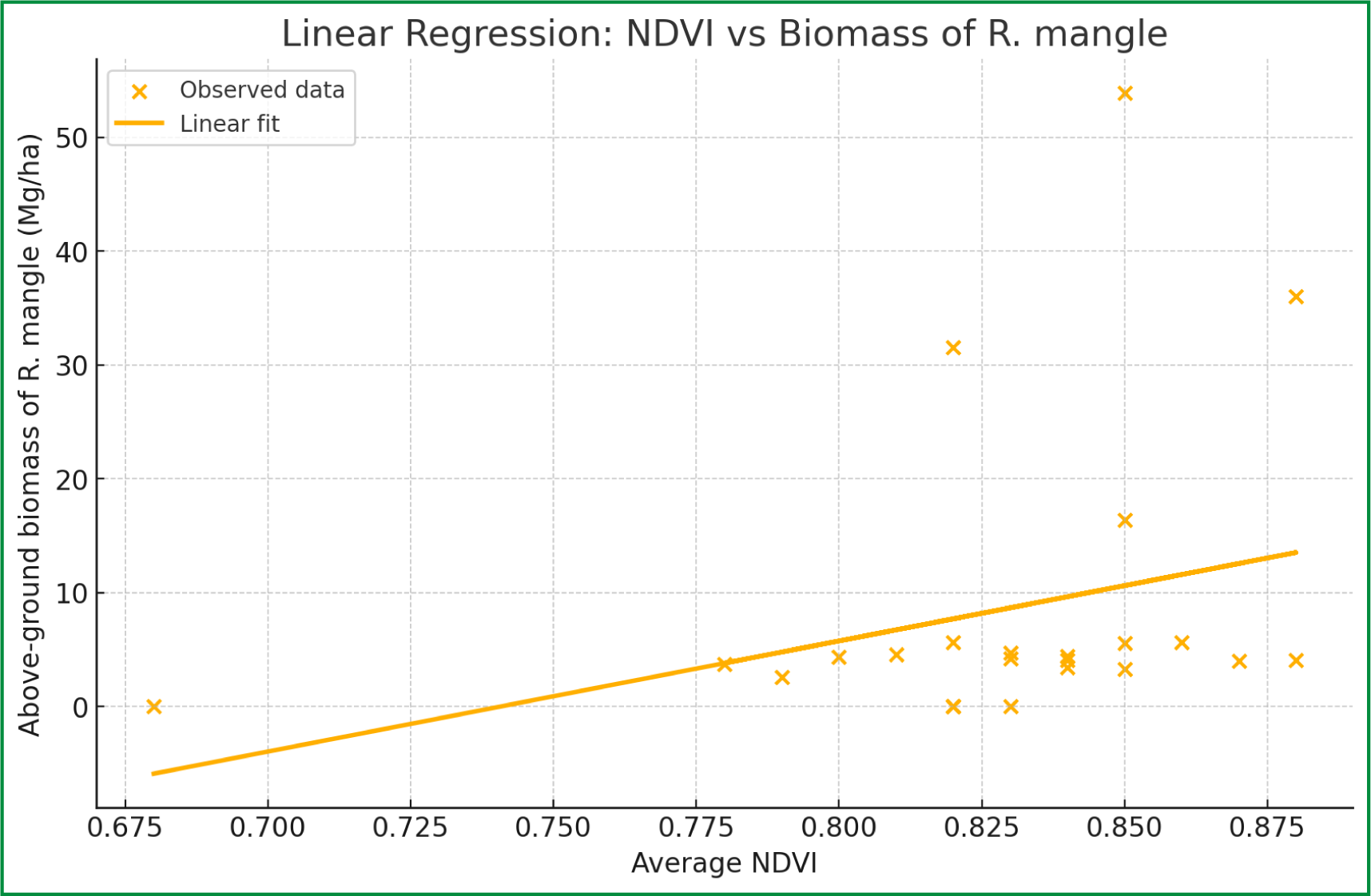
The regression for this species resulted in the following Equation (6):
The model showed a better relative fit than the previous ones, with an R2 = 0.088, i.e., 8.8% of the variability in biomass was explained by NDVI. However, the p-value was p = 0.160, which also does not allow us to consider this relationship as statistically significant at the 95% confidence level (Figure 4).
In the three cases analyzed, no statistically significant relationship was identified between mean NDVI and aboveground biomass of the species studied. This suggests that, under the conditions of the present study, NDVI alone is not a reliable predictor of mangrove aboveground biomass, and that other ecological, structural or environmental factors could be influencing more decisively the observed variability.
Winarso et al. (2015) developed a combined model using optical data (NDVI from Landsat 8) and radar data (tree height estimated using the ALOS PALSAR satellite). They found that the correlation between NDVI and biomass was low when used in isolation, but when combining NDVI with tree height, they achieved a high coefficient of determination (R2 = 0.815) in areas with developed mangroves such as Alas Purwo National Park, Indonesia. However, in degraded areas or areas with low trees such as Segara Anakan lagoon (SAL), Java, Indonesia, the combined model barely achieved an R2 = 0.081.
3.3 Aerial biomass with satellite images
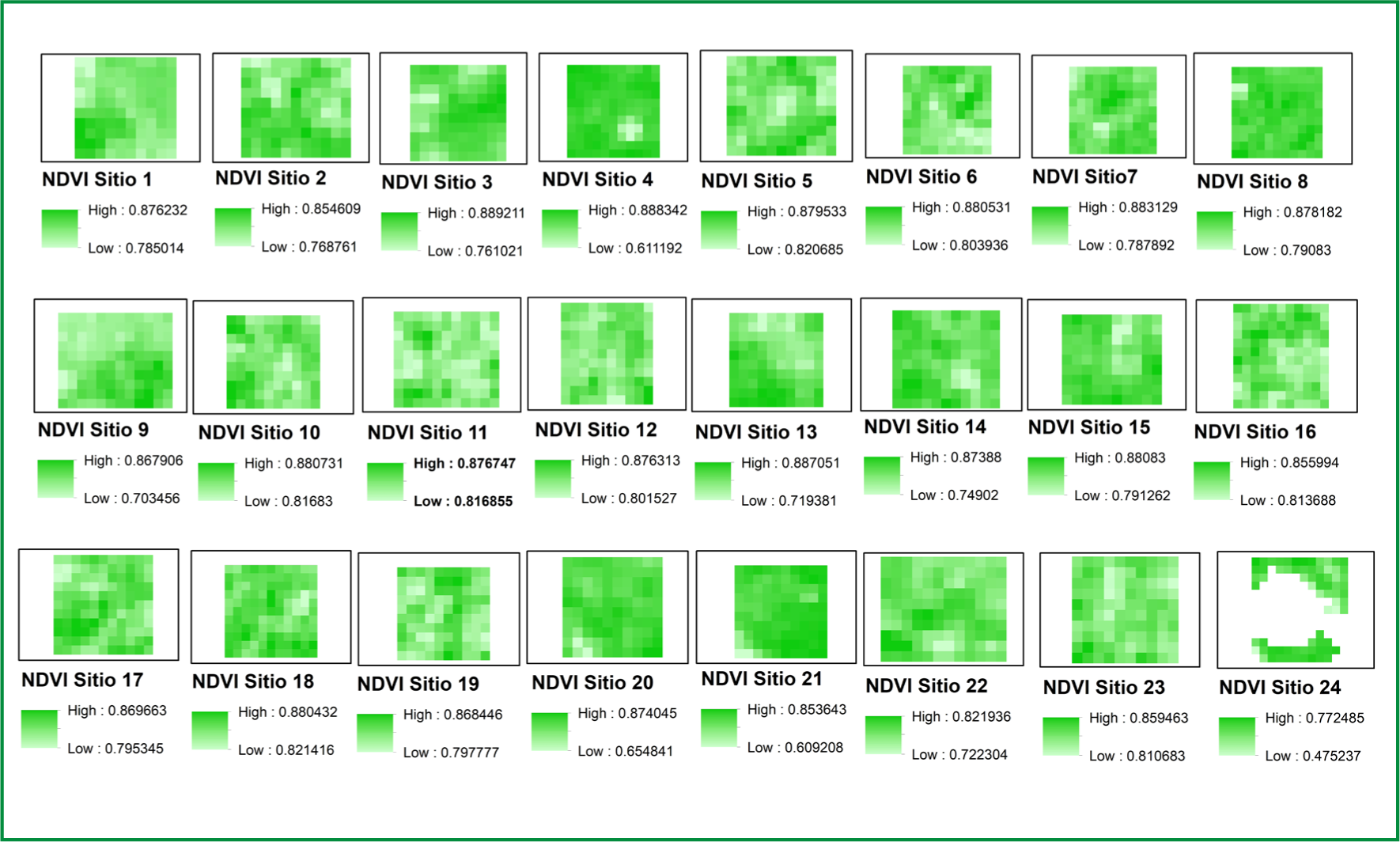
The NDVI values varied between the different study sites, between 0.68 and 0.88. The ejido has a permit for the sustainable use of the mangrove ecosystem, so this type of mangrove usually grows by natural regeneration and is found in different stages of growth in the study sites. Higher NDVI values were recorded for the mangroves where the majority are in the latizal and fustal stages, where a relatively high biomass was obtained.
The lowest NDVI values were obtained where most of the mangroves were in the sapling and latizal stages, where they coincided with a relatively low biomass (Figure 5).
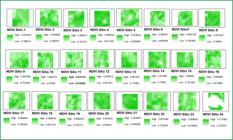
In this research, NDVI values recorded in the study sites ranged from 0.47, as the lowest value, to 0.88, as the highest, indicating that the health of the mangrove ecosystem is good. In research conducted in mangroves in Indonesia, NDVI values ranging from -0.39 to 0.88 have been reported (Sumarga et al., 2022), while other studies in the same country have found ranges between -0.07 and 0.59 (Muhsoni et al., 2018). In Vietnam, NDVI values in mangroves have been reported between -0.30 and 0.66 (Thuy et al., 2020). On the other hand, in Colombia, studies using NDVI as an indicator to monitor mangrove ecosystem health have recorded values ranging from -0.60 to 0.96 (Perea-Ardila et al., 2021).
4 CONCLUSIONS
The study was able to estimate the aerial biomass and carbon storage in mangroves of the UMA “La Solución Somos Todos” in Paraíso, Tabasco, through the combined use of dasometric variables and the NDVI vegetation index, thus fulfilling the main objective of the work. There were notable differences in biomass and carbon stored among the species studied, with Laguncularia racemosa having the highest values, followed by Avicennia germinans and Rhizophora mangle.
Despite a general trend between high NDVI values and higher biomass in sites with more developed vegetation, the simple regression analysis did not show a statistically significant relationship between NDVI and aboveground biomass for any of the species. This indicates that, under the conditions of the present study, NDVI alone is not a reliable predictor of biomass, and that other structural and ecological factors of the ecosystem need to be considered.
The results obtained show the relevance of mangroves as carbon reservoirs and reinforce the need to implement conservation and sustainable management strategies. The knowledge generated can be useful for decision-making in the environmental management of these ecosystems and lays the groundwork for future studies that integrate complementary variables and advanced remote sensing techniques.
Data Availability Statement:
Datasets related to this article will be available upon request to the corresponding author.
-
Evaluators in this article:
Renisson Neponuceno de Araújo Filho, Section Editor
REFERENCES
- APARECIDA DOS REIS, A. et al. Temporal stability of stratifications using different dendrometric variables and geostatistical interpolation. Ciência Florestal, v. 32, n. 1, 2022.
- ARIFANTI, V. B. et al. Contributions of mangrove conservation and restoration to climate change mitigation in Indonesia. Global Change Biology, v. 28, n. 15, p. 4523–4538, 2022.
- AYE, W. N.; TONG, X.; TUN, A. W. Species diversity, biomass and carbon stock assessment of Kanhlyashay Natural Mangrove Forest. Forests, v. 13, n. 7, p. 1013, 2022.
- BARBOSA-RAMOS, J. C. et al. Índices de vegetação na diagnose nutricional de povoamentos híbridos de Eucalyptus urophylla ST Blake. Ciência Florestal, v. 33, n. 2, 2023.
- BAUTISTA-OLIVAS, A. I. et al. Aerial biomass and carbon sequestration in mangroves in the arid zone of northwestern Mexico: Bahía del Tóbari and estero El Sargento, Sonora. Revista Chapingo Serie Ciencias Forestales y del Ambiente, v. 24, n. 3, p. 387-403, 2018.
- CHAVE, J. et al. Tree allometry and improved estimation of carbon stocks and balance in tropical forests. Oecologia, v. 145, p. 87-99, 2005.
- CUENCA-OCAY, G. Mangrove ecosystems’ role in climate change mitigation. Davao Research Journal, v. 12, n. 2, p. 72-75, 2019.
- FROMARD, F. et al. Structure, above-ground biomass and dynamics of mangrove ecosystems: new data from French Guiana. Oecologia, v. 115, n. 1, p. 39-53, 1998.
- HERNÁNDEZ, M. E.; JUNCA-GÓMEZ, D. Carbon stocks and greenhouse gas emissions (CH4 and N2O) in mangroves with different vegetation assemblies in the central coastal plain of Veracruz Mexico. Science of The Total Environment, v. 741, p. 140276, 2020.
- KAUFFMAN, J. B.; DONATO, D. C.; ADAME, M. F. Protocol for the measurement, monitoring and reporting of mangrove structure, biomass and carbon stocks. Bogor: CIFOR, 2013. (Vol. 117).
- KOMIYAMA, A.; POUNGPARN, S.; KATO, S. Common allometric equations for estimating the tree weight of mangroves. Journal of Tropical Ecology, v. 21, n. 4, p. 471-477, 2005.
- MENDOZA-CARIÑO, M. et al. Economic value of aboveground mangrove biomass carbon storage in Sonora, Mexico. Revista Chapingo Serie Ciencias Forestales y del Ambiente, v. 28, n. 3, 2022.
- MUHSONI, F. F. et al. Comparison of different vegetation indices for assessing mangrove density using sentinel-2 imagery. International Journal of Geomate, v. 14, p. 42-51, 2018.
- NGUYEN, L. D. et al. Mangrove mapping and above-ground biomass change detection using satellite images in coastal areas of Thai Binh Province, Vietnam. [S. l.: s. n.], 2019.
- OCHOA-GÓMEZ, J. G. et al. Mangrove wetland productivity and carbon stocks in an arid zone of the Gulf of California (La Paz Bay, Mexico). Forest Ecology and Management, v. 442, p. 135-147, 2019.
- PEREA-ARDILA, M. A.; LEAL-VILLAMIL, J.; OVIEDO-BARRERO, F. Caracterización espectral y monitoreo de bosques de manglar con teledetección en el litoral pacífico colombiano: Bajo Baudó, Chocó. La Granja: Revista de Ciencias de la Vida, v. 34, n. 2, p. 27-44, 2021.
- ROMAHN DE LA VEGA, C. F.; RAMÍREZ MALDONADO, H.; TREVIÑO GARCÍA, J. L. Dendrometry Chapingo: Universidad Autónoma Chapingo, 1994.
- SANTA, V. et al. Determination of the correlation between biomass data obtained in the field and NDVI obtained by remote sensing along the Chucul stream (Pcia. Córdoba) [S. l.: s. n.], 2013.
- SANTOS, H. V. V. S. S. et al. Allometric models for estimating the aboveground biomass of the mangrove Rhizophora mangle Brazilian Journal of Oceanography, v. 65, n. 1, p. 44-53, 2017.
- SUMARGA, E. et al. Maintaining carbon storage does not reduce fish production from mangrove-fish pond system: a case study in Coastal Area of Subang District, West Java, Indonesia. Forests, v. 13, n. 8, p. 1308, 2022.
- THUY, H. L. T. T. et al. Using sentinel image data and plot survey for the assessment of biomass and carbon stock in coastal forests of Thai Binh province, Vietnam. Applied Ecology & Environmental Research, v. 18, n. 6, 2020.
- WAHLANG, R.; CHATURVEDI, S. S. Relationship between above-ground biomass and different vegetation indices of forests of Ri-Bhoi District, Meghalaya, India. International Journal of Engineering and Technical Research, v. 9, 2020.
- WINARSO, G. et al. Mangrove above ground biomass estimation using combination of Landsat 8 and ALOS PALSAR data. International Journal of Remote Sensing and Earth Sciences, v. 12, n. 2, p. 85-96, 2015.
-
Editorial Board:Prof. Dr. Cristiane Pedrazzi, Editor-in-ChiefProf. Dr. Dalton Righi, Associate EditorMiguel Favila, Managing Editor

 Source: Authors (2024)
 Source: Authors (2024)
 Source: Authors (2024)
 Source: Authors (2024)
 Source: Authors (2024)