
 Presence and absence of the State: the location of Airbnb in Blumenau, state of Santa Catarina
Abstract
This article investigates the absence and presence of the State by locating public road infrastructure investments in the intra-urban space of Blumenau, a medium-sized industrial and tourist city, especially in areas where the properties offered by the Airbnb platform are situated. The socio-spatial and economic effects of such investments are also analyzed in the context of platform urbanism. The methodology combines a bibliographic review, analyses of statistical and census data, and the creation of maps that contributed to spatializing Airbnb and the presence and absence of the State in Blumenau. The research highlighted socio-spatial inequalities and segregation, with a significant concentration of public investments in areas where high-income classes and Airbnb rental offers predominate.
Keywords:
presence and absence of the State; public investments; Airbnb; platform urbanism; socio-spatial inequalities
Resumo
Este artigo investiga a ausência e a presença do Estado, através da localização dos investimentos públicos viários, no espaço intraurbano de Blumenau, cidade industrial e turística de porte médio, especialmente nas áreas onde se localizam os imóveis ofertados pela plataforma Airbnb. São também analisados, no contexto do urbanismo de plataforma, os efeitos socioespaciais e econômicos dos investimentos públicos viários. A metodologia combina revisão bibliográfica, análise de dados estatísticos e censitários e a elaboração de cartografias que contribuíram para espacializar o Airbnb e a presença e ausência do Estado em Blumenau. A pesquisa evidenciou desigualdades socioespaciais e segregação, com significativa concentração de investimentos públicos nas áreas onde predominam as camadas de alta renda e as ofertas de locação pelo Airbnb.
Palavras-chave:
presença e ausência do Estado; investimentos públicos; Airbnb; urbanismo de plataforma; desigualdades socioespaciais
Introduction
This article investigates the relationship between the location of properties available for short-term rental on the Airbnb platform in the city of Blumenau, and the absence or presence of the State in the intra-urban space, measured through the intra-urban location of public investments made in the road system. The location of the properties available on Airbnb between the months of September and October 2024, when the Oktoberfest takes place in the city, and the most significant public road investments, made between 2014 and 2023 by the Secretaria Municipal de Obras (Semob, Municipal Department of Public Works), in addition to the socio-spatial distribution of the population by income levels, are analyzed.
Data on the values and location of public road investments and real estate offered by Airbnb, the latter captured through the web scraping method (a computational data collection method from websites that assists in monitoring the expansion of Airbnb in cities while the platform does not make such data available to authorities), were collected for dissertation research, enabling the construction of a database. Cartographies and tables were produced that, when compared, allowed the spatialization and characterization of Airbnb's presence in Blumenau, which contributed to the understanding of the socio-spatial dynamics that involve the intra-urban location of the properties offered by the platform, seen as an agent that operates without distinction of territories and significantly impacts "spatial interactions" (Graham, 2020, p. 453).
The discussion about the location and impacts of Airbnb on the intra-urban space of cities around the world has been related and problematized based on concepts and expressions conventionally called "digitally enabled urbanism" (Lee et al., 2020) and "platform urbanism" (Graham, 2020). In Brazil, research on the impact of Airbnb has focused mainly on studies on the new dynamics of sociability and hospitality promoted by the platform (Vera and Gosling, 2017), which, according to Souza and Leonelli (2021), distances itself from the influences of Airbnb in the urban space, especially if we consider that Airbnb's performance in Brazil went beyond the simple act of sharing and became a service that, because it is little or not at all regulated, it impacts the socio-spatial dynamics of the cities where it is present in several ways (Souza, 2021).
Considering the international panorama of research on Airbnb (Kaplan and Nadler, 2017; Gallagher, 2018; Ioannides, Röslmaier and Van de Zee, 2018; Graham, 2020; Van Doorn, 2020; Goyette, 2021) and the national scenario, which still holds few, but significant conclusions (Lobo, 2018; Souza and Leonelli, 2021; Souza, 2021; Silva, Barbosa and Farias, 2020; Cruvinel, 2024), it is essential to produce academic investigations that deal with socio-spatial dynamics in the context of platform urbanism. In this sense, Souza and Leonelli (2021, p. 11) propose new approaches to be explored, relating Airbnb to the field of urban studies, and highlight the importance of taking into account the specificities of each city, since "the manifestations of the platform in the territory probably vary on the coast, in the interior, in tourist and non-tourist cities, and in small and medium-sized cities, metropolises and metropolitan regions".
Thus, it is essential to advance investigations that are not only theoretical, but also empirical and comparative, focusing on the main trends and consequences of the location and intra-urban concentration of properties offered on Airbnb, as well as their socio-spatial impacts. In this article, we consider the specificities of Blumenau, a medium-sized, tourist, and industrial city, where the tourist areas coincide with the central ones and which, like many of the cities on the periphery of capitalism, is permeated by inequalities and significantly segregated (Pires, 2024).
The article is structured in three sections, which are presented as complementary paths to understand the socio-spatial dynamics that involve the location of public road investments and Airbnb offers in the intra-urban space of Blumenau: in the first, syntheses and analyses of the approaches to Airbnb are presented and correlated – based on studies that address the concept of platform urbanism – and to the production of intra-urban space, considering the public investments made in the road system, also highlighting the concepts of segregation, accessibility and location elaborated by Villaça (1998); in the second, the locations of the properties made available by Airbnb in Blumenau and the socio-spatial distribution of the population by income levels are analyzed; and in the third, the relationships between the aspects discussed in the previous session and the most significant public road investments produced by the State are investigated.
Airbnb and space production
Airbnb, initially named AirBed & Breakfast, emerged in 2007 and was officially founded in 2008, in San Francisco, a Silicon Valley region in the United States, from the partnership between three friends, who saw in the capacity of local hotels an opportunity to rent their private spaces and their "air mattresses" as an alternative for extra income (Gallagher, 2018).
Inserted in the same field as large privately held companies valued at more than US$1 billion, such as Uber and iFood, Airbnb has promoted the debate about the business model known as the "Sharing Economy". It is an economic model based on digital intermediation, which facilitates the sharing of goods and services between individuals, often in a decentralized way. In this context, resources, which could previously remain idle, are made available for temporary use by others, without the need for permanent possession (Koopman, Mitchell and Thierer, 2015). According to Airbnb, hosts around the world say that hosting guests in their homes helps them cover their own housing costs, which is often the main reason why many have decided to make their properties available on the platform (Airbnb, 2022).
Seen as a symbol of the Sharing Economy, like Uber, Airbnb is also interpreted as one of the manifestations of platform urbanism, which obtained strong adherence from the millennial generation – individuals born between 1981 and 1995, who witnessed the rise of the internet, bringing new characteristics of consumption and lifestyle (Souza, 2021; Cruvinel, 2023).
According to Gallagher (2018), the ideology that sustains Airbnb is aligned with contemporary neoliberal practices, which contributed to its success, especially during the period of economic recession in the United States, which culminated in the real estate collapse of 2008. Thus, real estate sharing emerges as a viable alternative, maintaining the idea of housing as an investment and object of speculation, allowing its owners the possibility of additional remuneration (Van Doorn, 2020). According to Srnicek (2017), the Sharing Economy is an offshoot of "platform capitalism", which allows us to understand Airbnb as an expression of the reconfiguration of the capitalist system, which is constantly looking for new forms of exploitation and has altered urban dynamics, resulting in urban problems of significant socio-spatial and economic impact (Souza and Leonelli, 2021).
International academic production on the urban impacts of Airbnb has directed its attention predominantly to issues related to regulation and touristification. Van Doorn (2020) argues that Airbnb's integration with civil society is one of the main strategies used by the platform to reinforce its ability to influence urban legislation, configuring a characteristic of regulatory entrepreneurship. Ioannides, Röslmaier, and Van de Zee (2018) show that the platform tends to intensify the concentration of tourism in the so-called 'tourist bubbles', which promotes changes in the urban fabric – especially in the population structure through gentrification – and in the commercial patterns of the area, now focused on the tourism market (Brossat, 2019). According to Brauckmann (2017), the 'touristification' of urban space is one of the main characteristics of the gentrification process, as it increases land value, makes it harder for longtime residents to remain, and raises the cost of living.
According to Cruvinel (2023), the relations observed between North American and Asian countries indicate how the process of expansion of short-term rent can follow historically defined political and economic logics, which involve, for example, the production of socio--spatial inequalities, as well as disputes in the surroundings of the space produced. Prien and Graz (2021), similarly, discuss inequalities in the distribution of digitalized urban infrastructures, such as vacation rental services, using Lefebvre's (2016) concept of The Right to the City.
For Lefebvre (ibid.), The Right to the City goes beyond the provision of infrastructure and urban services, representing the citizens’ right to actively participate in the processes of communication, exchange, and transformation of urban life. It is not merely a state policy or a legal framework, but a utopia that guides social struggle, through which the role of the capitalist production of space must be understood as a determining factor in the urban issues that have emerged since the second half of the twentieth century. In this sense, the approaches of Prien and Graz (2021) and Cruvinel (2023), although distinct in their perspectives, deal with the dilemma between space production and the worsening of sociospatial inequalities, also highlighting the inequality of political power.
Racial and gender inequalities, pointed out by Piracha et al. (2019), Goyette (2021), Medvedeva (2023) and Borghys et al. (2020), are structural aspects of capitalist society that are manifested in European and North American platform urbanism. However, the relationship between the location and spatial concentration of the properties offered by Airbnb and the unequal production of urban infrastructure by the State, which culminates in inequalities and socio-spatial segregation, is still a process that has been little explored. This theme is presumed to be of great relevance, especially in countries on the periphery of capitalism, where disputes between groups or social classes are much more evident than in central countries (Villaça, 1998; Carlos, 2013).
Villaça (1998, p. 142), when defining segregation as "a process according to which different classes or social strata tend to be increasingly concentrated in different general regions or groups of neighborhoods", also highlights the importance of considering intra-urban locations to understand how the structure of our cities occurs. This location is influenced by two main factors: infrastructure networks and the possibilities of locomotion, with commuting activities such as going home, work, shopping, and education – being the most relevant, as it shapes the structure of the intra-urban space. According to the author, when we discuss intra-urban displacements, we are essentially addressing time, and the control of this displacement time is the most impactful force in the production of space, because “not being able to act on time, men act on space as a means of acting on time” (Villaça, 2011, p. 56). Thus, distance becomes mainly time spent commuting. Therefore, when the capital acquires space, or when it dominates a certain area, it is not only buying or appropriating the use value of the land, but also, and mainly, the exchange value and the time of displacement to other locations, including costs and frequencies.
Location, therefore, should also be understood as accessibility: the better the location, the greater the accessibility to other parts of the city. Thus, accessibility, more than infrastructure, is the crucial factor in the configuration of intra-urban space (Villaça, 1998; Lago, 2012; Sugai, 2015). It is accessibility that determines the possibility of living in the city (Villaça, 1998). The production and consumption of urban space are, in the final analysis, the production and consumption of accessibility. And if, as Barns (2019) suggests, there is a need for diverse epistemologies to debate platform urbanism – considering the ability of platforms not only to extend and scale social interactions but also to intensify capital accumulation – then it becomes essential to grasp and analyze the socio-spatial dynamics involved in the location of Airbnb within intra--urban space.
With the best locations of Brazilian cities produced by and for the ruling class, including with significant support from the State, the maintenance of its political domination and consequently of its social domination through space is historical and recurrent (Villaça, 1998). Thus, with the production of space happening unequally, Sugai (2015, p. 36) argues that "one of the most evident characteristics that define the inequalities of intra-urban spaces, and the presence or absence of the State, concerns the differentiated distribution and location of public investments, especially those related to the road system", as these appear "as a decisive factor in the structuring of urban space" (Villaça, 1998, p. 13). Thus, investigations into the distribution and location of public investments, especially those in the road system, "are essential to know how privileged locations and unequal urban spaces are produced" (Sugai, 2015, p, p. 36).
According to Villaça (1998), in the investigations on segregation and the spatial distribution of the population by social groups, by nationalities and ethnicities, for example, much studied in the central countries, the dimension of struggle will only appear when segregation by class is introduced. In class segregation, ethnicity or nationality are irrelevant. Hence the relevance of investigating the intra-urban location of the properties offered by Airbnb along with the process of capitalist production of space, considering the spatial distribution of the population by income levels and public road investments, since it is the segregation by classes that has "deeper implications on the urban structure" (Villaça, ibid., p. 148).
Airbnb in Blumenau
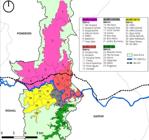
Blumenau is in the Vale do Itajaí, northeast of Santa Catarina, and has 361,261 inhabitants, being the third most populous in the state and the eighth in the southern region of Brazil (IBGE, 2022). It is composed of 35 neighborhoods and on its geomorphology, it is "cut" by the Itajaí- -Açu river, as well as by the BR-470 highway, and composed of several hills (Figure 1).
An important center of the textile industry in Brazil during the 1990s, Blumenau still maintains in its territory a significant number of large industries, such as Cia. Hering, Karsten, Cremer, Altenburg and Teka. The central region of the city, where many medium and large industries have been established since the end of the nineteenth century, has always housed a significant portion of the high-income population, especially the industrialists of the textile sector. Although it underwent major transformations in its productive scenario at the end of the twentieth century, many of these industries remain where they were originally established (Siebert, 1999; Pires, 2024).
The phenomenon of floods is unfortunately recurrent in the municipality, since since its foundation in 1850, at least 100 events of this type have been recorded in the city. The susceptibility of the Blumenau site to the flooding of the Itajaí-Açu river is so great that, "if we discount the floodable areas and the steeply sloping slopes from the urban perimeter, the remaining area, which can be considered urbanizable, barely reaches 20% of the total" (Siebert, 2000, p. 183), which, in other words, means the existence of a fierce dispute over these locations (Pires, 2024).
In 1983 and 1984, Blumenau faced two of the largest floods in its history, when the level of the Itajaí-Açu river exceeded the mark of 15 meters above its normal level. The socio--spatial repercussion of the 1983 flood was quite significant, affecting more than 70% of the population and causing "a profound change in the urbanization model of Blumenau" (Siebert, 1999, p. 95). To celebrate the overcoming of the population in the face of socio-environmental disasters, the Prefeitura Municipal de Blumenau (Blumenau City Hall) created the Oktoberfest, an event that promotes Germanic culture annually, during the month of October, to leverage the economy of the municipality that faced difficulties in that period. The event takes place at the Parque Vila Germânica event center, in the Velha neighborhood, next to the city center and, since its inauguration, it has been proving to be a capital-generating component for the municipality, with revenues that exceed millions of reais annually (Becker, 2011).
In Blumenau, the tourist areas coincide with the central region or are located very close to it, such as Parque Vila Germânica itself, in the Velha neighborhood, which borders the city center. It is in these areas that we have identified, as shown in Table 1 and the maps in Figure 1, the greatest presence of Airbnb. Of the 335 properties made available by the platform between the months of September and October 2024, when the city receives the highest number of tourists of the year, due to Oktoberfest, 163 of them, that is, 48.66% of the total, are in the central region.
Followed by the central region, the west has the highest numbers, housing 37.31% of the total properties available, with emphasis on the Velha neighborhood, where the event takes place, which is the one with the largest number of properties for short-term rental: there were 88 units identified, representing 26.27% of the total in the municipality and 70.40% of the total in the western region. The southern, northern, and eastern regions, on the other hand, have little representation, accounting for only 2.09%, 5.07%, and 6.87% of the total units listed in the municipality, respectively.
Of the 35 neighborhoods in the municipality, Airbnb is present in 26 of them, that is, 74.28% of the total. When confronted with the spatial distribution of the population by income levels, we can observe the greater presence of the platform in areas where historically the middle and high-income strata predominate in the city, whose income is higher than 6 minimum wages (Figure 2). However, it is also possible to observe the absence of Airbnb in areas where the elites predominate, such as the Jardim Blumenau neighborhood, for example, the only sector in the municipality with an income above 15 minimum wages.
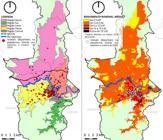
Like the higher-income sectors, the low-income sectors also had little or no Airbnb presence (Figure 2). These are sectors that, according to studies prepared by Pires (2024), have a high number of irregular streets – not yet registered with the Prefeitura Municipal de Blumenau (Blumenau City Hall) –, difficult access to treated water, lack of sewage treatment, and that, due to the topography, are hidden from the eyes of the majority of the population, significantly sloped, that is, hills that are at medium or high risk of landslides and that are home to affordable housing.
In 2022, the IBGE Census (Brazilian Institute of Geography and Statistics) pointed to Blumenau as the second city with the largest number of favelas and urban communities in Santa Catarina, a total of 37 (IBGE, 2022). In 2011, the Municipal Plan for Social Interest Housing of Blumenau had identified that at least 11 thousand families lived in the 55 precarious settlements in the city, about 7.5% of the total population (Pires, 2023). This reality, however, is hidden not only by the city's topography, but also by the high Municipal Human Development Index (MHDI) of 0.806, by the high GDP per capita and by the ideological discourse that the ruling class has produced and still produces about Blumenau: the discourse of a "European city", devoid of inequalities (Moser, 2010). In these areas, as shown in the maps in Figure 2, Airbnb is not present.
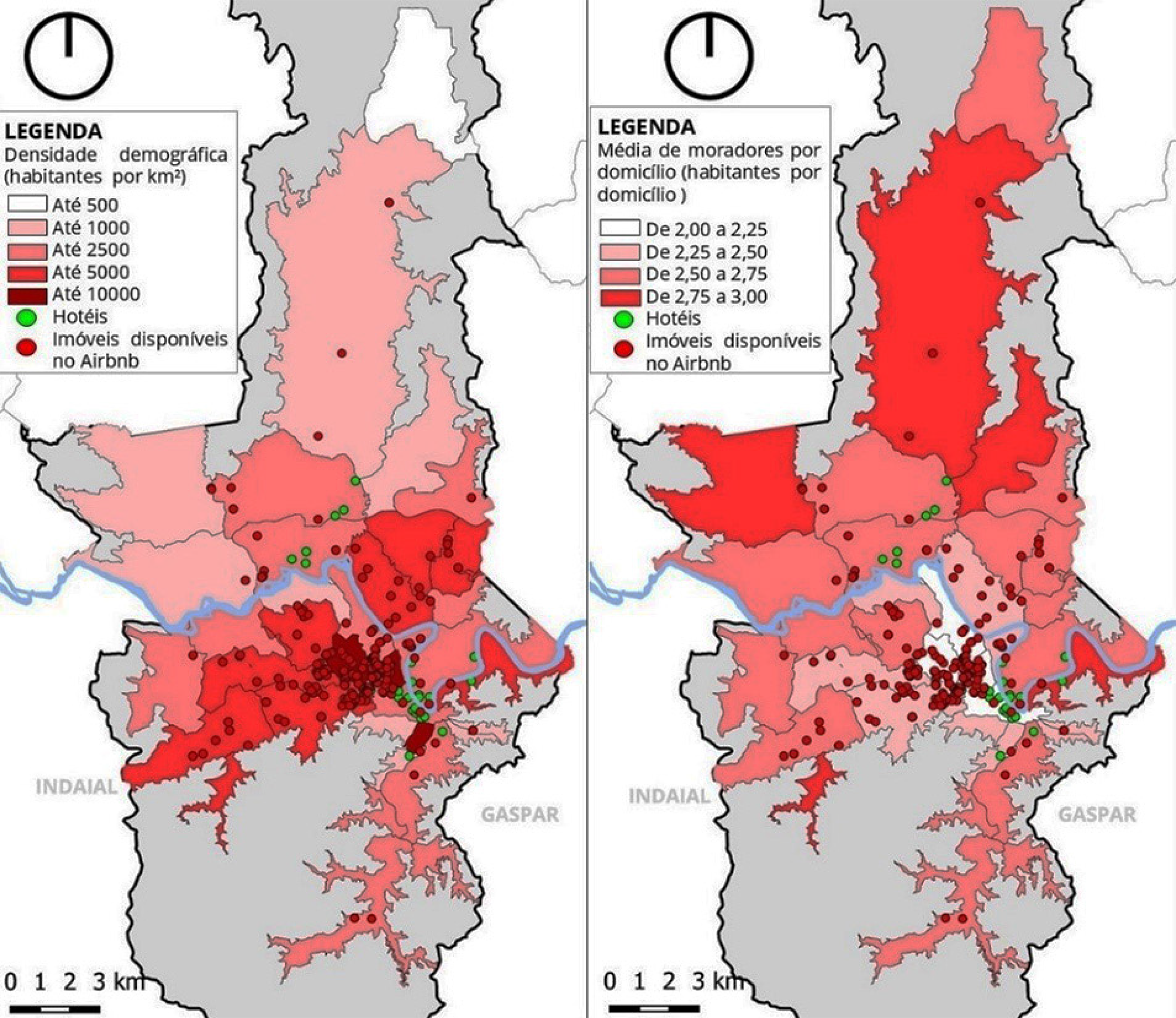
Just as the greater presence of Airbnb was identified in middle- and high-income areas, with the exception of areas where the elites live, there was also a greater concentration of the platform in neighborhoods with higher population density, such as Velha, Vila Nova, and Victor Konder, whose densities vary between 2,500 and 10,000 inhabitants per km2. These neighborhoods are among the most verticalized in Blumenau (Pires, 2024) and have the lowest averages of residents per household, between 2.00 and 2.50 (see Figure 3). On the other hand, popular neighborhoods, which have the highest average number of residents per household, such as Itoupava Central, the most populous in the municipality, where Airbnb is almost non-existent, have lower demographic densities, which can be attributed to the lower real estate speculation in these places, since they are far from the administrative center and the main commercial and service centers (Pires, ibid.).

– Density, average number of residents per household, and spatial distribution of Airbnb and hotels in Blumenau
There is a contrast between the urban realities of the northern and southern portions of the Itajaí-Açu river. In the south, the highest-income sectors predominate, as well as the presence of Airbnb and neighborhoods with higher density and residents per household, while in the north the reverse occurs. Due to "the barriers to accessibility to the Centro, which are the Itajaí-Açu river and the BR-470" (Back, 2024, p. 201), the northern region of Blumenau was urbanized late, even though it has had a significant population contingent in its neighborhoods since the 1980s. Although it has historic buildings and large industries, tourism in this intra-urban region is little encouraged by the municipal government and accessibility to neighborhoods is precarious when considering the few access alternatives (Pires, 2024).
Although Airbnb is mostly concentrated in the central region of Blumenau, the data point to a gradual, albeit timid, expansion towards the north and west. On the other hand, the hotel chain, which faced unfair competition with the emergence of short-term rentals (Souza and Leonelli, 2021), remains mainly concentrated in central neighborhoods and along the BR-470 highway, as illustrated in Figure 3. This phenomenon was also observed in Curitiba by Lobo (2018), who demonstrated that while the hotel sector is concentrated in tourist areas or central regions of the cities, Airbnb is also present in these areas, but with a more dispersed distribution.
This confirms the arguments of Kaplan and Nadler (2017, p. 106) that " Airbnb's growth does not necessarily come at the expense of the hotel industry". Serving the interests of capital, the repercussions of Airbnb are better perceived by cheaper means of accommodation, such as smaller hotels, inns, and hostels (Brossat, 2019), especially those with medium or low-quality infrastructure and located far from areas of interest, such as event centers, for example. Brauckmann (2017) even identified that smaller establishments have advertised their dormitories within Airbnb itself, as an alternative for survival in the face of the adversities imposed by platform urbanism.
If the offer of real estate by Airbnb is concentrated in a specific area, in this case the central region and the Velha neighborhood, it is understood that there is a strong relationship between the location of these properties with the location of the areas where the middle and high income layers predominate in Blumenau, and consequently, as Pires (2024) pointed out, of the most significant public road investments.
Airbnb and public investments in Blumenau
The attraction exerted by the hegemonic sector of the high-income strata and by the elites of Blumenau has historically influenced the direction of public road investments to this sector, which has allowed the ruling class to self-segregate in the central region and its surroundings, especially in the neighborhoods of Velha and Ponta Aguda (Pires, 2024). This process of social domination from space is continuous and was also present in the first two decades of the twenty-first century.
The revision of the 2006 Master Plan was justified by the absence of connections in the road system, especially towards the north and west regions, and defined that road investments should be made for this objective to be achieved. However, the plan rarely mentioned works, much less their possible locations (Pires, 2024). As indicated in Table 2, between 2014 and 2023, these two regions received public investments in road infrastructure, but unequally. The northern region, which concentrated 27.71% of the municipality's population in 2022, received only 18.55% of the investments. On the other hand, the western region, with 29.77% of the population, received 41.55% of the total invested. Of these investments, 76.35% were directed to the Velha neighborhood, which is home to only 5.58% of the city's population, but concentrates 31.72% of the public investments made in the road system in Blumenau between 2014 and 2023.
The central region already consolidated and, as we have seen, where the middle and high-income strata and also the elites predominate, which received significant road investments in the second half of the twentieth century (Pires, 2024), had the lowest percentage of public investments in the municipality's road system between 2014 and 2023. The maps in Figure 4 show that, although the western region holds 41.55% of the investments made by SEMOB, they are concentrated in the Velha neighborhood. The other neighborhoods to the west received, for the most part, between 0 and 3%, a number much lower than the 31.72% concentrated in the Velha neighborhood. Some neighborhoods, such as Victor Konder, Salto Weissbach and Tribess did not present road investments in this period, according to the municipality's Transparency Portal. The cartography also allows us to observe a thick mass of Airbnb concentration in the vicinity of Parque Vila Germânica, at the eastern end of the Velha neighborhood, which borders the central region.

– Public investments by neighborhood and general regions and spatial distribution of Airbnb in Blumenau
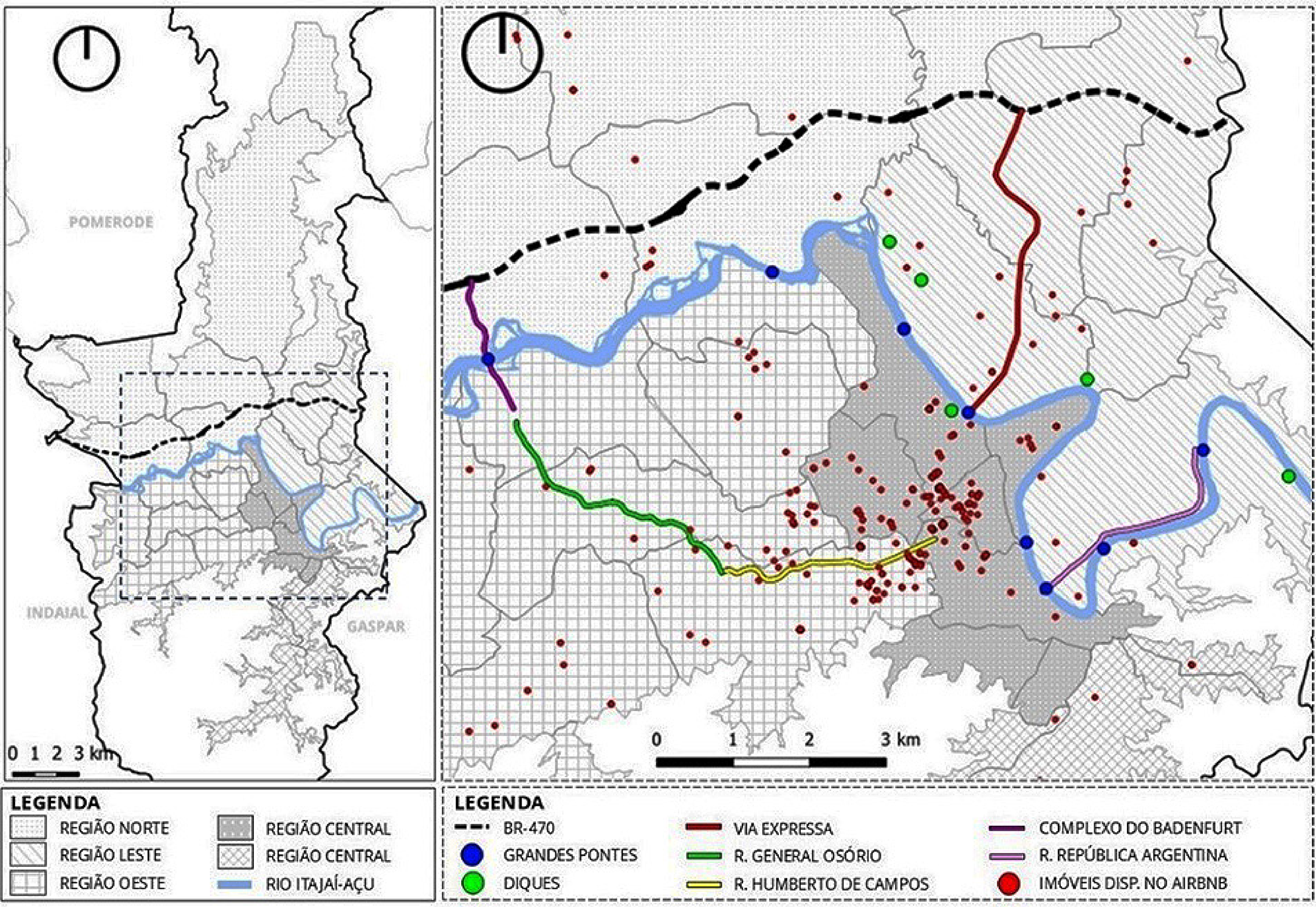
The central region, which despite not having registered significant recent road investments in its territory, is where most of the large bridges that cross the Itajaí-Açu river are concentrated. Also in its vicinity are the municipality's flood containment dikes, which reduce the effects of floods in some neighborhoods (see Figure 5), showing, as Pires (2024, p, p. 204) pointed out, that "the logic that determines the location of public investments in Blumenau" is, in a way, "linked to the distribution of social classes in the intra-urban space", which also coincides with the location where properties available for temporary rent on the Airbnb platform predominate in the city.
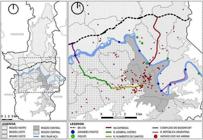
Among the largest and most significant road works carried out in Blumenau between 2014 and 2023, the following stand out: 1) the construction of the Complexo Viário do Badenfurt; 2) the expansion and duplication of Rua Humberto de Campos; 3) the renovation of Rua General Osório; 4) the construction of the binary and renovation of Rua República Argentina and; 5) the expansion and duplication of the Ponte Adolfo Konder (Figure 5). Except for the first, and among a total of 141 works, these infrastructures add up to more than R$ 118 million, about 42.69% of the total invested by Semob in a period of less than 10 years.
The Vorstadt and Ponta Aguda neighborhoods, the most benefited by the roadwork on Rua República Argentina, concentrated in their territory, in 2010, more than 40% of the families in the eastern region who earned more than 10 minimum wages, which characterizes them as two of the richest neighborhoods in Blumenau (Pires, 2024). In these neighborhoods, however, as the map in Figure 5 demonstrates, Airbnb is practically not present.
In the Velha neighborhood, where Airbnb predominates in the municipality, the production of road works was quite significant. The construction of the Complexo Viário do Badenfurt, for example, divided the flow and fleet of cars that entered Blumenau by the neighborhoods to the north (through the BR-470) and to the east (via Via Expressa). Part of this fleet then began to travel through the western region, especially through the Velha neighborhood, which until then had not received adjustments and adaptations to live with this new reality of congestion and conflicts on its roads, since more than 20 thousand automobiles began to travel daily through the complex, most of them towards the central region of Blumenau (Pires, 2024).
Between 2000 and 2010, even before the inauguration of the complex, the population of the Velha neighborhood had grown by 17.93%, while the increase in the number of households with income above 10 minimum wages was even more significant, 67.65%. The neighborhood, which already concentrated on the largest number of high-income families in the western region in 2000 (25% of the total number of families with income above 10 minimum wages), had this percentage increased to 31.34% in 2010, which indicates a trend towards a greater concentration of the highest income strata in its territory (IBGE, 2000; 2010).
In the Velha neighborhood, the expansion and duplication of Rua Humberto de Campos is another significant roadwork. Functioning as a gateway from the western region to the central region and neighboring not only the Centro, but also the Parque Vila Germânica, the Rua Humberto de Campos project was partially inaugurated in 2014 and officially completed only in 2019, consuming more than R$ 65.64 million from the public coffers, which corresponds to almost a quarter (23.59%) of the total invested by Semob in the municipality in a period of almost ten years. Another significant road investment made in the western region, which began in 2019 and ended in 2020, was the renovation of Rua General Osório, which connects Rua Humberto de Campos with the Complexo Viário do Badenfurt and cost more than R$17 million (Pires, 2024).
These three road works – the Complexo Viário do Badenfurt, Rua Humberto de Campos and Rua General Osório – formed a large corridor towards the Centro (See Figure 5), which certainly contributed to reducing the travel time between the west and central regions of Blumenau, opening fronts for real estate capital and favoring the accessibility of residents and the expansion of short-term rental offers throughout the city. Airbnb in the municipality.
When analyzing users' perception of the Airbnb platform, Silva, Barbosa e Farias (2020, p. 396) argues about the expansion of tenants' consumption, "which occurs as a result of greater access to these services [easy access to better-equipped areas of cities] and the possibility of reducing costs". In Blumenau, this reduction does not only come with costs, since Airbnb offers are concentrated near tourist and commercial areas, but also in travel time, since there is often the possibility of walking For Villaça (1998), it is on this accessibility that the possibility of living in the cities depends. In commuting, people spend energy and waste time, and "the former can be recovered", while "the latter, however, is irretrievable", and the latter is the one that determines the structuring of urban space (Villaça, 1998).
The concentration and location of the most significant road investments in Blumenau show that it is the elites who, with their great political power, attract to themselves the largest investments and the best road infrastructures, which allows them to optimize their travel time. Therefore, it is the elites who are privileged in the intra-urban space, as they dominate the production of space. In addition, the real estate market also comes out as the winner in the dispute for these locations and, consequently, their incessant public investments, since, "due to the increase in accessibility to the city center, those lands adjacent [to large road investments] will bring transport savings to their eventual occupants" and "their values will change and their owners will pocket this appreciation" (ibid., p. 80).
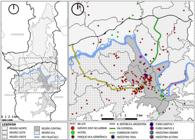
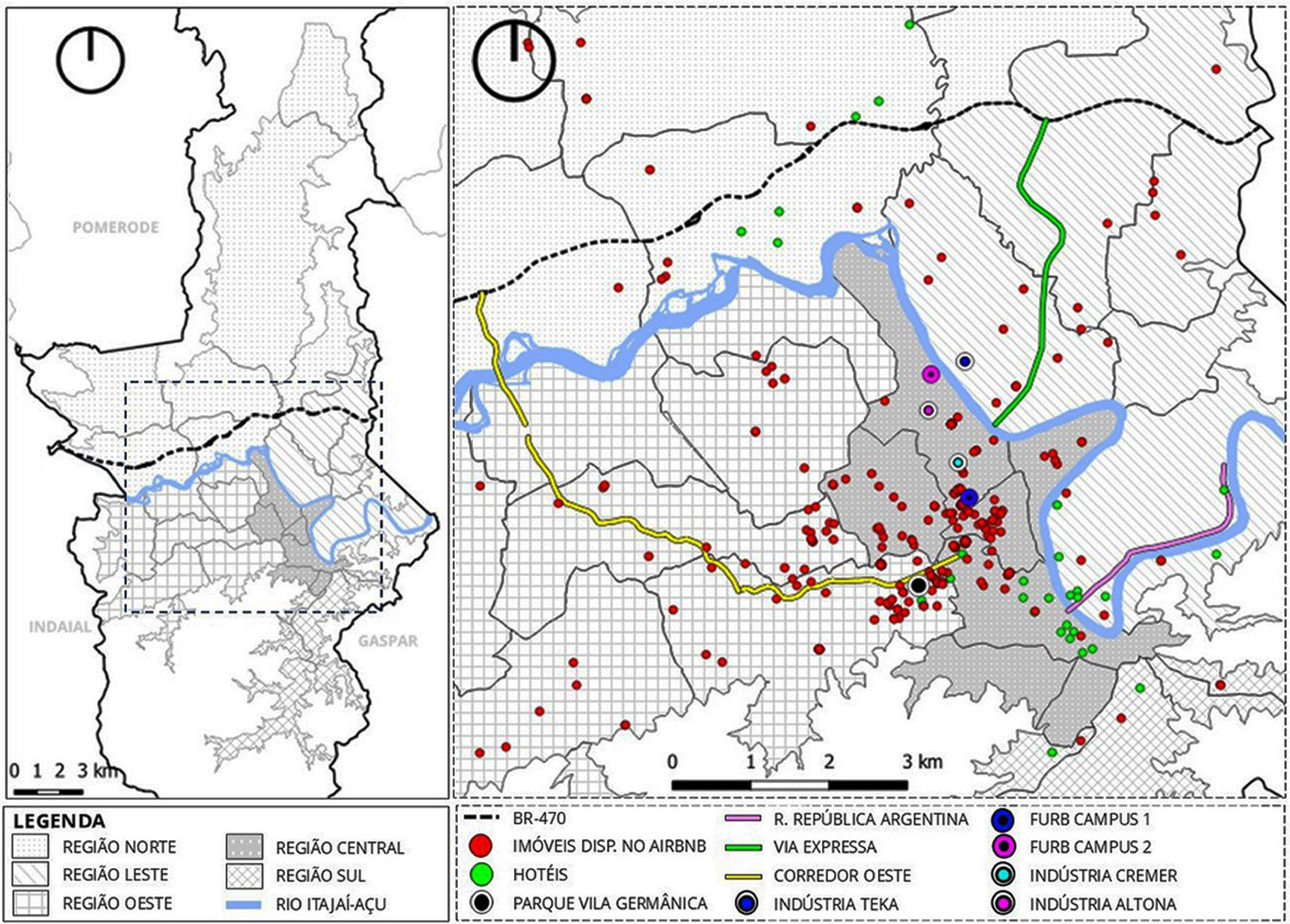
According to data in Table 3, the Velha neighborhood was, both in 2021 and 2022, the most sought after in the municipality, both for rent and housing, which can be explained by its infrastructure, which has been receiving, as we have seen, significant public investments in the road system, optimizing the time and travel costs of those who live in the area. The greater search for the Velha neighborhood can certainly also be explained by its concentration of properties available on Airbnb, as well as the Vila Nova and Água Verde neighborhoods, neighboring Velha and very close to Parque Vila Germânica. Other central neighborhoods, such as Itoupava Seca, Vila Nova, and Victor Konder, which are home to large industries such as Cremer, Teka, Altona, and the Regional University of Blumenau (FURB) (see Figure 6), were also highly sought after for purchase or rent, according to the real estate platform Datazap+ (Datazap, 2022).
According to Schor (2017), the orientation of platforms such as Airbnb determines their need for expansion to maximize profits. This intentional expansion has greater potential to generate urban impacts, and the real estate market has a great participation in this process. It is expected, then, according to the matrix proposed by the author, that the advancement of the platform will result in negative impacts on cities, mainly due to its for-profit orientation. In Blumenau, the neighborhoods where the properties available on Airbnb are concentrated are also the neighborhoods that showed the highest increase in the value of the m2 between 2019 and 2022. While the value of the m2 grew by an average of 5.97% in the country, in Blumenau this percentage was significantly higher, 15.29% (Datazap, 2022).
Therefore, Villaça's (1998, p. 359) statements are corroborated, according to which "man acts on time to reduce space, at the same time and by the same process that he acts on space to reduce time" and this production and consumption of urban space "is, ultimately, nothing more than the production and consumption of accessibility, that is, of locations". In addition to presenting itself as a segregated city, with the popular strata residing in the peripheries and the middle and high--income strata predominating in the central region and in the neighborhoods surrounding it, such as Velha and Ponta Aguda (Sugai, et. al, 2022; Pires, 2024), it was evident that in Blumenau platforms such as Airbnb "are incorporated in key locations of informational exchange, [the region of Parque Vila Germânica, for example] while remaining sufficiently materially and organizationally disincorporated to avoid significant liability" (Graham, 2020, p, p. 456), that is, they exempt themselves from their role in the process of unequal production of urban space. Just as Von Hippel (2005) had identified that historically on the planet there is no "democratization of innovation", in Blumenau there is no democratization in the distribution of public road investments.
The concentration and location of road investments, especially the most recent ones, produced in Blumenau, show that there is no democratization in the distribution of public investments in the municipality and that "it is the elites who, with their great political power, attract to themselves the largest investments and the best infrastructures" (Pires, 2024, p. 179), consequently optimizing your travel time. This process, together with the cartography presented, in addition to evidencing the capture of the State by the elites and these as conductors of the process of capitalist production of space, reveals that the commodification of space occurs in areas dominated by the highest- -income population, where they not only live but also have properties available for rent, aggregating their accumulation process and exacerbating socio-spatial inequalities.
Borghys et al. (2020), as an alternative to face the inequalities promoted by the commodification of space, bet on the cooperation model based on the integration of four agents: university, industry, government, and society. In the context of the periphery of capitalism, such as the Brazilian one, inequalities are even greater, which requires differentiated analyses, even though in Blumenau, whose intra-urban structuring was induced by industrialization and the advent of the automobile, there has been alert, since the end of the twentieth century, to the importance of intersectoriality in urban planning, involving universities, industry, society and the State (Siebert, 1999).
As evidenced in Figure 6, both industry and universities have a significant presence in the central region of Blumenau or in the neighborhoods surrounding it. In addition to the high-income layers, these areas are also home to large industries, such as Cremer, Teka and Eletro-Aço Altona, as well as the Regional University of Blumenau (FURB) and the tourist center, represented by the Vila Germânica Park. It is also where Airbnb offers and other forms of accommodation, such as hotels, are concentrated. There is, therefore, a notable presence not only of the State in the central neighborhoods, represented by public road investments, but also of industrial capital and academic centers of regional influence. The same, however, is not observed in peripheral and popular areas, which have socio-spatial and economic data significantly lower than those of central neighborhoods (Pires, 2024), in addition to not constituting tourist zones, and, therefore, are provided with very few hotels and Airbnb.
It is noted, therefore, that the right to the city, from which the city should take place as a priority of use value and not of exchange, is even more compromised with the emergence of platform urbanism, which, walking hand in hand with the ruling class and counting on the support of the State, appropriates the benefits promoted by the latter which, in a democratic society, they should be distributed equally. There is, therefore, a direct conflict between platform urbanism, represented by Airbnb, and the right to the city, that is, the right to urban life.
There are several factors that positively impact the quality of urban life in central neighborhoods where Airbnb is present, such as tourist parks, the concentration of investments in road infrastructure and better accessibility conditions and intra-urban travel time. It is where the State is most present, especially when compared to peripheral neighborhoods, where public investments are much lower, resulting in inequalities and socio-spatial segregation. Most users of the platform will certainly benefit, as they are located in the best locations in Blumenau. The impacts of this unequal distribution of investments, according to Pires (ibid.), are felt by the popular strata, which predominate in the north, south, and far west regions of the city and end up having their travel times and costs significantly increased, especially in a city where the number of cars is over 280 thousand, quite high for a municipality with just over 360 thousand inhabitants.
Discussion and conclusions
The analyses elaborated in this article are based on the understanding of platform urbanism as a socio-spatial unfolding of the capitalist system in the context of platform society and neoliberalism. As a result, from Blumenau and considering its urban, political and socio-spatial specificities, general aspects of this relationship were identified: processes associated with the production of socio-spatial inequalities from the unequal distribution of public road investments, which evidenced the greater presence of the State in the neighborhoods where Airbnb is more present. On the other hand, the absence of the State was perceived in the peripheral and popular areas where Airbnb exists, but in a significantly smaller way.
Some hypotheses were raised to explain the location and spatial concentration of Airbnb in Blumenau: there are not necessarily concrete strategies for locating the owners of the properties offered by Airbnb in Blumenau, but a concentration of property by the dominant class in the central areas, which make their idle properties available on the platform. It is assumed, therefore, that there are no or minimal conflicts and disputes, especially related to public road investments, between the locations of Airbnb offers and those of the high--income strata, as they take place in the same intra-urban region.
The results achieved, although restricted to only a portion of the scientific production developed about Airbnb and the experience of a medium-sized tourist and industrial city, contribute to the understanding of the relationship of the platform with theoretical formulations present in current urban studies, as well as expand the paths of investigation on the subject, highlighting the importance of considering the location and accessibility factors of Airbnb in studies that investigate the impacts of the platform on the intra-urban space.
By capturing the State and directly attracting most of the public investments made in the road system directly to its areas of interest, the ruling class also articulates, albeit indirectly, the benefits of these investments to the properties made available on the Airbnb platform, since both – the properties available on Airbnb and the housing of the highest income strata – predominate in the same intra-urban area. Therefore, both residents of central neighborhoods and Airbnb users will benefit and will have their costs and travel time reduced, especially if we consider the significant concentration of urban equipment and services in the central region of Blumenau.
From the analyses presented, concerns arise about the impacts of Airbnb in the municipality beyond its implications in intra-urban dynamics: is there a process of gentrification in Blumenau? Tourism, even though it occurs mostly in October, and the concentration of public road investments, is increasing the costs of living in the city? Is Airbnb contributing to the reduction in the supply of properties for conventional rental and expanding short-term rentals? If this conversion, as we have seen, increases profitability and real estate speculation, and the properties made available by Airbnb in Blumenau are in the areas that appreciate the most overtime and receive the highest public road investments, the evidence indicates that they are.
References
-
AIRBNB (2022). Número de novos anfitriões cresce 50% no 2º trimestre de 2022 no Brasil. Disponível em: https://news.airbnb.com/br/numero-de-novos-anfitrioes-cresce-50-no-2o-trimestre-de-2022-no-brasil/ Acesso em: 23 set 2024.
» https://news.airbnb.com/br/numero-de-novos-anfitrioes-cresce-50-no-2o-trimestre-de-2022-no-brasil/ - BACK, C. C. (2004). Os limites e contradições da aplicação dos instrumentos do Estatuto da Cidade em Curitiba e Blumenau: "transferência do direito de construir" e "Outorga Onerosa do Direito de Construir". Dissertação de mestrado. Blumenau, Universidade Regional de Blumenau.
- BECKER, K. L. (2011). Oktoberfest: a economia em festa. Dissertação de mestrado. Florianópolis, Universidade Federal de Santa Catarina.
- BORGHYS, K.; VAN DER GRAAF, S.; WALRAVENS, N.; VAN COMPERNOLLE, M. (2020). Multi-Stakeholder Innovation in Smart City Discourse: Quadruple Helix Thinking in the Age of "Platforms". Frontiers in Sustainable Cities, [s. l.], v. 2, pp. 1-5.
- BRAUCKMANN, S. (2017). City tourism and the sharing economy - potential effects of online peer-to-peer marketplaces on urban property markets. Journal of Tourism Futures, v. 3, n. 2, pp. 114-126
- BROSSAT, I. (2019). Airbnb, la ciudad uberizada Pamplona, Katakrak Liburuak, v. 1.
- CARLOS, A. F. A. (2013). "Segregação residencial: classes sociais e espaço urbano". In: VASCONCELOS, O. A.; CORREA, R. L.; PINTAUDI, S. M. (org.). A cidade contemporânea: segregação socioespacial São Paulo, Contexto, pp. 39-59.
- CRUVINEL, A. C. F. (2024). Airbnb como urbanismo de plataforma: aspectos gerais e caminhos para uma abordagem multiescalar. Revista PosFAU-USP, v. 31, n. 58, pp. 1-11.
- DATAZAP (2022). Relatório do Radar Imobiliário do Termômetro DataZap+: Blumenau e Vitória. Datazap, ago.
- GALLAGHER, L. (2018). A história da Airbnb São Paulo, Buzz Editora.
- GOYETTE, K. (2021). 'Making ends meet' by renting homes to strangers: historicizing Airbnb through women's supplemental income. City. Abingdon, v. 25, n. 3-4, pp. 332-354.
- GRAHAM, M. (2020). Regulate, replicate and resist - the conjunctural geographies of platform urbanism. Urban Geography, v. 41, n. 3, pp. 453-457.
- HUMES, L. B.; FREIRE, O. B de L. (2020). Como temos pesquisado a Airbnb? Características das pesquisas em periódicos científicos da Administração e do Turismo entre 2008 e 2018. PODIUM Sport, Leisure and Tourism Review, v. 9, n. 1, pp. 117-140.
- IBGE (2000). Censo Brasileiro de 2000. Rio de Janeiro, IBGE.
- IBGE (2010). Censo Brasileiro de 2010. Rio de Janeiro, IBGE.
- IBGE (2022). Censo Brasileiro de 2022. Rio de Janeiro, IBGE.
- IOANNIDES, D.; RÖSLMAIER, M.; VAN de ZEE, E. (2018). Airbnb as an instigator of 'tourism bubble' expansion in Utrecht's Lombok neighbourhood. Tourism Geographies, v.1, n. 5, pp. 822-840.
- KAPLAN, R. A.; NADLER, M. L. (2017). Airbnb: a case study in occupancy regulation and taxation. Law Review Online University of Chicago, v. 82, n. 1, pp. 103-115.
- KOOPMAN, C.; MITCHELL, M.; THIERER, A. (2015). The sharing economy and consumer protection regulation: the case for policy change. The Journal of Business, Entrepreneurship & the Law, v. 8, n. 2, pp. 529-547.
- LAGO, L. C. (2012). Trabalho, moradia e (i)mobilidade espacial na metrópole do Rio de Janeiro. Cadernos Metrópole São Paulo, n. 18, pp. 275-293.
- LEE, A. et al. (2020). Mapping platform urbanism: charting the nuance of the platform pivot. Urban Planning, v. 5, n. 1, pp. 116-128.
- LEFEBVRE, H. ([1968] 2016). O direito à cidade São Paulo, Centauro.
- LOBO, Y. S. (2018). Economia colaborativa e destinos turísticos urbanos: uma análise da distribuição espacial da Airbnb em Curitiba. Dissertação de mestrado. Curitiba, Universidade Federal do Paraná.
- MEDVEDEVA, N. (2023). The romantic anti-capitalisms of short-term rental hosting Hoboken, Antipode.
- MOSER, M. (2010). "A indisfarçável favelização em Blumenau". In: SCHUNKE, A. Blumenau em cadernos Blumenau, Cultura em movimento, v. 51, pp. 86-110.
- PIRACHA, A.; SHARPLES, R.; FORREST, J.; DUNN, K. (2019). Racism in the sharing economy: regulatory challenges in a neo-liberal cyber world. Geoforum, Amsterdam, v. 98, pp. 144-152.
- PIRES, D. C. F. (2023). O Programa Minha Casa Minha Vida como instrumento de produção de segregação socioespacial em Blumenau-SC. Cadernos do Ceas: Revista Crítica de Humanidades, v. 48, n. 260, pp. 655-688.
- PIRES, D. C. F. (2024). O processo de produção das desigualdades socioespaciais em Blumenau-SC (1980-2023). Dissertação de mestrado. Florianópolis, Universidade Federal de Santa Catarina.
- PRIEN, B.; GRAZ, A. S. (2021). Recht auf digitale Stadt - Right to the digital city. Zeitschrift für Praktische Philosophie, [s. l.], v. 8, n. 1, pp. 337-362.
- SCHOR, J. (2017). "Debatendo a economia do compartilhamento". In: ZANATTA, R. A. F.; PAULA, P. C. B.; KIRA, B. (ed.). Economias do Compartilhamento e o Direito Curitiba, Juruá, pp. 21-40.
- SIEBERT, C. A. F. (1999). A evolução urbana de Blumenau: O (des)controle urbanístico e a exclusão socioespacial. Dissertação de mestrado. Florianópolis, Universidade Federal de Santa Catarina.
- SIEBERT, C. A. F. (2000). A produção do espaço urbano de Blumenau a partir de seus instrumentos de controle urbanístico: 150 anos de história. In: VI SEMINÁRIO DA HISTÓRIA DA CIDADE E DO URBANISMO. Anais... Natal - RN.
- SILVA, L. A.; BARBOSA, M. L. A.; FARIAS, M. L. (2020). Significados do consumo colaborativo no turismo a partir dos consumidores do Airbnb. Turismo Visão e Ação, v. 22, n. 2, pp. 380-400.
- SOUZA, R. B. (2021). Territorialização do Airbnb em cidades pequenas turísticas brasileiras: regular é preciso? Dissertação de mestrado. Campinas, Universidade Estadual de Campinas.
- SOUZA, R. B. de; LEONELLI, G. C. V. (2021). Airbnb no Brasil: uma nova agenda de pesquisa para os estudos urbanos. Urbe: Revista Brasileira de Gestão Urbana, Curitiba, v. 13, pp. 1-15.
- SRNICEK, N. (2017). Platform Capitalism Cambridge, Polity Press, v. 1.
- SUGAI, M. I.; SOUZA, C. D.; FLORINDO, E. V.; IMTHON, I.; SALEH, N. M. (2022). Desigualdades e segregação socioespacial em cidades médias. O caso de Blumenau, SC. Madrid-Curitiba: XIV Seminário Internacional de Investigação em Urbanismo, Anais SIIU.
- SUGAI, M. I. (2015). Segregação silenciosa: investimentos públicos e dinâmica socioespacial na área conurbada de Florianópolis (1970-2000) Florianopolis, EDUFSC.
- VAN DOORN, N (2020). A new institution on the block: on platform urbanism and Airbnb citizenship. New Media & Society, Thousand Oaks, v. 22, n. 10, pp. 1808-1826.
- VERA, L. A. R.; GOSLING, M. S. (2017). Economia compartilhada no Turismo: uma discussão teórica sobre o consumo colaborativo e o compartilhamento. Revista Eletrônica de Estratégia & Negócios, v. 10, n. 1, pp. 226-251.
- VILLAÇA, F. (1998). O espaço intraurbano no Brasil São Paulo, Global.
- VILLAÇA, F. (2011). São Paulo: segregação urbana e desigualdade. Estudos Avançados, v. 25, n. 71, pp. 37-58.
- VON HIPPEL, E. (2005). Democratizing Innovation Cambridge, MA, MIT Press.
-
Editors:
Lucia Bógus e Luiz César de Queiroz Ribeiro

 Source: author’s elaboration based on
  Source: author’s elaboration based on data collected through web scraping and
  Source: author’s elaboration based on data collected from
  Source: author’s elaboration based on data collection via web scraping and
  Source: author’s elaboration based on data collection via web scraping and
  Source: author’s elaboration based on data collection via web scraping and