
 Airbnb Predominance Index: the platform’s influence on the Brazilian rental market
Abstract
This article proposes a statistical methodology to assess the impact of Airbnb on the long-term rental market in Brazilian municipalities. Recognizing disruptions in what was initially celebrated as the sharing economy, the study situates Airbnb in the context of platform urbanism and analyzes its repercussions. Rio de Janeiro was chosen as the case study due to its large number of listings on the platform and its established rental market. The proposed index considered variables such as the number of listings, types of properties, population data, households, and neighborhood area. The study concluded, based on the variability of the index, that Airbnb's influence on Rio de Janeiro's rental market is greater in neighborhoods with high tourist attractiveness.
Keywords:
platform urbanism; rental market; Rio de Janeiro
Resumo
Este artigo propõe uma metodologia estatística para avaliar o impacto do Airbnb no mercado de aluguéis de longa duração em municípios brasileiros. Reconhecendo rupturas no que foi inicialmente celebrado como economia do compartilhamento, o estudo situa o Airbnb no contexto do urbanismo de plataforma e analisa suas repercussões. O Rio de Janeiro foi escolhido como estudo por seu ao grande número de anúncios na plataforma e seu mercado de aluguéis consolidado. O índice proposto considerou variáveis como número de anúncios, tipos de imóveis, dados populacionais, domicílios e área dos bairros. Conclui-se, a partir da variabilidade do índice, que a influência do Airbnb para o mercado de aluguéis do Rio de Janeiro é maior em bairros com grande atratividade turística.
Palavras-chave:
urbanismo de plataforma; mercado de aluguéis; Rio de Janeiro
Introduction
In the last decades, digital technologies have significantly transformed human relations and their interaction with the urban space. Platforms such as Uber and Airbnb, which emerged under the discourse of sharing and democratization of access to goods and services, play a central role in contemporary capitalism, which is characterized by flexible accumulation and by the intensive exploitation of data (Morozov; Bria, 2019). Nevertheless, their operations reveal contradictions between the ideal of sharing and the social reality they promote, especially in their implications for local economic geographies (Graham, 2020). With the strong presence of platforms in the most diverse contemporary contexts, an updated and ideal form of the capitalist accumulation is set (Srnicek, 2018).
The consolidation of these platforms is a result of historical transformations that include the industrial crisis of the 1970s, the rise of the internet in the 1990s, and the 2008 financial crisis, which created favorable conditions for the emergence of lean and scalable business models (Chesnais, 2015; Antunes, 2020). The economic, social, and spatial dynamics, noted through the strong insertion of platforms into the daily life of cities, point to labor exploitation, which is one quite evident mark in cases such as those of Uber and iFood. Platform capitalism presents itself as a model for the extraction and control of a great amount of data, at the same time that it deepens the exploitation of the labor force, relying on the discourse of entrepreneurship. Other terms, such as uberization and crowd- -based capitalism, are recurrent when speaking of this phase of accumulation.
The repercussions of this platformization of capitalism can be seen in the urban space, given that these companies dominate markets to the point of becoming synonymous with the type of service they offer. Taking an “Uber”, ordering an “iFood”, or staying in an “Airbnb” have become common expressions and illustrate well the control such platforms impose to current urban life. The term platform urbanism (Barns, 2019; Mörtenböck; Mooshammer, 2021), in fact, makes evident the indissociable relationship between cities, technology, and capital accumulation based on the control by the platforms and on the production of the urban space.
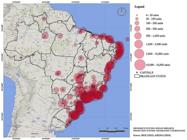
In the case of Airbnb, its global expansion stands out for its economic and social impacts, having transformed residences into lodging facilities and influenced local rental markets. These effects have been subjects of study, especially in urban contexts in which the housing deficit and the pressure for affordable housing are increasing (Wachsmuth et al., 2017; Souza, 2021). Founded in 2008, the platform arrived in Brazil in 2012 and, since then, has found in the country’s coastline the ideal scenario for its consolidation due to tourist demand. Andrade, Araujo and Cristino (2024) state that the coastal region concentrates the highest number of municipalities on Airbnb listings. Among the conflicts arising from the insertion (and predominance) of the platform in the country, one key issue is the difficulty in identifying the municipalities’ capacity to accommodate a higher number of Airbnb properties without jeopardizing the rental market (Souza, 2021; Andrade, Araujo and Cristino, 2024).
In light of the presented scenario, this article aims to propose a statistical methodology to evaluate the impact of Airbnb on the long-term rental market in Brazilian municipalities, referred to as the Airbnb Predominance Index – IPAIRBNB. The scope of the analysis is the municipality of Rio de Janeiro, whose choice is justified by its importance as the main Airbnb market in Brazil (Airbnb, 2024) and, also, by the fact that it is a capital city with a consolidated rental market. Methodologically, this article adopts a quantitative approach and relies on the mining of data related to permanent private housing – PPH, population, and area provided by the Brazilian Institute of Geography and Statistics – IBGE (2010; 2022). Variables related to the number of listings per neighborhood, obtained from Inside Airbnb (2024), were also combined.
In addition to this introduction, this article is structured into five parts. The first one presents a brief contextualization of platform urbanism as a representation of platform capitalism in cities. Subsequently, it seeks to situate Airbnb within the rental market context, in order to analyze the impacts of its expansion in the municipalities where it has become consolidated. Then, the IPAIRBNB is characterized, bringing together variables related to the households and the listings to classify the degree of impact of the platform on the long-term rental market in the area of interest. Next, the IPAIRBNB is applied to Rio de Janeiro, which is one of the largest markets of the platform and where the long-term rental dynamics compete with mediated short-term rentals, done mainly by Airbnb.
It was observed, based on the variability of the IPAIRBNB, that the influence of Airbnb on the rental market in Rio de Janeiro is greater in neighborhoods with high tourist attraction. This finding reinforces the relevance of the proposed index as a tool to understand and measure the impacts of platformization on urban dynamics, especially in cities marked by high tourist demand.
About platform urbanism
It begins with the understating of neoliberalism as a worldview, that goes beyond the corporate logic of productivity and competitiveness, extending also to social relations and all aspects of life (Dardot; Laval, 2016). Neoliberal thought is also present in the idea that the greater the entrepreneurial freedoms, the rights of private property, free market and trade, the greater the well-being of people (Harvey, 2013).
According to Dunker (2016), one should not consider neoliberalism only from the perspective of the economic theory that emerges in the 1930s, is renewed by the Chicago School in the 1960s, and is adapted into austerity and privatization policies in the 1980s. When considered just as the definition of contemporary capitalism in its globalized reach, also in the author’s perspective, the phenomenon is not fully grasped in all its dimensions. Thus, it must be understood that neoliberalism occupies the gray area between a diffuse stage of capitalism and an economic theory, being better defined as a way of life.
Thus, it is considered important that the analysis of the city in the neoliberal context be carried out from the perspective that, within it, many contradictions and deregulations typical of neoliberalism are intensified, in such way that its multiscale configuration ends up impacting urban life in many aspects. According to Harvey (2011), the neoliberal city is shaped by the transformation from an administrative to an entrepreneurial approach, in which the logic of competitiveness is incorporated into cities, with the capacity to attract private capital and promote real estate development being the parameters for the good functioning of urban policies. In that way, cities become business-friendly environments, in which private agents’ investments must always ensure returns, even if, for this, deregulations or tax incentives are needed.
Botsman and Rogers (2011) associate the emergence of this economic model with the 2008 global financial crisis, which prompted the development of technology--based businesses, predominantly in Silicon Valley. These enterprises emerged in a context of mass adoption of the internet and were funded by venture capital, in conjunction with the traditional financial sector (Schor, 2017). Srnicek (2018) interprets this phenomenon as a reconfiguration of the capitalist system: platform capitalism, marked by new forms of exploitation.
Platform capitalism derives from three recent historical milestones: (1) the overproduction crisis in the 1970s, which stimulated lean business models and the precarization of labor; (2) the advent of the digital industry in the 1990s; and (3) the 2008 financial crisis, which generated a large contingent of unemployed workers. These transformations laid the groundwork for the growth of platforms such as Airbnb, which rely on the rhetoric of sharing to maintain billion- -dollar profits (Slee, 2017). Digital platforms are consolidated, therefore, as a translation of the neoliberal logic.
Focusing specifically on the spatial, social, and economic dynamics observed in cities, platform urbanism is seen as a derivation of platform capitalism within the neoliberal production of space. According to Barns (2019), the concept marks a shift from the perception of pure and simple sharing, as it is based on the dynamics of urban data extraction by platforms, which directly influences governmental decision-making.
Platform urbanism turns to the understanding of urban issues and the challenges inherent to the digital context, focusing on a mode of urban space production that is deeply shaped by the conditions and possibilities provided by platforms (Rodgers; Moore, 2018). This aligns with the perspective of Amin (2007), who pointed to the existence of a technological everyday life, characterized by how social interactions in urban space occurred, progressively more, through the use of technology. Thus, it can be pointed out that, since the use of platforms in the context of urban space reproduction has been assimilated by today’s society, their implications should be observed and discussed, including within the legal sphere.
Airbnb and rental market in Brazil
Housing supply is heavily influenced by market dynamics, and housing demand depends on the financial capacity to access the formal real estate market. Those who lack sufficient means frequently resort to renting (Bonduki, 2014). In 2010, 16% of the Brazilian population lived in rental properties. Historically, between 1940 and 1960, there was an increase in property rentals, but this trend reversed from 1960 to 2000, with the expansion of private homeownership being driven by public policies and informal occupations. Despite the economic crisis of the 1980s, the number of owner-occupied residences continued growing, reflected in the rise of favelas and illegal occupations, as indicated by census data (IBGE, 2010).
In 2022, the discrepancy between vacant properties (20% of the total, equivalent to 11.4 million units) and the housing deficit (around 6 million residences) reveals inefficiencies in the market. The deficit includes cohabitation, precarious housing, and excessive urban rental costs, being the latter the most representative category. An increase is also observed in apartment rentals, more common in more urbanized regions such as the South and Southeast regions of Brazil, due to greater verticalization.
Demographic changes, such as the reduction in the average family size, and distortions in real estate market, including speculative property retention, reinforce the disconnection between housing supply and demand. In coastal areas, short-term rentals and secondary residences highlight specific characteristics, given the locational attractiveness of these regions (Moraes, 1999). In this context, hosting platforms such as Airbnb have played an increasing role, transforming the use and the economic dynamic of the available properties in these locations.
It is noticeable that, with the introduction of properties built or renovated with the clear objective of being made available on Airbnb, secondary residences have also acquired a more “professional” character when it comes to their offering in the short-term rental market via the platform, given that negotiations now have an intermediary that increases their connection possibilities through the display of listings on a global scale. However, it should be noted that this is the only typology of interest in this market.
Nethercote (2019) notes that the realignment of the rental market coincides with that of the labor regime, being both of them oriented toward flexibilization. While adaptability, freedom, and deregulation of markets are celebrated by the platforms, precarization continues to consolidate. The existence of property built specifically for rental on digital platforms points to a new frontier of middle-class investment, which, by electing this typology and using platforms like Airbnb, may establish a new rentier character in Brazilian cities (Andrade, Araujo and Cristino, 2024).
The arrival of Airbnb in Brazil in 2012 marked the entry of an innovative digital platform into a traditional hospitality market. Initially, operations were concentrated in São Paulo and Rio de Janeiro, with fewer than 1,000 listings, while the strategy for attracting hosts emphasized financial gains and enriching experiences. Their office in São Paulo was opened with a focus on the 2014 World Cup, an event that attracted 400 thousand guests, 94% of whom were international. With the success achieved during the World Cup, Airbnb established a partnership with the 2016 Olympic Games, becoming its official supplier and expanding its visibility. This momentum has consolidated the platform in the Brazilian market, especially in large urban centers (Andrade, Araujo and Cristino, 2024). Currently, the presence of the platform is more concentrated in coastal cities. In less touristic areas, the supply is reduced, standing out mainly in capitals.
It should be highlighted that the practice of offering properties through Airbnb in Brazil is not limited to individual users, but is also adopted by investors and real estate groups, reinforcing its rentier character. The platform promotes the idea that the user can earn a supplementary income through short-term rentals, especially in contexts of economic instability and job insecurity (Morozov; Bria, 2019; Antunes, 2020).
The significant presence of Airbnb in Brazilian cities reflects and amplifies the housing and market dynamics previously described. The short-term rental model offered by the platform intensifies the trend of vacant or underused properties in urban and coastal areas, converting them into highly profitable assets for property owners. This phenomenon is intrinsically related to real estate speculation and the mismatch of housing supply and demand, contributing to the worsening of the affordable housing deficit and putting pressure on the traditional rental market. Furthermore, Airbnb has consolidated itself as an alternative source of income for property owners interested in maximizing their returns, especially in tourist regions and areas of high locational value, such as the Brazilian coast, where short-term rental was already a consolidated practice.
Airbnb Predominance Index
In order to understand the phenomenon of the insertion and consolidation of the Airbnb platform in Brazilian municipalities based on its presence and significance, in a way that the comparisons would not overlook the specificities of these localities, a statistical methodology was developed, here referred to as Airbnb Predominance Index – IPAIRBNB. It incorporates, into the elements previously analyzed by Tulik (2001) and Souza (2021),1 a set of variables that are important for perceiving the scenarios that are being shaped in Brazilian municipalities regarding Airbnb.
IPAIRBNB was designed to be applied in any context of analysis, regardless of the territorial scale. For this, it was fundamental to select variables highly applicable to different municipalities, regardless of their size or specific characteristics. This is due to the contrasting urban dynamics, whose comparison should not create “distinct categories”, but rather compose an analytical framework capable of capturing the phenomenon in an integrated manner.
Therefore, IBGE data (2010; 2022) were taken into consideration regarding the area and the total population within the scope of analysis. Furthermore, household data were obtained from the Panorama of the 2010 Census,2 from which the totals of permanent private households and occasional-use households were extracted, which in the composition of the index was referred to as secondary residences.
To explore the distribution of Airbnb listings within the scope, one can make use of databases that gather information about the platform, namely AirDNA and Inside Airbnb.3 At this stage, the important data concern the number of listings and their typology, since properties on Airbnb can be either entire or shared. Given the intention of measuring the impacts on the long-term rental market, only data on entire properties were considered for the composition of IPAIRBNB.
Each variable is indexed according to its location. The “census sector” level of granularity was chosen for the construction of the index, while the index was normalized by the global averages of the variables involved. Therefore, the obtained formula was:
Where:
res: total number of permanent private households;
sr: number of occasional-use households (secondary residences);
pop: population of the analyzed sector;
area: area of the analyzed sector in square kilometers.
Each variable will be indexed by the census sector code represented by i. The variables without the subscript i correspond to those of the municipality to which the sector belongs or, if it is the case, to the average of the set of analyzed sectors. Thus, the second formula of the construction of IPAIRBNB was obtained as:
In which:
aci: Listings of entire properties on Airbnb within the analyzed sector.
The index vector (double-entry or bidimensional index), given by Hi= (Hi*,Hi’), characterizes the sector i in terms of secondary residences and homes listed for rent on Airbnb in a scale that normalizes the population size, number of households, and area of the analyzed sector. Fixing all the variables minus the variables of interest sri and aci, we have:
and
in which
and
Both indices are increasing functions of their variables, that is, the greater the number of secondary residences, the higher the values of Hi* and Hi’. To ensure the index’s internal consistency and prediction validity, Pearson’s correlation was applied,⁴ which in all tests revealed a strong relationship between the number of secondary residences and the listings of entire properties on Airbnb, indicating that municipalities with more secondary residences have a greater presence on the platform.
Linear regression analysis was also used to identify trends and relationships between the variables. In this case, the regression seeks the most appropriate model to describe the relationship between a dependent (H*, Airbnb) and an independent variable (H’, secondary residences), as adopted in this study. The regression line is given by:
Where:
H'i is the dependent variable (forecast or estimate);
H*i is the independent variable (data or input);
β0: is the linear coefficient or intercept;
β1: is the angular coefficient or slope of the line.
The method used in this analysis was based on the observation of groups with similar characteristics, allowing for the inference of the expressiveness of Airbnb in these localities and its influence on the rental market. Based on the hypothesis of disjunctive classification, each household was categorized as primary residence, secondary residence, or Airbnb property during the analyzed period. To refine the analysis, percentiles of both indices (H* and H’) were calculated using a custom function that determined quantiles between 10% and 90%, with 5% increments. The percentiles revealed that the residence index presented a higher concentration around median and upper values, while the Airbnb index revealed a greater spread in the lower percentiles, reflecting more significant negative variations between the neighborhoods.
Clustering was used to group the areas under analysis based on their similarity. There are diverse methods to carry out this process, which vary according to the criteria of “similarity” among the data points. Among the clustering algorithms, centroid-based models are highlighted, which calculate the similarity based on the proximity of points to the centroids of the clusters. The K-Means algorithm, an example of such models, begins with the initial selection of centroids, which can be random or defined by a specific method. From that stage on, each point is assigned to the nearest centroid, and the centroids are recalculated based on the average of the points assigned to each cluster. This process is repeated until there are no more significant changes, indicating the convergence of the algorithm and the definition of the final clusters.
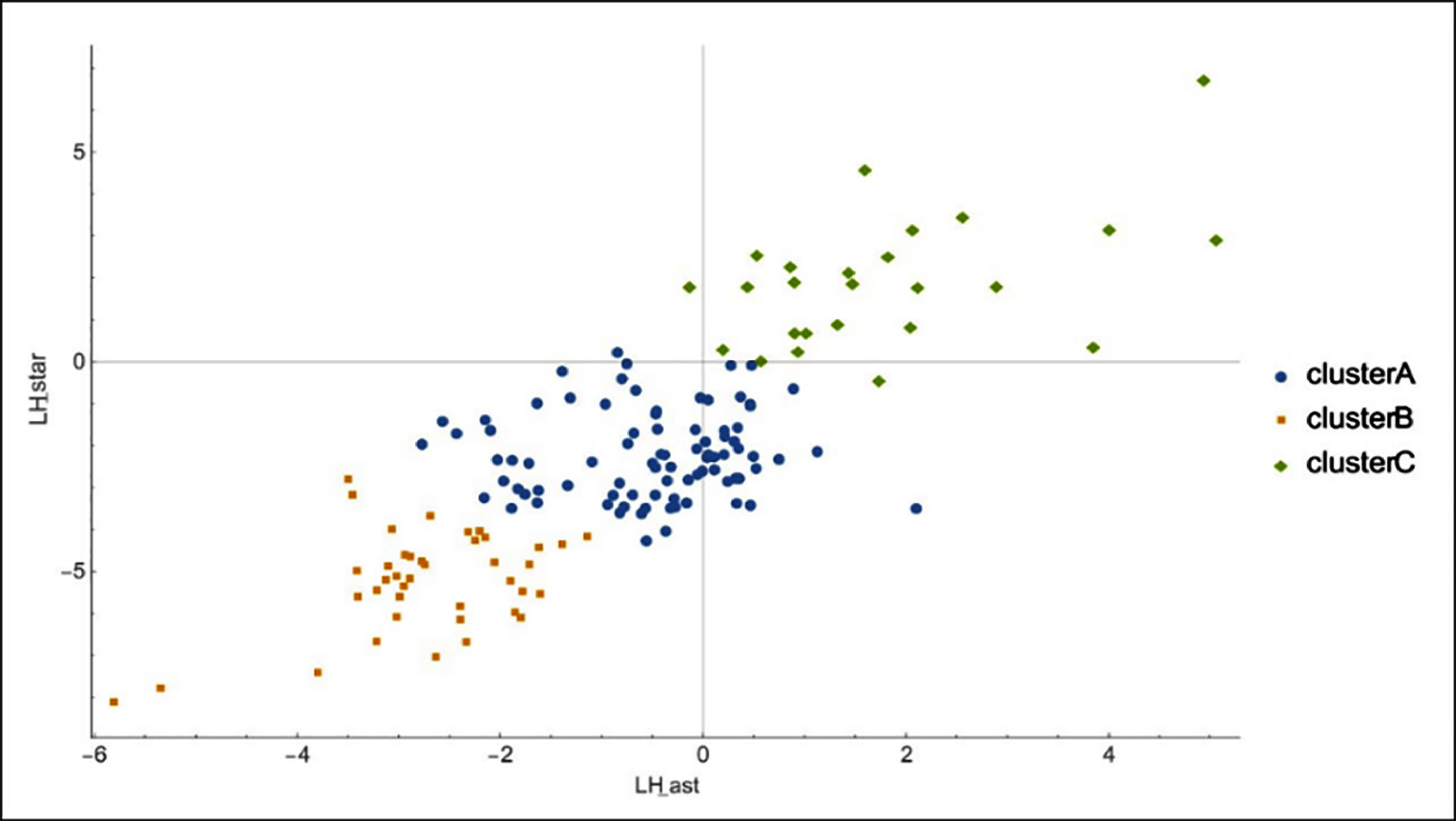
To determine the clusters within the analysis scope, the distances of the coordinates from the identified centroids are calculated. Therefore, the coordinate of the sector belongs to the cluster whose centroid is closest. In the tests, the analysis revealed three distinct clusters: the first one, with greater relative importance of residential categories, presents a moderate influence of Airbnb in the rental market, with moderate loss. The second cluster, characterized by negative indices, includes areas with low presence of secondary residences and limited supply on Airnbnb, resulting in a low influence of Airbnb over the rental market, despite the large number of households. The third one, with higher relevance of secondary residences and properties listed on Airbnb, indicates a significant pressure on the local market, reflecting a high influence of Airbnb, with properties used predominantly for commercial purposes. To sum up, IPAIRBNB presents the following classification:
Subsequently, an application of the IPAIRBNB in the municipality of Rio de Janeiro will be presented, focusing on the analysis of the neighborhoods. This approach will make it possible to identify the spatial and market dynamics associated with the impact of Airbnb, revealing how the platform influences the rental market in different areas of the city.
Application of IPAIRBNB in Rio de Janeiro
Currently, Rio de Janeiro is composed of 165 neighborhoods, according to data from the Municipal City Hall (2024). According to Villaça (2001), the rugged topography and soil characteristics of the city have contributed to an uneven urbanization since the early 19th century, leading to the concentration of retail trade in the Central Region and to the development of the South Zone, driven by significant state investments, attracting the wealthiest social classes.
This is a municipality that has three important characteristics for testing the hypothesis of this article: (1) Rio de Janeiro concentrates the highest number of listings on the Airbnb platform in the analyzed sample; (2) it is the main Brazilian tourist destination; (3) it is a capital city with diverse economy and consolidated rental market. Therefore, if it is of interest to verify if Airbnb’s predominance is capable of affecting the traditional rental market, Rio is the best locality for this purpose.
To explore the distribution of Airbnb listings, the Inside Airbnb platform was used. This tool enabled understanding the extent and nature of Airbnb listings in Rio de Janeiro, the only Brazilian city included in this databank so far, offering information on entire and shared properties available in the city. Data from IBGE (2010; 2022) on the number of permanent private households (PPH) and households for occasional use (HOU) were also collected, as well as the population of all the municipality’s neighborhoods. Table 1 presents these data, which will be the variables for the application of IPAIRBNB.
Applying the formulas (1) and (2) to the municipality of Rio de Janeiro, a regression line of the indices is obtained, explicitly given by:
The Pearson correlation between the indices is 0.801963, which indicates a strong correspondence between these two variables, suggesting that neighborhoods with a high number of secondary residences tend also to have a higher number of properties listed on Airbnb. The regression line obtained can be seen in Figure 2. Figure 3, in turn, presents the graph with the clusters outlined as moderate (A), low (B), and high (C).


– Graphical Representation of clusters formed by the grouping of the pairs of indices LH* (horizontal axis) and LH’ (vertical axis)
Table 2 presents neighborhoods, their indices and respective classification in IPAIRBNB. Figure 4 presents the spatial distribution of the index and makes it possible to observe the concentrations by regions (north, south, center, and west).

In an analysis focused on the spatial division of Rio de Janeiro, the first noteworthy aspect is that only 16.66% of neighborhoods display a high IPAIRBNB index. Among them, Copacabana stands out, located in the South Zone, area to which the elites migrated after leaving the city center, as detailed by Villaça (2001). Copacabana Palace, which opened in 1922 even before infrastructure reached the neighborhood, had already underscored the elites’ interest in settling within this region (Araujo, 2016). The neighborhood of Copacabana, where the per capita income is R$3,032,00 (FGV Social, 2020), features 10,783 listings on Airbnb, with 84% of listed units being entire properties, in contrast with 16% of shared units (Inside Airbnb, 2024). This distribution corresponds to approximately 11% of the total number of households in the neighborhood, and to 31.66% when considering only rented dwellings (IBGE, 2010). In other words, of the approximate 22 thousand homes previously available exclusively for long-term rent in 2010, almost half are now listed on Airbnb. In the neighborhood, the rental value of the square meter is R$50.72 (Secovi Rio, 2023) and the average daily rate on Airbnb is R$650.00 (Inside Airbnb, 2024).
The neighborhood of Ipanema, also located in the South Zone, has a per capita income of R$4,513.00 (FGV Social, 2020) and concentrates 3,045 listings of entire units on Airbnb, which represents 58.40% of the total of permanent private households rented in 2010 (IBGE, 2010). This suggests that more than half of properties available for the rental market in Ipanema have been absorbed by the platform, indicating a strong trend that new real estate developments within the neighborhood have the same destination. Notably, the neighborhood has 86% of entire properties available on the platform.
It is also interesting to observe the number of properties managed by the same host. This practice contributes to the removal of properties from the traditional rental circuit, given that a single person or business offers multiple units, transforming this into a market oriented toward short-term rentals. In Ipanema, a single host manages 50 properties (Inside Airbnb, 2024). The rental value of the square meter in the neighborhood is R$120.37 and the average daily rate on Airbnb is R$812.00 (Inside Airbnb, 2024).
It was observed that in the South Zone most neighborhoods offer more entire than shared units, representing 77% of total listings. This indicates that, given the concentration of a high-income population, there is no need to use their own property as an additional source of income. The most expressive total in this segment is observed in Rocinha, where, despite a limited offer of 28 listings, there were registered 12 offers of shared properties against 16 offers of entire units. In this neighborhood, the average daily rate is R$419.00, the lowest cost among South Zone neighborhoods. In Leblon, an adjacent neighborhood, daily rate costs R$897.00 (Inside Airbnb, 2024), which shows how the neighborhood’s valorization and tourist appeal influence the number of listings and on profits earned through the platform.
In Central Zone neighborhoods, there is a predominance of shared properties, which represent 41% of total listings. The density of Airbnb listings within these neighborhoods does not exceed 11% of rented properties and has barely any representation of the total of homes, remaining below 4%. Thus, even in neighborhoods with larger supply, such as Centro and Santa Teresa, the density of listings is low and only modestly interferes with rental dynamics, presenting a scenario of low attractiveness for listings on the platform. The rental price in Centro is R$35.22 per square meter (FGV Social, 2020), while average daily rate is R$302.00 (Inside Airbnb, 2024).
In the North Zone, the proportion of listings in relation to the total of households is nearly insignificant, not reaching 2%. This region also shows that the number of shared properties listings outnumber those of entire properties, accounting for 53% of the total. Probably, this is due to the fact that this area includes more lower-income neighborhoods, where renting out part of the home supplements the resident’s income. In Tijuca this is particularly notable, where per capita income is R$2,314.00 (FGV Social, 2020), and the entire property listings correspond to 78% of rented households (IBGE, 2010). These properties are probably offered by the homeowners themselves, given that, according to Brazil’s Tenancy Law, subletting of rented properties can only occur with the owner’s authorization (Law 8.245/91, Article 13).
In the West Zone, there are neighborhoods that stand out among those with the largest listing density, such as the case of Barra da Tijuca. According to Villaça (2001), this is a neighborhood resulting from an expansion axis, where a new real estate development pattern was stablished in Rio de Janeiro. With the spillover from the South Zone to other sectors, Barra da Tijuca has consolidated itself as a new product, marked by the material bases of appropriation of surplus profits from location, even though it is, in reality, a repetition of the real estate logic introduced in Copacabana. What is observed, currently, is the occupation of the area by higher-income classes, where the rental price per square meter is R$73.21 and per capita income is R$4,373.00 (FGV, 2020). Most of Airbnb listings are entire properties, which corresponds to 84.6% of the total (Inside Airbnb, 2024).
The neighborhoods of Camorim and Joá stand out for having the highest proportion of listings in relation to the universe of permanent private households, not only within this sector, but across the entire city. Camorim has a listing density on the order of 33%, followed by Joá with 18%, indicating a strong trend of property capture by the platform in these two neighborhoods. Not by chance, these are also the only two cases in the city of Rio de Janeiro where the number of listings is higher than the supply of rented households, denoting a possible real estate expansion already captured by Airbnb, without necessarily going through the rental market. In the case of the Camorim neighborhood, for example, it is inferred that the Athletes’ Village, built for the 2016 Olympic Games and converted into a 3,600-unit condominium, was a relevant factor in this real estate expansion (Rodrigues, 2019). The large number of listings in the neighborhood also indicates a probable buy-to-rent investment, in which one buys in order to rent or for speculative purposes, not necessarily for living, with the Airbnb platform serving this very function (Hoffman; Heisler, 2020).
In an analysis through clusters, it is possible to highlight some urban dynamics in the appropriation of the Airbnb platform in the city of Rio de Janeiro. Cluster A, which contemplates neighborhoods with moderate IPAIRBNB index, represents an intermediate zone between the extremes observed in clusters B and C. It encompasses neighborhoods with moderate per capita income, such as Santa Teresa, Laranjeiras, Catete, and Tijuca, in which Airbnb has a relevant but not dominant presence. In these territories, the proportion of entire units varies between 60% and 78%, and the listing density oscillates between 3% and 8% of rented households, signaling a more modest use of the platform. The appropriation of the Airbnb in these neighborhoods follows a hybrid logic: on the one hand, residents turn to the platform as a means of income diversification or supplementation; on the other hand, small investors start to operate multiple units, suggesting a trend toward professionalization of supply. These neighborhoods occupy a strategic position in urban structure: although they do not have the tourist attractiveness that is consolidated in the South Zone, they rely on good accessibility, historical and cultural value, and relative stability of land. This ambiguity reinforces the multifaceted character of the platform’s operation.
Cluster B, with low IPAIRBNB, concentrates neighborhoods with low per capita income and, in some cases, predominance of shared properties, such as Rocinha. In this situation, it is clear that the use of the platform is more related to supplementing income than to speculation. The inclusion of shared spaces or rooms by local residents reveal a domestic, subsistence-oriented use of the platform, with a focus on increasing household income without totally altering the residential function of the dwelling.
Finally, in Cluster C, neighborhoods such as Copacabana, Ipanema, Barra da Tijuca, and Joá stand out, characterized by high per capita income, high number of entire units available, and high listing density. These territories indicate a financialized and speculative logic in the use of the platform, marked by the activity of hosts with multiple properties and by a significant conversion of housing units into short-term rentals. In many of these cases, Airbnb functions as a tool for real estate value appreciation and for capturing location-based surplus profits, highlighting the articulation between real estate capital and digital market.
This differentiation between clusters demonstrates that Airbnb does not operate homogeneously throughout the city, but rather in a stratified manner, reflecting, also, historical inequalities. It is notable that the platform adapts to the socioeconomic conditions and land logic of each territory, with distinct impacts depending on the locality where it is located.
Concluding remarks
The study has revealed changes in the urban and social dynamics driven by the presence of Airbnb, with particular emphasis on how the platform has altered the rental market in Rio de Janeiro. The platform is seen as predominantly active in locations with high tourist appeal, such as Copacabana and Ipanema, but is also starting to impact neighborhoods such as Camorim, where local rental dynamics are being modified. Airbnb's expansion in Brazil, driven by factors such as major events and economic instability, has consolidated the model of short-term rentals as a significant practice in the real estate market. Nevertheless, this expansion also reveals structural inefficiencies and inequalities, such as the high number of vacant properties and a persistent housing deficit.
In higher-income neighborhoods, such as Copacabana and Barra da Tijuca, the absorption of properties for short-term rentals has put pressure on the traditional long-term rental market, making access to housing more difficult for the local population. The trend towards the concentration of entire properties and the management of multiple properties by a single host indicate that Airbnb has become a model of speculative investment, rather than a solution to the local housing demand.
However, in lower-income areas, such as some regions in the North and West Zones, Airbnb usage is more oriented toward shared room rentals, serving as a source of supplementary income for residents. Although the platform’s impact on these areas is more modest, it is possible to notice that long-term rental market dynamics continue to be affected, although on a smaller scale.
The application of IPAIRBNB as a methodology for measuring Airbnb's impacts on long-term real estate market proved to be effective for understanding how the platform impacts local realities. The analysis indicated the urgent need for more efficient regulatory measures, capable of addressing the specificities of each urban area and mitigating the negative effects of the commodification of urban space.
It is important to highlight that, since Airbnb frequently operates within the stock of properties available for short-term rent, the increasing tourist demand may create an overlap with the traditional long-term rental market. This overlap might lead to conflicts in cities where tourist and residential areas are clearly delimited, resulting in a division between the urban dynamics of each of these neighborhoods. This results in an increasingly evident contrast between tourism-oriented zones, with a high concentration of short-term rentals, and residential areas, which face difficulties in accessing long-term housing due to real estate market pressure. Ultimately, Airbnb not only transforms the rental market, but also reinforces real estate speculation, exacerbating inequalities in housing access and deepening social tensions in cities.
References
-
AIRBNB (2024). Dados gerais. Disponível em: https://news.airbnb.com/br/fast-facts Acesso em: 19 nov 2024.
» https://news.airbnb.com/br/fast-facts - AMIN, A. (2007). Re-thinking the urban social. City Londres, v. 11, n. 1, pp. 100-114.
- ANDRADE, J. N.; ARAUJO, C. P. de; CRISTINO, C. T. (2024). Incidência e repercussões do AIRBNB: o caso do Rio de Janeiro. Oculum Ensaios. Campinas, [S. l.], v. 21, pp. 1-20.
- ANTUNES, R. (2020). O privilégio da servidão: o novo proletariado de serviços na era digital São Paulo, Boitempo.
- ARAUJO, C. P. (2016). "Arquitetura hoteleira. Meio, fim ou imagem?". In: VARGAS, H. C.; PAIVA, R. A. (org.). Turismo, arquitetura e cidade São Paulo, Manole.
- BARNS, S. (2019). Negotiating the platform pivot: From partici-patory digital ecosystems to infrastructures of everyday life. Geography Compass Hoboken, v. 13, n. 9, pp. 1-13.
- BONDUKI, N. (2014). Os pioneiros da habitação social: cem anos de construção de política pública no Brasil São Paulo, Unesp; Sesc.
- BOTSMAN, R.; ROGERS, R. (2011). O que é seu é meu: como o consumo colaborativo vai mudar o nosso mundo. Porto Alegre, Bookman Editora. v. 1.
- CHESNAIS, F. (2015). A finança mundializada São Paulo, Boitempo.
- DARDOT, P.; LAVAL, C. (2019) Anatomía del nuevo neoliberalismo. Viento Sur. Madrid, v. 27, n. 164, pp. 5-16.
-
DUNKER, C. (2016). O neoliberalismo e seus normalopatas. Disponível em: https://blogdaboitempo.com.br/2016/11/03/o-neoliberalismo-e-seus-normalopatas/ Acesso em: 23 nov 2024.
» https://blogdaboitempo.com.br/2016/11/03/o-neoliberalismo-e-seus-normalopatas/ -
FGV SOCIAL (2020). Renda per capita - população total e favelas - bairros - Rio de Janeiro. Disponível em: https://cps.fgv.br/r-renda-capita-populacao-total-e-favelas-bairros-rio-de-janeiro Acesso em: 30 nov 2024.
» https://cps.fgv.br/r-renda-capita-populacao-total-e-favelas-bairros-rio-de-janeiro - GRAHAM, M. (2020). Regulate, replicate and resist - the conjunctural geographies of platform urbanism. Urban Geography, v. 41, n. 3, pp. 453-457.
- HARVEY, D. (2011). O enigma do capital e as crises do capitalismo São Paulo, Boitempo.
- HARVEY, D. (2013). Os limites do capital São Paulo, Boitempo.
- HOFFMAN, L. M.; HEISLER, B. S. (2020). Airbnb, short-term rentals and the future of housing Londres, Routledge.
-
INSIDE AIRBNB (2024). Rio de Janeiro. Disponível em: http://insideairbnb.com/rio-de-janeiro Acesso em: 30 mar 2024.
» http://insideairbnb.com/rio-de-janeiro -
IBGE - Instituto Brasileiro de Geografia e Estatística (2010). Sinopse do Censo 2010. Disponível em: https://censo2010.ibge.gov.br/sinopseporsetores/ Acesso em: 5 out 2024.
» https://censo2010.ibge.gov.br/sinopseporsetores/ -
IBGE - Instituto Brasileiro de Geografia e Estatística (2022). Panorama do Censo 2022. Disponível em: https://censo2022.ibge.gov.br/panorama/ Acesso em: 5 out 2024.
» https://censo2022.ibge.gov.br/panorama/ - MORAES, A. C. R. (1999). Contribuições para a gestão da zona costeira do Brasil: elementos para uma Geografia do Litoral Brasileiro. São Paulo, Hucitec.
- MOROZOV, E.; BRIA, F. (2019). A cidade inteligente, tecnologias urbanas e democracia São Paulo, Ubu.
- MÖRTENBÖCK, P.; MOOSHAMMER, H. (2021). Platform urbanism and its discontents Roterdã, Nai010 Publishers.
-
NETHERCOTE, M. (2019). Build-to-Rent and the financialization of rental housing: future research directions. Housing Studies, v. 35, n. 5, p. 839-874. Disponível em: https://www.tandfonline.com/doi/full/10.1080/02673037.2019.1636938 Acesso em: 20 nov 2024.
» https://www.tandfonline.com/doi/full/10.1080/02673037.2019.1636938 -
OPERDATA (2021). Coeficientes de correlação. Disponível em: https://operdata.com.br/blog/coeficientes-de-correlacao/ Acesso em: 23 nov 2024.
» https://operdata.com.br/blog/coeficientes-de-correlacao/ -
PREFEITURA MUNICIPAL DO RIO DE JANEIRO (2024). Data Rio: informações sobre a cidade. Disponível em: https://www.data.rio/pages/rio-em-sntese-2 Acesso em: 10 dez 2024.
» https://www.data.rio/pages/rio-em-sntese-2 - RODGERS, S.; MOORE, S. (2020). "Platform phenomenologies: social media as experiential infrastructures of urban public life". In: HODSON, M.; KASMIRE, J.; MCMEEKIN, A.; STEHLIN, J.; WARD, K. (ed.). Urban platforms and the future city:transformations in infrastructure, governance, knowledge and everyday life. Londres, Routledge.
-
RODRIGUES, M. (2019). Após 3 anos da Rio 2016, Vila dos Atletas vendeu menos de 15% dos apartamentos construídos. Disponível em https://g1.globo.com/rj/rio-de-janeiro/noticia/2019/08/12/apos-3-anos-da-rio-2016-vila-dos-atletas-vendeu-menos-de-15percent-dos-apartamentos-construidos.ghtml 12/08/2019. Acesso em: 30 mar 2021.
» https://g1.globo.com/rj/rio-de-janeiro/noticia/2019/08/12/apos-3-anos-da-rio-2016-vila-dos-atletas-vendeu-menos-de-15percent-dos-apartamentos-construidos.ghtml - SCHOR, J. (2017). "Debatendo a economia do compartilhamento". In: ZANATTA, R. A. F.; PAULA, P. C. B.; KIRA, B. (org.). Economias do Compartilhamento e o Direito Curitiba, Juruá.
-
SECOVI RIO (2023). Valor e variação do m 2 de locação residencial por bairros. Disponível em: https://www.secovirio.com.br/wp-content/uploads/2023/12/Valor-e-variacao-do-m%C2%B2-de-Locacao-Residencial-por-Bairros.pdf Acesso em: 5 out 2024.
» https://www.secovirio.com.br/wp-content/uploads/2023/12/Valor-e-variacao-do-m%C2%B2-de-Locacao-Residencial-por-Bairros.pdf - SLEE, T. (2017). Uberização: a nova onda do trabalho precarizado São Paulo, Elefante.
- SOUZA, R. B. (2021). Territorialização do Airbnb em cidades pequenas turísticas brasileiras: regular é preciso?. Dissertação de mestrado. Campinas, Universidade Estadual de Campinas.
- SRNICEK, N. (2018). Capitalismo de plataformas Buenos Aires, Caja Negra.
- TULIK, O. (2001). Turismo e meios de hospedagem: casas de temporada São Paulo, Roca.
- VILLAÇA, F. (2001). Espaço intra-urbano no Brasil São Paulo, Studio Nobel.
- WACHSMUTH, D. et al. (2017). Short-term cities: Airbnb's impact on Canadian housing markets. Urban Politics and Governance research group School of Urban Planning McGill University.
Notes
-
1
The methodology proposed by Tulik (2001) classifies the prevalence of secondary residences into five categories: incipient (up to 5%), weak (5.1% to 10%), moderate (10.1% to 20%), strong (20.1% to 40%), and exceptional (above 40%). The Airbnb Index in Cities – IABC, developed by Souza (2021), aims to identify the presence of the Airbnb platform in small Brazilian tourist cities. In its results, it is evident that the highest prevalence is found along the coast.
-
2
The information used was extracted from the 2010 Demographic Census, by census tract, and refers to the nature of Permanent Private Households. It is important to clarify that these data may indicate orders of magnitude to researchers, which may eventually be adjusted using indices or change rates provided by specialized institutes. That is, applying corrective factors to the 2010 Census data would only result in new values, without altering the conclusions presented here, which are relative to one another. The 2022 Census has not released information as detailed as that of the 2010 Census so far (December, 2024). Data on rented households, for example, are not included in the official tables.
-
3
AirDNA and Inside Airbnb are platforms that analyze the impact of Airbnb, but with different approaches. While AirDNA is a commercial tool aimed at real estate investors and managers, providing detailed data on occupancy, income, and seasonality to maximize financial returns, Inside Airbnb is an independent initiative focused on transparency and the social and urban impacts of the platform. AirDNA uses artificial intelligence and refined datasets to provide strategic support, being a paid tool, while Inside Airbnb, which is free, collects public information to support political and academic debate, highlighting issues such as real estate speculation and property concentration.
-
4
According to Operdata (2021, n.p.), “Pearson’s correlation coefficient, also called Pearson’s linear correlation or Pearson’s r, is a measure of the relationship between two quantitative variables and expresses the degree of correlation through values ranging from -1 and 1. When the correlation coefficient approaches 1, there is an increase in the value of one variable as the other also increases, that is, there is a positive linear relationship. When the coefficient approaches -1, it is also possible to state that the variables are correlated, but in this case, when the value of one variable increases, the value of the other decreases. This is called a negative or inverse correlation. A correlation coefficient close to zero indicates that there is no relation between the two variables, and the closer they are to 1 or -1, the stronger the relationship”.
ATTACHMENTS
-
Editors:
Lucia Bógus e Luiz César de Queiroz Ribeiro

 Source: prepared by the authors (2024).
 Source: prepared by the authors (2024).
 Source: prepared by the authors (2024).
 Source: prepared by the authors (2024).