
 The rural in democratic innovations: a comparative proposal between Latin America and Europe
Abstract
This article compares democratic innovations (DIs) in rural areas of Europe and Latin America, highlighting differences in approaches and motivations. In Europe, DIs focus on rural development, environmental policies, and local economic improvements, emphasizing institutional strengthening and sustainability without challenging the existing political model. In contrast, in Latin America, the rural context is a space for emancipatory struggles, such as the defense of indigenous rights and food sovereignty, serving as a battleground for autonomy and social justice. The article argues that, while in Europe DIs improve public policies, in Latin America they challenge established notions of development and rights, varying significantly between different sociopolitical contexts.
democratic innovations; rural; citizen participation; Latin America; Europe
Resumo
Este artigo compara inovações democráticas (IDs) em áreas rurais da Europa e da América Latina, destacando diferenças em abordagens e motivações. Na Europa, as IDs se concentram no desenvolvimento rural, nas políticas ambientais e nas melhorias económicas locais, com foco no fortalecimento institucional e na sustentabilidade, sem desafiar o modelo político existente. Em contraste, na América Latina, o rural é um espaço de lutas emancipatórias, como a defesa de direitos indígenas e a soberania alimentar, sendo um campo de batalha por autonomia e justiça social. O artigo argumenta que, enquanto na Europa as IDs aprimoram políticas públicas, na América Latina elas desafiam noções estabelecidas de desenvolvimento e direitos, variando significativamente entre contextos sociopolíticos.
inovações democráticas; rural; participação cidadã; América Latina; Europa
Introduction
The conceptualization of the 'rural' in European and Latin American contexts reflects the particularities of their historical, cultural, and socio-economic dimensions. In Europe, the 'rural' is often interpreted in relation to structured policies within the political framework of the European Union (EU), such as rural development programs and the Common Agricultural Policy (CAP) (Shucksmith et al., 2005). More recently, the European Green Deal has placed the rural within the scope of the European Commission's 'Farm to Fork' (F2F) strategy (Billen et al., 2024). Additionally, social conceptions and representations range from the crisis of productivist rurality to the post-productivist idyllic and bucolic rurality for tourist consumption (Silva et al., 2016). In contrast, in Latin America, the rural is often politicized through activism and social movements (Deere and Royce, 2011), marked by a distance from the state (Davis, 1999), and even generating violence (Kay, 2001). It is linked to peasant resistance (Fernandes, 2020), which has spurred academic production addressing issues such as struggles for land access rights (Fernandes, 2013), agrarian reform (Leite and Ávila, 2007), indigenous rights and resistance (Sobreiro, 2015; Hirsch, 2017; Rojas-Marchini, 2023), challenges of extractivism (Losekann, 2016; Veltmeyer, 2022), and political programs focused on food sovereignty (Edelman et al., 2014). This article explores this panorama of differences, focusing on how distinct interpretations of the 'rural' influence forms of citizen participation and democratic innovations (hereafter DIs) in participatory instances in rural contexts. It argues that such interpretations not only impact these participatory practices but also reflect and reinforce specific conceptions of the rural, while emphasizing the centrality of citizen engagement in promoting significant transformations in these different contexts.
Therefore, this study aims to explore DIs, understood here as institutions or processes that use deliberative and/or participatory means (Smith, 2009; Warren, 2009) to increase and diversify citizen participation in democratic governance and policy-making (Elstub & Escobar, 2019; Pogrebinschi, 2023), with an emphasis on experiences in Europe and Latin America from a comparative perspective. Thus, the article seeks to identify differences in approaches and underlying motivations for DIs, highlighting how rural dynamics are shaped by distinct socio-political contexts. This research is supported by an empirical analysis of DI cases compiled and coded, from specific databases for each region: Participedia, OECD, and Knoca for Europe, and Latinno (Pogrebinschi, 2017) for Latin America.
The relevance of this study lies in its ability to broaden the understanding of the role of DIs on (political) rural issues and how these can vary substantially between different geographical contexts. By rural issues, we understand here a wide range of topics that vary according to geographical, historical, and socio-economic contexts, namely (but not exclusively):
-
Agrarian Structure and Agricultural Policies, such as issues of family farming versus agribusiness (Altieri, 2009); agricultural policies and subsidies, such as the CAP in the EU or the impacts of global agricultural liberalization.
-
Sustainability and Environmental Crises, such as the impacts of climate change in rural areas, like desertification and biodiversity loss (Morton, 2007).
-
Rural Development and Social Exclusion, such as challenges of rural exodus and depopulation of rural areas (Shucksmith et al., 2009).
-
Food Sovereignty and Social Justice, such as movements for food sovereignty like La Via Campesina (Edelman et al., 2014).
-
Territorial Rights and Resistances, such as peasant and indigenous struggles for territorial and cultural rights (Borras, 2008).
-
Local Governance and Democratic Participation, such as participatory budgeting and community councils (Wampler, 2010).
By comparing European approaches, primarily focused on strengthening local governance and sustainability, with Latin American ones, where there is a greater emancipatory focus and struggle for civil, social, and territorial rights, the article highlights the potentialities and limitations of democratic innovations, in the specific context of rural issues, as tools for social and political transformation through democratic and participatory institutions or processes, which can contribute to more just, cohesive, and sustainable rural societies and communities.
Thus, the study seeks to answer the following research questions: (1) How do DIs manifest in rural areas and/or on rural issues in Europe and Latin America? (2) What are the main differences in motivations and socio--political contexts shaping these innovations in each region? (3) In what ways can DIs contribute to social and political transformation in rural contexts?
To answer these questions, the specific objectives of the study include: (1) Investigating how DIs manifest in rural areas and/or about rural issues in Europe and Latin America, considering their specificities in terms of implementation and participatory practices; (2) Analyzing the differences in motivations and socio-political contexts shaping DIs in each region, highlighting the historical, cultural, and institutional factors influencing these innovations; (3) Evaluating how DIs contribute to social and political transformations in rural contexts, exploring their impacts on strengthening citizenship, social justice, and the sustainability of democracies. In this sense, the study aims to demonstrate that DIs, despite their transformative potential, are deeply influenced by political contexts, contributing to the literature by emphasizing the importance of recognizing local specificities, and thus geographical and territorial ones, in strengthening democracies.
As such, the study presents a detailed section on different defining perspectives of the rural in European and Latin American contexts, addressing historical, cultural, and socio-economic differences. After presenting the methodology used for constructing the databases and the comparative analysis of DI cases in the two regions, the article develops an empirical analysis, first more descriptive and then more analytical, organizing the results into three main themes that emerged from the qualitative analysis of DI cases for each region: rural development, environmental sustainability, and local governance in Europe; and territorial rights, food sovereignty, and social justice in Latin America. This thematic distinction supports the central hypothesis of the study that, while in Europe the rural is primarily approached in terms of rural/territorial development, in Latin America it is more frequently considered within the scope of rights and social justice. The final discussion articulates the results considering these thematic issues, illustrating them with a selection of specific cases, highlighting the different regional priorities and the impacts of democratic innovations.
Literature review
Democratic Innovations in the context of contemporary crises
The world faces multiple crises (Lawrence et al., 2024), recently intensified by the resilience of post-pandemic capitalism (Nelson, 2020), that is, the structural fragilities of capitalism revealed by the pandemic – from the vulnerability of global supply chains to the impacts of neoliberal policies on health systems – while exacerbating the inequalities inherent to the system, deepening the inequalities embedded in the relations of production and reproduction that characterize the Global North-Global South divide (Stevano et al., 2021).
In this context, DIs seem to emerge as important tools for revitalizing democratic decision-making through greater citizen participation with the potential for more effective responses to current political myopia (Smith, 2021). Designed to address the inherent deficiencies of traditional governance models, these innovations provide new avenues for citizen engagement in public affairs, thus attempting to mitigate democratic deficits (Geissel & Joas, 2013; Warren, 2017). Consequently, DIs are increasingly recognized for their potential to deepen democracy (Elstub & Escobar, 2019), promoting inclusivity and responsiveness, and aiming to bridge the gap between citizens and policymakers, enabling greater citizen participation in political and decision-making processes (Dryzek et al., 2019).
However, the effectiveness of DIs in achieving substantial impact remains a topic of debate. Empirical studies indicate that, although DIs have been implemented in various contexts, their success in improving democratic quality is inconsistent (Jacquet, 2017; Parry, Curato e Dryzek , 2024). In Latin America, for example, most DIs occur at the local level and involve limited participation, with only a small fraction resulting in significant political outcomes (Pogrebinschi, 2023). This reflects the challenges DIs face in attempting to increase citizen participation and achieve sustainable policy impacts. Moreover, the lack of formalization and mandatory adoption often restricts the potential of these innovations to effect political change, as evidenced in cases where DIs fail to achieve desired outcomes due to insufficient legislative or constitutional support (Ibid.).
Erik Olin Wright's (2010) framework of "Real Utopias" offers a valuable theoretical perspective for analyzing these innovations. Wright emphasizes democratic equality and the pluralism of emancipatory alternatives as key elements in contesting capitalist structures and promoting sustainable forms of social organization (Wright, 2010). DIs have the potential to align with this vision by promoting participatory mechanisms that challenge existing hierarchies while empowering marginalized communities. For example, participatory budgeting, first implemented in Porto Alegre (Menegat, 2002), exemplifies how direct citizen involvement in budgetary decisions can increase social equity (Souza, 2001; Cabannes, 2004), thus serving as an experimental space for realizing elements of "Real Utopias." Although DIs possess transformative potential, their effectiveness depends on multiple factors, including the institutional context (Harris, 2019; OECD, 2020), the level of citizen involvement (Jacquet, 2017), and the political commitment to integrate citizen contributions into decision-making processes (Pillet et al., 2022).
In summary, by incorporating the concepts of democratic equality and pluralism into the analysis of DIs, we can better understand the conditions under which these innovations can contribute to a more sustainable and equitable future. However, their impact depends on careful design, effective implementation, and the existence of favorable political contexts and conditions, namely institutional openness to participation, consistent political support, and inclusive process design (Smith, 2024), which can be hindered by a lack of resources and/or responsiveness from public administration (Opitz, 2024).
In the context of this work, where the rural is the main focus, it is important to highlight two points before proceeding. First, to clarify that we assume the incorporation of DIs into the public policy cycle as essential to ensure citizen participation, that is, a central position in the idea of governance oriented by democracy of Bua and Bussu (2021). These authors emphasize the importance of creating participatory spaces where citizens play an active role in policy formulation, reinforcing democratic legitimacy and promoting systemic changes. This is an important argument in what we will see about the rural in Europe and citizen participation in that context.
Simultaneously, and second, Della Porta and Felicetti (2022) underline the fundamental link between social movements and DIs, illustrating how grassroots activism drives institutional change by demanding more inclusive and democratic governance. These authors argue that social movements often create "claimed spaces" for participation, challenging traditional power structures and promoting democratic innovation from the ground up. In turn, this is an important argument in considering the rural in Latin America and related DIs.
The Rural in Europe: a brief review and theoretical perspectives
The concept of ‘rural’ in Europe is marked by a historical tension between traditional and modern interpretations, reflecting the continent's economic, social, and cultural transformations. Authors like Williams (1973) approach the rural as a cultural construction that often idealizes bucolic landscapes and communal ways of life, contrasting them with industrialization and the urban. Williams argues that this romantic conception ignores the inequalities and conflicts that also define the rural. From the 1990s, scholars like Halfacree (1993) emphasize the plurality of rural experiences and introduce the idea of the rural as a socio-spatial representation. In turn, Woods (2011) highlights the role of globalization and European policies, such as the CAP, in redefining the European rural space as a place of production, leisure, and environmental conservation.
The CAP, a cornerstone of EU agricultural policy since 1962, has historically aimed to increase agricultural productivity, ensure a fair standard of living for farmers, stabilize markets, and ensure the availability of supplies at reasonable prices (Heyl et al., 2020). It has evolved to incorporate broader rural development objectives, including environmental sustainability, rural tourism, and the diversification of rural economies. In terms of citizen participation and interest groups in shaping policies aimed at rural development, the CAP introduced the Leader program in 1991, which created funds to support local communities. Scientific evaluations indicate that it is especially in the context of rural tourism that Leader measures have had a measurable quantitative effect on rural development through employment, marketing, and infrastructure, but the long-term effectiveness and efficiency of the measure are unclear (Ballesteros and Hernández Hernández, 2017). The CAP has been criticized for various reasons. First, market distortions with subsidies favoring large landowners and agricultural companies, harming small farmers and the objective of equity (McGiffen, 2005; Oxfam, 2002). Environmental measures are seen as insufficient to promote sustainable practices (Bureau and Mahé, 2008), and subsidies harm developing country markets by unfairly competing with local producers (Oxfam, 2002). Additionally, the CAP focuses excessively on agricultural production, neglecting broader rural development and the diversified needs of rural communities (OECD, 2006).
More recently, the European Coordination Via Campesina (ECVC, 2021) criticized the EU's 'Farm to Fork' (F2F) strategy for lacking practical measures to ensure the inclusion of small and medium-sized farmers, fearing that the strategy may ultimately reinforce the existing favoritism towards large agricultural companies in the CAP. The ECVC argues that the F2F strategy is inconsistent with other EU policies, such as trade agreements that harm sustainable agriculture by promoting industrial agricultural models. The organization advocates for a more comprehensive review of the CAP to align with the objectives of the F2F strategy, emphasizing the need for support for local markets, fairer pricing systems, and stronger protections for human, social, and labor rights. However, defining the rural in its modern conceptualization within the EU space implies a critical approach to its territorial and social impacts that invariably also shape and mold approaches and conceptions of the rural. Especially regarding public policy instruments directed at this "space" and the territories consigned therein, as well as the populations that inhabit them.
Thus, rurality in Europe is a multifaceted concept that goes beyond simplistic associations with economic decline or exclusively agricultural landscapes, as contemporary understanding of rurality recognizes that being rural does not necessarily mean being agricultural (Murdoch and Marsden, 1996; Figueiredo, 2011). Moreover, rural areas have become increasingly diversified, with the growth of tertiary sector activities, particularly those related to agritourism, highlighting the growing role of non-agricultural sectors in rural economies (Fonte and Papadopoulos, 2010). This change underscores the importance of agricultural policies in influencing the structure and sustainability of rural economies, while recognizing the need to integrate agricultural development with broader economic and territorial strategies.
However, these areas also face significant challenges due to deterritorialization, where global market pressures threaten to override traditional practices, leading to the homogenization of production systems and the erosion of local distinctiveness (Morgan et al., 2006). This tension between locality and deterritorialization underscores the contested nature of rural spaces, where maintaining local identity and cultural heritage is a constant struggle. To address these challenges, the active involvement of local actors, governance structures, and communities in preserving the unique characteristics of rural areas is crucial.
The rural in Latin America: a brief review and theoretical perspectives
In Latin America, the rural is profoundly shaped by colonial dynamics, agrarian struggles, and popular resistance. Martins (2010) explores the historical construction of the peasantry, highlighting the role of land tenure structures and latifundia in shaping rural inequalities. He also addresses forms of peasant resistance, such as land occupations and agrarian reform movements. The region’s history of colonization, inequality, and social movements has shaped a distinct rural narrative, where the struggle for land ownership and access to resources remains central. Movements such as the Landless Workers' Movement (MST) in Brazil exemplify the fight for agrarian reform and equitable distribution of agricultural resources (Carter, 2015), reinforcing how the concept of 'rural' is intertwined with issues of land rights and food sovereignty (Merino, 2020).
From the 2000s onwards, authors such as Escobar (2008) have addressed the notion of "territorialities in dispute", analyzing the impact of large-scale extraction projects and agribusiness. Escobar proposes a post--developmental reading, emphasizing the importance of local knowledge and community autonomy in the face of the neoliberal model. Food sovereignty, a concept championed by peasant organizations like La Vía Campesina, stresses the right of people to define their own agricultural and food policies. This concept prioritizes local food systems, agroecology, and the empowerment of rural communities, strongly contrasting with the industrialized, export-oriented models frequently observed in European agricultural policy (Borras, 2023).
Latin America’s rural areas are also characterized by a rich diversity of Indigenous cultures and traditional knowledge systems (Altieri, 1992). These perspectives often highlight a harmonious relationship with nature, sustainable land-use practices, and community governance (Field, 2001). The recognition and integration of these cultural elements into rural development policies are crucial in many Latin American countries, reflecting a broader understanding of rural spaces that includes cultural and social dimensions.
The rural has also been conceptualized, particularly in the Global South, through the intersection of climate change and agrarian studies. Leff (1986) highlights the rural as a space of socio-environmental conflicts, where hegemonic and alternative rationalities collide. More recently, studies have pointed out how climate change exacerbates socio-economic inequalities in rural areas, particularly affecting marginalized groups such as peasants and rural workers (Scoones et al., 2024). These studies critique the capitalist dynamics that drive environmental degradation and emphasize how these impacts are distributed unequally, often disproportionately affecting rural communities.
This theoretical-empirical perspective examines changes in rural class structures under neoliberalism – specifically, old and new forms of extractivism and the exploitation of rights and resources (Wolford et al., 2024) –hile questioning the potential for agrarian struggles as traditional peasantries give way to more diverse rural working populations. It also critiques technocratic policy responses, such as climate finance and carbon offsetting, which often ignore local knowledge and its complexities, instead blaming traditional practices such as slash-and-burn agriculture and pastoralism.
The scholars within this perspective (Rosset and Altieri, 2017; Scoones et al., 2017; Borras, 2023) argue for a deeper understanding of how global capitalist relations intersect with local environmental conditions, emphasizing that solutions must go beyond technical fixes to address the systemic inequalities underpinning both climate change and mitigation strategies. They also call for future research to integrate local histories with broader global environmental changes, advocating for transformative approaches that genuinely address the political-economic roots of climate crises based on two theoretical axes.
First, a theoretical axis that can be termed "emancipatory rural politics" (Scoones et al., 2017). This axis analyzes the rise of authoritarian populism in rural areas, highlighting how rural transformations contribute to and are shaped by political movements that apply processes of coercion and consensus, alongside populist initiatives, to enforce extractivist resource exploitation for rent-seeking purposes (Soyer and Barbosa Jr., 2020). The authors propose the 'Emancipatory Rural Politics Initiative' as a global research and action agenda aimed at understanding and countering these trends. They emphasize the need for alternative political strategies that promote social justice and sustainable development, grounded in local knowledge and experiences.
Second, a theoretical axis aimed at transforming agrarian policies and knowledge systems (Rosset and Altieri, 2017; Borras, 2023). This axis focuses on La Vía Campesina, an international movement advocating for food sovereignty, agrarian reform, and social justice. It explores how the movement challenges the dominant agricultural model, driven by neoliberal and corporate interests, by promoting agroecological practices and the rights of small-scale farmers. La Vía Campesina’s strategies include mobilizing local and global networks, political advocacy, and fostering knowledge exchange among farmers. The movement’s emphasis on grassroots participation and the integration of diverse cultural perspectives is highlighted as a key factor in its resilience and impact. Furthermore, the movement seeks to challenge market-based neoliberal approaches that dominate global food policy and trade, advocating for more equitable and sustainable forms of food production and distribution.
Additionally, and more recently, research has focused on the intersection of food sovereignty and the Covid-19 pandemic, presenting it as a critical moment for global food systems and calling for a reassessment of food production, distribution, and consumption practices (Bjørkhaug et al., 2023).
Methodology
The methodology for the comparative analysis of cases of Deliberative Innovations (DIs) in rural areas in Europe and Latin America followed two main steps. The first step involved the collection and compilation of data on these DIs using two distinct databases. The database for European cases was built from open-access sources, including Participedia, the OECD, and Knoca, each contributing relevant cases of DIs in the European context (Falanga et al., 2024), covering the period from the late 1970s to the present. Cases were selected and filtered based on keywords such as ‘rural’, ‘countryside’, ‘agrarian’, ‘agriculture’, ‘land’, and ‘food’, resulting in 59 cases from 11 European countries, all related to rural themes.
The database for Latin America was created using the Latinno1 platform, which compiles detailed information on DIs across 18 Latin American countries. The same search criteria were applied to identify relevant cases, yielding 212 cases related to rural themes, which took place between 1990 and 2020.
Both databases included descriptive information, such as country, start and end date of the case, level of governance (local, regional, or national), and the entity leading the process (governmental, private, or civic organization). Additionally, cases were coded according to analytical dimensions, such as the policy intervention area (e.g., agriculture, environment, development) and the stage of the public policy cycle (problem identification, policy formulation, implementation, or evaluation). Each case was also categorized according to a DI type, namely mini-public, participatory budgeting, and a broader category labeled participatory/collaborative governance. A subcategory of digital participation was also included, given that—especially after the pandemic—participatory processes increasingly relied on digital tools. This classification follows a recent and comprehensive literature review on DIs (Falanga et al., 2024).
The second step involved a qualitative analysis of the case descriptions, using MAXQDA content analysis software, which allowed for the examination of term frequency and their relationships with the analytical dimension of policy intervention areas. The analysis determined that, in Europe, DIs related to rural areas tend to emphasize rural development, environmental sustainability, and local governance, whereas in Latin America, innovations reflect a stronger focus on territorial rights, food sovereignty, and social justice.
Finally, the third step involved selecting 10 specific cases (five from each database) to illustrate and enrich the thematic analysis, applying the “cogitative” and “critical” selection criteria as proposed by Dryzek (2023). Cogitative examples were used to reflect on arguments and derive general conclusions, while critical examples were selected to challenge or refute existing perspectives, demonstrating the complexity of arguments or highlighting their limitations.
Findings
Democratic Innovations in rural areas: comparative indicators between Europe and Latin America
After conducting a content analysis of the descriptions of DI cases from each database, it became clear that the differences in focus between Europe and Latin America are evident. Europe emphasizes climate change, sustainable agricultural practices, democratic processes, and local governance, alongside urban and rural development. In contrast, cases in Latin America focus on poverty reduction, food sovereignty, cultural identity, the integration of ethnic groups, and the empowerment of Indigenous communities, suggesting a broader approach that integrates economic, social, and cultural dimensions, with a focus on basic needs and community-driven initiatives.
Specific patterns in Europe include structured assemblies and panels focused on future sustainability and agricultural practices, participatory approaches to budget allocation and decision-making, and collaborative efforts in urban and regional development. In Latin America, initiatives focus on food availability, poverty reduction, transparency in economic investment processes, ethnic group integration, cultural heritage preservation, social cohesion, and the development of rural and Indigenous communities.
In sum, while both European and Latin American DIs demonstrate a strong commitment to rural development and citizen participation, their approaches reflect different regional priorities and contexts. Europe tends to emphasize structured participatory processes and sustainability, whereas Latin America focuses more on human development, food sovereignty, and cultural integration.
Regional specificities and differences
The two datasets on rural DIs in Europe and Latin America provide an important contrast in the distribution and focus of democratic practices, reflecting different regional priorities and contexts.
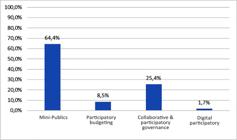
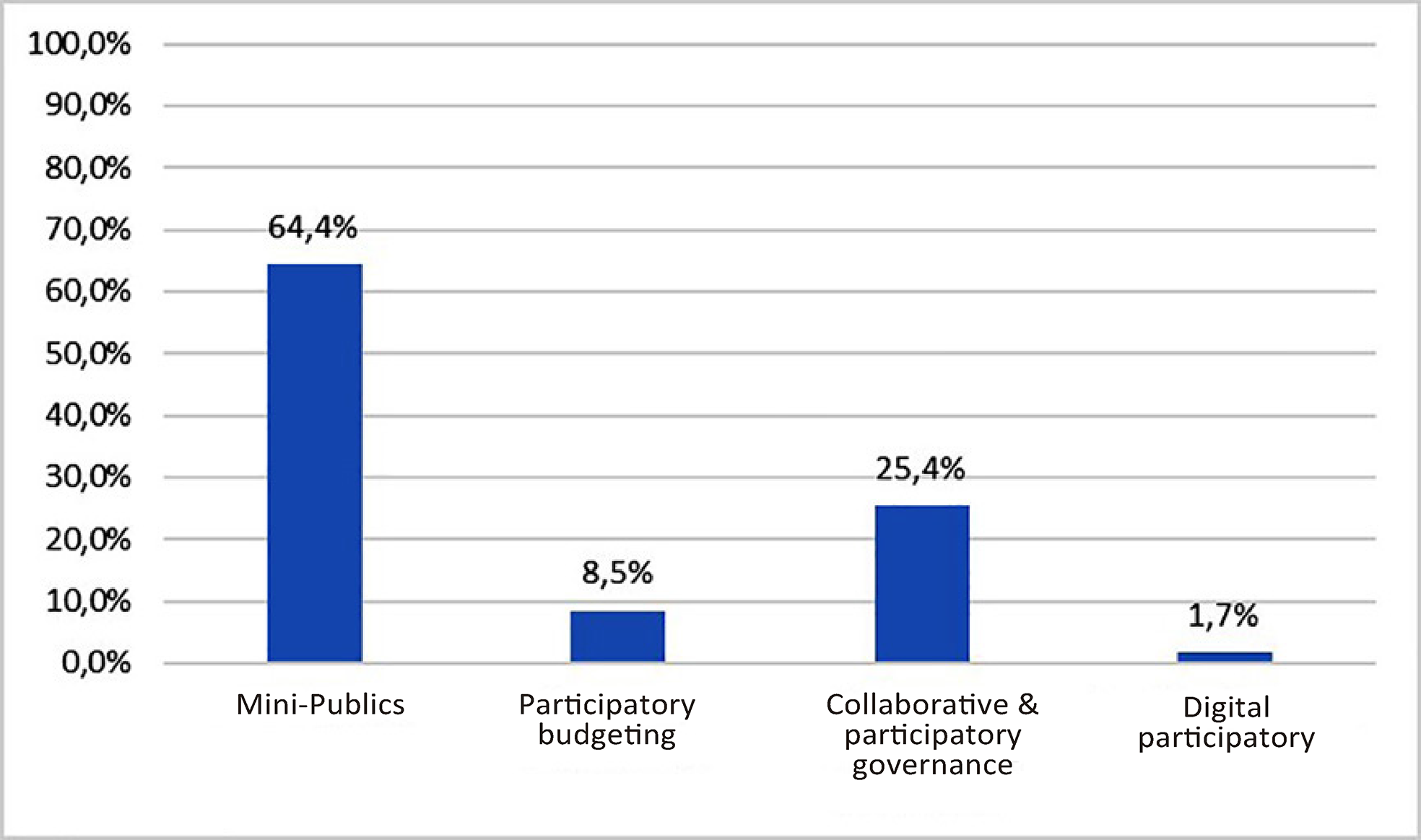
The European dataset reveals a dominance of mini-publics, which account for 64.4% of cases. This suggests a strong emphasis on deliberative democracy in European rural areas, where small-scale, face-to-face democratic processes may be more practical and effective.
One relevant example of the use of deliberative processes in a rural context is the "Wallonia Citizens' Panel on the EU Common Agricultural Policy" in Belgium (2006). This was a regional governance initiative led by the European Commission, falling under the policy formulation phase, focusing on agriculture, forestry, fisheries, and mining. The citizens' panel aimed to engage the public directly in shaping policies related to rural and agricultural regions, addressing the gap between EU policies and its citizens. The Wallonia panel, selected to ensure diverse representation, convened over three weekends to develop recommendations through discussions and expert hearings. These recommendations, validated by panel members, were forwarded to regional authorities and contributed to broader European panel discussions, including ten representatives from this region of Western Europe (Vrydagh et al., 2021).
Still in Europe, another notable mini-public is the "Future of Rural Areas" deliberative forum in Rhône-Alpes, France (2006). Conducted by the regional government, this forum focused on identifying issues related to rural development. The government’s leadership in this case reflects a decentralized policymaking approach, where rural development concerns are directly addressed through citizen participation, allowing for better policy adaptation to local needs.
More recently, in 2019, Austria established the "Citizens' Council on the Future of Agriculture" in Vorarlberg, operating at the regional level and led by the local government through the Office for Volunteering and Participation. This case focused on identifying problems in the agricultural sector, promoting citizen engagement in agriculture and sustainability issues. It stands out for its emphasis on direct citizen participation in shaping policies that impact rural development and environmental sustainability.
In Southern Europe, two notable cases include the "Municipal Meeting on Landscape in Tuscany" (Italy, 2010) and the "Gipuzkoa Citizens' Council" (Spain, 2022). The Tuscany initiative, led by the Regional Government of Tuscany, focused on environmental and landscape issues, emphasizing the importance of citizen participation in the formulation of inclusive and effective environmental policies, ensuring that local concerns are integrated into development strategies. Meanwhile, the Gipuzkoa case, led by the Provincial Council, addressed areas such as agriculture, forestry, fisheries, and mining, demonstrating a commitment to sustainable resource management and transparency in local governance.
While participatory and collaborative governance also plays a significant role, it is far less dominant than in Latin America, constituting 25.4% of cases. Participatory budgeting (8.5%) and digital participation (1.7%) are present but remain minor components of the overall landscape, indicating a more diversified approach to democratic innovations, albeit with a clear preference for mini-publics.
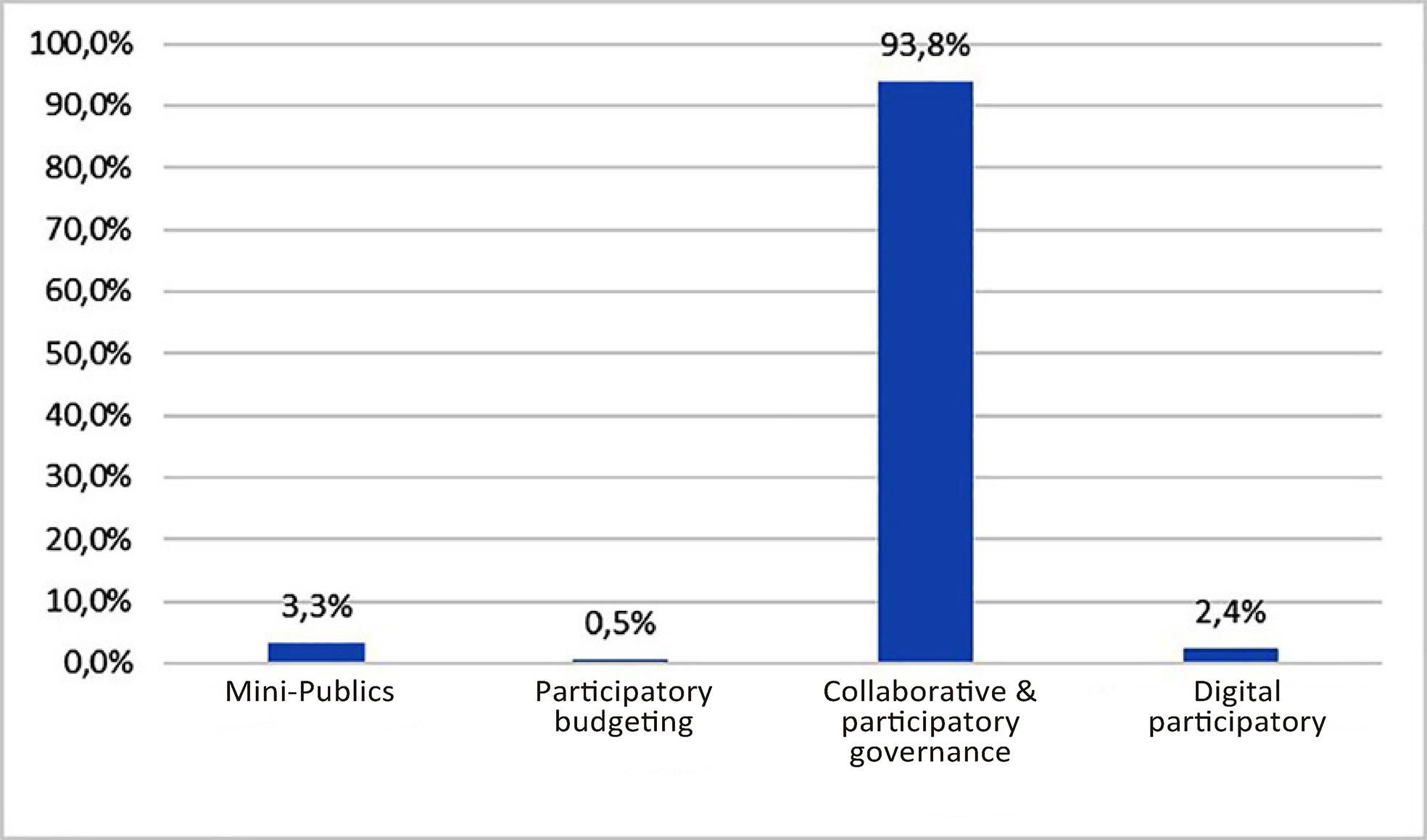
The South American database is heavily skewed towards participatory and collaborative governance, which accounts for more than 90% of recorded cases (93.8%). This overwhelming majority suggests that Latin American democracies are strongly committed to governance structures that emphasize collaborative processes, likely due to the region’s focus on inclusion and grassroots engagement in governance.
From the dataset collected for this analysis, some notable examples of participatory and collaborative governance in rural areas stand out. The “Ejidal Assembly” in Mexico, in operation since 1992, promotes the protection of community land rights and the management of communal lands, involving Indigenous communities and local farmers in the administration of their territories to ensure social justice and inclusion in land-use decision-making. Between 2001 and 2016, the “Indigenous Land Management Plans” in Brazil, led by the Kanindé Association for Ethno-Environmental Defense, stood out for their participatory and inclusive approach, integrating Indigenous communities in the management of their territories and environmental conservation, reinforcing community autonomy and territorial rights. In Ecuador, the “Food Security Workshops” (2010–2012) combined efforts from local governments, the national government, and Episcopal Conferences to formulate policies that strengthened food security, promoting sustainable agricultural practices and more equitable and resilient food systems. In Venezuela, the “Zamorano Funds” in operation since 2002, support local food production through cooperative funds, empowering farmers and encouraging sustainable agricultural practices, benefiting both communities and the environment. Finally, the “Campesino University Unicam” created in Argentina in 2008 and led by social movements such as the Movimiento Campesino de Santiago del Estero (Mocase), uses education as a tool for empowerment and social justice, promoting knowledge and practices that strengthen the autonomy of peasants and their participation in regional governance.
The remaining categories, mini-publics (3.3%), digital participation (2.4%), and participatory budgeting (0.5%), represent only a small fraction of the dataset. This distribution highlights an underutilization or lower prevalence of other democratic innovations compared to collaborative governance. However, it is important to note that, regarding participatory budgeting, which is known to have a strong connection to the Latin American continent (Ganuza & Baiocchi, 2012), where it actually originated, its low representation in the collected cases may be related to the limited use of this innovation in rural areas and/or on rural issues, given that the literature also indicates its predominant presence in urban contexts (Cabannes, 2015).
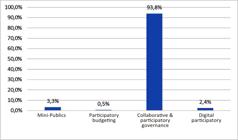
The striking differences between the datasets highlight contrasting priorities and democratic practices in Latin America and Europe. Mini-publics, which are relatively rare in the Latin American dataset but dominant in Europe, suggest that rural areas in Europe favor deliberative democratic processes that engage citizens in smaller and more controlled settings. On the other hand, participatory and collaborative governance, which is overwhelmingly prevalent in Latin America, reflects a regional emphasis on broader governance mechanisms with more diverse institutional designs, sometimes spontaneous and less structured, aiming to integrate a wide range of voices into decision-making processes.
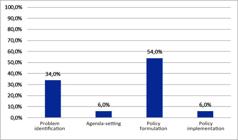
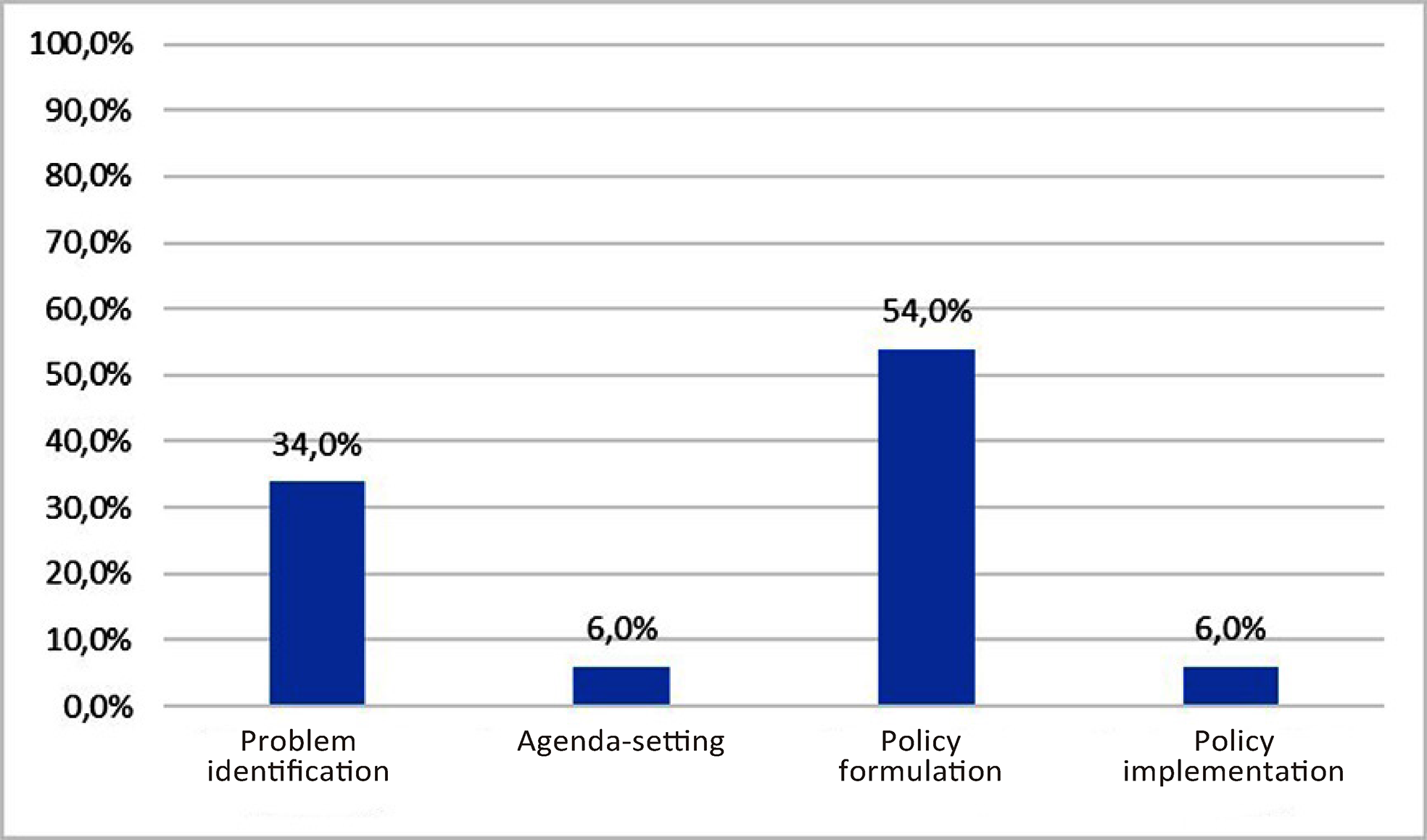
Precisely regarding decision-making processes, and more broadly, the different stages in the public policy cycle, there are considerable differences in the analysis of the results from the two datasets. In Europe, the data show a predominance in the "Problem Identification" and "Policy Formulation" stages, with a substantial emphasis on the latter. This suggests that DIs in Europe are primarily concentrated in the early stages of the policy cycle, where there is more room for deliberation and direct citizen influence over the content and shape of policies. On the other hand, "Policy Implementation" and "Policy Evaluation" show very low numbers, indicating a lower level of attention to these phases in the European context.
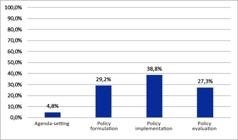
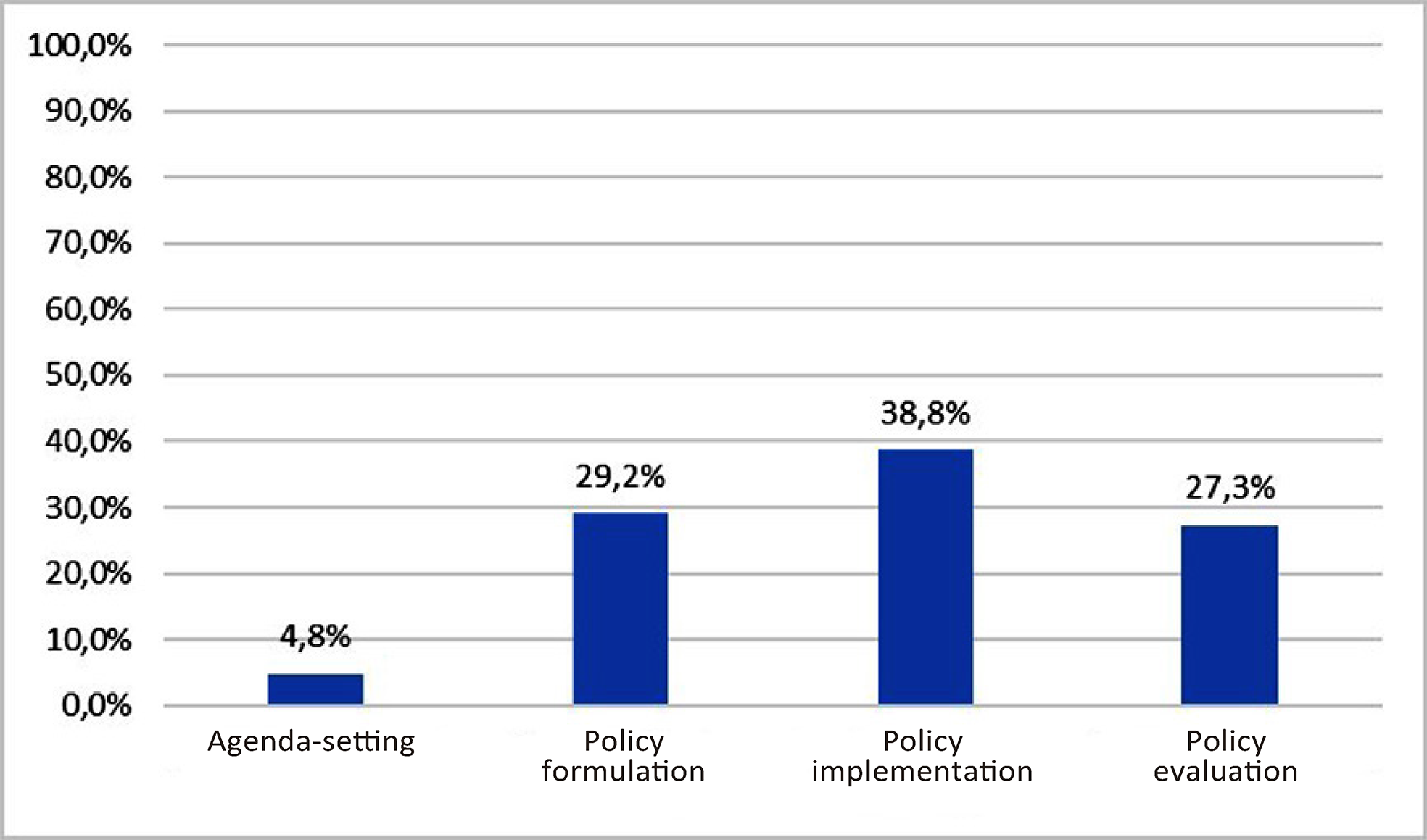
In contrast, the Latin American database demonstrates a more balanced distribution across the stages of the policy cycle, with a slight emphasis on "Policy Implementation" and "Policy Evaluation." This reflects a more pragmatic and execution-oriented approach, consistent with the regional focus on Participatory and Collaborative Governance, which prioritizes the continuous integration of citizens and other actors in the implementation and evaluation of public policies.
These differences seem to indicate that democratic innovations in rural areas in Europe tend to emphasize deliberation and policy formulation, while in Latin America there is a stronger focus on ensuring that policies are implemented and monitored.
Thematic analysis
Democratic Innovations and rural areas in Europe
The first theme, local governance, focuses on decision-making processes at the local level. It includes cases where residents engage in democratic processes to allocate budgets, make decisions, and improve local governance. The emphasis is on participatory approaches that empower local communities and involve them in democratic decision-making.
The second theme, rural development, includes cases related to the development of specific rural and urban-rural areas. It involves the planning and implementation of projects for market areas, downtown development, and other region-specific initiatives. These cases frequently present recommendations and collaborative efforts to improve infrastructure and local development.
The third theme, environmental sustainability, covers cases where citizens actively participate in discussions and decision-making processes related to climate change, agriculture, and rural development. These initiatives often involve public assemblies, mini-publics, and citizens' panels focused on the future of rural areas and sustainable agricultural practices.
From this thematic analysis, it is possible to observe that all cases in Europe address, in some way, rural development, environmental sustainability, and local governance. Returning to the examples highlighted above, the Wallonia citizens’ panel and the Rhône-Alpes mini-public are strongly focused on rural development, emphasizing the adaptation of agricultural and land-use policies to local realities. Both cases promote citizen participation in critical decision-making processes for rural development, seeking innovative solutions that consider the needs of local and regional communities. The Vorarlberg citizens’ council and the municipal meeting on landscape in Tuscany stand out for their emphasis on environmental sustainability. In Vorarlberg, citizen engagement in identifying agricultural issues reflects a concern with sustainable agricultural practices and environmental preservation. Similarly, the municipal meeting in Tuscany focuses on environmental management and landscape protection, promoting significant citizen participation in environmental policymaking. Meanwhile, the Gipuzkoa citizens’ council is a clear example of local governance in action, where citizen involvement is central to regional policymaking. This case reflects a commitment to participatory governance, promoting inclusion and transparency in decision-making processes and ensuring that regional policies are more responsive to local needs.
In conclusion, each of these cases represents a facet of rural democratic innovations in Europe, with an emphasis on rural development, environmental sustainability, and local governance. These examples demonstrate how different contexts and needs can be addressed through inclusive governance practices that promote citizen participation and accountability in decision-making.
Democratic innovations and rural areas in Latin America
The first theme, social justice, revolves around cultural and social aspects, including the integration of ethnic groups, the preservation of cultural heritage, and social organization within rural communities. These cases emphasize the importance of cultural identity, social cohesion, and the role of councils or social groups in maintaining community integrity.
The second theme, social and territorial rights, focuses on empowering local communities, particularly Indigenous groups. The focus is on national programs and initiatives that support social development, community representation, and the active involvement of various organizations in promoting sustainable rural development.
The third theme, food sovereignty, concerns initiatives related to food sovereignty, poverty reduction, socioeconomic investment, and transparency in funding. These cases address issues such as ensuring food availability by proposing an alternative vision of agro-food production and associated social reproduction, based on the principles of peasant autonomy and family farming, reducing economic disparities, and promoting the transparent use of resources to improve rural development.
In summary, the themes highlight efforts to address food sovereignty, economic investment, and poverty reduction; promote cultural heritage, social cohesion, and ethnic group integration; and foster rural development, community representation, and Indigenous empowerment.
Each of the specific DI cases in Latin America highlighted earlier represents different thematic dimensions, reflecting various efforts in promoting land rights, food sovereignty, and social justice. While the Ejidal Assembly in Mexico and the Indigenous Land Management Plans in Brazil stand out for defending territorial rights and social inclusion of Indigenous communities, the Food Security Workshops in Ecuador and the Zamorano Funds in Venezuela reinforce the importance of food sovereignty and local participation in policymaking. The Campesino University UNICAM, in turn, emphasizes social justice through education and the strengthening of rural communities. Together, these cases offer a diverse panorama of how different contexts and needs in the region are addressed through innovative governance practices and citizen participation.
Conclusion
In summary, our study reveals that rural democratic innovations in the European context tend to emphasize strengthening local governance, sustainable development, and citizen participation in deliberative political processes, remaining within existing political structures. In contrast, in Latin America, these democratic innovations take on a more politicized role, focusing on territorial rights, food sovereignty, and social justice, reflecting a more transformative use of the rural as a space of political and social resistance. This difference underscores the importance of considering local and contextual specificities when assessing the impact of democratic innovations.
The study demonstrates that rural democratic innovations hold significant potential for promoting social and political change, but their effectiveness depends heavily on the geographical, cultural, and political contexts in which they are implemented. By recognizing these differences, policymakers and researchers can develop more specific and inclusive approaches, leveraging the transformative potential of these practices to strengthen democracy and promote social justice in rural spaces.
The authors also acknowledge methodological limitations, such as potential biases arising from differences in data collection and reporting standards between countries and the impact of language barriers, given that much of the material is available only in English. These limitations may lead to underrepresentation in certain DI categories, such as participatory budgeting, which appears less frequently in the analyzed databases compared to the existing literature.
Finally, future research should explore how rural democratic innovations can be adapted to maximize their impact in varied contexts, considering factors such as cultural diversity, local power dynamics, and institutional barriers. Additional studies could examine the role of these innovations in promoting new forms of governance and sustainable development in rural areas, as well as the effectiveness of these practices in reducing social and economic inequalities.
Acknowledgments
The authors would like to thank to the European Research Executive Agency (i.e., REA) for the funding for this research through the Horizon European Programme (project INCITE-DEM, grant agreement 101094258).
References
- ALTIERI, M. A. (1992). Sustainable agricultural development in Latin America: exploring the possibilities. Agriculture, Ecosystems & Environment Amsterdam, v. 39, n. 1-2, pp. 1-21.
- ALTIERI, M. A. (2009). Agroecology, small farms, and food sovereignty. Monthly Review, v. 61, n. 3, pp. 102-113.
- BÄCHTIGER, A.; DRYZEK, J. S.; MANSBRIDGE, J.; WARREN, M. E. (2018). The Oxford handbook of deliberative democracy Oxford, Oxford University Press.
- BARHAM, E. (2003). Translating terroir: the global challenge of French AOC labeling. Journal of Rural Studies Nova York, v. 19, pp. 127-138.
- BILLEN, G.; AGUILERA, E.; EINARSSON, R.; GARNIER, J.; GINGRICH, S.; GRIZZETTI, B.; SANZ-COBENA, A. (2024). Beyond the farm to fork strategy: methodology for designing a European agro-ecological future. Science of the Total Environment Nova York, v. 908, p. 168160.
- BJØRKHAUG, H.; BÜKE, A.; RIBEIRO, J. D.; SIPPEL, S. R. (2023). The food system in the (post-)pandemic world: disruptions, vulnerability, resilience, and alternatives - 1. The International Journal of Sociology of Agriculture and Food Paris, v. 29, n. 2, pp. 35-37.
- BORRAS, S. M. (2008). La Vía Campesina and its global campaign for agrarian reform. Journal of Agrarian Change, v. 8, n. 2-3, pp. 258-289.
- BORRAS, S. M.(2023). La Via Campesina - transforming agrarian and knowledge politics, and co-constructing a field: a laudatio. The Journal of Peasant Studies Londres, v. 50, n. 2, pp. 691-724.
- BUA, A.; BUSSU, S. (2021). Between governance-driven democratisation and democracy-driven governance: Explaining changes in participatory governance in the case of Barcelona. European Journal of Political Research Londres, v. 60, n. 3, pp. 716-737.
-
BUREAU, J.-C.; MAHÉ, L.-P. (2008). CAP Reform Beyond 2013: an idea for a longer view. Notre Europe Retrieved from https://institutdelors.eu/wp-content/uploads/2020/08/capreformbeyond2013-bureaumahe-ne-dec08-1.pdf
» Retrieved from https://institutdelors.eu/wp-content/uploads/2020/08/capreformbeyond2013-bureaumahe-ne-dec08-1.pdf - CABANNES, Y. (2004). Participatory budgeting: a significant contribution to participatory democracy. Environment and Urbanization Londres, v. 16, n. 1, pp. 27-46.
- CABANNES, Y. (2015). The impact of participatory budgeting on basic services: municipal practices and evidence from the field. Environment and Urbanization, v. 27, n. 1, pp. 257-284.
- CARTER, M. (org.) (2015). Challenging social inequality: the landless rural workers movement and agrarian reform in Brazil Durham, Duke University Press.
- CARTY, R. K.; BLAIS, A.; FOURNIER, P. (2008). "When citizens choose to reform smp: the British Columbia citizens' assembly on electoral reform". In: BLAIS, A. To keep or to change first past the post ? Oxford, Oxford University Press.
- DAVIS, D. E. (1999). The power of distance: Re-theorizing social movements in Latin America. Theory and Society, v. 28, pp. 585-638.
- DELLA PORTA, D.; FELICETTI, A. (2022). Innovating democracy against democratic stress in Europe: Social movements and democratic experiments. Representation Londres, v. 58, n. 1, pp. 67-84.
- DEERE, C. D.; ROYCE, F. S. (org.) (2009). Rural social movements in Latin America: organizing for sustainable livelihoods Gainesville, University Press of Florida.
- DRYZEK, J. S. (2002). Deliberative democracy and beyond: liberals, critics, contestations Oxford, Oxford University Press.
- DRYZEK, J. S. (2024). For example: How to use examples in political science. American Political Science Review, pp. 1-13.
- DRYZEK, J. S. et al. (2019). The crisis of democracy and the science of deliberation. Science Nova York, v. 363, n. 6432, pp. 1144-1146.
- EDELMAN, M. et al. (2014). Introduction: critical perspectives on food sovereignty. The Journal of Peasant Studies Londres, v. 41, n. 6, pp. 911-931.
- ELSTUB, S.; ESCOBAR, O. (org.) (2019). Handbook of democratic innovation and governance Cheltenham, Edward Elgar Publishing.
- ESCOBAR, A. (2008). Territories of difference: place, movements, life, redes Durham, Duke University Press.
-
EUROPEAN COMMISSION (2022). A long-term vision for the EU's rural areas: building the future of rural areas together. Disponível em: https://ec.europa.eu/info/strategy/priorities-2019-2024/new-push-european-democracy/long-term-vision-rural-areas_en Acesso em: 2 set 2024.
» https://ec.europa.eu/info/strategy/priorities-2019-2024/new-push-european-democracy/long-term-vision-rural-areas_en -
ECVC - European Coordination Via Campesina (2021). Farm to fork strategy: key messages from ECVC. Retrieved from https://www.eurovia.org/wp-content/uploads/2021/03/2021-02-01-FINALE-EN-ECVC-documento-F2F-FR.pdf
» https://www.eurovia.org/wp-content/uploads/2021/03/2021-02-01-FINALE-EN-ECVC-documento-F2F-FR.pdf -
FALANGA, R. et al. (2024). Database and timeline on the history of participation and engagement (1.0) [Data set]. Zenodo. Disponível em: https://doi.org/10.5281/zenodo.10830077
» https://doi.org/10.5281/zenodo.10830077 - FERNANDES, B. M. (2013). Re-peasantization, resistance and subordination: the struggle for land and agrarian reform in Brazil. Agrarian South: Journal of Political Economy Nova Delhi, v. 2, n. 3, pp. 269-289.
- FERNANDES, B. M. (2020). Peasant movements in Latin America. Oxford research encyclopedia of politics Oxford, Oxford University Press.
- FIELD, L. W. (1991). Tools for indigenous agricultural development in Latin America: an anthropologist's perspective. Agriculture and Human Values Dordrecht, v. 8, n. 1-2, pp. 85-92.
- FIGUEIREDO, E. (coord.) (2011). O rural plural. Olhar o presente, imaginar o futuro Castro Verde - Alentejo, 100Luz.
- FONTE, M.; PAPADOPOULOS, A. G. (org.) (2010). Naming food after places: food relocalisation and knowledge dynamics in rural development Farnham, Ashgate Publishing Limited.
- FUNG, A.; WRIGHT, E. O. (2003). Deepening democracy: Institutional innovations in empowered participatory governance. Londres, Verso.
-
GANUZA, E.; BAIOCCHI, G. (2012). The power of ambiguity: how participatory budgeting travels the globe. Journal of Deliberative Democracy, v. 8, n. 2. Disponível em: https://doi.org/10.16997/jdd.142
» https://doi.org/10.16997/jdd.142 - GEISSEL, B.; JOAS, M. (2013). Participatory democratic innovations in Europe: improving the quality of democracy ? Opladen, Verlag Barbara Budrich.
- GHERGHINA, S.; MOKRE, M.; MI?COIU, S. (2021). Deliberative democracy, under-represented groups and inclusiveness in Europe. Innovation: the European Journal of Social Science Research Londres, v. 34, n. 5, pp. 633-637.
- HALFACREE, K. (1993). Locality and social representation: Space, discourse and alternative definitions of the rural. Journal of Rural Studies, v. 9, n. 1, pp. 23-37.
- HARRIS, C. (2019). "Deliberative mini-publics: Defining and designing". In: ELSTUB, S.; ESCOBAR, O. (org.). Handbook of democratic innovation and governance Cheltenham, Edward Elgar Publishing.
- HEYL, K.; DÖRING, T.; GARSKE, B.; STUBENRAUCH, J.; EKARDT, F. (2020). The common agricultural policy beyond 2020: a critical review in light of global environmental goals. Review of European, Comparative & International Environmental Law Oxford, v. 30, n. 1, pp. 95-106.
- HIRSCH, C. (2017). Between resistance and negotiation: indigenous organizations and the Bolivian state in the case of TIPNIS. The Journal of Peasant Studies Londres, v. 46, n. 4, pp. 811-830.
- JACQUET, V. (2017). Explaining non-participation in deliberative mini-publics. European Journal of Political Research Londres, v. 56, n. 3, pp. 640-659.
- JACQUET, V.; RYAN, M.; VAN DER DOES, R. (org.) (2023). The impacts of democratic innovations Colchester, ECPR Press.
- KAY, C. (2001). Reflections on rural violence in Latin America. Third World Quarterly Londres, v. 22, n. 5, pp. 741-775.
- LAWRENCE, M.; HOMER-DIXON, T.; JANZWOOD, S.; ROCKSTÖM, J.; RENN, O.; DONGES, J. F. (2024). Global polycrisis: the causal mechanisms of crisis entanglement. Global Sustainability Londres, v. 7, p. e6.
- LEFF, E. (1986). Ecología, capital y cultura: perspectivas latinoamericanas México, Siglo XXI Editores.
- LEITE, S. P.; ÁVILA, R. V. D. (2007). Reforma agrária e desenvolvimento na América Latina: rompendo com o reducionismo das abordagens economicistas. Revista de Economia e Sociologia Rural Brasília, v. 45, n. 3, pp. 777-805.
- LOSEKANN, C. (2016). A política dos afetados pelo extrativismo na América Latina. Revista Brasileira de Ciência Política Brasília, n. 20, pp. 121-164.
- MARTINS, J. S. (2010). O cativeiro da terra São Paulo, Contexto.
- MCGIFFEN, S. P. (2005). The European Union: a critical guide Londres, Pluto Press.
- MENEGAT, R. (2002). Participatory democracy and sustainable development: integrated urban environmental management in Porto Alegre, Brazil. Environment and Urbanization Londres, v. 14, n. 2, pp. 181-206.
- MERINO, R. (2020). The geopolitics of food security and food sovereignty in Latin America: harmonizing competing visions or reinforcing extractive agriculture? Geopolitics Londres, v. 27, n. 3.
- MORGAN, K.; MARSDEN, T.; MURDOCH, J. (2006). Worlds of food: place, power and provenance in the food chain Oxford, Oxford University Press.
- MORTON, J. (2007). The impact of climate change on smallholder and subsistence agriculture. Proceedings of the National Academy of Sciences, v. 104, n. 50, pp. 19680-19685.
- MURDOCH, J.; MARSDEN, T. (1996). Reconstituting rurality: Class, community and power in the countryside Londres, UCL Press.
- NELSON, A. (2020). Covid-19: capitalist and postcapitalist perspectives. Human Geography Londres, v. 13, n. 3, pp. 305-309.
- OECD (2006). The new rural paradigm: policies and governance. OECD Rural Policy Reviews Paris, OECD Publishing.
- OECD (2020). Innovative citizen participation and new democratic institutions: catching the deliberative wave. Paris, OECD Publishing.
- OPITZ, C. (2024). Democratic innovations administered: The organisational embeddedness of public administrators' attitudes towards participatory policy making. Journal of Deliberative Democracy, v. 20, n. 1.
-
PARRY, L. J.; CURATO, N.; DRYZEK, J. S. (2024). Governance of deliberative mini-publics: emerging consensus and divergent views. Policy & Politics (published online ahead of print 2024). Retrieved Feb 8, 2025, from https://doi.org/10.1332/03055736Y2024D000000043
» https://doi.org/10.1332/03055736Y2024D000000043 - PILET, J.; BOL, D.; VITTORI, D.; PAULIS, E. (2022). Public support for deliberative citizens' assemblies selected through sortition: evidence from 15 countries. European Journal of Political Research, v. 62, n. 3, pp. 873-902.
- POGREBINSCHI, T. (2017). Latinno Dataset. Berlin, WZB.
- POGREBINSCHI, T. (2023). Innovating democracy? The means and ends of citizen participation in Latin America. Cambridge, Cambridge University Press.
- ROJAS-MARCHINI, F. (2023). The legal geographies of indigenous consultation and conservation law in Chile. The Journal of Peasant Studies Londres, pp. 1-29.
- ROSSET, P.; ALTIERI, M. A. (2017). Agroecology: science and politics. Rugby, Practical Action Publishing.
- SCOONES, I.; EDELMAN, M.; BORRAS, S. M.; HALL, R.; WOLFORD, W.; WHITE, B. (2017). Emancipatory rural politics: confronting authoritarian populism. The Journal of Peasant Studies Londres, v. 45, n. 1, pp. 1-20.
- SCOONES, I.; BORRAS Jr., S. M.; BAVISKAR, A.; EDELMAN, M., PELUSO, N. L.; WOLFORD, W. (ed.) (2024). Climate change and critical agrarian studies Londres/Nova York, Routledge.
- SHUCKSMITH, M.; THOMPSON, K. J.; ROBERTS, D. (ed.) (2005). The CAP and the regions - the Territorial impact of the common agricultural policy Wallingford, CABI Publishing.
- SHUCKSMITH, M.; CAMERON, S.; MERRIDEW, T.; PICHLER, F. (2009). Urban-rural differences in quality of life across the European Union. Regional Studies, v. 43, n. 10, pp. 1275-1289.
- SILVA, D. S. D.; FIGUEIREDO, E.; EUSÉBIO, C.; CARNEIRO, M. J. (2016). The countryside is worth a thousand words - Portuguese representations on rural areas. Journal of Rural Studies Londres, v. 44, pp. 77-88.
- SOBREIRO, T. S. (2015). Can urban migration contribute to rural resistance? Indigenous mobilization in the middle Rio Negro, Amazonas, Brazil. The Journal of Peasant Studies Londres, v. 42, n. 6.
- SOYER, G.; BARBOSA JR., R. (2020). O extrativismo agrário do governo Bolsonaro a partir das relações estado-sociedade. Revista da ANPEGE, v. 16, n. 29, pp. 522-554.
- SMITH, G. (2009). D emocratic innovations: designing institutions for citizen participation Cambridge, Cambridge University Press.
- SMITH, G. (2021). Can democracy safeguard the future ? Cambridge, Polity.
- SOUZA, C. (2001). Participatory budgeting in Brazilian cities: Limits and possibilities in building democratic institutions. Environment and Urbanization Londres, v. 13, n. 1, pp. 159-184.
- STEVANO, S.; FRANZ, T.; DAFERMOS, Y.; WAEYENBERGE, E. V. (2021). Covid-19 and crises of capitalism: intensifying inequalities and global responses. Canadian Journal of Development Studies / Revue Canadienne d'Études Du Développement Ottawa, v. 42, n. 1-2, pp. 1-17.
- TIRADO BALLESTEROS, J. G.; HERNÁNDEZ HERNÁNDEZ, M. (2016). Assessing the impact of EU rural development programs on tourism. Tourism Planning & Development, v. 14, n. 2, pp. 149-166.
- VAN DER PLOEG, J. D.; LONG, A. (org.) (1994). Born from within. Practice and perspective of endogenous rural development Assen, Van Gorcum.
- VELTMEYER, H. (2022). Extractivism and beyond. The Extractive Industries and Society. Amsterdam, v. 11, p. 101132.
- VRYDAGH, J.; DEVILLERS, S.; TALUKDER, D.; JACQUET, V.; BOTTIN, J (2021). Les mini-publics en Belgique (2001-2018): expériences de panels citoyens délibératifs. Courrier Hebdomadaire Du CRISP Bruxelas, v. 32, n. 2477-2478, pp. 5-72.
- WALSH, C.; ELKINK, J. A. (2021). The dissatisfied and the engaged: citizen support for citizens' assemblies and their willingness to participate. Irish Political Studies Dublin, v. 36, n. 4, pp. 647-666.
- WAMPLER, B. (2010). Participatory budgeting in Brazil: contestation, cooperation, and accountability Pensilvânia, Penn State University Press.
- WARREN, M. E. (2009). Governance-driven democratization. Critical Policy Studies, v. 3, n. 1, pp. 3-13.
- WARREN, M. E. (2017). A problem-based approach to democratic theory. American Political Science Review Washington/D.C., v. 111, n. 1, pp. 39-53.
- WILLIAMS, R. (1973). The country and the city Londres, Chatto & Windus.
- WINTER, M. (2003). Embeddedness, the new local food economy and defensive localism. Journal of Rural Studies Londres, v. 19, pp. 23-32.
- WOLFORD, W. W.; WHITE, B.; SCOONES, I.; HALL, R.; EDELMAN, M.; BORRAS, S. M. (2024). Global land deals: what has been done, what has changed, and what's next? The Journal of Peasant Studies, pp.1-38.
- WOODS, M. (2011). Rural Londres, Routledge.
- WRIGHT, E. O. (2010). Envisioning real utopias Londres, Verso Books.
Notes
-
(1)
Data available here: https://www.latinno.net/en/
-
(2)
No examples of DIs falling under the category of "Policy Evaluation" were found in the data collection for Europe.
- (3)
-
(4)
No examples of DIs falling under the category of "Problem Identification" were found in the data collection for Latin America.

 Source: author’s. N= 59
 Source: author’s. N= 211
 Source: author’s. N= 503
 Source: author’s. N= 211