 Application of a low-cost instrument to identify risk for hearing disorders in a municipal health network
Purpose To evaluate the performance of the PETIT application (automated tablet-based screening) compared with conventional sweep screening in identifying the risk of hearing impairment in school-aged children, using headphones with passive noise cancellation.
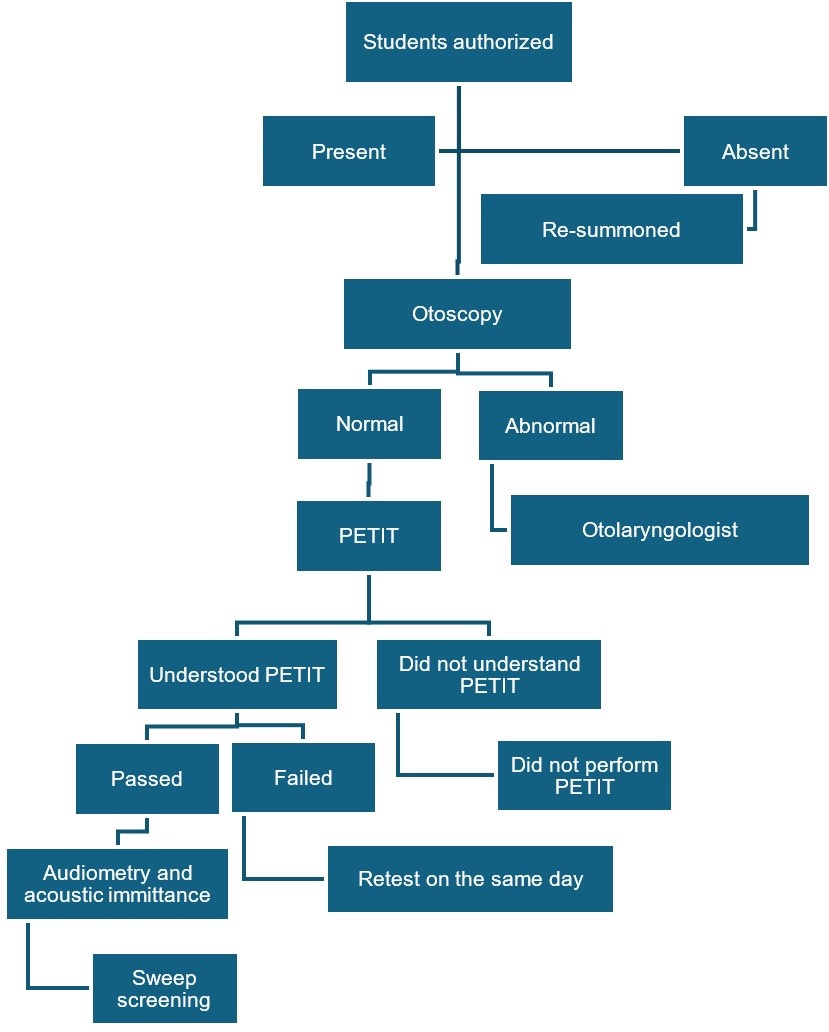
Methods Cross-sectional observational study including 122 children (aged 5 to 8 years) from the public school of Santana de Parnaíba. The following procedures were performed: otoscopy; automated hearing screening via tablet (with Sennheiser HD-280 headphones); and conventional sweep screening. Part of the sample also underwent pure-tone audiometry. Statistical analysis used binomial and binary logistic regression tests, along with the calculation of sensitivity, specificity, and accuracy.
Results There was significant association between the results of the sweep screening and PETIT, as well as the coefficient of the predictor variable (conventional audiometry) was significant to the performance in the sweep screening. For PETIT, a sensitivity of 85.7%, specificity of 100%, and accuracy of 99.18% were observed.
Conclusion The results suggest that this tool has promising applicability in schools for identifying children at risk of hearing impairments.
Keywords:
Hearing; Mass Screening; Student; Diagnosis; Low-Cost Technology
 Thumbnail