
 Relation between risk of dysphagia and oral intake level in cancer patients
Objective To relate the self-perceived risk of dysphagia with the level of oral intake in hospitalized oncology patients.
Methods This cross-sectional study had a convenience sample of adults and older adults diagnosed with cancer and hospitalized in an oncology hospital in southern Brazil. Data on sex, age, length of hospitalization, comorbidities, oncological diagnosis, treatment, and feeding route were obtained from the participants' medical records. The level of oral intake was classified using the Functional Oral Intake Scale (FOIS), and the risk of dysphagia was identified using the Eating Assessment Tool (EAT-10). The relationship between these variables was analyzed using Spearman's correlation coefficient.
Results The study included 60 participants – 42 with solid tumors and 18 with hematological tumors; 35 females (58.3%) and 25 males(41.7%), with a mean age of 58.5 ± 13.1 years. Of these, 56 exclusively used the oral route for feeding (93.3%), and 18 were at risk of dysphagia (30%). Older patients were at higher risk for dysphagia than adults (p-value = 0.020). EAT-10 scores (median = 0; IQR = 0–4) were significantly inversely correlated (RHO = -0.463; p-value = 0.000) with FOIS classifications (N: level 2 = 2; level 3 = 2; level 4 = 2; level 5 = 12; level 7 = 42).
Conclusion The study found that lower EAT-10 scores corresponded to higher FOIS levels. In other words, the lower the risk of dysphagia, the lower the susceptibility to using alternative feeding routes.
Keywords:
Speech, Language and Hearing Sciences; Dysphagia; Deglutition Disorders; Neoplasms; Medical Oncology
 Thumbnail
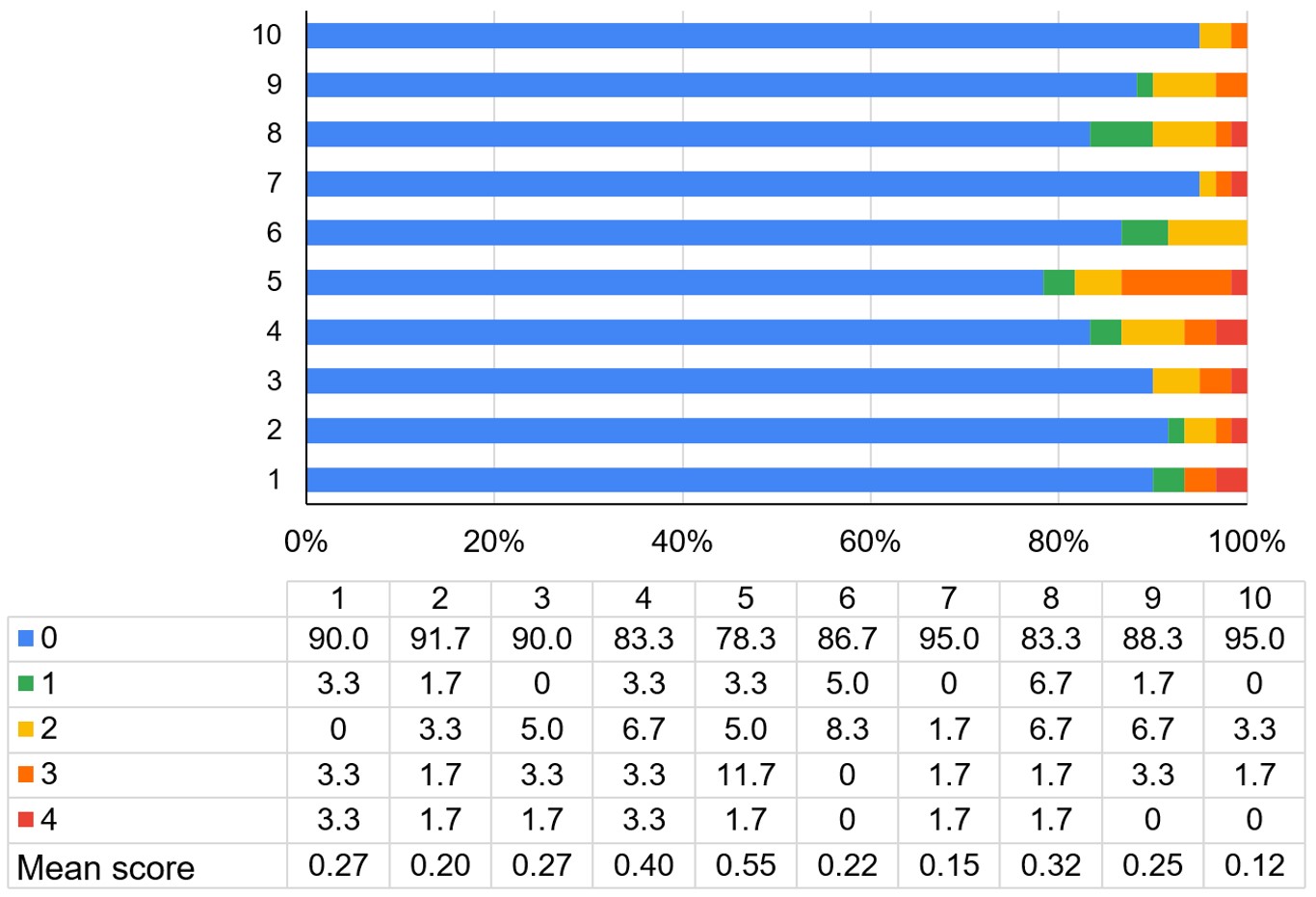 Caption: EAT-10 items: 1 - My swallowing problem has caused me to lose weight; 2 - My swallowing problem interferes with my ability to go out for meals; 3 - Swallowing liquids takes extra effort; 4 - Swallowing solids takes extra effort; 5 - Swallowing pills takes extra effort; 6 - Swallowing is painful; 7 - The pleasure of eating is affected by my swallowing; 8 - When I swallow food sticks in my throat; 9 - I cough when I eat; 10 - Swallowing is stressful