 Combining ability in F1 and F2 generations of wheat
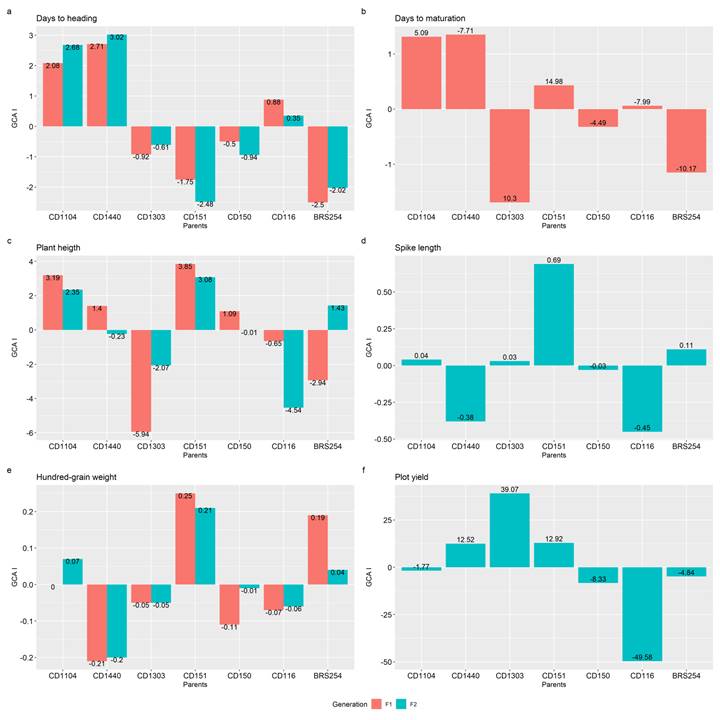
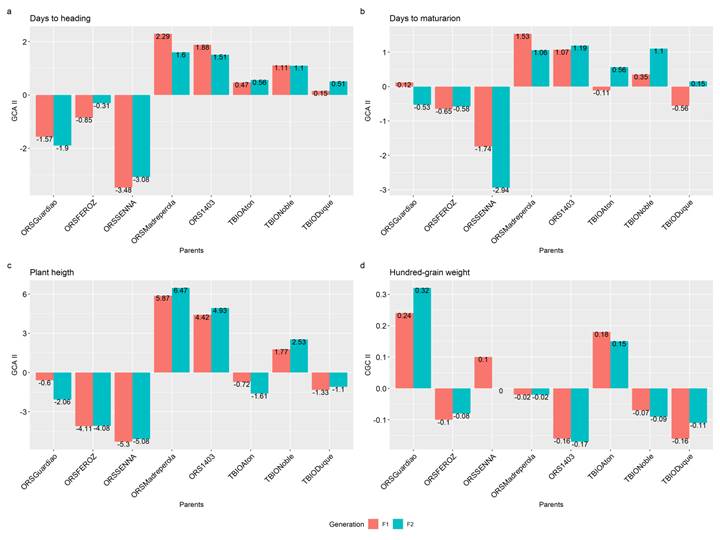
The selection of combinations that include the best parents and the understanding of the genetic effects controlling the traits can be made using diallel analysis. This study selected parents with a high frequency of favorable alleles and segregating populations with the greatest potential to produce superior progenies, as well as to understand the genetic effects controlling the studied traits. For this end, 15 parents were divided into two groups and crossed in a 7×8 partial diallel scheme, resulting in a total of 56 hybrid combinations. Some of the F1 seeds were advanced to the F2 generation. The combinations in both generations (F1 and F2) were evaluated in an experimental field in a randomized complete block design, with two replicates, between June and October 2022, in Viçosa, Minas Gerais, Brazil. Days to heading, days to maturation, plant height, spike length, hundred-grain weight, and plot yield were assessed. A diallel analysis was performed using the Geraldi and Miranda-Filho model for partial diallel, adapted from Griffing’s method. Our results suggested a predominance of additive effects. The parents CD 1303, CD 151, BRS 254, ORSFEROZ, ORS Guardião and ORSSENNA exhibited favorable alleles for different traits. In total, 41 combinations were selected, 20 from F1 and 21 from F2 generations. Among these, seven populations were identified as having high genetic potential for producing superior progenies.
Key words:
Triticum aestivum L.; wheat breeding; genetic effects.
 Thumbnail
 Thumbnail