
 Social representations of postpartum women on obstetric violence in childbirth and birth settings
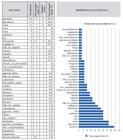
The purpose of this study was to analyze the social representations attributed by postpartum women regarding obstetric violence in childbirth and birth settings. This qualitative study is grounded in Social Representations Theory and involved postpartum women attending a university hospital. Data were collected through free associations to the trigger term “obstetric violence” organized using IRaMuTeQ software. The social representations allowed the construction of a diagram with frequency and Average Order of Evocation (AOE), characterized in a framework with a central core including the terms ignorance (f=11; AOE=2.4), fear (f=11; AOE=2.7), and pain (f=9; AOE=2.7); in the first periphery, rudeness (f=14; AOE=3. 4), anger (f=9; AOE=2.6), and evil (f=9; AOE=3.4); in the contrast zone, sadness (f=5; AOE=2.4), fear (f=5; AOE=2. 8), and invasion of privacy (f=3; AOE=2.7); and in the second periphery, assault (f=4; AOE=3.2), recklessness (f=4; AOE=4.5), and vulnerability (f=2; AOE=4.0). Social representations emphasized vulnerability, lack of information, and disrespect for autonomy. It is imperative that discussions on this topic be held in healthcare settings and during professional training to reinforce the implementation of effective practices in childbirth and maternity care.
Key words:
Obstetric violence; Social representation; Parturition; Postpartum period; Nursing
 Thumbnail
 Fonte: Autores (2021).