
 Gender-based violence against women: a scoping review
Abstract
Violence against women is a phenomenon that affects women all over the world from different age groups and social classes. This study aims to map existing scientific production on violence against women, seeking to identify what has been produced on this phenomenon. A scoping review was carried out on the EMBASE, LILACS, Web of Science and PsycInfo databases. The final sample of the review consisted of 233 articles published between 1998 and 2023, predominantly in the area of Health Sciences. The studies were primarily produced using qualitative methodology and focused on physical, sexual and psychological/emotional violence. The thematic content produced by the articles indicated the existence of 4 classes: Configuration of recurrent violence; Recognition of social impact; Support strategies for victims and Methodological strategies. Research has widely discussed important issues for understanding and combating violence against women. However, in addition to the most common forms of violence, it was observed that women have faced other forms of violence that still receive little attention in the field of scientific production. Promoting a multidisciplinary dialog seems to be a promising way of bridging this gap.
Key words:
Violence Against Women; Gender-Based Violence; Victimization
Resumo
A violência contra a mulher é um fenômeno que afeta mulheres do mundo todo de diferentes faixas etárias e classes sociais. Este estudo objetiva mapear as produções científicas existentes acerca desse fenômeno, buscando identificar o que tem sido produzido. Realizou-se uma revisão de escopo nas bases de dados EMBASE, LILACS, Web of Science e PsycInfo. A amostra final da revisão foi composta por 233 artigos publicados entre 1998 e 2023, predominantemente da área de Ciências da Saúde. Os estudos foram produzidos, prioritariamente, usando metodologia qualitativa e direcionaram a atenção para violência física, sexual e psicológica/emocional. O conteúdo temático produzido pelos artigos indicou a existência de 4 classes: Configuração das violências recorrentes; Reconhecimento do impacto social; Estratégias de suporte às vítimas e Estratégias metodológicas. As investigações têm discutido amplamente questões importantes para a compreensão e combate à violência contra a mulher, no entanto, além dos abusos mais comuns, foi observado que as mulheres têm enfrentado outras formas de opressão que ainda recebem pouca atenção no campo da produção científica. A promoção de um diálogo multidisciplinar parece se constituir como um caminho promissor para sanar essa lacuna.
Palavras-chave:
Violência contra a Mulher; Violência de Gênero; Vitimização
Resumen
La violencia contra la mujer es un fenómeno que afecta a mujeres de todo el mundo, de diferentes grupos de edad y clases sociales. Este estudio pretende mapear la producción científica existente sobre este fenómeno, buscando identificar lo que se ha producido. Se realizó una revisión de alcance en las bases de datos EMBASE, LILACS, Web of Science y PsycInfo. La muestra final de la revisión estuvo compuesta por 233 artículos publicados entre 1998 y 2023, predominantemente en el área de Ciencias de la Salud. Los estudios fueron elaborados con metodología principalmente cualitativa y se centraron en la violencia física, sexual y psicológica/emocional. El contenido temático producido por los artículos indicó la existencia de 4 clases: Configuración de la violencia recurrente; Reconocimiento del impacto social; Estrategias de apoyo a víctimas y estrategias metodológicas. La investigación ha debatido ampliamente cuestiones importantes para comprender y combatir la violencia contra las mujeres. Sin embargo, además de los abusos más comunes, se ha observado que las mujeres se han enfrentado a otras formas de opresión que aún reciben poca atención en el ámbito de la producción científica. Promover un diálogo multidisciplinario parece ser una forma prometedora de llenar este vacío.
Palabras clave:
Violencia contra la mujer; Violencia de género; Persecución
Introduction
The World Health Organization defines gender as a set of socially established characteristics, including relationships, roles, and social norms that vary according to culture1. Specifically, gender is understood as a hierarchical marker that can reflect unequal power relations between men and women, with women having been economically, politically, and socially disadvantaged over the centuries2. Gender-based violence refers to abusive actions stemming from androcentric domination, which are not uniform and occur in different contexts3.
The United Nations categorizes violence against women as any form of gender-based violence that causes or may result in suffering in women’s lives, including physical, sexual, or emotional abuse4. This phenomenon represents a global public health issue, manifesting itself in a persistent and everyday manner in the lives of victims5. Violence against women is not limited by age or social class, affecting women from different age groups and socioeconomic backgrounds6. The Amnesty International report on global human rights, published in 2023, highlighted that gender-based violence against women is deeply rooted in different cultures and has shown high incidence across multiple contexts7.
Currently, there is a growing body of research on violence against women across various fields of knowledge. While remarkable advances have been made, recurring theoretical and methodological challenges remain evident. Three distinct approaches to research on violence are most likely found: theoretical studies, empirical research, and care interventions. These approaches are often assumed to be independent of one another, lacking the necessary research integration to address this issue comprehensively. Other limitations in the field include an excessive focus on the prevalence of the phenomenon, a lack of sociological studies, the complexity of variables associated with violence, and a tendency to prioritize certain variables at the expense of others that are overlooked. These aspects contribute to a scenario in which new knowledge struggles to emerge, leading to lacking novelty in findings8.
Given the above, mapping existing scientific productions on gender-based violence against women may contribute to making this issue more visible. This research aims to identify what has been produced and the patterns present in studies on this phenomenon.
Methods
This study is a scoping review, descriptive and qualitative. The study was conducted following the Briggs Institute (JBI)9 methodology, and reported following the guidelines of the Preferred Reporting Items for Systematic Reviews and Meta-Analyses Extension for Scoping Reviews (PRISMA-ScR)10.
This strategy was selected because it is suitable for reviewing evidence produced by research using diverse methods, enabling a comprehensive analysis of a specific topic or subject11. The following research question guided the study: “How has gender-based violence against women been addressed in scientific research?”
Eligibility criteria
The eligibility criteria were established using the mnemonic PCC (Participants, Concept, and Context) strategy for scoping reviews12. The eligibility criteria for the review were: Participants: Studies that investigated gender-based violence against women. Concept: Understanding the phenomenon, including its driving factors and strategies to fight its incidence. Context: Studies involving women and/or men.
Only primary studies that involved men and women, regardless of age group, and had a primary focus on researching violence against women - irrespective of methodological approach or field of study - were considered. Additionally, the studies included were articles with abstracts and full-text availability in Portuguese or English. Secondary studies and research addressing other forms of gender-based violence were excluded. No exclusion criteria were applied based on ethnicity or year of publication.
Research sources and search strategies
The study reviewed articles from four databases: EMBASE, Latin American and Caribbean Literature in Health Sciences (LILACS), Web of Science, and PsycInfo. These databases were selected based on the number of internationally indexed journals and their ability to retrieve relevant articles in multidisciplinary and interdisciplinary fields13.
Selection
The selection of search terms occurred in three stages during the review. Between September and October 2023, a controlled vocabulary search was conducted using the Health Sciences Descriptors (DeCS/MeSH). This process aimed to investigate key concepts, analyze the most relevant descriptors in research on gender-based violence against women. and categorize them. Subsequently, in November and December 2023, multiple search strategies were developed using the selected reference terms. Four researchers individually tested these strategies to assess their effectiveness and select the most appropriate one. Finally, the final search strategy was developed and adapted according to each database used.
Selection
Using the descriptors “Violência contra as mulheres”, “Violência de gênero”, “Violence Against Women” and “Gender-Based Violence” along with their corresponding search strategies, searches were conducted in Portuguese and English in the selected databases between January and February 2024 (Table 1).
The Rayyan application (Qatar Computing Research Institute, Qatar) was used to manage and document the review process. The authors conducted training sessions in Rayyan to ensure screening consistency with the reviewers. The reviewers independently and blindly identified the publication titles and indexing terms used to describe the articles based on the eligibility criteria. A third reviewer assessed and resolved discrepancies, and when necessary, discussions were held with the research team regarding the inclusion of studies in cases of eligibility doubts. The same process was applied to evaluate and select abstracts for the study’s final sample.
Data extraction and organization
The extracted data included the following information: year of publication, authorship, country of publication, methodology used, type of violence discussed, and the journal’s field classification according to the CNPq Knowledge Areas Table14. Subsequently, the extracted data was reviewed, compiled, and organized in a spreadsheet using Microsoft Excel version 2401 for further analysis.
The selected abstracts were translated and uploaded to the online platform Google Docs following formatting guidelines15. One of the authors reviewed the extracted data and the formatting of the corpus before importing it into the free application OpenOffice.org Writer for final configuration.
Analysis and presentation of results
The data were analyzed using two strategies: manual evaluation followed by constructing tables for results discussion and thematic exploration using the free lexical analysis software Iramuteq version R 3.2.1.
In Iramuteq, data processing was performed using Hierarchical Descendant Classification (HDC). This computerized text analysis method was chosen for its ability to decompose and present a classification of words based on their distribution. HDC calculates partitions into lexical classes and presents their relationships through a dendrogram, considering the connections between classes and the representativeness of each axis within the analyzed textual content15. The details of the data can be consulted at the following link: https://doi.org/10.48331/scielodata.KA7BBJ.
Results
Article selection
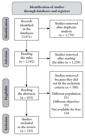
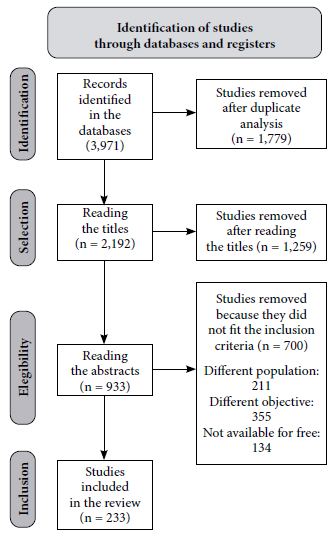
The database search identified a total of 3,971 studies. After excluding 1,779 duplicates, 2,192 studies were subjected to title screening, of which 1,259 were excluded for not meeting the inclusion criteria: being a primary study and discussing gender-based violence against women. A total of 933 abstracts were analyzed, and 700 studies did not meet the eligibility criteria: 211 had a different population than specified in the PCC strategy, 255 had different objectives than those intended, 134 were not freely available. In the end, 233 studies were included in this review. No reference list searches were conducted for additional studies. The entire selection process is presented in the PRISMA flow diagram in Figure 1.
Publication dates
The distribution of the 233 studies by year of publication was heterogeneous, covering the period from 1998 to 2023. No studies published in 1999 met the inclusion criteria. A growth in publications can be observed starting in 2010. Between 2012 and 2018, 111 studies were published (46.7%). However, this growth was followed by a significant drop in 2019, with only five studies, followed by a sharp increase in 2020. Between 2020 and 2021, 54 articles were published (23.18%).
Study methodologies
Regarding the methodological design of the studies included in the sample, a predominance of qualitative research was observed. Among the total studies, 130 specified the use of a qualitative approach (55.8%), 81 opted for a quantitative approach (34.8%), and only 22 combined both approaches as their methodological design (9.4%).
Study authorship
This review incorporated 233 studies: 28 (12%) were authored exclusively by men, 60 (25.8%) exclusively by women, 145 (62.2%) were co-authored by men and women, totalling 525 authors. Regarding institutional affiliations, institutions from the American continent predominated (37.7%), followed by Europe (9.9%), Asia (8.6%), Africa (1.0%), and Oceania (1.7%).
In terms of racial or ethnic background, data were gathered from publicly available academic profiles with photos. Of the 525 authors, 400 were identified as White (76.2%), 84 as non-White (16%), for 41 authors (7.8%), race or ethnicity information was unavailable.
Countries of publication
This review included studies from five continents: Africa, America, Asia, Europe, and Oceania. Most of the publications were from the American continent (147 studies), including 81 from South America - 77 from Brazil - and 66 from North America - 64 from the United States. Other continents also had an important number of studies - Europe: 48 studies, Africa: 19 studies, Asia: 17 studies, Oceania: 2 studies from Australia (Table 2).
Journal fields
Regarding the disciplinary fields of the journals where the selected studies were published, they were predominantly Health Sciences (83%), - Public Health (102 studies) and Medicine (73 studies), and Human Sciences field, - Psychology (22 studies) and Political Science (5 studies) (Table 3).
Types of violence discussed
Although different forms of violence against women often overlap, six types of violence were identified for analytical purposes: Physical violence (n=139). Sexual violence (n=133). Psychological/emotional violence (n=91), Property-related violence (n=15), Moral violence (n=4) and General violence, which includes studies investigating multiple manifestations of violence.
Lexicographic analysis
The complete corpus contained 233 texts, 1,922 text segments, 7,337 distinct forms and 68,681 occurrences. CHD divided the corpus into 1712 text segments and four clusters. The percentage of text segments retained was 89.07%. For analysis purposes, we used the standardization of grammatical forms indicated in Iramuteq (Figure 2).
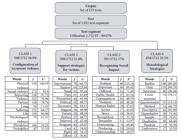
The lexicographic analysis divided the corpus into three partitions and four classes. Initially, the content of the analysis was divided into one partition: Class 4, “Methodological Strategies”, which was later merged with two other partitions: the combination of Class 2, “Recognition of Social Impact”, and Class 3, “Support Strategies for Victims”. In a third stage, the combination of these two previous partitions resulted in the third partition, which includes Class 1, “Configuration of Recurrent Violence”. The CHD (Hierarchical Descending Classification) was finalized at this stage, as the classes demonstrated stability, presenting text segments with similar vocabulary.
The degree of proximity between Classes 2 and 3 suggests a semantic connection in their textual content. Furthermore, the organization of the CHD indicates that the discussion on the recognition of social impact (Class 2) and the support strategies for victims (Class 3) is encompassed within the analysis of the configuration of recurrent violence (Class 1). The separation of Class 4 suggests that its lexical content is distinct from the topics addressed in the previous partitions, yet it enables the construction of these analyses.
The Class 4: “Methodological Strategies” represents 454 ST, accounting for 26.5% of the analyzed corpus. This class includes terms such as “Conduct” (f=146, x²=299.49), “Data” (f=155, x²=209.7), “Interview” (f=88, x²=190.48), “Cross-sectional” (f=74, x²=176.71), and “Questionnaire” (f=53, x²=115.13). The excerpts in this class highlighted the strategies used by researchers to conduct their studies, as shown next: “Face-to-face interviews were conducted using a questionnaire developed by the WHO for research on violence with 883 randomly selected women. A sample of 265 women, aged 18 to 49 years, was interviewed using a face-to-face questionnaire”.
The Class 2, “Recognition of Social Impact”, represents 291 ST (17% of the total corpus) and contains words such as “Problem” (f=80, x²=123.16), “Important” (f=40, x²=89.43), “Different” (f=51, x²=71.43), “Public Health” (f=27, x²=63.34), and “Consequence” ( f=45, x²=48.7). The analysis of the text segments allows for identifying a reflection on the understanding of both individual and social impacts of gender-based violence on the lives of victimized women. This is demonstrated in the following excerpts: “Gender-based violence is a widespread problem in South Africa. Structural inequalities from the past have created an environment conducive to violence against women. Violence against women is a significant social and public health issue in Saudi society. Healthcare professionals may need to consider this diagnosis when identifying risk factors found in this study”.
The Class 3, “Support Strategies for Victims”, represents 369 ST (21.6% of the corpus) and includes words such as “Intervention” (f=70, x²=147.45), “Support” (f =64, x²=125.84), “Need” (f =52, x²=97.24), “Duty” (f=61, x²=83.69), “Prevention” (f=44, x²=69.94), and “Political” (f=36, x²=68.35). The text segments in this class highlight strategies that can be developed to support victims in situations of violence, as described next: “The magnitude of this issue highlights the need to develop interventions that provide support to victims and implement effective public policies to break the cycle of violence. The results obtained in this study are important as they can serve as a source of information for the establishment of policies and programs aimed at preventing violence against women”.
The Class 1, “Configuration of Recurrent Violence” represents 598 ST (34.9% of the analyzed corpus) and includes terms such as “Physical Violence” (f=150, x²=146.93), “Sexual Violence” (f=172, x²=95.4), “Report” (f=116, x²=91.72), “Violence” (f=522, x²=76.96), and “Partner” (f=118, x²=76.76). The text segments within this class reveal the most prevalent types of violence and the dynamics of their manifestations, as illustrated next: “The types of perpetrated violence included physical, psychological, and/or sexual abuse against women or their children. The existence of previous violence was observed within the families of both victims and perpetrators. Physical, psychological, and economic violence was more frequently reported by women who live with a partner, are married, or are divorced/separated. Sexual violence was associated with individuals from non-Indigenous ethnic groups, while all types of violence were more common among urban dwellers, except for physical violence, which was more prevalent in the Highlands or the Amazon region”.
Discussion
The scoping review demonstrated that the selected studies show a predominance of female authors in research, indicating women’s interest in different countries and cultures in the issue of violence against women. The results of this research also highlight that the investigation of this phenomenon is predominantly conducted in three fields of knowledge: Health Sciences, Human Sciences, and Applied Social Sciences, with a greater emphasis on Health Sciences. Although qualitative studies are predominant, quantitative and mixed-method studies are also present. Additionally, there is a tendency to address the three primary forms of intimate partner violence against women: physical, sexual, and psychological.
Discussions on other manifestations of violence in different settings are also observed. The social significance of this issue is evidenced by the conceptualization of violence against women not only as an individual problem but also as a social and global phenomenon. This problem is recognized as one of the major social challenges in several countries, as seen in Turkey16, the United States17, and Brazil18. A study published in 1998 analyzed intimate partner violence against women and the perpetration of sexual violence19. Between 2000 and 2009, various studies addressed issues such as intimate partner violence, marital relationships, and domestic violence20-22.
However, new discussions have emerged, expanding beyond relationship dynamics to other contexts in which women are victimized, including the impact on victims’ health23 and the manifestation of violence against women in their workplaces24. A scoping review on sexism in the workplace highlighted that, although ambivalent sexism persists in environments marked by gender stereotypes in interpersonal and institutional relationships, feminist claims and women’s rights advancements have contributed to recognizing and challenging normalized gender role beliefs in academic research25.
There is a discernible trend in studies exploring intersections between violence and other relevant issues affecting the studied populations. This is exemplified by a study in South Africa that related gender-based violence against women to intergenerational relationships and compared the attitudes of young and older men toward their partners’ sexual health26. Another study demonstrated that social structures impose a resigned stance on women regarding the violence they experience, emphasizing the importance of considering contextual limitations such as poverty and inequality27.
The results of this review also suggest an increase in publications between 2020 and 2021, linking violence against women to topics such as the cyber context28, conflicts in eastern Ukraine29, refugee camps in Kenya30 and Canada31, and COVID-1932. When analyzing the types of violence discussed in the studies, physical violence emerges as the primary focus of investigation, followed by sexual and psychological/emotional violence. These findings are also reflected in a study conducted in Kenya with 283 female sex workers, which revealed a high rate of gender-based violence, with 86% of respondents experiencing physical, sexual, or emotional violence32.
A study involving young people aged 15 to 24 in low- and middle-income countries who had experienced physical and sexual violence at significant rates demonstrated that researchers had made global efforts to investigate, prevent, and develop intervention strategies to combat gender-based violence against women, mainly focusing on physical and sexual violence. This perspective highlights a shift in societal attitudes regarding the acceptance of physical abuse33. The normalization of physical violence has been increasingly challenged, and as social support for its justification declines, more subtle forms of violence, such as psychological abuse, have intensified34.
The emergence and persistence of these forms of violence were discussed in a study involving university students in Spain. The authors found that participants could easily associate physical or sexual aggression with violence against women. However, when presented with behaviors involving domination, humiliation, or control - such as preventing a woman from speaking or making derogatory comments about her appearance - many did not recognize these actions as forms of abuse against women35.
Women continue to face various forms of subordination, with sexual violence and victim-blaming frequently intertwined with variables such as gender, skin color, and normativity36. These variables interact, creating different experiences for victims. Analyzing social representations of women reveals that perceptions of sexual violence against women are often tied to the notion that the victim is co-responsible for the violence suffered, reflecting the persistent influence of patriarchal values in structuring our society37.
Additionally, the results indicate the existence of other forms of violence, including economic, moral, patrimonial, and conjugal violence. Despite the predominance of certain types of violence, women are frequently exposed to multiple forms of violation, experiencing polyvictimization, which complicates recognition and escape from abusive scenarios16,38. Moreover, this review identifies strategies for supporting victims in dealing with multiple abuse scenarios. Between 1998 and 2007, the main strategy adopted by studies was training professionals to assist victims39,40.
A study involving 386 pregnant women who experienced intimate partner violence during prenatal care at Family Medicine Units in Mexico City highlighted that, despite social and governmental support for combating violence, it remains a “taboo” for many women. The authors noted that this limitation extends to healthcare providers, who often categorize the issue as a private and sensitive matter. The study’s findings emphasize that healthcare professionals play a crucial role in identifying violence, assessing risk, sharing legal information, and providing proper referral and support services for victims41.
Recognizing preventive actions, such as projects that raise women’s awareness of their rights42, the development of health policies focused on prevention43, and the promotion of safe spaces for discussions on violence and empowerment, were the predominant strategies in studies published between 2008 and 201444,45. Research published between 2015 and 2019 emphasized the importance of developing interventions aligned with victims’ beliefs and coping strategies in abusive environments46,47. This includes efforts such as strengthening public education to combat the normalization of violence48 and leveraging information and communication technologies as awareness tools for victims’ rights49.
Finally, between 2020 and 2023, strategies aimed at challenging gender stereotypes16,50 have predominated, focusing on redefining social roles and women’s lived experiences51. Furthermore, there is a growing recognition of the importance of developing tools and public policies to combat the manifestation and perpetuation of these stereotypes in online social networks26.
Final considerations
The results indicated that, over the years, gender-based violence against women has been widely investigated across different social and cultural contexts. These investigations have addressed critical issues necessary for understanding and combating abuse. Despite evident progress, it is important to note that discussions still predominantly focus on the most common forms of violence in romantic relationships, with a concentration of publications in the Health Sciences. However, even within this framework, studies have presented various support strategies for victims.
The implication of these findings for the development of new research lies in recognizing that the investigation of this phenomenon must consider the victim’s context and the limitations imposed by it. Beyond the most commonly discussed forms of harm, women experience other forms of oppression that still do not receive adequate attention in scientific production. Promoting dialogue among different fields of knowledge to analyze this multifaceted phenomenon could be a promising approach to expanding and broadening research on violence against women.
Although this investigation has satisfactorily answered the research question, some limitations must be acknowledged to guide future studies on gender-based violence against women. The sample of this review was composed of open-access articles, without considering other publication formats, such as gray literature. Additionally, the search filter included only articles in English and Portuguese, limiting access to full texts published in other languages. A future research agenda could consider multiple formats for disseminating evidence, ranging from media productions to projects and other academic-scientific publications, given that gender-based violence against women is a phenomenon with a multifaceted origin and complex dynamics.
References
-
1 World Health Organization (WHO). Gender and health [Internet]. [cited 2024 jan 20]. Available from: https://www.who.int/news-room/questions-and-answers/item/gender-and-health
» https://www.who.int/news-room/questions-and-answers/item/gender-and-health -
2 World Health Organization (WHO). Gender mainstreaming for health managers: a practical approach [Internet]. [cited 2024 jan 20]. Available from: https://www.who.int/publications/i/item/9789241501057
» https://www.who.int/publications/i/item/9789241501057 - 3 Miguel LF, Biroli F. Teoria política feminista: textos centrais. Rio de Janeiro: Editora Horizonte; 2013.
-
4 Organização Pan-Americana de Saúde (OPAS). Violência contra as mulheres [Internet]. [acessado 2024 fev 4]. Disponível em: https://www.paho.org/pt/topics/violence-against-women
» https://www.paho.org/pt/topics/violence-against-women - 5 Brasil. Ministério das Mulheres. Prevenção de violências contra mulheres brasileiras no exterior. Brasília: Ministério das Mulheres; 2024.
- 6 Organización Panamericana de La Salud (OPS). Adaptación del marco global RESPETO en los países de América Latina y el Caribe. Washington: OPS; 2023.
- 7 Amnistía Internacional (Amnesty). Informe 2022/23 Amnistía Internacional: La situación de los derechos humanos en el mundo. Reino Unido: Amnesty; 2023.
- 8 Castro R, Riquer F. La investigación sobre violencia contra las mujeres en América Latina: entre el empirismo ciego y la teoría sin datos. Cad Saude Publica 2003; 19(1):135-146.
-
9 Aromataris E, Lockwood C, Porritt K, Jordan Z, organizadores. Welcome to the JBI Manual for Evidence Synthesis [Internet]. 2020 [cited 2024 fev 4]. Available from: https://jbi-global-wiki.refined.site/space/MANUAL
» https://jbi-global-wiki.refined.site/space/MANUAL - 10 Tricco AC, Lillie E, Zarin W, O'Brien KK, Colquhoun H, Levac D, Moher D, Peters MDJ, Horsley T, Weeks L, Hempel S, Akl EA, Chang C, McGowan J, Stewart L, Hartling L, Aldcroft, A, Wilson MG, Garritty C, Lewin S, Godfrey CM, Macdonald MT, Langlois EV, Soares-Weiser K, Moriarty J, Clifford T, Tunçalp Ö, Straus SE. PRISMA extension for scoping reviews (PRISMA-ScR): Checklist and explanation. Ann Intern Med 2018; 169(7):467-473.
- 11 Peters MDJ, Marnie C, Tricco AC, Pollock D, Munn Z, Alexander L, McInerney P, Godfrey CM, Khalil H. Updated methodological guidance for the conduct of scoping reviews. JBI Evid Implement 2021; 19(1):3-10.
- 12 The Joanna Briggs Institute (JBI). The Joanna Briggs Institute Reviewers' Manual 2015: Methodology for JBI scoping reviews. Joanne Briggs Institute; 2015.
-
13 Agência de Bibliotecas e Coleções Digitais da Universidade de São Paulo (ABCD USP). Bases de dados [Internet]. [acessado 2024 fev 12]. Disponível em: https://www.abcd.usp.br/apoio-pesquisador/bases-dados/#:~:text=Bases de Dados Espaço do Pesquisador A USP%2C
» https://www.abcd.usp.br/apoio-pesquisador/bases-dados/#:~:text=Bases de Dados Espaço do Pesquisador A USP%2C -
14 Conselho Nacional de Desenvolvimento Científico e Tecnológico (CAPES). Tabela de Áreas de Conhecimento/Avaliação [Internet]. [acessado 2024 fev 12]. Disponível em: https://www.gov.br/capes/pt-br/acesso-a-informacao/acoes-e-programas/avaliacao/instrumentos/documentos-de-apoio/tabela-de-areas-de-conhecimento-avaliacao
» https://www.gov.br/capes/pt-br/acesso-a-informacao/acoes-e-programas/avaliacao/instrumentos/documentos-de-apoio/tabela-de-areas-de-conhecimento-avaliacao - 15 Camargo BV, Justo AM. Tutorial para uso do software de análise textual IRAMUTEQ. Florianópolis: Universidade Federal de Santa Catarina, Laboratório de Psicologia Social da Comunicação e Cognição, Laccos; 2013.
- 16 Tunc EB, Cilgin H, Tunc S, Oner C, Catak B. Social determinants of sexual violence against pregnant women. Clin Epidemiol Global Health 2021; 10:1-5.
- 17 Walsh K, Hasin D, Keyes KM, Koenen KC. Associations between gender-based violence and personality disorders in U.S. women. Personal Disord 2016; 7(2):205-210.
- 18 Leite FMC, Amorim MHC, Gigante DP. Implicações das violências contra as mulheres sobre a não realização do exame citopatológico. Rev Saude Publica 2018; 52(89):1-10.
- 19 Coker AL, Richter DL. Violence against women in Sierra Leone: frequency and correlates of intimate partner violence and forced sexual intercourse. Afr J Reprod Health 1998; 2(1):61-72.
- 20 Vives-Cases C, Carrasco-Portiño M, Álvarez-Dardet C. Epidemic of intimate partner violence against women in Spain: Temporal distribution and victim age. Gaceta Sanitaria 2007; 21(4):298-305.
- 21 Moura LBA, Gandolfi L, Vasconcelos AMN, Pratesi R. Violências contra mulheres por parceiro íntimo em área urbana economicamente vulnerável, Brasília, DF. Rev Saude Publica 2009; 43(6):944-953.
- 22 Deslandes SF, Gomes R, Silva CMFP. Caracterização dos casos de violência doméstica contra a mulher atendidos em dois hospitais públicos do Rio de Janeiro. Cad Saude Publica 2000; 16(1):129-137.
- 23 Guedes RN, Silva ATMC, Fonseca RMGS. A violência de gênero e o processo saúde-doença das mulheres. Esc Anna Nery 2009; 13(3):625-631.
- 24 Tjaden PG, Thoennes N. Coworker violence and gender: Findings from the National Violence Against Women Survey. Am J Prev Med 2001; 20(2):85-89.
- 25 Andrade RO, Fernandes SCS. Expressões do Sexismo no Ambiente de Trabalho: Revisão de escopo. Psicol Teor Prática 2024; 26(2):1-27.
- 26 Lince-Deroche N, Shochet T, Sibeko J, Mdlopane L, Pato S, Makhubele QS, Bessenaar T. "You can talk about condoms [with younger men] while older men ... beat you for that": Young women's perceptions of gender-based violence within intergenerational relationships in South Africa. S Afr Med J 2018; 108(8):682-686.
- 27 Kumar P, Gruzd A, Mai P. Mapping out Violence Against Women of Influence on Twitter Using the Cyber-Lifestyle Routine Activity Theory. Am Behav Sci 2021; 65(5):689-711.
- 28 Capasso A, Skipalska H, Guttmacher S, Tikhonovsky NG, Navario P, Castillo TP. Factors associated with experiencing sexual violence among female gender-based violence survivors in conflict-afflicted eastern Ukraine. BMC Public Health 2021; 21(789):1-16.
- 29 Hossain M, Pearson RJ, McAlpine A, Bacchus LJ, Spangaro J, Muthuri S, Muuo S, Franchi G, Hess T, Bangha M, Izugbara C. Gender-based violence and its association with mental health among Somali women in a Kenyan refugee camp: a latent class analysis. J Epidemiol Community Health 2020; 75(4):327-334.
- 30 Bhattacharyya P, Songose L, Wilkinson L. How Sexual and Gender-Based Violence Affects the Settlement Experiences Among Yazidi Refugee Women in Canada. Frontiers Human Dynamics 2021; 3(2021):644846.
- 31 Peraud W, Quintard B, Constant A. Factors associated with violence against women following the COVID-19 lockdown in France: Results from a prospective online survey. PloS One 2021; 16(9):e0257193.
- 32 Heller M, Roberts ST, Masese L, Ngina J, Chohan N, Chohan V, Shafi J, McClelland RS, Brindle E, Graham SM. Gender-Based Violence, Physiological Stress, and Inflammation: A Cross-Sectional Study. J Womens Health (Larchmt) 2018; 27(9):1152-1161.
- 33 Decker MR, Latimore AD, Yasutake S, Haviland M, Ahmed S, Blum RW, Sonenstein F, Astone NM. Gender-based violence against adolescent and young adult women in low- and middle-income countries. J Adolesc Health 2015; 56(2):188-196.
- 34 Rafael RMR, Moura ATMS. Violência contra a mulher ou mulheres em situação de violência? Uma análise sobre a prevalência do fenômeno. J Bras Psiquiatr 2014; 63(2):149-153.
- 35 Valls R, Puigvert L, Melgar P, Garcia-Yeste C. Breaking the Silence at Spanish Universities: Findings From the First Study of Violence Against Women on Campuses in Spain. Violence Women 2016; 22(13):1519-1539.
- 36 Linhares LV, Torres ARR. She deserved it: Analysis of variables that influence the accountability of victims of sexual violence. Act Colom Psicol 2022; 25(1):218-229.
- 37 Linhares LV, Torres ARR, Diniz FCOR. "But she was drunk": Sexual violence and Blaming the victim. Psicol Conoc Soc 2022; 12(1):81-105.
- 38 Gomes IRR, Fernandes SCS. A permanência de mulheres em relacionamentos abusivos à luz da teoria da ação planejada. Bol Acad Paul Psicol 2018; 38(94):55-66.
- 39 Lang DL, Salazar LF, Wingood GM, Diclemente RJ, Mikhail I. Associations between recent gender-based violence and pregnancy, sexually transmitted infections, condom use practices, and negotiation of sexual practices among HIV-positive women. J Acquir Immune Defic Syndr 2007; 46(2):216-221.
- 40 Monteiro CFS, Araújo TME, Nunes BMVT, Lustosa AR, Bezerra CMJ. A violência contra a mulher atendida em unidade de urgência: uma contribuição da enfermagem. Esc Anna Nery 2006; 10(2):273-279.
- 41 Doubova SV, Pámanes-González V, Billings DL, Torres-Arreola L del P. Violencia de pareja en mujeres embarazadas en la Ciudad de México. Rev Saude Publica 2007; 41(4):582-590.
- 42 Paredes JMH, Ventura CAA. Consumo de alcohol y violencia doméstica contra las mujeres: un estudio con estudiantes universitarias de México. Rev Lat Am Enferm 2010; 18(n. esp.):557-564.
- 43 Rocha SV, Almeida MMG, Araújo TM. Violência contra a mulher entre residentes de áreas urbanas de Feira de Santana, Bahia. Trends Psychiatr Psychother 2011; 33(3):164-168.
- 44 Mosavel M, Ahmed R, Simon CM. Perceptions of gender-based violence among South African youth: implications for health promotion interventions. Health Promotion Int 2012; 7(3):323-330.
- 45 Beccheri-Cortez M, Souza L. Mulheres de classe média, relações de género e violência conjugal: um estudo exploratório. Rev Gerencia Polít Salud 2013; 12(24):34-53.
- 46 Wirtz AL, Perrin NA, Desgroppes A, Phipps V, Abdi AA, Ross B, Kaburu F, Kajue I, Kutto E, Taniguchi E, Glass N, Wirtz AL. Lifetime prevalence, correlates and health consequences of gender-based violence victimisation and perpetration among men and women in Somalia. BMJ Global Health 2018; 3(4):e000773.
- 47 Shair D, Akhter K, Shama A. The role of psychosocial support in coping with incidents of gender-based violence among Rohingya refugees. Intervention 2019; 17(2):238-242.
- 48 Tran TD, Nguyen H, Fisher J. Attitudes towards Intimate Partner Violence against Women among Women and Men in 39 Low- and Middle-Income Countries. PLoS One 2016; 11(11):e0167438.
- 49 Cardoso LF, Sorenson SB. Violence against women and household ownership of radios, computers, and phones in 20 countries. Am J Public Health 2017; 107(7):1175-1181.
- 50 Fernández-Matos D, Buitrago B, Almanza-Iglesia M, Villanueva-Hincapié C, Fernández-Matos D, Buitrago B, Almanza-Iglesia M, Villanueva-Hincapié C. Tolerancia institucional de la violencia contra las mujeres. Justicia 2022; 27(42):1-22.
- 51 Ribeiro NB, Souza CCBX. Reflexões sobre as redes sociais de suporte de mulheres que sofreram violência de gênero perpetrada por parceiro íntimo: considerações sobre a percepção do corpo e da sexualidade das mulheres. Rev Ter Ocup USP 2022; 32(1-3):e203875.

 Source: Authors (2024).
 Source: Authors (2024).