
 Chrononutrition, diet quality and perceived stress: results from two population-based studies in Brazil
Abstract
Chrononutrition and diet quality appear to influence stress, however, evidence on this relationship needs to be better elucidated. We aim to assess the association between chrononutrition, diet quality, and perceived stress in adults from Southern Brazil. Population-based cross-sectional study conducted in two Brazilian cities, with individuals aged ≥18 years. Chrononutrition and diet quality were the exposure, and perceived stress was the outcome. To assess the associations, Poisson regression was used to calculate crude and adjusted prevalence ratio. 2,170 individuals were analyzed: 12.3% did not have breakfast, 27.5% had less than four meals per day, 30.4% presented poor diet quality, 14% referred irregular consumption of healthy foods, and 43.2% had regular consumption of unhealthy foods. Perceived stress was reported by 38.2% of the sample. Individuals who ate less than four meals per day, with poor diet quality, with regular consumption of unhealthy foods, and with irregular consumption of healthy foods were more likely to present perceived stress. These results may contribute to the development of joint actions on nutrition and mental health.
Key words:
Eating; Diet Quality; Mental Health; Pandemics
Resumo
Crononutrição e qualidade da dieta parecem influenciar o estresse, mas evidências precisam ser melhor elucidadas. O objetivo foi avaliar a associação entre crononutrição, qualidade da dieta e estresse percebido em adultos do Sul do Brasil. Estudo transversal de base populacional conduzido em duas cidades brasileiras, com indivíduos com ≥18 anos. Crononutrição e qualidade da dieta foram as exposições, estresse percebido foi o desfecho. Para avaliar as associações utilizou-se regressão de Poisson para calcular a razão de prevalência bruta e ajustada. Foram analisados 2.170 indivíduos: 12,3% não tomavam café da manhã, 27,5% faziam <4 refeições por dia, 30,4% tinham pior qualidade da dieta, 14% consumiam irregularmente alimentos saudáveis e 43,2% consumiam regularmente alimentos não saudáveis, 38,2% tinham estresse percebido. Aqueles que faziam <4 refeições por dia, com pior qualidade da dieta, consumo regular de alimentos não saudáveis e consumo irregular de alimentos saudáveis tiveram maior probabilidade de apresentar estresse. Os resultados poderão contribuir para o desenvolvimento de ações conjuntas em nutrição e saúde mental.
Palavras-chave:
Alimentação; Qualidade da Dieta; Saúde mental; Pandemias
Resumen
La crononutrición y la calidad de la dieta parecen influir en el estrés, pero es necesario dilucidar más la evidencia. El objetivo fue evaluar la asociación entre crononutrición, calidad de la dieta y estrés percibido en adultos del sur de Brasil. Estudio transversal de base poblacional realizado en dos ciudades brasileñas, con individuos ≥18 años de edad. La crononutrición y la calidad de la dieta fueron las exposiciones, y el estrés percibido fue el resultado. Para evaluar las asociaciones se utilizó la regresión de Poisson para calcular la razón de prevalencia cruda y ajustada. Se analizaron 2.170 individuos: el 12,3% no desayunaba, el 27,5% hacía <4 comidas al día, el 30,4% tenía una dieta de peor calidad, el 14% consumía alimentos saludables de forma irregular y el 43,2% consumía regularmente alimentos poco saludables. El 38,2% había percibido estrés. Aquellos que comían <4 comidas al día, tenían una calidad de dieta más pobre, consumían regularmente alimentos poco saludables y consumían de manera irregular alimentos saludables, tenían más probabilidades de experimentar estrés. Los resultados pueden contribuir al desarrollo de acciones conjuntas en nutrición y salud mental.
Palabras clave:
Comida; Calidad de la dieta; Salud mental; Pandemias
Introduction
Stress can be defined as a non-specific response, derived from actions that affect the individual’s physical and psychological integrity. Stress is responsible for increasing the activity of the hypothalamic-pituitary-adrenal (HPA) axis and, consequently, the plasma cortisol levels1. During the COVID-19 pandemic, the occurrence of emotional disturbances, including stress, was commonly observed2. A study, with participants from 57 countries including Mexico, Argentina, Canada, the United Kingdom, Germany, the United States, China, and Brazil, recruited via social media, reported an average perceived stress score of 19.08. This score reflects a moderate level of stress3. In Brazil, another study found that 34.2% of participants had symptoms of post-traumatic stress during the COVID-19 pandemic4.
Multiple biological, environmental, social, and behavioral factors, including already-known factors, such as violence, abuse, family conflicts, trauma, anxiety, and depression, may influence stress5. Recently, the hypothesis that the circadian cycle and stress may share biological mechanisms has been explored6. The circadian cycle, one of the main regulators of the body, can affect various metabolic processes, including the energy balance of an individual. This regulation may be influenced by behavioral factors, such as dietary intake, for example7.
Chrononutrition is the area that aims to associate the study of nutrition and chronobiology, through the analysis of the influence of the feeding moment on the circadian cycle and health. Chrononutrition considers three main aspects: regularity of meals, food frequency, and mealtime8. Diet quality similarly influences brain functioning, cognitive functions, and mental health9,10. For instance, the consumption of ultra-processed foods, consistently associated with poor diet quality, has been correlated with an increase in depressive symptoms11.
Even before the COVID-19 pandemic, urbanization had already induced changes in eating patterns, impacting the regularity and frequency of meals8. Skipping breakfast has been associated with weight gain12, increasing the risk of cardiovascular diseases13. Conversely, a higher daily meal frequency appears linked to a lower prevalence of hypertension14, while a lower frequency of the population’s meals seems to increase this prevalence15. However, research on the association between chrononutrition and mental health is limited. Regarding diet quality, studies indicate a positive association between perceived stress and inadequate food consumption. Stressed individuals tend to have higher consumption of added sugar, saturated fats, processed meats, and nutritionally inadequate snacks16,17.
Evidence on the relationship and mechanisms by which diet and mental health interact needs to be better elucidated. In this way, studies assessing the association of different dietary variables with mental health, specifically stress, are extremely necessary nowadays9. Therefore, this study aimed to assess the association between chrononutrition, diet quality, and perceived stress in adults using data from population-based studies conducted amid the COVID-19 pandemic in Southern Brazil.
Methods
Setting, study sample, and data collection
This is a cross-sectional population-based study with data from the project entitled “Mental COVID: impact of COVID-19 on the mental health of the population”, conducted in two Brazilian Southern cities: Criciúma (Santa Catarina state) and Rio Grande (Rio Grande do Sul state). Criciúma has approximately 217,311 inhabitants, a Human Development Index (HDI) of 0.788, a population density of 815.87 inhabitants per km², and a literacy rate of 96,8%, with 59,9% of residents being adults and 15,7% being elderly18-20. Rio Grande has 211,965 inhabitants, an HDI of 0.744, a population density of 72.79 inhabitants per km², and a literacy rate of 96,1%, with 55,5% of residents being adults and 19,8% being elderly18-20. This study was conducted amid the COVID-19 outbreak, between October 2020 and January 2021, with individuals aged 18 years or older who were living in the urban areas of both cities. Subjects who were physically or cognitively unable to complete the survey were excluded.
The sampling process was conducted in two stages, based on the 2010 Brazilian Demographic Census21. First, primary units (census tracts) were randomly selected. Then, secondary units (households) were randomly chosen from the previously selected census tracts. The total number of households was sampled proportionally to the sector size. In Criciúma, 60 census tracts were sampled, resulting in 15,765 households, 607 of them included in this study. In Rio Grande, 90 census tracts were sampled, resulting in 29,734 households, 900 of them included in the study. All adults living in the selected households were invited to participate in the study. If the residents were not present in the household, two interview attempts were made. If after three attempts, the residents were still not found, the next household on the right was selected.
The sample size calculation was performed with parameters including 80% power, a 95% confidence interval (95%CI), a 50% prevalence for the outcome, a sampling error of five percentage points, a design effect of 1.5, and a 20% increment to account for potential losses and refusals. Ultimately, each study required a sample size of 690 individuals.
Trained personnel were responsible for conducting face-to-face household interviews, who wore personal protective equipment during the fieldwork to avoid SARS-CoV-2 infection. A single, precoded, and standardized questionnaire was used. Data collection was performed using tablets and the RedCap® software. Each interview lasted 30 minutes on average.
Chrononutrition
Chrononutrition was assessed by two of its three aspects, frequency and mealtime, using the following variables: number of daily meals (frequency) and making breakfast (an indirect indicator of the time of the first meal)14,22. The individuals interviewed should answer “yes” or “no” for each of the six daily meals (breakfast, morning snack, lunch, afternoon snack, dinner, and evening snack). The variable number of daily meals was dichotomized into <4 and ≥4 meals per day since the main daily meals are usually three (breakfast, lunch, and dinner). The idea of this categorization was to compare individuals who have consumed snacks between the main meals with those who have only eaten the main meals14.
Diet quality
Diet quality was evaluated by a frequency index of intake of healthy (legumes, vegetables, fruits, and milk) and unhealthy (soda and artificial juice, candies, and red meat) foods. To build it, the following questions were asked to the participants: “How many days a week do you usually eat…?”, followed by the foods: “at least one type of raw or cooked vegetable such as lettuce, tomato, cabbage, carrot, chayote, eggplant, zucchini (not including potatoes or cassava)”, “legumes such as beans, lentils, peas”, “fruit”, “milk (not including vegetable milk such as soy, almonds, chestnuts, rice)”, “soda or artificial juice”, “sweet foods, such as ice cream, chocolates, cakes, cookies or sweets”, and “red meat (beef, pork)”.
A score from 0 to 4 points was attributed according to the answer’s options for each question: “never”, “almost never”, “1 to 2 days a week”, “3 to 4 days a week”, “5 to 6 days a week” and “daily (including Saturday and Sunday)”. For healthy foods, the higher the frequency of intake the lower the score, varying from 0 (daily) to 4 (never or almost never). For unhealthy foods, the higher the intake the higher the score, also varying from 0 (never or almost never) to 4 (daily) (Chart 1). The final score was the sum of the intake score of each food, varying from 0 (better quality) to 28 points (worst quality), a little different from the original score proposed by Francisco et al.23 (maximum of 32 points), as raw and cooked vegetables were evaluated using the same question. We then categorized the diet quality into tertiles. The 1st tertile corresponded to the best diet quality and the 3rd to the worst diet quality23,24.
Additionally, we assessed the regularity of consumption for both healthy and unhealthy diet markers, employing the same questions and categorizations as the diet quality score. The distinction lies in evaluating the frequency of food consumption. Individuals reporting the consumption of at least one food item from the healthy or unhealthy groups at least five times a week were categorized as having a regular consumption of the corresponding food markers. Conversely, those consuming at least one food item from these groups less than five times a week were categorized as having irregular consumption24.
Perceived stress
The perceived stress scale, previously validated for the Brazilian population25, was used to evaluate stress. It is a self-reported measure designed to deal with the degree to which situations in an individual’s life are appraised as stressful. It was developed as a 14-item scale that assessed the perception of stressful experiences over the previous month using a Likert-type scale from 0 to 4 corresponding to the answer options “never”, “almost never”, “sometimes”, “fairly often”, and “very often”. The total score consisted of the sum of points, ranging from 0 (lower stress) to 56 points (higher stress). We categorized the total score in quintiles and those individuals classified in the fourth or fifth quintile were considered stressed. This approach to classifying stress has already been used in other published studies26.
Sociodemographic characteristics, pandemic-related behavioral, and health variables
We also used socioeconomic and demographic characteristics as well as pandemic-related behaviors and health-related characteristics as covariables of our study. They are described in Chart 2.
Statistical analyses
Absolute and relative frequencies were used to describe the characteristics of the sample. Crude analysis of the association of chrononutrition, diet quality, and perceived stress with the covariables, was assessed using Fisher’s exact test with a significance level of 5%.
Fisher’s exact test was also used to assess the association of chronutrition and diet quality with perceived stress. To evaluate whether crude associations of chrononutrition and diet quality with stress were independent of possible confounders, adjusted Poisson regression models were used, presenting the p-value corresponding to the Wald test for heterogeneity. Regression results were reported as prevalence ratio (PR) with their corresponding 95% confidence intervals (CI). To identify the possible confounders, we used a level hierarchical model of analysis27. Level 1 (distal) included demographic characteristics: sex, skin color, and age; Level 2 included socioeconomic and demographic characteristics as well as job situation: wealth index, schooling, marital status, living alone, getting unemployed, started working from home; Level 3 (proximal) included pandemic-related behavioral as well as health-related characteristics: adherence to social distance, going to bars or restaurants, go out for physical activity, contact with someone infected, infodemic, tested positive for COVID-19, fear of COVID-19, presence of COVID-19 symptoms, using online tools to talk to friends and family, excess weight, physical activity, sleep duration and quality, depressive symptoms, feeling of sadness and food insecurity. Variables were selected using the backward method considering each hierarchical level, and those variables with p-value<0.20 remained in the final model (Figure 1).
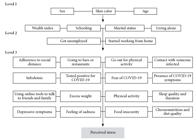
Hierarchical model of the association between chrononutrition, diet quality and perceived stress.
All analyses were performed in STATA version 12.1 using the svy prefix, which considers the complexity of the sampling process and the effect of the study design.
Ethical Aspects
This study was approved by the Research Ethics Committee of the Federal University of Rio Grande [protocol number 4.055.737]. Verbal informed consent was obtained from all subjects and was witnessed and formally recorded.
Results
A total of 2,170 individuals were analyzed (response rate of 75%). Most of them were female (59.7%), self-reported white skin color (84.0%), and did not live alone (89.4%). About a quarter (26.1%) had university education, 31.2% were 60 years old or older, and 49.1% were married (Table 1). Less than 10% became unemployed amid COVID-19 pandemic, while over 90% continued to work in person. More than 80% reported not going out for physical activity during this period. The prevalence of infodemic was 22.0% and of fear of COVID-19 was 19.1% (Table 2). More than half presented excess weight (59.1%) and approximately a quarter were physically active (≥150 minutes/per week) (24.7%). Concerning sleep characteristics, 9.6% reported poor or very poor sleep quality and 53.8% presented inadequate sleep duration. Felling of sadness and depressive symptoms were, respectively, observed in 16.1% and 13.0% of the interviewees (Table 3).
Regarding chrononutrition, 12.3% of the individuals usually skipped breakfast and 27.5% had less than four meals a day (Table 3). Younger (p<0.001) and single individuals (p=0.017), those who had COVID-19 symptoms (p=0.027), who did not use online tools to talk to friends and family (p=0.038), who practiced <150 minutes of physical activity per week (p=0.016), and had poor sleep quality (p=0.011), depressive symptoms (p<0.001) and sadness (p=0.002) presented higher frequency of skipping breakfast. Higher prevalence of having less than 4 meals a day was associated with being male (p=0.040), younger (p<0.001), single (p<0.001), non-white (p<0.001), having better education (p=0.001), not living alone (p=0.005) and not adhering to social distance (p=0.022), referring infodemic (p=0.003) and fear of COVID-19 (p=0.037), having gone to bars or restaurants amid the pandemic (p<0.001) and had contacted with someone infected (p<0.001), being with excess weight (p=0.006) and depressive symptoms (p<0.001) (Table 4).
Concerning diet quality, 30.4% had poor diet quality, 14% referred irregular consumption of markers of a healthy diet, and 43.2% had regular consumption of markers of an unhealthy diet (Table 3). Higher prevalence of poor diet quality was found in individuals males (p<0.001), younger (p<0.001), non-white (p=0.047), single (p<0.001), with better education (p<0.001), who did not live alone (p=0.021), did not adhere to social distancing (p=0.036), went to bars or restaurants (p=0.005), had COVID-19 symptoms (p=0.025) and excess weight (p=0.009), practiced <150 minutes per week of physical activity (p=0.003) and referred poor sleep quality (p=0.001), depressive symptoms (p<0.001) and sadness (p<0.001). Regular consumption of unhealthy foods was more frequent in males (p=0.004), with lowest wealth index (p<0.001), who did not start working from home during the pandemic (p=0.044), did not adhere to social distancing (p=0.003), referred fear of COVID-19 (p=0.003), did not use online tools to talk to friends and family (p<0.001), had excess weight (p=0.010), poor sleep quality (p=0.001), depressive symptoms (p=0.024), sadness (p=0.020) and food insecurity (p=0.046). Younger (p<0.001) and single individuals (p<0.001), who became unemployed (p=0.040), had inadequate sleep duration (p=0.004), depressive symptoms (p=0.029), and food insecurity (p=0.003) presented higher prevalence of irregular consumption of healthy foods (Table 4).
Perceived stress was reported by 38.2% of the sample. Men (p<0.001), single (p<0.001), younger (p<0.001), and non-white individuals (p=0.027) presented a higher prevalence of stress. Individuals with poor wealth index (p<0.001), who have become unemployed (p<0.001), who had gone to bars or restaurants (p=0.002), who were afraid of COVID-19 (p<0.001), who had contact with someone infected by COVID-19 (p=0.008), and symptoms of the infection (p<0.001) also presented higher prevalence of stress. Moreover, a higher frequency of stress was present in those who did not report infodemic (p<0.001) and did not use online tools to talk to friends and family (p<0.001). Higher prevalence of stress was also related to the practice of <150 minutes per week of physical activity (p=0.038), with poor or very poor sleep quality (p<0.001) and inadequate sleep duration (p<0.001), the presence of depressive symptoms (p<0.001) and feelings of sadness (p<0.001), and with food insecurity (p<0.001) (Table 5).
Table 6 shows the association between chrononutrition, diet quality, and perceived stress. In the crude model, both aspects of chrononutrition were associated with perceived stress. Individuals who usually skipped breakfast and who ate less than four meals per day presented a higher prevalence of perceived stress. However, after adjustment for confounders, only the frequency remained associated. Individuals who reported eating less than four meals per day were 19% more likely to have perceived stress when compared to those who usually ate four or more meals a day (PR=1.19, CI95% 1.07;1.32).
The association between diet quality and perceived stress showed that, after adjustment for confounders, poor diet quality was associated with a higher prevalence of perceived stress (PR=1.25, CI95% 1.10;1.43). Regarding the association of food markers consumption with perceived stress, irregular consumption of healthy foods was associated with a higher prevalence of perceived stress (PR=1.25, CI95% 1.09;1.44). In turn, regular consumption of unhealthy foods was associated with an increase of 13% in the prevalence of perceived stress (PR=1.13, CI95% 1.02;1.25) (Table 6).
Discussion
This study, which aimed to assess the association of chrononutrition and diet quality with perceived stress amid the COVID-19 pandemic, showed important findings. Less than four meals per day, irregular consumption of healthy foods, regular consumption of unhealthy foods, and poor diet quality increased the prevalence of perceived stress, independent of the variables included as potential confounders in the analysis model.
The relationship between dietary intake and mental health has been explored by other studies, in which poor diet quality was linked to worse mental health, although most papers consider depression as the outcome. Akbaraly et al.28 showed that women with higher scores on the Healthy Eating Index were less likely to have depressive symptoms when compared to women with lower scores. Liu et al.29 observed that the intake of processed foods was positively associated with depression and perceived stress. Research with data from low and middle-income countries showed that fruit intake was associated with lower odds of depression and anxiety, while vegetable intake was associated with lower risk of depression30.
Regarding perceived stress, a cross-sectional study observed that a higher intake of saturated fats and added sugars was associated with a higher stress score16. In the United Kingdom, lower adherence to a Mediterranean Diet was related to higher levels of stress in reproductive-age women17.
Our results agree with the literature. Poor diet quality, including irregular consumption of healthy foods and regular consumption of unhealthy foods, was associated with a higher prevalence of perceived stress. Nonetheless, our study has the advantage of being carried out amid the COVID-19 pandemic. The COVID-19 pandemic, with its unpredictability and numerous changes in daily life, left the population vulnerable to mental health issues, including stress31. While data on dietary changes during this period show contradictions, there is evidence of an increase in the number of daily snacks and meals. This increase is often associated with poor nutrition quality, primarily as a coping strategy for the stressful environment of the pandemic32,33.
On the other hand, studies evaluating the association between chrononutrition and stress are almost unknown. An Italian study conducted with elderly adults evaluated the influence of time-restricted feeding on mental health. Aged-stratified analysis showed that individuals aged 70 and over, who had time-restricted feeding of 8 hours presented less mental distress than those without time-restrict feeding, but this association disappeared after controlling for having breakfast. Moreover, there was no association between time-restricted feeding and mental health after adjusting for confounding variables in the non-stratified analysis by age34.
Circadian circle and stress systems are related for being responsible for energy and metabolic regulation and are involved mainly by neural mechanisms. While stressful actions activate the HPA axis and release catecholamines and glucocorticoids, the circadian circle receives information from the external environment through clocks located in peripheral tissues. This external information sends signals to the circadian clock located in the central nervous system (CNS), regulating the metabolism. These signals can activate circadian clocks from the HPA axis, releasing glucocorticoids and creating a stress response. Diet and feeding behaviors are external influencers of the circadian circle, also known as zeitgebers6,35.
Inadequate food intake and behavior can disrupt metabolic homeostasis. Nutritional inadequate meals (in composition and time) can disrupt the secretion of glucocorticoids such as cortisol, increasing it to superior levels from those normally indicated by the CNS36. Glucocorticoids, along with other hormones such as glucagon and ghrelin, are released during fasting status. As previously stated, its secretion is controlled by circadian clocks, including those existing in CNS, and is responsible for signaling the peripheral tissues indicating the feeding time36,37.
Glucocorticoids increase their levels right after fasting beginning38. This could be due to the activation of the HPA axis, especially in short periods of fasting37, once this status is seen as a stressful condition. In response, adrenocorticotrophin hormone is released to stimulate cortisol production, a stress hormone. During fasting, glucocorticoids act in favor of lipolysis, protein degradation, and glucose synthesis39. Therefore, is possible to hypothesize that less than four meals a day might be accompanied by longer periods of fasting, favoring the secretion of stress response mediators, such as glucocorticoids.
Regarding diet quality, it is important to establish that healthy dietary patterns are essential to prevent non-communicable chronic diseases40,41. These patterns are generally higher in plant-based foods, including fruits, vegetables, whole grains, legumes, seeds, and nuts, and lower in animal-based foods, processed meats, and ultra-processed, high-fat, and high-sugar foods40. Ultra-processed foods are industrially manufactured containing food additives and little or no whole foods. They usually have high amounts of trans fat and sugar, and low amounts of fiber, vitamins, and minerals42. Cross-sectional analysis of the Longitudinal Study of Adult Health Brazil pointed out that high ultra-processed food intake was associated with higher C-reactive protein (CRP) levels in women43.
Meals high in saturated fat can increase inflammatory markers, including CRP levels44, interleukin-6 (IL-6)45, tumor necrosis factor-alpha45, intercellular adhesion molecule-1 (ICAM-1)44,46, and vascular cell adhesion molecule-144. Also, meals high in saturated fat increase nuclear factor kappa B (NFκB) activation47. In line with this, palmitic acid (the most abundant saturated fatty acid in the Western diet) activates the proinflammatory response in microvascular endothelial cells, elevating the expression of IL-6, IL-8, ICAM-1, and toll-like receptor 248. This effect occurs, at least in part, by TLR4 - NFκB signaling pathway48. A high-fat meal intake also alters the expression of circadian clock-, inflammation-, and oxidative stress-related genes in human skeletal muscle49. A high-fat, high-carbohydrate meal raises endotoxin (lipopolysaccharide) levels postprandially and induces an inflammatory response in normal-weight men50.
On the other hand, healthy eating patterns are associated with lower circulating concentrations of inflammatory markers51,52. A study showed that two years of a Mediterranean-style diet, with daily consumption of whole grains, fruits, vegetables, nuts, and olive oil, reduced CRP, IL-6, and IL-18 compared to the control diet53. Also, the dietary intake alters the human gut microbiota54,55, with a Mediterranean diet and dietary components, such as fruits, vegetables, fiber, and polyphenols, positively modulating the gut microbiota, decreasing inflammation, and improving the gut barrier56,57.
Circadian rhythm disruption can lead to gut microbiota dysbiosis, with an increase in pathobionts and a decrease in beneficial bacteria, in addition to the disrupted gut barrier and blood-brain barrier58. The microbiota rhythms are regulated by diet and feeding time, which can alter both microbiota and gut activity, affecting host immune and metabolic function59. The disruption to microbiota homeostasis (dysbiosis) can alter innate and adaptive immunity, contributing to inflammation60. Also, the gut microbiota is essential for modulating brain functions61,62. Indeed, the microbiota can impact several neurological diseases, including stress and stress-related disorders63. Literature shows that host feeding rhythms synchronize with the microbiota to promote rhythms in intestinal innate immunity that anticipate exogenous microbial exposure64. A preclinical study evidenced that the microbiota coordinates with the circadian clock to generate rhythms in the expression of genes that govern lipid metabolism and absorption65.
It is important to highlight the methodological limitations of our study. The cross-sectional design does not allow establishing causality and temporality of associations, which increases the risk of reverse causality. Moreover, the assessment of perceived stress was through a screening tool and cannot be used as a diagnostic. However, the PSS instrument is widely used in population-based studies due to its easy application25,26. Finally, we were only able to evaluate two of the three chrononutrition aspects, once data on regularity of food was not available in the applied questionnaire.
As a strength, this is a population-based study conducted amid the COVID-19 pandemic with a sampling process conducted in two stages, representing an important epidemiological assessment. In addition, unlike most studies conducted during the pandemic, interviews take place face-to-face, at the participants’ households. Moreover, chrononutrition is a recent topic of study and there are few studies evaluating its association with stress in literature. Finally, surveys conducted during the pandemic have provided insights into how such an event can impact various aspects of people’s lives. This enables the planning of policies and actions targeted at the most affected individuals, and it also contributes to the accumulation of knowledge. This information will be valuable in addressing possible future pandemic events.
In conclusion, the study showed that less than four meals per day, poor diet quality, irregular consumption of healthy foods, and regular consumption of unhealthy foods were associated with a higher prevalence of stress in two Brazilian cities amid the COVID-19 pandemic. These findings demonstrated an important association between dietary aspects and stress, which can contribute to the development of joint actions on nutrition and mental health.
References
- 1 Fink G. Stress: Definition and History. In: Encyclopedia of Neuroscience. Elsevier; 2009. p. 549-555.
- 2 Barros MBA, Lima MG, Malta DC, Szwarcwald CL, Azevedo RCS, Romero D, Souza Júnior PRB, Azevedo LO, Machado ÍE, Damacena GN, Gomes CS, Werneck AO, Silva DRP, Pina MF, Gracie R. Relato de tristeza/depressão, nervosismo/ansiedade e problemas de sono na população adulta brasileira durante a pandemia de COVID-19. Epidemiol Serv Saude 2020; 29(4):e2020427.
- 3 Adamson MM, Phillips A, Seenivasan S, Martinez J, Grewal H, Kang X, Coetzee J, Luttenbacher I, Jester A, Harris OA, Spiegel D. International Prevalence and Correlates of Psychological Stress during the Global COVID-19 Pandemic. Int J Environ Res Public Health 2020; 17(24):9248.
- 4 Goularte JF, Serafim SD, Colombo R, Hogg B, Caldieraro MA, Rosa AR. COVID-19 and mental health in Brazil: Psychiatric symptoms in the general population. J Psychiatr Res 2021; 132:32-37.
- 5 Schneiderman N, Ironson G, Siegel SD. Stress and Health: Psychological, Behavioral, and Biological Determinants. Annu Rev Clin Psychol 2005; 1(1):607-628.
- 6 Oster H. The interplay between stress, circadian clocks, and energy metabolism. J Endocrinol 2020; 247(1):R13-R25.
- 7 Serin Y, Acar Tek N. Effect of Circadian Rhythm on Metabolic Processes and the Regulation of Energy Balance. Ann Nutr Metab 2019; 74(4):322-330.
- 8 Pot GK. Sleep and dietary habits in the urban environment: the role of chrono-nutrition. Proc Nutr Soc 2018; 77(3):189-198.
- 9 Adan RAH, Beek EM, Buitelaar JK, Cryan JF, Hebebrand J, Higgs S, Schellekens H, Dickson SL. Nutritional psychiatry: Towards improving mental health by what you eat. Eur Neuropsychopharmacol 2019; 29(12):1321-1332.
- 10 Oike H, Oishi K, Kobori M. Nutrients, Clock Genes, and Chrononutrition. Curr Nutr Rep 2014; 3(3):204-212.
- 11 Louzada MLC, Costa CS, Souza TN, Cruz GL, Levy RB, Monteiro CA. Impacto do consumo de alimentos ultraprocessados na saúde de crianças, adolescentes e adultos: revisão de escopo. Cad Saude Publica 2021; 37(Supl. 1):e00323020.
- 12 Almoosawi S, Vingeliene S, Karagounis LG, Pot GK. Chrono-nutrition: a review of current evidence from observational studies on global trends in time-of-day of energy intake and its association with obesity. Proc Nutr Soc. 2016;75(4):487-500.
- 13 Chen H, Zhang B, Ge Y, Shi H, Song S, Xue W, Li J, Fu K, Chen X, Teng W, Tian L. Association between skipping breakfast and risk of cardiovascular disease and all cause mortality: A meta-analysis. Clin Nutr 2020; 39(10):2982-2988.
- 14 Quadra MR, Santos LP, Schäfer AA, Meller FO. Influence of sleep and chrononutrition on hypertension and diabetes: a population-based study. Cad Saude Publica 2022; 38(7):e00291021.
- 15 Domingos TB, Pereira AF, Yokoo EM, Salles-Costa R. Low fruit consumption and omission of daily meals as risk factors for increased blood pressure in adults. Br J Nutr 2016; 116(4):683-691.
- 16 López-Cepero A, O'Neill J, Tamez M, Falcón LM, Tucker KL, Rodríguez-Orengo JF, Mattei J. Associations Between Perceived Stre ss and Dietary Intake in Adults in Puerto Rico. J Acad Nutr Diet 2021; 121(4):762-769.
- 17 Khaled K, Hundley V, Tsofliou F. Poor Dietary Quality and Patterns Are Associated with Higher Perceived Stress among Women of Reproductive Age in the UK. Nutrients 2021; 13(8):2588.
- 18 Instituto Brasileiro de Geografia e Estatística (IBGE). Censo Demográfico 2022: Principais Resultados. Rio de Janeiro: IBGE; 2023.
- 19 Instituto Brasileiro de Geografia e Estatística (IBGE). Censo Demográfico 2010: Características da População e dos Domicílios. Rio de Janeiro: IBGE; 2011.
- 20 Instituto Brasileiro de Geografia e Estatística (IBGE). Conheça cidades e estados do Brasil. Rio de Janeiro: IBGE; 2022.
- 21 Instituto Brasileiro de Geografia e Estatística (IBGE). Metodologia do Censo Demográfico 2010. Rio de Janeiro: IBGE; 2011.
- 22 O'Neil CE, Byrd-Bredbenner C, Hayes D, Jana L, Klinger SE, Stephenson-Martin S. The Role of Breakfast in Health: Definition and Criteria for a Quality Breakfast. J Acad Nutr Diet 2014; 114(12):S8-S26.
- 23 Francisco PMSB, Assumpção D, Borim FSA, Senicato C, Malta DC. Prevalence and co-occurrence of modifiable risk factors in adults and older people. Rev Saude Publica 2019; 53:86.
- 24 Meller FO, Manosso LM, Schäfer AA. The influence of diet quality on depression among adults and elderly: A population-based study. J Affect Disord 2021; 282:1076-1081.
- 25 Reis RS, Ferreira Hino AA, Rodriguez Añez CR. Perceived Stress Scale. J Health Psychol 2010; 15(1):107-114.
- 26 Schäfer AA, Santos LP, Manosso LM, Quadra MR, Meller FO. Relationship between sleep duration and quality and mental health before and during COVID-19 pandemic: Results of population-based studies in Brazil. J Psychosom Res 2022; 158:110910.
- 27 Victora CG, Huttly SR, Fuchs SC, Olinto MT. The role of conceptual frameworks in epidemiological analysis: a hierarchical approach. Int J Epidemiol 1997; 26(1):224-227.
- 28 Akbaraly TN, Sabia S, Shipley MJ, Batty GD, Kivimaki M. Adherence to healthy dietary guidelines and future depressive symptoms: evidence for sex differentials in the Whitehall II study. Am J Clin Nutr 2013; 97(2):419-427.
- 29 Liu Z min, Ho SC, Xie YJ, Chen Y jun, Chen Y ming, Chen B, Wong SY, Chan D, Wong CK, He Q, Tse LA, Woo J. Associations between dietary patterns and psychological factors: a cross-sectional study among Chinese postmenopausal women. Menopause 2016; 23(12):1294-1302.
- 30 Liu MW, Chen QT, Towne Jr. SD, Zhang J, Yu HJ, Tang R, Gasevic D, Wang PG, He QQ. Fruit and vegetable intake in relation to depressive and anxiety symptoms among adolescents in 25 low- and middle-income countries. J Affect Disord 2020; 261:172-180.
- 31 Penninx BWJH, Benros ME, Klein RS, Vinkers CH. How COVID-19 shaped mental health: from infection to pandemic effects. Nat Med 2022; 28(10):2027-2037.
- 32 Bennett G, Young E, Butler I, Coe S. The Impact of Lockdown During the COVID-19 Outbreak on Dietary Habits in Various Population Groups: A Scoping Review. Front Nutr 2021; 8:626432.
- 33 Arora T, Grey I. Health behaviour changes during COVID-19 and the potential consequences: A mini-review. J Health Psychol 2020; 25(9):1155-1163.
- 34 Currenti W, Godos J, Castellano S, Caruso G, Ferri R, Caraci F, Grosso G, Galvano F. Time-restricted feeding is associated with mental health in elderly Italian adults. Chronobiol Int 2021; 38(10):1507-1516.
- 35 Dumbell R, Matveeva O, Oster H. Circadian Clocks, Stress, and Immunity. Front Endocrinol 2016; 7:37.
- 36 Challet E. The circadian regulation of food intake. Nat Rev Endocrinol 2019; 15(7):393-405.
- 37 Nakamura Y, Walker BR, Ikuta T. Systematic review and meta-analysis reveals acutely elevated plasma cortisol following fasting but not less severe calorie restriction. Stress 2016; 19(2):151-157.
- 38 Kim BH, Joo Y, Kim MS, Choe HK, Tong Q, Kwon O. Effects of Intermittent Fasting on the Circulating Levels and Circadian Rhythms of Hormones. Endocrinol Metab 2021; 36(4):745-756.
- 39 Guia RM. Stress, glucocorticoid signaling pathway, and metabolic disorders. Diabetes Metab Syndr 2020; 14(5):1273-1280.
- 40 Cena H, Calder PC. Defining a Healthy Diet: Evidence for the Role of Contemporary Dietary Patterns in Health and Disease. Nutrients 2020; 12(2):334.
- 41 Neuhouser ML. The importance of healthy dietary patterns in chronic disease prevention. Nutr Res 2019; 70:3-6.
- 42 Juul F, Vaidean G, Parekh N. Ultra-processed Foods and Cardiovascular Diseases: Potential Mechanisms of Action. Adv Nutr 2021; 12(5):1673-1680.
- 43 Lopes AESC, Araújo LF, Levy RB, Barreto SM, Giatti L. Association between consumption of ultra-processed foods and serum C-reactive protein levels: cross-sectional results from the ELSA-Brasil study. Sao Paulo Med J 2019; 137(2):169-176.
- 44 Kiecolt-Glaser JK, Fagundes CP, Andridge R, Peng J, Malarkey WB, Habash D, Belury MA. Depression, daily stressors and inflammatory responses to high-fat meals: when stress overrides healthier food choices. Mol Psychiatry 2017; 22(3):476-482.
- 45 Rocha DMUP, Lopes LL, Silva A, Oliveira LL, Bressan J, Hermsdorff HHM. Orange juice modulates proinflammatory cytokines after high-fat saturated meal consumption. Food Funct 2017; 8(12):4396-4403.
- 46 Peairs AD, Rankin JW, Lee YW. Effects of acute ingestion of different fats on oxidative stress and inflammation in overweight and obese adults. Nutr J 2011; 10(1):122.
- 47 Bellido C, López-Miranda J, Blanco-Colio LM, Pérez-Martínez P, Muriana FJ, Martín-Ventura JL, Marín C, Gómez P, Fuentes F, Egido J, Pérez-Jiménez F. Butter and walnuts, but not olive oil, elicit postprandial activation of nuclear transcription factor ?B in peripheral blood mononuclear cells from healthy men. Am J Clin Nutr 2004; 80(6):1487-1491.
- 48 Pillon NJ, Azizi PM, Li YE, Liu J, Wang C, Chan KL, Hopperton KE, Bazinet RP, Heit B, Bilan PJ, Lee WL, Klip A. Palmitate-induced inflammatory pathways in human adipose microvascular endothelial cells promote monocyte adhesion and impair insulin transcytosis. Am J Physiol Endocrinol Metab 2015; 309(1):E35-E44.
- 49 Budai Z, Balogh L, Sarang Z. Short-term high-fat meal intake alters the expression of circadian clock-, inflammation-, and oxidative stress-related genes in human skeletal muscle. Int J Food Sci Nutr 2019; 70(6):749-758.
- 50 Ghanim H, Abuaysheh S, Sia CL, Korzeniewski K, Chaudhuri A, Fernandez-Real JM, Dandona P. Increase in Plasma Endotoxin Concentrations and the Expression of Toll-Like Receptors and Suppressor of Cytokine Signaling-3 in Mononuclear Cells After a High-Fat, High-Carbohydrate Meal. Diabetes Care 2009; 32(12):2281-2287.
- 51 Calder PC, Ahluwalia N, Brouns F, Buetler T, Clement K, Cunningham K, Esposito K, Jönsson LS, Kolb H, Lansink M, Marcos A, Margioris A, Matusheski N, Nordmann H, O'Brien J, Pugliese G, Rizkalla S, Schalkwijk C, Tuomilehto J, Wärnberg J, Watzl B, Winklhofer-Roob BM. Dietary factors and low-grade inflammation in relation to overweight and obesity. Br J Nutr 2011; 106(S3):S5-S78.
- 52 Tosti V, Bertozzi B, Fontana L. Health Benefits of the Mediterranean Diet: Metabolic and Molecular Mechanisms. J Gerontol 2018; 73(3):318-326.
- 53 Esposito K, Marfella R, Ciotola M, Di Palo C, Giugliano F, Giugliano G, D'Armiento M, D'Andrea F, Giugliano D. Effect of a Mediterranean-Style Diet on Endothelial Dysfunction and Markers of Vascular Inflammation in the Metabolic Syndrome. JAMA 2004; 292(12):1440.
- 54 David LA, Maurice CF, Carmody RN, Gootenberg DB, Button JE, Wolfe BE, Ling AV, Devlin AS, Varma Y, Fischbach MA, Biddinger SB, Dutton RJ, Turnbaugh PJ. Diet rapidly and reproducibly alters the human gut microbiome. Nature 2014; 505(7484):559-563.
- 55 Guo Y, Zhu X, Zeng M, Qi L, Tang X, Wang D, Zhang M, Xie Y, Li H, Yang X, Chen D. A diet high in sugar and fat influences neurotransmitter metabolism and then affects brain function by altering the gut microbiota. Transl Psychiatry 2021; 11(1):328.
- 56 Beam A, Clinger E, Hao L. Effect of Diet and Dietary Components on the Composition of the Gut Microbiota. Nutrients 2021; 13(8):2795.
- 57 Merra G, Noce A, Marrone G, Cintoni M, Tarsitano MG, Capacci A, Lorenzo A. Influence of Mediterranean Diet on Human Gut Microbiota. Nutrients 2020; 13(1):7.
- 58 Li Y, Shao L, Mou Y, Zhang Y, Ping Y. Sleep, circadian rhythm and gut microbiota: alterations in Alzheimer's disease and their potential links in the pathogenesis. Gut Microbes 2021; 13(1):1957407.
- 59 Voigt RM, Forsyth CB, Green SJ, Engen PA, Keshavarzian A. Circadian Rhythm and the Gut Microbiome. Int Rev Neurobiol 2016; 131:193-205.
- 60 Levy M, Kolodziejczyk AA, Thaiss CA, Elinav E. Dysbiosis and the immune system. Nat Rev Immunol 2017; 17(4):219-232.
- 61 Cryan JF, O'Riordan KJ, Sandhu K, Peterson V, Dinan TG. The gut microbiome in neurological disorders. Lancet Neurol 2020; 19(2):179-194.
- 62 Foster JA. Modulating brain function with microbiota. Science 2022; 376(6596):936-937.
- 63 Foster JA, Rinaman L, Cryan JF. Stress and the gut-brain axis: Regulation by the microbiome. Neurobiol Stress 2017; 7:124-136.
- 64 Brooks JF, Behrendt CL, Ruhn KA, Lee S, Raj P, Takahashi JS, Hooper LV. The microbiota coordinates diurnal rhythms in innate immunity with the circadian clock. Cell 2021; 184(16):4154-4167.e12.
- 65 Wang Y, Kuang Z, Yu X, Ruhn KA, Kubo M, Hooper L V. The intestinal microbiota regulates body composition through NFIL3 and the circadian clock. Science 2017; 357(6354):912-916.
- 66 Pulido CM, Villarejo-Carballido B, Redondo-Sama G, Gómez A. COVID-19 infodemic: More retweets for science-based information on coronavirus than for false information. Int Sociol 2020; 35(4):377-392.
- 67 Ahorsu DK, Lin CY, Imani V, Saffari M, Griffiths MD, Pakpour AH. The Fear of COVID-19 Scale: Development and Initial Validation. Int J Ment Health Addict 2022; 20(3):1537-1545.
- 68 Medeiros ED, Reis LM, Guimarães CLC, Silva PGN, Monteiro RP, Coelho GLH, Guimarães CMC, Martins ERDS, França LLA. Psychometric properties of the Brazilian version of the fear of COVID-19 scale (FCV-19S). Curr Psychol 2023; 42(2):980-989.
- 69 World Health Organization (WHO). WHO Expert Committee on Physical Status: the Use and Interpretation of Anthropometry. Report of a WHO Expert Committee. Geneva: WHO; 1995.
- 70 Lipschitz DA. Screening for nutritional status in the elderly. Prim Care 1994; 21(1):55-67.
- 71 IPAQ Research Committee. Guidelines for Data Processing and Analysis of the International Physical Activity Questionnaire (IPAQ) - Short and Long Forms. IPAQ; 2005.
- 72 World Health Organization (WHO). Global recommendations on physical activity for health. Geneva: WHO; 2010.
- 73 Chaput JP, Dutil C, Featherstone R, Ross R, Giangregorio L, Saunders TJ, et al. Sleep duration and health in adults: an overview of systematic reviews. Appl Physiol Nutr Metab 2020; 45(10):S218-S231.
- 74 Santos LP, Costa MG, Santos JV, Lindemann IL, Gigante DP. Comparação entre duas escalas de segurança alimentar. Cien Saude Colet 2014; 19(1):279-286.
- 75 Andrews FM, Withey SB. Social Indicators of Well-Being: Americans' Perceptions of Life Quality. Boston: Springer US; 2012.
- 76 Santos IS, Tavares BF, Munhoz TN, Almeida LSP, Silva NTB, Tams BD, Patella AM, Matijasevich A. Sensibilidade e especificidade do Patient Health Questionnaire-9 (PHQ-9) entre adultos da população geral. Cad Saude Publica 2013; 29(8):1533-1543.

 Source: Authors.