
 Mental Health Clothesline and Dialogue Circles: active techniques in qualitative research in health and education
This article aims to present and describe the techniques of the mental health clothesline and the dialogue circle, as participatory, dialogical and meaningful strategies of qualitative research in health and education. Considering the importance of allowing the inclusion of diversity and plurality of voices and experiences, active methods represent a broad and contextualized approach for this purpose. This is a qualitative study, using two active and participatory research techniques on the mental health of educators in a school community. The “Mental Health Clothesline” aims to understand negative and positive experiences related to people’s mental health. The “Dialogue Circles” are used as formative techniques, promoting the expression of feelings, thoughts and behaviors related to health and education. The main cores of meaning related to the negative experiences of educators were the experiences of illness and conflicts at work and personal life. The positive ones were personal and professional relationships and hope. The dialogic experience led participants to work on meanings from a deeper focus on mental health, producing sensitive knowledge with acceptance.
Key words:
Problem-Based Learning; Mental Health; Schools; Education; Qualitative Research
 Thumbnail
 Thumbnail
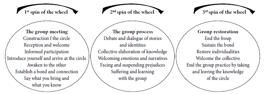 Thumbnail
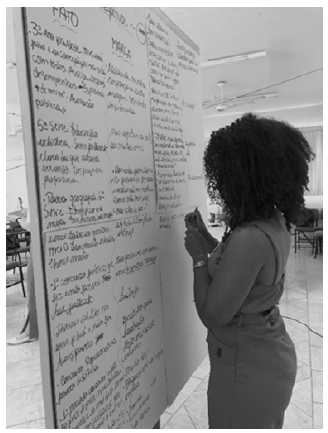 Source: Authors.
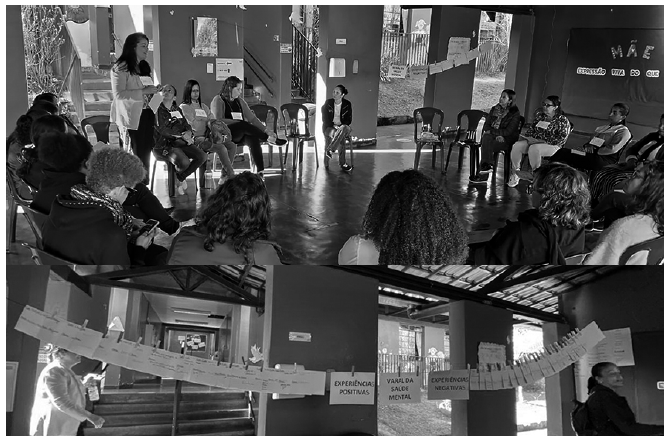 Source: Authors.
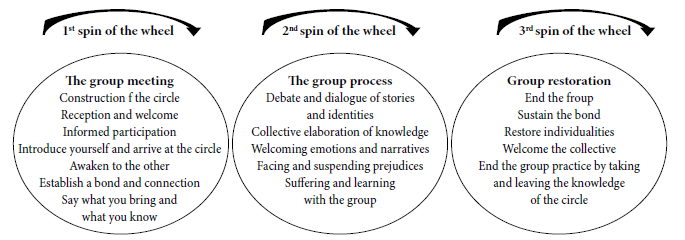 Source: Authors.