 Adverse childhood experiences and adulthood physical performance: the Brazilian Longitudinal Study of Adult Health (ELSA-Brasil)
Abstract
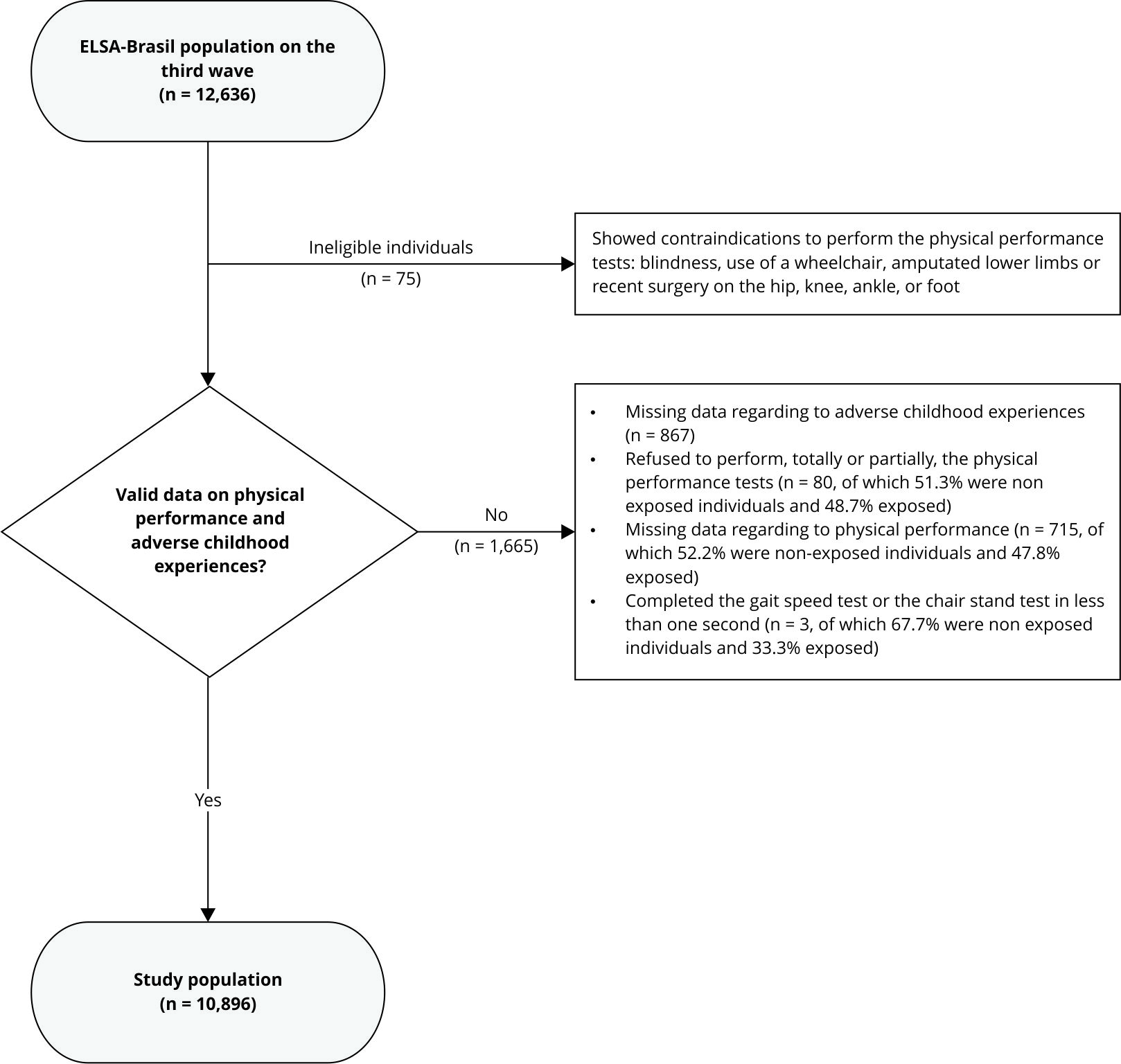
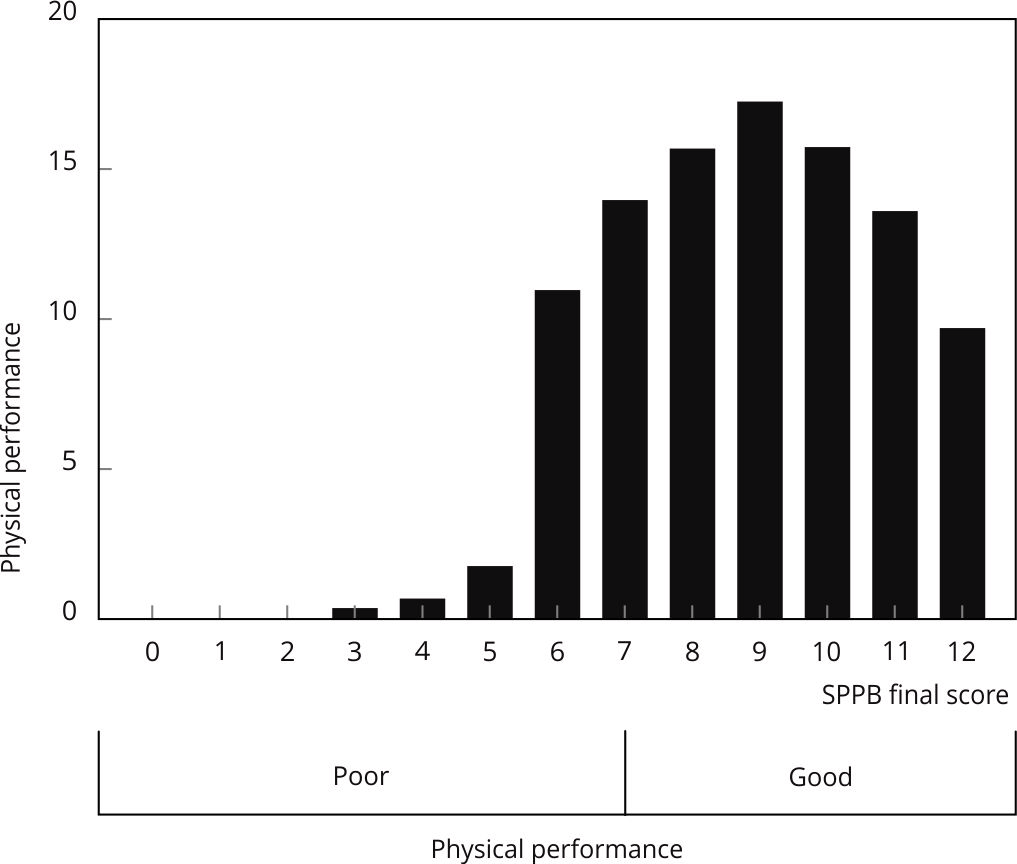
This study aimed to investigate associations between adverse childhood experiences (ACEs) and adulthood physical performance within a Brazilian population using a cross-sectional analysis. A total of 10,896 civil servants, aged 41 to 84 years, from the third wave of the Brazilian Longitudinal Study of Adult Health, were included in this research. ACEs were identified retrospectively using child labor and five household dysfunction indicators related to the first 14 years of life, analyzed individually and as a cumulative score. Physical performance was assessed using Short Physical Performance Battery, whose score was categorized as poor (≤ 7) or good (≥ 8) physical performance. Binary logistic regression models were employed. Participants had a mean age of 59 years (SD = 8.71), with 42% reporting exposure to at least 1 ACE and 28% having poor physical performance. After adjustments, exposure to one (OR = 1.18; 95%CI: 1.07; 1.32), two (OR = 1.19; 95%CI: 1.02; 1.39), and three or more ACEs types (OR = 1.36; 95%CI: 1.05; 1.75) increased poor physical performance chances in adulthood. Those who experienced household members conviction/incarceration (OR = 1.43; 95%CI: 1.02; 1.99), parental death (OR = 1.22; 95%CI: 1.05; 1.41) or separation/divorce (OR = 1.17; 95%CI: 1.01; 1.36) during childhood also had higher poor physical performance chances in adulthood. ACEs are associated with increased poor physical performance chances in adulthood. These findings underscore the importance of public policies aimed at reducing ACEs to alleviate the burden of diminished physical performance in adulthood.
Keywords:
Adverse Childhood Experiences; Child Labor; Physical Performance
 Thumbnail
 Thumbnail
 Thumbnail