 Intersectional violence and the health of migrant women in Brazil and Brazilian emigrant women abroad: a scoping review
Abstract
Migratory flows have expanded with the increased movement of women from Latin America and other continents to Brazil, in addition to the emigration of Brazilian women to the Global North. Considering the context of the feminization of migration and the importance of understanding women's oppression in the face of displacement, this scoping review analyzes, from an intersectional perspective, scientific evidence on health and expressions of violence against migrant women in Brazil and Brazilian women abroad. The adopted databases are VHL, Cochrane, Embase, PubMed, SciELO, Scopus, and Web of Science, using descriptors related to the topic. Twenty-six documents were included for analysis. Regarding the health of migrant women, the results indicate that migration has implications for access to and care for health, sexual and reproductive health, mental disorder, and the manifestation of suffering, in addition to barriers to access to health services due to intercultural and linguistic aspects. Both migrant women in Brazil and Brazilian women abroad suffer from intersectional violence, including expressions of racism, xenophobia, racial and gender inequality in the workplace, obstetric, sexual, and patrimonial violence, and conditions analogous to slavery, in addition to the hypersexualization of Brazilian women in the Global North. However, despite the challenges, oppression, and violence, the review shows the resistance and protagonism of migrant women throughout their life trajectories, as individual and collective strategies are developed to guarantee their rights as migrants and women.
Keywords:
Human Migration; Women; Intersectionality; Violence; Migrant Health
Resumo
Os fluxos migratórios têm se intensificado com o aumento da migração de mulheres da América Latina e de outros continentes para o Brasil, bem como com a emigração de brasileiras para o Norte Global. Considerando a realidade da feminização das migrações e a importância de compreender as opressões vivenciadas pelas mulheres em face aos seus deslocamentos, esta revisão de escopo analisa, sob uma perspectiva interseccional, as evidências científicas sobre a saúde e as expressões de violências contra mulheres migrantes no Brasil e mulheres brasileiras no exterior. As bases de dados utilizadas foram BVS, Cochrane, Embase, PubMed, SciELO, Scopus e Web of Science, empregando-se descritores relacionados à temática. Ao todo, 26 documentos foram incluídos para análise. Sobre a saúde das migrantes, os resultados indicam que a migração tem implicações para o acesso e a atenção à saúde, a saúde sexual e reprodutiva, o adoecimento mental e a manifestação de sofrimento, além das barreiras de acesso aos serviços de saúde decorrentes de aspectos interculturais e linguísticos. Tanto as migrantes no Brasil quanto as brasileiras no exterior sofrem com as violências interseccionais, incluindo expressões de racismo, xenofobia, desigualdade racial e de gênero no mercado de trabalho, violência obstétrica, sexual e patrimonial, e condições análogas à escravidão, somadas à hipersexualização das mulheres brasileiras no Norte Global. Contudo, apesar dos desafios, opressões e violências, a revisão revela as resistências e os protagonismos das migrantes ao longo de suas trajetórias, à medida que estratégias individuais e coletivas são desenvolvidas para garantir seus direitos enquanto migrantes e mulheres.
Palavras-chave:
Migração Humana; Mulheres; Enquadramento Interseccional; Violência; Saúde de Migrantes
Resumen
Los flujos migratorios se han intensificado, con un aumento del movimiento de mujeres de América Latina y de otros continentes hacia Brasil, así como la emigración de mujeres brasileñas hacia el Norte Global. Considerando la realidad de la feminización de la migración y la importancia de comprender las opresiones vivenciadas por las mujeres en este contexto, esta revisión analiza, desde una perspectiva interseccional, evidencias científicas sobre la salud y las expresiones de violencia contra las mujeres migrantes en Brasil y las mujeres brasileñas en el extranjero. Las bases de datos utilizadas fueron BVS, Cochrane, Embase, PubMed, SciELO, Scopus y Web of Science, con descriptores relacionados con el tema. En total, se incluyeron 26 documentos en el análisis. Respecto a la salud de las migrantes, los resultados indican que la migración impacta en el acceso y en el cuidado de salud, en la salud sexual y reproductiva, en la salud mental y en las manifestaciones de sufrimiento, además de evidenciar barreras de acceso a los servicios de salud asociadas a aspectos interculturales y lingüísticos. Tanto las migrantes en Brasil como las mujeres brasileñas en el extranjero enfrentan violencia interseccional, que incluye racismo, xenofobia, desigualdades raciales y de género en el entorno laboral, violencia obstétrica, sexual y patrimonial, condiciones análogas a la esclavitud y la hipersexualización de las mujeres brasileñas en el Norte Global. Pese a los desafíos, a la opresión y a la violencia, la revisión también destaca las resistencias y los protagonismos de las migrantes a lo largo de sus trayectorias, expresados en el desarrollo de estrategias individuales y colectivas para garantizar sus derechos como migrantes y mujeres.
Palabras-clave:
Migración Humana; Mujeres; Interseccionalidad; Violencia; Salud del Migrante
Introduction
Migratory flows have expanded in Latin America, especially in Brazil. Official Brazilian data indicate that 481,000 residency applications were granted in the country from 2022 to July 2024 and that, although men are the majority, the number of women, children, and adolescents has grown significantly, with the most prevalent nationalities being Venezuelan, Bolivian, Colombian, and Argentinean 1. In this same period, approximately 139,200 people requested asylum in the country, with prevalence of Venezuelans, but also including Cubans and Angolans: “...96.0% of them were Venezuelans, with women representing 47.2% of recognized refugees” 1.
It is extremely necessary to conduct studies and produce data (empirical, theoretical, and methodological data) on the migration of women, especially regarding their motivations, since they have historically been seen as the support for their companions, and not as protagonists of their own story 2.
It is increasingly common for women to migrate alone or with their children and they tend to seek employment to support their families 2. Therefore, in Brazil, as a country that has received a diverse range of migrants, especially in recent decades, we should understand the intersectional violence 3 against migrant women for provision of health care, prevention of violence, and development of effective policies to address this serious public health issue.
Women protagonism and challenges experienced in human displacement have been increasingly discussed from a feminist perspective, elucidating the growing movement and the diverse reasons for migration 4. While emigration is motivated by deficient rights, with women facing limited social mobility policies geared toward improving their living conditions, which contributes to their increased vulnerability 5.
Furthermore, in migratory contexts, violence can be exacerbated, showing how migration is intertwined with colonialism and body subjugation 4. Historically, violence against women is associated with male domination and exacerbated by colonization, in which the racialization and sexualization of gender relations characterize the structures that have been built since the European invasion of Latin America. Within the colonial gender paradigm, cruelty, impunity, and the naturalization of violence against women are increasingly prevalent, affecting their lives, including cases of femicide 6.
In this sense, intersectional studies inform analyses of oppression and violence against women, such as sexism, racism, and classism, complicating the dynamics of violence. Therefore, we address the diversity among women, even among those of the same social class and ethnicity. In other words, analyzing how the intersections of oppression shape their experiences is beneficial for developing public policies to meet their needs and address rights violations and violence 5,7.
As for migration processes, there is a consensus that they impact women’s lives differently, depending on their nationality, immigration status, sexual orientation, gender identity, race/ethnicity, and social class 5,8,9. Consequently, adopting intersectionality as an axis of analysis provides a more in-depth insight into the experiences of migrant women, shedding light on their oppressions and resistance beyond asymmetrical gender relations, also including distinctions and discrimination based on race and social class, access to employment and migration conditions, affinity with the destination country’s language, among other indicators 8,9.
Thus, considering that violence is intersectional and complex, Collins 3 reiterates that it is a social problem that causes suffering and harm to affected individuals. The author believes that, beyond the intersections of racial, gender, nationality, and social class violence, it is crucial to identify its determinants within the context of exploitation in a capitalist society, especially in countries that underwent colonization 3, a hallmark of Latin America. Therefore, if we consider these reflections on migrant women, we can infer that the more impoverished, the black, the indigenous, and those from the Global South are the most affected by racial and gender-based violence − a perspective adopted in this article.
If women’s movements involve countless challenges, how do migration processes and their health interrelate? A recent literature review 10 found that, in addition to migratory difficulties, women also face exacerbated vulnerabilities and social and economic inequalities, weak employment relationships, and the failure of services to meet their health needs, especially during the pandemic. Women face barriers in reconciling productive work with family care, which is expressed by the overload of demands, impacting their physical and mental health. They are often subjected to racial, gender-based, and xenophobic violence, which can cause or aggravate psychological distress and disorders 10.
However, this violence is not limited to Brazil, being also experienced by Brazilian women abroad; after migrating to the Global North, they report suffering racism and xenophobia, in addition to hypersexualization of their bodies, stigmatized as “easy” and sensual 11,12, and obstetric violence 11. Therefore, elucidating how our compatriots experience migratory processes and access to health care in the Global North is important to unveil the violence 11 and the colonial gender pattern that is perpetuated 6. This perspective reinforces the Brazilian Migration Law (Law n. 13,445/2017) 13, which fosters studies and research on Brazilian women abroad, as this population is a responsibility of the Brazilian State.
Thus, this scoping review aims to analyze scientific evidence on the health and expressions of violence against migrant women in Brazil and Brazilian women abroad. The research question is: What is the scientific evidence on the health and expressions of violence against migrant women in Brazil and Brazilian women abroad?
Methods
This scoping review aims to present a broader view of a given topic and discuss the diversity of knowledge, identifying gaps and supporting future systematic reviews 13. We followed the PRISMA-ScR (Reporting Items for Systematic Reviews and Meta-Analyses: Extension for Scoping Reviews) recommendations 14,15, which require registering a scoping review protocol, which was performed in October 2024 (https://osf.io/c9vba/overview), and the databases and descriptors used can be consulted. The strategy was developed by a librarian with a PhD in health sciences, specialized in the main health and interdisciplinary databases.
After establishing the research objective and question, we defined the population, concept and context (PCC) criteria of the review 14, namely: (a) Population: migrant women (young women aged over 18 years, female adults and older adult women); (b) Concepts: violence and health care; and (c) Contexts: Brazil as a destination for transnational migrant women and other countries as a destination for Brazilian emigrant women.
Box 1 presents the databases consulted, namely SciELO, Virtual Health Library (VHL), Embase, Web of Science, Scopus, Cochrane, and PubMed, the fields used, and the number of documents found.
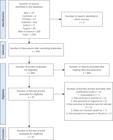
The documents retrieved from the databases (n = 1,036) were entered into the Zotero reference management software (https://www.zotero.org/) for duplicate detection and removal, totaling n = 899 after deletion. This total was then entered into the Rayyan system (https://www.rayyan.ai/), and the duplicate detection function was activated once again. This identified four additional duplicate documents, resulting in a final sample of n = 895. In this same program, the double-masked selection procedure was performed by two independent researchers, eliminating the need for a third party, as conflicts were resolved by consensus.
The inclusion criteria were articles, books, theses, and dissertations: (a) addressing health and violence against migrant women (young women aged over 18, adult women, and older adult women) in Brazil and Brazilian emigrant women abroad; (b) available online and in full; and (c) in Portuguese, English, or Spanish. The exclusion criteria were documents: (a) addressing topics outside the scope of the research; (b) addressing men, women, children, or adolescents; and (c) unavailable in full. Figure 1 Prisma 15 below presents the methodological approaches of the review.
Results
After defining the inclusion of articles for analysis, we created Box 2 with the main results of the research on the expressions of violence and the health of migrants.
General aspects of the selected sample
Twenty-six documents were selected for analysis: (a) 20 articles 11,12,16,17,18,19,20,21,22,23,24,25,26,27,28,29,30,31,32,33; (b) two books 34,35, and c) four theses/dissertations 36,37,38,39. Twenty documents address migrant women in Brazil, of which four studies address migrants of several nationalities 20,21,26,36; three address Bolivian women 24,25,37; three address Venezuelan women 19,22,29; two address Congolese women 38,39; one addresses a migrant from Gambia 17; one addresses Cuban doctors 23; one addresses Haitian women 28; and two address Brazilian internal migrants 18,27.
Regarding the training of health care professionals or health care service for migrants in Brazil, we found two official documents prepared by the Brazilian Ministry of Health in 2012 34,35. We found six articles on Brazilian women abroad, as follows: (a) three about Brazilian women in Portugal 11,12,31; (b) two about Brazilian women in several countries 30,33, and (c) one about Brazilian women in England 32.
Most studies are qualitative, using interviews, focus groups, and analysis of literature and social media. Only one study is quantitative 16, and two present a mixed-methods approach 24,32. Among the regions of the country where the migrants cited in the research reside, we identified: (a) four productions 24,25,36,37 in the city of São Paulo; (b) three in the city of Rio de Janeiro 17,38,39; (c) two in the State of Rio Grande do Sul 18,29; (d) two in the State of Roraima 19,22; (e) two in the State of Paraná 21,26; and (f) one in the states of São Paulo and Paraná 27. As no time frame was established, we observed that 18 documents were published (five about Brazilian women abroad) from 2020 to 2024, while eight productions were published from 2012 to 2019, indicating the growth of the topic of violence against migrant women in Brazil and Brazilian women abroad in the last four years.
Health and migration: migrant women in Brazil and Brazilian emigrant women abroad
This section provides a summary of possible inferences from the sample as to the relation between health and migration, with the following categories being addressed by the group: mental health, implications of forced migration and working conditions for health, impacts of violence on health, sexual and reproductive health, and barriers to access to health care services.
Regarding the health of migrant women in Brazil, we observed that they are heterogeneous and are strictly related to nationality, race/ethnicity, generation, social class, sexual orientation, length of stay in the country, and proficiency in the Portuguese language, profession, and labor relations (formal or informal work), in addition to migratory status. In this sense, based on the idea of the plurality of women and their living conditions, we consider that: “Different peculiarities make them unique and, therefore, demand specific perspectives, both for academic analyses and for their possible consequences in terms of developing public policies related to them” 24 (p. 3).
Migratory processes can involve difficulties in adaptation, social integration, linguistic and social barriers, and decisions that involve having to leave family and children in the country of origin 36. Therefore, it was common to find productions that complexify health aspects, associating them to living conditions, migratory processes, and violence against migrants.
We highlight the productions on the mental health of migrants, as the discussions on psychosocial distress and mental disorders are prominent in the sample 19,21,34,35,38. Evidently, when the study dialogues with intersectionality, mental health appears related to the oppressions related to race, social class, and gender, in addition to the situations of vulnerability of migrants, with their illness expressed by psychosocial distress, anxiety attacks, sleep disorders, headaches, panic syndrome, and the need for psychotropics 36.
All changes in living conditions, social and family support networks, difficulties with language and social integration, tensions in daily life, isolation, irregularity in the migration process, and loneliness experienced can have an impact on health, causing distress and the development of mental disorders 35,36.
Forced displacement exacerbates obstacles to migrants’ mental health maintenance and care: “When we refer to forced migration, we are referring to individuals who are fleeing war, political, religious, or social persecution, or human rights violations” 20 (p. 4). In refugee situations, women tend to develop post-traumatic stress disorder after leaving their countries, being forced to cope with adaptations, socioeconomic vulnerability, and violence 20.
There is social distress, loneliness, anxiety, emotional exhaustion, headaches, insomnia, stress, tachycardia, grieving, anxiety, depression, discouragement, anguish, fears, traumas 38, depression, sadness 29,38, panic syndrome, and feelings of shame, humiliation, and inferiority 29. Forced migration and political persecution against Congolese women exacerbate mental distress and disorders, reinforcing the need for mental health care 39.
Arruda-Barbosa et al. 19 indicate that, in the case of Venezuelan women, the conditions of forced migration, intersected with racial and gender oppression, exacerbate mental disorder and vulnerability to sexually transmitted infections (STIs), primarily when they are engaged in sex work. In some cases, men even offer higher pay for unprotected sex. Furthermore, experiencing violence is linked to developing depression and anxiety.
Forced migration is also experienced by Brazilian women who move internally in pursuit of better living and working conditions, which, combined with structural violence, substandard living conditions, and State negligence, has implications for their physical and mental health, requiring the provision of specific and accessible health care 18. Even when migrants move voluntarily for reasons such as education within Brazil, that is, outside the context of forced migration, they may experience psychological distress, depression, somatization, sadness, low self-esteem, and weight gain, especially if they become mothers, as this can aggravate feelings of fear and loneliness and be related to anxiety disorders 21.
In this review, the migration process is closely related to the health of migrant women, with a significant presence of psychological distress associated with the conditions of migration and life at the destination 16,34. Depending on their migration status, such as in cases of undocumented status, they face even greater barriers to accessing health care, social care, and other services, aggravated by the lack of social and family support 24,35.
The health of migrant women is also interrelated with precarious working conditions, exposure to occupational hazards, unhealthy conditions, workplace violence, and human trafficking for contemporary slave labor and/or sexual exploitation. Depending on their location, whether in rural or urban settings, it is even harder to break free from the human trafficking network, which increases psychological vulnerability and illness 35. It is also common for these women to be unemployed or in the informal sector 36, which further undermines access to care networks.
Migrants report that their routines are exhausting, with an overload of domestic and family care work, preventing them from having leisure time 36. Furthermore, with the advent of the COVID-19 pandemic, Haitian women have spoken about the hardships of balancing family care with work activities, as several schools and daycare centers remained closed, which is closely related to the overload of care work 28.
Congolese women also report difficulties in obtaining daycare places for their children and the burden of the sexual division of care. In addition to being responsible for caregiving, in some cases, they report that they are “at the service” of their partners, in accordance with Christian biblical teachings. At the same time, they consider economic subsistence to be a man’s obligation, although they wish to find a job 38. Still, regarding reproductive labor, Venezuelan women are responsible for family care and feel obligated to perform it 22.
For those who are employed, violence and rights violations are no less prevalent. Bolivian women, for example, are prevented from taking maternity leave and accessing health care services by their employers, as any time away from the machines represents less profit for capitalism. They are also far from support networks and family, making it difficult for them to escape exploitation and violence. Their working conditions often border on slavery, with long, intense workdays and paltry wages 25.
Once they are in sewing workshops, they may find substandard working conditions, such as working in poorly ventilated spaces, mold, and electrical problems (often the same as their housing), triggering respiratory and sleep problems, as well as musculoskeletal disorders due to non-ergonomic machinery and work overload. In addition to using their salaries to support themselves and their children, they also send part of their income to their families back in Bolivia 37.
Migration status can also be used as a reason for low wages 19, labor exploitation, intense working hours, and poor housing 21. This is compounded by the racial division of labor, in which Black women hold positions of low social value, with even lower wages and more precarious activities 38.
Articles about Brazilian women abroad rarely explore health issues, with one of the points raised being the difficulties in accessing health-related services 11,32. When undocumented, they face difficulty accessing social, health, and security services, as well as labor rights, and fear deportation 32.
Fear is a familiar feeling in research on Brazilian women 12,30,32. However, we also observed frustration, humiliation, and sadness 12, and shame, humiliation, and guilt 30,32. If Brazilian women suffer obstetric violence, xenophobia, and racism, they may experience postpartum depression, which impacts self-care and self-esteem 11.
Another issue raised by Brazilian women is that they are socially considered to be those who “bring” sexual diseases to foreign men, in this case, Portuguese men, reiterating the stigmatization and hypersexualization of Brazilian women 31. This objectification and discrimination can cause emotional stress and negative feelings such as guilt and difficulty in reacting to violence in situations of harassment perpetrated by men 30.
We have repeatedly identified barriers to access to health care services in Brazil as a social factor that further undermines the health of migrant women, who are isolated and deprived of the care to which they are entitled 35. Oliveira 36 notes the discrimination and xenophobia perpetrated in health care services. The use of xenophobic expressions by health care professionals during childbirth and the postpartum period has also been found 20,37, as well as cultural and linguistic barriers 37,39. These situations further preclude women from enjoying their right to health and are reasons for not seeking care in situations of domestic violence 25.
Regarding linguistic and cultural approaches to health care, we emphasize the relevance and urgency of providing intercultural mediation programs so migrants can receive quality health care and have their right to health guaranteed 39. It should be noted that one of the reasons for migrating to Brazil is the possibility of using the health care services of the Brazilian Unified Nationl Health System (SUS, acronym in Portuguese), such as prenatal and maternity care, appointments with endocrinologists and gynecologists, and vaccinations 36. Therefore, ensuring health care that considers intercultural dimensions is essential for adequate provision of health care.
However, publications aimed at training workers in Brazil are based on this recognition to build possibilities of access and care 34,35, considering the responsibility of public authorities in tackling violence against migrants, notably human trafficking in the forms of slave labor, commercial sexual exploitation, servile marriage and organ trafficking; this perspective is the foundation for the development of training proposals for health care professionals in the SUS network, who must be aware of the vulnerabilities implied in exposure to “risks of contagion, infections, illnesses, psychological suffering and mental disorders” 35 (p. 35). The significant risk to sexual and reproductive health 35, in addition to the difficulty in accessing services that provide this care, is noted and recognized as a fact in the country 34. Services need to identify and intervene in situations of violence against migrant women 34, recognizing that many of them may suffer institutional violence in health care services 35,36.
Regarding mental health care strategies for migrant women, we found an important mention of the creation of a specific field of knowledge production and care, called “‘migrant psychology’, ‘anthropopsychiatry’, ‘transcultural psychology’, or ‘transcultural psychotherapy’” 35 (p. 49), oriented toward understanding the effects of migration on mental health, distress, and illness 35.
The “psychology of migration” has focused on the analysis of macrosocial factors, lacking greater consideration of other factors that are closer to the individual, implicated in illness, such as subjective, behavioral, sociocultural, and intersubjective factors 35. However, the medicalizing perspective that reduces suffering to the individual and that often guides mental health care practices is criticized.
Violence and migration: migrant women in Brazil and Brazilian emigrant women abroad
This section presents the types of violence against migrants found by the authors of the sample, including gender-based, racial, xenophobic, and institutional violence. Forced migration is understood here as a violent event that makes women vulnerable by forcing them to move from their places of origin due to direct violence, such as gender-based violence, and indirect violence, such as structural violence, which makes certain territories unsustainable for life, including hunger, the presence of armed groups, and climate disasters, among other factors 40.
We should underscore that, although some documents make specific reference to certain types of violence, a range of productions 11,12,19,25,29,31,32,33,36,37,38,39 intersects violence against migrants, highlighting the complexity of oppression in their daily lives.
The study of Barata 11, for example, intersects and racializes obstetric violence, contextualizing the colonial relations that marked Brazil and Portugal. Oliveira 36, drawing on Kimberlé Crenshaw and Carla Akotirene, exposes the oppressions related to race, social class, gender, and nationality, showing that colonial violence, such as racism, xenophobia, and gender inequality, influences the living conditions of migrants and refugees. Hora 39 shows that sexual, obstetric, and armed violence in large urban centers, in addition to institutional racism, can impact the mental health of Congolese women.
Considering the above, we sought to organize the types of violence by their nature and expressions to form a framework that can visualize the social situation of migrant women. Notably, however, the intersection of the types of violence described in each article clearly illustrates the complex submission to xenophobic, misogynistic, racist, and classist power structures, making this framework more akin to a kaleidoscopic myriad. Thus, we note that, despite the movement toward sintering studies, this perspective of violence’s intricate complexity must be considered.
Hunger, as an expression of structural violence, is a fact for millions of women and families. The sample identified migrants as experiencing violence intrinsically linked to the production of vulnerability 19,20,36: “It’s been two days since I’ve eaten, both because of the pain and the lack of money. Sometimes I think that if I had a gun, I would have ended my misery; I can’t bear suffering like this anymore” 19 (p. 4). This excerpt also indicates the interrelationship between hunger and fragile mental health, leading to a severe situation in which the woman interviewed in the study reported suicidal ideation.
Another issue raised, albeit rarely, concerns the direct relation between violence and the health of migrants. Arruda-Barbosa et al. 19 argue that sexual exploitation against Venezuelan women is linked to psychological distress, depression, and anxiety. Migrants who have experienced or are currently experiencing domestic violence report fearing their partners and, when housed in shelters, also fearing other men with whom they share the space, especially when they need to use the restrooms there 22. Domestic violence is also related to depression, stomach pain, shame, fear, stress, and high blood pressure 25. Similarly, depression is interrelated with situations of intimate partner violence 32.
Underreported cases of violence and femicide, as well as errors in data entry, such as in the ethnicity/skin color field, are also a severe problem, especially in smaller municipalities, border municipalities, and municipalities with Indigenous populations 16. In addition, there is underreported violence against migrant women, especially those in situations of sexual trafficking and exploitation and in irregular situations, given that they are often under the control of international criminal networks 34.
Human trafficking for contemporary slave labor (CSL), sexual exploitation, and forced prostitution appear in Brazilian border regions 16,35, with Bolivian women in CSL 37, with the poorest, unemployed, Black, and young women being the most exposed to this violence 35. In situations of sexual exploitation, being a refugee can increase racism, xenophobia, misogyny, and poverty 19.
Several types of gender-based violence were reported in the sample, such as sexual violence 16,20,21,24,29,39 and, rape 19,24, experienced in the workplace 35 and in the context of armed violence in the country of origin 38; psychological violence 20,22,35; obstetric violence 26,37,39; child marriage in the country of origin as a form of submission to patriarchy and gender inequalities 17; in domestic relationships 18,22,29,38, with physical and verbal abuse and psychological threats 22; threats with the use of sharp weapons 19; and physical violence 24,35 in domestic relationships, as noted above and overlapping with sex work 19. Gender inequalities among female university students were also the subject of a study 21.
In addition to the types of violence described above, we found interpersonal racism against Black or Indigenous women 21,29,36,37,39, institutional racism within health care services 38, and racism against Cuban health care professionals 23. In the latter case, racism is expressed when Brazilian women on social media question their profession - are they really doctors? - and they are identified as domestic workers 23. Although not mentioned in the article, we should note the misogyny intersecting with such violence.
The relations between racism, xenophobia, and mental health are addressed in three documents 28,38,39. In summary, we have that: “Regarding the mental health of refugees, mental distress is not restricted to merely psychopathological or biomedical factors; it occurs due to social causes such as precariousness, injustices, losses, family separation, xenophobia, racism, and violence” 39 (p. 194).
That said, we note the intersection of several forms of violence against migrant women in some studies, jeopardizing women’s mental health. Specifically, xenophobia is indicated as a relevant theme in the sample 17,19,20,22,28,29,35,36,37, being experienced directly by migrant women and, in some cases, by their children 37,38.
Political persecution in the country of origin is addressed in the literature 36,38 as one of the possible motivations for emigrating, in addition to structural violence 18,21, which forces them to move to other countries in pursuit of better living conditions 20. Violence is also a motivation for moving, as one woman left her home after suffering physical and moral violence in childhood due to her homosexuality 27.
Patrimonial violence in the workplace 19,37, in refugee shelters 22, and by intimate partners 25 also affects women, as do deportation threats 37. The Brazilian State neglects forced migration due to environmental issues, which creates precariousness in the lives of women who face deterritorialization, debt, and drug trafficking 18, in addition to armed violence in large urban centers, such as Rio de Janeiro 39. Notably, only one more recent study also shows discriminations expressed through ableism, ageism against elderly migrants, religious intolerance, racism, sexism, and heteronormativity 20.
The articles that show the results of studies on Brazilian women emigrants abroad contextualize and historicize coloniality and the representations of Latin American women, especially in five articles 11,12,30,31,33, highlighting the importance of this context and the understanding of the perverse and violent discourses surrounding the bodies of Brazilian women: “The problem lies in the very existence of the prostitute stigma, which, related to coloniality, sexism, and racism, creates roles and imaginaries for women, with Brazilian women being considered ‘sinners, Eves, prostitutes, available, inferior, hypersexualized’. The problem, therefore, lies in the stigma of the ‘colonial body’, the available body, which affects all Brazilian women” 31 (p. 880).
Brazilian women abroad also suffer gender-based violence, such as obstetric violence, with several invasive and non-consensual procedures 11. In this context, there are also reports of racism and xenophobia in daily life 11,30,31,32 and during pregnancy and childbirth. The expressions of gender-based violence experienced by Brazilian women include fetishization, hypersexualization, and objectification, as discussed above 12,30,31,33. Sexual violence is also noted and associated to structural issues, such as machismo and xenophobia, which increase fears and insecurities 30.
Despite oppression and violence, studies also note migrants’ resistance and leadership throughout their journeys. They develop strategies to find employment and care for themselves and their families, seeking to guarantee their rights. They also act in the face of racism, making it clear to perpetrators that they are racist, in addition to recognizing the racial division of labor 38. In the case of Brazilian women in Portugal, they face resistance and promote their agendas through networked social movements, receiving support and participation from other migrants and Portuguese women 31.
Discussion
“You broke the world
<into several pieces and
<called them countries
<claimed ownership over
<what never belonged to them
<and left others with nothing
<− colonized”
Rupi Kaur 41 (p. 137, free translation).
Rupi Kaur’s powerful words 41 resonate in this literature review, and they are associated with the migratory journeys of migrant women in Brazil and Brazilian emigrant women abroad. They face the materialization of historical processes of invasion and colonization that have escalated the countless acts of violence against their bodies. We found that violence against migrants is circumscribed by gender coloniality, in which domination, power relations, and the mandate of masculinities order abuse, psychological violence, rape, and femicide 6. It is also within the colonial pattern of gender that: “(...) Women and their offspring become vulnerable and killable as never before” 6 (p. 24).
The review shows that the violence associated with migration processes represents hardships that Latin American women must face. However, it also symbolizes the creation of resistance translated into actions to confront racism, xenophobia, sexism, gender-based violence, and the sexual and racial division of labor, not always with the help of support networks and state initiatives to guarantee their rights. Forced migration − which includes refugees, internally displaced persons, asylum seekers, stateless persons, and crisis and survival migrants − is characterized by intense human rights violations and violence against women 42. This process is not ended upon arrival in Brazil, as a destination country. Here, they encounter diverse situations of violence that have implications for their lives, health, and work.
Although some studies focus on refugee migratory status and its relation with violence and health 19,20,29,36,38,39, we found that forced migrations appear and are interrelated with violence, especially when they are motivated to emigrate because they are victims of violence.
However, what is striking is the fact that, often, regardless of migratory status (being a refugee or not), violence is recurrent even when they come to Brazil to study 21, affirming that a single analytical category is not sufficient to understand the expressions of violence. Being intersectional and complex, it is not possible to standardize them, as we consider historical perspectives, the intersections of oppressions, whether related to nationality, social class, race/ethnicity, and migratory status, among others 3,7,9.
Although intersectionality is neither shown nor conceptualized in several studies, part of the sample 11,12,19,24,25,29,31,32,33,36,37,38,39 shows compositions of expressions of violence and their relations with structural inequities, whether in the country of origin or Brazil. Thus, as an analytical, theoretical, and methodological tool 7, intersectionality is crucial for studies on migrant women, including for proposing effective public policies that understand them as protagonists of their very displacements 9.
Studies show an intersection between living conditions and productive work - exploitation and precarious, often unhealthy and poorly paid activities - and reproductive conditions, with domestic and care work overload, and the mental health of migrant women, who experience accumulated distress, health symptoms, and illnesses. Different forms of violence intersect these processes, further compromising their lives. We found some extreme cases with women desiring to end their lives as a way to end the distress 19, even when femicide does not reach them first 16.
Regarding the work of these migrants, the review indicates that several experiences resemble or are expressions of conditions analogous to contemporary slavery and sexual exploitation, influencing their physical or mental illnesses in the face of labor exploitation and workplace violence. As women socially responsible for care work, they tend to care for their children and families without support networks or the Brazilian State, raising their children, for example, in workshops. This setting and family life intertwine, especially in the situation of those who work in sewing workshops 43.
By correlating mental distress and illness with women’s life factors, these studies build a perspective in which mental health is deindividualized. That is, rather than being understood as a solely and exclusively personal attribute, it is considered socially determined by life conditions. In other words, living conditions, work, housing, food, movement through spaces, protection, documentation, access to services, and exposure to violence, such as racism and xenophobia, constitute a framework of social determination of the health-disease process that degrades and weakens the mental and physical health of migrant women.
If we consider the subjective and material place through which the women in this sample circulate, who are mostly Latin American and seek protection and better living conditions for themselves and their families, we must add the weight of the colonial legacy that subjugates them in a matrix of power that fosters and reproduces social inequality and the spaces they are allowed to occupy, especially when they accumulate marks of subjection 44. In other words, race, gender, sexuality, social class, and place of origin hierarchize and increase vulnerabilities the further these women move away from the hegemonic individual form, notably in societies with racist, sexist, patriarchal, and xenophobic foundations.
According to Lélia Gonzalez 45, these are indelible marks of the construction of Brazil, which encompass all spheres of individual and collective life, that is, they have direct and indirect effects on individuals and communities, embedding oppressions that foster stereotypes that naturalize sexual exploitation, unhealthy and poorly paid work and the overload of reproductive work for some groups of women, notably Black women.
As we consider that social relations and colonialist capitalist forms influence the living conditions of migrants 9,46, it is not possible to homogenize their experiences or disregard the contradictions between the advances and setbacks in their displacements. As for mental health, in addition to the experiences of migratory processes, there is a set of situations, such as economic ones, lack of documentation, lack of social and family support, etc., that can be related to the demands for mental health care. This fact is not always understood by health care services and professionals, who may associate these plural and singular histories with a pathologizing perspective 46.
The contradictions in migrants’ experiences with Brazilian health care services are striking. While some studies praise the SUS as a valuable path to the right to health, countless barriers are identified. Access to and retention in health care networks are influenced by linguistic barriers, institutional violence, racism, and xenophobia experienced within services.
Thus, health care professionals require training to care for migrants, which is one of the recommendations for health care policies in the SUS. A recent technical note from the Brazilian Ministry of Health on the care of migrants in primary health care states that, to guarantee health care for this population, it is necessary to respect their culture and language, provide care even when they lack personal documents, and provide documents in multiple languages, among other principles 47.
Culturally sensitive and truly caring health care practices need to recognize and adopt the theoretical and methodological perspective of intersectionality 7 in order to understand health and illness processes more broadly. In mental health, this perspective is essential to escape a reductionist determinism that holds individuals responsible for their health, necessarily implying socially (re)produced macro-, meso-, and micropolitical factors. It also provides important support for public initiative, based on the recognition and assumption of responsibility for training attentive, sensitive, receptive, and more effective services and professionals regarding the care and consideration of migrant women, tackling the violence that affects them and protecting their physical and mental health.
Given the complexity of the social and historical relationships involving migrants, the proposal for intercultural care in the health field values reflections on the sociocultural practices and processes existing among people and groups, understanding their heterogeneities and the influences of social inequalities, racism, and structural violence on health care. It is fundamental that public health policies ensure greater popular participation for their effective implementation 46,48.
Based on this literature review, we suggest further theoretical and methodological exploration of the agency of migrants, who, day after day, in their social movements, seek the right to health and work, free from violence and certain that they are the protagonists of their own stories, as affirmed by research on intersectionality and Black and/or decolonial feminisms 6,7,9,45.
Another approach presented in the review concerns Brazilian women abroad. As feminists, we are struck by the fact that most articles refer to the fetishization and hypersexualization of Brazilian women in the Global North. Being far from home, in a different culture, living in a territory where the coloniality of gender was born 6, makes us reflect on the distress and challenges women face in their daily struggle for better living conditions for themselves and their families. Furthermore, this context raises questions about public health policies geared toward them: What are these policies? Who provides health care services, given their role as migrants? On the other hand, we understand that their resistance movements echo throughout the world: “Their voices speak of experiences of being expatriate women, intertwined with macrosocial structures, and connected to past struggles, revisited from a different feminist perspective, one that has turned the world upside down” 33 (p. 23).
Despite the heterogeneous contexts of Brazil and the countries of the Global North to which Brazilian women migrate, we believe that one of the differences lies in the fact that our compatriots do not always have access to public health care services, as is the case with SUS, which, despite its challenges, serves part of the migrant population in the country. Among the similarities, violence undoubtedly stands out, highlighting the need for care throughout their migrations.
One limitation of this study is its lack of quality assessment of the research presented here. The limited literature on Brazilian emigrant women abroad also limited its reach beyond Portugal and England. However, this path could be explored in future research, expanding consideration to the violence that affects Brazilian women, especially when seeking new opportunities in the Global North.
Final considerations
The research presented highlights intersectional violence against migrant women in Brazil and Brazilian emigrant women abroad, understanding that generalizations are impossible because their lives and stories are diverse. However, it shows that violence is related to gender, race, social class, nationality, generation, disability, and migratory status, as indicated by intersectional studies that rightly note the intricate interplay of oppressions that make them vulnerable.
Regarding health and illness processes, we found that living and working conditions, food security, housing, mobility and access (or lack thereof) to health care and social care services, and situations of violence (racism, xenophobia, gender-based violence, ageism, political persecution, ableism, among others) are interrelated with physical and mental illnesses, which often impact the personal and familial well-being and care.
The dynamics of household work, which has historically been the responsibility of women, especially Black and Indigenous women, was one focus presented in the review. Therefore, unpaid or underpaid work performed by women should be taken into account when considering the health of migrant women, as work overload is a fact. Despite the challenges posed by subjection to oppression and violence systems, the review shows resistance and protagonism among migrants throughout their journeys. These strategies are designed to guarantee their rights as migrants and women. In this regard, they are not alone. Through collective movements, they confront and embrace resistance to colonial violence in a world where they “claim ownership over what never belonged to them and leave others with nothing” as stated by Rupi Kaur 41 (p. 137, free translation).
-
Data availability
The databases used in the study, including extraction codes, analyses, and results, are available in the repository: (https://osf.io/c9vba/overview).
Acknowledgments
This study was funded by the Brazilian Ministry of Health (Department of Science and Technology) and the Brazilian National Research Council (CNPq).
References
-
1 Cavalcanti L, Oliveira T, Silva S. As dinâmicas migratórias nas macroregiões do Brasil. Relatório Anual 2024. https://portaldeimigracao.mj.gov.br/images/Obmigra_2020/OBMIGRA_2024/Relat%C3%B3rio_Anual/RELATORIO_ANUAL_24.pdf (accessed on 22/Aug/2025).
» https://portaldeimigracao.mj.gov.br/images/Obmigra_2020/OBMIGRA_2024/Relat%C3%B3rio_Anual/RELATORIO_ANUAL_24.pdf - 2 Dornelas PD, Ribeiro RGN. Mulheres migrantes: invisibilidade, direito à nacionalidade e a interseccionalidade nas políticas públicas. O Social em Questão 2018; 21:247-64.
- 3 Collins PH. Intersecções letais: raça, gênero e violência. São Paulo: Boitempo; 2024.
- 4 Schwinn SA. Gênero, raça e origem nacional: pensar a feminização das migrações internacionais a partir da interseccionalidade. In: ProMigra, editor. III Colóquio ProMigra de Pesquisa em Migração e Refúgio: desafios e perspectivas das migrações e refúgio na atualidade. São Paulo: ProMigra; 2024. p. 104-10.
- 5 Vázquez Laba V, Risquez Buonaffina M, Perazzolo R, Giménez Mercado C. Resistencias desde los márgenes: la experiencia migratoria de las mujeres como forma de agencia social. La Ventana Revista de Estudios de Género 2014; 5:59-87.
- 6 Segato R. Cenas de um pensamento incômodo: gênero, cárcere e cultura em uma visada decolonial. Rio de Janeiro: Bazar do Tempo; 2022.
- 7 Collins PH, Bilge S. Interseccionalidade. São Paulo: Boitempo; 2021.
- 8 Romano AQ, Pizzinato A. Migração de mulheres para o Brasil: interseções de gênero, raça/etnia e classe. Trabajo Social 2019; 21:197-213.
- 9 Andrade CB. Trabalhadoras migrantes latino-americanas e violências: rumo a uma visão interseccional? Ciênc Saúde Colet 2023; 28:3279-85.
- 10 Cespedes B, Macedo RM, Silveira C, Coviello DM. Acesso à saúde por mulheres migrantes internacionais e refugiadas no município de São Paulo no contexto da pandemia de Covid-19. Rev Med (São Paulo) 2024; 103:e-215894.
- 11 Barata C. "Mix of races, bad uterus": obstetric violence in the experiences of Afro-Brazilian migrants in Portugal. Societies 2022; 12:78.
- 12 França T, Oliveira SPD. Mulheres brasileiras imigrantes como estraga-prazeres: revelando racismo no "amigável" Portugal. Cadernos Pagu 2021; (63):e216301.
- 13 Brasil. Lei nº 13.445, de 24 de Maio de 2017. Institui a Lei de Migração. Diário Oficial da União 2017; 25 mai.
-
14 Peters M, Godfrey C, McInerney P, Munn Z, Tricco A, Khalil H. Scoping reviews. In: Aromataris E, Lockwood C, Porritt K, Pilla B, Jordan Z, editors. JBI manual for evidence synthesis. https://jbi-global-wiki.refined.site/space/MANUAL/355862497/10.+Scoping+reviews (accessed on 11/Jun/2025).
» https://jbi-global-wiki.refined.site/space/MANUAL/355862497/10.+Scoping+reviews - 15 Tricco AC, Lillie E, Zarin W, O'Brien KK, Colquhoun H, Levac D, et al. PRISMA extension for scoping reviews (PRISMA-ScR): checklist and explanation. Ann Intern Med 2018; 169:467-73.
- 16 Meneghel SN, Danilevicz IM, Polidoro M, Plentz LM, Meneghetti BP. Feminicídios em municípios de fronteira no Brasil. Ciênc Saúde Colet 2022; 27:493-502.
- 17 Balestro AC, Pereira T. Língua e cultura na feminização das migrações no Brasil. Trabalho em Linguística Aplicada 2019; 58:779-94.
- 18 Calderón Uribe M, Hamann C, Pizzinato A. Desplazamiento forzado en Brasil: experiencias de mujeres atendidas por la asistencia social. Revista de Psicologia 2021; 39:881-908.
- 19 Arruda-Barbosa L, Menegatti MS, Fonseca RMGS, Oliveira MAC. Violências sofridas por mulheres imigrantes venezuelanas profissionais do sexo: um olhar interseccional. Rev Esc Enferm USP 2024; 58:e20230282.
- 20 Fernandes JDM, Onuma FMS. Mulheres em situação de refúgio: as mais vulneráveis dentre as vulneráveis, segundo a teoria da reprodução social. Cad EBAPEBR 2024; 22:e2023-0124.
- 21 Ferreira AVS, Nascimento VN, Borges LM. A saúde mental de mulheres imigrantes na universidade. Interação em Psicologia 2022; 26:209-20.
- 22 Makuch MY, Osis MJD, Becerra A, Brasil C, Amorim HSF, Bahamondes L. Narratives of experiences of violence of Venezuelan migrant women sheltered at the northwestern Brazilian border. PLOS One 2021; 16:e0260300.
- 23 Pinto JP, Amaral D. Corpos em trânsito e trajetórias textuais. Revista da Anpoll 2016; 1:151-64.
- 24 Santos J, Drezett J, Alves AL. Características sociodemográficas de migrantes bolivianas com gestação decorrente de violência sexual atendidas em serviço público de referência para abortamento legal, São Paulo, Brasil, 2002-2014. Reprod Clim 2015; 30:25-32.
- 25 Serrano S, Martin D. Violência doméstica e saúde de mulheres migrantes bolivianas moradoras em oficinas domiciliares de costura na Grande São Paulo. REMHU 2022; 30:207-26.
- 26 Supimpa LS, Souza SRRKD, Prandini NR, Andreatta D, Trigueiro TH, Paviani BA. Experiência de mulheres imigrantes no processo de parto e nascimento. Rev Esc Enferm USP 2023; 57(spe):e20220444.
- 27 Silva LC, Justo JS. Errância e nomadismo feminino: o caso de duas mulheres trecheiras. Psicol Soc 2020; 32:e218518.
- 28 Souza JB, Heidemann ITSB, Pitilin EB, Bitencourt JVOV, Vendruscolo C, Brum CN. Determinantes sociais da saúde de mulheres imigrantes haitianas: repercussões no enfrentamento da COVID-19. Rev Eletrônica Enferm 2020; 22:64362.
- 29 Gehlen RGS, Langendorf TF, Vieira LB, Padoin SMDM. Vulnerabilidades de mulheres venezuelanas refugiadas: violências e relações sociais interseccionais. Rev Esc Enferm USP 2023; 57(spe):e20220430.
- 30 Chedid YD, Hemais MW. Subalternização de mulheres brasileiras em contextos de turismo: uma análise pós-colonial com base em Spivak. Revista Brasileira de Pesquisa em Turismo 2022; 16:e-2357.
- 31 Gomes MS. O imaginário social <mulher brasileira> em Portugal: uma análise da construção de saberes, das relações de poder e dos modos de subjetivação. Dados Rev Ciênc Sociais 2013; 56:867-90.
- 32 McIlwaine C, Evans Y. Navigating migrant infrastructure and gendered infrastructural violence: reflections from Brazilian women in London. Gender, Place & Culture 2023; 30:395-417.
- 33 Pelúcio L. Vozes do sul global: a midiatização dos feminismos em um podcast de mulheres brasileiras pelo mundo. Sex Salud Soc (Rio J.) 2023; (39):e22302.
- 34 Ministério da Saúde; Universidade de Brasília. Saúde, migração, tráfico e violência contra mulheres: o que o SUS precisa fazer. Brasília: Ministério da Saúde; 2013. (Caderno Pedagógico).
- 35 Departamento de Ações Programáticas Estratégicas, Secretaria de Atenção à Saúde, Ministério da Saúde; Departamento de Serviço Social, Universidade de Brasília. Saúde, migração, tráfico e violência contra mulheres: o que o SUS precisa saber. Brasília: Ministério da Saúde; 2013.
- 36 Oliveira LC. Os efeitos dos processos migratórios na saúde mental de mulheres imigrantes ou refugiadas a partir de uma análise interseccional [Master's Thesis]. Ribeirão Preto: Escola de Enfermagem de Ribeirão Preto, Universidade de São Paulo; 2022.
- 37 Avellaneda Yajahuanca RS. A experiência de gravidez, parto e pós-parto das imigrantes bolivianas e seus desencontros na cidade de São Paulo - Brasil [Doctoral Dissertation]. São Paulo: Faculdade de Saúde Pública, Universidade de São Paulo; 2015.
- 38 Santos P. Narrativas femininas e saúde mental: a saída da República Democrática do Congo e o refúgio no Rio de Janeiro [Master's Thesis]. Rio de Janeiro: Programa de Pós-graduação em Saúde Coletiva, Universidade do Estado do Rio de Janeiro; 2019.
- 39 Hora TD. Diferentes dimensões do acesso de refugiadas congolesas à atenção integral à saúde da mulher no município do Rio de Janeiro [Doctoral Dissertation]. Rio de Janeiro: Departamento de Serviço Social, Pontifícia universidade Católica do Rio de Janeiro; 2023.
- 40 Ribeiro FML, Andrade CB. Mulheres, deslocamentos climáticos e violências: perspectivas para o cuidado em saúde. Ciênc Saúde Colet 2026; 31:e11972024.
- 41 Kaur R. O que o sol faz com as flores. São Paulo: Editora Planeta do Brasil; 2022.
- 42 Moreira JB, Sala JB. Migrações forçadas: categorização em torno de sujeitos migrantes. In: Jubilut L, Frinhani FM, Lopes RO, editors. Migrantes forçados: conceitos e contextos. Boa Vista: Editora da UFRR; 2018. p. 15-42.
- 43 Andrade C, Alves E, Constantino P. A saúde por um fio? O trabalho escravo contemporâneo e migração na indústria da moda e confecção. Serviço Social e Saúde 2023; 21:e022010.
- 44 Mignolo WD. Colonialidade: o lado mais escuro da modernidade. Rev Bras Ciênc Soc 2017; 32:e329402.
- 45 Gonzalez L. Por um feminismo afro-latino-americano: ensaios, intervenções e diálogos. Rio de Janeiro: Jorge Zahar; 2020.
- 46 Pussetti C. Identidades em crise: imigrantes, emoções e saúde mental em Portugal. Saúde Soc 2010; 19:94-113.
-
47 Coordenação-Geral de Saúde da Família e Comunidade; Coordenação do Acesso e Equidade, Departamento de Estratégias e Políticas de Saúde Comunitária, Secretaria de Atenção Primária em Saúde, Ministério da Saúde. Nota Técnica nº 8/2024-CAEQ/CGESCO/DESCO/SAPS/MS. https://www.gov.br/saude/pt-br/centrais-de-conteudo/publicacoes/notas-tecnicas/2024/nota-tecnica-no-8-2024.pdf (accessed on 11/Jun/2025)
» https://www.gov.br/saude/pt-br/centrais-de-conteudo/publicacoes/notas-tecnicas/2024/nota-tecnica-no-8-2024.pdf - 48 Menéndez EL. Salud intercultural: propuestas, acciones y fracasos. Ciênc Saúde Colet 2016; 21:109-18.
The databases used in the study, including extraction codes, analyses, and results, are available in the repository: (https://osf.io/c9vba/overview).