
 Executive functions in adults: scoping review of computerized neuropsychological batteries
ABSTRACT.
Computerized assessment of executive functions (EF) has the potential to increase access to more cost-effective diagnostics, considering the relevance of these skills for quality of life and adaptive functioning.
Objective: This study conducted a scoping review to identify computerized fixed batteries for assessing EF in adults.
Methods: A systematic search was conducted in the United States National Library of Medicine (PubMed), Scopus, Web of Science, Cochrane Library (Reviews), PsychNet, and Scientific Electronic Library Online (SciELO) databases, following the Preferred Reporting Items for Systematic reviews and Meta-Analyses Extension for Scoping Reviews (PRISMA-ScR).
Results: A total of 15,704 records were identified, of which 62 studies met the eligibility criteria. In these, 42 batteries were mapped, which together encompassed 174 tasks associated with executive domains. No battery exclusively assesses EF, and most were developed for computerized application in a supervised face-to-face format. It was also observed that there was no explicit theoretical basis in the construction of the instruments, evidencing important conceptual gaps.
Conclusion: There are fixed computerized batteries applicable to the assessment of EF in adults, although not specific, reflecting the advance of digitalization in neuropsychological practice. The findings highlight the need for cross-cultural adaptations and psychometric validation studies that strengthen the theoretical basis and diagnostic accuracy of these instruments.
Keywords
Neuropsychological Tests; Telediagnostics; Cognition; Executive Function
RESUMO.
A informatização da avaliação das funções executivas (FE) tem potencial para ampliar o acesso a diagnósticos com melhor relação custo-benefício, considerando a relevância dessas habilidades para a qualidade de vida e o funcionamento adaptativo.
Objetivo: Este estudo realizou uma revisão de escopo com o objetivo de identificar baterias fixas informatizadas voltadas à avaliação das FE em adultos.
Métodos: A busca sistemática foi conduzida nas bases United States National Library of Medicine (PubMed), Scopus, Web of Science, Cochrane Library (Reviews), PsychNet, and Scientific Electronic Library Online (SciELO), seguindo as diretrizes do Preferred Reporting Items for Systematic reviews and Meta-Analyses Extension for Scoping Reviews (PRISMA-ScR).
Resultados: Foram identificados 15.704 registros, dos quais 62 estudos estudos atenderam aos critérios de elegebilidade. Nestes, foram mapeadas 42 baterias, que, em conjunto, englobaram 174 tarefas associadas a domínios executivos. Nenhuma bateria avalia exclusivamente FE, e a maioria foi desenvolvida para aplicação informatizada em formato supervisionado presencial. Observou-se, ainda, ausência de fundamentação teórica explícita na construção dos instrumentos, salientando lacunas conceituais importantes.
Conclusão: Existem baterias fixas informatizadas aplicáveis à avaliação de FE em adultos, ainda que não específicas, refletindo o avanço da digitalização na prática neuropsicológica. Os achados ressaltam a necessidade de adaptações transculturais e estudos de validação psicométrica que fortaleçam a base teórica e a precisão diagnóstica desses instrumentos.
Palavras-chave:
Testes Neuropsicológicos; Telediagnóstico; Cognição; Função Executiva
INTRODUCTION
Executive functions (EF) encompass a broad range of brain processes that, despite conceptual disagreements in the literature, are widely understood as contributing to intentional and controlled cognitive functioning and goal-directed behavior1. There is also consensus that the prefrontal cortex plays a predominant role (relative to other brain regions) in the emergence of these functions2. The implications of EF extend across various domains, including Education (mediating teaching-learning processes), Clinical Psychology (as a foundation for mental disorders), and Neuropsychology (with deficits associated with diverse neurological syndromes), highlighting their importance across different populations and contexts3.
The assessment and diagnosis of EF have increasingly become the focus of research due to their verified associations with mental and physical health conditions, as well as sociodemographic factors4,5. Identifying and intervening in EF deficits may slow the progression of related pathologies, underscoring the importance of thorough cognitive evaluations6. However, assessment may be hindered by the diversity of definitions attributed to the construct, often resulting in the measurement of distinct cognitive functions based on varied epistemological frameworks, which can limit understanding of executive functioning7.
The multiplicity of models and theories explaining EF creates a fertile conceptual field but also generates methodological tensions in assessment4. Some models stress inhibitory control1, others propose relatively independent components4,5, while integrative approaches suggest a general supervisory system3. This heterogeneity means neuropsychological instruments, though valid within their paradigms, may not align or provide a coherent picture of executive capacities when based on different frameworks. The lack of consensus can lead to diagnostic fragmentation or redundant measures, weakening interpretative foundations4.
Therefore, it may be helpful to consider explicitly which models guide the instruments chosen in an assessment battery. Tasks such as the Stroop, Tower of London (ToL), or Wisconsin Card Sorting Test embody paradigms that shaped later tests, many of which, despite the similar formats, reflect distinct conceptions of EF4-6, such as seeing ToL as an assessment of either planning, cognitive flexibility or Supervisory Attentional System (SAS)1,7. A consistent neuropsychological evaluation must balance theoretical coherence with methodological diversity, selecting tools that capture the multidimensional complexity of EF while preserving a clear epistemological basis for solid, reproducible, and scientifically comparable interpretations7. Structured tests that cover different EF domains (componential models)8 tend to allow for more accurate diagnoses and support personalized intervention strategies based on the specific subsystems of interest9. The increasing reliance on cognitive test batteries to assess EF is mainly driven by the recognition that isolated tests often fail to capture the full spectrum of these complex cognitive processes10. Comprehensive tools designed to screen various EF not only enhance diagnostic accuracy but also assist in monitoring cognitive changes over time, providing valuable information to clinicians in the management of cognitive deficits6.
As a result, innovative technologies, such as computerized cognitive batteries aimed at assessing multiple EF domains, have been increasingly incorporated into both research and clinical practice11. Among the main advantages of computerized assessment are: increased measurement precision, with reduced errors from manual calculations; the ability to obtain complex variables such as reaction time, which are difficult to measure in traditional settings; greater participant engagement due to familiarity with digital tools; and optimization of professionals’ time, thanks to automated scoring and recording processes, which streamline subsequent stages of evaluation12.
In the Brazilian context, some computerized instruments for assessing EF are already available, such as tasks based on the Matching Figures paradigm13 and the ToL task14. However, these instruments typically involve multiple cognitive processes simultaneously, limiting their evaluative specificity. Furthermore, a search conducted in March 2024 in the Psychological Testing Assessment System (Sistema de Avaliação de Testes Psicológicos — SATEPSI) of the Federal Council of Psychology (Conselho Federal de Psicologia — CFP) found no approved computerized instruments for use with Brazilian adults that are based on componential models of EF, models that are widely cited in the international literature5.
Given this context, the present study aims to investigate the existence of fixed computerized batteries, available internationally, for the assessment of EF in adults. The study is based on the hypothesis that such batteries are indeed available internationally, considering the growing body of evidence on the advantages of computerized assessment in neuropsychological contexts, particularly in terms of precision, efficiency, and comprehensiveness of cognitive measurement.
METHODS
To achieve this objective, a scoping review of the current literature on fixed computerized batteries designed to assess EF in adults was conducted. The search, selection, and data extraction procedures followed the guidelines of the Preferred Reporting Items for Systematic reviews and Meta-Analyses Extension for Scoping Reviews (PRISMA-ScR)15.
Information sources and search strategies
In February 2025, a search was conducted in the databases United States National Library of Medicine (PubMed), Scopus, Web of Science, Cochrane Library (Reviews), PsycNET, and Scientific Electronic Library Online (SciELO). To ensure maximum comprehensiveness, no language restrictions were applied. A time frame starting from 2015 was established to include recent studies that are potentially grounded in updated theoretical models of EF. In all databases — except SciELO — the following descriptors were used: (battery OR questionnaire OR test* OR assessment* OR evaluation OR task* OR instrument* OR inventory* OR screening* OR diagnosis*) AND ("executive functions*" OR executive* OR dysexecutive*) AND (computerized* OR "computerized adaptive testing*" OR "adaptive testing*" OR digital OR remote OR online). In SciELO, equivalent descriptors in Portuguese were applied. The search was conducted in the title, abstract, and keyword fields. Additionally, reverse citation tracking was used by examining the reference lists of included studies to identify other potentially eligible works. Information about the fixed batteries mentioned in the selected studies was gathered by consulting the original articles related to the development of each instrument or those reporting the first available psychometric evidence. In cases where the cited reference did not correspond to the initial publication of the instrument, internal citations within the articles were reviewed to identify and, whenever possible, use the oldest accessible version for the systematic description of each battery.
Eligibility criteria
empirical studies;
adult participants (aged ≥ 18 years);
use of fixed batteries aimed at assessing EF (even if also assessing other cognitive functions);
computerized administration of the battery;
use of terminology such as "executive function(s)," "executive control," "control," "working memory," "updating," "cognitive flexibility," "shifting," "inhibitory control," "inhibition," "reasoning," "planning," or "problem solving" to describe at least one construct within the battery; and
scientific articles (i.e., journal papers), based on the rationale that other materials — such as public presentations — may not fully describe all instruments used due to space limitations, and books are often not peer-reviewed.
use of virtual reality;
no quantitative analysis;
fixed batteries in which one or more tests or tasks were not administered or were substituted; d) non-article texts (e.g., book chapters, brief reports, editorials);
paper-and-pencil tests administered digitally without psychometric adaptation;
unavailable full text;
non-fixed batteries (i.e., arbitrary test selection by researchers rather than standardized or fixed test sets); and
studies with participants aged ≤ 18 years.
Data extraction and analysis
Sample: study participants;
Phenomenon of interest: EF and the operational definitions adopted;
Design: study design;
Evaluation: the fixed battery used;
Research type: type of study. Descriptions of "Evaluation" and "Research type" components followed Kapoor’s classification
target population;
functions assessed;
administration features (device used, format of instructions, responses, and scoring procedures, as well as tasks related to EF).
The analysis consisted of establishing the frequency of the extracted information.
Given that definitions of what constitutes EF vary among authors, it was anticipated that some tasks or tests from the batteries might be classifiable as EF components under a particular theoretical model, even if not explicitly labeled as such by the studies. Therefore, the tasks or tests within the identified fixed batteries were considered for this review if they aligned with the operational definitions of executive assessment paradigms proposed by Global Executive Function Initiative (GEFI)7, Diamond1, and Dias and Malloy-Diniz8. These operational definitions are detailed in Supplementary Material 1.
The Global Executive Function Initiative (GEFI) represents an international effort to standardize terminology and methodology in EF research, uniting researchers from diverse contexts and promoting widely recognized conceptual agreements7;
Diamond’s model5 is the most frequently cited theoretical reference in contemporary EF studies and is widely adopted as a classificatory framework5;
The model proposed by Dias and Malloy-Diniz8, presented in a reference work in Portuguese, provides theoretical and methodological contextualization for specific sociocultural realities, facilitating the inclusion of research paradigms applicable to the Brazilian population.
This adaptation is particularly important given the well-established intercultural variability of executive functioning, which demands instruments that are sensitive to the specific characteristics of different populations18. Thus, these three frameworks were considered complementary and representative of a conceptual gold standard for defining and classifying tasks as part of the executive function domain.
Procedure
Identification;
Screening;
Inclusion.
In Phase 1 (Identification), the database search was performed with the software Zotero™, which was used to organize and catalog the retrieved records. In Phase 2 (Screening), records that did not include the term "battery" in the full text were excluded using automated search tools within the software (Level 1 Screening). Additionally, documents that were not scientific articles — such as reviews, editorials, books, or conference proceedings — were excluded (Level 2 Screening). In Phase 3 (Inclusion), the full texts of the remaining studies were assessed for compatibility with the predefined eligibility criteria. The search, data extraction, and initial analysis were carried out by one of the authors. A second author reviewed all stages, including the inclusion criteria and the extracted data. Discrepancies between reviewers were discussed until consensus was reached. All extracted information from each study was recorded as notes within the corresponding Zotero™ files, facilitating traceability and systematization of the data during the analysis phases.
RESULTS
The final sample consisted of 66 reviewed studies. Figure 1 presents the flowchart of the record selection process. Supplementary Material 2 describes the characteristics of the included studies10,19-82. Among the included studies, 42 fixed batteries were identified containing tasks or tests that could be classified under paradigms associated with executive functions (EF). Supplementary Material 3 presents the main characteristics of these instruments, based on the version described in the oldest study located for each battery10,10,10,10,10,10,10,10,10,10,10,10,10,10,10,10,10,10,10,10,10 The final sample consisted of 66 reviewed studies. Figure 1 presents the flowchart of the record selection process. Supplementary Material 2 describes the characteristics of the included studies10,19-82. Among the included studies, 42 fixed batteries were identified containing tasks or tests that could be classified under paradigms associated with executive functions (EF). Supplementary Material 3 presents the main characteristics of these instruments, based on the version described in the oldest study located for each battery20,21,24,28,30,31,35,39,45,48,50,54,57,59,61,62,66,68,73-76,78-80,83-97. The distribution of publications of the batteries by year reveals one battery published in 1998, 2001, 2003; two in 2005; one in 2006, 2012 and 2013; three in 2014; four in 2015; two in 2016, 2017 and 2019; three in 2020; two in 2021; four in 2022; three in 2023; and nine in 2024. Of the 42 batteries identified, only one was originally developed for use with both children/adolescents and adults (1/42; 2.4%). The remaining batteries were designed exclusively for adults and elderly (aged 18 years or older; 41/42; 97.6%). Furthermore, it was noted that four of these batteries are not recommended for use with older adults (individuals under the age of 60; 4/42; 9.5%).
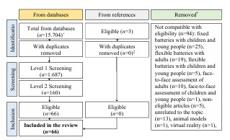
Preferred Reporting Items for Systematic reviews and Meta-Analyses (PRISMA) flowchart for identification, selection and inclusion of studies.
Notes: *Removed as they are not compatible with eligibility at the Inclusion stage; +United States National Library of Medicine — PubMed (n=3,578), Scopus (n=4,409), Web of Science (n=4,578), Cochrane Library (Reviews) (n=53), PsychNet (n=3,079) e Scientific Electronic Library Online — SciELO (n=7); ‡Records were already present among the database records.
None of the batteries consisted exclusively of tasks or tests classifiable as EF according to the method used in this review; all also included tasks not classifiable under the selected paradigms. Regardless of classification, none of the batteries claimed — based on their own terminology and definitions — to assess EF exclusively, but rather assessed EF alongside other cognitive abilities. Most batteries were originally applied with participants recruited in the United States (15 out of 42 batteries; 35.7%). Following in frequency were batteries recruiting from the United Kingdom (three batteries); Canada (three); China (three); France (three; 7.1%); Austria (two); South Korea (two; 4.8%); the United States and South Africa; Israel and Canada; Germany; Australia; Spain; Greece; Japan; the Netherlands; and Sweden (one battery each; 2.4%).
Most batteries were applied using computers (18/42; 42.9%), followed by those administered on tablets (9; 21.4%), touchscreen computers (four), smartphones (three), tablet or computer (three; 7.1%), tablet or touchscreen computer, tablet/smartphone/computer (two each; 4.8%), and one via tablet or smartphone (2.4%). The majority of batteries were initially designed for in-person application with professional supervision (24; 57.1%); 11 were self-administered (26.2%); five offered both in-person supervised and self-administered modes (11.9%); one provided either supervised synchronous remote administration or self-administration; and one provided supervised synchronous remote administration only (2.4%). Most batteries (17) presented on-screen written instructions without voice guidance (40.5%); other less common modes included on-screen instructions narrated simultaneously by the software (10; 23.8%), software-only narration (six; 14.3%), oral explanation by the professional during in-person administration (five; 11.9%), example videos (one; 2.4%), and mixed presentation (e.g., written for nonverbal tasks and narrated for verbal tasks) (two; 4.8%). One battery did not report how instructions were provided (2.4%).
Thirty-two batteries required direct motor responses on the device (76.1%); seven required verbal responses for verbal tasks and manual responses for nonverbal tasks (16.7%); one required manual responses and eye-tracking in one of its tasks; another involved responses captured by camera; and one did not report the response mode in its study (2.4%). Finally, 35 batteries generated results using automated scoring (83.3%); three used manual scoring (7.1%); two applied manual scoring for verbal tasks and automated scoring for nonverbal ones; and two did not report their scoring procedures (4.8%). None of the psychometric studies located described which EF model guided the selection of tasks for assessing EF.
Across the instruments, 176 tasks or tests were identified as being designed to assess executive functions (as categorized per the method of this review). Of these, 32 targeted inhibitory control, with the most common paradigm being Go/No-Go (16/32; 50%), followed by Stroop (14/32; 43.8%), Delay of Gratification (2/32; 6.3%), and Antisaccade (1/32; 3.1%). Regarding tasks with simultaneous emphasis on inhibitory control and cognitive flexibility, only one was found, developed under the Simon Effect paradigm. For cognitive flexibility, 54 tasks were identified, most of which followed the task-switching paradigm (29/54; 53.7%), followed by verbal fluency (14/54; 25.9%), Flanker (5/54; 9.3%), Dimensional Change Card Sort (DCCS) (4/54; 7.4%), and Design Fluency (2/54; 3.7%). For working memory, 31 tasks were found, of which 13 were based on the Digit Span paradigm, and 13 on Corsi Blocks (41.9%). Under the Continuous Performance Test (CPT) paradigm, 24 tasks were found that emphasized both working memory and inhibitory control. Thirteen tasks assessed working memory and cognitive flexibility simultaneously, under the Digit Symbol Substitution Test (DSST) paradigm. A total of 15 tasks were identified as targeting higher-level executive functions, most commonly based on the SAS paradigm (9/15; 60%), followed by Progressive Matrices (5/15; 33.3%) and Problem Solving (1/15; 6.7%). Supplementary Material 4 presents the resulting tasks.
DISCUSSION
The present study aimed to identify internationally published fixed computerized batteries designed to assess EF in adults. The results revealed the absence of batteries built exclusively for this purpose, according to the criteria established by frameworks considered gold standards for the conceptualization and evaluation of EF. However, instruments were identified that, although broad in cognitive domains, include tasks that are classifiable as representative of EF based on the adopted guidelines.
Scoping reviews such as this in the present study may play a key role in organizing the available literature, enabling the mapping of existing instruments, the identification of gaps, and the expansion of access to assessment resources by professionals and researchers15. Furthermore, such reviews facilitate the selection of instruments appropriate for specific clinical contexts or age groups, contributing to more informed decisions about the suitability of measures for different populations98.
In this regard, the findings of this study offer an up-to-date synthesis of computerized batteries that include executive tasks, as used in the literature over the past ten years. These instruments have been applied in clinical and non-clinical samples, including individuals with subjective cognitive complaints, mild cognitive impairment (MCI), dementia, mood disorders (such as bipolar and depressive disorders), cognitive changes associated with long COVID, and cancer.
Thus, this mapping can serve as a reference tool for researchers and professionals working in computerized neuropsychological assessment, providing support for the critical selection of instruments based on their evaluative scope, application context, and potential psychometric limitations. However, the qualified use of these instruments requires additional studies on validation, cross-cultural adaptation, and diagnostic accuracy, particularly in diverse populations and non-hegemonic contexts.
Still, many tests in this format require technological familiarity, which may be difficult for this demographic31. Knowing that batteries have been developed with tasks that allow use with the elderly may help preserve cost-effectiveness while reducing the risk of applying instruments that do not adequately address health characteristics in this developmental stage.
It is worth noting that most batteries identified in this review are applicable to elderly people. The computerized application of neuropsychological instruments may represent a highly cost-effective alternative for assessing populations with limited access to specialized centers, such as individuals living in rural areas or those with physical limitations that hinder travel99. These conditions are particularly prevalent among older adults and have already motivated the development of remote cognitive assessment strategies100. However, the effectiveness of computerized assessment in this age group may be compromised by limitations related to technology use, as some elders demonstrate low familiarity with digital devices31. In this context, prior knowledge of computerized batteries composed of tasks that are feasible for older adults becomes strategic, allowing the maintenance of the logistical and economic advantages of this format without compromising sensitivity to the cognitive and functional particularities of this life stage. Therefore, the selection of appropriate instruments is crucial to ensure the validity of results and equity in access to neuropsychological assessment.
To deal with the elderly’s low technological familiarity with digital devices, the literature highlights solutions such as simplified interfaces, gamified tutorials with training phases, and hybrid on-site/remote support48,74. These strategies reduce technology-related bias, improve adherence, and enhance validity74. Adopting these approaches could strengthen digital health policies by ensuring that technological innovations in EF assessment expand, rather than restrict, access to evidence-based diagnostic and preventive care.
The identification of 42 fixed computerized batteries for EF assessment suggests a significant advancement in the development of neuropsychological instruments in this format, aligning with the trend of digitizing assessment processes101. It has already been discussed how the COVID-19 pandemic (2020–2023), by requiring educational, clinical, and occupational tasks to be performed online, also contributed to the growing number of professionals working in Teleneuropsychology102. The sharp increase in the number of new computerized batteries found by this review in 2024 compared to previous years may reflect the publication of studies conducted during the pandemic period, as a response to the increased demand for digitization. Maintaining this trend may be encouraged in order to access other advantages of this format, such as increased cost-effectiveness for examinees (e.g., regarding transportation), for examiners (e.g., through automated scoring and elimination of personal interference), and for public policy (e.g., through the adoption of new technologies) — benefits already highlighted in the literature prior to the pandemic10,99.
The heterogeneity observed in administration formats (in-person, self-administered, or remote), as well as in the devices used (computers, tablets, smartphones), reflects the adaptability of these batteries to different contexts. This flexibility is advantageous but also demands caution in interpreting results, as factors such as the testing environment and device type can influence performance103. In this sense, the development of standardized protocols and the conduct of cross-cultural validation studies become essential to ensure the reliability and validity of these instruments across populations and conditions. On the other hand, the high frequency of supervised in-person applications may represent a limitation to the trend toward remote assessment noted by the same author, especially in the post-pandemic context and for populations with restricted access to assessment centers.
None of the batteries identified explicitly stated the theoretical model of EF on which the selection or application of their tasks was based. However, all tasks listed could be classified based on the paradigms proposed by Diamond1, a model also widely used in the guidelines of the GEFI7 and by Dias and Malloy-Diniz8. Given this predominance, it is plausible that some tasks present in the batteries may also be compatible with other established theoretical models in the literature, such as those proposed by Lezak103, Kerr and Zelazo104, or Miyake et al.105, even if they were not directly categorized within those frameworks. As an additional example, a recent model106 included processing speed among EF, as assessed by batteries such as the Cognitive and Emotional Battery and NeuroScreen through psychomotor tests — Motor Tapping20 and Finger Tapping60, respectively. Describing theoretical models may benefit the development of future batteries, as this aspect could help professionals and researchers identify the best resources for evaluating abilities that may not be classifiable under a given model.
The predominance of batteries developed and applied in the United States and European countries, such as the United Kingdom, France, and Germany, reflects the leadership of these contexts in neuropsychological research and in the development of technologies applied to mental and cognitive health. However, the scarcity of batteries adapted or validated for diverse sociocultural contexts, such as Brazil, remains a challenge, given the importance of culturally sensitive instruments to ensure the ecological validity of assessments18. The literature emphasizes that cultural, educational, and linguistic differences can significantly impact performance on executive tasks, making cross-cultural adaptation and local norming of instruments essential11.
Dias et al.5 and Obradović et al.7 emphasize the need for terminological and methodological standardization in EF research to facilitate comparisons across studies and the integration of findings into clinical practice. The heterogeneity of definitions and paradigms hinders the construction of consensus and may negatively affect the diagnostic precision and clinical utility of instruments. Initiatives such as GEFI aim precisely to promote greater uniformity in the definition and operationalization of EF, recommending that future research and test development explicitly state the theoretical frameworks adopted7.
The lack of explicit reference to theoretical models of EF in most psychometric studies of the identified batteries reveals a significant conceptual gap. This omission compromises the transparency of the foundations guiding the construction and interpretation of instruments. As pointed out by Dias et al.5 and Obradović et al.7, standardization of terminology and methodology is essential to enable comparability across studies and integration into clinical practice. The heterogeneity in definitions and theoretical paradigms hinders scientific consensus and may reduce diagnostic precision while limiting the clinical applicability of the instruments. Initiatives such as GEFI have emphasized the importance of conceptual standardization and recommend that future research and test development clearly articulate the theoretical models they are based on. Such a practice not only strengthens the theoretical validity of measures but also facilitates replication and the careful use of instruments in different contexts and populations7.
Another relevant finding of this review was that none of the identified batteries assessed executive functions exclusively, and it was common for them to include tasks targeting other cognitive domains. This finding aligns with what is discussed in literature about the difficulty of isolating executive processes in neuropsychological tasks due to the multifaceted and interdependent nature of EF107. Diamond1 also argues that tasks traditionally classified as executive often involve demands related to working memory, attention, or language, complicating the construction of “pure” EF assessment instruments. Even GEFI7, which defines paradigms such as the Simon Effect as simultaneously targeting inhibitory control and cognitive flexibility, recognizes that variables like perceptual organization, general intelligence, and verbal comprehension of instructions may influence performance on executive tasks.
Thus, the presence of mixed tasks may be interpreted as a reflection of the inherent complexity of the EF construct and the need for comprehensive assessments that consider the overlap between cognitive domains. This discussion, clarified by the finding, suggests an opportunity for future test batteries and clinical evaluations to account for the role of other cognitive, psychomotor, and physiological functions on the the assessed results, rather than focusing solely on the main target of psychometric application.
This latter point aligns with criticisms raised by some authors107,108, who review the often limited ecological validity of neuropsychological tests applied in contexts that differ significantly from the examinees’ daily lives, where the overlap of cognitive demands, tasks, distractions, and goals is rarely replicated in controlled clinical or laboratory settings. Assessment tools based on daily life activities, such as the Hotel Task109 and Cognitive Estimation110, have been developed in response to similar criticisms. There is modest evidence that the ecological validity of items in computerized batteries enhances other forms of validity and reliability measures111.
In this review, at least 12 distinct batteries used computerized versions of the classic Trail Making Test with letters and numbers (task-switching paradigm; see Supplementary Material 4. Other batteries included tasks with abstract stimuli, such as the Stroop Test or card-sorting tasks in the DSST paradigm, which are frequently criticized for their low ecological validity108. In contrast, instruments like CogEvo95 and Cogsuite66 incorporated concrete everyday stimuli such as animals and familiar objects.
This distinction between abstract and ecological stimuli has practical implications: low-ecological-validity tasks may fail to detect deficits expressed outside the laboratory, while more realistic measures capture the clinical impact of executive dysfunctions108. In Brazil, this issue is exacerbated by the scarcity of standardized tests and, more critically, by the lack of ecologically valid computerized tools, underscoring the need for culturally adapted instruments that integrate scientific rigor with clinical applicability109.
The ecological validity of these different types of stimuli still lacks systematic investigation. Future studies should comparatively explore the incremental validity of computerized batteries using abstract versus contextually meaningful stimuli, focusing on sensitivity to detecting executive functioning in adults. Considering the relevance of executive functions to mental health, functional autonomy, and healthcare cost reduction1, this critical approach is essential for improving instruments with broader clinical and societal applications.
Limitations and future directions
This review did not include an analysis of the psychometric properties of the identified batteries, which is a recommended focus for future studies. The selection considered only the first published study for each instrument, with the aim of mapping its origin and basic characteristics. This choice is justified by the fact that psychometric evidence is always relative to specific contexts and populations112, and this review did not restrict the target population in order to broaden the scope of the mapping. Additionally, the categorization of executive tasks was carried out exclusively based on the models of Diamond1, Obradović et al.7, and Dias and Malloy-Diniz8. As such, other functions frequently associated with EF — such as categorization, emotional regulation, initiative, and time management — may not have been represented. Future investigations should explore to what extent other tasks present in the mapped batteries address these functions, contributing to more sensitive assessments tailored to the specific demands of the individuals being evaluated. Finally, although most of the included batteries are applicable to adults and older adults, this review did not cover computerized instruments aimed at children and adolescents. Given the importance of assessing EF during early developmental stages — particularly for screening neurodevelopmental disorders —, it is recommended that future reviews include this population.
there are instruments applicable in remote, self-administered, or supervised in-person formats, enhancing their feasibility across various contexts;
the widespread presence of computerized batteries reflects a consistent trend toward the digitization of neuropsychological assessment;
the absence of explicit theoretical frameworks in the batteries compromises the conceptual delineation of EF and may hinder the identification of relevant cognitive functions that are not directly classified as executive; and
the applicability of these batteries to older populations highlights opportunities for inclusive assessment in more vulnerable groups with limited access to specialized services. In light of these findings, future research is recommended to deepen the psychometric analysis of the mapped batteries, focusing on their validity, diagnostic sensitivity, and cross-cultural suitability. Such investigations may contribute to the more rigorous and effective use of these instruments, promoting cognitive assessments that are more accessible, standardized, and responsive to the specific demands of diverse populations and clinical settings.
Supplementary Materials
Supplementary Material 1
Supplementary Material 2
Supplementary Material 3
Supplementary Material 4
DATA AVAILABILITY STATEMENT
The datasets generated and/or analyzed during the current study are available from the corresponding author upon reasonable request.
REFERENCES
-
1 Diamond A. Executive functions. Annu Rev Psychol. 2013;64:135-68. https://doi.org/10.1146/annurev-psych-113011-143750
» https://doi.org/10.1146/annurev-psych-113011-143750 -
2 Friedman NP, Robbins TW. The role of prefrontal cortex in cognitive control and executive function. Neuropsychopharmacology. 2022;47(1):72-89. https://doi.org/10.1038/s41386-021-01132-0
» https://doi.org/10.1038/s41386-021-01132-0 -
3 Munakata Y, Michaelson LE. Executive functions in social context: implications for conceptualizing, measuring, and supporting developmental trajectories. Annu Rev Dev Psychol. 2021;3(1):139-63. https://doi.org/10.1146/annurev-devpsych-121318-085005
» https://doi.org/10.1146/annurev-devpsych-121318-085005 -
4 Jukes MCH, Ahmed I, Baker S, Draper CE, Howard SJ, McCoy DC, et al. Principles for adapting assessments of executive function across cultural contexts. Brain Sci. 2024;14(4):318. https://doi.org/10.3390/brainsci14040318
» https://doi.org/10.3390/brainsci14040318 -
5 Dias NM, Helsdingen IE, Lins EKRM, Etcheverria CE, Dechen VA, Steffen L, et al. Executive functions beyond the "holy trinity": a scoping review. Neuropsychology. 2024;38(2):107-25. https://doi.org/10.1037/neu0000922
» https://doi.org/10.1037/neu0000922 -
6 Roye S, Calamia M, Robinson A. Examining patterns of executive functioning across dimensions of psychopathology. J Behav Ther Exp Psychiatry. 2022;77:101778. https://doi.org/10.1016/j.jbtep.2022.101778
» https://doi.org/10.1016/j.jbtep.2022.101778 - 7 Obradović J, Ahmed I, Howard S, Willoughby M, Lipina S; The Members of the GEFI Network. Contextual considerations & practical guidelines for direct assessments of children’s executive function skills. Stanford (US): Global Executive Function Initiative/Jacobs Foundation/Stanford Center on Early Childhood; 2024.
- 8 Dias NM, Malloy-Diniz LF. Funções executivas: Ponto de partida para a compreensão do construto. In: Dias NM, Malloy-Diniz LF, editors. Tratado de funções executivas. Belo Horizonte: Ampla; 2023. v. 1. p. 17-31.
-
9 Nuechterlein KH, Green MF, Kern RS, Baade LE, Barch DM, Cohen JD, et al. The MATRICS Consensus Cognitive Battery, part 1: test selection, reliability, and validity. Am J Psychiatry. 2008;165(2):203-13. https://doi.org/10.1176/appi.ajp.2007.07010042
» https://doi.org/10.1176/appi.ajp.2007.07010042 -
10 Moore TM, Reise SP, Gur RE, Hakonarson H, Gur RC. Psychometric properties of the penn computerized neurocognitive battery. Neuropsychology. 2015;29(2):235-46. https://doi.org/10.1037/neu0000093
» https://doi.org/10.1037/neu0000093 -
11 Zanini GAV, Miranda MC, Cogo-Moreira H, Nouri A, Fernández AL, Pompéia S. An adaptable, open-access test battery to study the fractionation of executive-functions in diverse populations. Front Psychol. 2021;12:627219. https://doi.org/10.3389/fpsyg.2021.627219
» https://doi.org/10.3389/fpsyg.2021.627219 -
12 Goghari VM, Krzyzanowski D, Yoon S, Dai Y, Toews D. Attitudes and beliefs toward computerized cognitive training in the general population. Front Psychol. 2020;11:503. https://doi.org/10.3389/fpsyg.2020.00503
» https://doi.org/10.3389/fpsyg.2020.00503 - 13 Serpa ALO, Malloy-Diniz LF, Mateus AR, Mancini CN, Souza FLV, Duarte LPD, et al. Matching Familiar Figures Test (MFFT-BR). São Paulo: Vetor; 2024.
- 14 Serpa ALO, Timóteo APP, Silva RO, Querino EHG, Malloy-Diniz LF. Torre de Londres (TOL-BR). São Paulo: Vetor; 2019.
-
15 Tricco AC, Lillie E, Zarin W, O’Brien KK, Colquhoun H, Levac D, et al. PRISMA Extension for Scoping Reviews (PRISMA-ScR): checklist and explanation. Ann Intern Med. 2018;169(7):467-73. https://doi.org/10.7326/M18-0850
» https://doi.org/10.7326/M18-0850 -
16 Amir-Behghadami M. SPIDER as a framework to formulate eligibility criteria in qualitative systematic reviews. BMJ Support Palliat Care. 2021;14:e312-3. https://doi.org/10.1136/bmjspcare-2021-003161
» https://doi.org/10.1136/bmjspcare-2021-003161 -
17 Kapoor MC. Types of studies and research design. Indian J Anaesth. 2016;60(9):626-30. https://doi.org/10.4103/0019-5049.190616
» https://doi.org/10.4103/0019-5049.190616 -
18 Briceño EM, Arce Rentería M, Gross AL, Jones RN, Gonzalez C, Wong R, et al. A cultural neuropsychological approach to harmonization of cognitive data across culturally and linguistically diverse older adult populations. Neuropsychology. 2023;37(3):247-57. https://doi.org/10.1037/neu0000816
» https://doi.org/10.1037/neu0000816 -
19 Benoit A, Malla AK, Iyer SN, Joober R, Bherer L, Lepage M. Cognitive deficits characterization using the cogstate research battery in first-episode psychosis patients. Schizophr Res Cogn. 2015;2(3):140-5. https://doi.org/10.1016/j.scog.2015.03.006
» https://doi.org/10.1016/j.scog.2015.03.006 -
20 Gordon E, Rush AJ, Palmer DM, Braund TA, Rekshan W. Toward an online cognitive and emotional battery to predict treatment remission in depression. Neuropsychiatr Dis Treat. 2015;11:517-31. https://doi.org/10.2147/NDT.S75975
» https://doi.org/10.2147/NDT.S75975 -
21 Jacova C, McGrenere J, Lee HS, Wang WW, Le Huray S, Corenblith EF, et al. C-TOC (Cognitive Testing on Computer): investigating the usability and validity of a novel self-administered cognitive assessment tool in aging and early dementia. Alzheimer Dis Assoc Disord. 2015;29(3):213-21. https://doi.org/10.1097/WAD.0000000000000055
» https://doi.org/10.1097/WAD.0000000000000055 -
22 Meskal I, Gehring K, van der Linden SD, Rutten GJ, Sitskoorn MM. Cognitive improvement in meningioma patients after surgery: clinical relevance of computerized testing. J Neurooncol. 2015;121(3):617-25. https://doi.org/10.1007/s11060-014-1679-8
» https://doi.org/10.1007/s11060-014-1679-8 -
23 Turner CE, Barker-Collo SL, Connell CJ, Gant N. Acute hypoxic gas breathing severely impairs cognition and task learning in humans. Physiol Behav. 2015;142:104-10. https://doi.org/10.1016/j.physbeh.2015.02.006
» https://doi.org/10.1016/j.physbeh.2015.02.006 -
24 Assmann KE, Bailet M, Lecoffre AC, Galan P, Hercberg S, Amieva H, et al. Comparison between a self-administered and supervised version of a web-based cognitive test battery: results from the NutriNet-Santé Cohort Study. J Med Internet Res. 2016;18(4):e68. https://doi.org/10.2196/jmir.4862
» https://doi.org/10.2196/jmir.4862 -
25 Galletly C, Gill S, Rigby A, Carnell BL, Clarke P. Assessing the effects of repetitive transcranial magnetic stimulation on cognition in major depressive disorder using computerized cognitive testing. J ECT. 2016;32(3):169-73. https://doi.org/10.1097/YCT.0000000000000308
» https://doi.org/10.1097/YCT.0000000000000308 -
26 Hartung EA, Kim JY, Laney N, Hooper SR, Radcliffe J, Port AM, et al. Evaluation of neurocognition in youth with CKD using a novel computerized neurocognitive battery. Clin J Am Soc Nephrol. 2016;11(1):39-46. https://doi.org/10.2215/CJN.02110215
» https://doi.org/10.2215/CJN.02110215 -
27 Kuzmickienė J, Kaubrys G. Specific features of executive dysfunction in Alzheimer-Type mild dementia based on computerized Cambridge Neuropsychological Test Automated Battery (CANTAB) test results. Med Sci Monit. 2016;22:3605-13. https://doi.org/10.12659/msm.900992
» https://doi.org/10.12659/msm.900992 -
28 Piper B, Mueller ST, Talebzadeh S, Ki MJ. Evaluation of the validity of the psychology experiment building language tests of vigilance, auditory memory, and decision making. PeerJ. 2016;4:e1772. https://doi.org/10.7717/peerj.1772
» https://doi.org/10.7717/peerj.1772 -
29 Yi JJ, Weinberger R, Moore TM, Calkins ME, Guri Y, McDonald-McGinn DM, et al. Performance on a computerized neurocognitive battery in 22q11.2 deletion syndrome: a comparison between US and Israeli cohorts. Brain Cogn. 2016;106:33-41. https://doi.org/10.1016/j.bandc.2016.02.002
» https://doi.org/10.1016/j.bandc.2016.02.002 -
30 Zhang JY, Feinstein A. Screening for cognitive impairments after traumatic brain injury: a comparison of a brief computerized battery with the Montreal Cognitive Assessment. J Neuropsychiatry Clin Neurosci. 2016;28(4):328-31. https://doi.org/10.1176/appi.neuropsych.16010005
» https://doi.org/10.1176/appi.neuropsych.16010005 -
31 Brenkel M, Shulman K, Hazan E, Herrmann N, Owen AM. Assessing capacity in the elderly: comparing the moca with a novel computerized battery of executive function. Dement Geriatr Cogn Disord Extra. 2017;7(2):249-56. https://doi.org/10.1159/000478008
» https://doi.org/10.1159/000478008 -
32 Holdnack JA, Iverson GL, Silverberg ND, Tulsky DS, Heinemann AW. NIH toolbox cognition tests following traumatic brain injury: frequency of low scores. Rehabil Psychol. 2017;62(4):474-84. https://doi.org/10.1037/rep0000145
» https://doi.org/10.1037/rep0000145 -
33 Kuiper JS, Oude Voshaar RC, Verhoeven FEA, Zuidema SU, Smidt N. Comparison of cognitive functioning as measured by the Ruff Figural Fluency Test and the CogState computerized battery within the LifeLines Cohort Study. BMC Psychol. 2017;5(1):15. https://doi.org/10.1186/s40359-017-0185-0
» https://doi.org/10.1186/s40359-017-0185-0 -
34 Moore TM, Basner M, Nasrini J, Hermosillo E, Kabadi S, Roalf DR, et al. Validation of the cognition test battery for spaceflight in a sample of highly educated adults. Aerosp Med Hum Perform. 2017;88(10):937-46. https://doi.org/10.3357/AMHP.4801.2017
» https://doi.org/10.3357/AMHP.4801.2017 -
35 Völter C, Götze L, Falkenstein M, Dazert S, Thomas JP. Application of a computer-based neurocognitive assessment battery in the elderly with and without hearing loss. Clin Interv Aging. 2017;12:1681-90. https://doi.org/10.2147/CIA.S142541
» https://doi.org/10.2147/CIA.S142541 -
36 Cotter J, Vithanage N, Colville S, Lyle D, Cranley D, Cormack F, et al. Investigating domain-specific cognitive impairment among patients with multiple sclerosis using touchscreen cognitive testing in routine clinical care. Front Neurol. 2018;9:331. https://doi.org/10.3389/fneur.2018.00331
» https://doi.org/10.3389/fneur.2018.00331 -
37 de Meijer L, Merlo D, Skibina O, Grobbee EJ, Gale J, Haartsen J, et al. Monitoring cognitive change in multiple sclerosis using a computerized cognitive battery. Mult Scler J Exp Transl Clin. 2018;4(4):2055217318815513. https://doi.org/10.1177/2055217318815513
» https://doi.org/10.1177/2055217318815513 -
38 Gonçalves MM, Pinho MS, Simões MR. Construct and concurrent validity of the Cambridge neuropsychological automated tests in Portuguese older adults without neuropsychiatric diagnoses and with Alzheimer’s disease dementia. Aging Neuropsychol Cogn. 2018;25(2):290-317. https://doi.org/10.1080/13825585.2017.1294651
» https://doi.org/10.1080/13825585.2017.1294651 -
39 Biagianti B, Fisher M, Brandrett B, Schlosser D, Loewy R, Nahum M, et al. Development and testing of a web-based battery to remotely assess cognitive health in individuals with schizophrenia. Schizophr Res. 2019;208:250-7. https://doi.org/10.1016/j.schres.2019.01.047
» https://doi.org/10.1016/j.schres.2019.01.047 -
40 Cerhan JH, Caine C, Anderson SK, Johnson DR, Lachance DH, Yan E, et al. Preliminary exploration of a computerized cognitive battery and comparison with traditional testing in patients with high-grade glioma. Neurooncol Pract. 2019;6(1):71-7. https://doi.org/10.1093/nop/npy013
» https://doi.org/10.1093/nop/npy013 -
41 Golan D, Wilken J, Doniger GM, Fratto T, Kane R, Srinivasan J, et al. Validity of a multi-domain computerized cognitive assessment battery for patients with multiple sclerosis. Mult Scler Relat Disord. 2019;30:154-62. https://doi.org/10.1016/j.msard.2019.01.051
» https://doi.org/10.1016/j.msard.2019.01.051 -
42 Helmstaedter C, Durch P, Hoppe C, Witt JA. Is the computerized assessment of psychomotor speed more sensitive to cognitive effects of antiepileptic pharmacotherapy than tests with a focus on higher-order cognitive processing? Implications for the choice of sensitive test parameters. Eur Neuropsychopharmacol. 2019;29(11):1273-81. https://doi.org/10.1016/j.euroneuro.2019.09.010
» https://doi.org/10.1016/j.euroneuro.2019.09.010 -
43 Lunter CM, Carroll EL, Housden C, Outtrim J, Forsyth F, Rivera A, et al. Neurocognitive testing in the emergency department: a potential assessment tool for mild traumatic brain injury. Emerg Med Australas. 2019;31(3):355-61. https://doi.org/10.1111/1742-6723.13163
» https://doi.org/10.1111/1742-6723.13163 -
44 Sicard V, Moore RD, Ellemberg D. Sensitivity of the cogstate test battery for detecting prolonged cognitive alterations stemming from sport-related concussions. Clin J Sport Med. 2019;29(1):62-8. https://doi.org/10.1097/JSM.0000000000000492
» https://doi.org/10.1097/JSM.0000000000000492 -
45 Chin J, Kim DE, Lee H, Yun J, Lee BH, Park J, et al. A validation study of the inbrain CST: a tablet computer-based cognitive screening test for elderly people with cognitive impairment. J Korean Med Sci. 2020;35(34):e292. https://doi.org/10.3346/jkms.2020.35.e292
» https://doi.org/10.3346/jkms.2020.35.e292 -
46 Feinkohl I, Borchers F, Burkhardt S, Krampe H, Kraft A, Speidel S, et al. Stability of neuropsychological test performance in older adults serving as normative controls for a study on postoperative cognitive dysfunction. BMC Res Notes. 2020;13(1):55. https://doi.org/10.1186/s13104-020-4919-3
» https://doi.org/10.1186/s13104-020-4919-3 -
47 Nordenswan E, Kataja E, Deater-Deckard K, Korja R, Karrasch M, Laine M, et al. Latent structure of executive functioning/learning tasks in the cogstate computerized battery. SAGE Open. 2020;10(3):215824402094884. https://doi.org/10.1177/2158244020948846
» https://doi.org/10.1177/2158244020948846 -
48 Alegret M, Espinosa A, Ortega G, Pérez-Cordón A, Sanabria Á, Hernández I, et al. From face-to-face to home-to-home: validity of a teleneuropsychological battery. J Alzheimers Dis. 2021;81(4):1541-53. https://doi.org/10.3233/JAD-201389
» https://doi.org/10.3233/JAD-201389 -
49 Barlow-Krelina E, Fabri TL, O’Mahony J, Gur RC, Gur RE, De Somma E, et al. Examining cognitive speed and accuracy dysfunction in youth and young adults with pediatric-onset multiple sclerosis using a computerized neurocognitive battery. Neuropsychology. 2021;35(4):388-98. https://doi.org/10.1037/neu0000729
» https://doi.org/10.1037/neu0000729 -
50 Bogert J, Rofael H, Mosca K, Ross RO, Callaerts G, Wang D, et al. A randomized, multicenter, crossover psychometric evaluation study of an ipad-administered cognitive test battery in participants with major depressive disorder who responded to treatment with oral antidepressants. J Affect Disord. 2021;292:261-9. https://doi.org/10.1016/j.jad.2021.05.046
» https://doi.org/10.1016/j.jad.2021.05.046 -
51 Cui QN, Green D, Jethi M, Driver T, Porco TC, Kuo J, et al. Individuals with and without normal tension glaucoma exhibit comparable performance on tests of cognitive function. Int J Ophthalmol. 2021;14(11):1721-8. https://doi.org/10.18240/ijo.2021.11.11
» https://doi.org/10.18240/ijo.2021.11.11 -
52 MacAulay RK, Boeve A, Halpin A. Comparing psychometric properties of the NIH toolbox cognition battery to gold-standard measures in socioeconomically diverse older adults. Arch Clin Neuropsychol. 2021;36(8):1523-34. https://doi.org/10.1093/arclin/acab018
» https://doi.org/10.1093/arclin/acab018 -
53 Scott JC, Moore TM, Stein DJ, Pretorius A, Zingela Z, Nagdee M, et al. Adaptation and validation of a computerized neurocognitive battery in the Xhosa of South Africa. Neuropsychology. 2021;35(6):581-94. https://doi.org/10.1037/neu0000742
» https://doi.org/10.1037/neu0000742 -
54 Adolphe M, Sawayama M, Maurel D, Delmas A, Oudeyer PY, Sauzéon H. An open-source cognitive test battery to assess human attention and memory. Front Psychol. 2022;13:880375. https://doi.org/10.3389/fpsyg.2022.880375
» https://doi.org/10.3389/fpsyg.2022.880375 -
55 Karlsen RH, Karr JE, Saksvik SB, Lundervold AJ, Hjemdal O, Olsen A, et al. Examining 3-month test-retest reliability and reliable change using the cambridge neuropsychological test automated battery. Appl Neuropsychol Adult. 2022;29(2):146-54. https://doi.org/10.1080/23279095.2020.1722126
» https://doi.org/10.1080/23279095.2020.1722126 -
56 Kairys A, Daugherty A, Kavcic V, Shair S, Persad C, Heidebrink J, et al. Laptop-administered NIH toolbox and cogstate brief battery in community-dwelling black adults: unexpected pattern of cognitive performance between MCI and healthy controls. J Int Neuropsychol Soc. 2022;28(3):239-48. https://doi.org/10.1017/S135561772100028X
» https://doi.org/10.1017/S135561772100028X -
57 Leemans K, De Ridder M. Cognition: development of a cognitive testing battery on the ipad for the evaluation of patients with brain mets. Acta Neurol Belg. 2022;122(1):145-52. https://doi.org/10.1007/s13760-021-01744-9
» https://doi.org/10.1007/s13760-021-01744-9 -
58 Li CH, Chen TF, Peng PL, Lin CH. A task-specific cognitive domain decline is correlated with plasma and neuroimaging markers in patients with Parkinson’s Disease. J Neurol. 2022;269(12):6530-43. https://doi.org/10.1007/s00415-022-11301-w
» https://doi.org/10.1007/s00415-022-11301-w -
59 Moore RC, Parrish EM, Van Patten R, Paolillo E, Filip TF, Bomyea J, et al. Initial psychometric properties of 7 NeuroUX remote ecological momentary cognitive tests among people with bipolar disorder: validation study. J Med Internet Res. 2022;24(7):e36665. https://doi.org/10.2196/36665
» https://doi.org/10.2196/36665 -
60 Robbins RN, Santoro AF, Ferraris C, Asiedu N, Liu J, Dolezal C, et al. Adaptation and construct validity evaluation of a tablet-based, short neuropsychological test battery for use with adolescents and young adults living with HIV in Thailand. Neuropsychology. 2022;36(8):695-708. https://doi.org/10.1037/neu0000851
» https://doi.org/10.1037/neu0000851 -
61 van den Hurk W, Bergman I, Machado A, Bjermo J, Gustavsson A. Swedish normative data for mindmore: a comprehensive cognitive screening battery, both digital and self-administrated. J Int Neuropsychol Soc. 2022;28(2):188-202. https://doi.org/10.1017/S135561772100045X
» https://doi.org/10.1017/S135561772100045X -
62 Glenn JM, Bryk K, Myers JR, Anderson J, Onguchi K, McFarlane J, et al. The efficacy and practicality of the neurotrack cognitive battery assessment for utilization in clinical settings for the identification of cognitive decline in an older Japanese population. Front Aging Neurosci. 2023;15:1206481. https://doi.org/10.3389/fnagi.2023.1206481
» https://doi.org/10.3389/fnagi.2023.1206481 -
63 Gu D, Lv X, Shi C, Zhang T, Liu S, Fan Z, et al. A stable and scalable digital composite neurocognitive test for early dementia screening based on machine learning: model development and validation study. J Med Internet Res. 2023;25:e49147. https://doi.org/10.2196/49147
» https://doi.org/10.2196/49147 -
64 Ketvel L, Keltikangas-Järvinen L, Pahkala K, Juonala M, Ahola-Olli A, Lehtimäki T, et al. Stress-related exhaustion, polygenic cognitive potential, and cognitive test performance: a general population study. Cognit Ther Res. 2023;47(2):155-67. https://doi.org/10.1007/s10608-023-10354-z
» https://doi.org/10.1007/s10608-023-10354-z -
65 Revert-Alcántara N, Funes-Molina MJ, Porcel C, Sáez-Zea C. Cross-cultural adaptation and Spanish validation of the Computerized Information Processing Assessment Battery (COGNITO). Arch Clin Neuropsychol. 2023;40(3):591-603. https://doi.org/10.1093/arclin/acad075
» https://doi.org/10.1093/arclin/acad075 -
66 Root JC, Gaynor AM, Ahsan A, Jung D, Schofield E, Ryan E, et al. Remote, computerised cognitive assessment for breast cancer- and treatment-related cognitive dysfunction: psychometric characteristics of the cogsuite neurocognitive battery. Arch Clin Neuropsychol. 2023;38(5):699-713. https://doi.org/10.1093/arclin/acac111
» https://doi.org/10.1093/arclin/acac111 -
67 Sawada Y, Satoh T, Saba H, Kitamoto H, Kato Y, Shiozuka Y, et al. Validity and reliability of a computerized cognitive function evaluation battery (CogEvo) as a screening tool. PCN Rep. 2023;2(1):e67. https://doi.org/10.1002/pcn5.67
» https://doi.org/10.1002/pcn5.67 -
68 Seok DH, Yang HW, Han JW, Lim JH, Kim SH, Kim EY, et al. Reliability and validity of a tablet-based neuropsychological test (the Hellocog) for screening dementia. Psychiatry Investig. 2024;21(6):655-63. https://doi.org/10.30773/pi.2023.0388
» https://doi.org/10.30773/pi.2023.0388 -
69 Taylor JC, Heuer HW, Clark AL, Wise AB, Manoochehri M, Forsberg L, et al. Feasibility and acceptability of remote smartphone cognitive testing in frontotemporal dementia research. Alzheimers Dement (Amst). 2023;15(2):e12423. https://doi.org/10.1002/dad2.12423
» https://doi.org/10.1002/dad2.12423 -
70 An D, Shin JS, Bae N, Seo SW, Na DL. Validity of the Tablet-Based Digital Cognitive Test (SCST) in identifying different degrees of cognitive impairment. J Korean Med Sci. 2024;39(37):e247. https://doi.org/10.3346/jkms.2024.39.e247
» https://doi.org/10.3346/jkms.2024.39.e247 -
71 Gaynor AM, Ahsan A, Jung D, Schofield E, Li Y, Ryan E, et al. Novel computerized neurocognitive test battery is sensitive to cancer-related cognitive deficits in survivors. J Cancer Surviv. 2024;18(2):466-78. https://doi.org/10.1007/s11764-022-01232-w
» https://doi.org/10.1007/s11764-022-01232-w -
72 Hoffmeister JR, Robison BR, Copeland CT, Prodan CI, Scott JG, Glenn JM. Detecting early stages of Alzheimer’s disease using a web-based cognitive battery. GeroScience. 2025;47:5355-63. https://doi.org/10.1007/s11357-024-01496-3
» https://doi.org/10.1007/s11357-024-01496-3 -
73 Maierhofer B, Grigoryeva D, Beck B, Lehrner J. Gender differences in neurocognitive assessments: insights from a pilot study with the international neurocognitive test profile (INCP) digital battery. Neuropsychiatr. 2025;39:167-73. https://doi.org/10.1007/s40211-024-00510-6
» https://doi.org/10.1007/s40211-024-00510-6 -
74 Morrissey S, Gillings R, Hornberger M. Feasibility and reliability of online vs in-person cognitive testing in healthy older people. PLoS One. 2024;19(8):e0309006. https://doi.org/10.1371/journal.pone.0309006
» https://doi.org/10.1371/journal.pone.0309006 -
75 Pan DN, Xie H, Zeng Y, Zhou Y, Lin C, Ma X, et al. The development and validation of a tablet-based assessment battery of general cognitive ability. BMC Psychol. 2024;12(1):778. https://doi.org/10.1186/s40359-024-02283-7
» https://doi.org/10.1186/s40359-024-02283-7 -
76 Patel AMR, Gilpin G, Koniotes A, Warren C, Xu C, Burgess PW, et al. Clinic evaluation of cognitive impairment in post-COVID syndrome: performance on legacy pen-and-paper and new digital cognitive tests. Brain Behav Immun Health. 2024;43:100917. https://doi.org/10.1016/j.bbih.2024.100917
» https://doi.org/10.1016/j.bbih.2024.100917 -
77 Thienel R, Borne L, Faucher C, Behler A, Robinson GA, Fripp J, et al. Can an online battery match in-person cognitive testing in providing information about age-related cortical morphology? Brain Imaging Behav. 2024;18(5):1215-25. https://doi.org/10.1007/s11682-024-00918-2
» https://doi.org/10.1007/s11682-024-00918-2 -
78 Tsiaras Y, Koutsonida M, Varthi MA, Galliou I, Zoubouli C, Aretouli E. Development of a self-administered online battery for remote assessment of executive functions and verbal memory: equivalence with face-to-face administration, preliminary norms, and acceptance. J Clin Exp Neuropsychol. 2024;46(6):599-613. https://doi.org/10.1080/13803395.2024.2376839
» https://doi.org/10.1080/13803395.2024.2376839 -
79 Woods D, Pebler P, Johnson DK, Herron T, Hall K, Blank M, et al. The California Cognitive Assessment Battery (CCAB). Front Hum Neurosci. 2024;17:1305529. https://doi.org/10.3389/fnhum.2023.1305529
» https://doi.org/10.3389/fnhum.2023.1305529 -
80 Zhang J, Hong ZY, Yang L, Li XJ, Ye F. Development and validation of an automatic computerized neurocognitive battery in Chinese. Am J Alzheimers Dis Other Demen. 2024;39:15333175241271910. https://doi.org/10.1177/15333175241271910
» https://doi.org/10.1177/15333175241271910 -
81 Bergman I, Franke Föyen L, Gustavsson A, van den Hurk W. Test-retest reliability, practice effects and estimates of change: A study on the Mindmore digital cognitive assessment tool. Scand J Psychol. 2025;66(1):1-14. https://doi.org/10.1111/sjop.13054
» https://doi.org/10.1111/sjop.13054 -
82 Wärn E, Andersson L, Berginström N. Remote neuropsychological testing as an alternative to traditional methods-a convergent validity study. Arch Clin Neuropsychol. 2025;40(6):1123-32. https://doi.org/10.1093/arclin/acaf013
» https://doi.org/10.1093/arclin/acaf013 -
83 Sahakian BJ, Morris RG, Evenden JL, Heald A, Levy R, Philpot M, et al. A comparative study of visuospatial memory and learning in Alzheimer-type dementia and Parkinson’s disease. Brain. 1988;111(Pt 3):695-718. https://doi.org/10.1093/brain/111.3.695
» https://doi.org/10.1093/brain/111.3.695 -
84 Gur RC, Ragland JD, Moberg PJ, Turner TH, Bilker WB, Kohler C, et al. Computerized neurocognitive scanning: I. methodology and validation in healthy people. Neuropsychopharmacology. 2001;25(5):766-76. https://doi.org/10.1016/S0893-133X(01)00278-0
» https://doi.org/10.1016/S0893-133X(01)00278-0 -
85 Dwolatzky T, Whitehead V, Doniger GM, Simon ES, Schweiger A, Jaffe D, et al. Validity of a novel computerized cognitive battery for mild cognitive impairment. BMC Geriatr. 2003;3:4. https://doi.org/10.1186/1471-2318-3-4
» https://doi.org/10.1186/1471-2318-3-4 -
86 Paul RH, Lawrence J, Williams LM, Richard CC, Cooper N, Gordon E. Preliminary validity of "integneuro": a new computerized battery of neurocognitive tests. Int J Neurosci. 2005;115(11):1549-67. https://doi.org/10.1080/00207450590957890
» https://doi.org/10.1080/00207450590957890 - 87 Kane RL, Short P, Sipes W, Flynn CF. Development and validation of the spaceflight cognitive assessment tool for Windows (WinSCAT). Aviat Space Environ Med. 2005;76(6 Suppl.):B183-91.
-
88 Gualtieri CT, Johnson LG. Reliability and validity of a computerized neurocognitive test battery, CNS vital signs. Arch Clin Neuropsychol. 2006;21(7):623-43. https://doi.org/10.1016/j.acn.2006.05.007
» https://doi.org/10.1016/j.acn.2006.05.007 -
89 Flechl B, Ackerl M, Sax C, Dieckmann K, Crevenna R, Gaiger A, et al. Neurocognitive and sociodemographic functioning of glioblastoma long-term survivors. J Neurooncol. 2012;109(2):331-9. https://doi.org/10.1007/s11060-012-0897-1
» https://doi.org/10.1007/s11060-012-0897-1 -
90 Gershon RC, Wagster MV, Hendrie HC, Fox NA, Cook KF, Nowinski CJ. NIH toolbox for assessment of neurological and behavioral function. Neurology. 2013;80(11 Suppl. 3):S2-6. https://doi.org/10.1212/WNL.0b013e3182872e5f
» https://doi.org/10.1212/WNL.0b013e3182872e5f -
91 Ritchie K, De Roquefeuil G, Ritchie C, Besset A, Poulain V, Artero S, et al. COGNITO: computerized assessment of information processing. J Psychol Psychother. 2014;4(2):136. https://doi.org/10.4172/2161-0487.1000136
» https://doi.org/10.4172/2161-0487.1000136 -
92 Kramer JH, Mungas D, Possin KL, Rankin KP, Boxer AL, Rosen HJ, et al. NIH EXAMINER: conceptualization and development of an executive function battery. J Int Neuropsychol Soc. 2014;20(1):11-9. https://doi.org/10.1017/S1355617713001094
» https://doi.org/10.1017/S1355617713001094 -
93 Basner M, Savitt A, Moore TM, Port AM, McGuire S, Ecker AJ, et al. Development and validation of the cognition test battery for spaceflight. Aerosp Med Hum Perform. 2015;86(11):942-52. https://doi.org/10.3357/AMHP.4343.2015
» https://doi.org/10.3357/AMHP.4343.2015 -
94 Wang H, Fan Z, Shi C, Xiong L, Zhang H, Li T, et al. Consensus statement on the neurocognitive outcomes for early detection of mild cognitive impairment and Alzheimer dementia from the Chinese Neuropsychological Normative (CN-NORM) Project. J Glob Health. 2019;9(2):020320. https://doi.org/10.7189/jogh.09.020320
» https://doi.org/10.7189/jogh.09.020320 -
95 Ichii S, Nakamura T, Kawarabayashi T, Takatama M, Ohgami T, Ihara K, et al. CogEvo, a cognitive function balancer, is a sensitive and easy psychiatric test battery for age-related cognitive decline. Geriatr Gerontol Int. 2020;20(3):248-55. https://doi.org/10.1111/ggi.13847
» https://doi.org/10.1111/ggi.13847 -
96 Vermeent S, Dotsch R, Schmand B, Klaming L, Miller JB, van Elswijk G. Evidence of validity for a newly developed digital cognitive test battery. Front Psychol. 2020;11:770. https://doi.org/10.3389/fpsyg.2020.00770
» https://doi.org/10.3389/fpsyg.2020.00770 -
97 CogState. About cogstate: optimizing the measurement of cognition [Internet]. Cogstate; 2024 [cited 2025 Jun 26]. Available from: https://www.cogstate.com/about-cogstate/?cn-reloaded=1
» https://www.cogstate.com/about-cogstate/?cn-reloaded=1 - 98 Rabbit P. Methodologies of frontal and executive function. Hove (UK): Psychology Press; 1997.
- 99 Kane RL, Parsons TD. Introduction to neuropsychology and technology. In: Kane RL, Parsons TD, editors. The role of technology in clinical neuropsychology. Oxford (UK): Oxford University Press; 2017. p. 3-23.
-
100 König A, Zeghari R, Guerchouche R, Tran MD, Bremond F, Linz N, et al. Remote cognitive assessment of older adults in rural areas by telemedicine and automatic speech and video analysis: protocol for a cross-over feasibility study. BMJ Open. 2021;11(9):e047083. https://doi.org/10.1136/bmjopen-2020-047083
» https://doi.org/10.1136/bmjopen-2020-047083 - 101 Smith D. Teleneuropsychology. In: Kreutzer JS, DeLuca J, Caplan B, editors. Encyclopedia of clinical neuropsychology. 2nd ed. Cham, Germany: Springer; 2011. p. 3414-5.
-
102 Marra DE, Hamlet KM, Bauer RM, Bowers D. Validity of teleneuropsychology for older adults in response to COVID-19: A systematic and critical review. Clin Neuropsychol. 2020;34(7-8):1411-52. https://doi.org/10.1080/13854046.2020.1769192
» https://doi.org/10.1080/13854046.2020.1769192 -
103 Lezak MD. The problem of assessing executive functions. Int J Psychol. 1982;17(1-4):281-97. https://doi.org/10.1080/00207598208247445
» https://doi.org/10.1080/00207598208247445 -
104 Kerr A, Zelazo PD. Development of "hot" executive function: the children’s gambling task. Brain Cogn. 2004;55(1):148-57. https://doi.org/10.1016/S0278-2626(03)00275-6
» https://doi.org/10.1016/S0278-2626(03)00275-6 -
105 Miyake A, Friedman NP, Emerson MJ, Witzki AH, Howerter A, Wager TD. The unity and diversity of executive functions and their contributions to complex "Frontal Lobe" tasks: a latent variable analysis. Cogn Psychol. 2000;41(1):49-100. https://doi.org/10.1006/cogp.1999.0734
» https://doi.org/10.1006/cogp.1999.0734 -
106 Tirapu-Ustárroz J, Cordero-Andrés P, Luna-Lario P, Hernáez-Goñi P. Proposed model of executive functions based on factorial analyses. Rev Neurol. 2017;64(2):75-84. https://doi.org/10.33588/rn.6402.2016227
» https://doi.org/10.33588/rn.6402.2016227 -
107 Chaytor N, Schmitter-Edgecombe M. The ecological validity of neuropsychological tests: a review of the literature on everyday cognitive skills. Neuropsychol Rev. 2003;13(4):181-97. https://doi.org/10.1023/b:nerv.0000009483.91468.fb
» https://doi.org/10.1023/b:nerv.0000009483.91468.fb -
108 Lewandowski KE. Ecological validity in cognitive assessment and treatment. Schizophr Res Cogn. 2024;40:100341. https://doi.org/10.1016/j.scog.2024.100341
» https://doi.org/10.1016/j.scog.2024.100341 -
109 Cardoso CO, Zimmermann N, Paraná CB, Gindri G, de Pereira APA, Fonseca RP. Brazilian adaptation of the Hotel Task: A tool for the ecological assessment of executive functions. Dement Neuropsychol. 2015;9(2):156-64. https://doi.org/10.1590/1980-57642015DN92000010
» https://doi.org/10.1590/1980-57642015DN92000010 - 110 Sherman EMS, Tan JE, Hrabok M. A Compendium of neuropsychological tests. 4th ed. Oxford, England: Oxford University Press; 2022.
-
111 Parsons TD. Ecological validity in virtual reality-based neuropsychological assessment. In: Mehdi Khosrow-Pour DBA, editor. Advances in information quality and management. IGI Global Scientific Publishing; 2014. p. 1006-15. https://doi.org/10.4018/978-1-4666-5888-2.ch095
» https://doi.org/10.4018/978-1-4666-5888-2.ch095 - 112 American Educational Research Association (AERA), American Psychological Association (APA), National Council on Measurement in Education (NCME). Standards for educational and psychological testing. Washington (DC): American Educational Research Association; 2014.
Edited by
-
Editor-in-Chief:
Sonia Maria Dossi Brucki. http://orcid.org/0000-0002-8303-6732
-
Associate Editor:
Mônica Sanches Yassuda. https://orcid.org/0000-0002-9182-2450

