DEVELOPING PREDICTION MODELS FOR SOIL ORGANIC MATTER CONTENT USING HYPERSPECTRAL DATASETS IN VARIOUS CROP ROTATION SYSTEMS
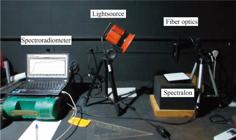
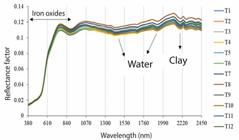
Soil organic matter (SOM) varies significantly along soil profiles, directly influencing soil fertility and structure. The aim of this study was to estimate SOM levels at various soil depths using VisNIR-SWIR spectroscopy combined with partial least squares regression (PLSR). The experiment was conducted on a Dystroferric Red Latosol under different crop rotation systems maintained since 1985. Soil samples were collected in March 2019 and stratified into eight layers (0–40 cm), totaling 384 samples. Spectral readings were obtained using a FieldSpec 3 Jr spectroradiometer, and SOM content was determined using a colorimetric method. The PLSR models demonstrated strong predictive capacity, especially for the 10-cm layer (R2 = 0.96, RMSE = 0.74 g dm3) and for the full dataset (R2 = 0.82, RMSE = 3.20 g dm3), with RPD values above 2, indicating excellent performance. The most relevant spectral bands were found in the ranges 580–590 nm, 870–930 nm, and 2400 nm. It was concluded that VisNIR-SWIR spectroscopy combined with PLSR is a promising and sustainable tool for estimating SOM, and is applicable across various soil layers and agricultural management contexts.
spectral signature; multivariate statistics; soil management; remote sensing
 Thumbnail
 Thumbnail
 Thumbnail
 Thumbnail
 Thumbnail