Open-source system for reservoir water level monitoring using ultrasonic sensing
Abstract
Accurate monitoring of reservoir water levels in urban and agricultural environments is essential but is often performed visually, a method that is both time-consuming and labor-intensive. This study describes the development and evaluation of a low-cost water level monitoring system based on the Internet of Things (IoT) concept. The system uses an ultrasonic sensor to continuously measure the distance to the water surface, incorporating automated data processing and real-time visualization through the ThingSpeak platform. Field tests were conducted in an open-air reservoir of 1,100 m3, and sensor readings were compared with manual observations from a limnimetric ruler, showing excellent agreement (R2 > 0.999). Results obtained under uncontrolled environmental conditions confirm the feasibility of ultrasonic sensing for continuous monitoring of water levels in open reservoirs. The system is inexpensive (approximately US$ 150), easy to assemble, install, and maintain, and provides accurate measurements both day and night.
Keywords:
IoT; climatic changes; limnigraph; low-cost equipment
Introduction
As many regions face prolonged droughts and others experience increasingly frequent and severe floods, the development, implementation, and use of river and reservoir level monitoring systems are of paramount importance. Studies have shown that periods of intense rainfall, extreme heat, and drought are becoming more frequent, reflecting the ongoing effects of global climate change (Kitterød, 2022). Populations living near river courses are often the first to experience the impacts of flooding, frequently caught off guard and lacking sufficient time to safeguard their lives or property. Conversely, communities in regions affected by low rainfall and dependent on small- to medium-sized reservoirs face instability in water availability, increasing crop losses and decreasing food production, which threatens subsistence agriculture (Andrade, 2017; Mendes et al., 2022).
During drought periods, monitoring river and reservoir levels is critical to ensure water supply planning, prevent shortages, and manage the distribution of drinking water. Conversely, during heavy rainfall, continuous monitoring supports effective reservoir and dam management for water storage, flood prevention, and regulated downstream flow (Khafidhoh & Ansyah, 2022).
Maintaining adequate control of river and reservoir levels in both dry and wet seasons is essential to mitigate the effects of floods and droughts, secure water availability, preserve aquatic ecosystems, and sustain agricultural productivity and environmental sustainability (Dswilan & Marzuki, 2021). Rivers play a vital ecological role in ecosystems, providing habitats for numerous species of plants and animals. Effective monitoring and regulation of river levels contribute to ecosystem conservation by preventing the negative impacts of irregular water flow (Xia & Chen, 2021; Rathnayaka & Lee, 2024).
Water-intensive activities such as drinking water supply and irrigation consume substantial quantities daily (Manley et al., 2022; Du et al., 2024). Hence, continuous monitoring of river and reservoir levels is indispensable for efficient water management planning long-term control.
Traditionally, water level measurements are taken manually using limnimetric rulers, a method that is time-consuming and prone to measurement errors. Automation enables continuous monitoring, enhances management capabilities, and supports timely decision-making (Mathai et al., 2024).
Commercial automated water level monitoring systems are often costly, imported, and lack adaptability for specific applications (Kabi et al., 2023). However, several studies have demonstrated the feasibility of ultrasonic technology for measuring liquid levels in various configurations at a relatively low cost (Cherqui et al., 2020; Smith et al., 2022; Sharma et al., 2023).
Given the above, this study aimed to develop, within the framework of the Internet of Things (IoT), a robust, low-cost, and open-source system for real-time monitoring of water levels in open-air reservoirs using an ultrasonic sensor and to make the information available online.
Material and Methods
The Internet of Things (IoT) can be defined as a digital framework that interconnects multiple devices capable of generating and exchanging data at varying levels of complexity (Ogunbunmi et al., 2024). This concept also extends to everyday applications in both personal and business contexts. One of its main advantages lies in enabling real-time data access and system interaction (Morchid et al., 2024).
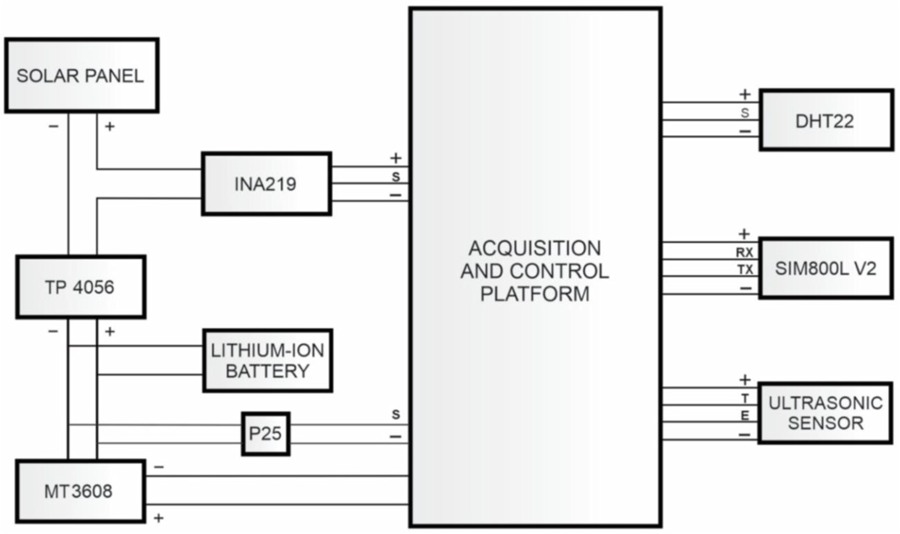
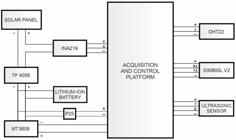
An IoT-based system was employed in this study to collect data (Pasika & Gandla, 2020; Pinto et al., 2021; Passos et al., 2022). An algorithm was developed using the free Arduino Integrated Development Environment (Arduino IDE; https://arduino.cc) to monitor the study variables, calculate the height of the water column, and, when required, estimate the reservoir water volume at 10-minute intervals (Figure 1).
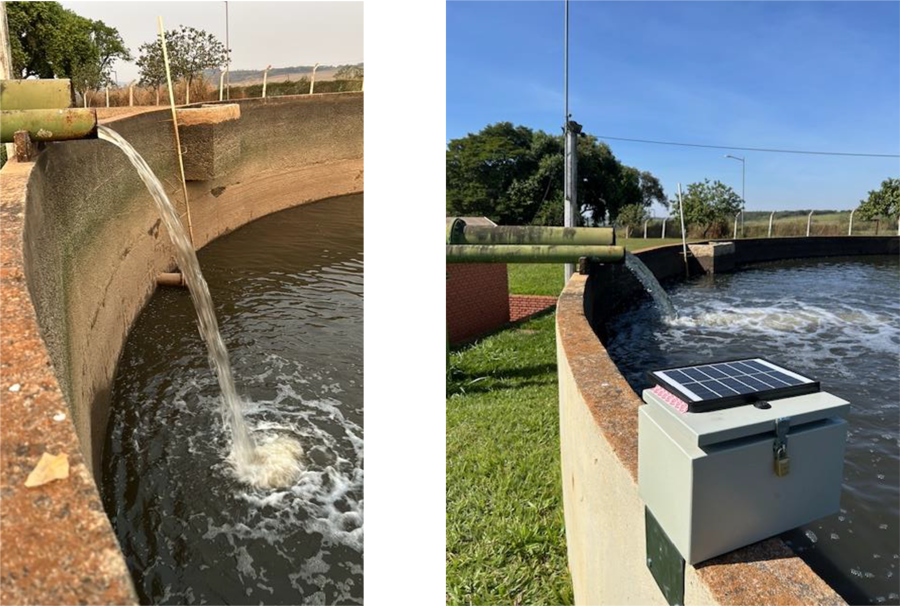
The study was conducted between September 2024 and January 2025 on the premises of the City Hall of the “Luiz de Queiroz” College of Agriculture (ESALQ), University of São Paulo (USP), in Piracicaba, Brazil (22°42’13” S; 47°37’23” W; altitude 580 m). The study site contains a reservoir (Figure 2) with a capacity of approximately 1,100 m3, storing raw water used for the supply of a water treatment plant (WTP), as well as for irrigation and cleaning of machinery and streets.

DHT22 – temperature sensor; INA219 – sensor for monitoring voltage, current, and power; MT3608 – DC-DC step-up voltage regulator module; P25 – voltage sensor; TP4056 – lithium-ion battery charging module; SIM800L V2 – module for wireless Internet access via GPRS/GSM; S – digital/analog signal; T – transmitted signal; E – echo (return); RX – serial communication reception; TX – serial communication transmission.
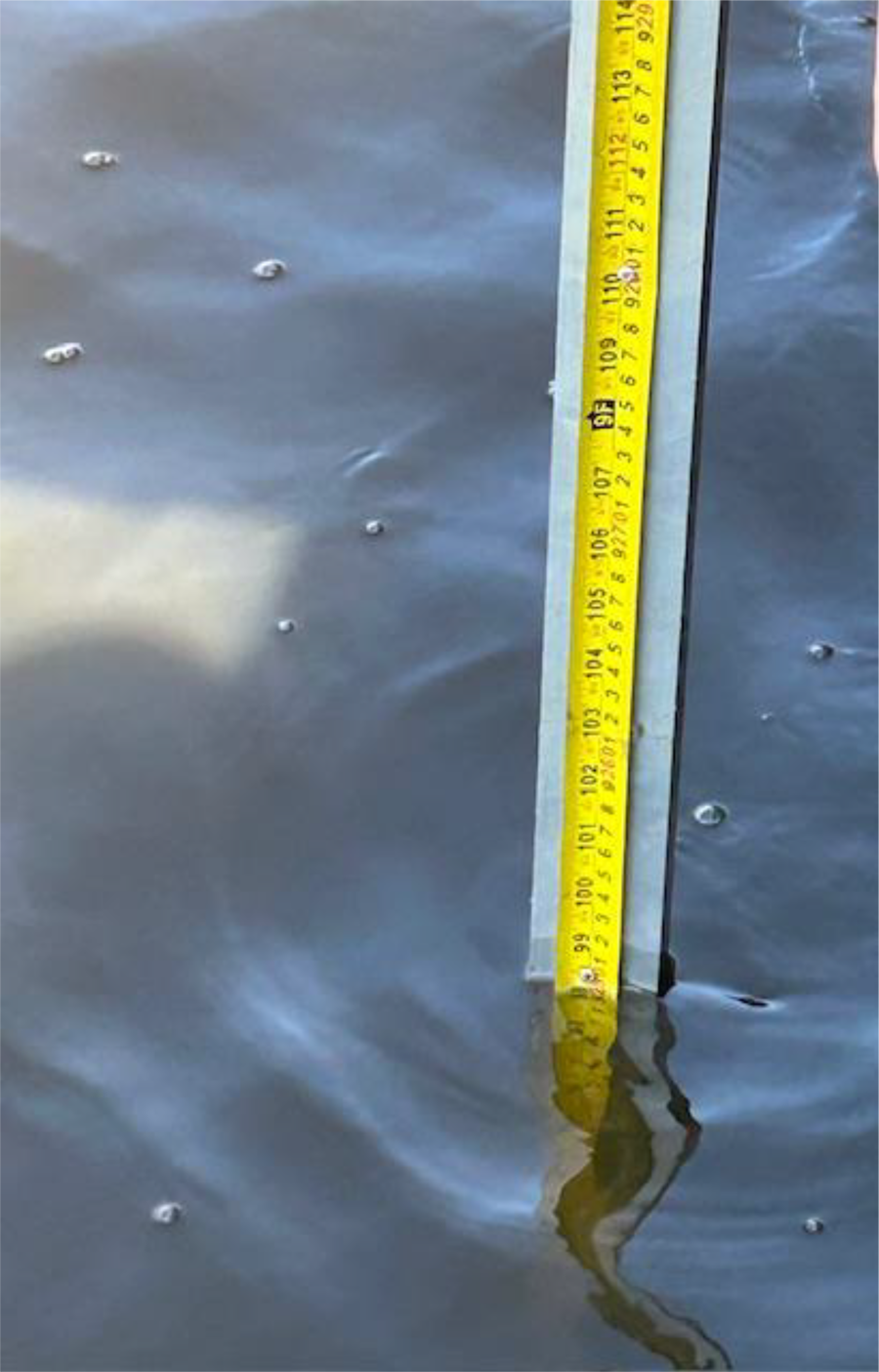
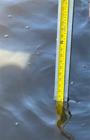
The reservoir used in this study measures 20 m in diameter and 3.5 m in depth. To establish the reference water level, a limnimetric ruler was positioned perpendicularly along the reservoir wall (Figure 3). The measurement system under validation was installed adjacent to the ruler.
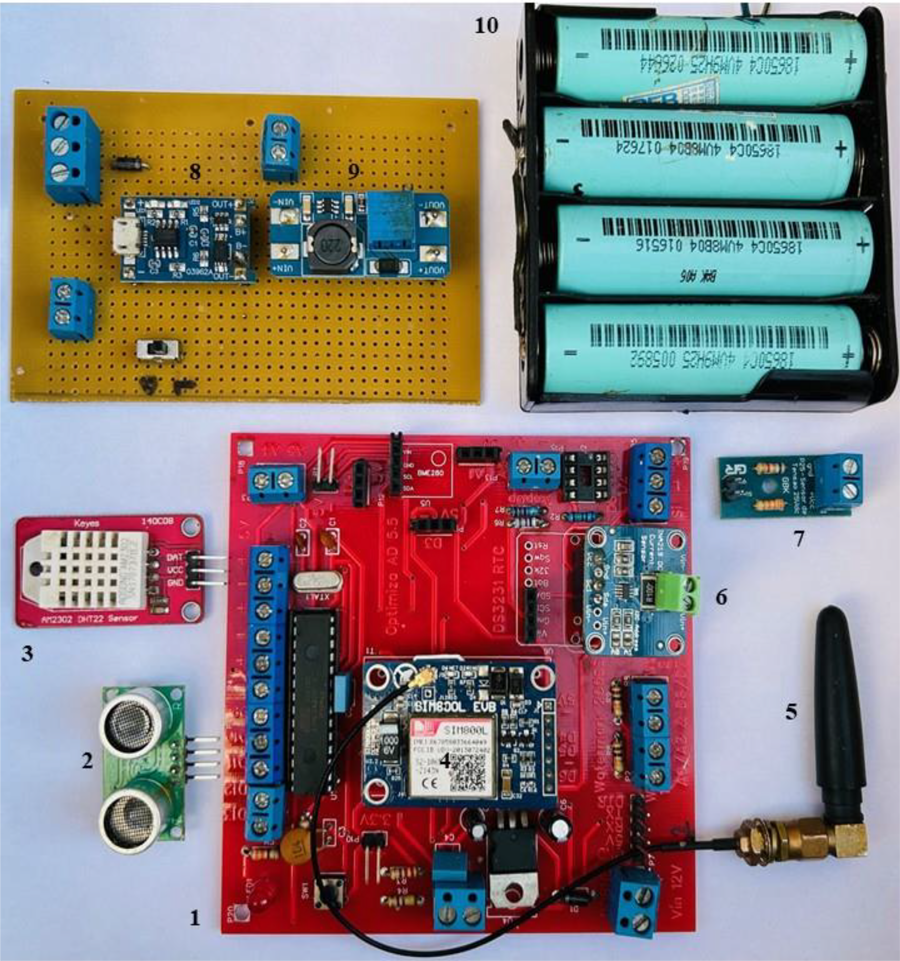
The power subsystem, responsible for supplying energy to the measurement system, comprised a 3 W, 6 V solar panel (17 × 17 cm); a TP4056 battery charging module; an MT3608 DC-DC step-up voltage regulator module; four 18650 lithium-ion batteries (4.2V, 1500 mAh each); a P25 voltage sensor (GBK, São Paulo, Brazil); and an INA219 sensor (Texas Instruments, Dallas, USA) for monitoring the voltage, current, and power delivered by the solar panel. The components were housed in a metal enclosure for protection. The solar panel was connected to the TP4056 module, which charged the lithium-ion batteries up to 4.2 V. The MT3608 module then increased the output voltage to 5.1 V, which powered the entire system (Figure 4).
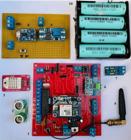
Ultrasonic water level measurement system proposed in this study. 1 – printed circuit board with ATmega328P microcontroller (data acquisition and control); 2 – ultrasonic sensor; 3 – temperature sensor; 4 – GPRS/GSM communication module; 5 – antenna; 6 – current, voltage, and power sensor; 7 – voltage sensor; 8 – lithium-ion battery charging module; 9 – DC-DC step-up voltage regulator module; 10 – 18650 lithium-ion batteries.
The ultrasonic sensor used was the RCW-0001 (2 × 3 × 2 cm), which operates by emitting sound waves to determine the distance between the sensor and an obstacle along the propagation path. It can also be applied for measuring water levels in reservoirs. The device consists of a circuit incorporating an ultrasonic transmitter, receiver, and control unit. It emits eight 40 kHz pulses and detects the returning echoes. The operating voltage ranges from 3.3 to 5 V DC, and the measurement range extends from 1 to 450 cm. The emitted sound waves operate at frequencies above the human hearing threshold. The sensor was positioned nearly perpendicular to the reservoir water surface.
The emitted sound wave, upon encountering an obstacle along its path, is reflected back toward the sensor. By combining the sound wave’s return time with the speed of sound, the distance to the object can be calculated, as expressed in [eq. (1)]:
Where:
d: object distance [m];
v : velocity of sound [m s-1];
t: sound return time [s].
The velocity of sound in air, v (m s⁻1), varies with ambient temperature (Li et al., 2025). The DHT22 temperature sensor (Aosong Electronics Co., Ltd., Guangzhou, China) was employed to correct for this variation, providing readings from −40 °C to 125 °C with an accuracy of ±0.5 °C. The correction can be approximated using [eq. (2)] (Mohammed et al., 2019):
Where:
v : velocity of sound [m s-1];
T: air temperature [°C].
By determining the distance d from the sensor to the reservoir water surface, the height h of the water column can be calculated (Equation 3) by subtracting d from the maximum height. Knowing the reservoir dimensions also makes it possible to calculate the real-time water volume available in the reservoir (Equation 4):
Where:
h: water column height [m];
hmax: maximum reservoir level [m];
d : distance from the water surface to the top of the reservoir [m].
Where:
V: reservoir water volume [m3];
π : 3.1415192654 [nondimensional];
∅: reservoir diameter [m]; and
h: water column height [m].
The communication subsystem, composed of the SIM800L V2 module (SIMCom Limited, China), uses GPRS/GSM (2.5G/2G) cellular network technology. Every 10 minutes, the developed algorithm monitors the variables from the energy subsystem (voltage, current, and power produced by the solar panel, as well as the voltage of the lithium-ion batteries) and the measurement subsystem (air temperature and sound wave travel time). The communication subsystem then receives all measured and calculated variables and transmits them wirelessly via GPRS/GSM to the ThingSpeak platform (www.thingspeak.com), making the data available in real time.
To validate the proposed methodology, measurements obtained by the ultrasonic sensor were compared with those obtained visually. The Pearson correlation coefficient (r), the coefficient of determination (R2), Willmott’s d index (Willmott et al., 1985), and the Kling–Gupta efficiency (KGE) index (Lamontagne et al., 2020) were determined to assess, respectively, the correlation between variables, the accuracy of the regression equation fit, the performance of the proposed methodology, and the combined effects of correlation, bias, and variance ratio.
For statistical analysis, the following additional metrics were calculated: 1) Mean Absolute Error (MAE): represents the average of the absolute differences between measurements and indicates how far the ultrasonic sensor readings deviate from the visual reference (Willmott & Matsuura, 2005); 2) Mean Bias Error (MBE): represents the average deviation from the mean; 3) Mean Percentage Error (MPE): represents the average percentage deviation of the measurements, indicating the accuracy of the sensor under evaluation; and 4) Root Mean Square Error (RMSE): provides a measure of the dispersion of the model errors.
All statistical analyses were performed using Microsoft Excel.
Results and Discussion
The study site, located in an uncontrolled environment, lies within a high-relief region with no physical barriers to air flow, resulting in frequent strong winds. These conditions caused wave formation on the reservoir surface, which hindered visual gauge readings. In addition, during reservoir filling, large fluctuations in water level made visual observations impossible. Pereira et al. (2022) reported that errors in level measurements obtained using ultrasonic sensors increase with flow turbulence in channels, due to variations in the reflection angle of sound waves.
Huang et al. (2022) proposed a methodology to mitigate the effects of liquid surface slopes and undulations on ultrasonic sensor measurements. Their approach transformed the gas–liquid interface into a solid–liquid interface using a rigid sphere and a circular waveguide, thereby providing a stable reflective surface for measurement.
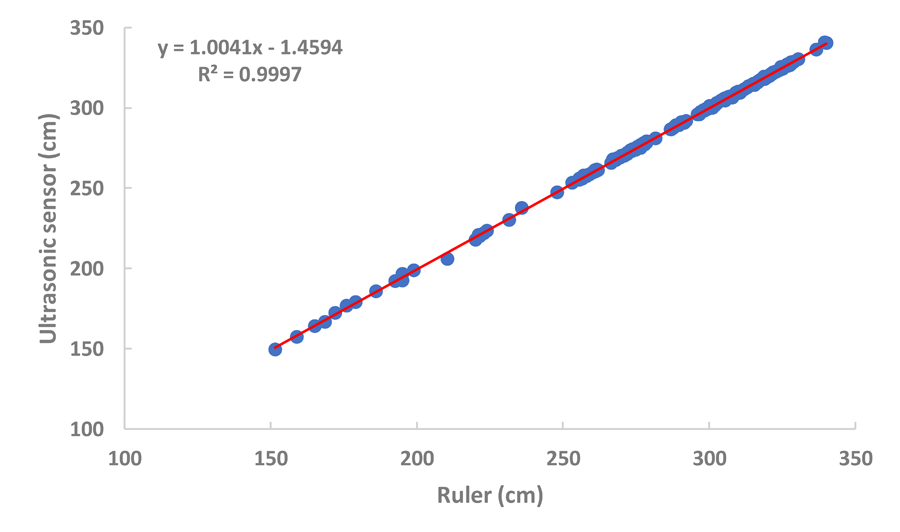
The comparison between visual measurements and those obtained with the ultrasonic sensor is shown in Figure 5. The results demonstrated excellent agreement between both methods, with a correlation coefficient of 0.9997. This strong correlation confirms that the ultrasonic sensor is highly reliable for the proposed application, as further supported by the statistical test results presented in Table 1.
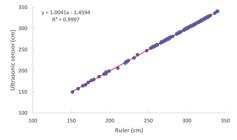
Scatter plot comparing observed (ruler) and measured (ultrasonic sensor) values obtained using the proposed methodology.
A linear regression was fitted to the data points in Figure 5 (Equation 5):
Measurement precision and accuracy are confirmed by r and R2 values of 0.9999 and 0.9997, respectively. The d index and Kling–Gupta efficiency (KGE) obtained were both close to 1, indicating excellent performance of the ultrasonic sensor compared with visual measurements using the limnimetric ruler. Li et al. (2025) and Mohammed et al. (2019) also reported results for ultrasonic sensors showing correlations above 99% and mean errors ranging from 0.5 to 1 cm, which are consistent with and therefore corroborate the findings of this study.
The MBE, MAE, MPE, and RMSE values were all below 1, indicating an excellent fit. The mean absolute error (MAE) of 0.484 cm was relatively low, demonstrating that the sensor provided satisfactory accuracy for practical water level measurements in reservoirs. Furthermore, the mean percentage error (MPE) of 0.108% reinforced the device’s precision, as deviations represented less than 0.2% of the measured value. This level of error is considered negligible for most practical applications, particularly in water resource monitoring contexts (Sahoo & Udgata, 2020).
The mean bias error (MBE) of −0.274 cm indicated a slight tendency of the ultrasonic sensor to underestimate the water level relative to the limnimetric ruler. This negative bias, though small, may be attributed to factors such as sensor calibration, environmental interference, or surface water disturbances (ripples). Nevertheless, the error magnitude was minimal and did not compromise the system’s applicability for continuous monitoring.
The root mean square error (RMSE) of 0.710 cm, slightly higher than the MAE, suggested that most deviations were concentrated around 0.5 cm, with few larger outliers. The RMSE confirmed the overall consistency of the ultrasonic sensor readings, reinforcing its reliability for water level monitoring in reservoirs.
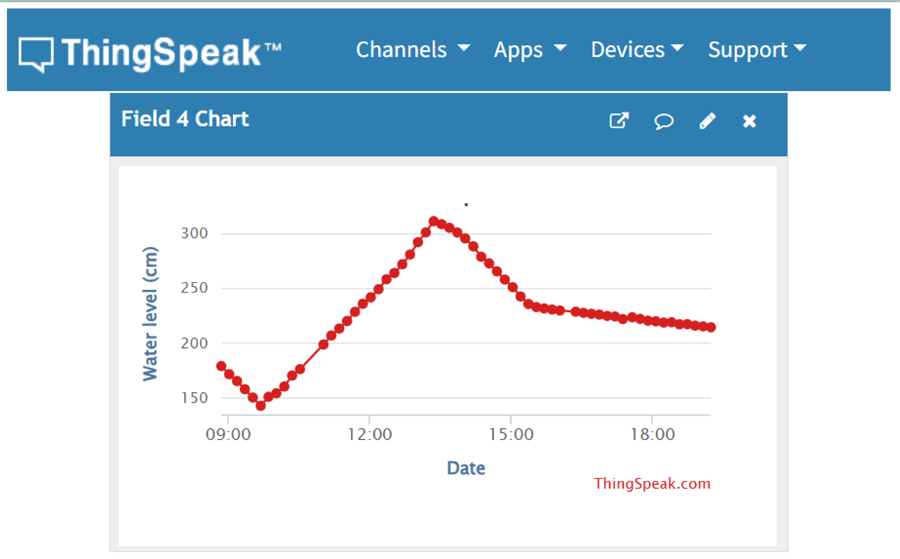
The high correlation and low error values observed in this study were comparable or superior to those reported by other studies employing ultrasonic sensors for water level measurement (Li et al., 2025; Djalilov et al., 2023). Most previous research was conducted under controlled laboratory conditions and also reported correlations above 99% and mean errors ranging from 0.5 to 1 cm, depending on the experimental setup. Therefore, the results obtained here demonstrate the feasibility of using ultrasonic sensors for practical, real-time monitoring applications in uncontrolled environments, such as open-air reservoirs, at any time of day or night, as illustrated by the measurements taken on October 29, 2025 (Figure 6).
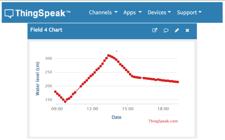
Real-time measurement data visualized on the ThingSpeak platform, obtained on October 29, 2025.
Conclusions
The proposed ultrasonic system for reservoir water level monitoring, when compared with visual measurements obtained using a limnimetric ruler, proved to be highly accurate, showing a strong correlation with visual readings (R2 = 0.9997). The system saves time and enables more frequent measurements throughout the day and night. Its application can significantly enhance the efficient monitoring of water resources in real time via wireless Internet. Moreover, it can be adapted for distance measurements in other uncontrolled environments, such as streams, rivers, and lakes.
The total cost to assemble the system—including the solar panel, limnimetric ruler, metal enclosure (30 × 20 × 20 cm), voltage regulator module, battery charging module, 18650 lithium-ion batteries, cables, and current, voltage, temperature, and ultrasonic sensors—was approximately US$150. This cost is relatively low compared with commercial systems. The proposed system is robust, inexpensive, and easy to construct, install, and maintain.
Acknowledgments
The authors gratefully acknowledge the support of the Luiz de Queiroz Campus Administration (PUSP-LQ), the Department of Biosystems Engineering at ESALQ/USP, and the National Institute of Science and Technology in Irrigation Engineering (INCTEI). We also greatly appreciate the assistance of Mr. L. C. Rodrigues from the Department of Food Science and Technology in preparing the schematic diagram.
References
- Andrade, H. V. (2017). Mapping of state policies for city adaptation to climate change in Brazil. Revista Geografia Acadêmica, 11 (2), 24-49.
-
Cherqui, F., James, R., Poelsma, P., Burns, M.J., Szota, C., Fletcher, T., & Bertrand-Krajewski, J.L. (2020). A platform and protocol to standardise the test and selection low-cost sensors for water level monitoring. H2 Open Journal, 3 (1), 437-456. https://doi.org/10.2166/h2oj.2020.050
» https://doi.org/10.2166/h2oj.2020.050 -
Djalilov, A., Sobirov, E., Nazarov, O., Urolov, S., & Gayipov, I. (2023). Study on automatic water level detection process using ultrasonic sensor. IOP Conference Series: Earth and Environmental Science, 1142 (1), 012020. https://doi.org/10.1088/1755-1315/1142/1/012020
» https://doi.org/10.1088/1755-1315/1142/1/012020 -
Dswilan, S., & Marzuki, H. (2021). Flood monitoring system using ultrasonic sensor SN-SR04T and SIM 900A. Journal of Physics: Conference Series, 1876, 012003. https://doi.org/10.1088/1742-6596/1876/1/012003
» https://doi.org/10.1088/1742-6596/1876/1/012003 -
Du, J., Laghari, Y., Wei, Y.C., Wu, L.Y., He, A.L., Liu, G.Y., Yang, H.H., Guo, Z.Y., & Leghari, S.J. (2024). Groundwater depletion and degradation in the North China Plain: Challenges and mitigation options. Water, 16 (2), 354. https://doi.org/10.3390/w16020354
» https://doi.org/10.3390/w16020354 -
Huang, S.L., Long, W., Liao, J.B., Li, M., Yu, Y.J., Gou, H.R., & Gan, F.J. (2022). Optimized lightweight ultrasonic liquid level sensor adapted to the tilt of liquid level and ripple. IEEE Sensors Journal. http://dx.doi.org/10.1109/JSEN.2021.3127127
» http://dx.doi.org/10.1109/JSEN.2021.3127127 -
Kabi, J.N., Maina, C.W., Mharakurwa, E.T., & Mathenge, S.W. (2023). Low cost, LoRa based river water level data acquisition system. HardwareX, 14, e00414. https://doi.org/10.1016/j.ohx.2023.e00414
» https://doi.org/10.1016/j.ohx.2023.e00414 -
Khafidhoh, N., & Ansyah, A. (2022). Monitoring river water levels to complete flood using ultrasonic sensors. NEWTON: Networking and Information Technology, 2 (2), 58 - 64. https://doi.org/10.32764/newton.v2i2.1996
» https://doi.org/10.32764/newton.v2i2.1996 -
Kitterød, N. O. (2022). Hydrological challenges in the Cauvery river basin, south India. Siècles, 53. https://doi.org/10.4000/siecles.10245
» https://doi.org/10.4000/siecles.10245 -
Lamontagne, J.R., Barber, C.A., & Vogel, R.M. (2020). Improved estimators of model performance efficiency for skewed hydrologic data. Water Resources Research, 56 (9), 1 - 25. https://doi.org/10.1029/2020WR027101
» https://doi.org/10.1029/2020WR027101 -
Li, S., Gao, W., & Liu, W. (2025). A novel temperature drift compensation algorithm for liquid-level measurement systems. Micromachines, 16( 1), 24. https://doi.org/10.3390/mi16010024
» https://doi.org/10.3390/mi16010024 -
Manley, C.K., Spaur, M., Madrigal, J.M., Fisher, J.A., Jones, R.R., Parks, C.G., Hofmann, J.N., Sandler, D.P., Beane Freeman, L., & Ward, M.H. (2022). Drinking water sources and water quality in a prospective agricultural cohort. Environmental Epidemiology, 6 (3), e210. http://dx.doi.org/10.1097/EE9.0000000000000210
» http://dx.doi.org/10.1097/EE9.0000000000000210 -
Mathai, E., George, A., Babu, A., Yaseen, M.M.S., & Kumar, A. (2024). Design & Development of Smart River Water Level Monitoring System http://dx.doi.org/10.1109/ICoICI62503.2024.10695993
» http://dx.doi.org/10.1109/ICoICI62503.2024.10695993 -
Mendes, P.D.A.G., Almeida, A.C.A., Litre, G., Filho, S.R., Saito, C.H., Dávalos, N.E.B., Gaivizzo, L.A.B., Lindoso, D.P., Reis, R.M., & Ferreira, J.L. (2022). Public policies and adaptation to climate change: three case studies in the brazilian semi-arid region. Sustainability in Debate, 13 (3), 209-226. https://periodicos.unb.br/index.php/sust/article/view/46064/35558
» https://periodicos.unb.br/index.php/sust/article/view/46064/35558 -
Mohammed, S.L., Al-Naji, A., Farjo, M.M., & Chahl, J. (2019). Highly accurate water level measurement system using a microcontroler and an ultrasonic sensor. IOP Conf. Series: Materials Science and Engineering, 518, 042025. https://doi.org/10.1088/1757-899X/518/4/042025
» https://doi.org/10.1088/1757-899X/518/4/042025 -
Morchid, A., El Alami, A., Raezah, A.A., & Sabbar, Y. (2024). Applications of internet of things (IoT) and sensors technology to increase food security and agricultural sustainability: Benefits and challenges. Ain Shams Engineering Journal, 15 (3), 102509. https://doi.org/10.1016/j.asej.2023.102509
» https://doi.org/10.1016/j.asej.2023.102509 -
Ogunbunmi, S., Taiwo, A.A., Oladosu, J.B., Sanusi, H., Inaolaji, F.A., Olasunkanmi, U.G., Azeez, A.I., Tajudeen, W.A., Christian, C.N., Samuel, A.O., Adeleke, O.J. & Enabulele, E.C. (2024). Internet of things weather monitoring system. World Journal of Advanced Research and Review s, 22 (02), 2099-2110. https://doi.org/10.30574/wjarr.2024.22.2.1647
» https://doi.org/10.30574/wjarr.2024.22.2.1647 -
Pasika, S., & Gandla, S.T. (2020). Smart water quality monitoring system with cost-effective using IoT. Heliyon, 6 (7), e04096. https://doi.org/10.1016/j.heliyon.2020.e04096
» https://doi.org/10.1016/j.heliyon.2020.e04096 -
Passos, M.L.V., Sousa, A.B.O., Teixeira, A.S. (2022). Fuzzy modeling in evaluating the consistency and efficiency of data remotely monitored by a multiparametric probe. Engenharia Agrícola, 42 (spe), e20210128. http://dx.doi.org/10.1590/1809-4430-Eng.Agric.v42nepe20210128/2022
» http://dx.doi.org/10.1590/1809-4430-Eng.Agric.v42nepe20210128/2022 -
Pereira, T.S.R., de Carvalho, T.P., Mendes, T.A., & Formiga, K.T.M. (2022). Evaluation of water level in flowing channels using ultrasonic sensors. Sustainability, 14 (9), 5512. https://doi.org/10.3390/su14095512
» https://doi.org/10.3390/su14095512 -
Pinto, J.S.S., Camargo, L.C., & Duarte, S.N. (2021). Development of a low cost open-source platform connected to the internet for acquisition of environmental parameters and soil moisture. Engenharia Agricola, 41, 338-346. https://doi.org/10.1590/1809-4430-Eng.Agric.v41n3p338-346/2021
» https://doi.org/10.1590/1809-4430-Eng.Agric.v41n3p338-346/2021 -
Rathnayaka, P.T.K., & Lee, J.Y. (2024). Design and optimization of water level control gate system in Malwathu Oya River, Sri Lanka. Water, 16 (19). http://dx.doi.org/10.3390/w16192797
» http://dx.doi.org/10.3390/w16192797 -
Sahoo, A.K., & Udgata, S.K. (2020). A novel ANN-based adaptive ultrasonic measurement system for accurate water level monitoring. IEEE Transactions on Instrumentation and Measurement, 69 (6), 3359-3369. https://doi.org/10.1109/TIM.2019.2939932
» https://doi.org/10.1109/TIM.2019.2939932 -
Sharma, P.K., Basu, S., Bairagi, K., & Ahmed, A. (2023). FLODAREM: Intelligent flood detection and dam reservoir monitoring system. http://dx.doi.org/10.1109/CCWC57344.2023.10099091
» http://dx.doi.org/10.1109/CCWC57344.2023.10099091 -
Smith, C., McCain, J., Downey, A.R.J., & Imran, J. (2022). An open-source IoT remote monitoring system for high-hazard dams. IEEE Sensors. https://doi.org/10.1109/SENSORS52175.2022.9967232
» https://doi.org/10.1109/SENSORS52175.2022.9967232 -
Willmott, C.J., Ackleson, S.G., Davies, R.E., Feddema, J.J., Klink, K.M., Legates, D.R., O'Donnell, J., & Rowe, C.M. (1985). Statistics for the evaluation and comparison of models. Journal of Geophysical Research, 90, 8995 - 9005. https://doi.org/10.1029/JC090iC05p08995
» https://doi.org/10.1029/JC090iC05p08995 -
Willmott, C.J., & Matsuura, K. (2005). Advantages of the mean absolute error (MAE) over the root mean square error (RMSE) in assessing average model performance. Climate Research, 30, 79 - 82. https://doi.org/10.3354/cr030079
» https://doi.org/10.3354/cr030079 -
Xia, J., & Chen, J. (2021). A new era of flood control strategies from the perspective of managing the 2020 Yangtze River flood. Science China-Earth Sciences, 1 (1), 1-9. http://dx.doi.org/10.1007/s11430-020-9699-8
» http://dx.doi.org/10.1007/s11430-020-9699-8
-
Data Availability Statement:
The datasets generated during and/or analyzed during the current study are available from the corresponding author on reasonable request.
Edited by
-
Area Editor:
Samuel Beskow
-
Edited by
Sbea
The datasets generated during and/or analyzed during the current study are available from the corresponding author on reasonable request.