 Quality of life and associated factors among university students
Abstract
Objective to analyze factors associated with the scores of the World Health Organization Quality of Life – brief version (WHOQOL-BREF) among students from a public university in Piauí.
Method analytical, cross-sectional, quantitative study. Two instruments were used: a sociodemographic, academic, and health questionnaire, and the WHOQOL-BREF. Descriptive and bivariate analyses were performed, with comparison of means using Student’s t-test and ANOVA, followed by Tukey’s post hoc test. A significance level of p≤.05 and a 95% confidence interval were adopted. Multiple linear regression was applied to analyze associated factors, considering WHOQOL-BREF domains as dependent variables.
Results a total of 378 students participated, predominantly women (70.6%), with a mean age of 23.8 years. Positive self-rated health was an independent factor across all domains. Satisfaction with the course was positively associated with the physical, psychological, and social domains. Female sex and having a partner were negatively associated with the physical domain. Higher personal income and physical activity were positively associated with the psychological domain. In the social domain, female sex, higher family income, and enrollment in specific courses were associated with higher scores. In the environmental domain, income, housing, and transportation showed positive associations, while non-white race/color showed a negative association.
Conclusion and implications for the practice satisfaction with the course and positive self-rated health were factors consistently associated with better quality-of-life scores, highlighting the need for intersectoral strategies aimed at promoting student well-being.
Keywords:
Health; Quality of Life; Students; University; University Students
Resumo
Objetivo analisar fatores associados aos escores do World Health Organization Quality of Life - brief version (WHOQOL-BREF) em estudantes de uma universidade pública do Piauí.
Método estudo analítico, transversal, quantitativo. Utilizaram-se dois instrumentos: questionário sociodemográfico, acadêmico e de saúde e o WHOQOL-BREF. Realizaram-se análises descritivas e bivariadas, com comparação de médias por teste t e ANOVA, seguidas de post hoc de Tukey. Adotou-se p≤0,05 e intervalo de confiança de 95%. Para analisar fatores associados, empregou-se regressão linear múltipla, considerando os domínios do WHOQOL-BREF como dependentes.
Resultados participaram 378 estudantes, majoritariamente mulheres (70,6%), com média de idade de 23,8 anos. A autoavaliação positiva de saúde foi independente em todos os domínios. A satisfação com o curso associou-se positivamente aos domínios físico, psicológico e social. Sexo feminino e presença de companheiro(a) associaram-se negativamente ao domínio físico. Maior renda pessoal e atividade física associaram-se positivamente ao domínio psicológico. No social, destacaram-se sexo feminino, maior renda familiar e cursos específicos. No ambiente, renda, moradia e transporte mostraram associações positivas, e raça/cor não branca negativa.
Conclusão e implicações para a prática A satisfação com o curso e a autoavaliação positiva de saúde foram fatores associados consistentes de melhores escores, indicando a necessidade intersetorial de fomento a eles.
Palavras-chave:
Alunos; Estudantes Universitários; Qualidade de Vida; Saúde; Universidade
Resumen
Objetivo analizar los factores asociados a los puntajes del World Health Organization Quality of Life – versión abreviada (WHOQOL-BREF) en estudiantes de una universidad pública de Piauí.
Método estudio analítico, transversal y cuantitativo. Se utilizaron dos instrumentos: un cuestionario sociodemográfico, académico y de salud, y el WHOQOL-BREF. Se realizaron análisis descriptivos y bivariados, con comparación de medias mediante la prueba t de Student y ANOVA, seguidos de la prueba post hoc de Tukey. Se adoptó un nivel de significación de p≤0,05 y un intervalo de confianza del 95%. Para analizar los factores asociados, se aplicó regresión lineal múltiple, considerando los dominios del WHOQOL-BREF como variables dependientes.
Resultados participaron 378 estudiantes, predominantemente mujeres (70,6%), con una media de edad de 23,8 años. La autoevaluación positiva de la salud fue un factor en todos los dominios. La satisfacción con el curso se asoció positivamente con los dominios físico, psicológico y social. El sexo femenino y tener pareja se asociaron negativamente con el dominio físico. Un mayor ingreso personal y la práctica de actividad física se asociaron positivamente con el dominio psicológico. En el dominio social, destacaron el sexo femenino, el mayor ingreso familiar y algunos cursos. En el dominio ambiental, el ingreso, la vivienda y el transporte mostraron asociaciones positivas, mientras que la raza/color no blanca presentó una asociación negativa.
Conclusión e implicaciones para la práctica la satisfacción con el curso y la autoevaluación positiva de la salud fueron factores asociados consistentes con mejores puntajes, lo que evidencia la necesidad de estrategias intersectoriales para promoverlos.
Palabras clave:
Alumnos; Estudiantes Universitarios; Calidad de Vida; Salud; Universidad
INTRODUCTION
Quality of Life (QoL) is defined as individuals' perception of their position in life within the context of their culture and value systems, as well as their goals, expectations, and concerns. The concept encompasses well-being across the physical, social, and psychological dimensions, as well as individuals' interactions with their environment.1,2
University enrollment and the demands of academic life, a critical stage in preparation for professional careers, place students under considerable pressure to adapt. This condition increases their susceptibility to stress and, consequently, to reduced QoL. Academic stress, in turn, impairs students' performance and academic engagement by reducing attention and concentration.3
The stress inherent to an exhausting routine is frequently intensified by feelings of loneliness, a common condition among students who relocate from their hometowns. Distance from established social networks, combined with the absence of support systems that could provide emotional support, heighten this vulnerability and contributes to poorer QoL among university students.4 These factors contribute to the development of mental health disorders such as stress, anxiety, depression, and suicidal ideation, significantly affecting students' overall health.5,6
Furthermore, the pursuit of social acceptance within new social circles may heighten students' vulnerability to maladaptive behaviors, including inappropriate alcohol and illicit substance use, unhealthy dietary habits, and risky sexual practices, which can compromise their well-being.7 Accordingly, addressing QoL among university students is of considerable relevance.
Despite the growing body of research on mental health and well-being among university students, studies addressing the quality of life of students at public institutions located in medium-sized cities in the interior of the Brazilian Northeast, a region characterized by socioeconomic inequalities and structural limitations in health and education, remain scarce, as evidenced by a bibliometric study.8 In this context, understanding how sociodemographic, academic, and health-related factors relate to different QoL domains is essential for informing health promotion initiatives in the university setting. Therefore, this study aimed to analyze factors associated with the scores of the World Health Organization Quality of Life – brief version (WHOQOL-BREF) among students at a public university in Piauí.
METHODS
This was an analytical, cross-sectional, quantitative study conducted with students at a university in the municipality of Floriano, Piauí. The university offers ten undergraduate programs, five in the teaching licensure track (Physical Education, Geography, History, Language and Literature/Portuguese, and Pedagogy) and five in the bachelor's degree track (Business Administration, Accounting Sciences, Computer Science, Law, and Nursing). The Strengthening the Reporting of Observational Studies in Epidemiology (STROBE) guidelines were used to guide the reporting of this study.
The eligible study population comprised 652 students regularly enrolled at the university. Sample size was calculated using a finite population formula, adopting a 95% confidence level, a 5% sampling error, and a 50% heterogeneity proportion. The calculation indicated a minimum of 266 participants to ensure statistical representativeness, to which 10% was added, yielding a minimum sample size of 293 participants. At the end of data collection, however, 378 valid questionnaires were obtained, as shown in Table 1.
The inclusion criteria included students enrolled in their respective programs who regularly attended classes. Students under 18 years of age, those without internet access or access to the equipment and instruments required to complete the online questionnaire, those who responded incompletely, and those who did not respond after three or more attempts were excluded. It should be noted that in the Computer Science program, the minimum sample size was not reached due to insufficient responses from students combined with the end of the stipulated data collection period.
Data were collected via an online questionnaire comprising two instruments: the first addressed students' sociodemographic, academic, and health profiles (sex, age group, marital status, race/skin color, religion, paid employment, personal income, household income, living arrangements, program, academic period, course satisfaction, mode of transportation, physical activity, comorbidities, and self-rated health status), based on studies in the field.9,10 To minimize potential confounding and information biases, the questionnaire was designed with direct and objective questions. The second instrument was the WHOQOL-BREF questionnaire,11 used to assess the quality of life of university students; it comprises 26 questions distributed across four domains, namely physical, psychological, social relationships, and environment, in addition to two general questions related to overall perception of quality of life and satisfaction with health.12
The questionnaire was sent to university students via their institutional email, with an invitation to participate in the study (including objectives, purposes, the data collection instrument content, and other research information), the consent form (in PDF format), and the link to access the Google Forms survey. Distribution was limited to institutional email addresses to ensure participation of students enrolled at the institution and to avoid potential selection bias.
Data were analyzed using Statistical Package for the Social Sciences (SPSS) software. A descriptive analysis of the independent variables (sociodemographic, economic, academic, health, and lifestyle) and WHOQOL-BREF domain scores was initially performed. Categorical variables were presented as absolute and relative frequencies, while quantitative variables were described by means, standard deviations, medians, and minimum and maximum values.
The WHOQOL-BREF was analyzed according to World Health Organization (WHO) guidelines. The instrument responses are presented on a five-point Likert scale, ranging from 1 to 5. Reverse-scored items, namely questions 3, 4, and 26, were first verified and recoded as recommended in the instrument manual. The scores for the physical, psychological, social relationships, and environment domains were then calculated from the mean of the items corresponding to each domain and subsequently transformed to a 0 to 100 scale according to the syntax proposed by the WHOQOL group. On this scale, higher values indicate better QoL perception.13
The independent variables were analyzed according to their nature and distribution. For bivariate analysis, mean WHOQOL-BREF domain scores were compared across the categories of the independent variables. For variables with two categories, the independent samples Student's t-test was used. For variables with three or more categories, one-way analysis of variance (ANOVA) was applied, followed by Tukey's post hoc test when statistically significant differences between groups were identified. The application of parametric tests was preceded by an assessment of the assumptions of normality and homogeneity of variances.
Multiple linear regression models were subsequently constructed to identify factors independently associated with scores in the physical, psychological, social relationships, and environment domains of the WHOQOL-BREF. A separate model was developed for each domain. Variables with p < .20 in the bivariate analysis were considered for the initial model composition, along with those deemed theoretically relevant. Results were presented as adjusted β coefficients, 95% confidence intervals (95% CI), and p-values.
Model quality was assessed through diagnostic tests. Multicollinearity among the independent variables was examined using the variance inflation factor. Residual normality was assessed using the Shapiro-Wilk test, and homoscedasticity was evaluated using the Breusch-Pagan/Cook-Weisberg test. In models where evidence of heteroscedasticity was found, robust standard errors were used. A significance level of 5% was adopted for all analyses.
The study was approved by the university's Research Ethics Committee under Opinion No. 3.305.189 and CAAE: (63437822.2.0000.5209), on October 11, 2022.
RESULTS
Table 2 presents the mean quality of life scores of the 378 students across the four assessed domains. The social domain had the highest mean (66.1; SD = 19.7), while the environment domain had the lowest mean score (54.7; SD = 14.7). Overall quality of life had a mean of 60.3 (SD = 12.7), with good internal consistency of the instrument (α = .818).
Descriptive analysis of the quality of life questionnaire (WHOQOL-BREF) of students (n = 378). Floriano, Piauí, 2023.
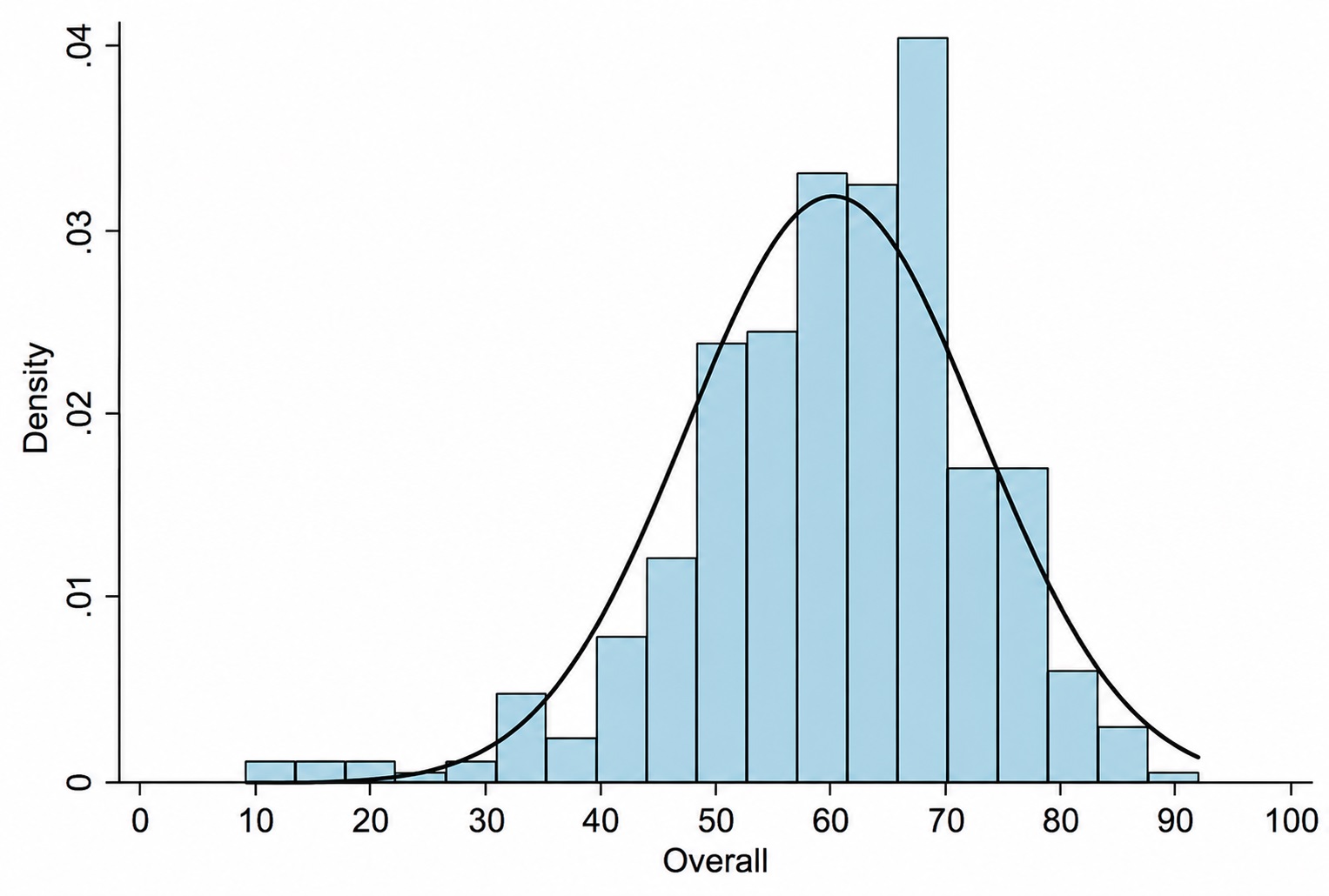
Figure 1 illustrates the distribution of overall QoL scores among students, with a predominance of intermediate scores and lower concentration at the extremes.
Histogram of the distribution of overall quality of life scores on the Quality of Life Questionnaire (WHOQOL-BREF) of students (n = 378). Floriano, Piauí, 2023.
The sample of 378 students was predominantly female (70.6%), with a mean age of 23.8 years (SD = 5.2), ranging from 18 to 54 years of age. Most students were single (83.3%), self-identified as non-white (79.9%), and Catholic (60.3%). Economically, 82.3% of students reported personal income below one minimum wage, and 46.7% reported household income between one and two minimum wages. Approximately two-thirds of the students lived with family members (63.5%).
Regarding academic enrollment, the programs with the highest representation were Nursing (23.3%), Pedagogy (14.0%), and Law (12.7%). Most respondents were in the 7th or 8th academic semester (26.5%), and the majority reported being satisfied with their program (86.2%). Concerning transportation, the primary modes used were motorcycle (38.4%) and walking (32.5%).
Regarding health and lifestyle, 59.5% did not engage in regular physical activity and 84.1% reported no comorbidities. Self-rated health status revealed that 53.4% of students considered their health to be "good" or "very good."
Table 3 presents the comparison of mean quality of life domain scores based on students' sociodemographic, economic, academic, and health characteristics. Variables such as age group, race/skin color, marital status, religion, personal income, presence of comorbidities, and course type (evening/full-time) showed no statistically significant association with QoL. Significant associations (p ≤ .05) were found between all WHOQOL-BREF domain scores and self-rated health status and course satisfaction.
Descriptive and comparative mean data regarding the quality of life domains (WHOQOL-BREF) of students (n = 378). Floriano, Piauí, 2023.
As shown in Table 4, in the physical domain, a negative association was observed with female sex (β = -3.3; p = .019) and being in a relationship (β = -4.2; p = .013), while course satisfaction (β = 5.8; p = .002) and positive self-rated health status (β = 6.0; p < .001) were positively associated with the outcome. In the psychological domain, higher personal income (1–2 MW: β = 4.2; p = .024; ≥3 MW: β = 6.9; p = .046), physical activity practice (β = 2.8; p = .047), course satisfaction (β = 10.2; p < .001), and positive self-rated health status (β = 5.0; p < .001) showed positive associations. In the social domain, female sex (β = 6.8; p = .014), household income ≥3 MW (β = 6.9; p = .027), course satisfaction (β = 12.0; p < .001), and positive self-rated health status (β = 3.8; p = .048) were associated with better scores, as were enrollment in Physical Education (β = 14.0; p = .013), Nursing (β = 9.8; p = .049), Geography (β = 16.6; p = .003), and Language and Literature/Portuguese (β = 15.4; p = .010). In the environment domain, higher scores were positively associated with household income (1–2 MW: β = 4.9; p = .001; ≥3 MW: β = 8.7; p < .001), living alone (β = 8.3; p < .001), using a car (β = 9.6; p < .001) or motorcycle (β = 5.8; p < .001), and positive self-rated health status (β = 4.8; p < .001), whereas non-white race/skin color was negatively associated with environment domain scores (β = -5.0; p = .003). Course satisfaction was independently associated with the physical, psychological, and social domains. Positive self-rated health status was independently associated with all assessed domains.
Multiple linear regression models for factors associated with quality of life by WHOQOL-BREF domain (n = 378). Floriano, Piauí, 2023.
DISCUSSION
Understanding quality of life (QoL) among university students requires an integrated analysis of sociodemographic, academic, and health-related factors, taking into account the conditions under which student life unfolds. From this perspective, the findings of this study were interpreted in light of the Social Determinants of Health model proposed by the World Health Organization Commission, which conceptualizes QoL as the result of interactions between structural determinants, such as income, socioeconomic status, and educational policies, and intermediate determinants, including material living conditions, social support, and health-related behaviors.
The sociodemographic and academic characterization of students reveals a profile marked by youth, feminization, low income, and belonging to historically marginalized racial groups, which is similar to that found in another study,14 and reflects the effect of public policies aimed at democratizing access to universities, such as racial and social quotas.15 Female predominance is also described in an Angolan study,16 suggesting a phenomenon observed across multiple educational settings. As such, the composition of the contemporary student body may reveal different material and subjective demands from the traditional profile observed in previous decades.
An international study indicates that female students present lower scores in the physical, psychological, and social QoL domains, demonstrating greater vulnerability in this group.17 This pattern converges with the findings of the present study, in which female sex was negatively associated with the physical domain, suggesting a specific vulnerability. However, women presented significantly higher scores in the social domain, indicating greater integration or social support, which complexifies the understanding of gender's influence on university QoL.
Consistently, the literature demonstrates that women tend to present worse health-related QoL compared to men, a result often attributed to greater exposure and sensitivity to stressors throughout life. In this regard, stress has been identified as a factor negatively associated with QoL, and evidence suggests that women identify a greater number of situations as stressful and are more impacted by these experiences.18,19
Despite advances in access, retention conditions remain unequal. A personal income below one minimum wage, dependence on rented housing, and commuting by precarious means, such as motorcycle or on foot, reveal a daily life marked by economic and logistical instability that reflects socioeconomic realities directly impacting academic life and well-being.20 These characteristics differ from the profile observed at private or international universities, where students generally belong to higher socioeconomic strata, have more stable family financial support, and have easier access to logistical and housing resources.20,21 In this regard, the implementation of financial, transportation, and housing assistance may serve as a strategy to offset the socioeconomic instabilities and logistical challenges that compromise the academic journey.
A previous study using another instrument (the 36-item Short Form Health Survey - SF-36) indicates that greater financial resource availability is associated with better scores, particularly in the mental health domain.18 The present study observed a positive association between income and QoL across different dimensions: higher personal income was associated with better scores in the psychological domain, while higher household income was related to better outcomes in the social and environmental domains, with particular note for students with income equal to or greater than three minimum wages, who had better scores in these domains. These findings broaden the existing understanding by demonstrating that the influence of income is not restricted to the psychological dimension but also extends to relational aspects and material living conditions, reinforcing the role of socioeconomic conditions as structural determinants of quality of life among university students.
In an international study, all QoL domains except the environmental domain showed a significant association with physical activity levels, suggesting that more active individuals tend to perceive their QoL as better. In the psychological domain, the absence of physical activity is associated with worse QoL scores, highlighting the relevance of behavioral factors in this outcome.17 Consistently, the findings of this study demonstrated that physical activity was associated with better scores in the psychological domain, reinforcing its role as a protective factor. These findings reinforce the importance of lifestyle-related behaviors, particularly physical activity, in promoting psychological well-being among university students.
The social relationships domain achieved the best performance, reinforcing the relevance of peer and family support networks for students' emotional balance. This domain frequently presents higher scores, even when others are impaired17. This pattern suggests that interpersonal bonds act as an important protective factor against the adversities of university life, contributing to a sense of belonging, emotional security, and support with academic and personal demands, gaining, within an intermediate determinant, a prominence capable of raising QoL scores.
On the other hand, students presented lower scores in the environmental domain, as in a previous study on the topic,22 which may suggest challenges associated with income, safety, transportation, recreation, and housing. Dissatisfaction with environmental conditions is strongly associated with socioeconomic vulnerability among university students.23 Similarly, Portuguese students expressed lower satisfaction with leisure opportunities and university infrastructure, especially those from low-income families.21 These factors may align with the reality found in this study, in which many students relied on precarious transportation and rented housing.
A study conducted with university students in Bangladesh identified moderate levels of perceived QoL and overall health self-assessment,17 which corroborates the findings of this study, in which positive self-rated health status showed a positive association across all evaluated domains, reinforcing the role of health perception as a relevant factor in students' QoL.
In this study, the dispersion reinforces the existence of variability in individual perceptions of well-being, consistent with the multifactorial challenges experienced in the university context. Furthermore, the integrated analysis of results confirms that QoL is influenced by social, emotional, and structural determinants. University QoL is a multifactorial construct influenced by health conditions, social support, behavioral factors, and institutional contexts24. The findings suggest the need for institutional strategies to expand student assistance initiatives, psychosocial support, and policies that promote academic retention.
Course satisfaction and positive self-rated health status showed the strongest associations, indicating that academic engagement and perceived well-being may be fundamental for preserving students' functional capacity and vitality. In contrast, the negative association in the environmental domain with non-White race/skin color is a critical finding. It may evidence that structural racism manifests in the occupation of space and access to safe, quality environments, regardless of other variables, reinforcing the need for equity policies.
Within this multifactorial scenario, course satisfaction was positively associated with all analyzed dimensions, constituting an important factor associated with QoL. This satisfaction may be influenced by the interpersonal relationship between faculty and students,25 placing itself within the realm of support and welcoming, once again demonstrating an intermediate health determinant standing out in its influence on QoL.
Self-rated health status, despite its positive correlation with QoL, warrants attention, as some students rated their health as fair or negative. Evidence indicates that negative health perceptions may be associated with unfavorable socioeconomic conditions, academic pressure, and greater emotional strain.14 One study found that students in socioeconomically vulnerable situations present lower perceived health scores and a greater risk of impairment across several WHOQOL-BREF domains.26
The findings of this study corroborate international evidence pointing to the influence of social determinants on health-related QoL.27,28 As described in the literature, household income proved strongly associated with scores, particularly in the environmental domain, evidencing the impact of socioeconomic conditions on structural dimensions of QoL. Although marital status also showed an independent association, the direction of the effect differed, suggesting specificities of the university context.
The findings of this study partially converge with the literature pointing to classic social determinants associated with better health-related quality of life (HRQoL). A previous study indicates that men tend to present better HRQoL scores,28 and, similarly, in this investigation, female sex was associated with worse scores in the physical domain, suggesting greater physical vulnerability among women. However, distinct behavior was observed in the social domain, in which female sex, in this study, presented significantly higher scores, indicating a possible greater integration or social support in this group, which broadens the understanding of gender's influence on QoL within a social context marked by differences in socially determined gender roles.
Regarding marital status, the literature frequently describes being married as associated with better HRQoL,27-28 possibly due to greater social support and emotional stability. However, in this study, having a partner showed a negative association with the physical domain, diverging from the trend observed in general populations. This finding may reflect specificities of the university context, in which academic demands and relational responsibilities may represent additional burden, particularly considering the predominance of a female public, which tends to accumulate multiple social roles. The relevance of this finding lies in the inversion of the expected trend, indicating that, for university students, managing a relationship may intensify physical strain. This negative impact suggests that the demands of shared life, combined with the demanding academic workload, may act as a stressor that outweighs the theoretical benefits of relationship stability.
Furthermore, there was strong convergence regarding the role of income as a predominant social determinant. As demonstrated in international studies,27,28 the findings reveal a clear positive gradient, in which higher income levels were consistently associated with better HRQoL scores. The magnitude of the associations observed in the environmental domain demonstrates that higher income not only broadens access to structural resources but also exerts a proportional and incremental influence on well-being. Likewise, the positive association between personal income and the psychological domain reinforces that socioeconomic conditions transcend the material sphere, directly influencing emotional stability and students' subjective perceptions.
In the context of the interior of northeastern Brazil, marked by historical inequalities in regional development, these findings gain particular relevance. Unlike large urban centers, universities located in regions with lower economic dynamism tend to enroll a greater proportion of students from socioeconomically vulnerable backgrounds, potentially amplifying the influence of social determinants on QoL.
CONCLUSION AND IMPLICATIONS FOR THE PRACTICE
The quality of life of university students varied across WHOQOL-BREF domains. Scores were significantly influenced by sociodemographic, academic, economic, and lifestyle-related factors. Course satisfaction and positive self-rated health status emerged as consistent predictors of better scores, evidencing the relevance of subjective and behavioral factors and the need for monitoring and promoting them. Socioeconomic variables, particularly household income, showed a strong association with the environmental domain and, to a lesser degree, with the social and psychological domains. Female sex was also found to be associated with worse scores in the physical domain and better scores in the social domain.
As such, this study contributes to the advancement of knowledge by situating the analysis of student health in the interior of the Northeast, revealing how regional asymmetries amplify the impact of social determinants on quality of life. By denouncing the influence of structural racism on environmental perception and identifying the inversion of traditional protective factors, the investigation offers a technical diagnosis that underpins the urgency of multidimensional student assistance policies.
This study's limitations include its cross-sectional design, which precludes the establishment of causal relationships, and the potential selection bias arising from online data collection. Although regression models were applied to control for confounders, residual confounding and possible collinearity between self-rated health and WHOQOL-BREF domains should be considered. Finally, the single-center nature of the research, focused on a single public institution in the interior of Piauí, limits the generalizability of the results, requiring caution when extrapolating findings to other university contexts. Longitudinal and multicenter studies are recommended to deepen the understanding of causal relationships between social determinants and quality of life in higher education.
Although students presented an overall satisfactory perception of their quality of life, which should be promoted, significant challenges related to mental health, financial stability, and environmental conditions persist. Overcoming these inequalities requires integrated health promotion actions, strengthening of student assistance, and public policies aimed at equity in higher education. These measures are essential for consolidating the university as a space that promotes comprehensive well-being, meaningful learning, and the qualified retention of students.
ACKNOWLEDGMENTS
Universidade Estadual do Piauí.
DATA AVAILABILITY RESEARCH
The underlying data supporting the research findings are contained within the article.
-
FINANCIAL SUPPORT
None.
References
-
1 World Health Organization. Annotated Bibliography of the WHO Quality of Life Assessment Instrument – WHOQOL [Internet]. Geneva: WHO; 1998 [citado 2026 jan 1]. Disponível em: http://depts.washington.edu/seaqol/docs/WHOQOL_Bibliography.pdf
» http://depts.washington.edu/seaqol/docs/WHOQOL_Bibliography.pdf -
2 Oliveira ES, Silva AFR, Silva KCB, Moura TVC, Araújo AL, Silva ARV. Stress and health risk behaviors among university students. Rev Bras Enferm. 2020;73(1):e20180035. https://doi.org/10.1590/0034-7167-2018-0035 PMid:32049225.
» https://doi.org/10.1590/0034-7167-2018-0035 -
3 Murakami K, Santos JLF, Troncon LEA, Panúncio-Pinto MP. Estresse e enfrentamento das dificuldades em universitários da área da saúde. Psicol Cienc Prof. 2024;44:e258748.https://doi.org/10.1590/1982-3703003258748
» https://doi.org/10.1590/1982-3703003258748 -
4 Barroso SM, Sousa AA, Rosendo LS. Impacto da solidão na qualidade de vida de universitários de Minas Gerais. Psicol Cienc Prof. 2023;43:e243909. https://doi.org/10.1590/1982-3703003243909
» https://doi.org/10.1590/1982-3703003243909 -
5 Muñoz-Albarracín M, Mayorga-Muñoz C, Jiménez-Figueroa A. Salud mental, autoestima y satisfacción vital en universitarios del sur de Chile. Rev Latinoam Cienc Soc Niñez Juv. 2023;21(2):1-27. https://doi.org/10.11600/rlcsnj.21.2.5428
» https://doi.org/10.11600/rlcsnj.21.2.5428 -
6 Freitas PHB, Meireles AL, Ribeiro IKDS, Abreu MNS, Paula W, Cardoso CS. Symptoms of depression, anxiety and stress in health students and impact on quality of life. Rev Lat Am Enfermagem. 2023;31:e3884. https://doi.org/10.1590/1518-8345.6315.3885 PMid:37075384.
» https://doi.org/10.1590/1518-8345.6315.3885 -
7 Batista RSC, Freitas TBC, Nascimento EGC, Martins RR, Miranda FAN, Pessoa Jr JM. Uso de substâncias psicoativas entre estudantes de medicina em uma universidade do semiárido brasileiro. Medicina. 2022;55(1):e-184136. https://doi.org/10.11606/issn.2176-7262.rmrp.2022.184136
» https://doi.org/10.11606/issn.2176-7262.rmrp.2022.184136 -
8 Costa VL, Castilho SR. Avaliação da qualidade de vida de estudantes universitários brasileiros: uma revisão bibliométrica. Rev Bras Qual Vida. 2022;14:e13231. https://doi.org/10.3895/rbqv.v14n0.13231
» https://doi.org/10.3895/rbqv.v14n0.13231 -
9 Moura IH, Nobre RS, Cortez RMA, Campelo V, Macêdo SF, Silva ARV. Quality of life of undergraduate nursing students. Rev Gaúcha Enferm. 2016 Jun;37(2):e55291. https://doi.org/10.1590/1983-1447.2016.02.55291 PMid:27253594.
» https://doi.org/10.1590/1983-1447.2016.02.55291 -
10 Oliveira LS, Oliveira EN, Campos MP, Vasconcelos MIO, Costa MSA, Almeida PC. Qualidade de vida de estudantes de uma universidade pública do Ceará. Revpsico. 2021;12(1):72-85. https://doi.org/10.36517/revpsiufc.12.1.2021.6
» https://doi.org/10.36517/revpsiufc.12.1.2021.6 -
11 WHOQOL Group. World Health Organization. WHOQOL: measuring quality of life [Internet]. Geneva: WHO; 1997 (MAS/MNH/PSF/97.4) [citado 2026 jan 1]. Disponível em: https://www.who.int/tools/whoqol
» https://www.who.int/tools/whoqol -
12 Fleck MP, Louzada S, Xavier M, Chachamovich E, Vieira G, Santos L et al. Aplicação da versão em português do instrumento abreviado de avaliação da qualidade de vida WHOQOL-bref. Rev Saude Publica. 2000;34(2):178-83. https://doi.org/10.1590/S0034-89102000000200012 PMid:10881154.
» https://doi.org/10.1590/S0034-89102000000200012 - 13 Fleck MPA. A avaliação da qualidade de vida: guia para profissionais da saúde. Porto Alegre: Artmed; 2008.
-
14 Alexandrino A, Nery CB, Oliveira CBS, Cruz EKL, Farias SM, Pontes ARL et al. Perfil sociodemográfico e acadêmico de estudantes universitários de uma universidade federal do interior do nordeste. Interbio. [Internet]. 2022; [citado 2026 jan 1];16(2):69-76. Disponível em: https://www.unigran.br/revistas/interbio/trabalho/54
» https://www.unigran.br/revistas/interbio/trabalho/54 - 15 Lei nº 12.711, de 29 de agosto de 2012 (BR). Dispõe sobre o ingresso nas universidades federais e nas instituições federais de ensino técnico de nível médio e dá outras providências. Diário Oficial da União, Brasília (DF), 30 ago 2012.
-
16 Mbala C, Tuti C, Fresta M. Quality of Life of Medical Students in Angola: A Cross-Sectional Study at Agostinho Neto University Using the World Health Organization Quality of Life-BREF (WHOQOL-BREF) Instrument. Cureus. 2025;17(6):e85613. https://doi.org/10.7759/cureus.85613 PMid:40636603.
» https://doi.org/10.7759/cureus.85613 -
17 Mahin M, Rahman MS, Rahman SM, Ilias FB, Hasan MM, Akter M et al. Factors impacting university students’ quality of life. PLoS One. 2025;20(8):e0329851. https://doi.org/10.1371/journal.pone.0329851 PMid:40768489.
» https://doi.org/10.1371/journal.pone.0329851 -
18 Nur N, Kıbık A, Kılıç E, Sümer H. Health-related quality of life and associated factors among undergraduate university students. Oman Med J. 2017;32(4):329-34. https://doi.org/10.5001/omj.2017.62 PMid:28804586.
» https://doi.org/10.5001/omj.2017.62 -
19 Ramón-Arbués E, Echániz-Serrano E, Martínez-Abadía B, Antón-Solanas I, Cobos-Rincón A, Santolalla-Arnedo I et al. Predictors of the Quality of Life of University Students: A Cross-Sectional Study. Int J Environ Res Public Health. 2022 Sep 23;19(19):12043. https://doi.org/10.3390/ijerph191912043 PMid:36231345.
» https://doi.org/10.3390/ijerph191912043 -
20 Sousa JCT, Ávila LK, Cardoso LGS. Perfil sociodemográfico de discentes em instituição de ensino superior privada na área da saúde. Arq Med Hosp Fac Cienc Med St Casa S Paulo. 2020;65(1):e2. https://doi.org/10.26432/1809-3019.2020.65.002
» https://doi.org/10.26432/1809-3019.2020.65.002 -
21 Fonseca RS, Escola J, Carvalho A, Loureiro A. O perfil sociodemográfico dos estudantes universitários: estudo descritivo-correlacional entre uma universidade portuguesa e brasileira. Educ. Foco. 2019;23(1):341-66. https://doi.org/10.34019/2447-5246.2019.v23.26040
» https://doi.org/10.34019/2447-5246.2019.v23.26040 -
22 Yüksel A, Özakgül A. Evaluation of nursing students’ sleep patterns, social jet lag, and quality of life. Florence Nightingale J Nurs. 2023;31(2):97-104. https://doi.org/10.5152/FNJN.2023.22176 PMid:37404212.
» https://doi.org/10.5152/FNJN.2023.22176 -
23 Carvalho AA, Vilela AAF, Alcântara KC, Lopes FM. Avaliação da qualidade de vida de estudantes universitários durante a pandemia da COVID-19. Aval (Campinas, Sorocaba, online). 2024;29:e024011. https://doi.org/10.1590/1982-57652024v29id274723
» https://doi.org/10.1590/1982-57652024v29id274723 -
24 Dal Pozzo LS, Zanchim MC, Graeff DB, Alves ALS. Prevalência de sonolência diurna excessiva e qualidade de vida de estudantes universitários. Estação Científica. 2024;18(31):159-79. https://doi.org/10.5281/zenodo.13766129
» https://doi.org/10.5281/zenodo.13766129 -
25 Silva CB, Freitas BB, Sousa IB, Soares PRAL, Aquino PS, Ribeiro SG. Fatores associados à satisfação de acadêmicos com o curso de graduação em enfermagem: um estudo transversal. REME. 2024;28:e-42208. https://doi.org/10.35699/2316-9389.2023.42208
» https://doi.org/10.35699/2316-9389.2023.42208 -
26 Nunes FD, Marques IV, Ávila LP, Marques MS, Januário GC, Santos AJ et al. Avaliação da saúde mental e qualidade de vida em estudantes de enfermagem de uma universidade pública. Braz J Hea Rev. 2024;7(9):e75492. https://doi.org/10.34119/bjhrv7n9-302
» https://doi.org/10.34119/bjhrv7n9-302 -
27 Kivits J, Erpelding ML, Guillemin F. Social determinants of health-related quality of life. Rev Epidemiol Sante Publique. 2013;61(Suppl 3):S189-94. https://doi.org/10.1016/j.respe.2013.06.001 PMid:23849946.
» https://doi.org/10.1016/j.respe.2013.06.001 -
28 Kangas T, Milis SL, Vanthomme K, Vandenheede H. The social determinants of health-related quality of life among people with chronic disease: a systematic literature review. Qual Life Res. 2025;34(9):2501-11. https://doi.org/10.1007/s11136-025-03976-1 PMid:40301158.
» https://doi.org/10.1007/s11136-025-03976-1
Edited by
-
ASSOCIATED EDITOR
Rosângela Marion da Silva https://orcid.org/0000-0003-3978-9654
-
SCIENTIFIC EDITOR
Marcelle Miranda da Silva https://orcid.org/0000-0003-4872-7252