
 Five decades of Intraand intersectoral inequality in labor income in Brazil: index, classification and economic situation
The distribution of labor income is a relevant topic of economic debate, especially in Brazil, given the persistence of high inequalities. With phases with greater and lesser emphasis, the national literature relates income distribution to sector dynamics. Contributing to this tradition, this study applies data from almost forty years over five decades (1970 to 2010) of the National Household Sample Survey (PNAD) and of the Brazilian Institute of Geography and Statistics (IBGE) with the purpose of: calculating a synthetic index of labor income inequality that considers intraand intersectoral distributions; and, from this index and Clustering, ii) proposing a historical classification of the Brazilian economic sectors. The analyses were contextualized by the economic cycles in the period (recessions and expansions). The evidence indicated the importance of the synthetic index and classification, slightly changed by the conjuncture, to better characterize the distribution of sectoral income.
Keywords:
Labor income; Sectors; Inequality; Clustering.
 Thumbnail
 Thumbnail
 Thumbnail
 Thumbnail
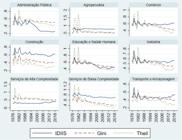 Thumbnail
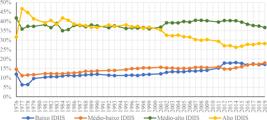 Thumbnail
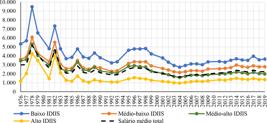 Thumbnail
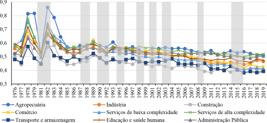
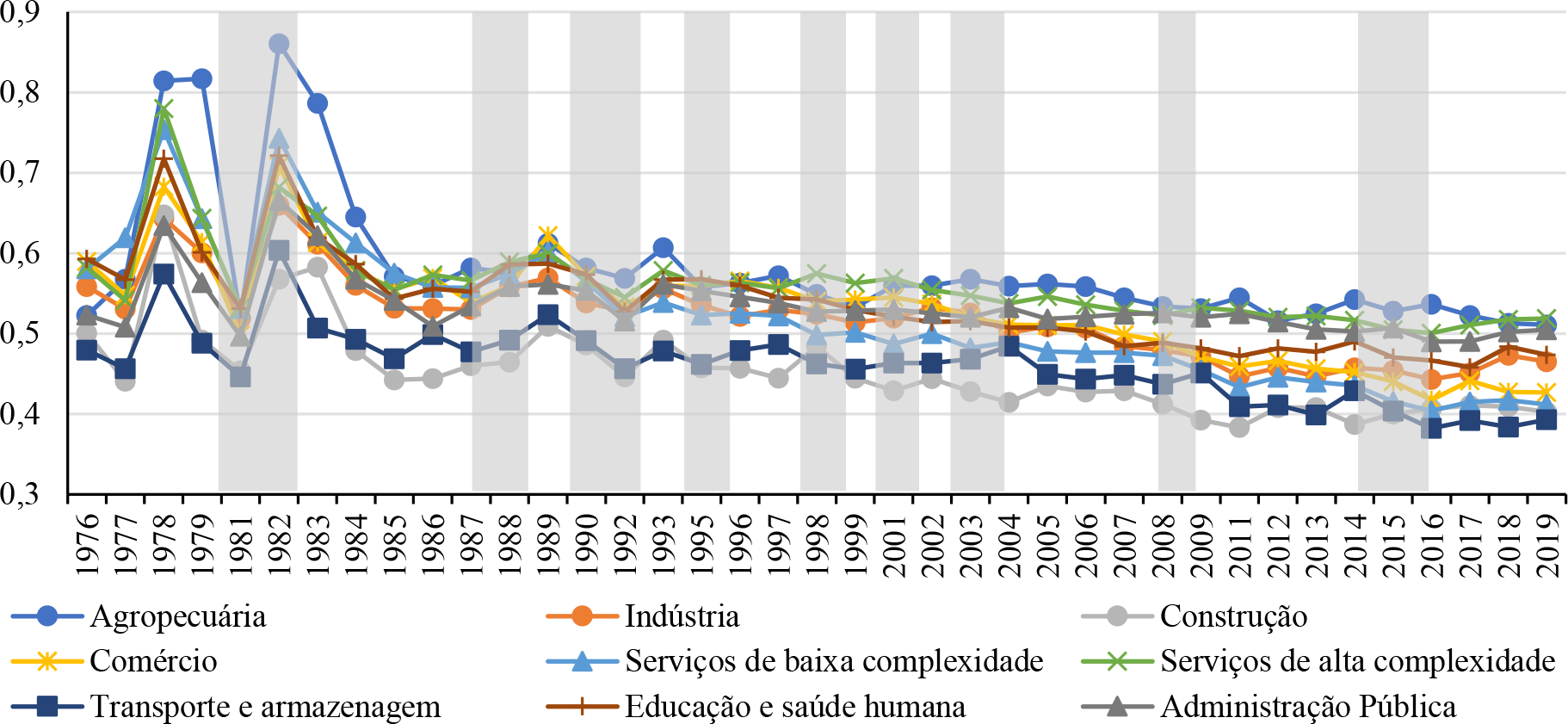 Fontes: CODACE e IBGE. Elaboração dos autores.
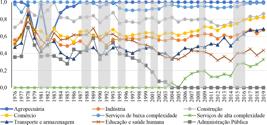
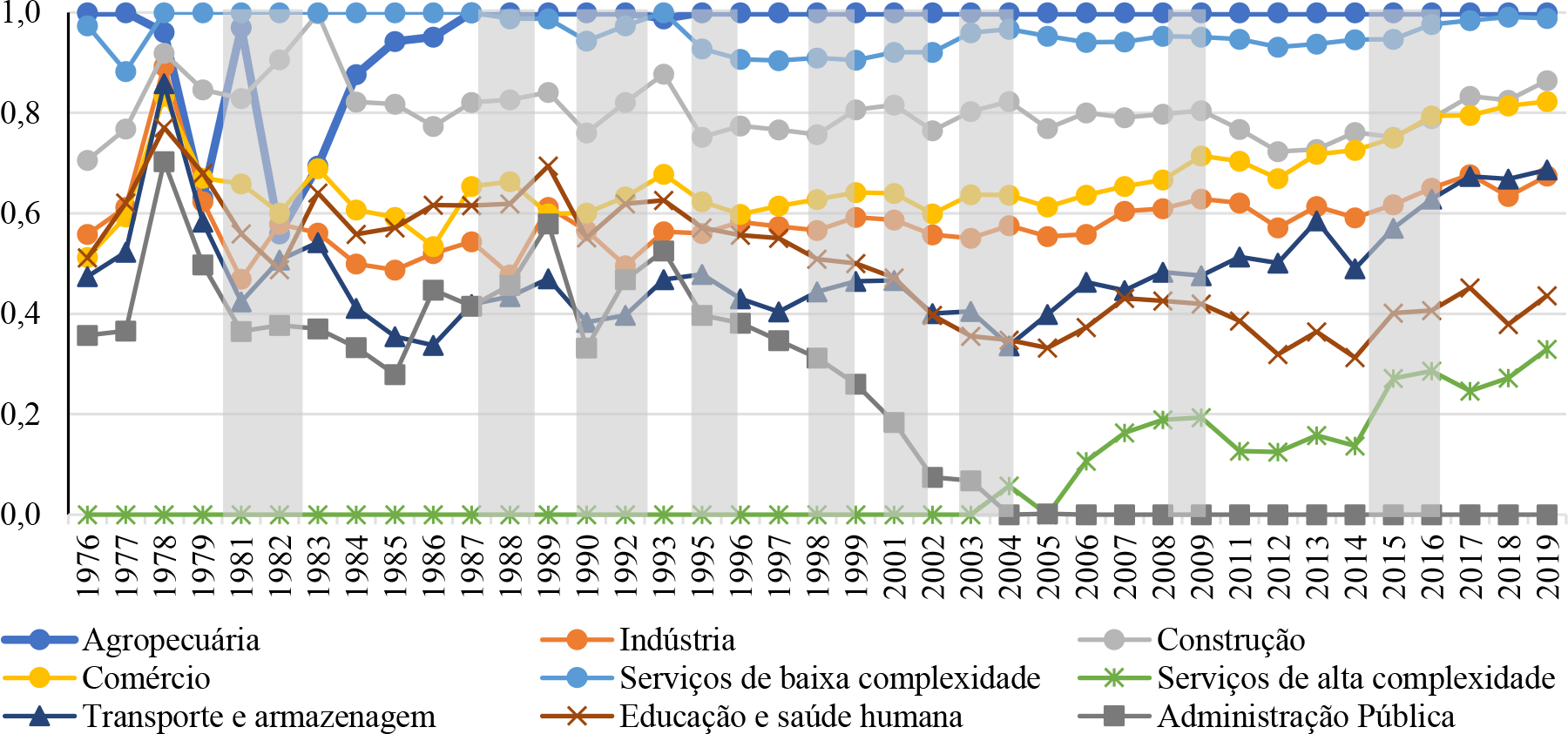 Fontes: CODACE e IBGE. Elaboração dos autores.
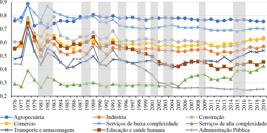
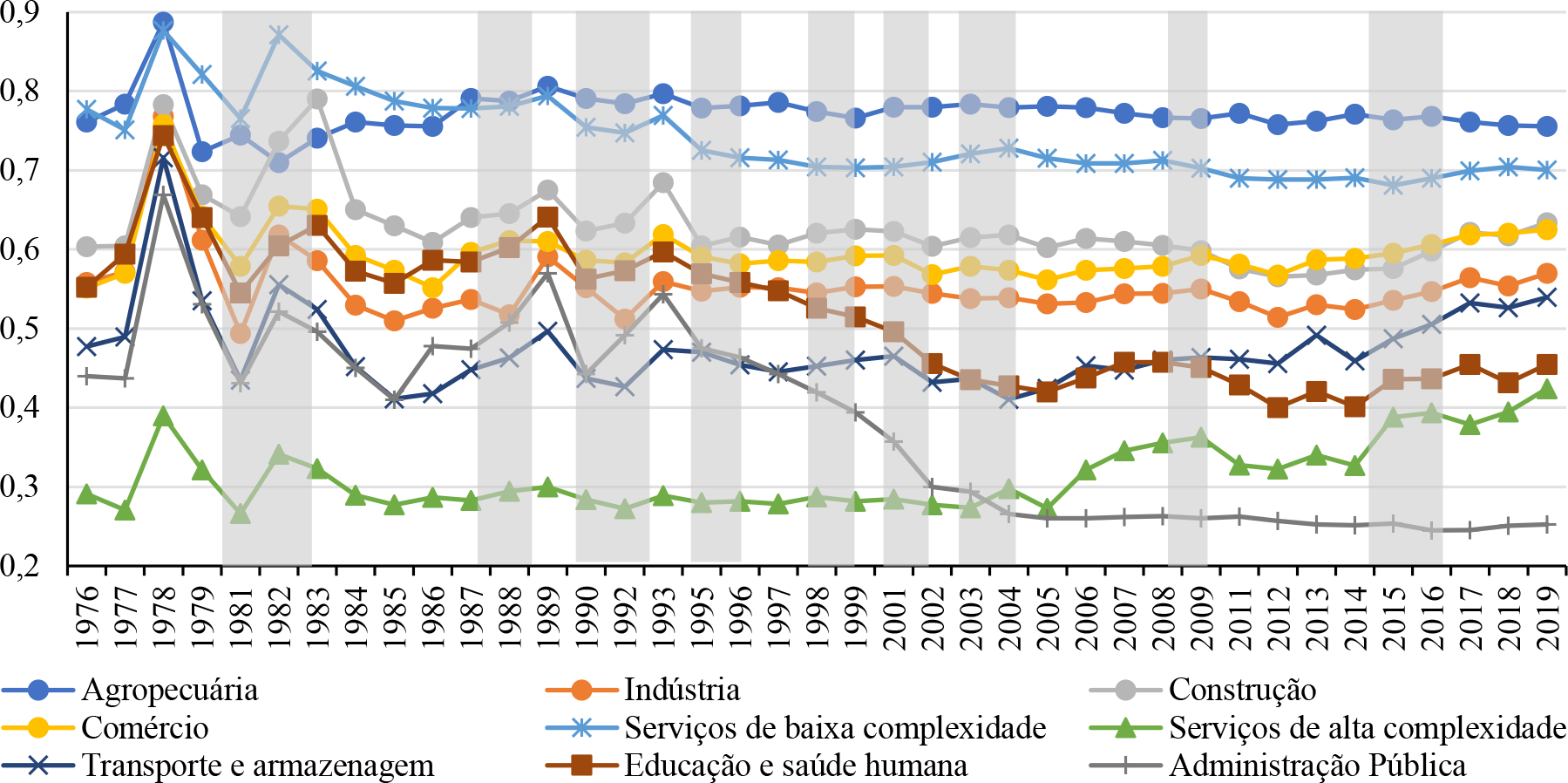 Fontes: CODACE e IBGE. Elaboração dos autores.
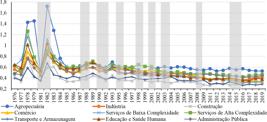
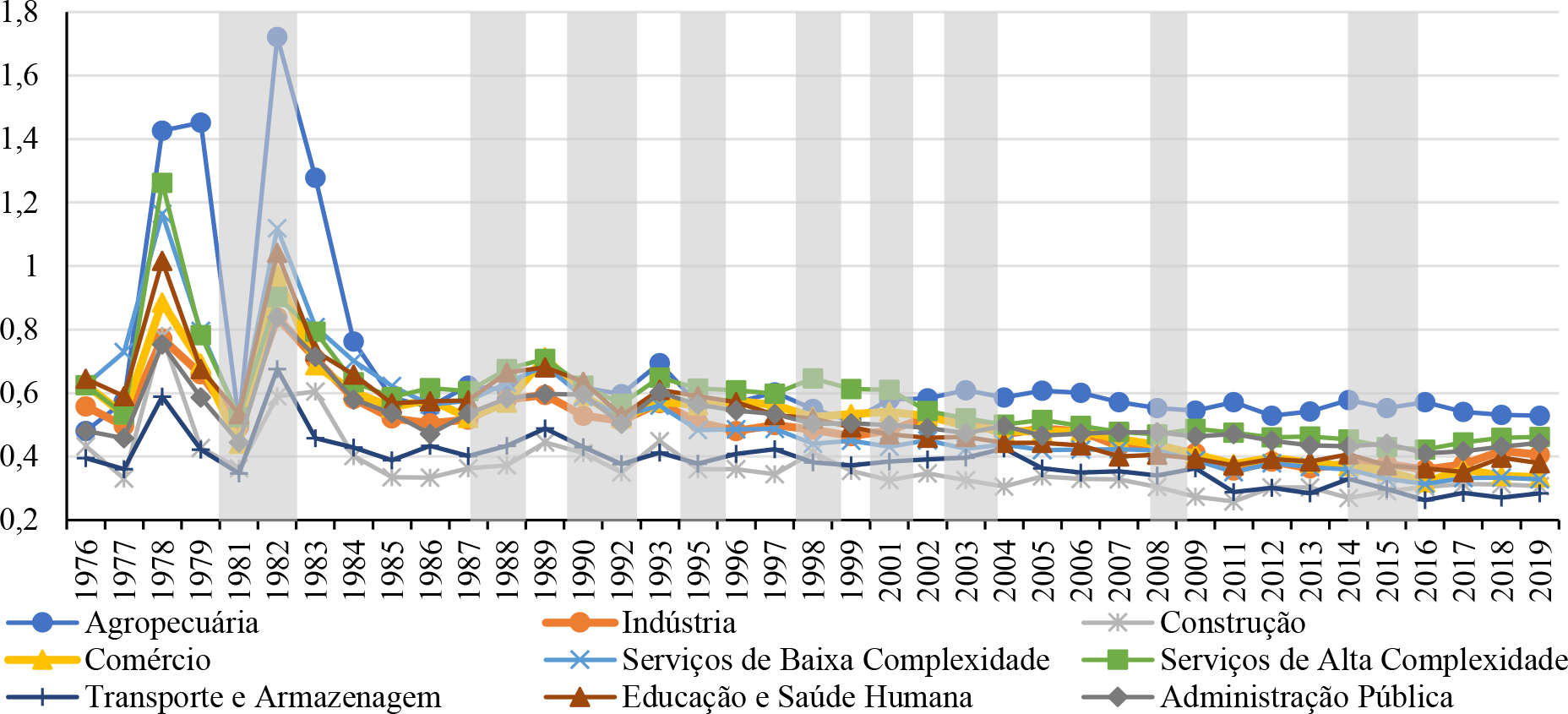 Fontes: CODACE e IBGE. Elaboração dos autores.
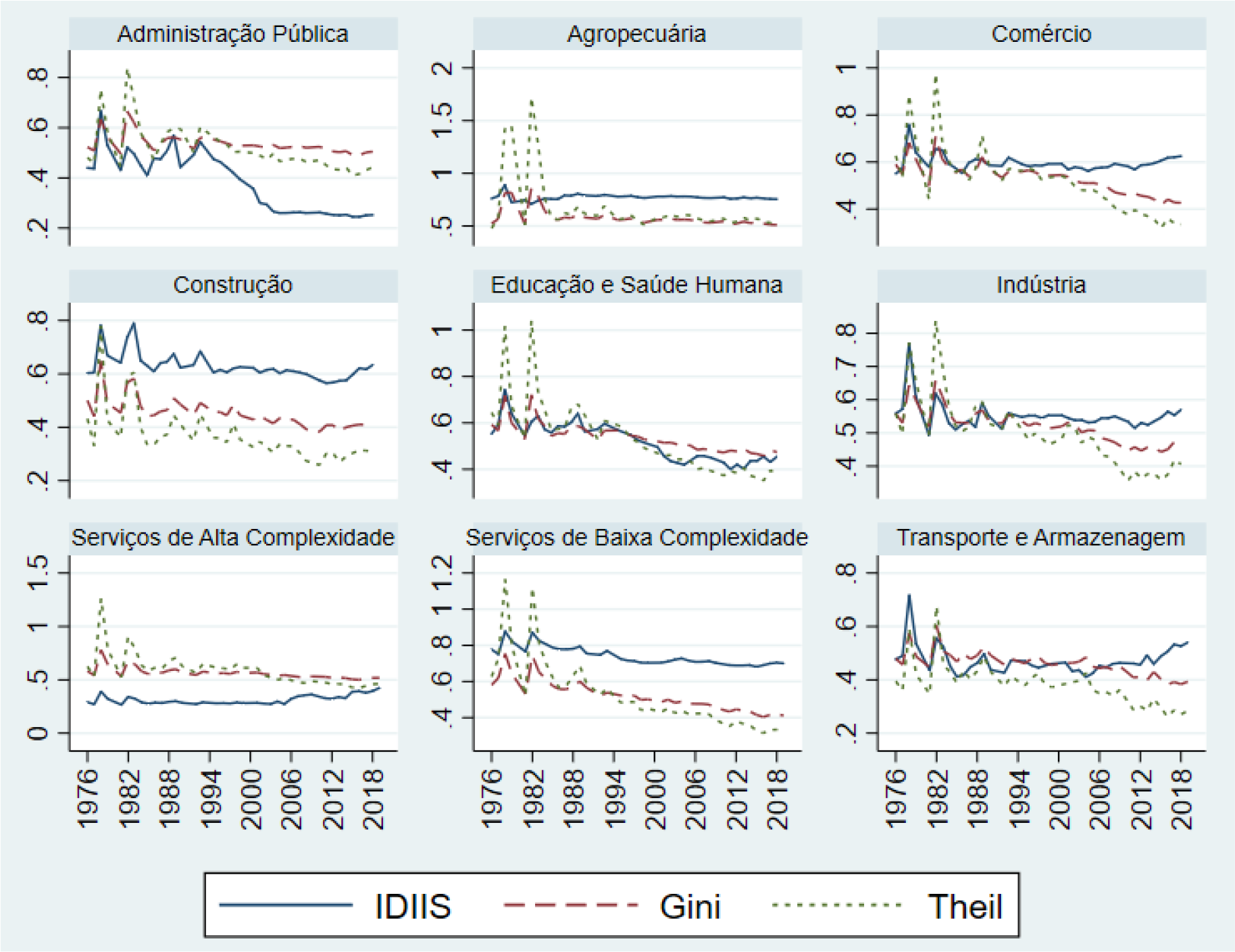 Fonte: IBGE. Elaboração dos autores.
 Fonte: IBGE, PNAD. Elaboração dos autores.
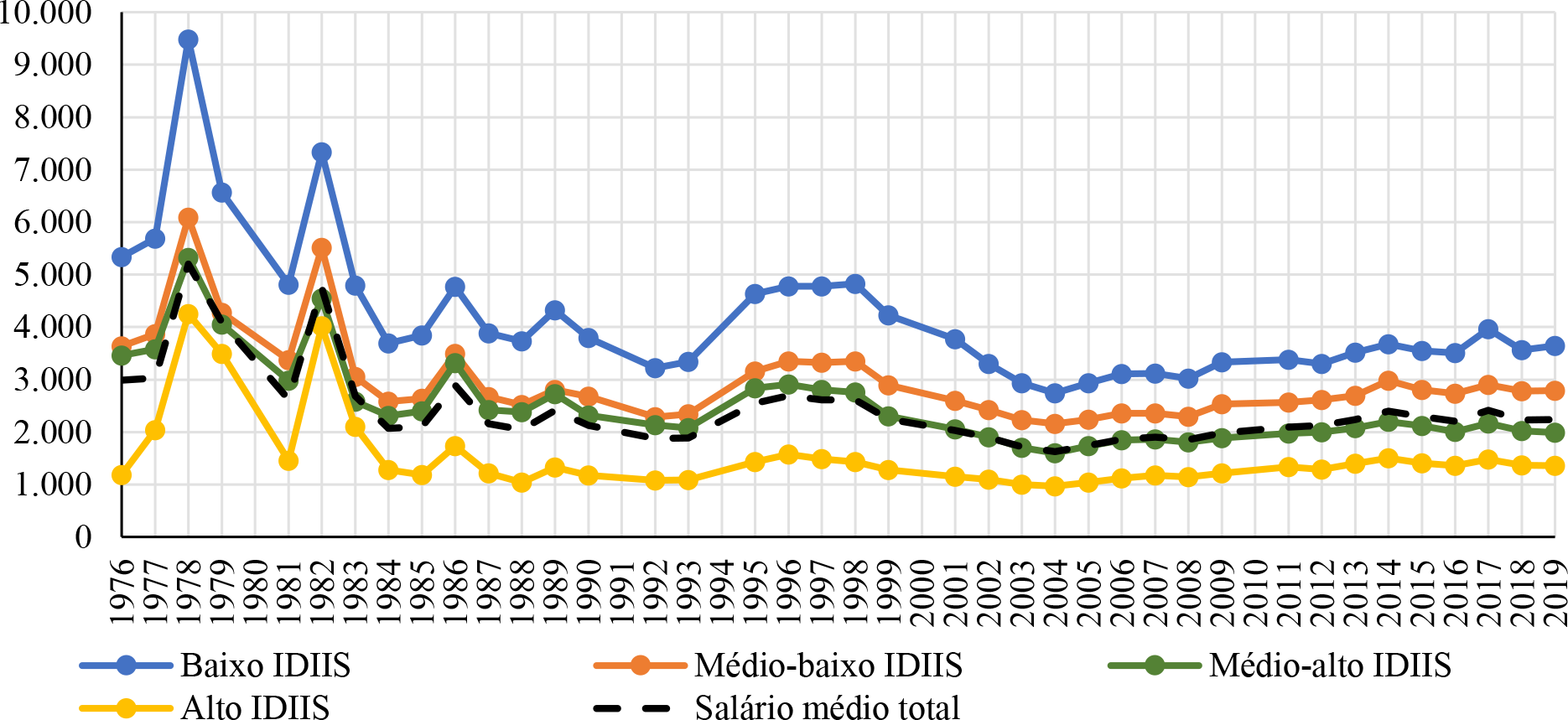 Fonte: IBGE, PNAD. Elaboração dos autores.