
 From Conflict to Compromise: How Resilience Links Job Satisfaction and Faculty Retention
Introduction. The shortage of teachers and high dropout rates highlight the central role of job satisfaction in teacher retention. This study critically analyzes how intrinsic and extrinsic factors interact to generate conflicts in the teaching profession.
Methodology. A systematic review was conducted in accordance with the Preferred Reporting Items for Systematic Reviews and Meta-Analyses 2020 guidelines, with methodological evaluation using the Mixed Methods Appraisal Tool. Twenty empirical studies published between 2020 and 2024, with high citation impact, were selected from the Scientific Electronic Library Online, Web of Science, Education Resources Information Centre, and Scopus databases. Results. Recurring associations were identified between administrative support and higher satisfaction, while work overload and low appreciation emerged as consistent predictors of stress and burnout. Resilience emerges not as an isolated attribute but as a mediating process conditioned by working conditions, determining whether conflicts foster professional growth or intensify burnout.
Discussion. A conceptual model is proposed in which faculty retention depends on the coordinated regulation between personal and institutional dimensions, challenging individualistic approaches to attrition.
Keywords
teacher job satisfaction; resilience; teacher attrition; Prisma; MMAT.
 Thumbnail
 Thumbnail
 Thumbnail
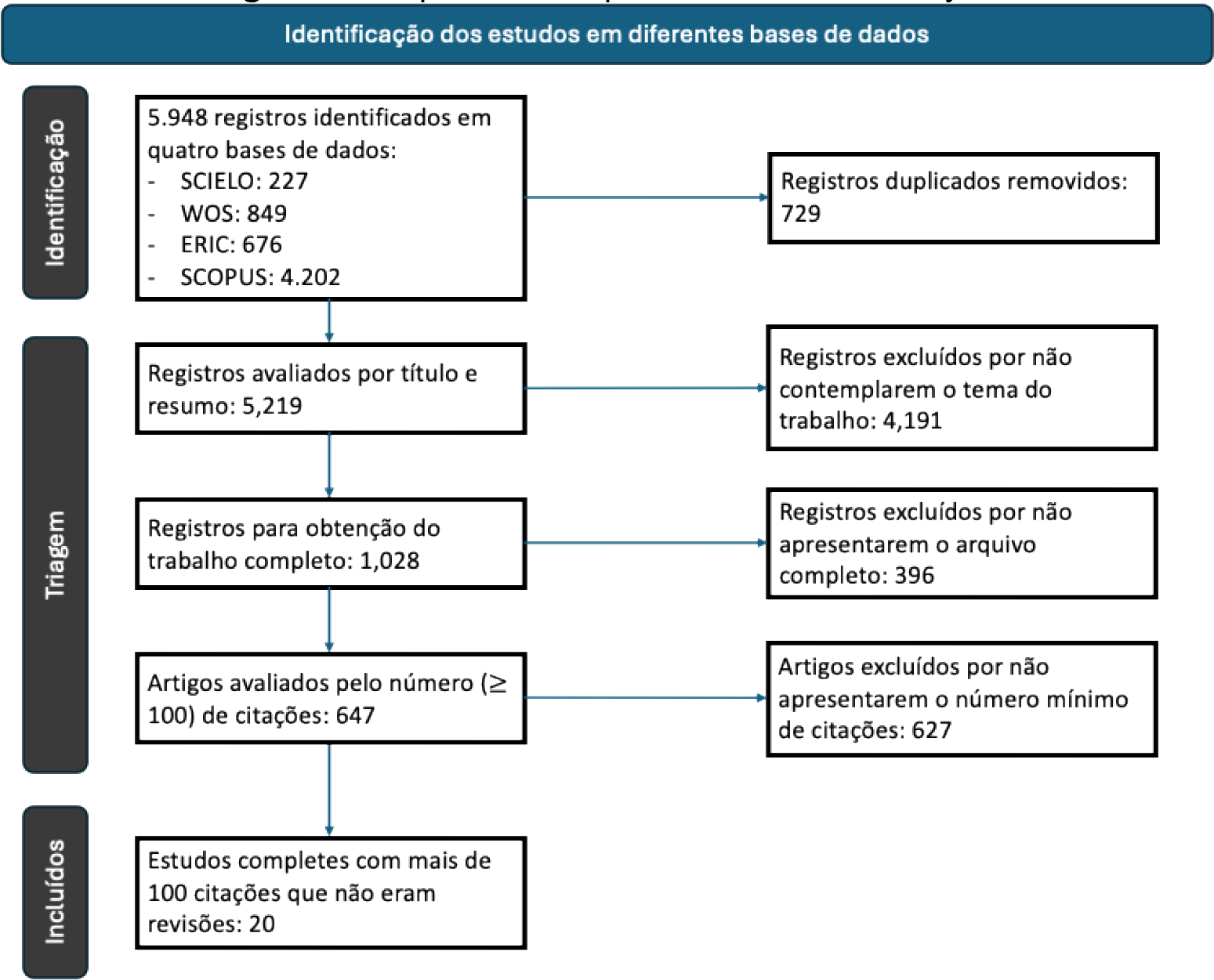 Source: Authors’ own elaboration (2025).
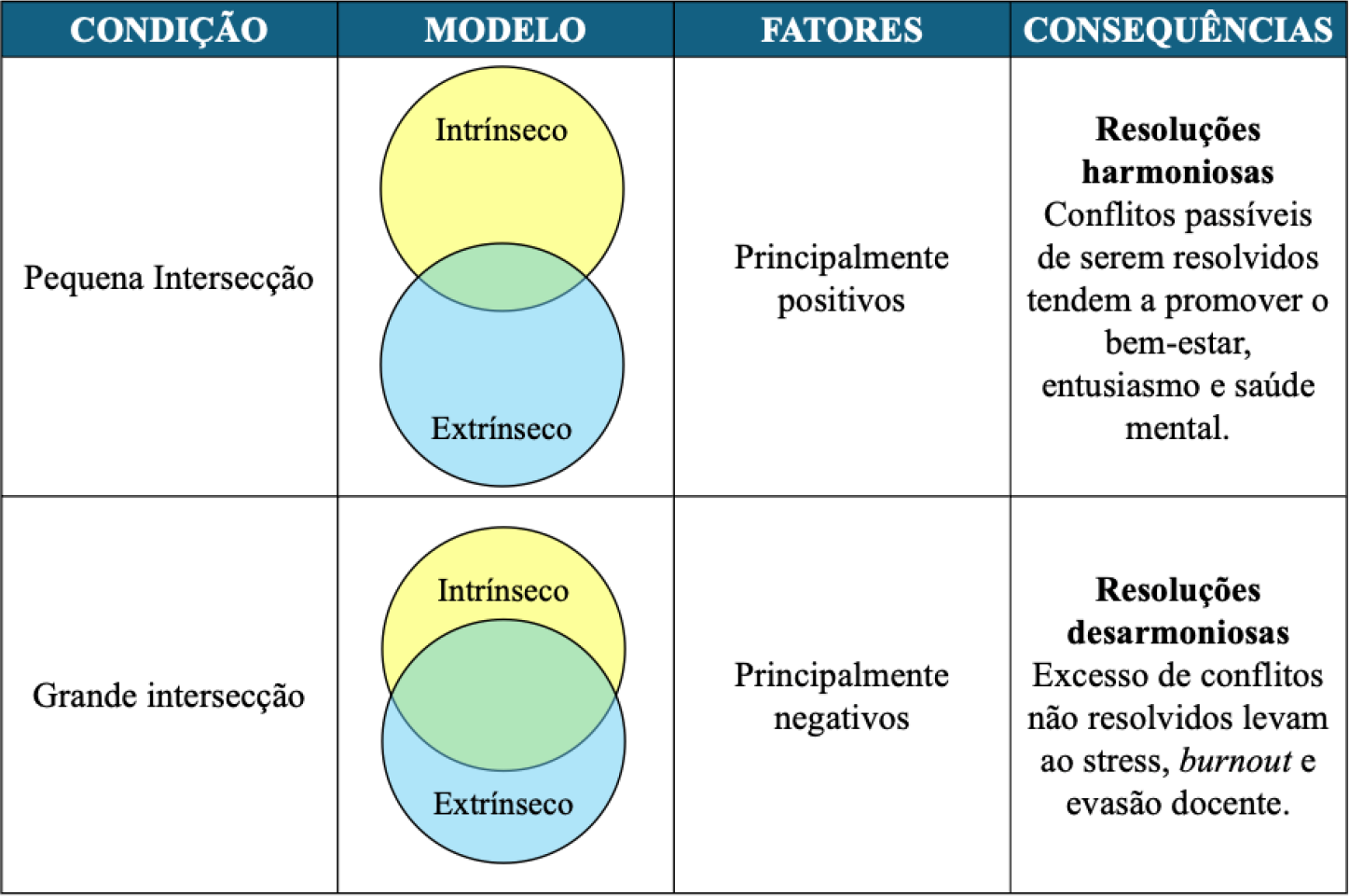 * The intensity of workplace conflict is represented by the shaded intersection between the two circles, where the size of the area is directly related to the intensity of the conflict. When intrinsic and extrinsic factors are positively regulated, the area is small, and thus there is less conflict.Source: Authors’ own elaboration (2025).
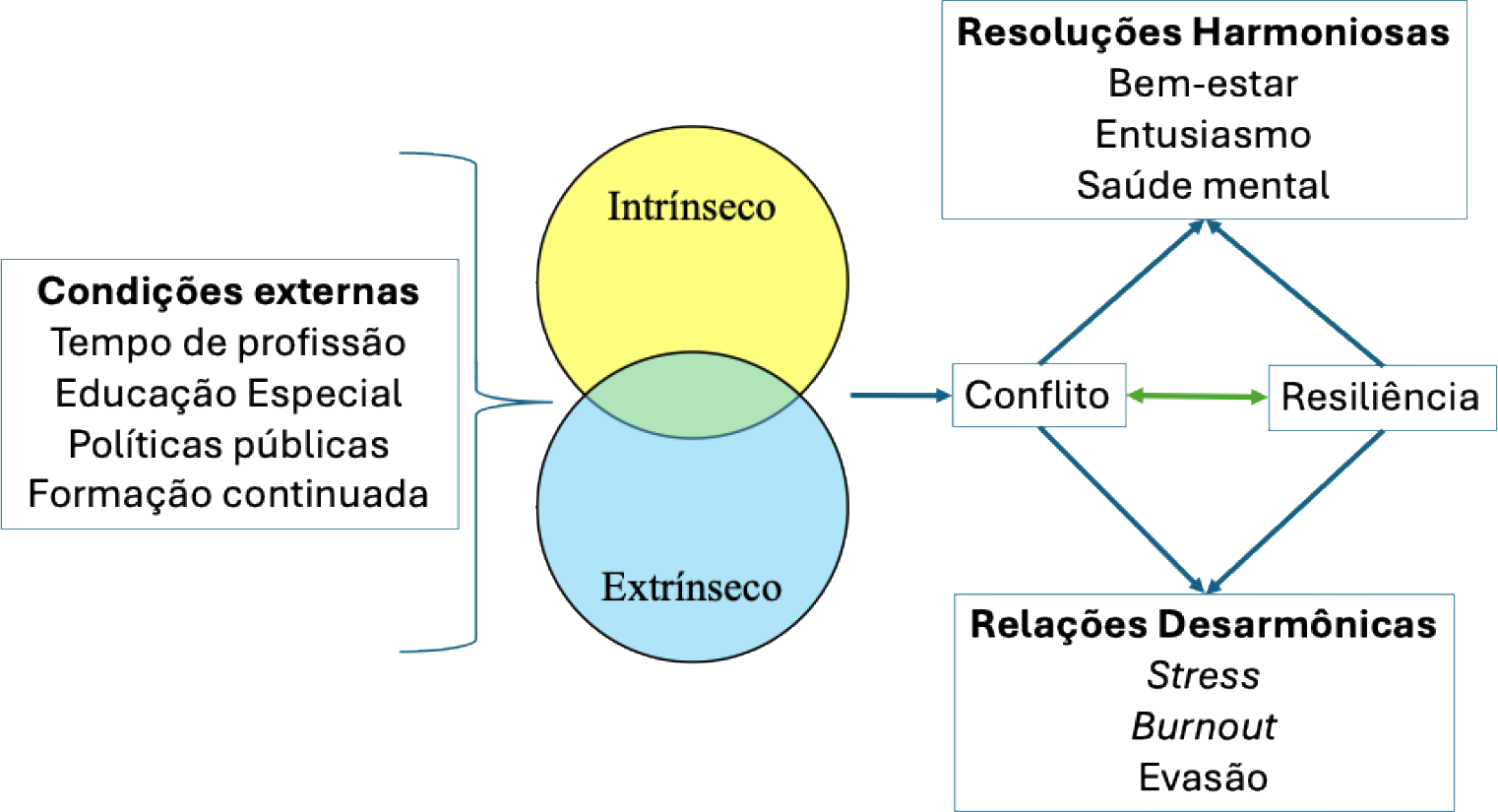 * The proposed model illustrates how conflict emerges from the interaction between intrinsic and extrinsic factors. Whether this conflict follows a harmonious or disharmonious path depends on the combination of the factors presented, the influence of external conditions, and the mediating role of resilience.Source: Authors’ own elaboration (2025).