
 NUCLEAR COMMUNICATIVE FUNCTION AS TEACHING STRATEGY FOR GERMAN MODAL PARTICLES: RELEVANCE OF THE MINIMALIST APPROACH
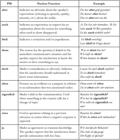
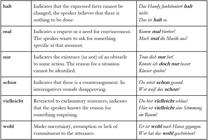
This work aims to introduce a proposal for teaching and learning German Modal Particles (MP) through their nuclear communicative functions. By having a highly structured internal paradigmatic organization, the minimalist approach considers each particle as having a specific communicative function, wherein their pragmatic meaning must be retrieved both by the recognition of their nuclear function, as well as by the interpretation of the communicative situation (AQUINO, 2023; DIEWALD, et al. 2017). Despite being of great importance for everyday interaction in German, MPs are rarely properly addressed in the context of German as an additional language (GAL) (AQUINO, 2020). In light of the experience in an extension course with teachers of GAL in Brazil, we argue that the description of the nuclear functions of MPs represents an innovative, objective and reliable tool for teaching of these modal elements in beginners to more advanced groups of students. As a didactic proposal we present: (i) a descriptive table with the nuclear functions of 15 MPs; (ii) a practical application of teaching MPs through their nuclear functions within authentic uses of doch and ja. Considering the gap of suitable didactic materials for teaching MPs, this proposal represents a significant contribution for GAL.
Key-words:
teaching modal particles; nuclear communicative function; learning strategies; German as an additional language
 Thumbnail
 Thumbnail
 Thumbnail
 Thumbnail
 Thumbnail
 Thumbnail
 Thumbnail
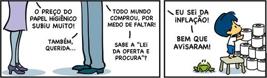 Thumbnail
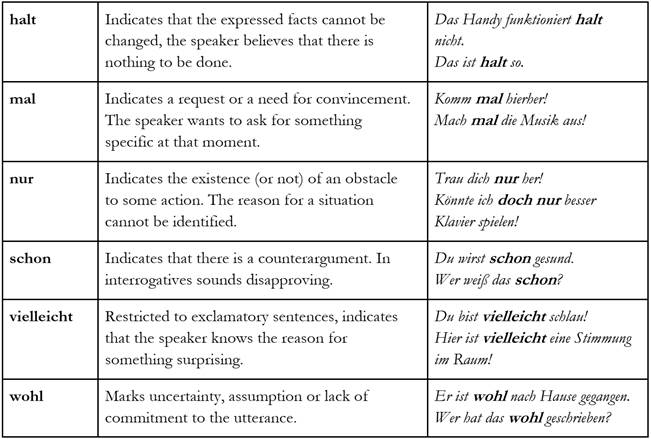
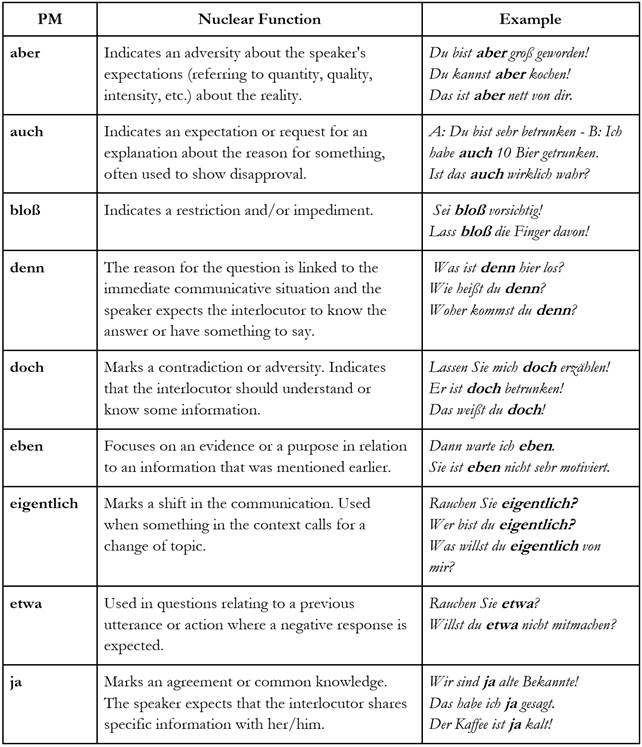 Source: Prepared by the author
 Source: @buzzfeedgermany
 Source: @funk
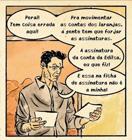
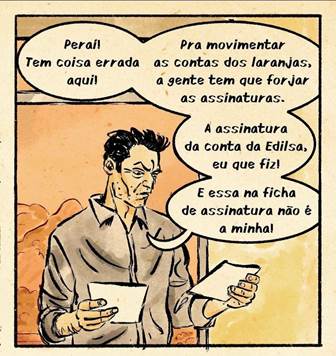 Source: @leandro_assis_ilustra
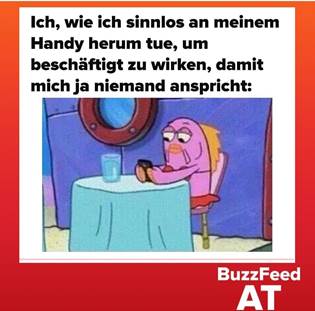 Source: @buzzfeedaustria
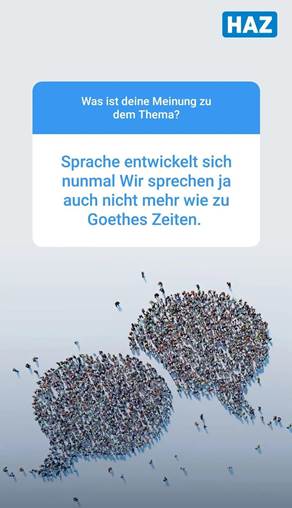 Source: @haz.de
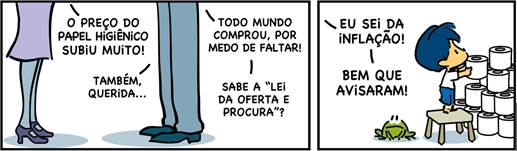 Sourse: @tirasarmandinho