
 CRITICAL-COLLABORATIVE HYBRID LEARNING: A DISCUSSION BASED ON THE SOCIAL-HISTORICAL-CULTURAL THEORY
Different conceptions about hybrid teaching, hybrid education, and hybrid learning have been disseminated since the pandemic period, without an effective discussion about which theoretical bases guide this hybrid work format. The objective of this paper is to discuss a teaching proposal carried out as part of a graduate program in Applied Linguistics and Language Studies (PUC-SP), focusing on hybrid teaching-learning in the light of the socio-historical-cultural theory and guided by critical-creative methodologies. More specifically, the study was anchored on the theoretical-methodological approach of Critical Collaborative Research (PCCol). It sought support in the concept of critical collaboration (Magalhães, 2010; 2011); in the studies of Vygotsky ([1930] 1991), Gutierrez et al. (1999); and in concepts that are the foundations of the discussion on hybridism (Canclini, [2001] 2008, Nørgård (2021). As a result, it was possible to highlight characteristics of hybrid teaching-learning from the socio-historical-cultural perspective: the development of autonomy, the interdependence between the proposed tasks aiming to expand spaces for critical-collaborative exchanges, the possibility of generating potential zones of development articulated with the real contexts of students' lives. Such results corroborate the need for new studies on hybrid teaching in postgraduate programs.
KEYWORDS:
Hybridism; Hybrid teaching-learning; Socio-historical-cultural perspective of hybrid teaching-learning; Learning stations; Critical-creative methodologies
 Thumbnail
 Thumbnail
 Thumbnail
 Thumbnail
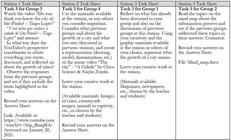 Thumbnail
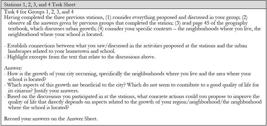 Thumbnail
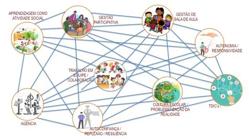
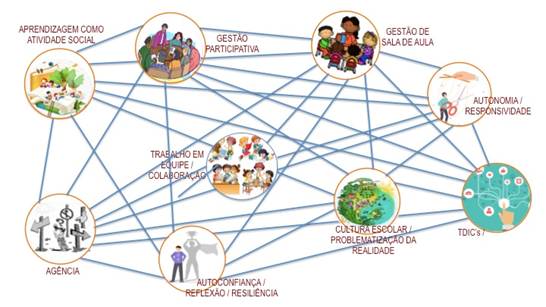 Source: created by the authorsLearning through social activityParticipative managementClassroom managementAutonomy/responsivenessTDICsSchool culture/probloematization of realitySelf-confidence/reflection/resililenceAgencyTeamwork/Collaboration
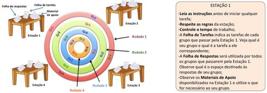
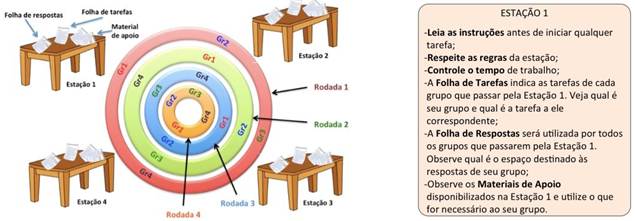 Source: created by the authorsSTATION 1- Read the instructions before beginning any task;- Respect the station rules;- Track the work time;- The Task Sheet indicates the tasks for each group that passes through Station 1. Determine which group is yours and what task is assigned to it;- The Answer Sheet will be used by all groups that pass through Station 1. Note the space designated for your group's answers;- Review the Support Materials available at Station 1 and use whatever is necessary for your group.
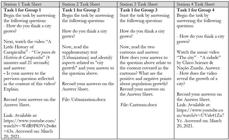
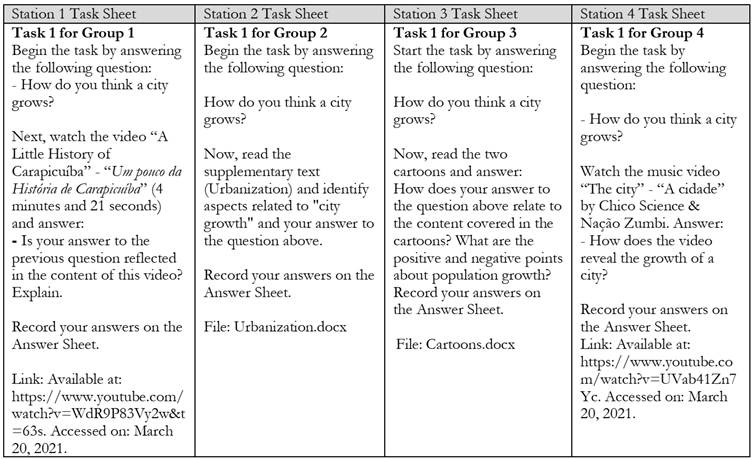 Source: created by the authors
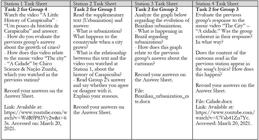
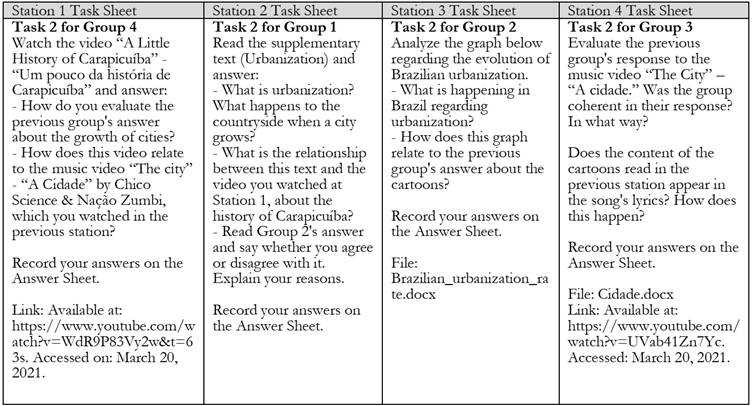 Source: created by the authors
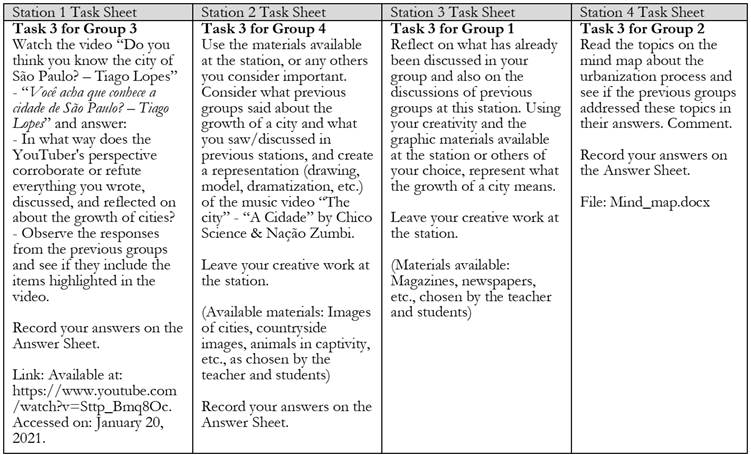 Source: created by the authors
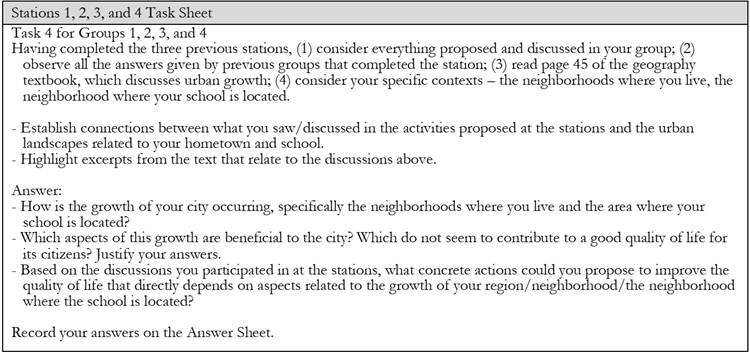 Source: created by the authors