
 NARRATIVE-RHETORICAL CARTOGRAPHIES FOR EDUCATIONAL INCLUSION: PROFESSIONAL ACTION SCENARIOS IN SCHOOL SUPPORT SITUATIONS
ABSTRACT:
In Chile, building inclusive schools implies defining the role and actions of support teams in the School Integration Program (PIE). However, this program has been reported to develop approaches simultaneously (integrative/inclusive) and to be rooted in deficit-based models and professional encapsulation, which hinder the professional actions of teams in school support situations. Thus, this study aims to understand how PIE professionals define and intervene in educational support situations in 7 Chilean educational institutions. Through a qualitative methodology with a narrative-rhetorical approach, examining 52 critical incidents, from which 10 exemplary cases were selected. The results highlight: 1) Difficulties with teaching and learning strategies, 2) Behavioral/disciplinary incidents of students, 3) Difficulties in collaborative work and 4) Difficulties in relations with families. The predominance of restricted-individualizing actions that privilege an integrative approach is discussed, in addition to mapping how professionals close/open their intervention scenarios. The methodological proposal presented provides valuable tools to deepen the definition and intervention of educational situations, emphasizing its relevance for initial and continuous training for education professionals.
Keywords:
Inclusive Education; Narrative approach; Pedagogical Situation; Education Professionals
RESUMEN:
En Chile, construir escuelas inclusivas implica definir el rol y el accionar de los equipos de apoyo en el Programa de Integración Escolar (PIE). Sin embargo, se ha reportado que este proyecto desarrolla una serie de enfoques simultáneos (integrador/inclusivo), basados en el déficit y el encapsulamiento profesional que impiden obturar las actuaciones profesionales de los equipos en las situaciones de apoyo escolar. Así, se busca comprender cómo los profesionales del PIE definen e intervienen en situaciones de apoyo educativo en 7 instituciones educativas chilenas. Se desarrolla una metodología cualitativa con enfoque narrativo-retórico, examinando 52 incidentes críticos, de los cuales se seleccionan 10 casos ejemplares. Los resultados destacan: 1) Dificultades con las estrategias de enseñanza y aprendizaje, 2) Incidentes conductuales/disciplinarios de estudiantes, 3) Dificultades para el Trabajo colaborativo y 4) Dificultades en las Relaciones con familias. Se discute la predominancia de actuaciones restringido-individualizadoras que privilegian un enfoque integrador, además de mapear cómo los profesionales clausuran/abren sus escenarios de intervención. Se concluye que la propuesta metodológica proporciona herramientas enriquecedoras para profundizar en la definición e intervención de situaciones educativas, y su relevancia para la formación inicial y continua para profesionales de la educación.
Palabras clave:
Inclusión Educativa; Enfoque narrativo; Situación Pedagógica; Profesionales de la Educación
RESUMO:
No Chile, a construção de escolas inclusivas implica definir o papel e as ações das equipes de apoio no Programa de Integração Escolar (PIE). No entanto, foi relatado que este programa desenvolve abordagens simultâneas (integradora/inclusiva), baseadas em modelos de déficit e encapsulamento profissional, que dificultam as ações profissionais das equipes em situações de apoio escolar. Assim, o objetivo é entender como os profissionais do PIE definem e intervêm em situações de apoio educacional em 7 instituições educacionais chilenas. Desenvolve-se uma metodologia qualitativa com abordagem narrativo-retórica, examinando 52 incidentes críticos, dos quais são selecionados 10 casos exemplares. Os resultados destacam: 1) Dificuldades com estratégias de ensino e aprendizagem, 2) Incidentes comportamentais/disciplinares dos alunos, 3) Dificuldades no trabalho colaborativo e 4) Dificuldades no relacionamento com as famílias. A discussão aborda a predominância de ações restritivas e individualizadoras que favorecem uma abordagem integradora, além de mapear como os profissionais fecham/abrem seus cenários de intervenção. Conclui-se que a proposta metodológica fornece ferramentas enriquecedoras para aprofundar a definição e a intervenção de situações educacionais, e sua relevância para a formação inicial e continuada de profissionais da educação.
Palavras-chave:
Educação Inclusiva; Abordagem Narrativa; Situação Pedagógica; Profissionais da Educação
INTRODUCTION
Moving forward on the path to educational inclusion (Figueroa-Céspedes et al., 2024) necessitates a framework that guides the development of inclusive schools, clarifying the roles and actions of both teaching and non-teaching support teams. These teams, which vary in composition and approach, have been integrated into school systems to provide educational support aligned with each institution's unique interpretation and implementation of inclusion (Azorín & Ainscow, 2020; Narváez et al., 2024). This diversity in understanding and practice underscores the importance of a strategic guide to effectively progress toward authentic and impactful inclusion.
In Chile, the School Integration Program (PIE-Programa de Integración Escolar), created in 2010, was proposed as an inclusive strategy to support the presence, learning, and participation of students with Special Educational Needs (SEN) (Ministry of Education [Mineduc], 2013), defining diagnostic, support, and collaboration roles for school teams (Mineduc, 2020). However, this policy has been characterized by internal tensions, as it is articulated from a simultaneously integrative and inclusive approach, affecting the work of professionals in the School Integration Program (PIE) (Figueroa-Céspedes et al., 2020; López et al., 2018); an issue that has been investigated and problematized internationally in other contexts (Ainscow, 2020; Moberg et al., 2020; Silva, 2022).
Research examining the individuals who contribute to the development of inclusive schools has primarily concentrated on the viewpoints of regular classroom teachers, administrators, and principals (Manghi & Valdés, 2020; Valdés et al., 2022). There has been comparatively little focus on the role of support professionals in this context (Dinamarca & Cabezas, 2023; Figueroa-Céspedes et al., 2020; Inostroza & Falabella, 2021; Otondo-Briceño et al., 2021).
Rappaport & Echeita (2018) emphasize that, despite the significant contributions made by these professionals, there are ongoing debates regarding their role that necessitate contextual definition. Research on the models guiding support actions reveals a tendency toward individual attention practices (Cartolari et al., 2008; Walker & Borges, 2024), often framed within a deficit perspective (Sandoval et al., 2019) that adopts a clinical-reductionist view of school-related issues (Ramírez & Valdés, 2019). Additionally, in the context of PIE supports, dynamics of professional encapsulation are prevalent (Manghi & Valdés, 2020), which obstructs collaboration with schools and limits the utilization of community and public resources and networks in addressing diversity (López et al., 2018). This disparity between the normative role and its practical application restricts these professionals' participation in the classroom, highlighting that their initial training, which is primarily clinically oriented, does not adequately prepare them to integrate fully into the dynamics of the school environment (Dinamarca & Cabezas, 2023).
In this scenario, aiming for an inclusive approach implies comprehensive and progressive transformations in the system to provide effective responses to diversity (Booth & Ainscow, 2015; Rocha-Damasceno et al., 2023), resulting in a challenge for interprofessional articulation and an expanded definition of problems and resources, to enrich these practices (Erausquin & D’ Arcangelo, 2018; Soto et al., 2018).
Contextually, how teacher support teams define professional intervention situations has been questioned. These situations reveal the units of analysis from which their practices are framed and guided (Erausquin & D'Arcangelo, 2018); this has established the need to form and construct identities that open up genuinely inclusive scenarios (Narváez et al., 2024). From a situated approach, the Critical Incident (CI) analysis technique has been used to identify and describe disruptive events in teaching practice, rather than facilitating reflective processes on professional modes of action. However, it has been rarely studied in the field of inclusion in education (Figueroa-Céspedes et al., 2020; Otondo-Briceño et al., 2021; Valdés & Monereo, 2012). Furthermore, the relevance of applying narrative-rhetorical approaches for the exploration and reflection of conflicting themes in education professionals has been pointed out (Van Beveren et al., 2018; Van Beveren, 2024)
On the other hand, Burke's (1969) dramatistic approach proposes a rhetorical analysis that identifies in the discourse, those units of analysis used to understand a situation together with their respective agency and identity positioning (Perinbanayagam, 2024), aspects that are guiding towards the construction of inclusive schools and, mainly, of the agents who develop their professional interventions in the educational support situation. However, this approach has been rarely used to understand educational phenomena, from the voice of the actors (Figueroa et al., 2013; Kaasila & Lutovac, 2024; Rutten & Soetaert, 2015; Van Beveren et al., 2018; Van Beveren et al., 2023).
Thus, we seek to understand how PIE professionals define and intervene in educational support situations in six Chilean public educational institutions. Thus, we apply a narrative-rhetorical analysis (Burke, 1969), enabling a mapping of the situational composition of these situations.
Definition of the situation of school support in inclusive contexts
Intervening in the School Support situation requires a deeper understanding of the definition that educational agents create of it. In this sense, defining a situation means answering the question “What is happening here?” This refers to social frames of reference for interpreting events, as well as the appropriate way to engage with them and the elements that this situation incorporates or excludes (Goffman, 2006). Thus, educational agents operate by defining situations and courses of action for their intervention (Erausquin & D'Arcangelo, 2018).
From a sociocultural perspective, Baquero (2016) posits that the educational context is an inseparable composite of the learners and educators, the social environment, and the cultural tools at play. However, this composite nature varies according to the focus and scope of the educational stakeholders and their frames of reference, resulting in more segmented or articulated units of analysis. As previously mentioned, among support professionals, these units have been characterized as primarily centered on the individual level and direct intervention, with insufficient integration of perspectives from other actors and resources (Cartolari et al., 2008; Walker & Borges, 2024). Furthermore, these approaches are often reactive and/or codified in relation to the problematic student or case (Ramírez & Valdés, 2019), viewed through a biomedical lens rather than an educational one (Erausquin & D'Arcangelo, 2018).
The aforementioned points highlight a fallacy of abstraction typical of methodological individualism, which is prevalent in psychoeducational disciplines and professions (Baquero, 2016). This underscores the importance of examining these distinctions and contributing to a new understanding of the situation based on the situated narratives of the individuals involved (Erausquin & D'Arcangelo, 2018). Furthermore, the construction of the situation concerning school support reveals a political, practical, and discursive configuration for what is meant by Educational Inclusion (Azorín & Ainscow, 2020). Consequently, as noted by Manghi & Valdés (2020), it is crucial to consider how inclusion is both understood and implemented, as its definition is reflective of a specific vision of education and society, which can be interpreted through paradigmatic and/or social project lenses.
The conceptualization of Inclusion as Integration represents a formative model designed to incorporate and ensure access for students—particularly those with a baseline diagnosis (SEN)—into regular classrooms. However, this model relies on classification practices that assign responsibility for the teaching and learning process to professionals who are typically not in the classroom (Manghi & Valdés, 2020). In contrast, the critical inclusive approach asserts that welcoming students is an institutional responsibility. This paradigm aims to create an educational space for all, fostering a pedagogy rooted in diversity and the appreciation of differences, while focusing on minimizing barriers to learning and participation (Booth & Ainscow, 2015). This approach strives to include all individuals at risk of exclusion (Rocha-Damasceno et al., 2023). In this context, the omnilectic perspective (Santos & Senna, 2020) expands our understanding by integrating critical and reflective viewpoints that articulate dialectics and complexity. It enables us to uncover and comprehend the social exclusions and injustices inherent in the educational system, thereby promoting more inclusive and equitable transformations.
Conversely, as a social initiative, it should be recognized as an intergovernmental commitment aimed at enhancing levels of equity, with the overarching goal of constructing a societal framework that dismantles socio-educational injustices (Manghi & Valdés, 2020). Within this context, the Chilean school system has implemented a range of significant government policies to define and address educational support needs (Inostroza & Falabella, 2021). These include the establishment of the Priority School Subsidy Programs (PIE), the Preferential School Subsidy Law of 2009, which allocates state resources to assist vulnerable students, Decreto 170 of the same year that outlines key diagnostic labels, Decreto 83 of 2015 for curricular diversification, and the School Inclusion Law of 2016, which abolished profit motives in education. Consequently, various intervention mechanisms have been introduced in most Chilean schools, supported by professionals from school coexistence teams, psychosocial teams, and the PIE team.
The PIE has primarily focused on addressing the diversity of children classified with SEN (Mineduc, 2020, 2013) through an interventionist approach, often at the expense of promotion or prevention strategies (Manghi & Valdés, 2020). This approach influences processes of diagnosis, support, and collaboration, whereby students are categorized based on the specific educational needs they require (Decreto 170, 2009). Consequently, their conditions are classified as either permanent or temporary. Regardless of their classification, schools receive additional funding for each student enrolled in the program.
It has been documented that the implementation of this public policy faces challenges stemming from both a clinical-rehabilitative and an individual approach to learning disabilities (Manghi & Valdés, 2020). Simultaneously, there is an increasing emphasis on incorporating mechanisms aligned with an inclusive model, which is associated with collaborative functions in educational processes from a rights-based perspective (López et al., 2018). This phenomenon is often referred to in the literature as paradigmatic hybridity (Figueroa-Céspedes et al., 2020; López et al., 2018). Moreover, these elements are connected to a prevailing narrative regarding support systems that encapsulate and assign responsibility to professional teams based on accountability frameworks (Manghi et al., 2020; Manghi & Valdés, 2020). Paradoxically, this dynamic perpetuates mechanisms of segregation and discrimination within the educational system itself (Figueroa-Céspedes et al., 2021), thereby constraining the creation of favorable governmental conditions for effective educational practices (Oszlak & O'Donnell, 2008). This underscores the urgent need for a genuinely inclusive identity-based agency and procedural framework (Narváez et al., 2024). Furthermore, the research conducted by Roa & Zenteno (2024) identifies three significant barriers that impede teacher collaboration: a lack of time due to excessive workload, a competitive culture that restricts cooperation, and inadequate institutional support, which manifests as insufficient resources and backing for collaborative efforts.
The present study emphasizes the significance of considering the units of analysis (Baquero, 2016; Erausquin & D'Arcangelo, 2018) when defining and intervening in support situations. This consideration influences whether professional action and identity exhibit a reductionist or a more integrated profile (Perinbanayagam, 2024). From an inclusive perspective, addressing this challenge is crucial for reducing barriers to learning and participation (Booth & Ainscow, 2015).
Critical Incidents and Kenneth Burke's Narrative-Rhetorical Approach
Navigating the waters of educational inclusion involves recognizing the difficulties and complexities of the process (Figueroa-Céspedes et al., 2024). In this context, Critical Incidents (CI) are a valuable tool for exploring these challenges. A CI is an emotionally disturbing and challenging event that demands an immediate response, testing the professional and interpersonal skills of the individual involved (Figueroa-Céspedes & Fica-Pinol, 2024; Mastro & Monereo, 2014). According to Nail et al. (2012), analyzing CIs involves breaking down experiences into their contextual, emotional, and professional dimensions, as well as emerging dilemmas and possible response alternatives, which facilitates a deeper understanding of the situation.
The CI technique is currently associated with a range of topics in education (Figueroa-Céspedes & Fica-Pinol, 2024; Davis & Knight, 2023; Msosa & Govender, 2020), emphasizing its potential for facilitating reflection on practice and transforming teachers' identity representations, particularly when individuals acknowledge the conflicts and limitations present in their professional action repertoires (Mastro & Monereo, 2014). However, its application in the context of inclusion in education has received limited attention (Figueroa-Céspedes et al., 2020; 2021) and has yielded an ambivalent assessment regarding its effectiveness (Valdés & Monereo, 2012).
The critical aspect pertains to a conflict or a momentary disruption of an established order (Sardi, 2013), which is essential to any narrative (Bruner, 2003). This unforeseen occurrence challenges our understanding of normality and results in temporarily articulated descriptions of facts and actions, executed by agents within specific contexts and means.
On the other hand, this proposal is based on the approaches of Kenneth Burke (1969) and his pentadic model of dramatic action (Kaasila & Lutovac, 2024; Perinbanayagam, 2024; Rutten & Soetaert, 2015; Wertsch, 1999), which allows the analysis of written/oral records as narratives, under the assumption that any action is interpretable from a dramatic logic, in the following dimensions:
-
Structure of the action, which is comprised of five components:
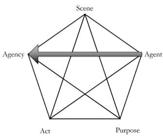
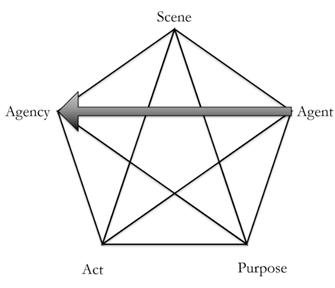
) Act: This is the action that takes place in a given scene and involves one or more actors.
) Scene: This encompasses temporal, social, and cultural aspects, ranging from the most immediate to broader spheres, depending on how they are conjured up in the action.
) Actor/Agent: This is/are the person/people who participate(s) in the scene and are indirectly/indirectly involved in the act or actions. Depending on the situation, this person/people can be divided into co-agent or counter-agent.
) Agency: This refers to the means/tools used by the actor/agent to achieve a specific goal, which can be material or abstract.
) Purpose: This corresponds to the goal pursued by the actor/s through the act, which may be implicit in the rest of the pentadic elements, and may also be multiple or even contradictory between actors.
-
Dialectical relationships (ratios) between the aforementioned components, which identify how one element prevails over or determines the others and how these processes define a situation, given that they render the other elements invisible or silent. Furthermore, they account for the narrator's selection principles, allowing us to understand how a situation is defined (Figueroa et al., 2013).
According to this proposal, drama emerges from the imbalance or inadequacy between the components; from an interdisciplinary standpoint, this is both foundational and identifiable within the narrative of a CI. Furthermore, one can assert that a CI occurs when actors detect imbalances or mismatches between two or more elements of the pentad (see Figure 1).
Burke (1969) aims to identify the motives attributable to actors through communication as an action. In this sense, his approach has been used to analyze political communication (Li & McKerrow, 2020; Darr & Strine IV, 2017). However, in education, it has been little developed, despite being considered a perspective on perspectives, towards the understanding of language, insofar as it constructs meanings, establishes negotiation of identities and the establishment of interpersonal relationships (Kaasila & Lutovac, 2024; Perinbanayagam, 2024; Rutten & Soetaert, 2015), in addition to allowing us to delve into the units of analysis of the agents (Wertsch, 1999).
From an articulated perspective, understanding the pedagogical landscape and its significant impact on the intentions of the agents involved is crucial. The scene, shaped by the action environment and the intersubjective space of the participants, enables us to observe the agential capacities that education professionals cultivate in pedagogical support situations. Consequently, depending on the focus and framing of the pentad, specific units of analysis emerge that define the educational context, highlighting its compositional and situated nature (Figueroa et al., 2013). These elements align with Vygotsky's (1978) sociocultural insights, as the events occurring within a situation are deeply intertwined with the immediate political and cultural contexts present in educational institutions. Thus, this narrative-rhetorical approach informs the current analytical model for mapping the units of analysis in defining and intervening in school support situations, based on CI narratives.
METHOD
This research is a qualitative study with an interpretive scope (Díaz, 2018) based on a narrative-rhetorical approach (Burke, 1969; Kaasila & Lutovac, 2024; Rutten & Soetaert, 2015). The sample consisted of 32 professionals from the PIE teams (Table 1) from SEVEN municipal educational institutions in a commune in the fourth region of Chile who participated in a training course on educational inclusion during the first half of 2019. The schools shared educational projects with an inclusive approach, observing five primary schools, one secondary school, and a micro-center for itinerant support that groups together a series of rural schools. Thus, the teams were asked to anonymously record at least one CI experienced in their school support practices, in the context of a training process focused on detecting barriers to learning and participation, obtaining 52 reports.
Participants developed each story based on an adaptation of Nail et al.'s (2012) CI script, which includes the following sections: incident description (where, when, what, and how it happened); emotions; professional performance regarding the incident; and reflection on what happened. Participants were given a brief example to complete each section, delineating each event described. First, an inductive content analysis (Díaz, 2018) was conducted, based on a thematic synthesis that allowed each CI to be categorized according to support areas. This resulted in four CI categories (Table 2), which provided access to the main axes of conflict among the participant group.
Second, representative or exemplary CIs (Figueroa et al., 2013) were selected for each category based on typicality criteria, that is, thematic generalization and internal descriptive frequency, and were reviewed in three rounds, according to the authors of the research. Thus, 10 CIs were subjected to a deductive analysis (Díaz, 2018) based on the Burkean pentad (Burke, 1969), identifying their predominant components and ratios.
We sought to identify and describe the interpretive keys for each CI category using the narrative-rhetorical model, rather than a detailed description of each section of the CI script and each element of the pentad, to understand the structure of the research participants' support situation. Finally, the research was conducted with informed consent approved by the affiliated Ethics Committee and was administered to each participant in physical form.
RESULTS
The results are presented with a focus on exemplary CIs, grouping four types of difficulties in school support practices: 1) Difficulties with teaching and learning strategies, 2) Behavioral/disciplinary incidents of students, 3) Difficulties in Collaborative Work and 4) Difficulties in Relationships with families.
Difficulties with teaching and learning strategies: Agency-Scene-Actor
They are about problems associated with teaching and learning methodologies, where the description of the incident suggests a failure in the agency, a common classroom or resource context, triggered by the difficulties presented by certain students, which are interpreted as challenges.
During resource room support, we work with students with ASD [Autism Spectrum Disorder]. The goal is to help them identify and name opposing concepts. The child manages this, but struggles to use the concepts (in sentences), only managing to identify and name concepts with difficulty (up-down). I felt frustrated because I tried various strategies, but I couldn't reach the child (CI6, Speech-language Pathologist).
Thus, the connection between the scene and the agency is highlighted, both in the account of the professional performance and in the reflection on the incident. In the same CI as above, in an exploratory professional performance, the physical space, as a scene, serves as a resource (agency):
When I saw that the child could only identify the concepts, I tried to use the space where we were to help him perceive the concepts (up-down), putting the child on top of the table and we placed ourselves under the table, without being able to get the child to express these concepts. After this, the child was taken to his classroom holding his hand and he crouched down and stood up, saying up-down (CI6, Speech-language Pathologist).
On the other hand, the reflection on a CI referring to group reading problems of a student with SEN, considers the diversity of the classroom (scene) as a criterion to evaluate and redefine failed strategies and methodologies (agency), from an inclusive perspective:
In a language class, I assisted a 3rd grade student. In that session, the children were reading collectively from the text assigned by the teacher, using a turn-taking methodology. When it was the turn of a student with reading and writing difficulties, the student began reading and successfully completed the paragraph, but his reading was choppy. Upon finishing the reading, many of his classmates openly expressed their incomprehension of what their classmate had read. At that moment, the class group was informed about each other's skills, such as strengths and weaknesses (...) When planning an activity within the classroom or with professionals in related fields, we must take into consideration the diversity of our students and generate assertive strategies and activities, so that our students feel confident in carrying them out and do not experience them as distressing situations that generate discomfort or insecurity (CI24, Psychologist).
Another variant pertains to the connection between the agency (methodology) and the actor-narrator. In this instance, a classroom instructor’s reflection on the shortcomings of strategies intended to encourage a student’s participation in support tasks within the resource room suggests that the actor will address the situation by modifying their approaches and strategies (agency).
During the afternoon of that day, I thought about the situation, not only the specific facts, but also a solution, really all the options available to me. First, I had to change myself, the way I worked with her, engaging in recreational activities, and reducing traditional paper-and-pencil tasks (CI16, Speech-language Pathologist).
In many CIs, strategies (agency) are the central theme of the reflection. They define the situation surrounding the incident and incorporate other elements, such as the scene. This introduction of the scene, however, is not very inclusive of other aspects beyond the immediate situation. It is also possible to note that the main actor (professional-narrator) takes direct responsibility for the incident.
Student Behavioral/Disciplinary Incidents: Act: Agency-Scene
These incidents refer to accounts detailing student behavioral problems, primarily in the classroom setting. In this case, they are presented as the mismatch between a student's (actor's) act (of indiscipline) and a situation (classroom rules), which are reported as destabilizing to the pedagogical dynamic. While these types of incidents tend to focus on an actor (the problem student) as the axis of the description, in some of them, the situation shifts and focuses on the agency, as the act (student indiscipline) stems from a teacher or other agents' lack of adequate tools to address it.
(…) At that moment, the student with behavioral challenges arrived, having been disciplined for his behavior in the previous class. I approached him, assigned him a seat, and provided context. However, his rebelliousness did not subside during the class. I implemented countless participation strategies to get him involved. However, I was unable to get him out of his anger and frustration. I presented the situation to the head teacher and the teaching assistant. I expressed my frustration and feelings about the situation. I asked for tools to deal with these situations. I felt supported and understood when I expressed this problem. I understood that I should remain calm and activate the support networks the teacher has for these situations (support assistant - psychologist) (CI18, SET).
In another case, the CI points out that the actor-narrator (SET) redefines a situation anchored to an act of indiscipline:
One Thursday in first period, we were starting class when a student entered the classroom late, sat down at his desk, and was getting ready to sleep. I personally approached him and asked him to correct his posture and pay attention to the class. The student refused, stating that he “doesn't care.” The class teacher noticed and began to complain to him in front of the class. The student became annoyed and covered himself up to continue sleeping. I approached him again, requesting one last time that he correct his posture. When he refused again, I wrote it down. The annoyed student pointed out to me, “You don't know why I'm sleepy. I don't care about this nonsense.” At first, I felt very frustrated at not getting the student's attention. I got annoyed. Then, upon hearing his last outburst and noticing his stress, I felt frustrated with my lack of empathy for the student and my extreme concern for the class and its structure. When I noticed the student was going through a rough issue, which somehow justified his delays and sleeplessness, I spoke to his head teacher and told her everything. She explained, and we met with the student. We both apologized, which in my case focused on seeing him as a person and not just another element that needs to be adapted (CI44, SET).
The initial inadequacy stems from the act of sleeping within the pedagogical context of the classroom. The first response from the SET and the classroom teacher typically involves the use of sanctions (notations) as a standard strategy, which proves to be inadequate in comparison to the response of the student. In addressing this issue, the SET expands its perspective to consider the student's personal challenges. In this context, the corrective action and the reflections upon it are shaped by the interplay between the scene and agency. A reevaluation of the scene transforms the approach—shifting from normative sanctions to dialogue—and, in doing so, it implicitly embraces a broader educational purpose that recognizes the student as a person.
Both incidents indicate that strategy (agency) alone, despite overcoming the deficient characteristics of the actor involved (problem student), is not enough without a redefinition of the pedagogical scene for an inclusive resolution.
Difficulties in Collaborative Work: Actor-Agency (-Scene)
These are incidents that hinder the development of collaborative tasks implemented by SET with classroom teachers, within the framework of the PIE, to improve teaching and learning practices. The CI lies in the mismatch between Actor-counteragent (subject teacher) and the collaborative work (agency) of the agent-narrator (SET), who describes the former as being wronged by the latter, characterizing him/her as disrespectful, impertinent, manipulative, etc.
Thus, the conflict relates to assessment procedures for students with SEN, where the counter-agent's actions reveal an (implicit) scene of distrust, hostility, or bureaucratization, in addition to highlighting discrepancies in the definition of these assessments. For example, the subject teacher is characterized as inappropriately addressing this instrument. Furthermore, the agent indirectly involves the student, who is accused of an act that is detrimental to him/her (he/she does not deserve the grade). However, for the SET, the agency (PACI [Individualized Curriculum Adjustment Plan-Plan de Adecuaciones Curriculares Individualizado]) legitimizes the grade obtained in the eyes of the teacher:
I was in my classroom evaluating a student when the math teacher arrogantly arrived with a test for a student who had gotten a grade (6.5); she said that compared to the course, the grade was very good and this student didn't deserve it because he didn't know as much as the others (he has Mild Intellectual Disability). The test considered the objectives contemplated in the student's PACI and didn't have a problem-solving item like the rest of his classmates'. It considered the goals that she and I had set for the school year and that he should reach, and that, according to its coding, had been achieved (CI48, SET).
Another similar situation occurs in an incident in which a classroom teacher identifies a mismatch between an actor (a student with SEN) and their respective scene (a regular classroom): “A teacher at school told me one day, 'This student is a no use to me in the classroom,' so she told me to work with her in the resource room” (CI49, SET).
Another narrative points out the discrepancy between the scene, based on the lack of legitimacy granted by the classroom teacher (counteragent) to the PIE and the co-teaching situation, in which the latter would operate by disqualifying (agency) the agent-narrator:
In my first year, I worked with a teacher who didn't believe in the integration project and what it required of us all, for the benefit of the students. So, whenever she could, she interrupted my participation in the classes and mentioned that I was wrong in my explanations, which in turn confused the students. It's worth noting that she realized she was wrong, but didn't acknowledge it, leaving the children wondering (CI15, SET).
Regarding the narrators' reflections on this type of CI, the actor-agency ratio predominates, where the negative characteristics of the counter-agent determine the impossibility and necessity of collaborative work. In this regard, a preference for direct intervention over a situation composed of multiple actors or scenes can be deduced.
It's a shame that in education there are people like this teacher (...), but I also believe I must continue doing my part for the students, because no matter how much we talk and work together, she won't change. I insist, the main focus is on the students (CI15, SET).
A variant of the actor-agency ratio in collaborative work occurs when the CI reflection focuses on the professional approach taken by the narrator. In this case, a consideration of the narrator's agency (self-control) in addressing the CI is incorporated into the situation. However, the possibility of developing collaborative work is conditioned by the subject teacher's negative attributes:
On other occasions the same thing happens to me and I suffered a lot, it was hard for me to get out of a situation like that, however, now that I have more experience I can't get destabilized, I didn't fall into the teacher's game and I managed to stay calm in front of my student, colleagues and with the conflictive teacher we reached an agreement that for another opportunity we should work more collaboratively, I feel that we still need to talk to her about the attitude she adopted, because it was not the right one. (CI48, SET).
In both cases, the stories focus on the characteristics of the actors (victimized/empowered agent and counter-agent with negative attributes) without addressing the characteristics of collaborative work itself (agency), nor the characteristics of the scene in which it is inscribed (the role of the PIE, school context, etc.).
However, some aspects of the situation are alluded to in the description of the CI, but they are insufficient in defining and reflecting on the support situation. The story portrays a bureaucratized and formalistic school culture that fails to generate conditions to sustain collaborative work (agency) or channel the conflicts this entails beyond individual actions, generating imbalances in the subjectivity of the actors.
First, I withdrew from the conversation, went to my classroom to report the incident to the Coordinator [PIE], and then went to report the situation to the school director, who suggested I file a complaint in writing for a prompt resolution. I think any agreement established should be detailed in writing, responsibilities should be shared, and respect should be commanded because my work should be valued, and above all, I as a person. I felt like everything came to nothing. (CI4, SET)
Difficulties in Relationships with Families: Scene-Actor-Purpose
These incidents relate to interactions between PIE professionals and students' families. Specifically, the situation highlights the predominant mismatch between the purpose and the actor about the scene, in this case, the expectations of a parent regarding the PIE:
A parent approached the PIE to request that we admit her son, as she felt he had many difficulties and that being in the PIE would make it easier because her son had asked her to. [I felt] bewilderment, concern, and a lot of anxiety. As the coordinator at the time, I told her that it wasn't like that, and I also had to do everything with the assessment that would have to be done. I questioned the work of the PIE and the awareness-raising that should have been done more intensively, both for students and parents, so that diversity would be understood, and valued (CI 8, SET).
In the example, the scene (entry requirements) determines the impertinence of the guardian's (or responsible family member's) purpose and act (application for admission to the PIE program) and, by extension, the student's (indirect actor). The professional action consists of clarifying the admission conditions, that is, the limits of the institutional setting with the characteristics of the indirect actor. In the reflection, the narrator identifies that the cause of the CI corresponds to a previous mismatch in the (insufficient) performance of the PIE team, following one of its purposes (awareness raising). Thus, the guardian's impertinence is an indicator of a lack of understanding and respect for diversity. Diversity that is visible, it seems, as long as it coincides with the program's procedures.
The predominance of a partial and rigid framework, focused on the procedural and vertical aspects of the PIE, favors a position of protection from the established PIE policy. Considering a broader or more flexible framework would allow a parent's intention to seek support for their pupil's learning difficulties to be understood without impertinence. It could also provide a window into the construction of the educational situation, rather than the partial and closed institutional mechanism of the program.
DISCUSSION
An analysis of the CIs reported by PIE professionals in seven Chilean educational institutions identified the main difficulties faced in school support practices. These are grouped into four key categories: teaching and learning strategies, behavioral/disciplinary incidents, collaborative work, and relationships with families. These dimensions highlight the tensions present in school contexts and the challenges faced by the educational community in building inclusive environments. The reports show how the professional team alternates between clinical-rehabilitative and pedagogical approaches, depending on their ability to recontextualize problems and actively address diversity. However, there is a persistent tendency toward immediate solutions that neglect structural factors, limiting the effectiveness and sustainability of interventions.
The difficulties observed in CIs reflect a complex interaction between agency, setting, and actor within the educational context. Following Burke's (1969) rhetorical theory, roles and meanings in the pedagogical setting are continually constructed and redefined through classroom experiences and the experience of educational support. This approach is complemented by aspects of the sociocultural approach (Vygotsky, 1978), which highlights the role of the social and cultural context in mediating learning. This implies that pedagogical strategies, the teacher/support team-student relationship, and educational effectiveness are influenced by the dynamics of the environment, at the level of educational policies and cultures.
The findings of this research indicate that the incidents identified by professional teams can be interpreted as mismatches among various elements of Burke's (1969) pentad. This understanding helps establish frameworks for how professionals navigate their educational support actions. The interaction of these components shapes professional performance, which can range from a more constrained approach to a more integrated one, characterized by either greater flexibility or rigidity. When one element of the pentad dominates in a rigid, unidirectional manner, it restricts a comprehensive understanding of the problem. For instance, this dynamic can be observed in the challenges of professional collaboration, which may be influenced by the attributes of the actors involved, such as the classroom teacher versus the counteragent, or by the oversimplification of student diversity and family perspectives due to rigid norms and diagnoses necessary for accessing the PIE (scene). On the other hand, fostering greater interdependence among the components of the pentad can enhance the educational support landscape. This interdependence enables a redefinition of professional interventions and encourages a more innovative approach to the situation. Such an approach requires decentering the primary actor, reallocating their tools, and sharing responsibility within the professional community. This process ultimately enriches the shared vision of the team. Additionally, it directs reflection toward more enriching strategies, albeit with a focus on the immediate context, by incorporating referential narratives that involve indirect participants, such as the student body.
The units of analysis that form the basis for defining situations and their corresponding interventions raise important questions regarding the interdisciplinary approaches needed to tackle emerging educational issues. These inquiries set the stage for exploring the current limitations in the co-construction of shared situational models among support professionals and other stakeholders in the school environment (Cartolari et al., 2008; Walker & Borges, 2024). This endeavor has the potential to enhance the visibility and utilization of resources within the broader educational community, thereby fostering learning and participation—two fundamental aspects of a critical inclusive perspective (Booth & Ainscow, 2015). The omnilectics perspective (Rocha-Damasceno et al., 2023; Santos & Senna, 2020), which synthesizes complexity and dialectics, provides a profound understanding of inclusive social situations as dynamic processes characterized by continual change, wherein tensions and contradictions among actors, policies, and sociocultural contexts interact and influence one another. This approach underscores the necessity of adopting flexible analytical models that acknowledge the interdependence of these elements, facilitating the co-construction of context-specific solutions. Such solutions must address classroom diversity while considering structural factors and their interplay with the various systems within the school ecology. In this manner, a dynamic and transformative process of educational inclusion is promoted.
From a political-institutional perspective, the effectiveness and individual accountability inherent in inclusion policies in Chile (Manghi et al., 2020) reveal an internal fragmentation. On one side, there exists an inherited rehabilitative medical model, while on the other, an inclusive approach that advocates for collaborative efforts and the diversification of teaching (Figueroa-Céspedes et al., 2020; López et al., 2018). These contradictions, reflected in state policies (Oszlak & O'Donnell, 2008), emerge within the school management of the PIE, where management teams encounter challenges in fostering conducive conditions for collaborative work (Roa & Zenteno, 2024). This situation is partly attributed to the economic incentives tied to diagnostic processes, which link the provision of extraordinary subsidies to each diagnosed student (Figueroa-Céspedes et al., 2020).
The professional self-perception of educators regarding CI is a crucial factor in assessing both their performance and the strategies they employ. This self-awareness helps identify areas for improvement aimed at enhancing inclusion in education. However, educational mediations often operate within clinical and fragmented frameworks (Ramírez & Valdés, 2019), which oversimplify the inherent complexity of pedagogical work (Baquero, 2016) and perpetuate an integrative paradigm alongside an interventionist logic (Manghi & Valdés, 2020). These dynamics expose significant tensions related to the implementation of educational and curricular approaches among the various stakeholders within the school context (Dinamarca & Cabezas, 2023; Figueroa-Céspedes et al., 2020; Guerrero & Rojas, 2023). Therefore, exploring how professionals navigate challenging situations, as revealed in the findings, enables a reconfiguration of pedagogical practices towards more inclusive and collaborative methods.
FINAL CONSIDERATIONS
The process of educational inclusion in Chile can be understood as a complex transformation, akin to an odyssey (Figueroa-Céspedes et al., 2024). This journey necessitates identifying the challenges faced by educational stakeholders and analyzing the dynamics of school support. From the perspective of Santos & Senna (2020), grasping the dialectical and complex nature of the educational system involves recognizing both its interconnections and contradictions, along with taking action to overcome these challenges, thereby fostering genuine and transformative inclusion processes. The analysis indicates that participants in the educational field constantly negotiate and redefine their objectives, whether they pertain to pursuing inclusive aims, modifying pedagogical practices, or adapting to student needs. It is evident that rigidity in inclusive definitions and approaches hampers the effectiveness of practices, as situations cannot be addressed in isolation. Instead, they require an interdependent perspective, wherein the agency of professionals is developed through dialogue with the conditions of their environment. Thus, the findings emphasize the urgent need to rethink and transform the analytical frameworks used in these agencies (Baquero, 2016; Erausquin & D'Arcangelo, 2018) to create collaborative professional scenarios that sustainably promote inclusion in schools.
The examined cartographies not only encourage critical reflection but also facilitate a comprehensive understanding of the social and cultural dynamics that underpin inclusive classrooms (CIs). In this context, the inherent tensions of human conflicts are illuminated (Sardi, 2013), creating an opportunity to develop flexible, dialogic, and innovative educational practices that can address the challenges posed by diversity in the educational landscape. Consequently, educational inclusion emerges as both a guiding framework for professional practices—aimed at reducing barriers to learning and participation—and as an ethical and social initiative that seeks to diminish inequalities and promote social justice (Booth & Ainscow, 2015; Manghi & Valdés, 2020). This perspective encourages us to methodologically and actively advocate for approaches that highlight the structural barriers faced by various educational stakeholders, recognizing the complexity and dialectic nature of our commitment to inclusion (Rocha-Damasceno et al., 2023; Santos & Senna, 2020).
Moreover, this approach carries significant practical implications by fostering self-analysis and collaborative reflection within educational teams. This process aids in identifying blind spots in problem definition and generates action research proposals focused on enhancing educational practices. CI analysis emerges as an essential tool for revealing the tensions between institutional structures and inclusive discourses (Figueroa-Céspedes et al., 2020; Sardi, 2013; Manghi & Valdés, 2020), highlighting the conflicts between traditional paradigms and critical perspectives (Figueroa-Céspedes et al., 2020; López et al., 2018). Utilizing a narrative-rhetorical approach (Burke, 1969; Kaasila & Lutovac, 2024; Rutten & Soetaert, 2015) promotes a nuanced and situational understanding of Contextual Inquiries, encouraging comprehensive reflection on the implications of inclusion in practice. Furthermore, collaborative analyses of situations foster dialogue across various disciplines, enriching the contextual understanding of Contextual Inquiries through the exchange of diverse analytical approaches. By equipping professional teams with reflective tools rooted in their own narratives (Van Beveren, 2024), this method encourages the development of collaborative and sustainable practices tailored to specific contexts. Consequently, implementing these methodologies in professional and continuing education programs tied to educational support holds significant potential for benefit, as it aids in constructing inclusive professional identities (Narváez et al., 2024) that ultimately serve society as a whole.
Among the methodological limitations identified, the absence of a targeted approach to gender and age variables is particularly noteworthy, as these are critical factors in educational collaboration (Ortega et al., 2023). Moving forward, we recommend a deeper exploration of the roles of various stakeholders within support teams to capture a diverse range of perspectives and approaches, ultimately facilitating the reconfiguration of learning environments in the context of educational inclusion. Additionally, it is crucial to expand our understanding of the contextual factors that influence the dynamics of educational support by incorporating methodological exercises that include semiotic and multimodal representations of support situations, as discussed in studies on educational quality (Manghi et al., 2022). Furthermore, adopting a biographical approach (Morales & Taborda, 2021) would offer valuable insights into the identity-based elements that either reinforce or challenge inclusive paradigms within professional careers.
References
-
Ainscow, M. (2020). Promoting inclusion and equity in education: lessons from international experiences. Nordic journal of studies in educational policy, 6(1), 7-16. https://doi.org/10.1080/20020317.2020.1729587
» https://doi.org/10.1080/20020317.2020.1729587 -
Azorín, C., y Ainscow, M. (2020). Guiando a las escuelas en su camino hacia la inclusión. International Journal of Inclusive Education, 24(1), 58-76. https://doi.org/10.1080/13603116.2018.1450900
» https://doi.org/10.1080/13603116.2018.1450900 - Baquero, R. (2016). La falacia de abstracción de la situación en los abordajes psicoeducativos. En N. Abate & R. Arué(coord.), Cognición, Aprendizaje y Desarrollo(pp. 55-73). Noveduc.
- Booth, T., & Ainscow, M. (2015). Guía para la educación inclusiva: desarrollando el aprendizaje y la participación en los centros escolares FUHEM-OEI.
- Burke, K. (1969). A grammar of motives University of California Press.
- Bruner, J. (2003). La fábrica de Historias: Derecho, literatura, vida Fondo de Cultura Económica.
- Cartolari, M., Naya, M., & Lania, M. (2008). Modelos mentales de intervención en escenarios de integración escolar: su apropiación y construcción en una comunidad de práctica [Resumen ponencia]. XVJornadas de Investigación y Cuarto Encuentro de Investigadores en Psicología del Mercosur, Argentina.
-
Darr, C., & Strine IV, H. (2017). Natural Disasters and the Rhetorical Construction of American Values: Community Exceptionalism as Representative Anecdote. Atlantic Journal of Communication, 25(5), 293-304. https://doi.org/10.1080/15456870.2017.1377201
» https://doi.org/10.1080/15456870.2017.1377201 -
Davis, K., & Knight, D. (2023). Assessing learning processes rather than outcomes: using critical incidents to explore student learning abroad. Higher Education, 85, 341-357. http://dx.doi.org/10.1007/s10734-022-00836-6
» https://doi.org/10.1007/s10734-022-00836-6 - Decreto 170. (2009). Fija normas para determinar los alumnos con necesidades educativas especiales que serán beneficiarios de las subvenciones para educación especial Biblioteca del Congreso Nacional.
-
Díaz, C. (2018). Investigación cualitativa y análisis de contenido temático. Orientación intelectual de la revista Universum. Revista General De Información y Documentación, 28(1), 119-142. https://doi.org/10.5209/RGID.60813
» https://doi.org/10.5209/RGID.60813 -
Dinamarca, K. A., & Cabezas, J. M. (2023). The interprofessional practice of health professionals in inclusive schools: A study using respondent-driven sampling. Journal of Interprofessional Education & Practice, 32, 100650. https://doi.org/10.1016/j.xjep.2023.100650
» https://doi.org/10.1016/j.xjep.2023.100650 - Erausquin, C. & D' Arcangelo, M. (2018). Unidades de Análisis para la construcción de conocimientos e intervenciones en escenarios educativos. En C. Erausquin (coord.) Interpelando entramados de experiencias. Cruce de fronteras e implicación psico-educativa entre universidad y escuelas(pp. 7-34). EDULP.
-
Figueroa, B., Aillon, M., & Salazar, O. (2013). La acción mediada, una unidad de análisis para revisar las prácticas de lectura y escritura hipertextual en la formación de profesores. Revista de Universidad y Sociedad del Conocimiento, 10(1), 75-88. http://dx.doi.org/10.7238/rusc.v10i1.1291
» https://doi.org/10.7238/rusc.v10i1.1291 -
Figueroa-Céspedes, I., Sepúlveda, G., Soto, J., & Yáñez-Urbina, C. (2020). Coenseñanza entre docentes de educación general básica y educadoras diferenciales: incidentes críticos de la práctica colaborativa en programas de integración educativa. Pensamiento educativo, 57(1), 1-15. http://dx.doi.org/10.7764/pel.57.1.2020.1
» https://doi.org/10.7764/pel.57.1.2020.1 -
Figueroa-Céspedes, I., Arévalo-Aróstica, N., Yáñez-Urbina, C., & Muñoz-Abarca, F. (2021). Incidentes críticos de la participación en el aula: explorando la voz de estudiantes del programa de integración escolar. Revista Sul-Americana de Psicología, 9(1), 11-38. https://doi.org/10.29344/2318650X.1.2546
» https://doi.org/10.29344/2318650X.1.2546 -
Figueroa-Céspedes, I., Fica-Pinol, E., Soto-Cárcamo, J., Rodríguez, B., & Quezada, M. (2024). Un viaje hacia la inclusión: procesos de autoevaluación institucional participativa en una escuela municipal chilena. Cuadernos De Investigación Educativa, 15(1). https://doi.org/10.18861/cied.2024.15.1.3700
» https://doi.org/10.18861/cied.2024.15.1.3700 -
Figueroa-Céspedes, I., & Fica-Pinol, E. (2024). Incidentes críticos en educación infantil: mapeando situaciones y emociones experimentadas por educadoras de párvulos. Educación y Humanismo, 26(47). http://dx.doi.org/10.17081/eduhum.26.47.6366
» https://doi.org/10.17081/eduhum.26.47.6366 - Goffman, E. (2006). Frame Analysis: los marcos de la experiencia Centro de Investigaciones Sociológicas.
-
Guerrero, Y., & Rojas, C. J. (2023). Opportunities and challenges for speech-language pathologists to move towards inclusive education in Colombia. Rev. Fac. Med, 71(4), e104651. https://doi.org/10.15446/revfacmed.v71n4.104651
» https://doi.org/10.15446/revfacmed.v71n4.104651 -
Inostroza, F., & Falabella, A. (2021). Educadoras diferenciales en Chile frente a las políticas de rendición de cuentas: Incluir, estandarizar y desobedecer. Revista mexicana de investigación educativa, 26(88), 123-148. http://www.scielo.org.mx/scielo.php?script=sci_arttext&pid=S1405-66662021000100123&lng=es&tlng=es
» http://www.scielo.org.mx/scielo.php?script=sci_arttext&pid=S1405-66662021000100123&lng=es&tlng=es - Kaasila, R., & Lutovac, S. (2024). Analyzing Burkean Rhetoric in Pre-service Teachers’ Identity Narratives. En E. Hyry , O. Ylitapio M. Uitto (Eds.), Narratives in Educational Research: Methodological Perspectives(pp. 161-177). Springer Nature Switzerland.
-
Li, Z., McKerrow, R. (2020). Xi Jinping's keynote in the Belt and Road Forum: a pentadic cartography. Critical Discourse Studies, 8(5), 504-518. https://doi.org/10.1080/17405904.2020.1761411
» https://doi.org/10.1080/17405904.2020.1761411 -
López, V., González, P., Manghi, D., Ascorra, P., Oyanedel, J., Redón, S., Leal, F., & Salgado, M. (2018). Políticas de inclusión educativa en Chile: tres nudos críticos. Archivos Analíticos de Políticas Educativas, 26(157), 1-24. https://doi.org/10.14507/epaa.26.3088
» https://doi.org/10.14507/epaa.26.3088 -
Manghi, D., Ceroni-Piña, P., Montaner-Chichizola, G. (2022). “El mejor liceo de Chile”, calidad en educación pública y sus representaciones semióticas en disputa. Perspectivas De La Comunicación, 15(1), 183-217. http://dx.doi.org/10.4067/S0718-48672022000100187
» https://doi.org/10.4067/S0718-48672022000100187 -
Manghi, D., Conejeros, M., Bustos, A., Aranda, I., Vega, V., & Diaz, K. (2020). Comprender la educación inclusiva chilena: Panorama de Políticas e investigación educativa. Cadernos de Pesquisa, 50(175), 114-134. https://doi.org/10.1590/198053146605
» https://doi.org/10.1590/198053146605 -
Manghi, D., & Valdés, R. (2020). Ampliando los horizontes de acción de los asistentes de la educación desde una perspectiva inclusiva. Revista de estudios y experiencias en educación, 19(40), 15-33. https://revistas.ucsc.cl/index.php/rexe/article/view/961
» https://revistas.ucsc.cl/index.php/rexe/article/view/961 -
Mastro, C., & Monereo, C. (2014). Incidentes críticos en los profesores universitarios de la PUCP. Revista Iberoamericana de Educación Superior, 50(13), 3-20. http://dx.doi.org/10.22201/iisue.20072872e.2014.13.117
» https://doi.org/10.22201/iisue.20072872e.2014.13.117 - Ministerio de Educación [Mineduc]. (2013). Orientaciones técnicas para Programas de Integración Escolar (PIE) Autor.
- Ministerio de Educación [Mineduc]. (2020). Profesionales asistentes de la educación: Orientaciones acerca de su rol y funciones en programa de integración escolar PIE Autor.
-
Moberg, S., Muta, E., Korenaga, K., Kuorelahti, M., & Savolainen, H. (2020). Struggling for inclusive education in Japan and Finland: teachers’ attitudes towards inclusive education. European journal of special needs education, 35(1), 100-114. https://doi.org/10.1080/08856257.2019.1615800
» https://doi.org/10.1080/08856257.2019.1615800 -
Morales, I., & Taborda, M. (2021). La investigación biográfico-narrativa: significados y tendencias en la indagación de la identidad profesional docente. Folios, (53), 171-182. https://doi.org/10.17227/folios.53-11257
» https://doi.org/10.17227/folios.53-11257 -
Msosa, S., & Govender, J. (2020). Service failure in higher education institutions: A case study in diagnosing students’ evaluation of critical incidents. International Journal of Educational Management, 34(1), 45-55. https://doi.org/10.1108/IJEM-03-2019-0097
» https://doi.org/10.1108/IJEM-03-2019-0097 -
Nail, O., Gajardo, J., & Muñoz, M. (2012). La técnica de análisis de incidentes críticos: una herramienta para la reflexión sobre prácticas docentes en convivencia escolar. Psicoperspectivas, 11(2), 56-76. http://dx.doi.org/10.5027/psicoperspectivas-Vol11-Issue2-fulltext-204
» https://doi.org/10.5027/psicoperspectivas-Vol11-Issue2-fulltext-204 -
Narváez, G., Pabón, K., León, V., Guzmán, C., & Haro, Y. (2024). Construcción de la Identidad de Profesionales Vinculados con la Inclusión Educativa. Revista latinoamericana de educación inclusiva, 18(1), 195-212. http://dx.doi.org/10.4067/s0718-73782024000100195
» https://doi.org/10.4067/s0718-73782024000100195 -
Ortega, L., Manaut, C., Palacios, D., & Martínez, M. (2023). Patrones y Predictores de Colaboración Docente: Un Estudio Mixto en Escuelas Chilenas. REICE. Revista Iberoamericana sobre Calidad, Eficacia y Cambio en Educación, 21(1), 65-85. https://doi.org/10.15366/reice2023.21.1.004
» https://doi.org/10.15366/reice2023.21.1.004 -
Otondo-Briceño, M., Mayor-Ruiz, C., & Hernández-de la-Torre, E. (2021). Análisis de los incidentes críticos de la identidad profesional docente del profesorado principiante de educación especial. Formación universitaria, 14(4), 25-38. http://dx.doi.org/10.4067/S0718-50062021000400025
» https://doi.org/10.4067/S0718-50062021000400025 - Oszlak, O., & O'Donnell, G. (2008). Estado y políticas estatales en América Latina: hacia una estrategia de investigación. En C. Acuña(comp.), Lecturas sobre el Estado y las políticas públicas: retomando el debate de ayer para fortalecer el actual (pp. 555-584). Jefatura de Gabinete de Ministros de la Nación.
- Perinbanayagam, R. (2024). The Grammar of Identity. En N. Denzin y S. Chen(Eds), Essential Issues in Symbolic Interaction (pp. 125-144). Emerald Publishing Limited.
-
Ramírez, L., & Valdés, R. (2019). El “CASO” como dispositivo de las prácticas escolares. Revista Electrónica Educare, 23(3), 1-23. http://dx.doi.org/10.15359/ree.23-3.12
» https://doi.org/10.15359/ree.23-3.12 -
Rappoport, S., & Echeita, G. (2018). El docente, los profesionales de apoyo y las prácticas de enseñanza: aspectos clave en la configuración de aulas inclusivas. Perspectiva Educacional, 57(3), 3-27. http://dx.doi.org/10.4151/07189729-vol.57-iss.3-art.740
» https://doi.org/10.4151/07189729-vol.57-iss.3-art.740 -
Roa, K. & Zenteno, C. (2024). ¿ Por qué no pueden colaborar? Obstáculos para la colaboración docente. Magis: Revista Internacional de Investigación en Educación, (17), 1-22. https://doi.org/10.11144/Javeriana.m17.ppco
» https://doi.org/10.11144/Javeriana.m17.ppco -
Rocha-Damasceno, A., Pereira dos Santos, M., & Cabral, R. (2023). “Omnicrítica”: Das culturas, políticas e práticas à perspectiva omnilética. Revista Diálogos E Perspectivas Em Educação Especial, 10(2), 143-158. https://doi.org/10.36311/2358-8845.2023.v10n2.p143-158
» https://doi.org/10.36311/2358-8845.2023.v10n2.p143-158 -
Rutten, K., & Soetaert, R. (2015). Attitudes toward education: Kenneth Burke and new rhetoric. Studies in Philosophy and Education, 34(4), 339-347. https://doi.org/10.1007/s11217-014-9432-5
» https://doi.org/10.1007/s11217-014-9432-5 -
Sandoval, M., Simón, C., & Echeita, G. (2019). A critical review of education support practices in Spain. European Journal of Special Needs Education, 34(4), 441-454. https://doi.org/10.1080/08856257.2018.1533094
» https://doi.org/10.1080/08856257.2018.1533094 -
Santos, Mônica Pereira dos, & Senna, Manoella. (2020). Políticas de inclusão em educação: Discutindo a importância da formação de gestores para a diversidade. Educação: Teoria e Prática, 30(63), 1-17. https://doi.org/10.18675/1981-8106.v30.n.63.s13642
» https://doi.org/10.18675/1981-8106.v30.n.63.s13642 - Sardi, V. (2013). Relatos inesperados: La escritura de incidentes críticos en la formación docente en letras EDULP.
-
Silva, J. (2022). Deficiência, diversidade e diferença: idiossincrasias e divergências conceituais.Educação em Revista,38, e36551. https://doi.org/10.1590/0102-4698368536551
» https://doi.org/10.1590/0102-4698368536551 -
Soto, J., Figueroa, I., y Yáñez-Urbina, C. (2018). Asesoramiento Colaborativo en Escuelas Municipales: Posicionamientos y Desafíos del Rol de Amigo Crítico en un Proyecto de Desarrollo Escolar Inclusivo. Revista Latinoamericana de Educación Inclusiva, 11(1), 245-264. http://dx.doi.org/10.4067/S0718-73782017000100015
» https://doi.org/10.4067/S0718-73782017000100015 -
Valdés, A., & Monereo, C. (2012). Desafíos a la formación del docente inclusivo: la identidad profesional y su relación con los incidentes críticos. Revista Latinoamericana de Educación Inclusiva, 6(2), 193-208. https://revistas.ucentral.cl/revistainclusiva/article/view/6_2_010
» https://revistas.ucentral.cl/revistainclusiva/article/view/6_2_010 -
Valdés, R., Jiménez, L., & Jiménez, F. (2022). Radiografía de la investigación sobre educación inclusiva. Cadernos de Pesquisa, 52, 1-23. https://doi.org/10.1590/198053149524
» https://doi.org/10.1590/198053149524 -
Van Beveren, L., Rutten, K., Vandermeersche, G., & Verdoodt, I. (2018). Exploring educational taboos through school movies. A rhetorical analysis of student-teachers' reflections. Teaching and Teacher Education, 75, 187-198. https://doi.org/10.1016/j.tate.2018.06.008
» https://doi.org/10.1016/j.tate.2018.06.008 -
Van Beveren, L., Rutten, K., Roets, G., & Buysse, A. (2023). Critical cultural disability studies and mental health: a rhetorical perspective. Disability & Society, 38(2), 342-361. https://doi.org/10.1080/09687599.2021.1918539
» https://doi.org/10.1080/09687599.2021.1918539 -
Van Beveren, L. (2024). Reflecting in/on social professions: the critical potential of rhetorical reflexivity. Reflective Practice, 25(2), 132-144. https://doi.org/10.1080/14623943.2024.2305871
» https://doi.org/10.1080/14623943.2024.2305871 - Vygotsky, L. (1978). Mind in society: The development of higher psychological processes Harvard university press.
-
Walker, D., & Borges, F. (2024). Relações possíveis entre concepções e práticas docentes com estudantes autistas nas aulas de matemática. Educação em Revista, 40, e42267. https://doi.org/10.1590/0102-4698-42267
» https://doi.org/10.1590/0102-4698-42267 - Wertsch, J. (1999). La mente en acción Aique.
History
-
Received
24 Jan 2025 -
Preprint posted on
09 Jan 2025
10.1590/SciELOPreprints.11011 -
Accepted
19 Mar 2025

 Note: Our elaboration.