Exploratory hydrogeochemical and hydrogeological assessment of arsenic occurrence in groundwater from two municipalities in Uruguay
ABSTRACT
This study presents an exploratory hydrogeochemical and hydrogeological assessment of arsenic occurrence in groundwater from the municipalities of Carlos Reyles (Durazno Department) and Sarandí Grande (Florida Department), Uruguay. The objective was to characterize local geological, hydrogeochemical, and operational conditions potentially associated with arsenic mobilization in groundwater systems and to generate site-specific baseline information. The research was conducted in two stages: first, secondary data from public supply wells were analyzed together with geological profiles and physicochemical parameters to identify preliminary patterns. In the second stage, groundwater samples from 16 wells were collected and analyzed to support the exploratory assessment. The results indicated that arsenic concentrations above 10 μg/L were associated with different hydrogeological settings in the two study areas, involving Cretaceous sedimentary formations in Carlos Reyles and crystalline basement aquifers in Sarandí Grande. The analysis of secondary data allowed the identification of site-specific hydrogeochemical patterns, including associations between arsenic concentrations and pH, alkalinity, sodium, and nitrate in Carlos Reyles, as well as between arsenic, pumping flow rates, depth, and alkalinity in Sarandí Grande. The results from sampling and physicochemical analyses indicated consistency with the identified patterns in 40–80% of the sampled wells. The findings highlight the complexity of local aquifer systems and the need for detailed, site-specific investigations to understand arsenic mobilization processes. This study provides baseline environmental data and contributes to future research, monitoring, and groundwater management strategies in arsenic-affected regions of Uruguay.
Keywords:
geochemistry; hydrogeology; environmental assessment; crystalline basement; Cretaceous formations; geogenic contamination
INTRODUCTION
Arsenic (As) in groundwater affects nearly 108 countries globally, exposing more than 230 million people to the risk of poisoning, including premature mortality (Mukherjee et al., 2024; Shaji et al., 2021). In Latin America, As occurrence in groundwater has been reported in 20 countries, generally of geogenic origin, associated with young volcanic rocks (Cenozoic) and mobilized by chemical and physical weathering (Bundschuh et al., 2020).
As a widespread contaminant, reducing human exposure is challenging but can be achieved by imposing restrictions on collecting groundwater in areas with certain geological formations and geochemical conditions (Bundschuh, Carrera and Litter, 2008). In this sense, territorial mapping and site-specific environmental characterization play a central role in identifying areas of potential risk and supporting informed groundwater management decisions. Previous approaches, such as sediment-based field tools (Hossain et al., 2014), illustrate how integrated geological and hydrogeochemical information can support risk-oriented environmental assessments in As-affected regions.
In Uruguay, the number of studies on the presence of As in water and soil has increased, showing an extensive distribution in the territory (Bühl et al., 2023; Bundschuh et al., 2020; Wu et al., 2021). In this regard, at least 163 localities in inland regions of the country have As concentrations in untreated groundwater exceeding 10 μg/L and, in some cases, above 20 μg/L (Cabrera, 2021). Such 163 identified localities are associated with public drillings, which provide potable water to 94% of the national population, guaranteed by the public organism Obras Sanitarias del Estado (OSE). It is important to highlight that 6% of the national population, dispersedly located in the countryside, still lacks access to potable water, and could possibly be exposed to high As content (Mañay et al., 2019).
In this regard, Machado et al. (2020), evaluating 46 private wells located in different aquifers in the country, found that half of the samples exceeded the limit of 10 μg/L recommended by the World Health Organization for drinking water, implying risks for human health. The highest concentrations were observed in the Southern Cretaceous aquifer, characterized as porous, with fine sandstones and low levels of dissolved iron. Significant levels were also found in the Thermal Corridor and the Mercedes aquifer.
Raigón and Chuy were also reported as aquifers with As content greater than 10 μg/L (Bundschuh et al., 2020), even though the highest concentrations (up to 60 μg/L) were found in the Mercedes aquifer (Manganelli et al., 2007). Other aquifers — sedimentary and crystalline — were also associated with high hazard areas by Wu et al. (2021), who used machine learning methods to develop a model for the distribution of the element in the country.
Regarding the geochemical conditions that can contribute to As mobilization, Machado, Bühl and Mañay (2019) revealed a strong correlation of total As with fluoride, after analyzing samples collected from different aquifers in the country. Such correlation has been attributed to the dissolution of minerals containing As, facilitated by the Quaternary alluvial basin, and to the ion exchange with fluorite.
In conclusion, it is evident that studies related to As in groundwater in Uruguay have experienced a notable increase in recent years. Exhaustive sampling has been carried out in various aquifers, both in private and public wells. Several geological and geochemical conditions have been reported. Likewise, multiple attempts have been made to map the presence of this element at the national level.
In this context, the present study contributes to the growing body of research on As in groundwater in Uruguay by providing a site-specific environmental, hydrogeochemical, and hydrogeological assessment of As occurrence in two municipalities where information remains limited. The study seeks to characterize local aquifer systems, identify potential geological and geochemical factors associated with As mobilization, and generate baseline knowledge to support future monitoring programs, risk assessments, and groundwater management strategies.
METHODS
Study area
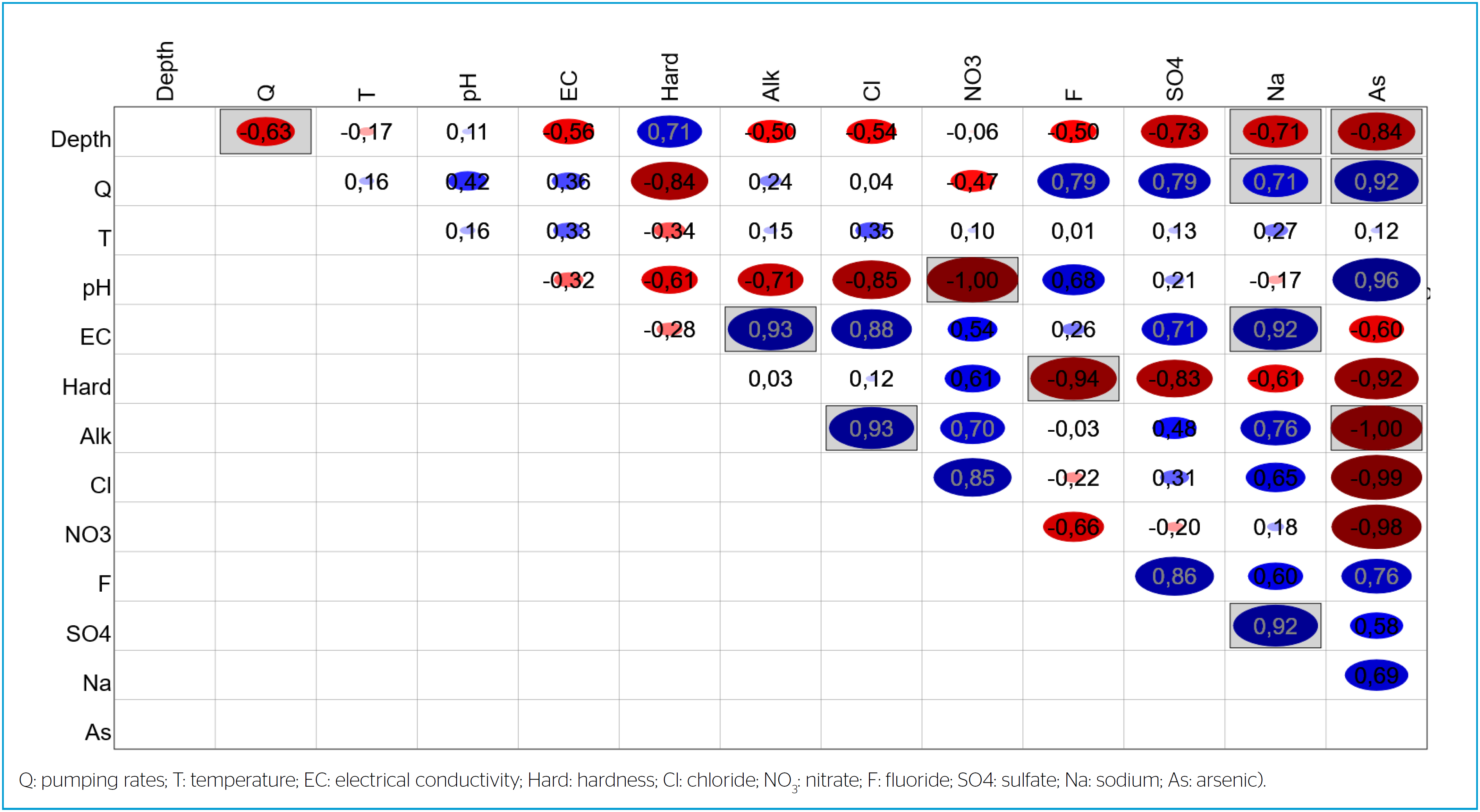
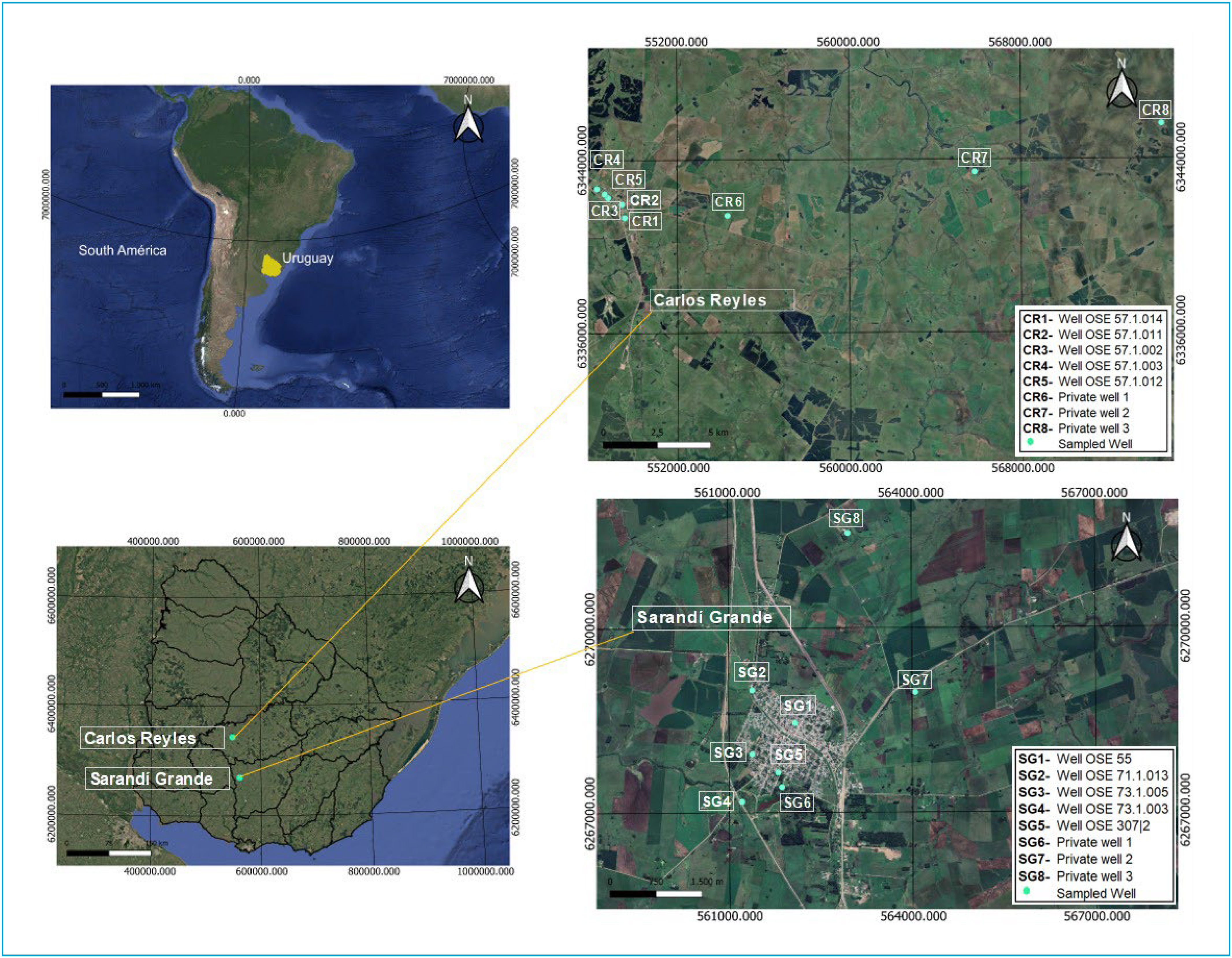
The study area is located in the Uruguayan countryside, specifically in the municipalities of Carlos Reyles (CR, located in Durazno Department) and Sarandí Grande (SG, located in Florida Department) (Figure 1). These locations were selected based on:
-
previous reports of elevated As concentrations in groundwater in both areas (Cabrera, 2021);
-
the identification of the Asencio Formation in both municipalities in regional hydrogeological maps (Figure 1SM, Supplementary Material), which motivated an initial exploratory working hypothesis of potential hydrogeological similarity to be evaluated through field data; and
-
the lack of site-specific academic studies addressing the geological and geochemical conditions controlling As occurrence in groundwater.
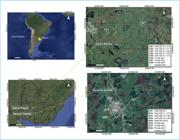
Sampling wells in the municipalities of Carlos Reyles and Sarandí Grande, Uruguay. The abbreviation CR was used to represent wells in Carlos Reyles, public (1–5) or private (6–8), while SG was used for Sarandí Grande, public (1–5) or private (6–8).
Secondary data analysis and identification of site-specific hydrogeochemical patterns
Secondary data were obtained by accessing public information from OSE, the governmental organism responsible for public water supply in the country. All available data were assessed and were associated with samples collected in 2018 and 2019 (CR), and 2021 (SG). The geological profiles of the drillings were also evaluated. Regional geological maps were also assessed and have been provided by Dirección Nacional de Aguas (DINAGUA).
Statistical analyses (descriptive statistics, Pearson and Spearman correlations, and mean comparison tests) were performed considering physicochemical parameters, pumping flow rates, and the well depths using the software PAST 3.26. The As concentration ranges were mapped together with geological data, using QGIS 3.4. Based on these analyses, preliminary site-specific patterns and parameters potentially associated with As occurrence were identified.
Sampling and physicochemical analysis
Eight wells from each locality (CR and SG) were sampled, being five used for public supply (OSE) and three private ones, totaling 16 wells (Figure 1). Groundwater samples were collected in September 2022, and the following parameters were measured in situ: pH (pHmeter Sanxin SX711), electrical conductivity (conductivity meter Hanna® HI-98303), temperature, and oxidation-reduction potential (ORP sensor Lovibond ® SD60). The samples were kept under refrigeration (< 4°C) until the following analyses were performed in the laboratory: alkalinity (titration method), chemical oxygen demand (COD, spectrophotometric method), anions (ionic chromatography), and cations, including trace elements (ICP-MS). Sample conservation, preparation, and analysis were performed following the methods described by the American Public Health Association (APHA), American Water Works Association (AWWA), Water Environment Federation (WEF) (APHA, AWWA, WEF, 1989) and/or Dirección Nacional de Medio Ambiente de Uruguay (DINAMA, 2017).
The results were compared with national and international regulations and with studies previously conducted in Uruguay.
The site-specific patterns and preliminary associations were further examined using the results obtained from field sampling and physicochemical analyses.
RESULTS AND DISCUSSION
Secondary data analysis and identification of site-specific hydrogeochemical patterns
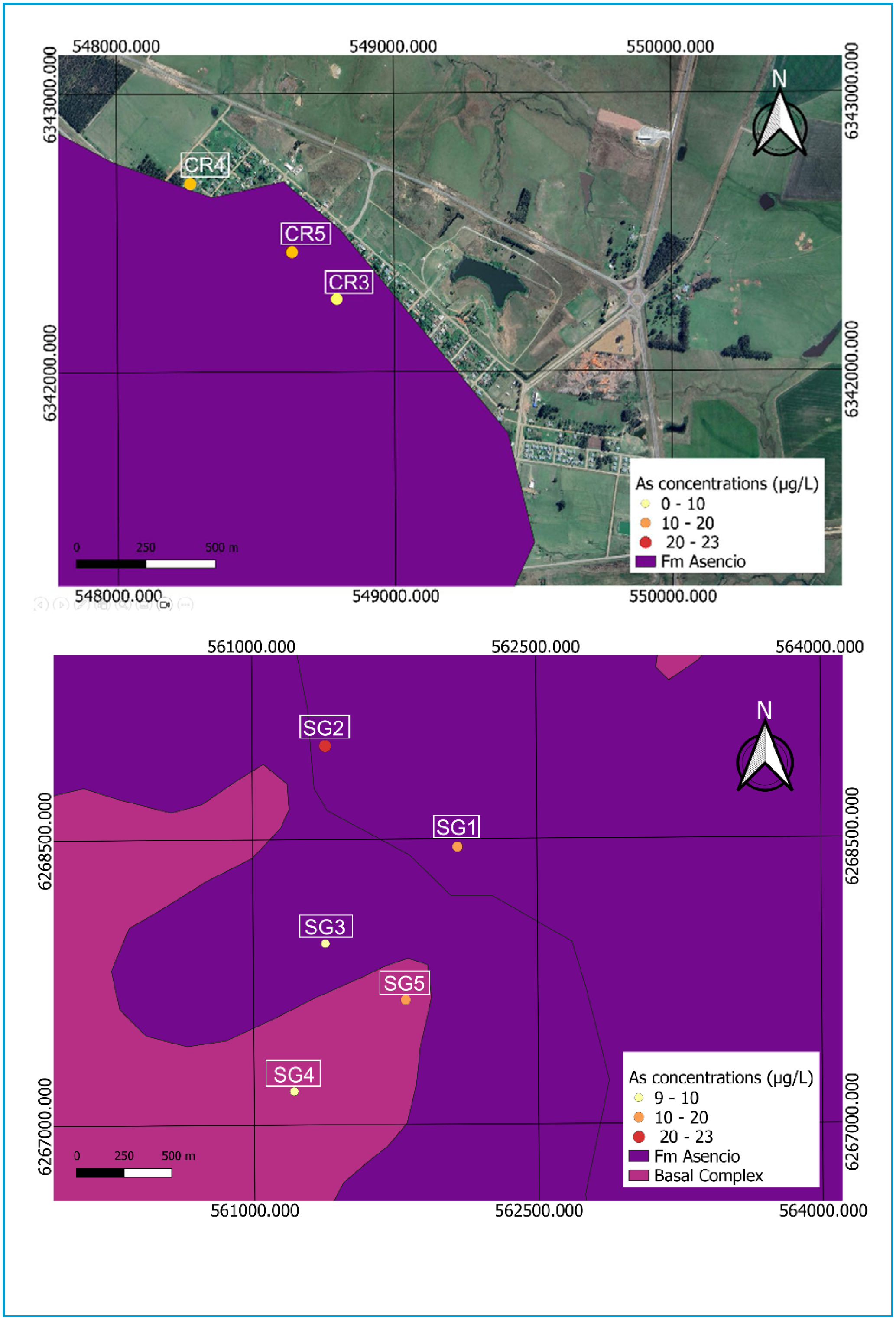
The location of the public wells, their mean As concentrations obtained from public information, and the formations identified in both municipalities in regional hydrogeological maps can be observed in Figure 2. Some of the public wells presented in Figure 2 were also sampled in the present study (see Figure 1) and their identification is presented (i.e., CR3–CR5 in Carlos Reyles, and SG1–SG5 in Sarandí Grande).
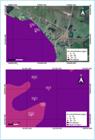
Geological formations and arsenic concentrations in groundwater (μg/L) in Carlos Reyles (above) and Sarandí Grande (below).
It is possible to observe the incidence of Asencio Formation in several localities with high As concentrations. Such formation is commonly associated with Mercedes Formation, where high concentrations of As have been reported previously (Machado et al., 2020; Manganelli et al., 2007); thus, the presence of such formation in both localities motivated an initial exploratory working hypothesis of potential hydrogeological similarity, which needed evaluation through field data. In this regard, it is important to highlight that geological maps can mislead to incorrect interpretations, as other aquifer layers may not be represented. Thus, the geological profiles of the wells were also evaluated (Table 1). As observed, the geological profiles reveal the presence of sandstones in untubed zones in CR, which could be preliminarily associated with the Asencio or Mercedes Formation (Cretaceous formations). Differently, in SG the profiles reveal the incidence of crystalline (and not sedimentary) formations after the tubing.
Thus, even though the geological map (Figure 2) shows that the Asencio Formation could be associated with high As concentrations in groundwaters from both CR and SG, such a working hypothesis could not be validated, and the well regions without tubing indicated that different aquifers are actually being exploited. Therefore, As concentrations above 10 μg/L could be associated with Cretaceous formations in CR and crystalline formations in SG.
Considering the physicochemical data obtained at this stage (secondary data), Tables 1SM and 2SM of the Supplementary Material present descriptive statistics for CR and SG, respectively. Table 3SM shows the mean comparison using the Mann-Whitney test (adopted due to non-normality of data), indicating that CR and SG samples did not present a statistically significant difference, considering As concentrations.
The Pearson correlation analysis was performed considering the different aquifer formations observed in CR (n = 15) and SG (n = 16), separately. The results are presented in Figures 3 and 4 for CR and SG data, respectively. The Spearman correlation analysis was also performed, and the results are presented in Figures 2SM and 3SM of the Supplementary Material, respectively.
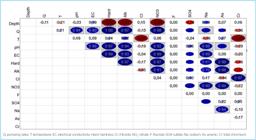
Pearson correlation for the physicochemical parameters of Obras Sanitarias del Estado public wells in Carlos Reyles. Significant correlations are boxed, with positive (blue) or negative (red) values.
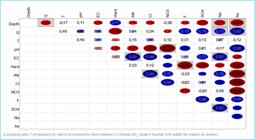
Pearson correlation for the physicochemical parameters of Obras Sanitarias del Estado public wells in Sarandí Grande. Significant correlations are boxed, with positive (blue) or negative (red) values.
Considering CR data, several correlations could be observed, with the significant ones (p < 0.05, boxed) being those of As with pH, hardness (commonly caused by dissolved calcium and magnesium), alkalinity, as well as with the concentrations of nitrate and sodium, all of them positive. Some geochemical processes that could be preliminarily associated with such correlations are described as follows; they are hypothesis-driven and have not undergone experimental validation in this study.
High pH values and alkalinity could reduce the adsorption of arsenates (As V) and favor their desorption to the aqueous phase (Bhattacharya et al., 2002; Smedley and Kinniburgh, 2002). The presence of sodium, calcium, and magnesium in the samples may indicate dissolution and/or ion exchange with alkaline minerals, which can also contribute to increasing pH values and desorbing arsenates (Smedley and Kinniburgh, 2013).
On the other hand, the presence of nitrates may indicate anthropic influence on arsenic (As) mobilization; it has been reported that nitrate stabilizes the oxidant conditions of As in arsenates, which are more mobile at high pH values (Adeloju, Khan and Patti, 2021). Such a process agrees with the correlation of As and alkaline environments previously mentioned. Nevertheless, even though anthropogenic influence may contribute to As mobilization, this is not necessarily associated with the anthropogenic origin of As; rather, evidence indicates that human activities contribute to modifying geochemical conditions that may favor the mobilization of geogenic As (Smedley and Kinniburgh, 2002). In this regard, the municipalities of CR and SG do not present industrial activity which could be the source of As contamination, nor have any significant concentrations of other heavy metals been observed in the secondary data analysis. Thus, As content in these zones was considered to be geogenic.
Regarding the Spearman correlation analysis for CR samples (Figure 2SM of the Supplementary Material), it did not indicate any significant pattern.
Considering SG data, the Pearson correlation analysis showed that As concentrations presented positive significant correlation with pumping rates and negative correlation with depth and alkalinity.
In this regard, possible explanations for the correlation with pumping rate are that higher pumping rates can enhance the contact with geological formations containing As, favoring the dissolution, liberation, and mobilization of the element in groundwater (Smedley and Kinniburgh, 2002). Another possible hypothesis for such correlation is that higher rates can change more intensely the redox conditions of the aquifer, especially when the water that enters the well has different chemical characteristics, which can promote As mobilization (Stollenwerk, 2003). Such explanations are hypothetical, not experimentally validated, since there were no oxidation-reduction potential (ORP/Eh) datasets for the studied wells.
Regarding the negative correlation with depth, it is suggested that As mobilization can be more intense in shallower wells in the zone, possibly more influenced by oxidant conditions and/or anthropogenic activities (Smedley and Kinniburgh, 2002). In the same direction, the negative correlation with alkalinity indicates that As mobilization might not be controlled by alkalinization/mineralization of the water, as was observed in CR. Differently, As mobilization could originate from the mixture of waters with different hydrogeochemical evolutions, including young waters from recharge zones (Goldberg, 2002; Dixit & Hering, 2003; Smedley & Kinniburgh, 2002).
The Spearman correlation analysis for SG samples (Figure 3SM of the Supplementary Material) indicated a similar pattern, with significant positive correlation with pumping rate and negative with depth.
Therefore, considering the analysis of secondary data, it can be suggested that the following site-specific patterns could be observed:
-
for the municipality of CR, the verification of Cretaceous (sedimentary) formations and the positive linear correlation with pH, hardness, alkalinity, concentrations of sodium and nitrate, indicating, preliminarily, the influence of alkalinization on the desorption of geogenic As, as well as the stabilization of arsenates in environments containing nitrates;
-
for the municipality of SG, the verification of crystalline basement and the correlation with pumping rate (positive), depth, and alkalinity (negative), indicating geochemical mobilization processes influenced by environments occurring in shallower zones and the mixture with younger waters, as well as by the operation of the wells (pumping rate).
Such geological and geochemical patterns were hypothesis-driven (supported by the literature) and not experimentally demonstrated and were further examined in the next step of this study. Therefore, in a preliminary and exploratory analysis, the observed patterns indicated that significantly different geochemical processes influenced As mobilization in the studied sites.
Sampling and physicochemical analysis
The results of the physicochemical parameters evaluated for the sampled wells are presented in Table 2. Parameters whose correlations were suggested to be significant in 3.1. were highlighted. Other results are also presented in Table 4SM of the Supplementary Material.
As the number of samples was too small for statistical analyses (n=8 for each municipality, being n = 6 for the same known hydrogeological formation), no statistical correlation analysis was performed at this stage. Instead, increasing or decreasing patterns associated with As concentrations were observed.
For CR samples, the private wells CR6–8 did not present As mobilization in groundwater (2.5 μg/L is the detection limit). Therefore, only CR1–CR5 were examined to observe the identified patterns (with alkalinity, pH, sodium, calcium, magnesium, and nitrate). For pH, alkalinity, and sodium, an increasing pattern with the increase of As concentrations could be observed in 80% of the wells (CR1–CR4, not observed in CR5). For nitrate, the pattern could be observed in 60% of the wells (CR1, CR3, and CR4). Differently, for calcium and magnesium, no pattern could be observed (see Table 4SM of the Supplementary Material).
Considering SG data, no geological profiles were available for the private wells, impairing their association with the same hydrogeological setting as the public ones. Nevertheless, their results were also examined for patterns in this case, as As mobilization was observed in all samples. Thus, considering associations with pumping rate, depth, and alkalinity, respectively, the previously identified patterns could be observed in approximately 60% (wells SG1, SG2, SG3, SG 4, SG6), 40% (wells SG4, SG6, SG8), and 60% (wells SG2, SG3, SG4, SG6, SG8) of the samples collected,.
It should be emphasized that even though some patterns could be observed both after secondary data analysis and sampling (primary data), the results are still exploratory, and more datasets must be collected to permit statistical evaluation and validation.
Finally, it is important to highlight that the observation of high As values in private wells, which do not undergo potability control, indicates a risk to public health. In this sense, it is essential to continue with exhaustive mapping of As presence in the territory, as well as to adopt tools for the early identification of the element.
Study limitations and uncertainties
This study presents an exploratory, site-specific assessment and is subject to several limitations. The number of sampled wells is limited, which restricts statistical power and generalizability. The spatial distribution of wells is constrained by the availability of public and private infrastructure, potentially introducing spatial bias. Geological and construction profiles were incomplete for some private wells, limiting hydrogeological interpretation. The absence of detailed mineralogical, iron, manganese, and redox speciation data restricts process-based geochemical interpretations.
Statistical relationships identified in this study represent associations rather than causal mechanisms. Therefore, the observed patterns should be interpreted as hypothesis-generating rather than predictive or operational tools. Future studies should incorporate larger datasets, systematic sampling designs, detailed mineralogical characterization, and experimental hydrogeochemical analyses to validate and refine the interpretations presented herein.
CONCLUSIONS
This study conducted an exploratory environmental assessment of As occurrence in groundwater in the municipalities of Carlos Reyles and Sarandí Grande, Uruguay, combining secondary data analysis with spot sampling and physicochemical characterization. The objective was to identify local hydrogeological and geochemical patterns potentially associated with elevated As concentrations.
In Carlos Reyles, the analyzed public datasets (secondary data) showed a positive association of As with pH, alkalinity, hardness, concentrations of sodium and nitrate, in wells exploiting sedimentary formations. In Sarandí Grande, wells exploiting crystalline aquifers showed As concentrations positively associated with pumping rates and negatively with depth and alkalinity. These identified patterns were consistent in a significant proportion of the samples collected for this study (primary data). These relationships should be interpreted with caution, as they are based on a limited number of observations and do not allow for the conclusive establishment of As mobilization mechanisms.
The results reinforce the idea that, even in geographically close areas with similar surface formations, the hydrogeological processes that control As levels can differ substantially. In this regard, the study underscores the need for local and specific assessments, avoiding simplified extrapolations to a regional scale.
Finally, given the detection of high As concentrations in private wells without systematic potability testing, the importance of strengthening hydrogeological monitoring and characterization strategies in rural areas is highlighted. Future studies with higher sampling density, more robust statistical analyses, and mineralogical characterization will allow for a deeper understanding of the processes that control As mobility and support the preventive management of groundwater resources.
DATA AVAILABILITY STATEMENT
The datasets generated and/or analyzed during the current study are available from the corresponding author upon request.
REFERENCES
-
ADELOJU, Samuel Bodunrin; KHAN, Shahnoor; PATTI, Antonio F. Arsenic Contamination of Groundwater and Its Implications for Drinking Water Quality and Human Health in Under-Developed Countries and Remote Communities – A Review. Applied Sciences, v. 11, n. 4, e1926, 2021. https://doi.org/10.3390/app11041926
» https://doi.org/10.3390/app11041926 - AMERICAN PUBLIC HEALTH ASSOCIATION – APHA; AMERICAN WATER WORKS ASSOCIATION – AWWA; WATER ENVIRONMENT FEDERATION – WEF. Standard Methods for the Examination of Water and Wastewater 17. ed. Washington: American Public Health Association, 1989.
-
BHATTACHARYA, Prosun; JACKS, G.; AHMED, Kazi Matin; ROUTH, Joyanto; KHAN, Aftab Alam. Arsenic in groundwater of the Bengal Delta Plain aquifers in Bangladesh. Bulletin of Environmental Contamination and Toxicology, v. 69, n. 4, p. 538–545, 2002. https://doi.org/10.1007/s00128-002-0095-5
» https://doi.org/10.1007/s00128-002-0095-5 -
BÜHL, Valery; PIZZORNO, Paulina; MACHADO, Ignacio; ALVAREDA, Elena; MAÑAY, Nelly. Private Wells in Uruguay: Evaluating groundwater arsenic levels and finding new areas for population´s health risks assessment. In: VAN DER WAL, Albert; AHMAD, Arslan; PETRUSEVSKI, Branislav; WEIJIMA, Jan; SAVIC, Dragan; VAN DER WENS, Patrick; BEERENDONK, Erwin; BHATTACHARYA, Prosun; BUNDSCHUH, Jochen; NAIDU, Ravi. Arsenic in the Environment: Bridging Science to Practice for Sustainable Development. London: CRC Press, 2023. p. 297– 298. https://doi.org/10.1201/9781003317395
» https://doi.org/10.1201/9781003317395 -
BUNDSCHUH, Jochen; ARMIENTA, Maria Aurora; MORALES-SIMFORS, Nury; ALAM, Mohammad Ayaz; LÓPEZ, Dina L.; DELGADO, Valeria; DIETRICH, Sebastian; SCHNEIDER, Jerusa; TAPIA, Joseline; SRACEK, Ondra; CASTILLO, Elianna; PARRA, Lue-Meru Marco; ESPINOZA, Maximina Altamirano; GUILHERME, Luiz Roberto Guimarães; SOSA, Numa Nahuel; NIAZI, Nabeel Khan; TOMASZEWSKA, Barbara; ALLENDE, Katherine Lizama; BIEGER, Klaus; ALONSO, David L.; BRANDÃO, Pedro F. B.; BHATTACHARYA, Prosun; LITTER, Marta I.; AHMAD, Arslan. Arsenic in Latin America: New findings on source, mobilization and mobility in human environments in 20 countries based on decadal research 2010-2020. Critical Reviews in Environmental Science and Technology, v. 51, n. 16, p. 1727–1865, 2020. https://doi.org/10.1080/10643389.2020.1770527
» https://doi.org/10.1080/10643389.2020.1770527 - BUNDSCHUH, Jochen; CARRERA, Alejo Pérez; LITTER, Marta. IBEROARSEN: Distribución del arsénico en las regiones Ibérica e Iberoamericana. [S.l.]: CYTED, Ciencia y Tecnología para el Desarrollo, 2008.
-
CABRERA, Sebastián. Hay 163 lugares del interior donde el agua tiene arsénico: ¿Cuáles son y cómo lo solucionará OSE?. El Pais, 2021. Available at: https://www.elpais.com.uy/que-pasa/hay-163-lugares-del-interior-donde-el-agua-tiene-arsenico-cuales-son-y-como-lo-solucionara-ose Accessed on: Mar. 2, 2025.
» https://www.elpais.com.uy/que-pasa/hay-163-lugares-del-interior-donde-el-agua-tiene-arsenico-cuales-son-y-como-lo-solucionara-ose -
DIRECCIÓN NACIONAL DE MEDIO AMBIENTE DE URUGUAY – DINAMA. Resolución Ministerial N° 1648/2017. Aprueba la 3ª edición del Manual de procedimientos analíticos para muestras ambientales, elaborado por la División Laboratorio Ambiental de la Dirección Nacional de Medio Ambiente. Ministerio de Ambiente, Uruguay, 2017. Available at: https://www.ambiente.gub.uy/oan/documentos/Manual-de-procedimientos-anal%C3%ADticos-para-muestras-ambientales.-Tercera-edici%C3%B3n-2017-_-MA.pdf Accessed on: Feb. 5, 2026.
» https://www.ambiente.gub.uy/oan/documentos/Manual-de-procedimientos-anal%C3%ADticos-para-muestras-ambientales.-Tercera-edici%C3%B3n-2017-_-MA.pdf -
DIXIT, Suvasis; HERING, Janet G. Comparison of arsenic(V) and arsenic(III) sorption onto iron oxide minerals: implications for Arsenic mobility. Environmental Science & Technology, v. 37, n. 18, p. 4182–4189, 2003. https://doi.org/10.1021/es030309t
» https://doi.org/10.1021/es030309t -
GOLDBERG, Sabine. Competitive adsorption of arsenate and arsenite on oxides and clay minerals. Soil Science Society of America Journal, v. 66, n. 2, p. 413–421, 2002. https://doi.org/10.2136/sssaj2002.4130
» https://doi.org/10.2136/sssaj2002.4130 -
HOSSAIN, Mohammed; BHATTACHARYA, Prosun; FRAPE, Shaun K.; JACKS, Gunnar; ISLAM, M. Mainul; RAHMAN, M. Moklesur; VON BRÖMSSEN, Mattias; HASAN, M. Aziz; AHMED, Kazi Matin. Sediment color tool for targeting arsenic-safe aquifers for the installation of shallow drinking water tubewells. Science of the Total Environment, v. 493, p. 615–625, 2014. https://doi.org/10.1016/j.scitotenv.2014.05.064
» https://doi.org/10.1016/j.scitotenv.2014.05.064 -
MACHADO, Ignacio; BÜHL, Valery; MAÑAY, Nelly. Total arsenic and inorganic arsenic speciation in groundwater intended for human consumption in Uruguay: Correlation with fluoride, iron, manganese and sulfate. Science of The Total Environment, v. 681, p. 497–502, 2019. https://doi.org/10.1016/j.scitotenv.2019.05.107
» https://doi.org/10.1016/j.scitotenv.2019.05.107 -
MACHADO, Ignacio; FALCHI, Lucía; BÜHL, Valery; MAÑAY, Nelly. Arsenic levels in groundwater and its correlation with relevant inorganic parameters in Uruguay: A medical geology perspective. Science of The Total Environment, v. 721, 137787, 2020. https://doi.org/10.1016/j.scitotenv.2020.137787
» https://doi.org/10.1016/j.scitotenv.2020.137787 - MANGANELLI, Alberto; GOSO, Cesar; GUEREQUIZ, Rosario; FERNÁNDEZ TURIEL, Jose Luis; GARCÍA VALLES, Maite; GIMENO TORRENTE, Domingo. Estudio preliminar del contenido de arsénico de las aguas subterráneas del suroeste de Uruguay. Montevideo. Geogaceta, v. 41, p. 115–118, 2007.
-
MAÑAY, Nelly; PISTÓN, Mariela; CÁCERES, Mariano; PIZZORNO, Paulina; BÜHL, Valery. An overview of environmental arsenic issues and exposure risks in Uruguay. Science of The Total Environment, v. 686, p. 590–598, 2019. https://doi.org/10.1016/j.scitotenv.2019.05.443
» https://doi.org/10.1016/j.scitotenv.2019.05.443 -
MUKHERJEE, Ahbijit; COOMAR, Poulomee; SARKAR, Soumyajit; JOHANNESSON, Karen H.; FRYAR Alan E.; SCHREIBER, Madeline E.; AHMED, Kazi Matin; ALAM, Mohammad Ayaz; BHATTACHARYA, Prosun; BUNDSCHUH, Jochen; BURGESS, William; CHAKRABORTY, Madhumita; COYTE, Rachel; FAROOQI, Abida; GUO, Huaming; IJUMULANA, Julian; JEELANI, Gh; MONDAL, Debapriya; NORDSTROM, D. Kirk; PODGORSKI, Joel; POLYA, David A.; SCANLON, Bridget R.; SHAMSUDDUHA, Mohammad; TAPIA, Joseline; VENGOSH, Avner. Arsenic and other geogenic contaminants in global groundwater. Nature Reviews Earth & Environment, v. 5, p. 312–328, 2024. https://doi.org/10.1038/s43017-024-00519-z
» https://doi.org/10.1038/s43017-024-00519-z -
SHAJI, Elias; SANTOSH, Madhava Warrier; SARATH, K.V.; PRAKASH, Pranav; DEEPCHAND, Vinod; DIVYA, B.V. Arsenic contamination of groundwater: A global synopsis with focus on the Indian Peninsula. Geoscience Frontiers, v. 12, n. 3, 11079, 2021. https://doi.org/10.1016/j.gsf.2020.08.015
» https://doi.org/10.1016/j.gsf.2020.08.015 -
SMEDLEY, Pauline L.; KINNIBURGH, David G. A review of the source, behaviour and distribution of arsenic in natural waters. Applied Geochemistry, v. 17, n. 5, p. 517–568, 2002. https://doi.org/10.1016/S0883-2927(02)00018-5
» https://doi.org/10.1016/S0883-2927(02)00018-5 -
SMEDLEY, Pauline L.; KINNIBURGH, David G. Chapter 12: Arsenic in groundwater and the environment. In: SELINUS, Olle; ALLOWAY, Brian; CENTENO, José; FINKELMAN, Robert B.; FUGE, Ronald; LINDH, Ulf; SMEDLEY, Pauline L. (Eds.). Essentials of Medical Geology Dordrecht: Springer, 2013. p. 279–310. https://doi.org/10.1007/978-94-007-4375-5_12
» https://doi.org/10.1007/978-94-007-4375-5_12 -
STOLLENWERK, Kenneth G. Geochemical Processes Controlling Transport of Arsenic in Groundwater: A Review of Adsorption. In: WELCH, Alan H.; STOLLENWERK, Kenneth G. (Eds.). Arsenic in Ground Water Boston: Springer, 2003. p. 67–100. https://doi.org/10.1007/0-306-47956-7_3
» https://doi.org/10.1007/0-306-47956-7_3 -
WU, Ruohan; ALVAREDA, Elena M.; POLYA, David A.; BLANCO, Gonzalo; GAMAZO, Pablo. Distribution of Groundwater Arsenic in Uruguay Using Hybrid Machine Learning and Expert System Approaches. Water, v. 13, n. 4, 527, 2021. https://doi.org/10.3390/w13040527
» https://doi.org/10.3390/w13040527
Edited by
-
Editor:
Davi Gasparini Fernandes Cunha https://orcid.org/0000-0003-1876-3623

 Source: Public data provided by Uruguayan governmental institutions (Obras Sanitarias del Estado and Dirección Nacional de Aguas).