Exploratory hydrogeochemical and hydrogeological assessment of arsenic occurrence in groundwater from two municipalities in Uruguay
This study presents an exploratory hydrogeochemical and hydrogeological assessment of arsenic occurrence in groundwater from the municipalities of Carlos Reyles (Durazno Department) and Sarandí Grande (Florida Department), Uruguay. The objective was to characterize local geological, hydrogeochemical, and operational conditions potentially associated with arsenic mobilization in groundwater systems and to generate site-specific baseline information. The research was conducted in two stages: first, secondary data from public supply wells were analyzed together with geological profiles and physicochemical parameters to identify preliminary patterns. In the second stage, groundwater samples from 16 wells were collected and analyzed to support the exploratory assessment. The results indicated that arsenic concentrations above 10 μg/L were associated with different hydrogeological settings in the two study areas, involving Cretaceous sedimentary formations in Carlos Reyles and crystalline basement aquifers in Sarandí Grande. The analysis of secondary data allowed the identification of site-specific hydrogeochemical patterns, including associations between arsenic concentrations and pH, alkalinity, sodium, and nitrate in Carlos Reyles, as well as between arsenic, pumping flow rates, depth, and alkalinity in Sarandí Grande. The results from sampling and physicochemical analyses indicated consistency with the identified patterns in 40–80% of the sampled wells. The findings highlight the complexity of local aquifer systems and the need for detailed, site-specific investigations to understand arsenic mobilization processes. This study provides baseline environmental data and contributes to future research, monitoring, and groundwater management strategies in arsenic-affected regions of Uruguay.
Keywords:
geochemistry; hydrogeology; environmental assessment; crystalline basement; Cretaceous formations; geogenic contamination
 Thumbnail
 Thumbnail
 Thumbnail
 Thumbnail
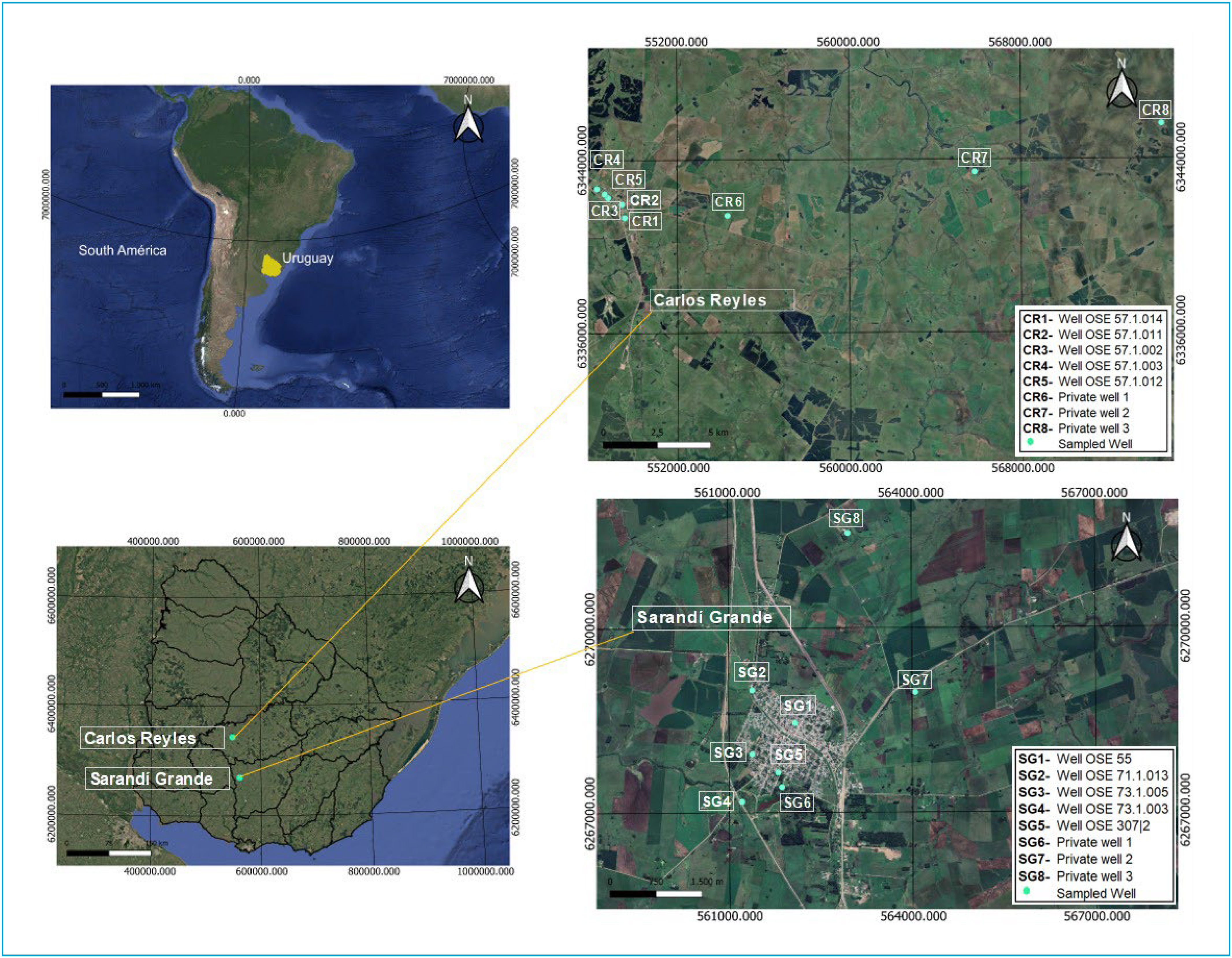
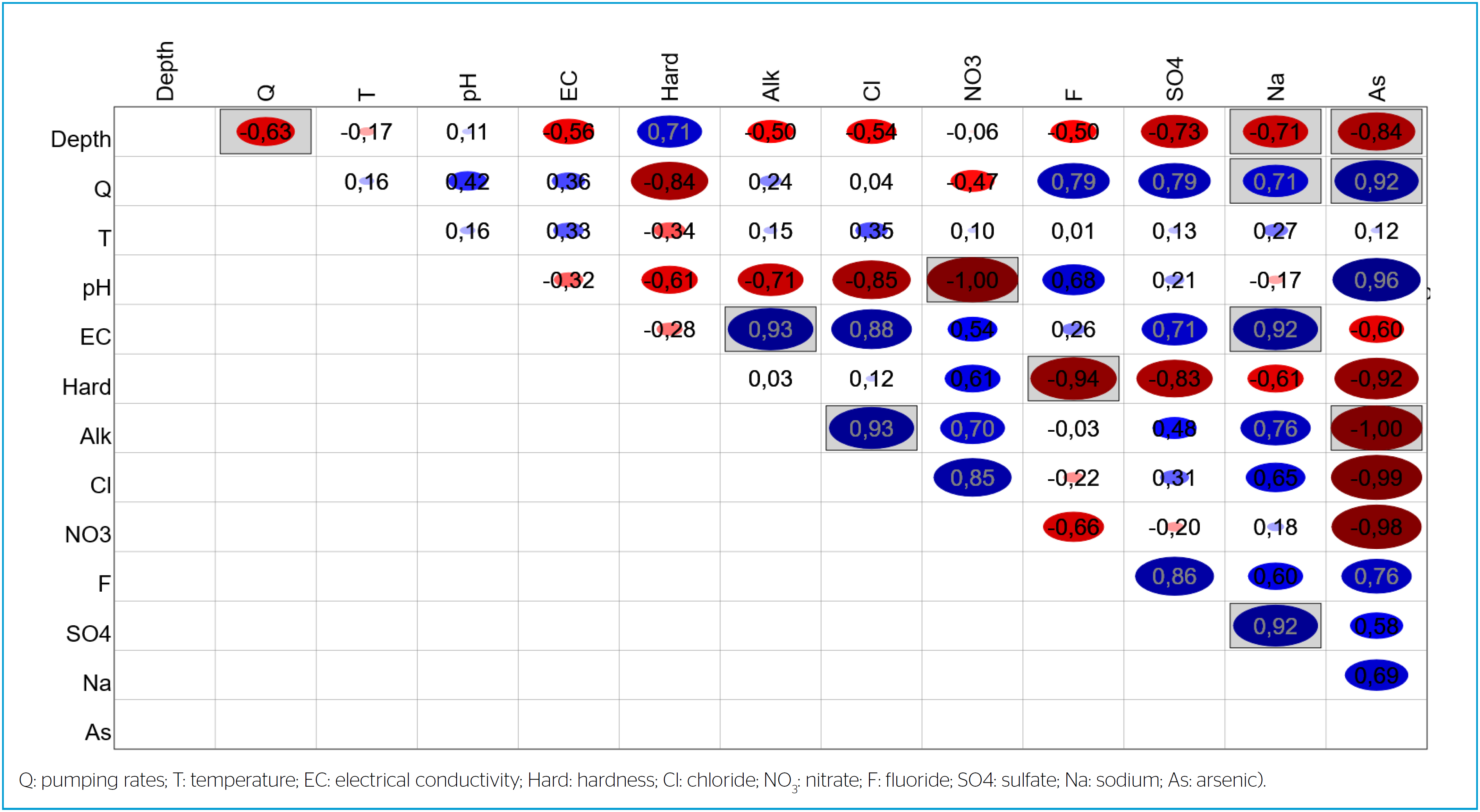
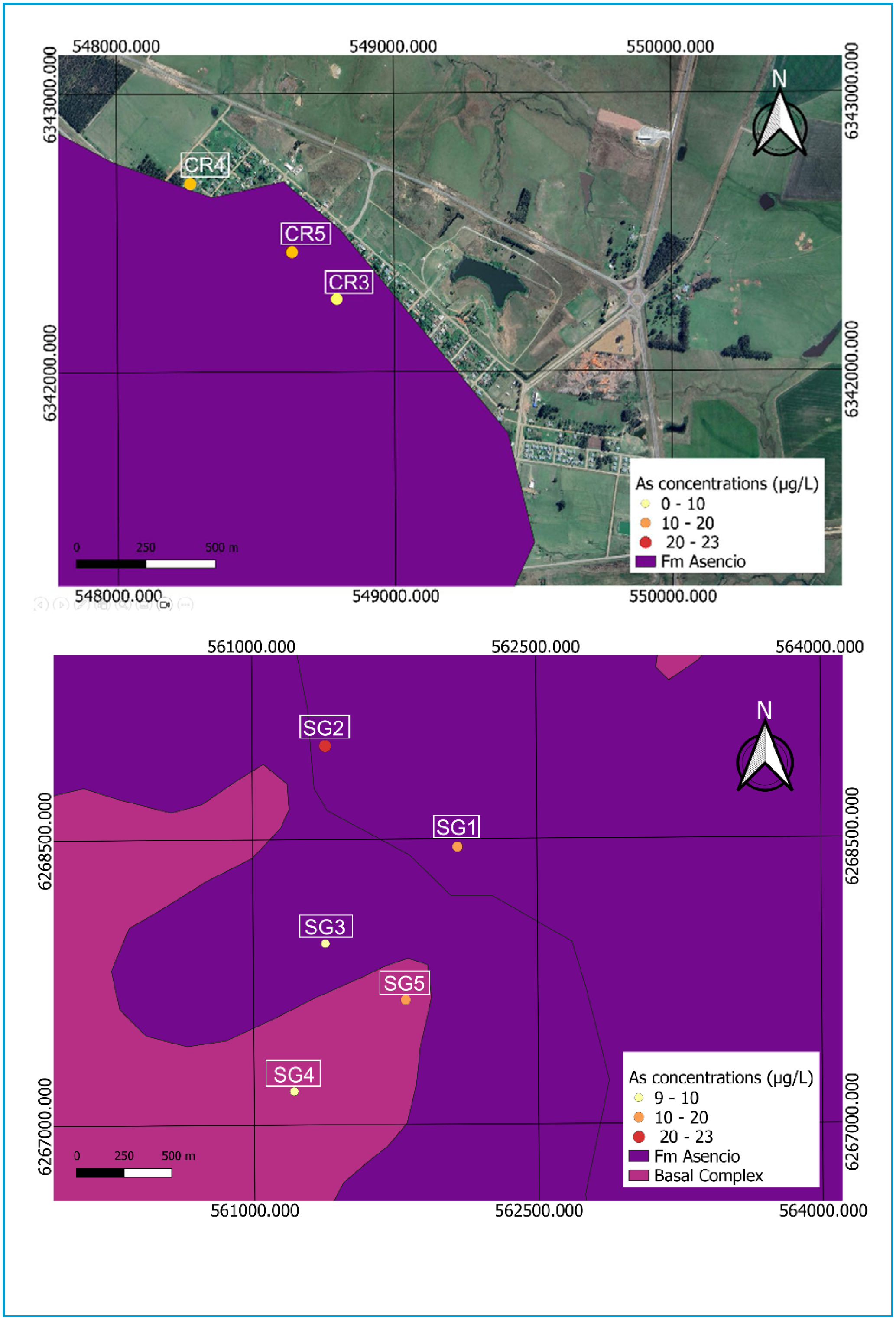 Source: Public data provided by Uruguayan governmental institutions (Obras Sanitarias del Estado and Dirección Nacional de Aguas).