
 Adverse events during physical therapy on postoperative cardiac surgery receiving noradrenaline
Abstract
Introduction: Cardiac surgery is a highly complex procedure for treating cardiovascular diseases. In the early postoperative period, hemodynamic instability is frequent and noradrenaline is widely used as a rescue measure. During hospitalization, physical therapy in these patients may improve central and peripheral circulation and prevent muscle weakness acquired in the intensive care units, but studies are unclear if it is safe to prescribe exercise to patients undergoing continuous infusion of vasoactive drugs.
Objective: To analyze the occurrence of adverse events during physiotherapeutic care in patients undergoing continuous infusion of noradrenaline after cardiac surgery.
Methods: This is a retrospective observational study conducted in a cohort of 404 Cardiac Intensive Care Unit (CICU) patients. Data were collected on the occurrence of adverse events during physiotherapeutic care of patients using noradrenaline or not. Additionally, an association between noradrenaline dose, length of stay, and the evolution of mobility progressions was registered.
Results: The frequency of adverse events was higher on the first postoperative day (D1), and the recorded adverse events were of low severity, regardless of noradrenaline use. A low but positive correlation was found between noradrenaline dose on D1 and length of stay in the CICU. In addition, a delay in mobilization progression due to the use of moderate and high doses of noradrenaline on D1 was observed.
Conclusion: Physical therapy in the postoperative period of cardiac surgery in patients using noradrenaline was safe, with a low incidence of adverse events.
Keywords:
Vasoconstrictor agents; Cardiac rehabilitation; Early mobilization
Resumo
Introdução: A cirurgia cardíaca é um procedimento altamente complexo para o tratamento de doenças cardiovasculares. No período pós-operatório imediato, a instabilidade hemodinâmica é frequente e a noradrenalina é amplamente utilizada como medida de resgate. Durante a hospitalização, a fisioterapia nesses pacientes pode melhorar a circulação central e periférica e prevenir a fraqueza muscular adquirida nas unidades de terapia intensiva, mas os estudos não são conclusivos quanto à segurança da prescrição de exercícios para pacientes submetidos à infusão contínua de fármacos vasoativos.
Objetivo: Analisar a ocorrência de eventos adversos durante o atendimento fisiote-rapêutico em pacientes submetidos à infusão contínua de no-radrenalina após cirurgia cardíaca.
Métodos: Trata-se de um estudo observacional retrospectivo realizado em uma coorte de 404 pacientes da Unidade de Terapia Intensiva Cardíaca (UTI Cardíaca). Foram coletados dados sobre a ocorrência de eventos adversos durante o atendimento fisioterapêutico em pacientes que utilizavam ou não noradrenalina. Adicionalmente, registrou-se a associação entre a dose de noradrenalina, o tempo de internação e a evolução da mobilidade.
Resultados: A frequência de eventos adversos foi maior no primeiro dia pós-operatório (D1) e os eventos adversos registrados foram de baixa gravidade, independentemente do uso de noradrenalina. Observou-se uma correlação fraca, porém positiva, entre a dose de noradrenalina no D1 e o tempo de internação na UTI cardíaca. Além disso, notou-se um atraso na progressão da mobilização devido ao uso de doses moderadas e altas de noradrenalina no D1.
Conclusão: A fisioterapia no período pós-operatório de cirurgia cardíaca em pacientes que utilizam noradrenalina mostrou-se segura, com baixa incidência de eventos adversos.
Palavras-chave:
Vasoconstritores; Reabilitação cardíaca; Mobilização precoce
Introduction
Shock is a common complication in the postoperative period of cardiac surgery,1, 2 usually secondary to hypovolemia, vasoplegic syndrome caused by an inflammatory response during cardiopulmonary bypass (CPB), and low cardiac output after myocardial ischemia-re-perfusion injury, which can occur alone or in combination,2 resulting in organ hypoperfusion.
Providing adequate perfusion pressure is essential to restore adequate oxygen delivery and reduce the risk of organ damage and multiple organ dysfunction.3 Usually, the management of shock consists of fluid administration, vasopressor therapy, and inotropic drugs may be used when appropriate.4, 5
The infusion of noradrenaline (NA) is considered a first-line treatment in post-CPB inflammatory syndrome5 as it acts as a potent vasoconstrictor drug, widely used in cases of systemic arterial hypotension, without stimulating a significant increase in heart rate due to its low chronotropic activity.6
Physical therapy assumed a fundamental role in postoperative rehabilitation of cardiac surgery, preventing pulmonary complications7, 8 and intensive care unit-acquired muscle weakness,9 maintaining functionality10 and reducing the length of stay.9, 10, 11 However, the use of vasoactive drugs and the adequate hemodynamic evaluation of patients hospitalized in intensive care units remain barriers to exercise prescription,12 and studies on exercise prescription in individuals post-operatively after cardiac surgery using vasoactive drugs still lack evidence.
Another area for improvement is the considerable heterogeneity in the definition of safety events and their gravity in literature.12 They can usually be classified as mild, moderate, severe, or death. Mild adverse events require no or minimal intervention; moderate events can prolong the length of stay, cause permanent damage or loss of function; and severe events can require major treatment or shorten life expectancy.13
Therefore, this study aims to evaluate the frequency of adverse events during physical therapy sessions in patients during the postoperative period of cardiac surgery and compare their occurrence between patients with and without NA infusion.
Methods
This is a retrospective unicentric observational study conducted at the Cardiac Intensive Care Unit (CICU) at Pedro Ernesto University Hospital (HUPE) of the State University of Rio de Janeiro (UERJ), approved by the Institutional Ethics Committee under number 4233492 0.3.0000.5259. Data were collected from electronic medical records in the period between January and December 2019.
Inclusion criteria were adult patients (>18 years) undergoing cardiac surgery via median sternotomy with a cardiopulmonary bypass. Patients were excluded if they remained for more than 48 hours at mechanical ventilation, presenting neurological, cognitive, and orthopedic damages that harmed the physical therapy usual care routine. Patients with missing data in medical records were also excluded.
The results of this retrospective study are reported according to the Strengthening the Reporting of Observational Studies in Epidemiology (STROBE) guidelines.
Data collection and definitions
Anthropometric data, length of postoperative stay at the CICU, comorbidities, use of NA and its dose, type of surgery performed, and duration of CPB and aortic clamping were collected in medical records, as well as the mobility markers related to physiotherapeutic care and an occurrence of adverse events. This study considered the following interventions as mobility markers: active bed exercises, sitting at the edge of the bed, orthostasis, moving to a chair, and walking. Each mark is counted as one mobilization, so one physiotherapeutic care can contain up to five mobilizations. The exercises were performed according to the unit's standard physiotherapy care protocol and were prescribed to achieve a light intensity level. Exercise intensity was clinically guided by perceived exertion (Borg scale) and hemodynamic safety parameters, with the heart rate increase limited to a maximum of 30 bpm above resting values, while also respecting systolic blood pressure safety thresholds.
An adverse event was the occurrence of any unfavorable signs and symptoms during physiotherapeutic care, such as hypotension (mean arterial pressure < 60 mmHg) or hypertension (systolic arterial pressure > 180 mmHg), disorientation, cold sweating, nausea, dizziness, emesis, bradycardia (heart rate < 60 bpm) or tachycardia (heart rate increase > 30 bpm above resting values), dyspnea, the need to start or increase the dose of NA during exercise, arrhythmias, cardiorespiratory arrest, and death.
For the analysis of NA infusion, doses and the occurrence of adverse events were considered during the period of postoperative hospitalization in CICU up to the fourth day. NA doses were stratified as low doses when less than 0.05 μg/kg/min, moderate between 0.05 - 0.2 μg/kg/min, and high doses above 0.2 μg/kg/min.14
Statistical analysis
All data collected were allocated in Excel sheets (version 2012) and used to perform descriptive analysis, including the frequency of NA infusion and the prevalence of adverse events. The additional data were analyzed using the SigmaStat software (GraphPad Software, San Diego, California, USA). Normality and variance homogeneity were tested. The Spearman correlation between the NA dose on the postoperative day 1 (D1) and the length of stay in the CICU was evaluated. The Kaplan-Meier curve assessed the number of days to reach each mobility marker. A p-value < 0.05 was considered statistically significant.
Results
From January to December 2019, 404 patients underwent cardiac surgery, of whom 383 met the inclusion criteria. Of these, 142 were excluded due to unavailable medical records/data or exclusion criteria, remaining 241 patients. The patients included in this study were, on average, 60 years old, with a male predominance (69%). The common comorbidity was hypertension (80%), and the most frequent type of surgery was coronary artery bypass grafting followed by valve replacement (Table 1). Among the analyzed patients, 54% were under continuous NA infusion on the first postoperative day, of which 94% received moderate or high doses. Only 12 patients (5%) were still with NA by the fourth day. A total of 3,734 mobilizations were performed in patients without NA and 887 with NA, predominantly with a moderate dose (Table 2).
Adverse events during physical therapy were more frequent on the first day of postoperative care, regardless of NA infusion (22.9% and 23.6% for patients with and without NA, respectively). On the following days, there was a higher prevalence of adverse events in patients with NA, having occurred in 1.7% of mobilizations performed without NA and 5.2% with NA. Regardless of the group, adverse events were most frequent when individuals were sitting at the edge of the bed, and there was a higher occurrence in the NA group (9.8%) than in the group without NA (3.6%). This circumstance was also identified during the mark moving to a chair, where 5.4% of patients with NA experienced an adverse event, compared to 2.2% of patients without NA (Figure 1).
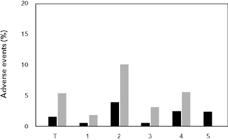
Frequency of adverse events in the different types of mobilizations recorded in patients without noradrenaline (black bars) and with noradrenaline (grey bars) on the 1st, 2nd, 3rd and 4th postoperative day.
The adverse events observed were predominantly transient and of mild severity. Hypotension was the most frequent event, followed by nausea/vomiting and dizziness. Notably, mild adverse events were more frequent among patients who were not receiving NA, occurring in 98 events (95%) in the non-NA group compared with 67 events (91%) in those receiving NA. These mild events included nausea, dizziness, atrial fibrillation, hypertension, and bradycardia. Moderate adverse events were reported eleven times overall, corresponding to 4.9% of the adverse events in subjects not receiving NA and 8.2% in those receiving it, with only a small difference in the number of affected patients between groups (Table 3). Additionally, a low positive correlation was observed between the NA dose on the first postoperative day and the length of post-operative stay in the CICU (r = 0.258; p < 0.05).
Patients without NA infusion on D1 reached the mobility markers (sitting at the edge of the bed, moving to a chair and walking) earlier than those under moderate and high doses of NA (Figure 2).
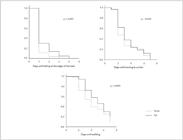
Kaplan-Meier curve representing the number of days until reaching mobility milestones (sitting at the edge of the bed, moving to a chair and walking) for the group of patients who did not use noradrenaline on the first day after-operative (None) and the group of patients who used a moderate or high dose of noradrenaline (NA).
Discussion
This study observed the occurrence of adverse events in patients hospitalized in CICU with and without NA. Most adverse events related to physical therapy care in the postoperative period of cardiac surgery occurred in the D1 regardless of NA infusion, and these events were of low severity. Also, a low positive correlation between the dose of NA on D1 and the length of stay in the CICU was found as moderate and high doses of NA on D1 delay the mobility progression throughout the hospital stay.
The highest frequency of adverse events on D1 may be associated with greater hemodynamic lability in the immediate postoperative period. It may be influenced by vasoplegic syndrome, which has been identified in half of the patients undergoing cardiac surgery.15 Vasoplegia is a form of vasodilatory shock secondary to the inflammatory response of extracorporeal circulation, and, in these cases, the use of vasopressors is the first-line therapy.5
A higher frequency of low-severity adverse events was also described by Boyd et al.14 and Rebel et al.16 evaluating the feasibility of performing physical exercises in patients receiving vasoactive drugs during the postoperative period of cardiac surgery14 and hospitalized in an intensive care unit,16 and found that the adverse event most frequently was transient hypotension. Recently, a systematic review17 of early mobilization in patients receiving vasoactive drugs in the CICU demonstrated that even patients in high and moderate doses were mobilized without serious adverse events.
In the present study, adverse events were recorded in 5.2% of mobilizations performed in patients receiving NA and 1.7% without NA, and no serious adverse events were recorded during physical therapy. Lindholz et al.18 reported a lower frequency of adverse events in patients receiving NA, 1% of the mobilizations, and only one serious adverse event, with a moderate dose of NA.
There still needs to be a consensus in the literature on the safe dosage of vasoactive drugs to progress mobilization in patients during the postoperative period of cardiac surgery. Hodgson et al.,19 in an expert consensus for recommendation on safety criteria for active mobilization of adults on mechanical ventilation, do not establish cutoff points in dosage to indicate mobilization. However, they describe that factors such as a change in dosage (increase) and assessment of tissue perfusion are more critical in decision-making than the presence of vasoactive drug infusion. In that study, they also classified mobilizations performed in and out of bed using low doses of vasopressors as a low risk of adverse events.18
Our results showed that patients were mobilized with a dose of up to 0.98 μg/kg/min, and no serious adverse events were recorded. Lindholz et al.,18 in a retrospective study, identified that NA doses of 0.33 μg/kg/min for bed mobilizations and up to 0.2 μg/kg/min for out-of-bed mobilizations were considered safe. Nievera et al.,20 in a retrospective study, evaluated the safety of walking and transferring to a chair in cardiothoracic surgery patients receiving NA and described no correlation between the dose of NA and the level of activity. The dosage administered during activities ranged from 0.01 to 0.28 μg/kg/min, including walking.
The presence of vasopressors is considered a barrier to mobilization,12, 21 delaying rehabilitation and having a negative impact on pulmonary complications prevention, length of stay, and quality of life. This association is due to high and moderate doses of NA.17 In the present study, patients were mostly mobilized with a moderate NA dose during physical therapy.
Sitting at the edge of the bed was the intervention that more frequently caused adverse events in both groups. However, it is essential to consider that this is the first postural change in post-surgical mobilization and is influenced by the modulation of blood pressure, impaired by hypovolemia, vasoplegia, and, eventually, heart failure.22, 23 So, it is realized when the patient tends to have greater hemodynamic effects but no major adverse effects.
Patients with NA infusion during the mobilization on D1 took more days to reach the mobility markers than those without NA. This can be related to the fact that the most adverse event was recorded in sitting at the edge of the bed and could have delayed the progression of mobility markers in patients with NA, as this group continued to present more adverse events in the mobility markers during the postoperative days.
Considering that this study was based on the analysis of medical records, there were barriers in providing the information necessary for the research, both due to incorrect completion and missing data as the high number of medical records unavailable for search. Consequently, the absence of standardized documentation for physiological responses – such as heart rate and Borg scale ratings – prevented a definitive confirmation that the planned mobilization intensities were uniformly achieved and recorded for all participants.
In the studied sample, the concomitant use of other drugs, such as inotropics and antiarrhythmics was common, which could generate bias in the result. There are few studies that support exercise therapy in patients undergoing cardiac surgery using NA, limiting data interpretation and discussion.
Conclusion
Performing exercises during physical therapy in the postoperative period of cardiac surgery in patients using NA seems to be safe, as the frequency of adverse events was small, with transient repercussions and no serious events were recorded. However, this data must be extrapolated carefully as results may differ depending on the physical therapy protocol used. More studies are needed to establish cutoff points in the dosage of vasoactive drugs for safety mobilization.
Data availability statement
The data that support the findings of this study are available upon reasonable request.
References
-
1 Hollenberg SM. Vasoactive drugs in circulatory shock. Am J Respir Crit Care Med. 2011;183(7):847-55. https://doi.org/10.1164/rccm.201006-0972ci
» https://doi.org/10.1164/rccm.201006-0972ci -
2 Lim JY, Park SJ, Kim HJ, Kim HJ, Choo SJ, Chung CH, et al. Comparison of dopamine versus norepinephrine in circulatory shock after cardiac surgery: A randomized controlled trial. J Card Surg. 2021;36(10):3711-8. https://doi.org/10.1111/jocs.15861
» https://doi.org/10.1111/jocs.15861 -
3 VanDyck TJ, Pinsky MR. Hemodynamic monitoring in cardiogenic shock. Curr Opin Crit Care. 2021;27(4):454-9. https://doi.org/10.1097/mcc.0000000000000838
» https://doi.org/10.1097/mcc.0000000000000838 -
4 Kashani K, Omer T, Shaw AD. The intensivist's perspective of shock, volume management, and hemodynamic monitoring. Clin J Am Soc Nephrol. 2022;17(5):706-16. https://doi.org/10.2215/cjn.14191021
» https://doi.org/10.2215/cjn.14191021 -
5 Busse LW, Barker N, Petersen C. Vasoplegic syndrome following cardiothoracic surgery-review of pathophysiology and update of treatment options. Crit Care. 2020;24(1):36. https://doi.org/10.1186/s13054-020-2743-8
» https://doi.org/10.1186/s13054-020-2743-8 -
6 Kislitsina ON, Rich JD, Wilcox JE, Pham DT, Churyla A, Vorovich EB, et al. Shock - Classification and pathophysiological principles of therapeutics. Curr Cardiol Rev. 2019;15(2):102-13. https://doi.org/10.2174/1573403x15666181212125024
» https://doi.org/10.2174/1573403x15666181212125024 -
7 Ball L, Costantino F, Pelosi P. Postoperative complications of patients undergoing cardiac surgery. Curr Opin Crit Care. 2016; 22(4):386-92. https://doi.org/10.1097/mcc.0000000000000319
» https://doi.org/10.1097/mcc.0000000000000319 -
8 Cassina T, Putzu A, Santambrogio L, Villa M, Licker MJ. Hemodynamic challenge to early mobilization after cardiac surgery: A pilot study. Ann Card Anaesth. 2016;19(3):425-32. https://doi.org/10.4103/0971-9784.185524
» https://doi.org/10.4103/0971-9784.185524 -
9 Alaparthi GK, Gatty A, Samuel SR, Amaravadi SK. Effectiveness, safety, and barriers to early mobilization in the intensive care unit. Crit Care Res Pract. 2020;2020:7840743. https://doi.org/10.1155/2020/7840743
» https://doi.org/10.1155/2020/7840743 -
10 Cordeiro ALL, Lima AS, Oliveira CM, Sá JP, Guimarães ARF. Impact of early mobilization on clinical and functional outcomes in patients submitted to coronary artery bypass grafting. Am J Cardiovasc Dis. 2022;12(2):67-72. https://pmc.ncbi.nlm.nih.gov/articles/PMC9123416/
» https://pmc.ncbi.nlm.nih.gov/articles/PMC9123416/ -
11 Yayla A, Özer N. Effects of early mobilization protocol performed after cardiac surgery on patient care outcomes. Int J Nurs Pract. 2019;25(6):e12784. https://doi.org/10.1111/ijn.12784
» https://doi.org/10.1111/ijn.12784 -
12 Dubb R, Nydahl P, Hermes C, Schwabbauer N, Toonstra A, Parker AM, et al. Barriers and strategies for early mobilization of patients in intensive care units. Ann Am Thorac Soc. 2016; 13(5):724-30. https://doi.org/10.1513/annalsats.201509-586cme
» https://doi.org/10.1513/annalsats.201509-586cme -
13 World Health Organization & WHO Patient Safety. Conceptual framework for the international classification for patient safety version 1.1: final technical report January 2009. WHO; 2010 [cited 2025 Aug 15]. Available from: https://iris.who.int/handle/10665/70882
» https://iris.who.int/handle/10665/70882 -
14 Boyd J, Paratz J, Tronstad O, Caruana L, Walsh J. Exercise is feasible in patients receiving vasoactive medication in a cardiac surgical intensive care unit: A prospective observational study. Aust Crit Care. 2020;33(3):244-9. https://doi.org/10.10Wj.aucc.2020.02.004
» https://doi.org/10.10Wj.aucc.2020.02.004 -
15 Weis F, Kilger E, Beiras-Fernandez A, Nassau K, Reuter D, Goetz A, et al. Association between vasopressor dependence and early outcome in patients after cardiac surgery. Anaesthesia. 2006;61(10):938-42. https://doi.org/10.1111/j.1365-2044.2006.04779.x
» https://doi.org/10.1111/j.1365-2044.2006.04779.x -
16 Rebel A, Marzano V, Green M, Johnston K, Wang J, Neeman T, et al. Mobilisation is feasible in intensive care patients receiv ing vasoactive therapy: An observational study. Aust Crit Care. 2019; 32(2):139-46. https://doi.org/10.10Wj.aucc.2018.03.004
» https://doi.org/10.10Wj.aucc.2018.03.004 -
17 Jacob P, Surendran PJ, EM MA, Papasavvas T, Praveen R, Swaminathan N, et al. Early mobilization of patients receiving vasoactive drugs in critical care units: a systematic review. J Acute Care Phys Ther. 2021;12(1):37-48. https://doi.org//10.1097/JAT.0000000000000140
» https://doi.org//10.1097/JAT.0000000000000140 -
18 Lindholz M, Schellenberg CM, Grunow JJ, Kagerbauer S, Milnik A, Zickler D, et al. Mobilisation of critically ill patients receiving norepinephrine: a retrospective cohort study. Crit Care. 2022;26(1):362. https://doi.org/10.1186/s13054-022-04245-0
» https://doi.org/10.1186/s13054-022-04245-0 -
19 Hodgson CL, Stiller K, Needham DM, Tipping CJ, Harrold M, Baldwin CE, et al. Expert consensus and recommendations on safety criteria for active mobilization of mechanically ventilated critically ill adults. Crit Care. 2014;18(6):658. https://doi.org/10.1186/s13054-014-0658-y
» https://doi.org/10.1186/s13054-014-0658-y -
20 Nievera RA, Fick A, Harris HK. Effects of ambulation and nondependent transfers on vital signs in patients receiving norepinephrine. Am J Crit Care. 2016;26(1):31-6. https://doi.org/10.4037/ajcc2017384
» https://doi.org/10.4037/ajcc2017384 -
21 Fontela PC, Forgiarini Jr LA, Friedman G. Clinical attitudes and perceived barriers to early mobilization of critically ill patients in adult intensive care units. Rev Bras Ter Intensiva. 2018; 30(2):187-94. https://doi.org/10.5935/0103-507x.20180037
» https://doi.org/10.5935/0103-507x.20180037 -
22 Hanada M, Tawara Y, Miyazaki T, Sato S, Morimoto Y, Oikawa M, et al. Incidence of orthostatic hypotension and cardiovascular response to postoperative early mobilization in patients undergoing cardiothoracic and abdominal surgery. BMC Surg. 2017;17(1):111. https://doi.org/10.1186/s12893-017-0314-y
» https://doi.org/10.1186/s12893-017-0314-y -
23 Jans O, Brinth L, Kehlet H, Mehlsen J. Decreased heart rate variability responses during early postoperative mobilization - An observational study. BMC Anesthesiol. 2015;15:120. https://doi.org/10.1186/s12871-015-0099-4
» https://doi.org/10.1186/s12871-015-0099-4
Edited by
-
Associate editor:
Ana Paula Cunha Loureiro

 Note: T = total; 1 = active bed exercises; 2 = sitting at the edge of the bed; 3 = orthostasis; 4 = sitting out of bed; 5 = walking.
