 Pilates exercises and older adults’ emotional aspects, anxiety: a systematic review
ABSTRACT
Introduction: The increase in life expectancy will raise the number of older adults and the declines in some aspects of health (such as physical and emotional functions) even more in the coming decades. The regular practice of physical activity and exercise has been associated with more positive mental and emotional health. Objective: This systematic review aimed to analyze the effects of Pilates protocols on older adults’ emotional state. Methods: This systematic review followed the PRISMA recommendations. The methodological quality of the included articles was assessed by the PEDro scale. The following databases were searched: PubMed, BASIS, CENTRAL, CINAHL, Web of Science, LILACS, SportDiscus, and Pedro. The keywords that were available on MeSH (Pubmed) and DeCS (Health Sciences Descriptors) were used in the search strategy. Results: This review retrieved 318 articles, analyzing 11 of them. Its methodological quality assessment showed that six of the 11 chosen randomized controlled trials had high quality (PEDro score ≥ 6 points). The studies evaluated 521 individuals (most of whom were women) with mats and equipped Pilates interventions. Most articles used 12-week protocols with 60-minute sessions. This review found that, of its 11 randomized controlled trials, six obtained significant results in their Pilates groups vs. control and aerobic groups and four studies found no such relationship. Conclusion: Pilates seems to improve emotional aspects such as anxiety and depression in older adults. However, the scarcity of studies requires further controlled and randomized clinical trials to investigate this outcome.
Keywords:
Anxiety; Depression; Elderly; Emotional State; Pilates Exercises
RESUMO
Com o aumento da expectativa de vida, a tendência é de que a população idosa aumente nas próximas décadas, trazendo consigo declínios em alguns aspectos de saúde, como nas funções físicas e emocionais. A prática regular de atividade física e exercício vem sendo associada a fatores psicológicos mais positivos da saúde mental e emocional. Visou-se realizar uma busca sistematizada da literatura para analisar os efeitos de protocolos de intervenção com exercícios de pilates sobre o estado emocional dos idosos. Este estudo é uma revisão sistemática que seguiu as recomendações do protocolo PRISMA. A qualidade metodológica dos estudos incluídos foi avaliada pela escala PEDro. As buscas foram realizadas nas bases de dados PubMed, EMBASE, CENTRAL, CINAHL, Web of Science, LILACS, SportDiscus e PEDro, e foram definidas palavras-chave disponíveis no MeSH e DeCS. Foram identificados 318 estudos, dos quais 11 foram incluídos para análise. A avaliação da qualidade metodológica demonstrou que, dos 11 ECRs incluídos nesta revisão, seis foram de alta qualidade (≥ 6 pontos). Os estudos abrangeram um total de 521 indivíduos, a maioria mulheres, com intervenções de pilates solo e em aparelhos, predominantemente de protocolos de 12 semanas, com sessões de 60 minutos. Houve significância a favor do grupo pilates em relação aos grupos-controle e exercícios aeróbios em seis estudos, e em quatro estudos o pilates não se mostrou significativo. Exercícios de pilates parecem melhorar aspectos emocionais, como ansiedade e depressão, em idosos, porém são necessários mais ensaios clínicos controlados e randomizados que investiguem esse desfecho.
Descritores:
Ansiedade; Depressão; Estado Emocional; Exercícios de Pilates; Idosos
RESUMEN
Dado un incremento en la esperanza de vida, la población anciana tiende a aumentar en las próximas décadas, lo cual conllevará deterioro en algunos aspectos de la salud, como las funciones físicas y emocionales. La práctica regular de actividad física y de ejercicio viene asociándose con factores psicológicos más positivos para la salud mental y emocional. El objetivo de este estudio fue realizar una búsqueda sistemática de la literatura para analizar los efectos de los protocolos de intervención con ejercicios de pilates sobre el estado emocional de las personas mayores. Este estudio es una revisión sistemática que siguió las recomendaciones del protocolo PRISMA. La calidad metodológica de los estudios incluidos se evaluó mediante la escala PEDro. Las búsquedas se realizaron en las bases de datos PubMed, EMBASE, CENTRAL, CINAHL, Web of Science, LILACS, SportDiscus y PEDro, y se definieron las palabras clave disponibles en MeSH y DeCS. Se identificaron 318 estudios, de los cuales 11 se incluyeron para su análisis. La evaluación de la calidad metodológica demostró que, de los 11 ECR incluidos en esta revisión, seis fueron de alta calidad (≥ 6 puntos). Los estudios abarcaron un total de 521 individuos, en su mayoría mujeres, con intervenciones de pilates en el suelo y con dispositivos, predominantemente protocolos de 12 semanas, con sesiones de 60 minutos. Se constató una significancia a favor del grupo de pilates con relación a los grupos de control y los ejercicios aeróbicos en seis estudios, y en cuatro estudios el pilates no fue significativo. Los ejercicios de pilates parecen mejorar los aspectos emocionales, como la ansiedad y la depresión, en las personas mayores, pero se necesitan ensayos clínicos más controlados y aleatorizados para investigar este resultado.
Palabras clave:
Ansiedad; Depresión; Estado Emocional; Ejercicios de Pilates; Ancianos
INTRODUCTION
With the increase in life expectancy worldwide, the number of older adults will tend to grow in the coming decades. About 13% of the Brazilian population is aged 60 years or older; a percentage that is to tend to double1. Every physiological function continually decreases in the universal, ubiquitous, and inevitable human aging process, which will suffer the intimate influence of lifelong experiences and behaviors, especially of a healthy lifestyle2.
The physiological process of aging includes declines in some aspects of health, such as disabilities and decreased muscle function and cardiorespiratory fitness. In addition to physical aspects, individuals’ cognitive and mental state (memory, reasoning, and attention) can also suffer deficits. Diseases such as anxiety and depression can also arise in older adults3),(4.
Regular physical activity and exercise have been associated with more positive psychological factors and a lower prevalence of depressive symptoms, alleviating various mental health conditions2),(5. Moreover, physical exercise is as effective as pharmacological treatment. Also, medications (antidepressants, anxiolytics, etc.) can be associated with adverse events such as falls, fractures, delusions, and worsening cognitive impairment2; hence the strong evidence that physical training can effectively manage physical and mental health2-6.
These improvements stem from the physiological effect of physical exercise on the body as it regulates the immune system. The body releases pro- and anti-inflammatory cytokines during and after physical activities, increasing lymphocyte circulation and cell recruitment, which can lead to numerous interdependent changes in the brain to produce a protective environment against depression7.
Older adults (aged 65 years and above) should perform regular moderate aerobic physical activity for 150 to 300 minutes, vigorous aerobic physical activity for at least 75 to 150 minutes, or an equivalent combination of moderate and vigorous physical activity during per week. Recommendations suggest individuals increase varied moderate or vigorous multicomponent physical activities that emphasize balance and muscle strength training for three days or more during the week8.
Of the various exercise options, Pilates (a form of physical conditioning/rehabilitation) has become popular in recent years. In Brazil, alongside yoga, gymnastics, and stretching, it ranks as the sixth most practiced physical activity regardless of age, ranking second in practitioners aged over 60 years9. It works the body as a whole and improves strength, muscle endurance, coordination, balance, and flexibility and increases bone mineral density10-11.
A study has shown that a protocol using Pilates and mental stimulation (dual task with memory, speech, verbal fluency, visual and auditory stimuli, attention, and inhibition) for 12 weeks significantly improved several of its participants’ cognitive aspects12. A recent meta-analysis13 has shown that the regular practice of physical activity (including Pilates) significantly reduces anxiety symptoms in older adults. Results from clinical trials14),(15 have shown that Pilates can improve individuals’ mental aspects. However, its diverse protocols hinder the standardization of this intervention.
This and the scarcity of robust information on systematic reviews that analyze the results of Pilates interventions on older adults’ emotional has necessitated this study. Its aims to analyze the evidence on the regular practice of Pilates and its potential benefits in improving emotional aspects, such as anxiety and depression.
Despite the vast literature on the effects of Pilates in older adults, most systematic reviews focus on physical aspects such as strength, balance, and flexibility. Thus, this study differs from those by analyzing the effects of Pilates on older adults’ emotional state, an often-neglected dimension.
This study also stands out for its methodological rigor, including its prior registration on PROSPERO, its adoption of the PRISMA protocol, and its comprehensive search on national and international databases. Thus, this systematic review of the literature aimed to analyze the effects of intervention protocols with Pilates exercises on older adults’ emotional state, specifically regarding their anxiety, depressive symptoms, mood swings, and quality of life related to mental health.
METHODOLOGY
This systematic review was registered on PROSPERO (International Prospective Register of Systematic Review) CRD42023474250. The PRISMA recommendations were followed in this study16. The PICO method was used to structure the guiding question, inclusion criteria, bibliographic search, study selection, and data extraction17 (Table 1). Studies that used Pilates as an intervention and that evaluated its effects on older adults’ emotional state, anxiety, and depression were considered eligible.
Inclusion and exclusion criteria
Inclusion criteria: (1) randomized controlled trials on the effects of Pilates on the emotional state of older adults aged over 60 years, (2) studies in which Pilates took place with equipment, accessories, or on the floor, and (3) studies that assesses older adults’ emotional state as their primary and/or secondary outcome. The following exclusion criteria were considered: (1) studies with duplicate information in another randomized controlled trial, (2) Pilates with no association with emotional state, (3) participants with severe pathological conditions, and (4) studies in which participants were aged up to 60 years.
Databases and search strategy
Articles were searched in July 2023 on the following databases: PubMed, EMBASE, CENTRAL, CINAHL, Web of Science, LILACS, SportDiscus, and PEDro. The keywords that were available on MeSH (Pubmed) and DeCS (Health Sciences Descriptors) considering the PICO strategy were used in the search strategy.
The search strategy was composed of the following keywords: “aged” OR “aging” OR “elderly” OR “elderly men” OR “elderly women” OR “older” OR “older adults” OR “older men” OR “older women” OR “older people” OR “senior”) AND (“clinical Pilates” OR “clinic Pilates” OR “equipment-based Pilates” OR “mat-based Pilates” OR “mat Pilates” OR “Pilates” OR “Pilates-based exercise” OR “Pilates exercise” OR “Pilates method” OR “Pilates training”) AND (“anxiety” OR “depression” OR “emotional state” OR “mental health” OR “psychological state” OR “well-being”) AND (“allocation” OR “control” OR “control group” OR “controlled trial” OR “clinical trial” OR “controlled clinical trial” OR “group” OR “groups” OR “placebo” OR “randomized” OR “randomized allocation” OR “random process” OR “randomized trial” OR “randomized controlled trial” OR “study.”
Study selection
A reviewer (LCO) carried out the initial search on the databases, extracting article titles and abstracts. Then, duplicate removal, study selection, and data evaluation and extraction were independently conducted by two authors (BHS and JMP) based on the reading of titles and abstracts.
Potentially eligible articles were read in full. Then, two reviewers blindly read the article titles and abstracts, excluding those that failed to meet the chosen inclusion criteria. The reference lists of all eligible articles were manually searched for new references.
Divergences, if unresolved between the two researchers (BHS and JMP), were discussed with a third author (LCO), who decided the issue. The same form for data extraction was used by the authors.
Data extraction
The chosen articles were entered into a table in order of publication with the following data: (1) name of the first author and year of publication, (2) number of volunteers in each group, (3) mean and standard deviation of age in each group, (4) intervention (static or dynamic stretching), (5) control of exercise intensity, (6) equipment, (7) activities carried out by other comparison groups, (8) control group activities, (9) emotional state assessment instrument, and (10) results reported for the effect of Pilates on older adults’ emotional state.
Evaluation of the methodological quality of the studies
Methodological quality was assessed by two independent reviewers using the physiotherapy evidence database scale (PEDro)18, which considers the internal validity and sufficiency of statistical information in the studies. It includes 11 questions with three items from the Jadad scale and nine items from the Delphi list. The first question has no score (related to the external validity of the study), unlike the other 10. Each item that meets the required criteria receives one point, making it possible to classify each study as excellent (9-10), good (6-8), fair (4-5), or poor (<4). Studies with a score ≥ 6 were considered as having high quality.
Emotional state and indicators
The term “emotional state” refers to a transitory affective condition that is influenced by internal (such as thoughts and memories) and external factors (such as environment or social interactions). It is often assessed by psychological indicators, such as anxiety levels, depressive symptoms, mood swings, and in some cases aspects of quality of life associated with mental health19. These indicators were selected because they represent fundamental dimensions of the emotional state that are often compromised in aging and that may benefit from physical practices such as Pilates.
RESULTS
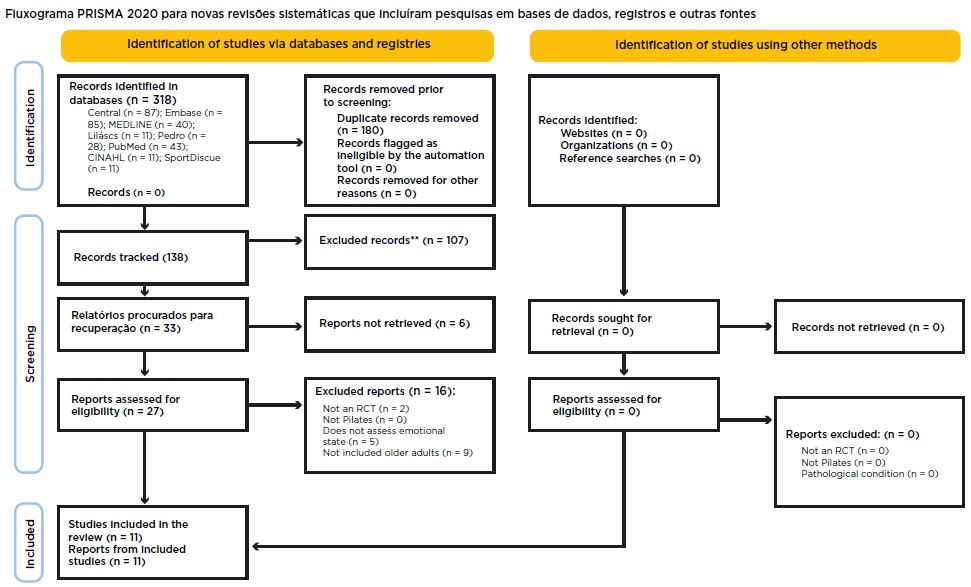
This review retrieved 318 possibly relevant studies on the searched databases. After removing the duplicates (136), this review read 181 titles and abstracts, excluding 149 articles since they failed to meet the chosen inclusion/exclusion criteria. After reading the remaining articles in full, 18 failed to meet the chosen eligibility criteria.
This review chose the following reasons for exclusion: (1) age group (eight studies); (2) study design (four studies); (3) assessed no emotional state (two studies); and (4) the full version of the study was unavailable (two studies). Thus, this systematic review included 11 studies14),(15),(20-28 in its qualitative synthesis. The PRISMA flow diagram illustrates article identification, screening, and inclusion (Figure 1).
The randomized controlled trials in this systematic review (Chart 2) were published from 2013 to 202223),(15 including 521 older adults. Only one study included both sexes20, whereas the other 10 included only women in their samples14),(15),(21-28. This review included four studies from Iran15),(22),(25),(26, four from Brazil22),(24),(25),(26, one from Spain14, one from Portugal21 and one from Mexico20.
Participants’ mean age ranged from 61.47±1.55 to 70.23±5.9 years15),(23. The interventions lasted from eight 15),(26),(28 to 24 weeks22, with 12 weeks being the most frequent duration. Regarding the Pilates protocols, only one study added the Cadillac, Reformer, and Chair devices to solo pilates22.
The weekly frequency for the interventions ranged from two14),(19),(22),(24),(25),(28 to three times a week20),(15),(23),(24),(26),(27, with sessions lasting at least 30 minutes21 and 60 minutes at most in most studies14),(23-26.
The analyzed studies reported applying their Pilates method in person in group under professional supervision. Also, two studies used other groups of interventions: an aerobic activity class to maintain heart rate at 60-70% and resistance training27-28. Also, six studies described that their control groups maintained their usual routine15),(20-23),(27. Other conducts, such as active static stretching exercises24 and varied recreational and cognitive activities25, occurred in five groups. One group filled out a questionnaire to participate in a cancer and disease prevention training program26) and two other studies conducted lectures and guidance on maintaining habitual activities and performing no physical activities14),(28.
The evaluation of the emotional state included questionnaires that considered emotional aspects and domains. Of the 11 included studies, four used the SF-36 questionnaire and assessed quality of life outcomes, including mental health and emotional aspects 22),(24),(25),(28, whereas two studies used the General Health Questionnaire to assess mental health in general21),(28.
Also, two studies used the Hospital Anxiety and Depression Scale (HADS) to assess anxiety and depression index14-15. WHOQOL-BREF took place in two23-25 studies and its variation, WHOQOL-OLD, in one study25. In addition to these questionnaires, the Oxford Happiness Inventory25 and Beck’s Depression Inventory26 analyzed happiness and depression; the Profile of Mood States20, mood status; and the Geriatric Depression Scale23, depression.
Regarding the reported results, five studies obtained positive intergroup results when comparing Pilates exercises to the control group14),(20),(21),(23),(26, whereas one study showed an intragroup improvement in the Pilates group in relation to the group that practiced aerobic exercises27. In another study, Pilates showed no significance when compared to the group that performed resistance training25; four studies showed no improvement in the Pilates groups when compared to the control group15),(22),(24),(28. Finally, the evaluation of methodological quality (Table 1) showed that six of the 11 studies in this systematic review had high methodological quality (PEDro score ≥ 6 points).
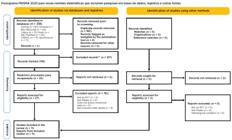
Prisma flowchart illustrating the retrieval, screening, and inclusion of studies in this systematic review (Jacarezinho, Paraná, Brasil, 2023)
DISCUSSION
This review aimed to assess the effects of Pilates on older adults’ emotional state, the protocols in its chosen articles, and the effectiveness of their results. The methodological quality of the 11 studies in this review ranged from four to eight, with eight being the maximum score since it is impossible to blind participants and the professionals applying the physical exercise interventions. The methodological quality of the 11 studies averaged six points on the PEDro scale.
Only five studies reported intergroup improvements in their Pilates groups when compared to their control group: one for depression and happiness, one for depression and overall mental health, one for anxiety and depression, and two for depression. Another study found an improvement in its Pilates group in its intragroup comparison. Our hypothesis regarding these results is that some studies may have failed to accurately enforce the principles of Pilates during their interventions, a fundamental point for the body-mind connection. A principle that is essential for emotional control is intentional breathing as it activates heart rate control, self-awareness, and emotion self-regulation, helping to control panic and anxiety crises29.
Despite modest findings, the observed improvements agree with the results of a recent meta-analysis on the effectiveness of Pilates in women with anxiety and depression symptoms, which found favorable effects in reducing these symptoms. The authors concluded that the longer the duration of Pilates training, the better the effects in reducing symptoms of anxiety and depression in women30.
These findings reinforce the notion that the practice of physical exercise is fundamental and contributes to reducing negative emotional symptoms, as in a study31 that suggested other forms of treatment in addition to drug therapies to improve anxiety and depression, including the regular practice of physical exercise, which, in several cases, has effects that resemble those of drugs and therapies. Physiologically, exercising increases the transport of oxygen to the brain, synthesizes and degrades neurotransmitters, releases serotonin, and decreases blood viscosity32. According to a survey33 on the risk of stress-related cardiovascular diseases, physical exercise may be linked to the improvement of several growth factors, such as the brain neurotrophic factor, which mediates protective and therapeutic effects of depression, establishing an excellent form of prevention and helping to combat the disease.
Since Pilates improved participants’ emotional aspects (anxiety and depression) in a portion of the studies in this systematic review, it is important to highlight this type of exercise, the method of which directly contributes to body maintenance, improves physical capacities and skills, works the body globally, corrects postural changes, realigns muscles, and develops body stability, strength, and postural balance34. It also alleviates patients’ pain, positively impacting older adults’ physical and mental health and longevity. In Brazil9, along with yoga, gymnastics, and stretching, Pilates ranks as the sixth most practiced physical activity regardless of age, ranking second among practitioners aged over 60 years9.
Also, regarding the effects of Pilates on mental aspects, a study has suggested that it could improve emotional aspects, reducing depression and anxiety15. This can be explained by the release and increase of hormones that raise β-endorphin levels during exercise35. It is also important to remember that Pilates commonly takes place in quiet environments in groups, providing social contact and establishing relationships during interventions, enabling greater acceptance and adherence to the practice and aid for mental health10.
However, this systematic search in the literature for studies that used Pilates with older adults found that only 11 of the 180 retrieved articles evaluated participants’ emotional aspects. This shows that few professionals observe mental health during treatment. The World Health Organization defines health as “a state of complete physical, mental, and social well-being, and not merely the absence of disease or infirmity.” Thus, health goes beyond physical issues, involving emotional aspects8.
Since health is involved in more than physical issues, comprehensively understanding patients’ (considering several aspects of their life, including the emotional ones) requires biopsychosocial evaluations. This integrative approach considers biological, psychological, and social factors, enabling a complex interaction between these dimensions since factors such as emotional state, anxiety, and depression in older adults, although often underestimated and associated with aging, greatly impact their quality of life36.
The prevalence of these disorders in older adults, especially of depression, exceeds that in other age groups. According to the Brazilian National Family Secretariat, older adults aged from 60 to 64 years represent 13.2% of the age group most affected by depression, whereas the youth and adults only comprise 5.9% of sufferers. Many older adults face emotional challenges, especially related to changes in health, retirement, reduced social contact, loss of loved ones, and loneliness, showing a predisposition to emotional deficits, which can lead to depression37.
These emotional and mental symptoms may be associated with other diseases, as in a systematic review with meta-analysis38 that pointed to the correlation between sarcopenia and depression. Moreover, depression is related to low skeletal muscle strength and function. That review showed a high prevalence of depression in patients with sarcopenia. Thus, the regular practice of exercise benefits the muscle strength of individuals with sarcopenia, being associated with psychological benefits related to depression2),(38.
Regarding these emotional and psychological aspects, it is important to analyze evaluation scales to find which instruments would be ideal for such outcomes. The choice of scales or questionnaires is an important factor as they can interfere with outcome interpretation. Although the studies in this systematic review have used instruments aimed at the emotional state, other scales are available in the literature, such as a perceived stress scale39 and the subjective happiness scale40, which investigate levels of individual stress and levels of subjective happiness, respectively. However, only the geriatric depression scale and the WHOQOL OLD assess older adults’ emotional state. Thus, future studies and clinical practice should pay attention to these specific instruments to better assess older adults’ emotional health.
In summary, Pilates seems to offer a form of exercise to reduce anxiety and depression symptoms by positively affecting older adults’ mental health, despite no standardization of the ideal dosage or exercise protocols for this purpose. Thus, interpreting the results of this review requires caution, especially since improvements occurred in about half of the included articles (45.5%).
The limitations of this review refer to its lack of analysis of the level of evidence of its articles and its absence of a quantitative data analysis. On the other hand, the strengths of this study are mainly related to the systematization of its searches since it avoided any filter linked to the language or the year of publication. Another strong point is the fact that it is the only review to have sought to assess whether Pilates contributes to the alleviation of emotional aspects (anxiety and depression) in older adults, specifically analyzing randomized controlled trials. Finally, the results in this review may be extrapolated to clinical practice, enabling physical therapy, nursing, and physical education professionals to enhance their treatment of older adults who have compromised emotional aspects.
CONCLUSION
Pilates seems to alleviate older adults’ emotional aspects, such as anxiety and depression. However, interpreting the information in this review requires caution due to the low number of studies on these outcomes. Thus, this review suggests that future randomized controlled trials with high methodological quality be carried out to assess the emotional aspects associated with Pilates and contribute to this theme.
Data Availability:
The Complete Dataset Supporting The Findings Of This Study Is Available Within The Article.
REFERENCES
-
1 Perissé C, Marli M. Idosos indicam caminhos para uma melhor idade [Internet]. Agência de Notícias-IBGE; 2019 [citado 17 mar 2026]. Disponível em: Disponível em: https://agenciadenoticias.ibge.gov.br/agencia-noticias/2012-agencia-de-noticias/noticias/24036-idosos-indicam-caminhos-para-uma-melhor-idade
» https://agenciadenoticias.ibge.gov.br/agencia-noticias/2012-agencia-de-noticias/noticias/24036-idosos-indicam-caminhos-para-uma-melhor-idade -
2 Izquierdo M, Duque G, Morley JE. Physical activity guidelines for older people: knowledge gaps and future directions. Lancet Healthy Longev. 2021;2(6):e380-3. doi: 10.1016/s2666-7568(21)00079-9
» https://doi.org/10.1016/s2666-7568(21)00079-9 -
3 Souza LR, Gonçalves TR, Leite FS, Oliveira IG, Moreira CI, et al. Transtornos psiquiátricos em idosos: uma revisão integrativa da literatura. Braz J Dev. 2023;9(6):19457-69. doi: 10.34117/bjdv9n6-050
» https://doi.org/10.34117/bjdv9n6-050 -
4 Filippin LI, Castro LD. A percepção do envelhecimento e seu impacto na saúde mental dos idosos. Braz J Dev. 2021;7(8):78430-9. doi: 10.34117/bjdv7n8-185
» https://doi.org/10.34117/bjdv7n8-185 -
5 Bourbeau K, Moriarty T, Ayanniyi A, Zuhl M. The Combined Effect of Exercise and Behavioral Therapy for Depression and Anxiety: systematic review and meta-analysis. Behav Sci. 2020;10(7):116. doi: 10.3390/bs10070116
» https://doi.org/10.3390/bs10070116 -
6 Stonerock GL, Hoffman BM, Smith PJ, Blumenthal JA. Exercise as treatment for anxiety: systematic review and analysis. Ann Behav Med. 2015;49(4):542-56. doi: 10.1007/s12160-014-9685-9
» https://doi.org/10.1007/s12160-014-9685-9 -
7 Pawelec G, Goldeck D, Derhovanessian E. Inflammation, ageing and chronic disease. Curr Opin Immunol. 2014;29:23-8. doi: 10.1016/j.coi.2014.03.007
» https://doi.org/10.1016/j.coi.2014.03.007 -
8 World Health Organization. Sobre a OMS [Internet]. 2026 [citado 17 mar 2026]. Disponível em: Disponível em: https://www.who.int/pt/about
» https://www.who.int/pt/about -
9 Lima MG, Malta DC, Monteiro CN, Silva Sousa NF, Stopa SR, et al. Leisure-time physical activity and sports in the Brazilian population: a social disparity analysis. PLoS One. 2019;14(12):e0225940. doi: 10.1371/journal.pone.0225940
» https://doi.org/10.1371/journal.pone.0225940 -
10 Engers PB, Rombaldi AJ, Portella EG, Silva MC. The effects of the Pilates method in the elderly: a systematic review. Rev Bras Reumatol English Ed. 2016;56(4):352-65. doi: 10.1016/j.rbre.2016.05.005
» https://doi.org/10.1016/j.rbre.2016.05.005 -
11 Casonatto J, Yamacita CM. Pilates exercise and postural balance in older adults: A systematic review and meta-analysis of randomized controlled trials. Complement Ther Med. 2020;48:102232. doi: 10.1016/j.ctim.2019.102232
» https://doi.org/10.1016/j.ctim.2019.102232 -
12 Silva DJ, Torres JL, Ericeira LP, Jardim NY, Costa VO, et al. Pilates and cognitive stimulation in dual task an intervention protocol to improve functional abilities and minimize the rate of age-related cognitive decline in postmenopausal women. Int J Environ Res Public Health. 2022;19(20):13333. doi: 10.3390/ijerph192013333
» https://doi.org/10.3390/ijerph192013333 -
13 Goodarzi S, Teymouri AMM, Beiky M, Fathi H, Nakhaee Z, et al. Effect of physical activity for reducing anxiety symptoms in older adults: a meta-analysis of randomized controlled trials. BMC Sports Sci Med Rehabil. 2024;16(1):153. doi: 10.1186/s13102-024-00947-w
» https://doi.org/10.1186/s13102-024-00947-w -
14 Aibar-Almazán A, Hita-Contreras F, Cruz-Díaz D, Torre-Cruz M, Jiménez-García JD, et al. Effects of Pilates training on sleep quality, anxiety, depression and fatigue in postmenopausal women: a randomized controlled trial. Maturitas. 2019;124:62-7. doi: 10.1016/j.maturitas.2019.03.019
» https://doi.org/10.1016/j.maturitas.2019.03.019 -
15 Farzane A, Jahromi MK. The effect of Pilates training on hormonal and psychophysical function in older women. J Sports Med Phys Fit. 2022;62(1):110-21. doi: 10.23736/s0022-4707.21.12089-4
» https://doi.org/10.23736/s0022-4707.21.12089-4 -
16 Galvão TF, Pansani TSA, Harrad D. Principais itens para relatar revisões sistemáticas e meta-análises: A recomendação PRISMA. Epidemiol Serv Saude. 2015;24(2):335-42. doi: 10.5123/s1679-49742015000200017
» https://doi.org/10.5123/s1679-49742015000200017 -
17 Higgins J, Thomas J. Cochrane Handbook for Systematic Reviews of interventions [Internet].. Cochrane; 2021 [citado 17 mar 2026]. Disponível em: Disponível em: https://training.cochrane.org/handbook/current
» https://training.cochrane.org/handbook/current -
18 Maher CG, Sherrington C, Herbert RD, Moseley AM, Elkins M. Reliability of the PEDro scale for rating quality of randomized controlled trials. Phys Ther. 2003;83(8):713-21. doi: 10.1093/ptj/83.8.713
» https://doi.org/10.1093/ptj/83.8.713 -
19 Rolls ET. Emotion, motivation, decision-making, the orbitofrontal cortex, anterior cingulate cortex, and the amygdala. Brain Struct Funct. 2023;228(5):1201-57. doi: 10.1007/s00429-023-02644-9
» https://doi.org/10.1007/s00429-023-02644-9 -
20 Ángeles MAV, Moncada Jiménez J, Gallegos Sanchez JJ, Ruiz-Juan F. El efecto de un programa de ejercicios basado en Pilates sobre el estado de ánimo en adultos mayores Mexicanos (Effects of a Pilates-based exercise program on mood states in older adults in Mexico). Retos. 2016;(30):106-9. doi: 10.47197/retos.v0i30.49543
» https://doi.org/10.47197/retos.v0i30.49543 -
21 Curia VS, Vilaça J, Haas AN, Fernandes HM. Effects of 16-weeks of pilates on health perception and sleep quality among elderly women. Arch Gerontol Geriatr. 2018;74:118-22. doi: 10.1016/j.archger.2017.10.012
» https://doi.org/10.1016/j.archger.2017.10.012 -
22 Liposcki DB, Silva Nagata IF, Silvano GA, Zanella K, Schneider RH. Influence of a Pilates exercise program on the quality of life of sedentary elderly people: A randomized clinical trial. J Bodyw Mov Ther. 2019;23(2):390-3. doi: 10.1016/j.jbmt.2018.02.007
» https://doi.org/10.1016/j.jbmt.2018.02.007 - 23 Mokhtari M, Bahram ME, Pourvaghar MJ, Akasheh G. Effect of Pilates training on some psychological and social factors related to falling in elderly women. Feyz Med Sci J. 2013;17(5):453-62.
-
24 Oliveira LC, Oliveira RG, Pires-Oliveira DA. Effects of Pilates on muscle strength, postural balance and quality of life of older adults: a randomized, controlled, clinical trial. J Phys Ther Sci. 2015;27(3):871-6. doi: 10.1589/jpts.27.871
» https://doi.org/10.1589/jpts.27.871 -
25 Pucci GCMF, Neves EB, Santana FS, Neves DA, Saavedra FJF. Efeito do treinamento resistido e do pilates na qualidade de vida de idosas: um ensaio clínico randomizado. Rev Bras Geriatr Gerontol. 2020;23(5). doi: 10.1590/1981-22562020023.200283
» https://doi.org/10.1590/1981-22562020023.200283 -
26 Ravari A, Mirzaei T, Bahremand R, Raeisi M, Kamiab Z. The effect of Pilates exercise on the happiness and depression of elderly women: a clinical trial study. J Sports Med Phys Fitness. 2020;61(1):131-9. doi: 10.23736/S0022-4707.20.10730-8
» https://doi.org/10.23736/S0022-4707.20.10730-8 -
27 Soori S, Heirani A, Rafie F. Effects of the aerobic and Pilates exercises on mental health in inactive older women. J Women Aging. 2022;34(4):429-37. doi: 10.1080/08952841.2021.1924576
» https://doi.org/10.1080/08952841.2021.1924576 -
28 Tozim BM, Furlanetto MG, França DML, Morcelli MH, Navega MT. Efeito do método Pilates na flexibilidade, qualidade de vida e nível de dor em idosos. ConSci Saúde. 2014;13(4):563-70. doi: 10.5585/conssaude.v13n4.4904
» https://doi.org/10.5585/conssaude.v13n4.4904 -
29 Ashhad S, Kam K, Del Negro CA, Feldman JL. Breathing rhythm and pattern and their influence on emotion. Annu Rev Neurosci. 2022;45:223-47. doi: 10.1146/annurev-neuro-090121-014424
» https://doi.org/10.1146/annurev-neuro-090121-014424 -
30 Mingxiao JME, Zhennan ZME, Xiaojie TME, Yong LMS, Lili GME, et al. The impact of Pilates exercise for depression symptoms in female patients: A systematic review and meta-analysis. Medicine. 2023;102(41):e35419.doi: 10.1097/MD.0000000000035419
» https://doi.org/10.1097/MD.0000000000035419 -
31 Mingxiao ME, Zhennan MEZ, Xiaojie TME, Lin Y, Gao L, et al. O impacto do exercício de Pilates nos sintomas de depressão em pacientes do sexo feminino: uma revisão sistemática e meta-análise. Medicine. 2023102(41):e35419. doi: 10.1097/MD.0000000000035419
» https://doi.org/10.1097/MD.0000000000035419 -
32 Naci H, Ioannidis JPA. Comparative effectiveness of exercise and drug interventions on mortality outcomes: metaepidemiological study. Br J Sports Med. 2015;49(21):1414-22. doi: 10.1136/bjsports-2015-f5577rep
» https://doi.org/10.1136/bjsports-2015-f5577rep -
33 Mello MT, Boscolo RA, Esteves AM, Tufik S. O exercício físico e os aspectos psicobiológicos. Rev Bras Med Esporte. 2005;11(3):203-7. doi: 10.1590/s1517-86922005000300010
» https://doi.org/10.1590/s1517-86922005000300010 -
34 Hamer M. Psychosocial stress and cardiovascular disease risk. Psychosom Med. 2012;74(9):896-903. doi: 10.1097/psy.0b013e31827457f4
» https://doi.org/10.1097/psy.0b013e31827457f4 - 35 Camarão T. Pilates no Brasil. Rio de Janeiro: Elsevier; 2004.
-
36 Paungmali A, Joseph LH, Punturee K, Sitilertpisan P, Pirunsan U, et al. Immediate effects of core stabilization exercise on β-endorphin and cortisol levels among patients with chronic nonspecific low back pain: A randomized crossover design. J Manipulative Physiol Ther. 2018;41(3):181-8. doi: 10.1016/j.jmpt.2018.01.002
» https://doi.org/10.1016/j.jmpt.2018.01.002 -
37 Moser AD, Scharan K. O olhar biopsicossocial na fisioterapia: ferramentas disponíveis para sua operacionalização. Fisioter Mov. 2018;31:e003136. doi: 10.1590/1980-5918.031.ED01
» https://doi.org/10.1590/1980-5918.031.ED01 -
38 Secretaria Nacional da Família (Brasil). Boletim Fatos e Números: Saúde Mental [Internet]. vol. 1. Brasília, DF; 2022 [cited 17 mar 2026]. Available from: Available from: https://www.gov.br/mdh/pt-br/navegue-por-temas/observatorio-nacional-da-familia/fatos-e-numeros/5.SADEMENTALLTIMAVERSO10.10.22.pdf
» https://www.gov.br/mdh/pt-br/navegue-por-temas/observatorio-nacional-da-familia/fatos-e-numeros/5.SADEMENTALLTIMAVERSO10.10.22.pdf -
39 Li Z, Tong X, Ma Y, Bao T, Yue J. Prevalence of depression in patients with sarcopenia and correlation between the two diseases: systematic review and meta‐analysis. J Cachex Sarcopen Muscle. 2022;13(1):128-44. doi: 10.1002/jcsm.12908
» https://doi.org/10.1002/jcsm.12908 -
40 Luft CDB, Sanches SO, Mazo GZ, Andrade A. Versão brasileira da Escala de Estresse Percebido: tradução e validação para idosos. Rev Saúde Pública. 2007;41(4):606-15. doi: 10.1590/S0034-89102007000400015
» https://doi.org/10.1590/S0034-89102007000400015 -
41 Lyubomirsky S, Lepper HS. A measure of subjective happiness: preliminary reliability and construct validation. Social Indic Res. 1999;46(2):137-55. doi: 10.1023/A:1006824100041
» https://doi.org/10.1023/A:1006824100041
Edited by
-
Responsible editor:
Sônia LP Pacheco de Toledo