Fungi and oomycetes causing root rot in avocado (Persea americana Mill) in Nayarit, Mexico
Abstract:
Avocado is a crop of great importance in Nayarit, Mexico. Trees with root rot symptoms have recently been observed, but the causal agent remains unknown. Therefore, this research aimed to identify the putatively pathogenic fungi and oomycetes that cause root rot in avocados in Nayarit, Mexico. From June to July 2022, in orchards located in the main producing municipalities of Nayarit, symptomatic root sections were collected from trees with apparent root rot. Fifteen microorganisms associated with diseased roots were isolated and morphologically identified. Subsequently, pathogenicity tests of the fungal isolates and oomycetes were performed on young (˜four-month-old) avocado trees. Isolates showing pathogenicity were molecularly identified by sequencing the internal transcript spacer regions (primers ITS5 and ITS4). All oomycete and fungal isolates caused symptoms, but with different levels of virulence. Molecular identification revelead three genera, isolates of Phytophthora cinnamomi(Oomycete), Fusarium oxysporum species complex, F. solanispecies complex, Fusarium sp., and sp., Lasiodiplodiaassociated with avocado root rot in Nayarit.
Index terms
molecular characterization; distribution;
Fusarium
; phytopathogen
Resumo:
O abacate é uma cultura de grande importância em Nayarit, México. Árvores com sintomas de podridão radicular foram observadas recentemente, más o agente causal permanece desconhecido. Portanto, esta pesquisa teve como objetivo identificar os fungos e oomicetos supostamente patogênicos que causam podridão radicular em abacates em Nayarit, México. De junho a julho de 2022, em pomares localizados nos principais municípios produtores de Nayarit, foram coletadas seções de raízes sintomáticas de árvores com podridão radicular aparente. Quinze microrganismos associados a raízes doentes foramisolados e identificados morfologicamente. Posteriormente, testes de patogenicidade dos isolados fúngicos e oomicetos foram realizados em abacateiros jovens (˜quatro meses deidade). Os isolados que apresentaram patogenicidade foram identificados molecularmente por meio do sequenciamento das regiões espaçadoras do transcrito interno, com os primers ITS5 e ITS4. Todos os isolados oomicetos e fúngicos causaram sintomas, más comníveis de virulência distintos. A identificação molecular permitiu identificar três gêneros, isolados de Phytophthora cinnamomi (Oomiceto), complexo de espécies , Fusarium oxysporumcomplexo de espécies F. solani, Fusarium sp. e Lasiodiplodia sp., associados àpodridão da raiz do abacate em Nayarit.
Termos para indexação
caracterização molecular; distribuição;
Fusarium
; fitopatógeno
Introduction
The avocado (Persea americana Mill) is one of the major perennial crops in Mexico. The country stands out as the world’s leading producer, yielding approximately 2.9 million metric tons over an established area exceeding 250,000 hectares (SIAP, 2024).
However, its production has been constrained by various phytosanitary issues.
The disease commonly known as “avocado root rot,” caused by the oomycete soilborne Phytophthora cinnamomi Rands, is a significant limiting factor in avocado cultivation and is widely distributed, with a broad range of alternative host species (RAMÍREZ et al., 2014; RODRÍGUEZ et al., 2017).
The damage caused by this pathogen to avocado trees in Mexico has been documented in the roots and the base of the stem.
Such damage causes leaf wilting, reducing the quality and quantity of fruit produced.
As the disease progresses, the tree wilts and loses foliage, with apparent branch dieback.
In severe cases, they cause significant losses in the harvest, and the tree dies (OSORIO et al., 2017; ZAPATA et al., 2018).
Osorio et al. (2017) mention that besides P. cinnamomi, there are unidentified microorganisms associated with “avocado root rot” have unknown roles. Additionally, Phytophthora heveae Thompson, Phytophthora citricola Sawada, Verticillium sp., and Cylindrocarpon destructans Zinss pathogens inducing similar symptoms have been suggested (RAMÍREZ et al., 2014).
Studies on the incidence, causal agents, and pathogenicity of the microorganisms causing root rot in avocado orchards in Nayarit, Mexico, are scarce. Therefore, this research aimed to identify the microorganisms associated with avocado root rot in the producing areas of Nayarit and to evaluate their pathogenicity.
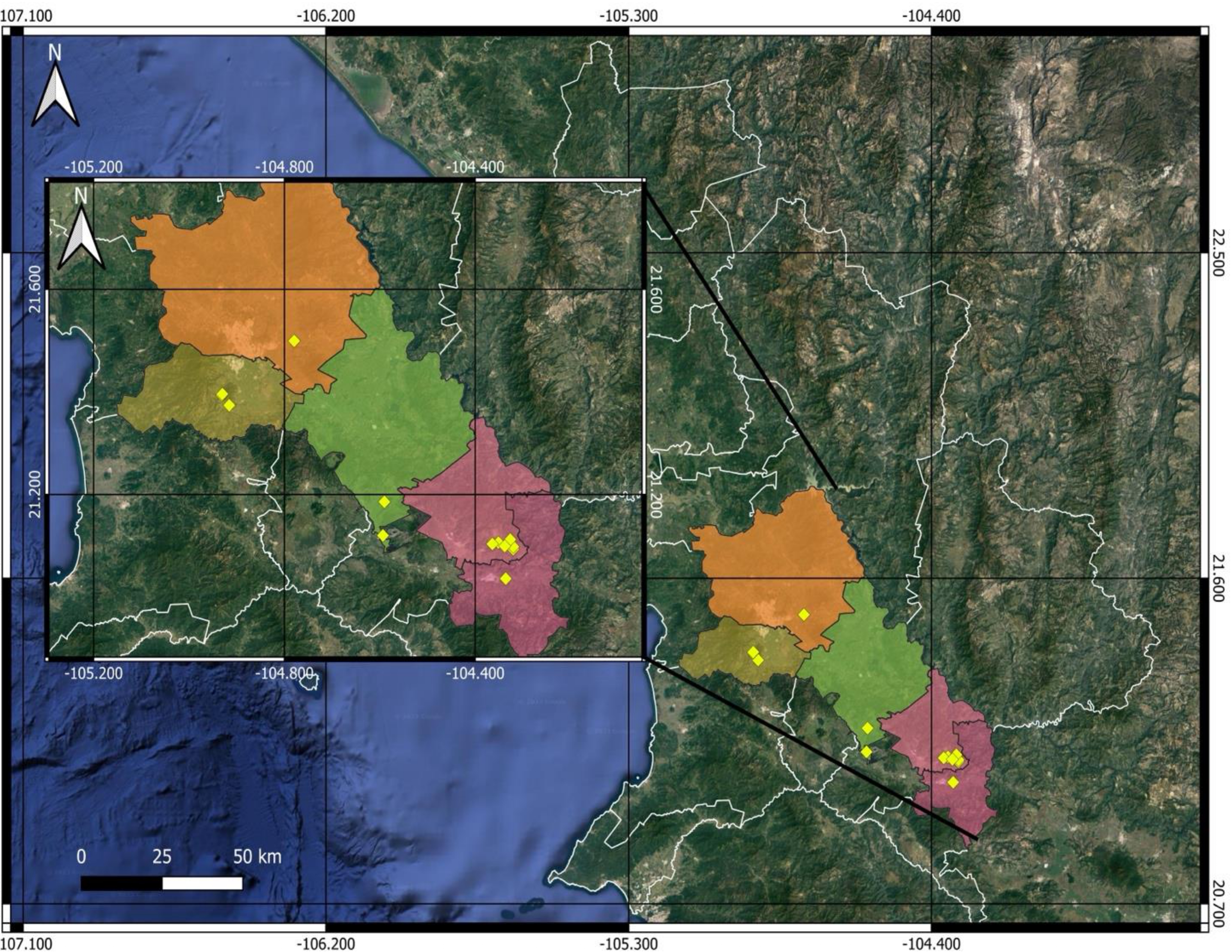
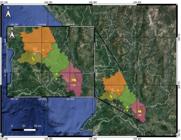
During June and July 2022, root samples from avocado trees were collected in 13 orchards in the main producing municipalities in Nayarit, Mexico (Figure 1) (Table 1).
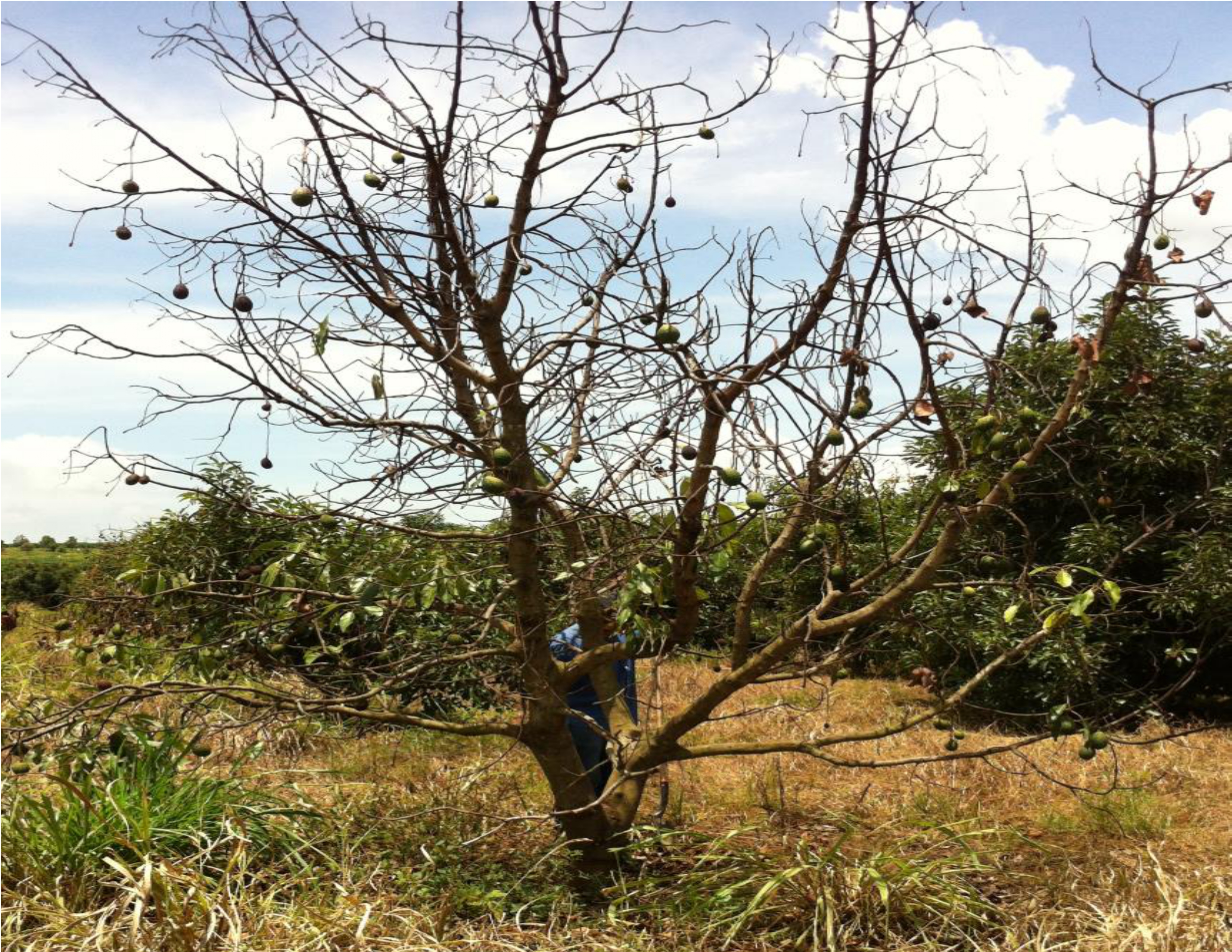
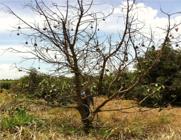
Trees showing symptoms of “avocado root rot” were selected. Symptoms included defoliation, chlorosis, wilting, dieback, and necrotic new roots (Figure 2).
Samples were taken from five trees per orchard. Roots were washed, sterilized with a 3% sodium hypochlorite solution, rinsed with sterile distilled water, and dried. Segments of 5-10 mm were cut, focusing on the advancing zone of the disease, and placed on potato dextrose agar (PDA) and V8-PARPH media.
Petri dishes with tissue samples were incubated at 28 ± 2 °C in the dark until fungal and oomycete colonies became visible.
The isolated microorganisms were purified on PDA using the monoconidial culture and incubated at 28 ± 2 °C for 72 hours.
Their identification was performed at the genus level by observing morphological characteristics under a light microscope (Leica, DME 13595, Wetzlar, Germany) and using taxonomic keys (WATANABE, 2010; BARNETT; HUNTER, 1998; ERWIN; RIBEIRO,1996).
The isolates’ identities were confirmed molecularly by extracting genomic DNA from the seven-day-old PDA cultures using the DNeasy Plant kit (QIAGEN®) per the manufacturer’s instructions. Molecular identification involved sequencing internal transcribed spacers (ITS). These regions were amplified using universal primers ITS1 (5´-TCCGTAGGTGAACCTGCGG-3´) and ITS4 (5´-TCCTCCGCTTATTGATATGC-3´) (WHITE et al., 1990) with the following conditions: 1x buffer, 3.5 mM MgCl2, 10 mM dNTPs, 2.5 μM of each primer, and 1U Taq platinum (Invitrogen®). The amplification protocol involved one cycle at 94 ºC for 5 min, followed by 35 cycles at 94 ºC for 30 secs, 60 ºC for 45 secs, 72 ºC for 1.5 min, and a final extension at 72 ºC for 8 min. PCR products were visualized on 2 % agarose gels and purified using magnetic beads before sequencing.
Sequences were edited with MEGA 11 (TAMURA et al., 2021) to obtain a consensus sequence for each sample and analyzed using BLAST on the NCBI database; all the sequences generated in this study were deposited in the NCBI database (Table 2).
For Phytophthora species identification, we followed the methodology described on the IDphy tool, which provides molecular resources for identifying Phytophthora species based on the type strains and well-authenticated specimens (ABAD et al.2023).
Therefore, the strains morphologically identified as belonging to the genus Phytophthora were aligned and phylogenetically compared with the sequence of the type strain of Phytophthora cinnamomi and all the members of Clade 7 of Phytophthora, where this species is grouped (ABAD et al.2023).
Additionally, we constructed a maximum- likelihood model tree on the IQ-TREE server (TRIFINOPOULOS et al. 2016) with sequences of all species from Clade 7 and our sequences. Concerning Fusarium species complexes, their sequences were aligned with MAFFT v7 (KATOH et al. 2019) and then used to reconstruct a maximum-likelihood model on the IQ-TREE server.
The best-fitting model obtained with Modelfinder was the K2P+I+G4, and an ultrafast bootstrap test (HOANG et al. 2018) with 10,000 replicates was performed. For the phylogenetic reconstruction, we included previously reported sequences of the Fusarium solani Mart species complex (FSSC), including the type of strain (SCHROERS et al. 2016) and sequences of the Fusarium oxysporum Schlecht species complex (FOSC), all downloaded from GenBank.
After isolating microorganisms, fifteen isolates (eleven fungi and four oomycetes) were selected to undergo pathogenicity testing under greenhouse conditions. Five young avocado trees (var. Drymifolia, ≈ 4 months old) grown from seeds of healthy trees and planted individually in black polyethylene bags (18×26 cm; ≈2 L) containing sterile loam-clay soil were used.
The base of each tree’s stem was inoculated with a 6 mm PDA disc with mycelium from each microorganism.
Before inoculation, the bark of the stems was superficially injured with 2 mm cross-shaped cuts using a sterile scalpel.
Inoculated stems were wrapped with Parafilm®. Control trees received PDA discs without inoculum. Inoculated trees were maintained in a greenhouse for six months after inoculation. During this time, the presence or absence of typical infection symptoms caused by the tested fungi and oomycetes was monitored weekly. Fungal and oomycete isolates that caused severe damage to roots, stems, leaves, and shoots after inoculation, including tree death, were considered pathogenic.
To classify the virulence level of each isolate, two criteria were considered: the number of days until the appearance of first symptoms (dai), and whether the inoculated tree eventually died. Isolates were categorized as follows: highly virulent if they caused symptoms within 35 days and induced plant mortality; moderately virulent if symptoms appeared between 36 and 98 days, regardless of whether mortality occurred; low virulence was assigned to isolates that produced symptoms after 98 days without inducing mortality; and avirulent (zero virulence) was assigned when no symptoms or mortality were observed (Table 2).
The microorganisms (fungi and oomycetes) isolated from the roots of avocado trees with symptoms of “avocado root rot” belonged to the genera Phytophthora, Fusarium, and Lasiodiplodia.
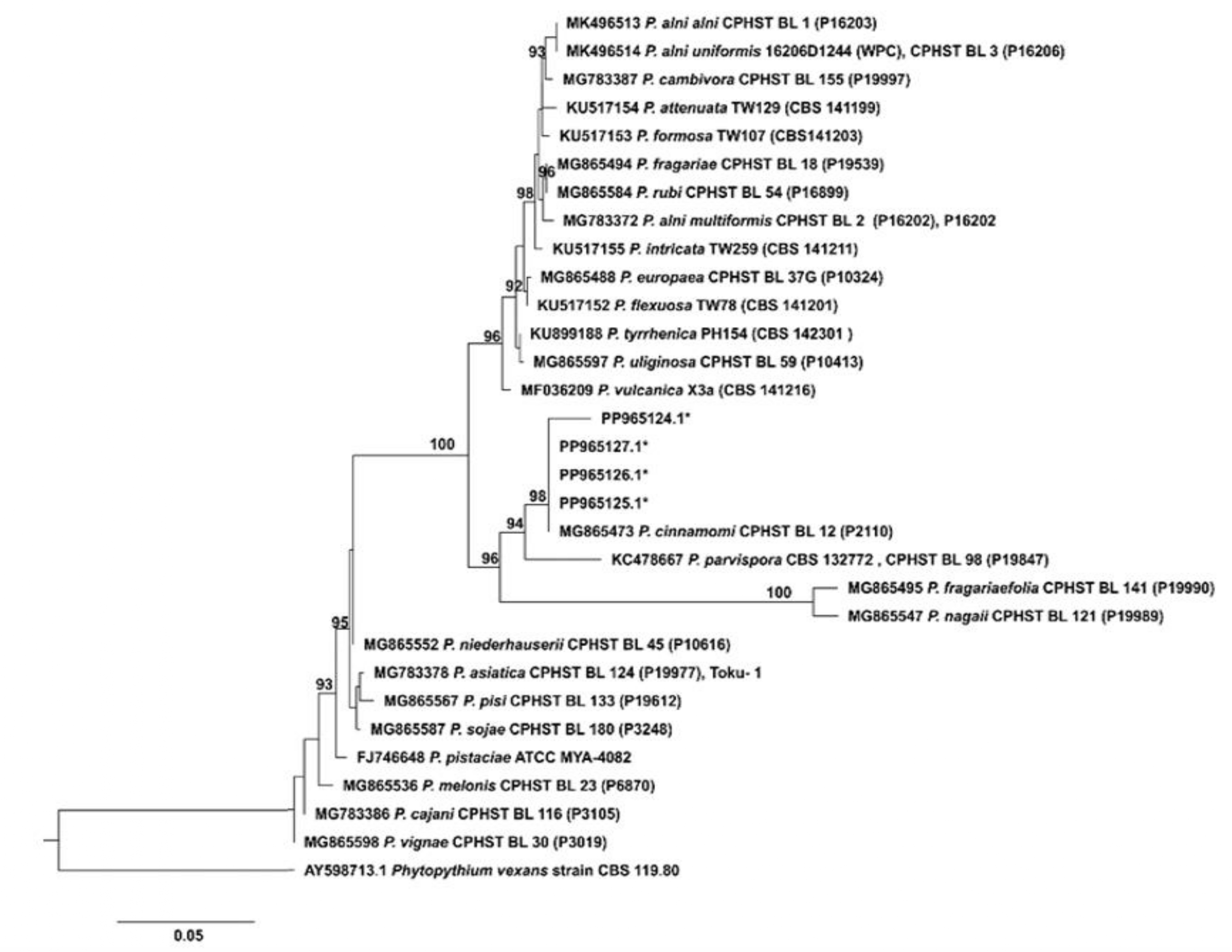
Analysis of the ITS sequences revealed 97- 100% nucleotide similarity between the fungal and oomycete isolates and previously published sequences, including the ex-type strain of Phytophthora cinnamomi (oomycete),Fusarium oxysporum species complex, F. solani species complex, and Lasiodiplodia sp. P. cinnamomi identification was corroborated by the grouping of our sequences with the ex-type strain sequence of P. cinnamomi in a ML analysis(Figure 3).
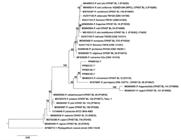
Maximum Likelihood phylogenetic tree of Phytophtora clade 7. The tree shows the grouping of the sequences from this study with the Phytophthora cinnamomi ex-type sequence.Phytopythium vexans was used as an external group. The best-fit model by Modelfinder was TIM3+F+G4, the ultrafast bootstrap test (Hoang et al. 2017) consisted of 10,000 replicates, numbers above branches indicate ultrafast bootstrap values >95 and asterisks * indicate sequences generated in this study.
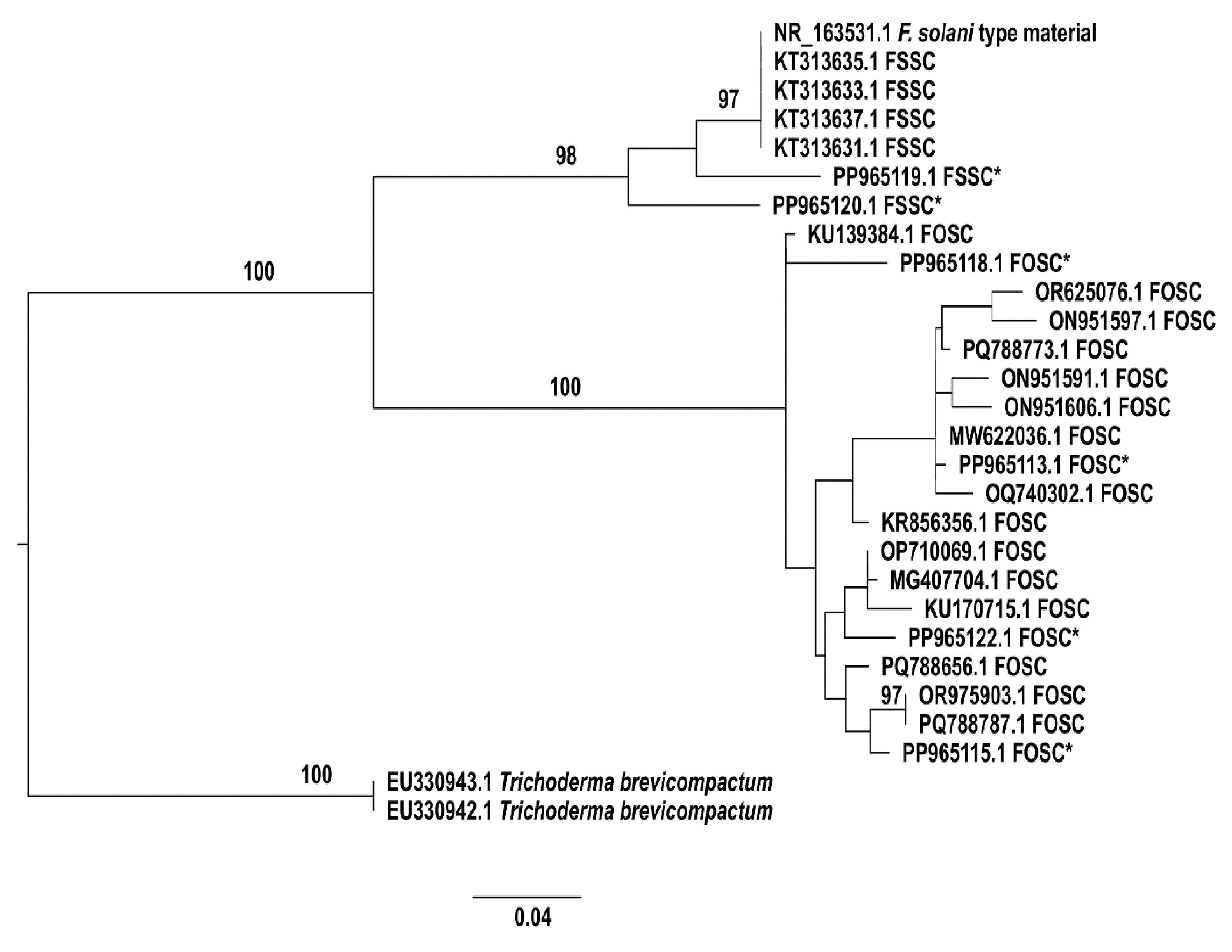
Fusarium sp. was the most frequently observed genus (66.6%, 10 isolates), with four isolates identified as F. oxysporum species complex and two as F. solani species complex, all supported by the phylogenetic analysis (Figure 4), as well as four identified only at the genus level. Similarly, Fusarium has been associated with diseased avocado trees in other regions.
Hernández et al.(2015) in Colombia documented the association of the genus Fusarium with various avocado organs. Fusarium austroamericanum, F. decemcellulare, F. incarnatum, F.oxysporum, F. solani, F. subglutinans, and F.verticillioides were reported in fruits; while F. incarnatum, F. solani, and F. subglutinans were found in leaves. Fusarium solaniwas reported in both the peduncle and the root. Olalde et al. (2020) reported F. oxysporum and F. solani as root rot pathogens in avocado trees in Michoacán, Mexico.
Ceja et al. (2000) found F. oxysporum and F. solani causing trunk lesions in avocado.
León;Mattos (2016) documented seed and seedling infection by F. verticillioides in Peru. Phytophthora was the second most frequent genus with four isolates (26.6%) belonging to P. cinnamomi. Members of the genus Phytophthora are significant pathogens for agricultural and forestry crops worldwide, causing substantial economic losses.
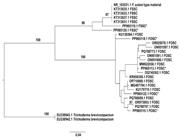
ITS Maximum Likelihood phylogenetic tree, showing the grouping of strain sequences from this study with members of the Fusarium solani species complex (FSSC) and Fusarium oxysporum species complex (FOSC). Trichoderma brevicompactum was used as an external group. Numbers above branches indicate ultrafast bootstrap values >95, asterisks * indicate sequences generated in this study.
The P. cinnamomi isolates were differentially distributed among the orchards sampled in this study. This species has been reported as the main cause of root rot in avocados in other countries (BERG et al., 2021; KURBETLI et al., 2020; RODRÍGUEZ et al., 2017).
In Mexico, the first epidemiological report of this pathogen was in 1952, documenting a 90% loss in avocado production (AGAPITO et al., 2022). Other species, such as P. heveae and P. citricola have also been associated with root rot in avocado in Colombia (RAMÍREZ et al., 2014).
Finally,one isolate (6.6%) belonged to the genus Lasiodiplodia. This fungus is considered the causal agent of dieback and fruit rot in various host plants (PICOS et al., 2015). Medina et al. (2018) reported L. theobromae causing soft rot symptoms in jackfruit (Artocarpus heterophyllus) in Nayarit, Mexico.
Recently, Betancourt et al. (2024) reported L. theobromae as the cause of dieback in soursop (Annona muricata L.) in Nayarit, Mexico, and Cambero et al. (2024) reported it as a root pathogen in Annona muricata L. in Nayarit, Mexico. In this regard, Alama et al. (2006) recorded L. theobromae as the causal agent of canker and dieback in avocado crops in Peru, with an incidence exceeding 80%. In Colombia, L. theobromae was associated with damage to the graft area in avocado was recorded (RAMÍREZ;MORALES, 2021).
Similar data are reported by Monir et al. (2021), who indicate that L. theobromae was the phytopathogen frequently isolated from graft failure seedlings in different avocado cultivars.
Arjona et al.(2019) observed branch dieback in several avocado orchards in southern Spain, with a low incidence of L. theobromae with these symptoms.Valencia et al. (2019) documented the infection of L. theobromae in avocado cankers and dieback in Chile.
All isolates were pathogenic to avocado trees (Table 2), with varying degrees of virulence in the time required to induce the first symptoms. The time to appearance of initial symptoms, such as chlorosis and wilting, in inoculated avocado plants (var. drymifolia), varied among pathogens.
Fusarium oxysporum strains induced the first infection symptoms in avocado trees between 21 and 98 days after inoculation (dai). F. solani isolates ranged from 28 to 135 dai. Isolates of Phytophthora cinnamomi induced disease symptoms from 21 to 143 dai. The Lasiodiplodia sp. (005) isolate triggered the appearance of initial infection symptoms at 135 dai. Isolates of Fusarium sp. (006) and Phytophthora cinnamomi (007) isolated from trees in the municipality of Jala were the most virulent, causing chlorosis in all tested trees between 21 and 35 dai, followed by tree death between 143 and 159 dai. Therefore, the identification of this Fusarium sp. strain is needed.
Based on days until symptoms, pathogenicity testing revealed significant variability in intrinsic virulence among isolates, even within the same species and originating from the same locality. This variability can be attributed to the strains’ specific ability to induce pathological symptoms, potentially depending on their region of origin.
Dissanayake et al. (2009) documented differences in virulence among Fusarium strains on the Welsh onion (Allium fistulosum) cultivated in different regions, interestingly, the five isolates with the highest virulence were members of F. oxysporum.
Hernández et al. (2015) suggested that the variability among F. oxysporum isolates is influenced by the environmental conditions where the fungus develops, leading to distinct virulence characteristics.
These include colony adaptation, the production of microconidia and macroconidia for propagation, and the formation of chlamydospores for survival under stress factors. In P. cinnamomi, pathogenic variation has also been demonstrated. Huberli et al. (2001) documented pathogenicity differences among Australian isolates from plant species Eucalyptus marginata and Corymbia calophylla, suggesting three response categories based on the duration necessary for the pathogen to induce plant death: i) High pathogenicity, where isolates caused plant death at ≤59 days after inoculation (dai); ii) Intermediate pathogenicity, where isolates induced plant death betweenat 60 and 182 dai; and iii) low pathogenicity, where isolates did not cause plant death after 182 dai.
According to the results obtained from morphological characterization, ITS sequence analysis, and pathogenicity tests, Phytophthora cinnamomi (Oomycete), strains related to the Fusarium oxysporum species complex, and the F. solani species complex, Fusariumsp., and Lasiodiplodia sp. were identified as the phytopathogens responsible for causing the symptoms of root rot and wilting of Persea americana plants in Nayarit, Mexico. However, to ensure greater reliability of molecular identification, the use of additional markers such as EF1α, β-tubulin, rDNA, among others, is recommended. This information could be useful for producers of this crop, enabling the development of targeted disease control strategies, such as chemical or genetic control (e.g., resistant rootstocks).
Acknowledgment
To the Secretaría de Ciencia, Humanidades, Tecnología e Innovación (SECIHTI), to the Universidad Autónoma de Nayarit for the facilities provided to carry out this research, and to the Board of Trustees that administers the special tax destined for the Universidad Autónoma de Nayarit.
References
-
ABAD, G.Z.; BURGESS, T.I.; REDFORD, A.J.; BIENAPFL, J.C.; SRIVASTAVA, S.; MATHEW, R.; JENNINGS, K. IDphy: an international online resource for molecular and morphological identification of phytophthora. Plant Disease, St Paul, v.107, n.4, p.987-98, 2023. https://doi.org/10.1094/PDIS-02-22-0448-FE
» https://doi.org/10.1094/PDIS-02-22-0448-FE -
AGAPITO, A.M.E.; CIBRIÁN, L.M.G.; RUIZ, J.D.; LÓPEZ, C.B.E.; RUEDA, P.E.O. Phytophthora cinnamomi Rands en aguacate. Revista Mexicana de Ciencias Agrícolas, Texcoco, n.28, p.331-41, 2022. https://doi.org/10.29312/remexca.v13i28.3287
» https://doi.org/10.29312/remexca.v13i28.3287 - ALAMA, I.; MALDONADO, E.; GÁLVEZ, E.R. Lasiodiplodia theobromae afectando el cultivo de palto (Persea americana) en las condiciones de Piura-Perú. Universalia, Caracas, v.11, n.2, p.4-13, 2006.
-
ARJONA, G.I.; RUANO, R.D.; LÓPEZ, H.C.J. Identification, pathogenicity and distribution of the causal agents of dieback in avocado orchards in Spain. Spanish Journal of Agricultural Research, Madrid, v.17, n.1, e1003, 2019. https://doi.org/10.5424/sjar/2019171-13561
» https://doi.org/10.5424/sjar/2019171-13561 - BARNETT, H.L.; HUNTER, B.B. Illustrated genera of imperfect fungi 4.ed. St Paul: American Phytopathology Society, 1998. p.217.
-
BERG, V.D.N.; SWART, V.; BACKER, R.; FICK, A.; VIENA, R.; ENGELBRECHT, J.; PRABHU, S. Advances in understanding defense mechanisms in Persea americana against Phytophthora cinnamomi. Frontiers in Plant Science Lausanne, v.120, p.1-17, 2021. https://doi.org/10.3389/fpls.2021.636339
» https://doi.org/10.3389/fpls.2021.636339 -
BETANCOURT, A.A.; LUNA, E.G.; RIOS, V.C.; LÓPEZ, G.G.G.; CAMBERO, C.J.O.; CRUZ, C.E. Descending death in soursop (Annona muricata L.) caused by Lasiodiplodia theobromae in Nayarit, Mexico. Revista Bio Ciencias, Nayarit, v.11, e1594, p.1-14, 2024. https://doi.org/10.15741/revbio.11.e1594
» https://doi.org/10.15741/revbio.11.e1594 -
CAMBERO, A.C.B.; RIOS, V.C.; LUNA, E.G.; LÓPEZ, G.G.G.; ESTRADA, V.M.O.; CAMBERO, C.O.J. Patógenos causantes de la pudrición de raíz en guanábana (Annona muricata L.), en Nayarit, México. Ecosistemas y Recursos Agropecuarios, Tabasco, v.11, n.2, e3672, p.1-9, 2024. https://doi.org/10.19136/era.a11n2.3672
» https://doi.org/10.19136/era.a11n2.3672 - CEJA, T.L.F.; TÉLIZ, O.D.; OSADA, K.S.; MORALES, G.J.L. Etiología, distribución e incidencia del Cancro del aguacate Persea americana Mill. en cuatro municipios del Estado de Michoacán, México. Revista Mexicana de Fitopatología, Chapingo, v.18, n.2, p.79-86, 2000.
-
DISSANAYAKE, M.L.M.C.; KASHIMA, R.; TANAKA, S.; SHIN-ICHI I. Pathogenic variation and molecular characterization of Fusarium species isolated from wilted Welsh onion in Japan. Journal of General Plant Pathology, Tokyo, v.75, p.37–45, 2009. https://doi.org/10.1007/s10327-008-0135-z
» https://doi.org/10.1007/s10327-008-0135-z - ERWIN, D.C.; RIBEIRO, O.K. Phytophthora diseases worldwide Saint Paul, The American Phytopathological Society, 1996. p.562.
- HERNÁNDEZ-MEDINA, C.A; HENAO-HENAO, E.D.; VELASCO-BELALCÁZAR, M.L.; GÓMEZ-LÓPEZ E.D. Caracterización morfológica y molecular de aislados de Fusarium asociadas aguacate (Persea americana Mill), en el Valle del Cauca. Fitopatología Colombiana, Cali, v.39, n.2, p.51-6, 2015.
- HOANG, D. T.; CHERNOMOR, O.; HAESELER, A. V.; MINH, B. Q.; VINH, L. S. UFBoot2: Improving the ultrafast bootstrap approximation. Molecular Biology and Evolution, v. 35, p. 518-522, 2018.
-
HUBERLI, D.; TOMMERUP, I.C.; DOBROWOLSKI, M.P.; CALVER, M.C.; HARDY, G.E. Phenotypic variation in a clonal lineage of two Phytophthora cinnamomi populations from Western Australia. Mycological Research, Cambridge, v.105, p.1053-64, 2001. https://doi.org/10.1016/S0953-7562(08)61967-X
» https://doi.org/10.1016/S0953-7562(08)61967-X -
KATOH, K.; ROZEWICKI, J.; YAMADA, K.D. MAFFT online service: multiple sequence alignment, interactive sequence choice and visualization. Briefings in Bioinformatics, London, v.20, n.4, p.1160-6, 2019. https://doi.org/10.1093/bib/bbx108
» https://doi.org/10.1093/bib/bbx108 -
KURBETLI, I.; KARACA, G.; AYDOGDU, M.; SÜLÜ, G. Phytophthora species causing root and collar of pomegranate in Turkey. European Journal of Plant Pathology, Dordrecht, v.157, n 3, p.485-96, 2020. https://doi.org/10.1007/s10658-020-02007-8
» https://doi.org/10.1007/s10658-020-02007-8 -
LEON, T.B.; MATTOS, C.L. Hongos fitopatógenos asociados a semillas de palto (Persea americana Mill.). Revista de Investigación Altoandin, Puno, v.18 n.4, p.423-30. 2016. http://dx.doi.org/10.18271/ria.2016.216
» http://dx.doi.org/10.18271/ria.2016.216 -
MEDINA, T.M.A.; LUNA, E.G.; CAMBERO, C.O.J.; RAMÍREZ, G.L.G.; RIOS, V.C. Lasiodiplodia theobromae agente causal de la pudrición blanda de frutos de Artocarpus heterophyllus Lam. en Nayarit, México. Revista Brasileira de Fruticultura, Jaboticabal, v.40, n.5, p.1-5, 2018. https://doi.org/10.1590/0100-29452018018
» https://doi.org/10.1590/0100-29452018018 -
MONIR, G.A.; RADWAN, M.A.; HASSAN, M.S. Protecting avocado seedlings from grafting failure during propagation in nursery using biological and chemical control. Egyptian Journal of Phytopathology, Cairo, v.49, n.2, p.41-53, 2021. https://doi.org/10.21608/EJP.2021.84933.1040
» https://doi.org/10.21608/EJP.2021.84933.1040 - OLALDE, G.G.L.; RAYA, Y.A.M.; APÁEZ, P.B.; VARGAS, M.S.; PEDRAZA, M.E.S.; RAYMUNDO, T.: VALENZUELA, R.; LARA, C.M.B.N. Characterization of Fusarium spp., a Phytopathogen of avocado (Persea americana Miller var. drymifolia (Schltdl. and Cham.)) in Michoacán, México. Revista de la Facultad de Ciencias Agrarias de la Universidad Nacional del Cuyo, Mendoza, v.52, n. 2. p.310-6, 2020.
-
OSORIO, A.L.; BURBANO, F.O.; ARCILA, C.A; VÁZQUEZ, B.A.; CARRASCAL, P.F.; ROMERO, F.J. Distribución espacial del riesgo potencial de marchitamiento del aguacate causado por Phytophthora cinnamomi en la subregión de Montes de María, Colombia. Revista Colombiana de Ciencias Hortícolas, Boyacá, v.11, n.2, p.273-85, 2017. https://doi.org/10.17584/rcch.2017v11i2.7329
» https://doi.org/10.17584/rcch.2017v11i2.7329 - PICOS, M.P.A.; GARCÍA, E.R.S.; LEÓN, F.J.; SAÑUDO, B.A.; ALLENDE, M.R. Lasiodiplodia theobromae en cultivos agrícolas de México: taxonomía, hospedantes, diversidad y control. Revista Mexicana de Fitopatología, Texcoco, v.33, p.54-74, 2015.
-
RAMÍREZ, G.J.G.; CASTAÑEDA, S.D.A.; MORALES, O.J.G. Estudios etiológicos de la marchitez del aguacate en Antioquia Colombia. Revista Ceres, Viçosa-MG, v.61, n.1, p.50-61, 2014. https://doi.org/10.1590/S0034-737X2014000100007
» https://doi.org/10.1590/S0034-737X2014000100007 -
RAMÍREZ, G.J.G.; MORALES, O.J.G. Diseases and disorders associated with different stages of crop development and factors that determine the incidence in Hass avocado crops. Revista Ceres, Viçosa-MG, v.68, n.1, p.71-82, 2021. https://doi.org/10.1590/0034-737X202168010009
» https://doi.org/10.1590/0034-737X202168010009 -
RODRÍGUEZ, H.E.; CAICEDO, A.A.; ENRÍQUEZ, V.A.; MUÑOZ, F.J. Evaluation of tolerance to Phytophthora cinnamomi Rands in avocado (Persea americana Miller) germplasm. Acta Agronómica, Palmira, v.66, n.1, p.128-34, 2017. https://doi.org/10.15446/acag.v66n1.50705
» https://doi.org/10.15446/acag.v66n1.50705 -
SCHROERS, H.J.; SAMUELS, G.J.; ZHANG, N.; SHORT, D.P.G.; JUBA, J.GEISER, D.M. Epitypification of Fusisporium (Fusarium) solani and its assignment to a common phylogenetic species in the Fusarium solani species complex. Mycologia, Lancaster, v.108, p.806-19, 2016. https://doi.org/10.3852/15-255
» https://doi.org/10.3852/15-255 -
SIAP - Servicio de Información Agroalimentaria y Pesquera. Anuario estadístico de la producción agrícola. Disponível em: https://nube.siap.gob.mx/cierreagricola/ Acesso em: 08 jul. 2024.
» https://nube.siap.gob.mx/cierreagricola/ -
TRIFINOPOULOS, J.; NGUYEN, L.T.; VON HAESELER, A.; MINH, B.Q. W-IQ-TREE: A fast online phylogenetic tool for maximum likelihood analysis. Nucleic Acids Research, London, v.44, p.W232-W235,2016. https://doi.org/10.1093/nar/gkw256
» https://doi.org/10.1093/nar/gkw256 -
VALENCIA, A.L.; GIL, P.M.; LATORRE, B.A.; ROSALES, I.M. Characterization and pathogenicity of Botryosphaeriaceae species obtained from avocado trees with branch canker and dieback and from avocado fruit with stem end rot in Chile. Plant Disease, St Paul, v.103, n.5, p.996-1005, 2019. https://doi.org/10.1094/PDIS-07-18-1131-RE
» https://doi.org/10.1094/PDIS-07-18-1131-RE - WATANABE, T. Pictorial atlas of soil and seed fungi morphologies of cultured fungi and key to species 3.ed. London: CRC Press, 2010.
- WHITE, T.J.; BRUNS, T.; LEE, S.; TAYLOR, J. Amplification and direct sequencing of fungal ribosomal RNA genes for phylogenetics. In: INNIS, M.; GELFAND, D.; SNINSKY, J.; WHITE, T. (ed.). PCR protocols: a guide to methods and applications. San Diego: Academic Press, 1990. p.315-22.
-
ZAPATA, J.C.; LEAL, J.M. Manejo integrado de la pudrición de raíces del aguacate (Persea americanaMill.), causado por Phytophthora cinnamomi Rands. Temas Agrarios, Montería, v.23, n.2, p.131-43, 2018. https://doi.org/10.21897/rta.v23i2.1297
» https://doi.org/10.21897/rta.v23i2.1297
Edited by
-
Scientific Editor
Alexandre Pio Viana
-
Associate Editor
Ivan Herman Fischer
The data that support the findings of this study are available from the corresponding author, Rosales, F.A.P., upon reasonable request.