
 Crew optimization in urban railway systems: case study of Rio de Janeiro VLT
Abstract
ABSTRACT: This study aims to develop a mathematical model for crew optimization in urban rail systems. In this sense, the proposed model offers a solution that considers the number of operators distributed daily in each working day, as well as providing the distribution of the workforce in work schedules, to minimize the total number of operators needed, but without any penalty to contractual work restrictions, legal restrictions and practical specificities presented by the operational context of the system. Another relevant aspect of the proposed model is the joint optimization of both the shifts and work schedule problem, without the need to use the timetable as an initial parameter for the model. Also in this work, the application of the model in a light rail vehicle (VLT) operator in the city of Rio de Janeiro is presented, while allowing the practical evaluation of the capacity to optimize the workforce after to use of the model, by the comparison between the generated computational results and the currently solution from the operator. In the end, some alternative work schedules in Brazilian labor legislation are tested and their direct gains in the reduction of the workforce obtained by optimizing the model are presented, as well as the guarantee of a more evenly fair work schedule, avoiding any work overload for operator or deviations from current labor legislation.
Keywords:
Optimization; Crew scheduling; Light rail transit; LRT
Resumo
RESUMO: O objetivo deste estudo é desenvolver um modelo matemático para otimização da tripulação em sistemas ferroviários urbanos. Neste sentido, o modelo proposto oferece uma solução que considere as quantidades de operadores alocados diariamente em cada jornada de trabalho, bem como prover a distribuição do efetivo em escalas de trabalho, de modo que minimize a quantidade total de operadores necessários, mas sem qualquer penalização às restrições contratuais de trabalho, restrições legais e especificidades práticas apresentadas pelo contexto operacional do sistema. Outro aspecto relevante acerca do modelo proposto é a otimização conjunta tanto do problema de alocação quanto escala, sem a necessidade de utilização de uma tabela de horários como parâmetro inicial ao modelo. Ainda neste trabalho, apresenta-se a aplicação do modelo em um operador de veículo leve sobre trilhos (VLT), na cidade do Rio de Janeiro, ao passo que permita a avaliação prática da capacidade de otimização do efetivo após o emprego do modelo, por meio da comparação entre os resultados computacionais gerados e o efetivo atualmente praticado no operador. Ao final, são testadas algumas alternativas de escalas de trabalho vigentes na legislação brasileira e apresentado seus ganhos diretos na redução do efetivo obtidos pela otimização do modelo, bem como a garantia de uma escala distribuída de forma mais equilibrada, evitando qualquer sobrecarga de trabalho dos operadores ou desvios na legislação vigente.
Palavras-chave:
Otimização; Programação da tripulação; Veículo leve sobre trilhos; VLT
1. Introduction
According to Wanke & Fleury (2006), personnel expenses represent the largest percentage of gross revenue for a freight carrier in the railway segment. According to ANPTrilhos (2014), labor costs are the most expensive item for passenger carriers in Brazil, representing 48% of the total operating cost.
As an aggravating factor, the COVID-19 pandemic caused a significant drop in passenger demand, creating a major challenge for passenger transport operators to readapt and continue offering a quality service to the population and maintaining an economic and financial balance. According to ANPTrilhos (2021), the volume of passengers transported between March and December 2020 decreased by 55.9% compared to 2019, clearly highlighting the serious economic imbalance of operators during this period.
Thus, the search for cost minimization becomes a crucial factor for the survival of these organizations and the maintenance of adequate public service. The search for the rational use of resources is essential for generating value in companies that aim to achieve levels of excellence in the management of their resources. In more extreme cases, where there is a shortage of financial resources, efficient management becomes essential for the survival of these companies. In the context of public transportation companies, which depend on government incentives to fund their operations, they show great interest in methodologies for resource optimization, aiming to ensure their financial balance.
Also, Erber (2000) points out that technological resources tend to have a reduction in their costs and an increase in their quality when new technologies are developed and there is free trade between companies. On the other hand, labor costs tend to be maintained or increased as labor legislation is strengthened or there is a shortage of specialized professionals in the market. From this perspective, companies that depend on a large workforce to operate their systems are the most interested in methods or models capable of guaranteeing the quality and productivity of their services through a lean production process with the least possible waste.
In general, the work of allocating labor can be solved manually with a significant level of planning effort by the responsible manager. However, as the number of operators increases or there are variations in demand throughout the day or in the possibilities of scale, this task becomes extremely expensive for manual execution. In this situation, the manager starts to prioritize only the minimum fulfillment of the requirements, without being able to evaluate the set of solutions that represent the best decision based on specific criteria, especially for resource optimization. In this sense, computational models are important tools, capable of performing the task with greater reliability and quality, within an adequate time for a quick return to operational demands and, therefore, will be explored in this study to show the potential gain over empirical solutions.
Therefore, this article aims to propose an optimization model for the allocation of human resources in an urban transport railway operation and validate it with the application in a light rail vehicle (LRV) operator, comparing the solution currently practiced with the solution obtained through the proposed model.
This paper is structured as follows: Section 2 shows the relevant concepts and a brief literature review on the crew scheduling problem. Section 3 shows the mathematical model. Section 4 shows the results and analyses. Finally, Section 5 shows the conclusions of this work.
2. Bibliographical review
According to Constantino (1997), resource management problems are classified in the literature into two types: allocation problems and service scale problems. Allocation problems are understood as problems related to daily planning and scale problems aimed at planning for a larger horizon.
Although in a generalist way without more specific consideration of a given segment, Dantzig (1954) was the first to formulate an allocation problem as an integer programming problem. In his work, the mathematical formulation consisted of the use of decision variables that represented the number of employees associated with each shift, known as Set Covering.
2.1 The problem of crew optimization in the transportation segment
Kasirzadeh et al. (2017) state that in the transportation segment, specifically in the airline industry, crew scheduling problems have been widely studied over the last 60 years, to obtain more significant savings in their operation. Later, since the 1990s, Jütte & Thonemann (2012) state that crew allocation and scheduling problems in railway transport have been discussed in the literature, opening up a considerable range of cases given the specific characteristics of railway transport.
As a widespread method, crew scheduling problems are extensions of the set covering model, as stated by Abbink et al. (2018). As a basis for crew scheduling optimization problems, Caprara et al. (1997) define the Set Covering Problem (SCP). The use of allocation problems is widespread, with some examples of the application being the work on optimization in railway systems highlighted by Ernst et al. (2001), which addresses the problem of optimizing the crew schedule of a freight transport system, based on a previously defined operational plan used as input data in the model.
Jütte & Thonemann (2012) present a model capable of generating task allocation for the crew of a train operation, ensuring the lowest possible cost and strict compliance with the crew's labor rights and the system's operational needs. Tian & Song (2013) developed a model for optimizing shifts on specific lines of a high-speed train system in China, under the justification that this division of lines considerably reduces the degree of complexity of the solution.
A little more recently, Hoffmann et al. (2017) explored the crew scheduling problem by applying a model to optimize the crew of a passenger railway system in Germany, considering the absenteeism rate of operators. Through an adaptation of the basic Set Covering model, the company's absenteeism variable and other practical constraints of a real system are integrated into the model, so that its real capacity to reduce labor costs in the German operator is tested.
Through their model, Moreno et al. (2019) propose a solution to the BRT scheduling problem, in two stages. The first is to divide the original schedules and the second, through graph theory, is to assign work shifts by correspondence. The method was applied in a BRT system operated by the company Integra SA, where 82 drivers were needed. After applying the method, it was possible to reduce the need to 78 drivers, with the solution being obtained in a few seconds of execution.
2.2 Approaches to the crew optimization problem
Different approaches to solving the crew optimization problem have been proposed. It is observed that the allocation and scheduling problems are usually solved independently, in two steps. However, models that solve the allocation and scheduling problems simultaneously, in a single step, have been proposed and presented better results.
Gomes & Gualda (2015) present a single-step model to solve crew allocation and crew shift problems in an aviation system. Since the problem offers high combinatorial complexity to obtain the solution and, consequently, a high degree of computational effort, the solution was based on heuristic methods and tested in real situations and showed the capacity to solve problems in small and medium-sized airlines in the Brazilian industry.
Xie et al. (2017) created a model that aims to reconcile both the interests of the organization and its employees so a weighted sum of both interests is performed. Metaheuristic methods were proposed to solve the problem, which was tested with real instances. The results were compared with commercial optimization packages and the authors indicated that the results were satisfactory.
Ma et al. (2017) present a single-step model solution and highlight as main contributions a valid approach for cases with a special cost structure and restrictions on the balance of drivers' working time and idle time, and an algorithm that incorporates the Gamma heuristic function and selection rules. Applied to ten bus lines in Beijing, the model indicated that the HACO-based algorithm could be a viable and efficient optimization technique for crew allocation problems, especially for large-scale problems.
Perumal et al. (2021) propose a model capable of jointly solving vehicle and crew scheduling problems, favoring the lesser flexibility provided by the electric bus fleet, which has lower autonomy and range when compared to conventional buses, thus making the solution to the problem more complex. As a result of the application of the method, gains were identified in vehicle and crew scheduling when considered in an integrated manner, to the detriment of a traditional sequential approach. Additionally, the analysis of the results indicated that increasing the autonomy of vehicles from 120 km to 250 km would allow an 8.21% reduction in the company's operating costs, indicating opportunities to improve the fleet's autonomy.
Urban public transport systems offer a context of uncertainty that causes changes in travel times throughout the day, while some authors seek solutions in their approach capable of minimizing these impacts on scheduling and, consequently, on the solution for crew scheduling. For example, the work of Banerjee et al. (2022) addresses the crew scheduling problem considering uncertainties in vehicle arrivals, representing this condition in their algorithm through an interval formulation. The work of Amberg & Amberg (2023) stands out, which presents a multi-objective algorithm based on the minimization of three aspects of planning: the economic result of the solution, the propagation of delays throughout the trips, and schedule changes, preserving the original structure of the trip schedule.
Even considering a certain degree of improvement and special adjustments to the model, it is noted that the most commonly applied method deals with the set coverage problem, presenting opportunities in different segments and a variety of cases as examples of application under the same purpose of crew optimization.
3. Method
To develop the proposed mathematical model, we considered aspects of Brazilian labor legislation, called the Consolidation of Labor Laws (CLT), which defines some rules such as maximum working hours, rest periods, etc. The Constitution of the Republic, in its article 7, item XIII, provides that “the duration of normal work shall not exceed eight hours per day and forty-four hours per week, with the possibility of compensating for working hours and reducing the working day, through an agreement or collective bargaining agreement”.
The Tribunal Superior do Trabalho (2020) highlights on its website that: “the so-called intra-shift break, a period intended for rest and meals, is not included in the working day. According to article 71 of the CLT, anyone who works more than six hours is entitled to a minimum break of one hour. If the working day is less than six hours, the break is at least 15 minutes”. Another notable point in Brazilian legislation is the application of additional remuneration for overtime worked by the employee. According to current legislation, hours beyond the pre-established working day must be paid by the employer increasing at least 50% of the normal hourly value or compensated through a time bank system.
Among these aspects, the allocation of working hours under ideal conditions from the employer's point of view always aims at the maximum reduction or elimination of situations that may result in overtime or non-compliance with specific legislation. Thus, the model was developed in a way that allows the optimal distribution of working hours, for each day of operation, in parallel, also considering the best distribution of resources in work shifts, to meet the daily demand of operators, without any considerable changes in the pre-established working conditions and operational guarantees indicated by the technical team.
3.1 Model for optimizing operational staff
The sets and their respective indexes, parameters, and decision variables are defined below. T is the set of work shifts t, C is the set of days c included in the work schedule cycle, E is the set of variations of the approved schedules e, J is the set of possible variations of work shifts j, H is the set of time slots h existing in a day, and finally, W is the set of days of the week w.
The parameters used are: Rwh, which represents the input of the operational planning in the model, so that the minimum need for operators is defined for each time slot, on each day of operation, from Monday to Sunday. Regarding the allocation of work shifts, the parameters are according to the particularities of each shift T, being subdivided into as many types as necessary. Therefore, Fthj represents the variations in work shifts and working hours implemented, receiving the value 1 for an hour worked and 0 for an hour not worked. The parameter Sthj is similar to Fthj, but represents the hours worked in work shifts that extend beyond the work shift into the following day. The parameter Btec represents the relationship between work shifts and variations in approved schedules and days. Finally, the parameter SEwc represents the relationship between days of the week w and days c. The decision variables of the model are: Xwtj, which represents the number of operators allocated to work shifts j, for each day of the week w and in each work shift t. The variables Dtc represent the minimum number of operators throughout the work shift distribution cycle. Finally, the decision variables Yte represent the total number of operators distributed in each work shift and for each existing work shift t. Tables 1 and 2 briefly describe the parameters and variables that make up the proposed mathematical model.
Expressions (1) to (8) represent the mathematical model of integer linear programming proposed to solve the operator allocation problem.
subject to
The optimization model of the total number of operators is developed through a logical relationship in the optimization of two decision variables related to the number of operators: the number of operators allocated to each work shift and the number of operators distributed in each work shift.
Equation (1) represents the objective function for minimizing the total number of operators, represented by the total number of operators distributed across work shifts and schedules allowed in the model. Constraints (2) and (3) ensure that the number of operators allocated to work shifts is greater than or equal to the number required to cover each operating time slot, predefined in the model based on the type of day and work shift. Based on the number of operators allocated to shifts, constraints (4) ensure the relationship between the days of the week used to allocate the shift to its corresponding day in the work shift cycle, and constraints (5) ensure that the work shift for each shift meets the minimum number of operators. Finally, constraints (6), (7) and (8) define the domain of the decision variables.
Additionally, it is important to emphasize that Brazilian labor legislation is very objective concerning inter-shift work rest, maximum hours worked per shift, and intra-shift break, in addition to the specific considerations of each operational unit regarding personnel management. Therefore, all these considerations are included within the model through the parameters used in the tests of constraints (2), (3), and (4), as well as the subdivision of the number of operators by work shifts, which guarantee a minimum variation in the operators' work routine and a minimum intra-shift break of 11 consecutive hours.
3.2 Total number of operators
Based on the total number of operators allocated to the work shifts in the model above, to meet the real demand for operators from the perspective of medium/long-term planning, 2 factors will also be applied to the final number to obtain the company's total workforce: the AB factor, referring to the historical percentage of absenteeism recorded in the company, and the FE vacation factor, commonly used at 8.33%, referring to the extra workforce of one over twelfth required to cover operators' vacations, as shown in Equation (9).
Finally, with the total effective information, it will be possible to compare the operator's current scenario.
4. Optimization of the vlt crew in the city of Rio de Janeiro
This work deals with the application of the crew optimization model to develop and practically validate this method through a case study at the VLT (Light Rail Vehicle) operator in the city of Rio de Janeiro, ensuring that the scientific work has an applied purpose and exploratory objectives, of a quantitative and local nature, carried out in the field.
4.1 The Rio de Janeiro light rail system
With a proposal to modernize the public transport matrix in the central and port region of Rio de Janeiro, the VLT Carioca (2020) was designed to become the main mode of circulation in the region, including assuming an important role in the intermodal integration of the transport systems already existing in this region.
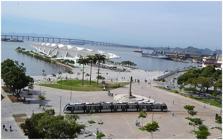
Through its three operational lines, the VLT system includes 31 stations and approximately 26 kilometers of rail network, guaranteeing a modern and efficient transport option for the local and floating population of the Central region of Rio de Janeiro (Figure 1).
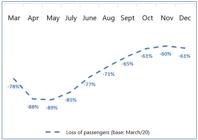
In 2020, Rio de Janeiro's VLT system faced a major challenge, as did practically all passenger transport systems in Brazil and around the world: the Covid-19 pandemic. In this scenario, the operator's internal records indicate that the level of loss of the mode reached 89% of passenger demand, based on the last pre-pandemic week of March 2020, while it has been gradually resuming passenger volume since the easing of health restrictions, although still far below the previous scenario (Figure 2).
Like most rail transport systems, Rio de Janeiro's VLT uses operators to drive trains throughout its entire rail network, whose personnel management is carried out entirely internally by the operator, from their hiring to the actual driving of the trains. In this sense, one of the major challenges in terms of resource management is to allocate these professionals appropriately to operational needs with a high level of productivity, optimizing the available workforce and, consequently, the operational costs related to personnel.
4.2 Optimization of the company's operational staff
To optimize the workforce, data from the operator's operational planning and the survey of parameters related to the operational premises, legal attributions, and personnel management specific to the operator and workplace were used. Therefore, two sections will be presented below regarding the specific parameters for the VLT operator in the City of Rio de Janeiro. The first section indicates the number of operators required to operate the system, in each time slot and based on the planning defined by the company. The first section presents the personnel management premises and legal aspects that enable the allocation of these operations in work shifts and schedules.
4.2.1 Number of operators required per time slot (Rwh parameter)
The definition of the number of operators in the VLT Rio de Janeiro operation has as a preliminary calculation the direct allocation of 1 operator for each 1 train in operation. Thus, the railway capacity planning indicates the departure number for the survey of this parameter. In addition, it is necessary to dimension the operational slack for the surrender of periodic interruptions for intra-day breaks, shift changes, or operational rest, referred to in the company as surrender queues.
In the case of Rio de Janeiro's VLT operators, each complete operational route, going to the last terminal and returning to its support base, has an average duration of one hour, with a margin of variation of 10 minutes in the event of delays or advances. Therefore, the company's management adopts an average minimum rest interval of 14 minutes for each trip, that is, the operator rests 14 minutes for every 60 minutes worked, on average. This strategy then allows the dimensioning of the operator workforce to be carried out without the need for the travel timetable, ensuring that the optimization model provides the allocation strategy regardless of this information.
Finally, taking as a basis the current operational scenario of the VLT in Rio de Janeiro, Table 3 shows the input data regarding the demand of operators by time slot, considering each operational day that requires specific dimensioning, commonly divided into weekdays, Saturdays, and Sundays.
4.2.2 Legal aspects and personnel management (other parameters)
As an important step in customizing the model, the collection of information for parameterization must consider any specific needs of the operator, so that the results obtained are fully aligned with what is recommended by local labor legislation, as well as the personnel management practices employed by the company. In the case of the VLT in Rio de Janeiro, the restrictions related to working hours are presented below.
Daily shifts must follow the rule of 8 hours of work and 1 hour of intra-shift break; working shifts must be subdivided into 4 groups, morning (A), intermediate (B), afternoon (C), and night (D), in such a way that each operator has a minimum of predictability regarding their usual working period, and respecting the legal limit of 12 hours between shifts;
Due to restrictions on the supply of transportation and public safety conditions, no work shift should start or end between 1 am and 4 am. The break time can occur from the 3rd hour to the 5th hour of the work shift. Given the low availability of supervisors in the late evening and early morning, the night shift should only start at 10 pm, so that all procedures for starting the work shift are concentrated in a single performance by the night supervisor.
Due to the specific operational conditions for each day, the mathematical modeling needed to consider the differences presented by each day of the week. Specifically, in public transportation, the operational plan for weekdays differs considerably when compared to Saturdays and Sundays, so each will have a part represented in the model capable of optimizing journeys and schedules based on their specific demand for operators.
In this sense, the model assumes in its optimization a specific allocation of shifts for the following division: Monday - Thursday: it has a different operational profile from the others, being days typically more operationally demanding and, therefore, requiring the maximum number of employees on the work schedule; Friday: despite presenting the same operational plan from Monday to Friday, the number of operators on the Friday night shift may be smaller due to the operational profile of Saturday morning being quieter than a business day; Saturday: it has a different operational plan from the others, due to trade in the early morning and its condition of low demand in the afternoon and evening; and Sunday: it has a different operational plan from the others, due to its condition of usual low demand and a need for more operators in the evening period to start operations properly on the first business day of the week, Monday.
Like in working hours, there are also specific requirements regarding work shifts, which are highlighted below: The type of work shift adopted must be the same for all operators, and this must be the shift approved by the company with the labor union that represents them. The shift presents a special distribution to prioritize the number of workers on weekdays over weekends, based on 16 cycles of days off that are distributed over 14 weeks, until returning to the first cycle; The shifts must necessarily be subdivided following the 4 shifts specified for the work shifts, ensuring coverage of the number of operators on days off, without the need to move other operators between different shifts.
Finally, to determine the total size of the team for comparison purposes with the company's current budget plan, it is necessary to know the number of vacation employees and the margin for absenteeism and turnover. In this exercise, the value to be considered for vacations will be a factor of 8.33% and, for the absenteeism or turnover rate, it will be a factor of 3%, both applied to the total number of employees resulting from the optimization.
In summary, the following assumptions and restrictions are assumed in the model: 8-hour working days: Starting at 5 am at the earliest and ending at midnight at the latest; Strict use of a special shift approved by the operator; Division of working days and shifts into 4 shifts: Morning, Intermediate, Afternoon and Night; Factor of 8.33% for vacation coverage and 3% for historical absenteeism rate.
4.2.3 Analysis and discussion of results
The computational experiments were performed using the AIMMS software, in which the model was implemented and the optimization problem was solved. Table 4 shows the results obtained for each of the shifts and the total.
Assuming the premises of historical absenteeism and extra staff to cover staff vacations, calculated by equation (9), the result of the necessary operational staff corresponds to 106 VLT operators, still 8.5% less than the staff currently employed by the company.
4.3 Sensitivity analysis and expansion of results
4.3.1 Flexible shifts
As noted in section 4.2, it was possible to achieve a considerable reduction in the operational workforce employed by the company. Even so, an expansion of the optimization scenarios was carried out so that two new scenarios were tested to reduce the workforce. Scenario 1 refers to the optimization based on the current shift used by the company and scenario 2 refers to the possibility of a mixed solution by including the 5x2 and 4x2 shifts, as provided for in Brazilian labor legislation. Scenario 3 will only test the 5x2 and 4x2 shifts, disregarding the use of the company's current shift. The results are presented in Table 5.
The best solution is to adopt a mixed solution, using the currently used scale and the traditional 5x2 and 4x2 scales, offering an additional reduction of 2 operators. Scenario 3 excluded the current scale and presented an increase of 2 operators, to be configured as the worst optimization scenario.
4.3.2 Flexible working hours
In addition to the possibility of flexible work shifts, there is also the possibility of flexible working hours, in which operators must currently start or end their working hours before 10 pm and after 5 am, which limits the range of possible allocations made by the model to 4 shifts that correspond to the permitted time slots.
In this sense, the Table 6 shows a comparison of the scenario with fewer staff, Scenario 2, and Scenario 4, which offers both the flexibility of shifts observed in Scenario 2, as well as the flexibility of working hours through a new distribution of shifts, in 6 divisions of 4-time slots, which offer the possibility of operators being allocated without any restrictions to the night window between 10 pm and 5 am.
When comparing scenarios 2 and 4, we observe that when we expand the possible working hours, there is a reduction of 3 more operators in the total workforce, confirming that this is indeed an aspect that offers better results in terms of minimizing the total workforce.
5. Final considerations
The results obtained by the model proved to be highly effective in optimizing the company's operational workforce, in line with the proposal for increased competitiveness and efficiency in the management of its resources, with an 8.5% reduction in the workforce. Additionally, the exploration of new shifts and the relaxation of restrictions on working hours showed an even greater potential for reducing the workforce, through a mixed solution in which shifts provided for in Brazilian legislation were combined with a new arrangement for start and end times, without any breach of current labor legislation. As a major differentiator, the process proposes a final number of resources without requiring any more specific details of the operational travel schedule, such as a timetable, by using an operational solution based on a queue of operators to cover the operators, while replacements of this resource can occur throughout the entire operation without any loss of production.
Acknowledgements
The authors would like to thank VLT do Rio de Janeiro for their support in providing information.
-
Financial support:
None.
-
How to cite:
Cruz, V. N., Silva Junior, O. S., & Lopes, L. A. S. (2024). Crew optimization in urban railway systems: case study of Rio de Janeiro VLT. Gestão & Produção, 31, e6823. https://doi.org/101590/1806-9649-2024v31e6823
References
-
Abbink, E., Huisman, D., & Kroon, L. (2018). Railway crew management. In R. Borndörfer, T. Klug, L. Lamorgese, C. Mannino & M. Reuther (Eds.), Handbook of optimization in the railway industry: international series in operations research & management science (pp. 243-264). Cham: Springer. http://doi.org/10.1007/978-3-319-72153-8_11
» http://doi.org/10.1007/978-3-319-72153-8_11 -
Amberg, B., & Amberg, B. (2023). Robust and cost-efficient integrated multiple depot vehicle and crew scheduling with controlled trip shifting. Transportation Science, 57(1), 82-105. http://doi.org/10.1287/trsc.2022.1154
» http://doi.org/10.1287/trsc.2022.1154 -
ANPTrilhos. (2014). Agenda Política 2015-2018 Retrieved in 2021, August 31, from https://anptrilhos.org.br/wp-content/uploads/2017/05/Agenda-Pol%C3%ADtica-2015-2018.pdf
» https://anptrilhos.org.br/wp-content/uploads/2017/05/Agenda-Pol%C3%ADtica-2015-2018.pdf -
ANPTrilhos. (2021). Balanço Metroferroviário 2020-2021 Retrieved in 2021, August 31, from https://anptrilhos.org.br/wp-content/uploads/2021/04/anptrilhos-balanco-metroferroviario-2020-2021.pdf
» https://anptrilhos.org.br/wp-content/uploads/2021/04/anptrilhos-balanco-metroferroviario-2020-2021.pdf -
Banerjee, T., Biswas, A., Shaikh, A., & Bhunia, A. (2022). An application of extended NSGA-II in interval valued multi-objective scheduling problem of crews. Soft Computing, 26(3), 1261-1278. http://doi.org/10.1007/s00500-021-06386-w
» http://doi.org/10.1007/s00500-021-06386-w -
Caprara, A., Fischetti, M., Toth, P., Vigo, D., & Guida, P. L. (1997). Algorithms for railway crew management. Mathematical Programming, 79(1), 125-141. http://doi.org/10.1007/BF02614314
» http://doi.org/10.1007/BF02614314 - Constantino, A. (1997). Otimização de escala de trabalho para condutores de trem: sequenciamento de tarefas e alocação baseada em preferência declarada (Tese de Doutorado). Universidade Federal de Santa Catarina, Florianópolis, SC.
-
Dantzig, G. B. (1954). A comment on edie’s “traffic delays at toll booths”. Journal of the Operations Research Society of America, 2(3), 339-341. http://doi.org/10.1287/opre.2.3.339
» http://doi.org/10.1287/opre.2.3.339 - Erber, F. S. (2000). O padrão de desenvolvimento industrial e tecnológico e o futuro da indústria brasileira. Revista de Economia Contemporânea, 5(3), 1-32.
-
Ernst, A., Jiang, H., Krishnamoorthy, M., Nott, H., & Sier, D. (2001). An integrated optimization model for train crew management. Annals of Operations Research, 108(1–4), 211-224. http://doi.org/10.1023/A:1016019314196
» http://doi.org/10.1023/A:1016019314196 -
Gomes, P., & Gualda, N. (2015). Heuristics to solve the integrated airline crew assignment problem. Journal of Transport Literature, 9(1), 25-29. http://doi.org/10.1590/2238-1031.jtl.v9n1a5
» http://doi.org/10.1590/2238-1031.jtl.v9n1a5 -
Hoffmann, K., Bucher, U., Neufeld, J., & Tamke, F. (2017). Solving practical railway crew scheduling problems with attendance rates. Business & Information Systems Engineering, 59(3), 147-159. http://doi.org/10.1007/s12599-017-0470-8
» http://doi.org/10.1007/s12599-017-0470-8 -
Jütte, S., & Thonemann, U. W. (2012). Divide-and-price: a decomposition algorithm for solving large railway crew scheduling problems. European Journal of Operational Research, 219(2), 214-223. http://doi.org/10.1016/j.ejor.2011.12.038
» http://doi.org/10.1016/j.ejor.2011.12.038 -
Kasirzadeh, A., Saddoune, M., & Soumis, F. (2017). Airline crew scheduling: models, algorithms, and data sets. EURO J Transp Logist., 6(2), 111-137. http://doi.org/10.1007/s13676-015-0080-x
» http://doi.org/10.1007/s13676-015-0080-x -
Ma, J., Song, C., Ceder, A., Liu, T., & Guan, W. (2017). Fairness in optimizing bus-crew scheduling process. PLoS One, 12(11), e0187623. http://doi.org/10.1371/journal.pone.0187623 PMid:29190772.
» http://doi.org/10.1371/journal.pone.0187623 -
Moreno, C., Falcón, L., Escobar, J., Zuluaga, A., & Echeverri, M. (2019). Heuristic constructive algorithm for work-shift scheduling in bus rapid transit systems. Decision Science Letters, 8(4), 519-530. http://doi.org/10.5267/j.dsl.2019.4.002
» http://doi.org/10.5267/j.dsl.2019.4.002 -
Perumal, S., Dollevoet, T., Huisman, D., Lusby, R., Larsen, J., & Riis, M. (2021). Solution approaches for integrated vehicle and crew scheduling with electric buses. Computers & Operations Research, 132, 105268. http://doi.org/10.1016/j.cor.2021.105268
» http://doi.org/10.1016/j.cor.2021.105268 -
Tian, Z., & Song, Q. (2013). Modeling and algorithms of the crew scheduling problem on high-speed railway lines. Procedia: Social and Behavioral Sciences, 96, 1443-1452. http://doi.org/10.1016/j.sbspro.2013.08.164
» http://doi.org/10.1016/j.sbspro.2013.08.164 -
Tribunal Superior do Trabalho. (2020). Jornada de Trabalho. Retrieved in 2021, August 31, from http://www.tst.jus.br/jornada-de-trabalho
» http://www.tst.jus.br/jornada-de-trabalho -
VLT Carioca. (2020). VLT Carioca Retrieved in 2021, August 31, from https://www.vltrio.com.br/
» https://www.vltrio.com.br/ - Wanke, P. F., & Fleury, P. F. (2006). Transporte de cargas no Brasil: estudo exploratório das principais variáveis relacionadas aos diferentes modais e às suas estruturas de custos. In J. A. De Negri & L. C. Kubota (Eds.), Estrutura e Dinâmica do Setor de Serviços no Brasil (pp. 409-464). Brasília: IPEA.
-
Xie, L., Merschformann, M., Kliewer, N., & Suhl, L. (2017). Metaheuristics approach for solving personalized crew rostering problem in public bus transit. Journal of Heuristics, 23(5), 321-347. http://doi.org/10.1007/s10732-017-9348-7
» http://doi.org/10.1007/s10732-017-9348-7


