 Can a digital platform framework advance the bioeconomy and the sustainabilty in the Amazon?: literature review
Abstract
Abstract The Amazon, with its vast biodiversity, holds strategic potential for developing a sustainable bioeconomy, particularly through the valorization of non-timber forest products (NTFPs). In this context, digital technologies serve as key tools for building more transparent, inclusive, and environmentally responsible value chains. We carried out this study in a systematic literature review (SLR), based on 56 articles, analyzing how digital platforms can contribute to the economic, environmental, and social valorization of NTFPs in the region. The findings indicate that tools such as blockchain and Internet of Things (IoT) enhance traceability, authenticity, and sustainable standards, while artificial intelligence supports demand planning and market alignment. Drawing upon these insights, we proposed a digital framework, structured around four pillars: traceability and authentication, demand forecasting and market management, community capacity-building, and environmental monitoring with sustainable certifications. The framework aims to reduce inequalities, promote sustainable practices, and drive regional development. However, challenges such as inadequate technological infrastructure and a lack of local capability remain significant challenges to its implementation. Future studies should test the model’s application in specific Amazonian communities, assessing its socioeconomic and environmental impacts as well as its practical feasibility.
Keywords:
Bioeconomy; Amazon; Non-Timber Forest Products; Digital platforms; Sustainability
Resumo
Resumo A Amazônia, com sua vasta biodiversidade, possui um potencial estratégico para o desenvolvimento de uma bioeconomia sustentável, especialmente por meio da valorização de produtos florestais não madeireiros (PFNMs). Nesse contexto, as tecnologias digitais servem como ferramentas essenciais para construir cadeias de valor mais transparentes, inclusivas e ambientalmente responsáveis. Este estudo realizou uma revisão sistemática da literatura (RSL), baseada em 56 artigos, para analisar como as plataformas digitais podem contribuir para a valorização econômica, ambiental e social dos PFNMs na região. Os resultados indicam que ferramentas como blockchain e Internet das Coisas (IoT) aprimoram a rastreabilidade, autenticidade e padrões sustentáveis, enquanto a inteligência artificial auxilia no planejamento da demanda e alinhamento ao mercado. Com base nessas percepções, foi proposto um framework digital estruturado em quatro pilares: rastreabilidade e autenticação, previsão de demanda e gestão de mercado, capacitação comunitária e monitoramento ambiental com certificações sustentáveis. O framework visa reduzir desigualdades, promover práticas sustentáveis e impulsionar o desenvolvimento regional. No entanto, desafios como infraestrutura tecnológica inadequada e falta de capacidade local permanecem obstáculos significativos para sua implementação. Estudos futuros devem testar a aplicação do modelo em comunidades específicas da Amazônia, avaliando seus impactos socioeconômicos e ambientais, bem como sua viabilidade prática.
Palavras-chave:
Bioeconomia; Amazônia; Produtos Florestais Não Madeireiros; Plataformas digitais; Sustentabilidade
1 Introduction
The bioeconomy in the Amazon is increasingly regarded as an indispensable strategy for balancing environmental conservation with sustainable economic development. Renowned for its exceptional biodiversity richness, the region holds significant potential for the production of non-timber forest products (NTFPs) such as açaí, Brazil nuts, essential oils, and medicinal plants (Afonso, 2022). These products represent a strategic economic resource while also offering opportunities to value the traditional knowledge of local communities, promoting practices that integrate economic development and sustainability (Delgado et al., 2023).
The concept of bioeconomy, understood as the sustainable use of biological resources to foster innovation and generate economic value, has gained prominence in global sustainable development agendas (D’Amato & Korhonen, 2021). However, its implementation in the Amazon faces structural challenges, including insufficient infrastructure, low integration of value chains, and logistical bottlenecks that limit the region's competitiveness (Weiss et al., 2023; Abramovay et al., 2021). These issues are compounded by regional inequalities, food insecurity, and inadequate sanitation conditions, underscoring the need for solutions that combine sustainable development with social inclusion (Marcovitch & Val, 2024).
For the Amazonian bioeconomy to reach its full potential, it is essential to adapt it to local specificities, considering the region's rich biodiversity, traditional community knowledge, and socioeconomic conditions (Costa et al., 2022). Economic models imported from other contexts often overlook these nuances, reducing their effectiveness in achieving long-lasting impacts (Chelala et al., 2022). Approaches that integrate social, cultural, and ecological factors are necessary to maximize benefits and ensure long-term sustainability (Pamplona et al., 2021).
Studies such as those by Denny et al. (2021), Oliveira et al. (2023), and Tovar & Hajjar (2024) highlight that the challenges faced in the Amazon extend beyond environmental issues. They include food insecurity, economic inequalities, and unfair trade practices, which hinder the development of sustainable strategies. These problems underscore the need for initiatives aimed at equity and reducing the historical vulnerabilities of local communities (Marcovitch & Val, 2024).
Despite its potential, the Amazonian bioeconomy remains underutilized, partly due to the lack of studies systematically analyzing local species, their geographical distributions, and potential uses (Ribeiro & Soares, 2022). This technical-scientific gap limits the identification of commercial opportunities and the formulation of sustainable exploitation strategies. The absence of robust analyses on economic and ecological viability also hampers the creation of public policies and incentives capable of attracting investments and fostering bioeconomy growth (Freitas et al., 2024).
Given this scenario, investigating the intersection between digital platforms and the Amazonian bioeconomy is both theoretically and practically relevant. From a theoretical standpoint, the study contributes to an emerging body of literature that seeks to operationalize sustainability through technological innovation while acknowledging socioecological complexity. This need is reinforced by the lack of consensus on the definition of bioeconomy, as discussed by Leavy et al. (2024), who highlight the importance of adopting a holistic perspective that integrates biomass-based, biotechnology-based, and biosphere-based dimensions.
From a practical standpoint, the research responds to the urgent demand for scalable, inclusive, and context-specific solutions capable of enhancing market access, improving value chains, and strengthening forest-based economies. In this regard, the recently established Brazilian Bioeconomy Strategy (Decree No. 12.044/2024) reflects this approach by promoting a development model grounded in social justice, traditional knowledge, biodiversity conservation, and technological innovation (Brasil, 2024). Digital platforms tailored to the Amazon represent a viable alternative to overcome these barriers. They can reduce inequalities, foster local autonomy, and increase the global competitiveness of biodiversity-based products by connecting small producers with global markets and promoting value chains that are more transparent, fair, and sustainable (Garrett et al., 2024).
Emerging technologies such as blockchain, the Internet of Things (IoT), and Artificial Intelligence (AI) can enhance traceability, optimize logistics, and ensure product authenticity, contributing to environmental conservation and improved socioeconomic conditions (Pulita et al., 2024; Watanabe et al., 2018). However, their implementation in the Amazon faces limited access to technical training and resources, insufficient financial resources, and fragmented public policies (Abramovay et al., 2021).
While several studies examine digital technologies applied to the bioeconomy (D’Amico et al., 2022; Gkikas et al., 2023; Lekkas et al., 2021), few systematically investigate how specific solutions can be integrated into a digital framework tailored to the Amazon's unique characteristics. Research exploring the barriers faced by local communities and opportunities for NTFP commercialization remains insufficient (Ribeiro & Soares, 2022). This methodological gap hinders the development of strategies that efficiently combine traditional knowledge, modern science, and digital technologies (Freitas et al., 2024).
In this article we seek to address these gaps through a systematic literature review, examining how digital platforms can contribute to the economic, environmental, and social valorization of NTFPs within a context-specific and biodiversity-based vision of the Amazonian bioeconomy. The primary objective is to propose a digital platform model that integrates technological and organizational solutions to strengthen forest-based value chains, promote sustainable practices, and enhance local livelihoods. Additionally, in this study we explore how such a framework can reduce regional inequalities, support fair benefit-sharing, and align digital transformation with the broader goals of an inclusive and territorially grounded bioeconomy.
The structure of this article is organized as follows: In Section 2 we present the theoretical background, discussing the main concepts, challenges, and opportunities related to the bioeconomy in the Amazon. In Section 3 we describe the methodology of the systematic literature review adopted in this study. In Section 4 we present the main results of the analysis and proposes a framework for the development of digital platforms focused on the Amazonian bioeconomy. In Section 5 we discuss the theoretical and practical implications of the findings, while in Section 6 we summarize the conclusions and suggest directions for future research.
2 Theoretical background
2.1 The bioeconomy in the Amazon
Bioeconomy utilizes renewable biological resources to promote sustainable economic alternatives, reconciling development with environmental conservation (Gawel et al., 2019). This circular model seeks to reduce dependence on fossil fuels and minimize environmental impact. Amazon's biodiversity, with NTFPs such as açaí, Brazil nuts, and pequi, holds significant economic potential for local communities, directly contributing to ecosystem preservation, deforestation reduction, biodiversity protection, and climate change mitigation (Bachi & Carvalho-Ribeiro, 2023).
However, the development of the bioeconomy in the Amazon faces significant obstacles. The sustainable exploitation of forest resources is often hindered by inadequate public policies, poor infrastructure, and limited access to competitive markets (Souza et al., 2023). Small producers, in turn, face challenges related to organization, capacity-building, and difficulties in ensuring traceability and standardization of their products, which compromises access to global markets. These factors restrict the growth of the bioeconomy and diminish its potential economic and environmental benefits (Martins & Teixeira, 2024).
The concept of bioeconomy encompasses a wide range of sectors, from technological activities such as the production of sustainable pharmaceuticals and cosmetics to traditional practices like the extraction of NTFPs, including oils, fruits, and resins (Afonso, 2022). In Brazil, the study “Opportunities and Challenges of the Bioeconomy,” conducted by the Center for Management and Strategic Studies (CGEE) under the Ministry of Science, Technology, and Innovation (MCTI), defines the bioeconomy as encompassing all economic activities derived from bioprocesses and bioproducts aimed at sustainable solutions for challenges in food, health, energy, and environmental protection (CGEE, 2020).
In the Amazonian context, bioeconomy assumes strategic importance as it seeks to add value to sociobiodiversity and promote the economic development of local communities (Lopes & Chiavari, 2022). However, implementing a bioeconomy model faces significant challenges. As highlighted by Denny et al. (2021), the lack of measures to conserve biodiversity and rigorously control land use can lead to severe impacts, such as deforestation for biomass production. Studies indicate that the bioeconomy in the Amazon must align with a bioecology model that prioritizes sustainable resource management, the inclusion of traditional populations, and the equitable distribution of benefits (Costa et al., 2022; Garrett et al., 2024; Lesenfants et al., 2024). These elements are essential to prevent the bioeconomy from perpetuating unsustainable practices or exacerbating existing inequalities in the region.
Building a sustainable bioeconomy in the Amazon requires respecting the region's cultural diversity and valuing the traditional knowledge of local populations, who play a central role in conserving the biome and sustainably using its natural resources (Marcovitch & Val, 2024). This approach must consider the region's multiple sociocultural and economic realities. For example, many riverside and Indigenous communities directly depend on traditional extractive practices, such as harvesting açaí and Brazil nuts. These activities not only sustain the local economy but also strengthen the cultural identity of the peoples involved (Costa et al., 2022).
Despite its potential, the Amazonian bioeconomy continues to face structural constraints. The lack of detailed research on native species, their geographic distribution, and characteristics with economic potential hinders the comprehensive valuation of regional biodiversity (Ribeiro & Soares, 2022). Furthermore, NTFP value chains remain underdeveloped, with deficiencies in sustainable management protocols, efficient processing, logistical infrastructure, and regulatory compliance, including sanitary requirements necessary to access national and international markets (Veiga & Rios, 2021).
According to Antunes et al. (2019), this situation is aggravated by the disconnect between the traditional knowledge of local populations and technological innovations, which could enhance the added value of products and processes. One promising solution to bridge this gap is the Amazon Biobank, a community-based genetic database that integrates genomic data, traditional knowledge, and digital technologies to foster benefit-sharing and sustainable innovation. By employing blockchain and smart contracts, the platform ensures traceability, data ownership, and fair remuneration for local contributors, enabling transparent and verifiable links between genetic resources and their economic applications (Kimura et al., 2023). This initiative exemplifies how digital infrastructures can align biotechnological research with local development, adding value to biodiversity while protecting community rights.
Garrett et al. (2024) and Souza et al. (2024) emphasize that e-commerce can play a strategic role in strengthening the Amazonian bioeconomy, particularly by integrating small producers into global value chains. Digital platforms provide tools capable of overcoming logistical and market barriers faced by local producers, enabling direct access to international markets. These technologies improve transparency, traceability, and product standardization—essential factors for meeting the growing consumer demand for sustainable practices and certified products.
In addition to facilitating the trade, digital platforms also offer functionalities that extend beyond supply chain management. They can support the valuation of ecosystem services—such as carbon sequestration, water regulation, and biodiversity conservation—by generating data for compensation schemes and sustainability accounting (Keith et al., 2021). Moreover, tools such as remote sensing, geospatial analysis, and IoT-based monitoring contribute to environmental impact assessments by providing real-time information on land use and ecological conditions (Singh et al., 2021). These applications enhance transparency, improve compliance, and support decision-making in forest-based production systems.
Inasmuch, the use of digital platforms for the commercialization of Amazonian bioeconomy products emerges as a promising approach to addressing structural challenges and enhancing the competitiveness of regional products. These solutions can strengthen sociobiodiversity value chains and create opportunities to generate economic and environmental value, consolidating the bioeconomy as a viable strategy for sustainable development.
2.2 Interplay of policies in the Amazonian bioeconomy
The development of the bioeconomy in the Amazon requires a nuanced understanding of how local, national, and international policies intersect. These frameworks influence critical domains such as land rights, trade regulations, and digital infrastructure, shaping the region's potential to sustain socio-economic growth while preserving its ecological integrity. Aligning these policies effectively can empower local communities, facilitate access to global markets, and enable sustainable technological advancements.
Land tenure in the Amazon remains a persistent challenge, with conflicts arising from overlapping claims by Indigenous communities, agribusiness, and conservation initiatives (Chelala et al., 2022; Abramovay et al., 2021). Addressing these disputes is essential to ensure the fair inclusion of traditional populations in the bioeconomy. Strengthening land rights, for example, can reduce deforestation and foster the sustainable use of forest resources, as shown in regional development assessments conducted by the Brazilian National Bank for Economic and Social Development (BNDES) (Pamplona et al., 2021). Furthermore, international agreements such as the Leticia Pact underscore the importance of integrating Indigenous knowledge into conservation and development strategies, reinforcing the need for coordinated global action (Abramovay et al., 2021).
Trade regulations, both national and international, also play a pivotal role in promoting access to high-value markets for bio-based products. Certification schemes for sustainably sourced goods help Amazonian producers reach premium segments (Chelala et al., 2022; Lovrić et al., 2019). However, restrictive trade barriers—such as tariffs and non-tariff measures—create significant entry obstacles for small producers, as noted in socio-economic studies of the Amazonas region (Willerding et al., 2020; Weiss et al., 2023). Addressing these barriers requires capacity-building initiatives and simplified procedures that align local practices with global trade standards (Bröring & Vanacker, 2022). These priorities are reflected in Brazil’s recently launched Bioeconomy Strategy (Decree No. 12.044/2024), which emphasizes innovation, biodiversity valorization, and inclusive development grounded in territorial rights.
The role of digital infrastructure in the bioeconomy is equally critical. Legal frameworks regulating digital connectivity directly affect how Amazonian communities engage with emerging markets. Improved connectivity facilitates access to information and enhances the traceability of goods along complex supply chains—an essential element of sustainability governance (Pamplona et al., 2021; Abramovay et al., 2021). Such advancements are particularly relevant for rural and forest-based economies, where physical isolation still limits integration into larger markets (Chelala et al., 2022).
Harmonizing these policy areas is essential for fostering a resilient bioeconomy. The European Union’s Bioeconomy Strategy serves as a reference, demonstrating how cross-border collaboration in research and innovation can integrate diverse stakeholder interests (Lovrić et al., 2019; Toppinen et al., 2020). Similarly, aligning international environmental agreements with national development agendas is crucial to mitigate conflict and promote equitable growth—particularly in regions like the Amazon, where environmental and social challenges are deeply interconnected (Abramovay et al., 2021).
A comprehensive approach to policy integration—prioritizing local empowerment, global competitiveness, and technological innovation—not only holds the key to unlocking the Amazon’s bioeconomic potential but also offers a model for sustainable development in other biodiversity-rich regions.
2.3 Digital platforms and the transformation of forest product trade
The advances on digital platforms have played a core role in transforming the trade of NTFPs within the Amazonian bioeconomy (Nobre & Nobre, 2018). These tools connect small-scale producers to global markets, reducing logistical barriers and increasing the visibility of supply chains. This connection facilitates direct commercialization between producers, consumers, and companies, strengthening business relationships and enhancing efficiency.
Studies on the impact of e-commerce on NTFP operations in China show that e-commerce can mitigate information asymmetries and eliminate intermediaries, enabling producers to maximize profits by selling directly to end consumers (Li et al., 2021). Similarly, digital platforms such as Origens Brasil provide a transformative approach by connecting small-scale producers in Amazonian conservation areas with global markets. This platform operates by ensuring real-time product tracking, which enhances transaction transparency and verifies the origin of products and the sustainable practices employed by producers (Afonso, 2022).
Notably, Origens Brasil has demonstrated tangible impacts on local communities by promoting fair trade and ethical business practices. It has supported producers of açaí and Brazil nuts, among others, by ensuring compliance with sustainability standards, which allows these products to command premium prices in international markets (Alves & Oliveira, 2023). This approach not only adds economic value to NTFPs but also strengthens trust between consumers and producers, reinforcing the linkage between sustainable production and biodiversity conservation
These platforms not only improve traceability but also create opportunities to optimize logistical and administrative processes, such as demand planning and inventory management. Technologies like blockchain and IoT have proven effective in ensuring product quality and authenticity, establishing reliability standards that meet global market demands (Watanabe et al., 2018). A study on digitized value chains in South Africa highlights that the implementation of digital technologies can resolve scalability bottlenecks and expand access to larger markets, promoting inclusive and sustainable economies (Smidt & Jokonya, 2022). This type of digitization facilitates the integration of small-scale producers into global value chains, expanding their commercial opportunities while reducing operational costs.
Another significant aspect of digital platforms is their role in fostering a more ethical trade environment. These platforms ensure fair remuneration for small-scale producers who adopt sustainable practices by reducing the reliance on intermediaries, which often exploit asymmetries in market power and information. For instance, Li et al. (2021) analyzed data from 429 rural households in China and demonstrated that e-commerce platforms for NTFPs expand market access and reduce reliance on intermediaries, mitigating profit losses to middlemen. This approach enables producers to secure price premiums for higher-quality and sustainably produced goods, thereby enhancing their economic returns while promoting sustainable production behaviors.
The digitalization of forest product trade extends beyond logistical and commercial optimization, actively contributing to environmental conservation. By reinforcing sustainable value chains and reducing reliance on exploitative intermediaries, digital platforms help combat predatory practices, thereby preserving standing forests and aligning economic development with biodiversity conservation (Watanabe et al., 2018). Furthermore, the integration of technological innovations, such as e-commerce and digital monitoring, with traditional practices enhances market access and promotes transparency. This synergy, as demonstrated in small agricultural value chains, offers a transformative pathway to strengthen the Amazonian bioeconomy, establishing it as a sustainable development model (Smidt & Jokonya, 2022).
2.4 Innovation in the forest product value chain
The development of the bioeconomy in the Amazon has progressed through a combination of technological and organizational innovations applied across multiple stages of NTFP value chains. For products such as açaí, Brazil nuts, and pequi, these innovations include sustainable forest management practices, technical improvements in harvesting and post-harvest processing, and the introduction of digital technologies for real-time monitoring and traceability (Afonso, 2022; Lopes et al., 2018; Watanabe et al., 2018).
Digital tools enhance both transparency and operational efficiency by enabling continuous monitoring of production processes—from raw material origin to final delivery (Singh et al., 2021). This type of granular oversight allows producers to demonstrate compliance with sustainability and quality standards, identify inefficiencies in real time, and meet increasing market demands for traceable, responsibly sourced products. For consumers, access to verified data on sourcing and production practices reduces informational asymmetry, fostering more ethical consumption and reinforcing trust in forest-based supply chains (Centobelli et al., 2022; Cao et al., 2023).
In parallel, organizational innovations, such as partnerships among governments, community organizations, and private actors, have expanded local capacity to participate in broader markets. These arrangements are particularly effective when combined with institutional support and long-term technical assistance. Initiatives such as “Amazonia 4.0” exemplify this model by integrating Fourth Industrial Revolution Technologies, including artificial intelligence, biotechnology, and blockchain, into community-based innovation hubs. Such integration strengthens value chains, supports inclusive entrepreneurship, and enables equitable benefit-sharing through hybrid models that merge traditional knowledge with high-tech tools (Nobre & Nobre, 2018).
Within these production systems, technologies like IoT and blockchain play a key role in ensuring the traceability, authenticity, and standardization of products. These systems provide end-to-end visibility, facilitating inventory control, optimizing logistics, and supporting predictive analytics for risk and demand management (Watanabe et al., 2018; D’Amico et al., 2022). In addition, smart sensors embedded in the supply chain can generate real-time environmental data on harvest intensity, local ecosystem dynamics, and resource use patterns—enabling more adaptive, evidence-based decision-making and long-term resource stewardship (Afonso, 2022).
Additionally, these technologies reduce costs by addressing inefficiencies such as overproduction and delayed deliveries while automating logistics processes. Real-time monitoring supports predictive analytics, facilitating proactive decision-making to optimize resource allocation and improve delivery accuracy (Watanabe et al., 2018). By streamlining operations and fostering collaboration between upstream producers and downstream markets, these digital advancements enhance sustainability and competitiveness within the bioeconomy.
Smart sensors and real-time monitoring systems have also facilitated the sustainable management of natural resources, providing continuous data on harvesting, environmental conditions, and product quality (Afonso, 2022). This enhanced connectivity enables faster and more informed decision-making, strengthening local producers’ ability to access global markets and expand their economic opportunities (Nobre & Nobre, 2018).
However, traceability alone is not sufficient to demonstrate sustainability. A core challenge for digital platforms lies in measuring and transparently communicating sustainability impacts in a comprehensive manner. This requires accounting for multidimensional indicators, such as energy consumption, greenhouse gas emissions, land-use change, water usage, and social inclusion, across the value chain (Movilla-Pateiro et al., 2021). For this to be effective, platforms must convert operational data into standardized sustainability metrics. Tools such as real-time dashboards, environmental performance scores, or dynamic certification models can help communicate impacts to producers, consumers, and regulators, while strengthening accountability and informed decision-making (Peças et al., 2023).
Such mechanisms also help distinguish genuinely sustainable practices from extractive or unsustainable ones, challenging the assumption that all biodiversity-based products are inherently beneficial. To avoid greenwashing risks, digital infrastructures must be designed with governance structures that define what is measured, how indicators are interpreted, and how claims are independently verified (Vivien et al., 2019). This ensures that platforms promote substantive improvements rather than relying on superficial sustainability narratives.
On the organizational side, producer networks and cooperatives are essential to embedding ethical and sustainable practices in forest-based value chains. These arrangements foster collective learning, knowledge exchange, and technical collaboration, enabling small-scale producers to adopt improved harvesting, processing, and commercialization strategies (Liverpool-Tasie et al., 2020). By aggregating production and strengthening negotiation capacity, they reduce individual vulnerabilities and enhance access to markets, credit, and technical assistance. When integrated into broader institutional frameworks, such as public funding schemes, extension services, or partnerships with private companies, these networks also promote more equitable benefit-sharing and social inclusion (Samoggia & Beyhan, 2022; Lovrić et al., 2020). In this sense, they serve not only as operational structures but also as governance mechanisms that help align bioeconomic development with local autonomy, resilience, and long-term sustainability.
At a broader level, multi-actor collaboration networks involving researchers, civil society, policymakers, and industry stakeholders enable integrated responses to the systemic challenges of forest-based bioeconomies. These networks can co-develop sustainability metrics, adapt technologies to regional contexts, and align innovation with the needs of Amazonian communities (Maritan et al., 2024). International experiences, particularly in the European Union, show that regions with diverse and well-structured collaborative arrangements achieve higher levels of innovation and policy coherence (Lovrić et al., 2019). Applying this model to the Amazon could strengthen its positioning as both a global supplier of bio-based goods and a reference in tropical sustainability.
Nevertheless, persistent structural barriers remain. The lack of robust public policies, underinvestment in research and development (R&D), and fragmented institutional support continue to limit the transformative potential of the forest-based bioeconomy (Costa et al., 2022; Ferreira et al., 2024; Garrett et al., 2024). Overcoming these challenges requires coordinated actions that combine innovation incentives, infrastructure investments, and the development of sustainability analytics and governance frameworks (Abramovay et al., 2021).
In summary, innovation along the NTFP value chain contributes not only to economic growth and competitiveness, but also to environmental preservation and social equity. When supported by appropriate technologies, institutional support, and participatory governance, digital platforms can evolve from traceability instruments into integrated sustainability infrastructures. This transformation aligns directly with the objective of this study, to propose a digital platform framework capable of strengthening forest-based value chains while promoting inclusive, data-informed, and ecologically sound development in the Amazonian bioeconomy.
3 Methodology
In this article we employed a systematic literature review (SLR) as its primary method, following the protocol outlined by Shaffril et al. (2021). The SLR was selected to enable a structured and comprehensive synthesis of peer-reviewed academic literature on the use of digital platforms to strengthen value chains in the Amazonian bioeconomy. The objective was to identify how digital solutions contribute to the economic, environmental, and social valorization of NTFPs, and to inform the development of a digital platform model that integrates technological and organizational innovations to support sustainability and inclusive development in the region.
To ensure methodological rigor and transparency, we established explicit inclusion and exclusion criteria. We have included peer-reviewed articles published between 2018 and 2024 — a period characterized by the consolidation of digital platform studies and the expansion of bioeconomy strategies in the Amazon (Lesenfants et al., 2024; Pinsky et al., 2024). Eligible articles were written in Portuguese or English and addressed at least one of the following themes: the Amazonian bioeconomy, digital marketplaces or platforms, forest-based value chains, or innovation for local producers. We selected this timeframe to capture the most recent developments in digital infrastructure and sustainability discourse. We have excluded from this study non-peer-reviewed texts, articles not directly focused on the Amazon or the interface between digital technologies and NTFP-based economies, and studies for which full-text access was unavailable.
We carried out the literature search in three databases, Scopus, Web of Science, and SciELO, using Boolean operators to combine relevant search terms. The full search string used was: (“bioeconomy” OR “sociobiodiversity” OR “biobased economy”) AND (“Amazon” OR “Amazon rainforest” OR “Amazon region”) AND (“digital platform” OR “e-commerce” OR “digital technologies” OR “ICT” OR “blockchain” OR “IoT” OR “artificial intelligence”) AND (“non-timber forest products” OR “NTFP” OR “forest value chains” OR “biodiversity-based products”) AND (“sustainability” OR “sustainability indicators” OR “environmental assessment” OR “ecosystem services” OR “carbon emissions” OR “traceability” OR “benefit sharing” OR “genomics” OR “genetic resources”). The syntax was adapted to each database to ensure proper filtering and compatibility.
Figure 1 presents a flowchart of the selection process, detailing the identification, screening, eligibility, and inclusion phases.
The initial search across the three databases identified a total of 512 articles: 128 from Scielo, 204 from Scopus, and 180 from Web of Science. After removing duplicates (n = 73), the first exclusion criterion applied was publication date, which eliminated 84 articles published before 2018. Next, 21 articles written in languages other than Portuguese or English were excluded, followed by the removal of 36 articles due to lack of full-text access. The titles and abstracts of the remaining 298 articles were then screened, leading to the exclusion of 134 records that did not align thematically or regionally with the research scope. A total of 164 articles advanced to the full-text review stage. In this final phase, 108 articles were excluded due to issues such as limited methodological rigor, insufficient contextual alignment, or marginal relevance to the research objectives. As a result, 56 articles were retained for the final qualitative synthesis and framework development.
To analyze the selected literature, NVivo software was used for qualitative coding. Following the guidelines proposed by Naeem et al. (2023), thematic categories were identified based on frequency, conceptual coherence, and contextual relevance to the Amazon. Coding followed a deductive-inductive approach, combining predefined categories, derived from the research objectives, such as traceability, governance, digital inclusion, and value chain integration, with emergent themes identified during the reading process. The final analytical categories reflect cross-cutting patterns relevant to the development of digital infrastructure for forest-based economies.
The findings from this analytical process form the empirical and conceptual basis for the digital platform framework presented in Section 4. The construction of the framework was directly informed by the challenges and opportunities discussed in the literature, with particular attention to infrastructural limitations, organizational models, and technological readiness in the Amazon. It incorporates digital inclusion, sustainability governance, and value creation across supply chains not only as commercial imperatives, but also as key components of a more equitable and resilient forest-based bioeconomy.
4 Results
The systematic literature review identified a set of technological and organizational dimensions associated with the adoption of digital platforms in the Amazonian bioeconomy. The studies we selected emphasized the role of these platforms in enabling traceability, improving logistics, enhancing market access, and supporting sustainable forest management practices related to NTFPs.
We organized the reviewed literature into thematic categories that reflect recurring elements in the selected corpus. These categories, summarized in Table 1, include: (i) digital infrastructure and technological innovations; (ii) market access and e-commerce; (iii) socioeconomic empowerment; and (iv) environmental conservation and sustainability.
The first category, Digital Infrastructure and Technological Innovations, highlights how technologies such as blockchain, the IoT, and data analytics enhance the traceability and authenticity of NTFPs. These systems allow for real-time monitoring across the value chain—from production to commercialization—ensuring compliance with environmental and quality standards. This level of oversight is especially relevant in the Amazon, where logistics and monitoring are complex and fragmented (D’Amico et al., 2022; Watanabe et al., 2018).
The second category, Market Access and E-Commerce, addresses the role of digital marketplaces in connecting Amazonian producers with national and international buyers. By reducing the number of intermediaries, these platforms promote fairer pricing and more transparent transactions. Initiatives like Origens Brasil demonstrate how visibility, market credibility, and ethical branding can be strengthened through platform design (Garrett et al., 2024; Weiss et al., 2023).
In the third category, Socioeconomic Empowerment, the literature emphasizes the role of digital tools in expanding the participation of small-scale producers. Capacity-building initiatives, when coupled with digital platforms, can strengthen cooperatives, improve technical knowledge, and facilitate the adoption of sustainable practices. These processes contribute to local autonomy and increased competitiveness in forest-based value chains (Nobre & Nobre, 2018; Brondizio et al., 2021; Liverpool-Tasie et al., 2020).
Finally, the category Environmental Conservation and Sustainability reinforces the capacity of digital technologies to support biodiversity preservation and climate governance. Blockchain-supported certifications and digital monitoring of environmental indicators help verify compliance with sustainability criteria, making it easier to communicate these attributes to consumers and regulators. Such tools are essential to validating claims about environmental responsibility and to preventing greenwashing practices (Abramovay et al., 2021; Afonso, 2022; Centobelli et al., 2022).
To ensure conceptual consistency, the framework presented in the following section was directly informed by the four analytical dimensions identified through the literature review and summarized in Table 1. Each pillar of the framework was developed based on the recurring themes and operational needs observed across the selected studies. This alignment guarantees that the proposed structure responds concretely to the challenges and opportunities mapped in the empirical literature.
4.1 Proposed framework for a digital marketplace platform
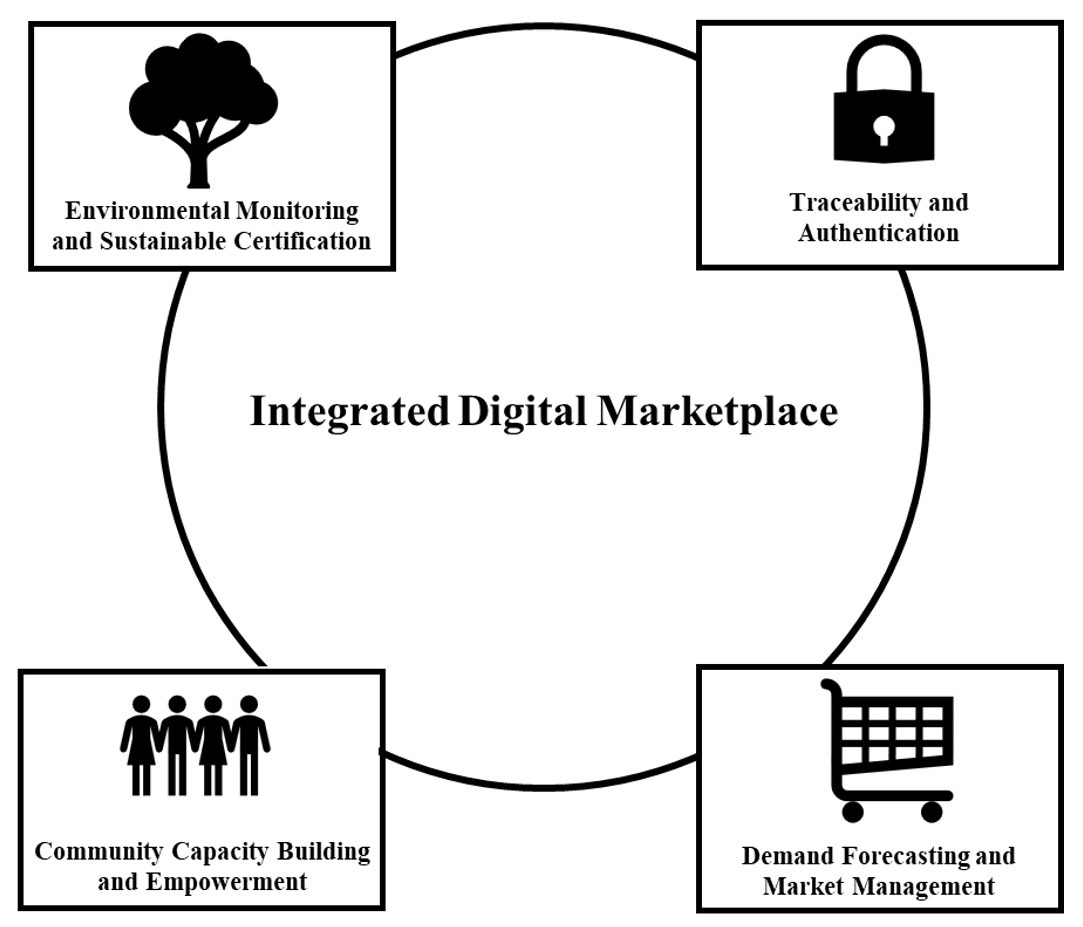
Based on the findings from the SLR, a framework is proposed for a digital marketplace platform tailored to the Amazonian bioeconomy. The model is structured to address the region’s social, economic, and environmental specificities, offering technological and organizational solutions that promote traceability, transparency, and sustainability, while facilitating local small-scale producers’ access to global markets. Figure 2 presents the proposed framework, organized into four interconnected pillars that reflect the empirical findings of the SLR.
Figure 2 illustrates the main components of the framework, organized into four interconnected pillars: traceability and authentication, demand forecasting and market management, community training and empowerment, and environmental monitoring and sustainable certification. These components integrate to form a cohesive system, with each playing a specific role in supporting the platform while working interdependently to foster sustainable value chains. Their interaction constitutes the core of the model, ensuring a continuous flow of information and support to small-scale producers, enabling both economic growth and environmental preservation.
The first component, traceability and authentication, employs technologies such as blockchain and IoT to monitor the entire production chain, from the origin of the products to the end consumer. These technologies, as noted by Abramovay et al. (2021), enhance transparency and reliability, allowing consumers and intermediaries to verify the provenance and the sustainable practices associated with the products. IoT sensors, as highlighted by D’Amico et al. (2022), monitor environmental conditions during transport and storage, ensuring quality and compliance with international standards. Moreover, demand forecasting and market management rely on the data provided by traceability tools, ensuring that production aligns with market expectations.
The second component, demand forecasting and market management, leverages artificial intelligence to identify consumption trends and optimize production. This approach, described by Souza et al. (2024) and Watanabe et al. (2018), minimizes waste, increases profitability, and connects local producers with global consumers who prioritize sustainability and fair trade. For example, AI-driven platforms analyze purchasing behaviors to anticipate demand, reducing surplus production while improving market responsiveness.
The third component, community training and empowerment, focuses on promoting the socioeconomic inclusion of local communities through technical and digital education initiatives. Robinson et al. (2020) argue that strengthening cooperatives and support networks enhances the bargaining power of small-scale producers. Similarly, Dawson et al. (2024) show that training cooperative members in digital innovation and platform use fosters autonomy, improves competitiveness, and increases access to broader markets. While the platform offers traceability and certification tools, their effective use depends on building local capacity and ensuring producers are equipped to engage with these systems.
The fourth component, environmental monitoring and sustainable certification, focuses on preserving Amazonian ecosystems. Blockchain-based certifications, as described by Köhler et al. (2022), assure consumers of the sustainable origin of products, increasing their acceptance in international markets. Additionally, digital technologies, according to Afonso (2022), enable real-time monitoring of environmental conditions, supporting the implementation of practices that prevent deforestation and promote conservation. This monitoring also informs demand forecasting by providing data on the ecological impact of production, ensuring alignment between environmental and economic objectives.
The interconnection of these components forms the foundation of an integrated system that provides a holistic approach to addressing the historical challenges faced in the Amazon. Issues such as insufficient infrastructure, logistical difficulties, and social exclusion are tackled in a coordinated manner, with each component contributing specific solutions to overcome these barriers. Simultaneously, the model promotes operational efficiency through advanced technologies, environmental sustainability by integrating responsible management practices, and socioeconomic inclusion by empowering local communities and increasing their participation in global markets.
The expected benefits include strengthening NTFP value chains, expanding access to global markets, promoting sustainable practices, and empowering local communities. Implementing this model requires strategic collaboration among governments, local organizations, and the private sector, combined with investments in infrastructure, technology, and capacity-building. By addressing structural challenges through an integrated, technology-driven approach, the framework lays the groundwork for a transformative bioeconomy that balances economic growth with ecological preservation. The modular structure of the framework also supports its adaptation to diverse local contexts, accounting for the region’s territorial heterogeneity and varying levels of digital readiness across Amazonian communities.
5 Discussion
The findings of the systematic literature review reveal that digital platforms hold substantial potential to overcome structural limitations in the Amazonian bioeconomy. Technologies such as blockchain and the IoT enable real-time monitoring, product authentication, and end-to-end traceability, improving transparency, inventory control, and alignment between supply and market demand (D’Amico et al., 2022; Watanabe et al., 2018). By embedding credibility and accountability into forest-based production chains, these tools not only increase the commercial value of NTFPs but also enhance the reputation and competitiveness of Amazonian producers (Afonso, 2022).
Moreover, digital marketplaces facilitate direct integration between producers and consumers, reducing reliance on intermediaries and fostering fairer trade relations. This model contributes to more transparent value chains, potentially raising incomes for small-scale producers while meeting the growing international demand for sustainable and ethically sourced products (Garrett et al., 2024; Weiss et al., 2023; Friedman & Ormiston, 2021). Socially, platform adoption requires supportive structures such as cooperatives, training programs, and digital education initiatives, which are essential to ensure inclusive participation. As noted by Brondizio et al. (2021), the development of support networks strengthens collective bargaining power and resilience, while digital training expands access to markets and economic inclusion (Dawson et al., 2024; Liverpool-Tasie et al., 2020).
In environmental terms, platforms can advance biodiversity conservation through tools that facilitate real-time ecological monitoring and blockchain-based certifications. These technologies validate compliance with sustainability criteria and increase confidence in product origin and quality (Abramovay et al., 2021; Centobelli et al., 2022). As a result, certified NTFPs such as açaí and Brazil nuts gain prominence in international markets as symbols of standing forest economies and low-impact production (Köhler et al., 2022; Savari et al., 2020).
However, this potential is hindered by persistent infrastructure constraints in the Amazon. Limited internet coverage, unreliable energy supply, and insufficient investment in technical training and equipment are recurring obstacles to the effective implementation and scaling of digital platforms (Bandura et al., 2020; Bressan et al., 2022; Castro Leal et al., 2021). Without targeted public policies and capacity-building strategies, there is a risk that technological solutions may reinforce existing inequalities, excluding the most vulnerable communities from participating in the digital bioeconomy.
The results confirm that unlocking the benefits of digital platforms in the Amazonian context requires coordinated and sustained action across public, private, and community actors. Successful implementation depends on aligning technological innovation with traditional knowledge, inclusive governance, and long-term development strategies (Chelala et al., 2022; Pamplona et al., 2021). In this sense, digital ecosystems can act as enablers of a bioeconomy that is not only economically viable, but also socially just and ecologically sound.
This broader interpretation aligns with the study’s central premise that digital platforms can serve as strategic infrastructure to operationalize a context-specific model of bioeconomy in the Amazon. As discussed earlier, the region's biodiversity offers high potential for sustainable development, particularly through the responsible use of NTFPs such as essential oils, medicinal plants, and edible fruits (Afonso, 2022). However, unlocking this potential depends on addressing challenges such as fragmented value chains, low technological integration, and persistent social inequality (Abramovay et al., 2021; Weiss et al., 2023). Digital platforms offer a means to bridge these gaps by improving transparency, traceability, and access to differentiated markets.
Nevertheless, as emphasized in the literature, imported economic models often neglect the Amazon’s sociocultural and territorial specificities, limiting their long-term impact (Chelala et al., 2022). The adoption of a digital bioeconomy must, therefore, be grounded in local realities, incorporating traditional knowledge, participatory governance, and regionally adapted sustainability indicators. When these elements are integrated, digital platforms can advance inclusive and climate-resilient strategies, reinforcing the Amazon as a living economy in which biodiversity is not only protected but actively valued.
Finally, future research should focus on field validation of digital platform frameworks, especially in diverse community contexts across the Amazon. Studies should also explore how sustainability certifications can be aligned with regional criteria and how collaborative networks across different governance levels can support implementation. Such efforts will be essential to ensure that the digital transformation of the Amazonian bioeconomy translates into tangible, equitable, and ecologically coherent outcomes.
6 Conclusion
Through a systematic literature review (SLR) carried out in this study, we identified the potential of digital platforms to strengthen the Amazonian bioeconomy, particularly in the commercialization of NTFPs. The findings indicate that digital technologies such as blockchain and the Internet of Things (IoT) are central to enhancing traceability, ensuring compliance with sustainability standards, and increasing transparency along the value chain. Additionally, artificial intelligence contributes to demand forecasting and targeted market access. These tools not only raise the market value of NTFPs but also address the growing expectations of global consumers for ethically and sustainably sourced products, reinforcing the credibility of standing forest economies.
Based on the literature, we developed a digital platform framework to reflect the social, economic, and environmental specificities of the Amazon. The model proposes the integration of technological and organizational solutions to support inclusive and resilient value chains. It emphasizes the importance of capacity-building and cooperative strengthening, aiming to reduce inequalities, increase local autonomy, and facilitate the direct participation of small-scale producers in global markets. The framework also promotes sustainable management practices, seeking to align economic growth with biodiversity conservation and climate resilience.
To advance this agenda, future research should prioritize the empirical validation of the proposed framework through field-based studies. Applying the model in specific Amazonian contexts will be essential to assess its feasibility and to identify operational challenges and opportunities. It will also be necessary to establish metrics for monitoring socioeconomic and environmental outcomes and to evaluate the effectiveness of sustainability certifications tailored to regional realities. Engaging diverse stakeholders (local communities, governments, and private sector actors) will be critical to ensuring context-sensitive implementation and long-term impact.
From a scientific standpoint, this study is limited by its exclusive reliance on secondary data, without empirical testing of the proposed framework. Although conceptually robust, the model has not yet been assessed under real-world conditions, particularly in light of the Amazon’s infrastructural gaps and socioeconomic disparities. Future studies should address this limitation by conducting pilot projects and longitudinal analyses, which can help refine the framework and enhance its applicability across the heterogeneous territories of the Amazon.
Statement on Data Availability
The data used in this research are fully presented in the submitted manuscript. All information necessary for reproducing and verifying the results is described in detail in the text, tables and figures of the article.
-
Financial support:
This work did not receive specific funding from institutions or agencies in the public, private or non-profit sectors.
-
How to cite:
Silva, J. C. K., Soliani, R. D., Ferreira-Júnior, G. C., Lovrić, N., & Lobão, M. S. P. (2025). Can a digital platform framework advance the bioeconomy and the sustainabilty in the Amazon?: literature review. Gestão & Produção, 32, e14724. https://doi.org/10.1590/1806-9649-2025v32e14724
References
-
Abramovay, R., Ferreira, J., Costa, F. A., Ehrlich, M., Euler, A. M. C., Young, C. E. F., Kaimowitz, D., Moutinho, P., Nobre, I., Rogez, H., Roxo, E., Schor, T., & Villanova, L. (2021). The new bioeconomy in the amazon: opportunities and challenges for a healthy standing forest and flowing rivers. In The Amazon We Want (Ed.), Amazon assessment report 2021 New York: United Nations Sustainable Development Solutions Network. http://doi.org/10.55161/UGHK1968
» http://doi.org/10.55161/UGHK1968 -
Afonso, S. R. (2022). Innovation perspectives for the bioeconomy of Non-Timber Forest products in Brazil. Forests, 13(12), 2046. http://doi.org/10.3390/f13122046
» http://doi.org/10.3390/f13122046 -
Alves, F. S., & Oliveira, P. C. (2023). Castanhais & quilombos do Alto Trombetas (PA): uma proposta de justiça socioambiental. Estudos Avançados, 37(108), 51-72. http://doi.org/10.1590/s0103-4014.2023.37108.004
» http://doi.org/10.1590/s0103-4014.2023.37108.004 -
Antunes, A. P., Rebêlo, G. H., Pezzuti, J. C. B., De Mattos Vieira, M. R., De Araujo Lima Constantino, P., Campos-Silva, J. V., Fonseca, R., Durigan, C. C., Ramos, R. M., Amaral, J. V. D., Pimenta, N. C., Ranzi, T. J. D., Lima, N. S., & Shepard, G. H. (2019). A conspiracy of silence: subsistence hunting rights in the Brazilian Amazon. Land Use Policy, 84, 1-11. http://doi.org/10.1016/j.landusepol.2019.02.045
» http://doi.org/10.1016/j.landusepol.2019.02.045 -
Bachi, L., & Carvalho-Ribeiro, S. (2023). Markets for Non-Timber Forest Products (NTFPs): the role of Community-Based Tourism (CBT) in Enhancing Brazil’s Sociobiodiversity. Forests, 14(2), 298. http://doi.org/10.3390/f14020298
» http://doi.org/10.3390/f14020298 - Bandura, R., McKeown, S., & Silveira, F. M. (2020). Sustainable infrastructure in the Amazon: Connecting environmental preservation with governance, security, and economic development. Washington, D.C.: Center for Strategic & International Studies.
- Brasil. (2024). Decreto nº 12.044, de 5 de junho de 2024. Institui a Estratégia Nacional de Bioeconomia Brasília, DF: Diário Oficial da República Federativa do Brasil.
-
Bressan, T., Valdivia-Gago, A., Silvera-Ccallo, R. M., Llanos-Cuentas, A., Condor, D. F., Padilla-Huamantinco, P. G., Vilcarromero, S., Miranda, J. J., & Zavaleta-Cortijo, C. (2022). Challenges of design, implementation, acceptability, and potential for, biomedical technologies in the Peruvian Amazon. International Journal for Equity in Health, 21(1), 183. http://doi.org/10.1186/s12939-022-01773-7 PMid:36536404.
» http://doi.org/10.1186/s12939-022-01773-7 -
Brondizio, E. S., Andersson, K., De Castro, F., Futemma, C., Salk, C., Tengö, M., Londres, M., Tourne, D. C., Gonzalez, T. S., Molina-Garzón, A., Lopes, G. R., & Siani, S. M. (2021). Making place-based sustainability initiatives visible in the Brazilian Amazon. Current Opinion in Environmental Sustainability, 49, 66-78. http://doi.org/10.1016/j.cosust.2021.03.007
» http://doi.org/10.1016/j.cosust.2021.03.007 -
Bröring, S., & Vanacker, A. (2022). Designing business models for the bioeconomy: what are the major challenges? EFB Bioeconomy Journal, 2, 100032. http://doi.org/10.1016/j.bioeco.2022.100032
» http://doi.org/10.1016/j.bioeco.2022.100032 -
Cao, S., Xu, H., & Bryceson, K. P. (2023). Blockchain traceability for sustainability communication in food supply chains: an architectural framework, design pathway and considerations. Sustainability, 15(18), 13486. http://doi.org/10.3390/su151813486
» http://doi.org/10.3390/su151813486 -
Castro Leal, D., Krüger, M., Teles, V. T. E., Teles, C. T. E., Cardoso, D. M., Randall, D., & Wulf, V. (2021). Digital technology at the edge of capitalism. ACM Transactions on Computer-Human Interaction, 28(3), 1-39. http://doi.org/10.1145/3448072
» http://doi.org/10.1145/3448072 -
Centobelli, P., Cerchione, R., Del Vecchio, P., Oropallo, E., & Secundo, G. (2022). Blockchain technology for bridging trust, traceability and transparency in circular supply chain. Information & Management, 59(7), 103508. http://doi.org/10.1016/j.im.2021.103508
» http://doi.org/10.1016/j.im.2021.103508 - Centro de Gestão e Estudos Estratégicos - CGEE. (2020). Oportunidades e Desafios da Bioeconomia. Perspectivas da Bioeconomia Brasileira com Base em Inovações Tecnológicas e de Mercado (32 p.). Brasília, DF: Ministério da Ciência, Tecnologia e Inovações e Comunicações (MCTIC).
-
Chelala, C., Chelala, C., & Carvalho, A. C. A. (2022). Entraves para o desenvolvimento da bioeconomia na Amazônia. In A. F. Gomes, P. Quaresma, P. Giraldi, V. F. Santos & J. Porto (Eds.), Mestrado em desenvolvimento regional: 15 anos, na busca de sinergias, possibilidades e expectativas de desenvolvimento (pp. 38-48). Maringá, PR: Uniedusul. http://doi.org/10.51324/80277988.3
» http://doi.org/10.51324/80277988.3 - Costa, F. A., Nobre, C., Genin, C., Rocha Frasson, C. M., Araújo Fernandes, D., Silva, H., Vicente, I., Takaes Santos, I., Feltran-Barbieri, R., Ventura, R., No., & Folhes, R. (2022). Bioeconomy for the Amazon: concepts, limits, and trends for a proper definition of the tropical forest biome. São Paulo: World Resources Institute, WRI Brasil.
-
D’Amato, D., & Korhonen, J. (2021). Integrating the green economy, circular economy and bioeconomy in a strategic sustainability framework. Ecological Economics, 188, 107143. http://doi.org/10.1016/j.ecolecon.2021.107143
» http://doi.org/10.1016/j.ecolecon.2021.107143 -
D’Amico, G., Szopik-Depczyńska, K., Beltramo, R., D’Adamo, I., & Ioppolo, G. (2022). Smart and sustainable bioeconomy platform: A new approach towards sustainability. Sustainability, 14(1), 466. http://doi.org/10.3390/su14010466
» http://doi.org/10.3390/su14010466 -
Dawson, G. E., Jr., Antunes, J. A. V., Jr., Wegner, D., & Adami, V. S. (2024). Creating a digital platform for the agricultural cooperative system through interorganizational collaboration. Journal of Rural Studies, 110, 103388. http://doi.org/10.1016/j.jrurstud.2024.103388
» http://doi.org/10.1016/j.jrurstud.2024.103388 -
Delgado, T. S., McCall, M. K., & López-Binnqüist, C. (2023). Non-Timber Forest products: small matters, big significance, and the complexity of reaching a workable definition for sustainability. Small-scale Forestry, 22(1), 37-68. http://doi.org/10.1007/s11842-022-09517-9
» http://doi.org/10.1007/s11842-022-09517-9 -
Denny, D. M. T., Martins, M. M. V., & Burnquist, H. L. (2021). From extractivism and illegalities to a circular bioeconomy in the Amazon Region. Revista Tempo do Mundo (RTM), 27, 127-163. http://doi.org/10.38116/rtm27art5
» http://doi.org/10.38116/rtm27art5 -
Ferreira, J., Coudel, E., Abramovay, R., Barlow, J., Garrett, R., Lees, A. C., Piketty, M., Porro, R., Vieira, I., & Withey, K. (2024). A lack of clarity on the bioeconomy concept might be harmful for Amazonian ecosystems and its people. Ecological Economics, 224, 108299. http://doi.org/10.1016/j.ecolecon.2024.108299
» http://doi.org/10.1016/j.ecolecon.2024.108299 -
Freitas, L. C., Santos, R. W. S. D., Reis, F. R., Haminiuk, C. W. I., Corazza, M. L., & Masson, M. L. (2024). Green extraction technologies: a path to the Amazon bioeconomy development. Trends in Food Science & Technology, 147, 104462. http://doi.org/10.1016/j.tifs.2024.104462
» http://doi.org/10.1016/j.tifs.2024.104462 -
Friedman, N., & Ormiston, J. (2021). Blockchain as a sustainability-oriented innovation?: opportunities for and resistance to Blockchain technology as a driver of sustainability in global food supply chains. Technological Forecasting and Social Change, 175, 121403. http://doi.org/10.1016/j.techfore.2021.121403
» http://doi.org/10.1016/j.techfore.2021.121403 -
Garrett, R., Ferreira, J., Abramovay, R., Brandão, J., Brondizio, E., Euler, A., Pinedo, D., Porro, R., Rocha, E. C., Sampaio, O., Schmink, M., Torres, B., & Varese, M. (2024). Transformative changes are needed to support socio-bioeconomies for people and ecosystems in the Amazon. Nature Ecology & Evolution, 8(10), 1815-1825. http://doi.org/10.1038/s41559-024-02467-9 PMid:39107371.
» http://doi.org/10.1038/s41559-024-02467-9 -
Gawel, E., Pannicke, N., & Hagemann, N. (2019). A path transition towards a bioeconomy: the crucial role of sustainability. Sustainability, 11(11), 3005. http://doi.org/10.3390/su11113005
» http://doi.org/10.3390/su11113005 -
Gkikas, D. C., Theodoridis, P. K., & Gkikas, M. C. (2023). Artificial Intelligence (AI) Use for e-governance in agriculture: exploring the bioeconomy landscape. In C. Gaie & M. Mehta (Eds.), Recent advances in data and algorithms for e-government (Vol. 5, pp. 141-172). Cham: Springer. http://doi.org/10.1007/978-3-031-22408-9_7
» http://doi.org/10.1007/978-3-031-22408-9_7 -
Keith, H., Vardon, M., Obst, C., Young, V., Houghton, R. A., & Mackey, B. (2021). Evaluating nature-based solutions for climate mitigation and conservation requires comprehensive carbon accounting. The Science of the Total Environment, 769, 144341. http://doi.org/10.1016/j.scitotenv.2020.144341 PMid:33736241.
» http://doi.org/10.1016/j.scitotenv.2020.144341 -
Kimura, L. T., Andrade, E. R., Nobre, I., Nobre, C. A., de Medeiros, B. A. S., Riaño-Pachón, D. M., Shiraishi, F. K., Carvalho, T. C. M. B., & Simplicio, M. A., Jr. (2023). Amazon Biobank: a collaborative genetic database for bioeconomy development. Functional & Integrative Genomics, 23(2), 101. http://doi.org/10.1007/s10142-023-01015-1 PMid:36964864.
» http://doi.org/10.1007/s10142-023-01015-1 -
Köhler, S., Bager, S., & Pizzol, M. (2022). Sustainability standards and blockchain in agro-food supply chains: synergies and conflicts. Technological Forecasting and Social Change, 185, 122094. http://doi.org/10.1016/j.techfore.2022.122094
» http://doi.org/10.1016/j.techfore.2022.122094 -
Leavy, S., Allegretti, G., Presotto, E., Montoya, M. A., & Talamini, E. (2024). Measuring the bioeconomy economically: exploring the connections between concepts, methods, data, indicators and their limitations. Sustainability, 16(20), 8727. http://doi.org/10.3390/su16208727
» http://doi.org/10.3390/su16208727 -
Lekkas, D. F., Panagiotakis, I., & Dermatas, D. (2021). A digital circular bioeconomy – Opportunities and challenges for waste management in this new era. Waste Management & Research, 39(3), 407-408. http://doi.org/10.1177/0734242X21992299 PMid:33645350.
» http://doi.org/10.1177/0734242X21992299 -
Lesenfants, Y., Mehl, A. V., Muggah, R., Aguirre, K., & Smith, P. C. (2024). Re-imagining bioeconomy for Amazonia. Washington, D.C.: Inter-American Development Bank, Igarapé Institute. http://doi.org/10.18235/0013007
» http://doi.org/10.18235/0013007 -
Li, B., Xu, C., Zhu, Z., & Kong, F. (2021). Does e-commerce drive rural households engaged in non-timber forest product operations to adopt green production behaviors? Journal of Cleaner Production, 320, 128855. http://doi.org/10.1016/j.jclepro.2021.128855
» http://doi.org/10.1016/j.jclepro.2021.128855 -
Liverpool-Tasie, L. S. O., Wineman, A., Young, S., Tambo, J., Vargas, C., Reardon, T., Adjognon, G. S., Porciello, J., Gathoni, N., Bizikova, L., Galiè, A., & Celestin, A. (2020). A scoping review of market links between value chain actors and small-scale producers in developing regions. Nature Sustainability, 3(10), 799-808. http://doi.org/10.1038/s41893-020-00621-2
» http://doi.org/10.1038/s41893-020-00621-2 -
Lopes, C. L., & Chiavari, J. (2022). Bioeconomia na Amazônia: análise conceitual, regulatória e institucional Rio de Janeiro: Climate Policy Initiative, Pontifícia Universidade Católica do Rio de Janeiro. http://doi.org/10.59346/report.amazonia2030.202209.ed51.cpi
» http://doi.org/10.59346/report.amazonia2030.202209.ed51.cpi -
Lopes, E., Soares-Filho, B., Souza, F., Rajão, R., Merry, F., & Ribeiro, S. C. (2018). Mapping the socio-ecology of Non Timber Forest Products (NTFP) extraction in the Brazilian Amazon: the case of açaí (Euterpe precatoria Mart) in Acre. Landscape and Urban Planning, 188, 110-117. http://doi.org/10.1016/j.landurbplan.2018.08.025
» http://doi.org/10.1016/j.landurbplan.2018.08.025 -
Lovrić, M., Lovrić, N., & Mavsar, R. (2019). Mapping forest-based bioeconomy research in Europe. Forest Policy and Economics, 110, 101874. http://doi.org/10.1016/j.forpol.2019.01.019
» http://doi.org/10.1016/j.forpol.2019.01.019 -
Lovrić, N., Lovrić, M., & Mavsar, R. (2020). Factors behind development of innovations in European forest-based bioeconomy. Forest Policy and Economics, 111, 102079. http://doi.org/10.1016/j.forpol.2019.102079
» http://doi.org/10.1016/j.forpol.2019.102079 -
Marcovitch, J., & Val, A. (2024). Bioeconomia para quem? Bases para um desenvolvimento sustentável na Amazônia (387 p.). São Paulo: Com-Arte. http://doi.org/10.11606/9786589321453
» http://doi.org/10.11606/9786589321453 -
Maritan, F. B., Soliani, R. D., Ferreira, G. C., Jr., Satrapa, H. F. M., & Florentino, M. M. G. (2024). Regional development through innovation: a proposal for a technological hub framework. Revista de Gestão e Secretariado, 15(10), e4255. http://doi.org/10.7769/gesec.v15i10.4255
» http://doi.org/10.7769/gesec.v15i10.4255 -
Martins, K. F., & Teixeira, D. (2024). Assessing the impact of voluntary sustainability standards in Amazonian enterprises involved in the açaí value chain. Heliyon, 10(14), e34157. http://doi.org/10.1016/j.heliyon.2024.e34157 PMid:39108928.
» http://doi.org/10.1016/j.heliyon.2024.e34157 -
Movilla-Pateiro, L., Mahou-Lago, X. M., Doval, M. I., & Simal-Gandara, J. (2021). Toward a sustainable metric and indicators for the goal of sustainability in agricultural and food production. Critical Reviews in Food Science and Nutrition, 61(7), 1108-1129. http://doi.org/10.1080/10408398.2020.1754161 PMid:32319311.
» http://doi.org/10.1080/10408398.2020.1754161 -
Naeem, M., Ozuem, W., Howell, K., & Ranfagni, S. (2023). A step-by-step process of thematic analysis to develop a conceptual model in qualitative research. International Journal of Qualitative Methods, 22, 16094069231205789. http://doi.org/10.1177/16094069231205789
» http://doi.org/10.1177/16094069231205789 -
Nobre, I., & Nobre, C. A. (2018). The Amazonia third way initiative: the role of technology to unveil the potential of a novel tropical biodiversity-based economy. In L. C. Loures (Ed.), Land use: assessing the past, envisioning the future London: IntechOpen. http://doi.org/10.5772/intechopen.80413
» http://doi.org/10.5772/intechopen.80413 -
Oliveira, W., Galetto, L., Tabarelli, M., Peres, C. A., & Lopes, A. V. (2023). Paradoxically striving for food security in the leading food-producing tropical country, Brazil. One Earth, 6(5), 455-458. http://doi.org/10.1016/j.oneear.2023.03.003
» http://doi.org/10.1016/j.oneear.2023.03.003 - Pamplona, L. M. P., Satarini, J., & Kadri, N. M. (2021). Potential of bioeconomy for the sustainable development of the Amazon and acting possibilities for the BNDES. Revista do BNDES, 28(56), 55-86.
-
Peças, P., John, L., Ribeiro, I., Baptista, A. J., Pinto, S. M., Dias, R., Henriques, J., Estrela, M., Pilastri, A., & Cunha, F. (2023). Holistic framework to data-driven sustainability assessment. Sustainability, 15(4), 3562. http://doi.org/10.3390/su15043562
» http://doi.org/10.3390/su15043562 -
Pinsky, V. C., Marcovitch, J., & Val, A. L. (2024). Experimentalist governance in bioeconomy: insights from the Brazilian Amazon. Revista de Administração Contemporânea, 28(6), e240170. http://doi.org/10.1590/1982-7849rac2024240170.en
» http://doi.org/10.1590/1982-7849rac2024240170.en -
Pulita, J. G., Pereira, C. R., & Silva, A. L. (2024). How does traceability support stakeholders in food recall management? A case study of the beef chain. Gestão & Produção, 31, e3324. http://doi.org/10.1590/1806-9649-2024v31e3324
» http://doi.org/10.1590/1806-9649-2024v31e3324 -
Ribeiro, S. C., & Soares, B., Fo. (2022). Opportunities of the Nagaya Protocol to nurture the use of native species in Brazil. Environmental Science & Policy, 127, 321-324. http://doi.org/10.1016/j.envsci.2021.10.033
» http://doi.org/10.1016/j.envsci.2021.10.033 -
Robinson, L., Schulz, J., Dodel, M., Correa, T., Villanueva-Mansilla, E., Leal, S., Magallanes-Blanco, C., Rodriguez-Medina, L., Dunn, H. S., Levine, L., McMahon, R., & Khilnani, A. (2020). Digital inclusion across the Americas and Caribbean. Social Inclusion, 8(2), 244-259. http://doi.org/10.17645/si.v8i2.2632
» http://doi.org/10.17645/si.v8i2.2632 -
Samoggia, A., & Beyhan, Z. (2022). Fairness-enabling practices in agro-food chain. Sustainability, 14(11), 6391. http://doi.org/10.3390/su14116391
» http://doi.org/10.3390/su14116391 -
Savari, M., Eskandari Damaneh, H., & Eskandari Damaneh, H. (2020). Factors influencing local people’s participation in sustainable forest management. Arabian Journal of Geosciences, 13(13), 513. http://doi.org/10.1007/s12517-020-05519-z
» http://doi.org/10.1007/s12517-020-05519-z -
Shaffril, H. M., Samsuddin, S. F., & Samah, A. A. (2021). The ABC of systematic literature review: the basic methodological guidance for beginners. Quality & Quantity, 55(4), 1319-1346. http://doi.org/10.1007/s11135-020-01059-6
» http://doi.org/10.1007/s11135-020-01059-6 -
Singh, A., Christensen, T., & Panoutsou, C. (2021). Policy review for biomass value chains in the European bioeconomy. Global Transitions, 3, 13-42. http://doi.org/10.1016/j.glt.2020.11.003
» http://doi.org/10.1016/j.glt.2020.11.003 -
Smidt, H. J., & Jokonya, O. (2022). Towards a framework to implement a digital agriculture value chain in South Africa for small-scale farmers. Journal of Transport and Supply Chain Management, 16. http://doi.org/10.4102/jtscm.v16i0.746
» http://doi.org/10.4102/jtscm.v16i0.746 -
Souza, A. O., Pereira, M. E. F., Satrapa, H. F. M., Luiz, D. M., Drumond, T. D. R., Soliani, R. D., De Souza Oliveira, P. R., & Pereira, F. S. (2024). Marketing strategies for a natural products startup: a case study in the Brazilian Amazon. Observatório de La Economía Latinoamericana, 22(6), e5495. http://doi.org/10.55905/oelv22n6-243
» http://doi.org/10.55905/oelv22n6-243 -
Souza, D. J., Soliani, R. D., Lima, F. B., Jr., Souza Oliveira, P. R., & Drumond, T. D. R. (2023). From extraction to commercialization: an analysis of the timber supply chain in the brazilian legal amazon. Revista JRG de Estudos Acadêmicos, 6(13), 1206-1229. http://doi.org/10.5281/zenodo.8106478
» http://doi.org/10.5281/zenodo.8106478 -
Toppinen, A., D’Amato, D., & Stern, T. (2020). Forest-based circular bioeconomy: matching sustainability challenges and novel business opportunities? Forest Policy and Economics, 110, 102041. http://doi.org/10.1016/j.forpol.2019.102041
» http://doi.org/10.1016/j.forpol.2019.102041 -
Tovar, J. G., & Hajjar, R. (2024). Towards a more just approach to community forestry initiatives: confronting contradictions, trade-offs, and threats to fairness. Biological Conservation, 295, 110665. http://doi.org/10.1016/j.biocon.2024.110665
» http://doi.org/10.1016/j.biocon.2024.110665 - Veiga, P. M., & Rios, S. P. (2021). Desafios das exportações de produtos agroflorestais da Amazônia: o papel do ambiente institucional. Breves Cindes, (114), 1-32.
-
Vivien, F.-D., Nieddu, M., Befort, N., Debref, R., & Giampietro, M. (2019). The hijacking of the bioeconomy. Ecological Economics, 159, 189-197. http://doi.org/10.1016/j.ecolecon.2019.01.027
» http://doi.org/10.1016/j.ecolecon.2019.01.027 -
Watanabe, C., Naveed, N., & Neittaanmäki, P. (2018). Digital solutions transform the forest-based bioeconomy into a digital platform industry: a suggestion for a disruptive business model in the digital economy. Technology in Society, 54, 168-188. http://doi.org/10.1016/j.techsoc.2018.05.002
» http://doi.org/10.1016/j.techsoc.2018.05.002 -
Weiss, G., Ludvig, A., & Živojinović, I. (2023). Embracing the non-wood forest products potential for bioeconomy: analysis of innovation cases across Europe. Land, 12(2), 305. http://doi.org/10.3390/land12020305
» http://doi.org/10.3390/land12020305 -
Willerding, A. L., Silva, L. R., Silva, R. P., Assis, G. M. O., & Monteiro, E. V. C. (2020). Estratégias para o desenvolvimento da bioeconomia no estado do Amazonas. Estudos Avançados, 34(98), 143-166. http://doi.org/10.1590/s0103-4014.2020.3498.010
» http://doi.org/10.1590/s0103-4014.2020.3498.010
-
Editor-in-Chief
Pedro Munari