 Can a digital platform framework advance the bioeconomy and the sustainabilty in the Amazon?: literature review
Abstract
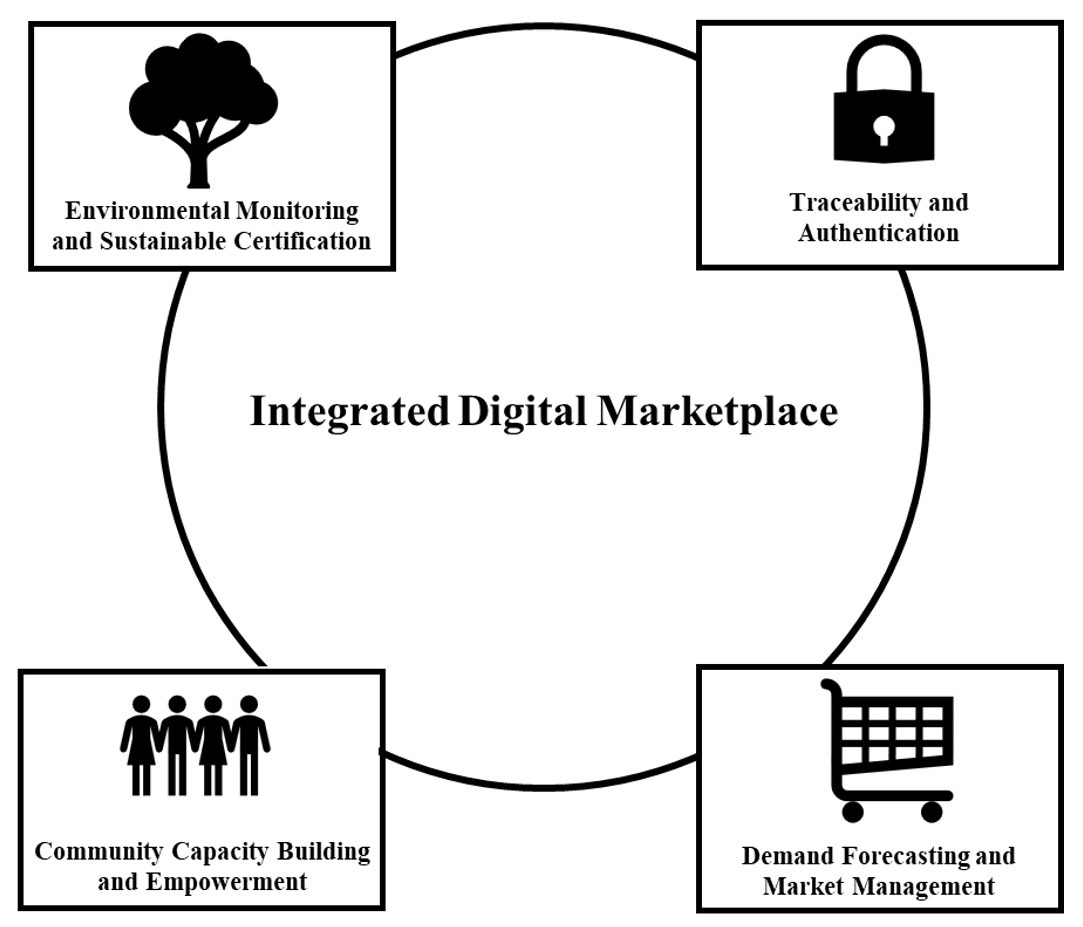
Abstract The Amazon, with its vast biodiversity, holds strategic potential for developing a sustainable bioeconomy, particularly through the valorization of non-timber forest products (NTFPs). In this context, digital technologies serve as key tools for building more transparent, inclusive, and environmentally responsible value chains. We carried out this study in a systematic literature review (SLR), based on 56 articles, analyzing how digital platforms can contribute to the economic, environmental, and social valorization of NTFPs in the region. The findings indicate that tools such as blockchain and Internet of Things (IoT) enhance traceability, authenticity, and sustainable standards, while artificial intelligence supports demand planning and market alignment. Drawing upon these insights, we proposed a digital framework, structured around four pillars: traceability and authentication, demand forecasting and market management, community capacity-building, and environmental monitoring with sustainable certifications. The framework aims to reduce inequalities, promote sustainable practices, and drive regional development. However, challenges such as inadequate technological infrastructure and a lack of local capability remain significant challenges to its implementation. Future studies should test the model’s application in specific Amazonian communities, assessing its socioeconomic and environmental impacts as well as its practical feasibility.
Keywords:
Bioeconomy; Amazon; Non-Timber Forest Products; Digital platforms; Sustainability
 Thumbnail
 Thumbnail