 Intersectoriality in the Health at School Program: case study of a municipality in Minas Gerais, Brazil
Abstract
Qualitative research was carried out to understand how the subjects of health, education and the school community are involved in the Health at the School Program (HSP) and to evaluate the effectiveness of intersectorality in this context. An indepth interview was used as a collection method, which was evaluated by content analysis based on a matrix of interventions (MI). Of the three MI themes, the following were presented: HSP activities, management and training. Those involved in the HSP recognized the objective of the program and the concept of intersectorality, but there is still a need to involve, in an equivalent way, all subjects in the planning, development, evaluation and monitoring of the program; provide continuous training, improvements in communication and strengthening the link between sectors; and encourage community participation.
Keywords
School health services; Health policy; Intersectoral collaboration; Qualitative research; Program evaluation
Resumo
Realizou-se uma pesquisa qualitativa para compreender como os sujeitos da saúde, da educação e da comunidade escolar estão envolvidos no Programa Saúde na Escola (PSE); e para avaliar a efetivação da intersetorialidade nesse contexto. Como método de coleta utilizou-se a entrevista em profundidade, que foi avaliada pela análise de conteúdo embasada em uma matriz de intervenção (MI). Dos três temas da MI, foram observados: atividades do PSE, gestão e capacitação/formação. Os envolvidos no PSE reconheceram o objetivo do programa e o conceito de intersetorialidade, mas ainda há necessidade de envolver, de forma equivalente, todos os sujeitos no planejamento, desenvolvimento, avaliação e monitoramento do programa; propiciar contínuas capacitações, melhorias na comunicação e no fortalecimento do vínculo entre os setores; e estimular a participação da comunidade.
Palavras-chave
Serviços de saúde escolar; Política de saúde; Colaboração intersetorial; Pesquisa qualitativa; Avaliação de programas e projetos de saúde
Resumen
Se realizó una investigación cualitativa para comprender cómo los sujetos de la salud, de la educación y de la comunidad escolar están involucrados en el Programa Salud en la Escuela (PSE) y para evaluar la efectividad de la intersectorialidad en ese contexto. Como método de colecta se utilizó la entrevista en profundidad que fue evaluada por el análisis de contenido con base en una matriz de intervención (MI). De los tres temas de la MI, se observaron: actividades del PSE, gestión y capacitación/formación. Los involucrados en el PSE reconocieron el objetivo del programa y el concepto de intersectorialidad, pero también existe la necesidad de envolver, de forma equivalente, a todos los sujetos en la planificación, desarrollo, evaluación y monitoreo del programa; propiciar capacitaciones continuas, mejoras en la comunicación y en el fortalecimiento del vínculo entre los sectores e incentivar la participación de la comunidad.
Palabras clave
Servicios de salud escolar; Política de salud; Colaboración intersectorial; Investigación cualitativa; Evaluación de programas y proyectos de salud
Introduction
Schools are favorable environments for strengthening health promotion (HP), since it reaches a large part of the population of children and adolescents and favors the development of healthy behaviors and habits1-4.
Considering the potential of this environment for producing HP, in 1995 the World Health Organization (WHO), the United Nations Educational, Scientific and Cultural Organization (UNESCO) and the United Nations Children’s Fund (UNICEF) proposed the concept of Health Promoting Schools (HPS). This is a strategy that encourages the health and education sectors to work together in order to encourage the active participation of the community in identifying and resolving their problems3,5. This concept aims to improve the quality of life (QoL) of schoolchildren by achieving comprehensive health, developing life skills, creating healthy environments, offering healthy food and activities that encourage active living5.
The concept of HPS was strengthened in Brazil with the publication of the National Curriculum Guidelines, which formally included health as a cross-cutting theme in the school curriculum1,6. Since then, the concept of “health at the school” has gone beyond the idea of just building healthy habits and has become a right of citizenship1. The quest to guarantee this right has resulted in the implementation of several successful HP experiences in schools across the country6.
Although the experiences of HP in Brazilian schools are diverse, it was the publication of the National Health Promotion Policy (Política Nacional de Promoção da Saúde - PNPS) that broadened discussions about the elements for a healthy life and the need for intersectoral cooperation to achieve QoL. In this scenario, the Brazilian health and education systems have strengthened their relationship and in order to comply with the principles of primary care, where the coordination of care for schoolchildren in the territory is the responsibility of the family health teams7, the Health at School Program (HSP)8 was created.
The HSP is a federal government initiative that is still in force today9. Over the years, the program has expanded its reach and, in 2021/2022, was present in 97.3% of Brazilian municipalities, covering more than 23 million students9,10. Its mission is to contribute to the comprehensive education of students in the public basic education network, by offering HP actions, preventing risks and injuries and tackling social vulnerabilities8,9. The program’s guidelines are in line with the objectives of the Brazilian Unified Health System (SUS) and include comprehensiveness, territoriality, longitudinality, social control, monitoring, interdisciplinarity and intersectorality7,8,11.
Intersectorality is a concept widely discussed in the literature, especially in the field of HP. Prado et al.12, after reviewing national and international studies, defined it as the ability to integrate different subjects and sectors, which complement each other in terms of their technical skills and articulate in management spaces, in order to reduce social inequalities in health, by solving problems identified by the community12. This concept is similar to the one proposed by the Ministry of Health9, which defines intersectoriality in the context of the HSP as the “articulation of actions carried out by the health and education systems, with a view to comprehensive health care for students”.
In the HSP, the implementation of intersectoral practices is a challenge that comes up against several obstacles, such as the difficulty for those involved to understand the concept of intersectorality more broadly2, the persistence in reproducing the medical-sanitary discourse associated with the logic of preventing risk and illness13, the conflict of agendas and attributions between the sectors, the lack of dialog between the areas, the lack of partnerships that go beyond the health and education sectors2 and the lack of involvement of students and their families in the decision-making process14.
In order to tackle these difficulties at local level and implement good practices that lead to the materialization of intersectorality9, it is essential to know and evaluate the development of the HSP in Brazilian municipalities. The aim of this study was therefore to understand how health, education and the school community are involved in the HSP in the municipality of Carandaí - Minas Gerais (MG), and to assess the effectiveness of intersectorality in this context.
Methodology
This is a qualitative study on the HSP from the perspective of different subjects15, carried out in the municipality of Carandaí - MG, between December 2022 and March 2023. The municipality was chosen for convenience16, due to the ease of access to participants and the need to assess whether intersectorality is being implemented in the program.
The city of Carandaí – MG has 23,812 inhabitants, a land area of 487,280 km2 and is administratively divided into its headquarters and two other districts17,18. The public Basic Education network has 15 schools, which offer different stages and types of education, covering Early Childhood Education, Primary Education and Secondary Education17,18. Through the HSP, these schools are linked to the primary health care network, which has six Basic Health Units (BHU)18.
This study was carried out in three municipal schools and the BHUs linked to them. These sites were selected intentionally because they were active in the HSP and because they had participants who were potential key informants16,19. In an effort to ensure the variability of the data, we selected two schools in the city and one school in one of the districts of the municipality and included different subjects involved in the HSP: ten health professionals (nurses, dental surgeons, nutritionists, physiotherapists, social workers and physical educators), ten education professionals (educational managers and teachers) and ten representatives of the school community (those responsible for the students). The total number of participants was defined based on access, time and the minimum number of interviews needed to carry out the content analysis19.
All the participants included in this research agreed to take part in an in-depth interview (IDI)20, which took place in a room at the school or BHU with a private and quiet environment that provided privacy. All the interviews were conducted by the main researcher, without the participation of observers.
To conduct the IDI20, a script was drawn up based on the research objectives and the literature on the HSP and intersectorality2,8,9. The same script was used for all participants, with a triggering question and points to be explored (figure 1). The posture adopted by the researcher ensured that the answers were not induced and that the interviewee felt free to express their opinions20. The script and conduct of the IDI were tested beforehand in a pilot study.

The IDIs were audio-recorded and lasted between 2.43 and 22.48 minutes (average = 9.5 minutes). The IDIs were then transcribed using Microsoft Word® software, checked individually by the main researcher and identified with letters (“S” for “health”, “E” for “education” and “C” for “community”) and numbers to ensure the anonymity of the participants.
The data from this research was evaluated using the content analysis method proposed by Graneheim and Lundman21, using a deductive approach22. Initially, two independent researchers thoroughly read the transcripts in order to grasp the meaning of the statements. Next, the nuclei of meaning were extracted from each IDI, which were condensed and abstracted. Finally, the contents were categorized and grouped into themes, following the matrix of indicators (MI) proposed by Oliveira et al.23. In this process, the 14 indicators of the MI corresponded to the categories, which were unified into the three dimensions (management, HSP activities and training) of the MI, defining the major themes of the content analysis. It should be noted that the MI was built on a theoretical and logical model based on the HSP legislation and covers the basic aspects of the program, from planning to expected results23.
This study was cleared by the Research Ethics Committee of the Federal University of Minas Gerais (CAAE:61495722.4.0000.5149), in accordance with current legislation (CNS Resolution 466/12).
Results and discussion
Characterization of the participants
The detailed characterization of the participants is shown in figure 2.
Themes and categories
Data analysis, based on the theoretical and logical model and MI23, allowed us to identify the gaps between the desirable scenario and the current scenario24,25 based on the essential parameters. The three themes proposed in MI23 emerged during the IDIs. The presentation of the results and discussion was therefore organized considering the themes and their indicators.
Theme I: HSP activities
As in other scenarios2,26, the subjects of this research recognized the objectives of the HSP, referring to HP, disease prevention, assessment of health conditions and care, as set out in the legislation8, for example:
The purpose is to take, promote the health of children who sometimes don’t have it offered, so we manage to reach a greater number of children, mainly, and so we promote more knowledge, promote their health. During these visits, we are able to provide guidance, take a look, assess whether there is a need for follow-up at the UBS clinic and we can call the child in for treatment at the UBS.
(S10)
Although the education professionals and community interviewees recognized the objectives of the HSP, it was noted that the statements mainly covered Health Education (HE) actions. HE is one of the five fields of the HP27 and the emphasis on this area may be associated with the high percentage of educational actions that have been carried out within the program28,29.
In the present study, the HE actions covered the themes set out in the HSP10, but the activities were carried out on a one-off basis and were based on traditional pedagogical practices30, such as lectures, campaigns and handing out educational materials:
We go to the schools and give the students oral hygiene instructions, give a talk, explain how to brush, how to use toothbrushes and toothpaste, and here we provide both toothbrushes and toothpaste, as well as dental floss.
(S6)
My perception is that they [health professionals] come and pass. How can I put it? They pass on the campaign, they publicize it, right, so that the children grow up knowing about the need for a vaccine, for example, and they take it home. They do theater about the topic they’re working on.
(E9)
This format has also been shown in previous studies11,23,30,31, which have observed that the consequence is low student involvement, low educational potential30 and low effectiveness of the actions32.
In order to overcome traditional practices30 and guarantee HP, it is necessary to combine different strategies and implement multiple accountability33, i.e. in addition to health and education professionals, the school community also needs to take part in setting priorities, making decisions and establishing and implementing actions33. Similar to previous research23,31, this was identified as a limitation in the context of the HSP. The following statements show that parents/guardians participate in the program only occasionally:
I don’t think parents know about this program, they know that it exists, that the health department goes, carries out actions and everything, their children take the information home, but they’ve never taken part in a talk by the Health at School Program, an activity, a health workshop at school, I don’t think they know how it works inside the school, they know that we take the information, but they’ve never been invited to take an active part inside the school.
(S1)
I only attended a talk with him [the dentist] once. He said he would go there and teach the children. Once she sent some photos to the school group.
(C3)
It may be seen how the community only participates in actions to raise awareness about disease prevention and control. Therefore, there is no involvement in planning, discussing priorities and proposing solutions within the program33,34. This behavior limits the population’s opportunities to learn about health issues33 and does not encourage empowerment to take control of their own lives34.
As in this study, preliminary research11,23,35 has also found that the professionals involved in the HSP are open to working together with the school population:
So, in the meetings held during the time I’ve been here, it’s with the students, students and teachers, but we’re thinking about the possibility of parents and students, or maybe separate ones too. I think it’s important to stress many issues with parents, because the basis of these children and adolescents is family and school.
(S2)
This fact, coupled with the community’s interest in participating in the HSP, could be a positive point for the program’s development. In this study, by listening to the population, it was possible to identify some strategies that could facilitate access to information and, consequently, improve dialog34:
I think there should be more lectures, right? To encourage people to learn more about the project, to explain how it works.
(C1)
Nowadays it’s all through WhatsApp. I think it’s the easiest way to communicate. It’s the creation of the group, so it’s publicized in the school, the parents who are interested, right?
(C7)
Another point highlighted by some education professionals was the need for adequate school infrastructure to carry out HE actions:
The dentists went there, gave us the kits, but a big class, can you imagine a big class, for us to be brushing everyone’s teeth there, when there’s a big sink, it still goes, right?
(E4)
Research shows that Brazilian schools are unequal in terms of their physical structure, with the best-equipped institutions located in the South and Southeast of the country36,37. This, coupled with the impact of the school environment on health and QoL38,39, reinforces the need to expand public policies aimed at improving school environments36.
With regard to the actions to assess health conditions that are planned by the HSP8, it was noted that some of them were mentioned by the interviewees, especially the updating and control of the vaccination schedule and ophthalmic, anthropometric and dental assessments:
Like now, we’re currently working on anthropometry, which we carried out in the schools, we identified some underweight, thinness, obesity, and they’ve now been referred to a nutritionist for follow-up.
(S1).
They come, they give talks, they do some theater, they weigh, they’ve done weigh-ins, they’ve done eye exams for the children [...]. That’s it. The dentist has come too.
(E9)
As may be seen, some of the actions provided for in the HSP were mentioned in this study, a result that is in line with the Brazilian context29. Based on data from the Primary Care Access and Quality Improvement Program, Wachs et al.29 showed that few primary care teams carry out all the health condition assessment actions, and that it is more common to carry out up to four clinical actions out of the seven stipulated by the program8.
It should be noted that clinical psychosocial assessment was not emphasized in the subjects’ speeches, even though mental health activities were one of the demands highlighted by the schools:
They even bring it, last year we had a school that asked us to work more on violence prevention, which it needed, even suicide, self-mutilation, right?
(S3)
National research has shown that the majority of Brazilian schoolchildren, especially female adolescents from public schools, have negative feelings about their mental health40. It is estimated that this situation was aggravated by the social isolation imposed by the Covid-1941 pandemic and, therefore, in the post-pandemic period, greater attention is required from health and education professionals to develop activities that minimize suffering and promote mental health40,41. It is hoped that the enactment of Law 14.819/24, establishing the National Policy for Psychosocial Care in School Communities, will strengthen this theme in the HSP42.
The demands presented by the schools also reinforce the importance of discussing the health conditions of schoolchildren in order to define priorities. It is known that the HSP is based on the principle of territoriality9, i.e. it seeks to respect the different realities that exist in the area under shared responsibility9.
Finally, it was noted in the participants’ speeches that care needs are also identified by education professionals, especially acute demands:
Here, if we see that a child has a problem, a toothache or a cavity, if we see it in their diet or if it’s not in their day-to-day life, we ask the mother to take them to the UBS, and the mother does. You know? So there’s never been any problem of not being seen, okay?
(E6)
This behavior indicates a break with the traditional paradigm of schoolchildren’s health, since responsibility for the student’s wellbeing and dealing with the demands identified on a daily basis are beginning to be incorporated into the school routine and pedagogical objectives43.
Theme II: Management
The HSP seeks to integrate and articulate education and health policies and actions, involving family health and basic education teams8. This articulation, provided for in the program’s guidelines, was referred to in some of the interviewees’ speeches, such as:
The Health at School Program is a federal program, where municipalities can join and within it are themes and actions to work together health and education, for disease prevention and issues that have to do with general health and then using the municipality’s education, issues that also affect the school.
(S3)
Although simplified, the interviewees’ concept is similar to the concept of intersectorality adopted in this study12, reinforcing the need to integrate different agents and sectors. Sousa et al.11 identified similar results and showed that although the subjects did not define intersectorality in a structured and precise way, the meaning they attributed was appropriate.
According to Oliveira et al.23, in order for integration between health and school to be guaranteed in the HSP, it is necessary to enable joint planning involving school and primary care teams, to articulate themes related to HSP actions in political pedagogical projects and to plan and enable permanent education.
Planning is one of the pillars of intersectorality in public management44. In the scenario of this research, the planning of HSP activities was carried out only by those involved in managing the program. The calendar and themes to be worked on by health and education professionals were passed on vertically, i.e. from management to those directly responsible for implementation:
We already have a predefined schedule and the coordinator of the program makes some adjustments and passes it on to them in meetings, summons the school principals, the nurses and passes on to us in a meeting what the school has to do, what the BHU has to do, the nurses, what reports we have to deliver, the deadlines as well.
(S1)
Because, the themes we don’t, I’ve never helped define any themes, you know? But when we’re asked to, we do, together with the students, the teachers, the supervisor, the whole school. We develop and send what we’ve done to the health staff.
(E8)
This type of communication, verticalized and lacking integration, has also been found in other studies11,23,35 and constitutes a multisectoral network, without horizontal discussion, fragmented and with little impact45. To ensure participatory planning, the sectors involved need to go beyond negotiating tasks and transferring responsibilities45, defining common objectives and overcoming institutional hierarchies and power relations45.
Despite the fact that it is compulsory to include the topic of health in the school curriculum46, it was observed in this and other studies in the literature11,23 that most of the time the health sector is responsible for carrying out the actions. The school often just receives and supports the development of the activities:
So, the teachers, I think they’re more like that, they’re more like...they help take the children, move the children from the classroom to the place where the activity is going to take place and everything, but they’re not so involved in the activity. The supervisor, the principal, I see as having a slightly more effective role.
(S8)
This structuring, centered on health professionals, perpetuates the confrontation of organizational difficulties that are common in the implementation/execution of the HSP23,35, such as:
Maybe the program has these flaws because the school has its calendar, we have our calendar. Let’s put it this way, we don’t have to rely solely on that, especially during the pandemic, there are a lot of things, a lot of activities, vaccinations, a lot of guidance, a lot of other things to do within the unit. So maybe the calendar isn’t strictly adhered to or done the way it should be because of time constraints. Everything is very rushed. The activities don’t match up with each other. So ours doesn’t match up with the school. So, from time to time, it’s difficult to do things because of exam times or holidays or recess periods.
(S9)
This scenario needs to change. Educators need to be involved in the planning of actions, as they are the professionals who know the needs and daily lives of schoolchildren and can suggest topics that raise their critical awareness and active participation11. In addition, educators have technical knowledge of the National Basic Common Curriculum47,48 and are therefore the most suitable to define strategies that link health actions to the knowledge, skills and abilities to be developed throughout basic education46.
In this study, although incipient, it can be seen that the actions of the HSP are gradually being incorporated into the school routine:
Oh, there’s been a change, because before, in the beginning, it was more the responsibility of health to work on certain topics, and so it was more of a responsibility. Today, we’ve managed to pass this responsibility on to education to work together. So, the themes have already been put on the municipal calendar so that they can be worked on.
(S3)
The literature also shows that health is being incorporated into political pedagogical projects. Vieira and Belisário31 have shown that health approaches have been integrated into regular subjects, citing as an example the incorporation of the topic of healthy eating into science and mathematics. Another fact that ratifies the incorporation of health themes into school curricula is the modification of Law 9.394/199649, which now guarantees the transversal inclusion of human rights, violence prevention and food/nutritional education content in the school curriculum.
Permanent evaluation and monitoring are fundamental for structuring and organizing the HSP9,23. One of the ways of guaranteeing this guideline is by feeding it into the Information System9,10. In this study, it was observed that the recording of actions is carried out and is the responsibility of the managers:
I’ve been carrying out the actions, but the consolidation of the data, which I wanted to say, is done by a coordinator from the Family Health Support Nucleus, in this case they’re the ones who work there, the Nucleus staff.
(S5)
You can see that there is, every month we send a report, we even send some activities that are done with the children, photos, so that they have a file there.
(E6)
In fact, data entry into health information systems is the exclusive responsibility of professionals in this sector, i.e. education professionals must carry out manual monitoring when developing collective health actions9. It is worth emphasizing the importance of ensuring the quality of the data entered, since it can be used to assess the development of the HSP and any shortcomings and, from this, reorient the interventions that are necessary9.
Despite the existence of monitoring through the entry of data via the information system, in this municipality there were weaknesses in the process of evaluating activities and following up referrals. In the subjects’ speeches, it was observed that evaluations are not regular and systematized, feedback on results is scarce and often concentrated on management professionals, and there is a lack of protocols to monitor referrals, especially by the education sector. The following statements exemplify these topics:
Nurses work a lot, they don’t have time for anything, so I do my activities, I put them in the family’s electronic medical record and then I move on to something else, I don’t get to know, there’s no way of going back to school, knowing the results, if the time we worked is being effective. Unfortunately, I don’t hear back from them.
(S5)
I think so, because we talk to a lot of parents who say that their children have already taken part in the service, sometimes they’re still in the process.
(E1)
Although the evaluation and monitoring of the HSP in this municipality needs to be improved, it was noted in the community’s speeches that the HSP has been generating positive results in the lives of schoolchildren:
Yes, they even started brushing their teeth more often, because my daughter didn’t like it very much, but after this visit to the school, she started to have better hygiene. She encouraged herself to brush her own teeth. So it was very good.
(C5)
The signs that students are changing their behavior and disseminating knowledge within the family reinforces the importance of HP in the school environment for the development of critical, reflective subjects7 capable of adopting healthier lifestyles3.
Theme III: Training/Education
In the HSP, it is desirable to have regular training for professionals, with an established timetable and hours set aside for this activity23. In this study, there were no reports of training being offered to health professionals, according to the following statement:
There are people who don’t even know what this is, there are a lot of people who don’t even know what this is [HSP], teachers, nurses, technicians, maybe they don’t even know what this is. So, [we need] a meeting to explain to everyone what it is first, what the program is, where it came from, its origin, what it’s for, if it’s based on what, you know? So that we can work with more awareness perhaps, so that we can have a better methodology to carry out this program.
(S9)
The lack of professional training is a persistent problem2,11,23,26 that needs to be discussed and prioritized within the context of the HSP35. The lack of training hinders the development of actions, the identification of needs and the operationalization of intersectorality11,23,35,50. On the other hand, ensuring training brings benefits such as improving work processes, strengthening the bond between professionals50 and understanding the technical language of each sector35. It should be emphasized that this process should not be one-off, but incorporated into learning in everyday work, in practices that encourage critical reflection, learning and teaching, moving towards the implementation of permanent education9.
In the area of education, only one interviewee mentioned the presence of training:
Look, people talked a lot when we had the pandemic, right? When we went back to school, we had training to teach the children not to get close to each other, the distancing. There were several programs that the city government set up for us [...].
(E4)
As noted, it was related to the prevention of Covid-19 and was probably included due to Ordinance No. 564/Saes/MS, of July 8, 2020, instituted as a result of the new coronavirus pandemic9.
Study limitations
In this study, students were not included as research participants. Considering that this is the main group benefiting from the program, it is essential to understand the perception of this population in relation to the organization of the HSP. Therefore, it is suggested that future research be directed at this public, to ensure the active participation and protagonism of these subjects in this social space9.
Final considerations
This research has generated information that can help improve the effectiveness of the HSP in a municipality in Carandaí, Minas Gerais. The results show that the school community’s participation in the HSP is incipient and that education and health professionals focus on carrying out the program’s activities. In order to achieve intersectoriality, it is necessary to involve everyone equally in planning, development, evaluation and monitoring, as well as providing ongoing training, improving communication and strengthening the link between the sectors involved. As facilitators of this process, it is worth highlighting the subjects’ interest in getting to know the program, its objectives and goals.
Acknowledgments
To Prof. Efigênia Ferreira e Ferreira (in memorian) for her collaboration in the conception and design of this research. To the Municipal Department of Education and Health of the municipality of Carandaí for allowing this research to be carried out on their premises and to the participants for their willingness to help.
-
Silva LT, Lima CASO, Vargas AMD, Pordeus IA. Intersectoriality in the Health at School Program: case study of a municipality in Minas Gerais, Brazil. Interface (Botucatu). 2025; 29: e250033 https://doi.org/10.1590/interface.250033
References
-
1 Monteiro PHN, Bizzo N. A saúde na escola: análise dos documentos de referência nos quarenta anos de obrigatoriedade dos programas de saúde,1971-2011. Hist Cienc Saude-Manguinhos. 2015; 22(2):411-28. doi: 10.1590/S0104-59702014005000028.
» https://doi.org/10.1590/S0104-59702014005000028 -
2 Farias ICV, Sá RMPF, Figueiredo N, Menezes Filho A. Análise da intersetorialidade no Programa Saúde na Escola. Rev Bras Educ Med. 2016; 40(2):261-7. doi: 10.1590/1981-52712015v40n2e02642014.
» https://doi.org/10.1590/1981-52712015v40n2e02642014 - 3 Organização Pan-Americana da Saúde. Transformar cada escola em uma escola promotora de saúde: padrões e indicadores globais. Washington: OPAS; 2022.
- 4 World Health Organization. Investing in school health. Geneva: WHO; 2021.
-
5 Figueiredo TAM, Machado VLT, Abreu MMS. A saúde na escola: um breve resgate histórico. Cienc Saude Colet. 2010; 15(2):397-402. doi: 10.1590/S1413-81232010000200015.
» https://doi.org/10.1590/S1413-81232010000200015 - 6 Brasil. Ministério da Saúde. Organização Pan-Americana da Saúde. Escolas promotoras de Saúde: experiências no Brasil. Brasília: Ministério da Saúde; 2007.
- 7 Brasil. Ministério da Saúde. Secretaria de Atenção à Saúde. Departamento de Atenção Básica. Saúde na escola. Brasília: Ministério da Saúde; 2009.
- 8 Brasil. Ministério da Saúde. Decreto nº 6.286, de 5 de Dezembro de 2007. Institui o Programa Saúde na Escola-PSE e dá outras providências. Diário Oficial da União. 5 Dez 2007.
- 9 Brasil. Ministério da Saúde. Secretaria de Atenção Primária à Saúde. Departamento de Promoção da Saúde. Caderno do gestor do PSE. 2a ed. Brasília: Ministério da Saúde; 2022.
-
10 Fernandes LA, Shimizu HE, Prado Neto PF, Cavalcante FVSA, Silva JRM, Parente RCM. Trajetória dos 15 anos de implementação do Programa Saúde na Escola no Brasil. Saúde Debate. 2022; 46(3 Spec No):13-28. doi: 10.1590/0103-11042022E301.
» https://doi.org/10.1590/0103-11042022E301 -
11 Sousa MC, Esperidião MA, Medina MG. A intersetorialidade no Programa Saúde na Escola: avaliação do processo político-gerencial e das práticas de trabalho. Cienc Saude Colet. 2017; 22(6):1781-90. doi: 10.1590/1413-81232017226.24262016.
» https://doi.org/10.1590/1413-81232017226.24262016 -
12 Prado NMBL, Aquino R, Hartz ZMA, Santos HLPC, Medina MG. Revisitando definições e naturezas da intersetorialidade: um ensaio teórico. Cienc Saude Colet. 2022; 27(2):593-602. doi: 10.1590/1413-81232022272.47042020.
» https://doi.org/10.1590/1413-81232022272.47042020 -
13 Pinto MB, Silva KL. Health promotion in schools: speeches, representations, and approaches. Rev Bras Enferm. 2020; 73(3):e20180774. doi: 10.1590/0034-7167-2018-0774.
» https://doi.org/10.1590/0034-7167-2018-0774 -
14 DallaCosta M, Rodrigues RM, Schütz G, Conterno S. Programa Saúde na Escola: desafios e possibilidades para promover saúde na perspectiva da alimentação saudável. Saude Debate. 2022; 46(3 Spec No):244-60. doi: 10.1590/0103-11042022E318.
» https://doi.org/10.1590/0103-11042022E318 - 15 Yin RK. Pesquisa qualitativa: do início ao fim. Porto Alegre: Penso; 2016.
-
16 Renjith V, Yesodharan R, Noronha JA, Ladd E, George A. Qualitative methods in health care research. Int J Prev Med. 2021; 12:20. doi: 10.4103/ijpvm.IJPVM_321_19.
» https://doi.org/10.4103/ijpvm.IJPVM_321_19 -
17 Instituto Brasileiro de Geografia e Estatística. Cidades@. Carandaí, Minas Gerais [Internet]. Rio de Janeiro: IBGE; 2022 [citado 13 Dez 2024]. Disponível em: https://cidades.ibge.gov.br/brasil/mg/carandai/panorama
» https://cidades.ibge.gov.br/brasil/mg/carandai/panorama -
18 Prefeitura Municipal de Carandaí. Secretaria Saúde [Internet]. Carandaí: Prefeitura Municipal de Carandaí; 2023 [citado 12 Dez 2024]. Disponível em: https://carandai.mg.gov.br/
» https://carandai.mg.gov.br/ -
19 Moser A, Korstjens I. Series: practical guidance to qualitative research. Part 3: sampling, data collection and analysis. Eur J Gen Pract. 2018; 24(1):9-18. doi: 10.1080/13814788.2017.1375091.
» https://doi.org/10.1080/13814788.2017.1375091 - 20 Minayo MCS. O desafio do conhecimento: pesquisa qualitativa em saúde. 9a ed. São Paulo: Hucitec; 2006.
-
21 Graneheim UH, Lundman B. Qualitative content analysis in nursing research: concepts, procedures and measures to achieve trustworthiness. Nurse Educ Today. 2004; 24(2):105-12. doi: 10.1016/j.nedt.2003.10.001.
» https://doi.org/10.1016/j.nedt.2003.10.001 -
22 Graneheim UH, Lindgren BM, Lundman B. Methodological challenges in qualitative content analysis: a discussion paper. Nurse Educ Today. 2017; 56:29-34. doi: 10.1016/j.nedt.2017.06.002.
» https://doi.org/10.1016/j.nedt.2017.06.002 -
23 Oliveira FPSL, Vargas AMD, Hartz Z, Dias S, Ferreira EF. Integração das ações do Programa Saúde na Escola entre profissionais da saúde e da educação: um estudo de caso em Belo Horizonte, Minas Gerais. Saúde Debate. 2022; 46(3 Spec No):72-86. doi: 10.1590/0103-11042022E305.
» https://doi.org/10.1590/0103-11042022E305 - 24 Medina MG, Silva GAP, Aquino R, Hartz ZMA. Uso de modelos teóricos na avaliação em saúde: aspectos conceituais e operacionais. In: Hartz ZMA, Silva LMV, organizadores. Avaliação em saúde: dos modelos teóricos à prática na avaliação de programas e sistemas de saúde. Salvador, Rio de Janeiro: Edufba, Editora Fiocruz; 2005. p. 41-63.
-
25 Tayabas LMT, León TC, Espino JM. Qualitative evaluation: a critical and interpretative complementary approach to improve health programs and services. Int J Qual Stud Health Well-being. 2014; 9:24417. doi: 10.3402/qhw.v9.24417.
» https://doi.org/10.3402/qhw.v9.24417 -
26 Carvalho APTSC, Gomes JL, Gomes IM, Silva GE, Ferreira Neto AJ, Bringel NMM, et al. Ações na área da sexualidade adolescente sob a perspectiva do programa Saúde na Escola: visão dos profissionais de saúde. Rev APS. 2021; 24(1):6-15. doi: 10.34019/1809-8363.2021.v24.15926.
» https://doi.org/10.34019/1809-8363.2021.v24.15926 - 27 Brasil. Ministério da Saúde. Secretaria de Políticas de Saúde. Projeto Promoção da Saúde. As Cartas da Promoção da Saúde. Brasília: Ministério da Saúde; 2002.
- 28 Machado MFAS, Gubert FA, Meyer APGFV, Sampaio YPCC, Dias MSA, Almeida AMB, et al. Programa Saúde na Escola: estratégia promotora de saúde na atenção básica no Brasil. J Hum Growth Dev. 2015; 25(3):307-12.
-
29 Wachs LS, Facchini LA, Thumé E, Tomasi E, Fassa MEG, Fassa AG. Avaliação da implementação do Programa Saúde na Escola do Programa de Melhoria do Acesso e da Qualidade da Atenção Básica: 2012, 2014 e 2018. Cad Saude Publica. 2022; 38(6):e00231021. doi: 10.1590/0102-311XPT231021.
» https://doi.org/10.1590/0102-311XPT231021 -
30 Pereira FM, Lima WA, Lopes ALN, Nascimento LS. Perceptions, experiences and perspectives on school health and the School Health Program: the teachers’ viewpoint on the municipal health network of Belem-PA. Physis. 2021; 31(1):e310126. doi: 10.1590/S0103-73312021310126.
» https://doi.org/10.1590/S0103-73312021310126 -
31 Vieira LS, Belisário SA. Intersetorialidade na promoção da saúde escolar: um estudo do Programa Saúde na Escola. Saude Debate. 2018; 42(4 Spec No):120-33. doi: 10.1590/0103-11042018S409.
» https://doi.org/10.1590/0103-11042018S409 -
32 Lopes IE, Nogueira JAD, Rocha DG. Eixos de ação do Programa Saúde na Escola e promoção da saúde: revisão integrativa. Saude Debate. 2018; 42(118):773-89. doi: 10.1590/0103-1104201811819.
» https://doi.org/10.1590/0103-1104201811819 -
33 Buss PM. Promoção da saúde e qualidade de vida. Cienc Saude Colet. 2000; 5(1):163-77. doi: 10.1590/S1413-81232000000100014.
» https://doi.org/10.1590/S1413-81232000000100014 -
34 Silva EC, Pelicioni MCF. Participação social e promoção da saúde: estudo de caso na região de Paranapiacaba e Parque Andreense. Cienc Saude Colet. 2013; 18(2):563-72. doi: 10.1590/S1413-81232013000200028.
» https://doi.org/10.1590/S1413-81232013000200028 -
35 Chiari APG, Ferreira RC, Akerman M, Amaral JHL, Machado KM, Senna MIB. Rede intersetorial do Programa Saúde na Escola: sujeitos, percepções e práticas. Cad Saude Publica. 2018; 34(5):e00104217. doi: 10.1590/0102-311X00104217.
» https://doi.org/10.1590/0102-311X00104217 -
36 Nery NG, Jordão LMR, Freire MCM. School environment and oral health promotion: the National Survey of School Health (PeNSE). Rev Saude Publica. 2019; 53:93. doi: 10.11606/s1518-8787.2019053001376.
» https://doi.org/10.11606/s1518-8787.2019053001376 -
37 Horta RL, Andersen CS, Pinto RO, Horta BL, Oliveira-Campos M, Andreazzi MAR, et al. Health promotion in school environment in Brazil. Rev Saude Publica. 2017; 51:27. doi: 10.1590/S1518-8787.2017051006709.
» https://doi.org/10.1590/S1518-8787.2017051006709 -
38 Fernández MR, Goettems ML, Ardenghi TM, Demarco FF, Correa MB. The role of school social environment on dental caries experience in 8- to 12-year-old brazilian children: a multilevel analysis. Caries Res. 2015; 49(5):548-56. doi: 10.1159/000438832.
» https://doi.org/10.1159/000438832 -
39 Quezada-Conde MDC, Alvarez-Velasco PL, Balseca-Ibarra MC, Freitas RD, Ardenghi TM, Michel-Crosato E, et al. Does the school environment exert influence on quality of life related to traumatic dental injury in children? Braz Oral Res. 2022; 36:e105. doi: 10.1590/1807-3107bor-2022.vol36.0105.
» https://doi.org/10.1590/1807-3107bor-2022.vol36.0105 -
40 Antunes JT, Dumont-Pena E, Silva AG, Moutinho CS, Vieira MLFP, Malta DC. A saúde mental dos adolescentes brasileiros: Pesquisa Nacional de Saúde do Escolar de 2019. REME. 2022; 26:e-146. doi: 10.35699/reme.v26i.38984.
» https://doi.org/10.35699/reme.v26i.38984 -
41 Gadagnoto TC, Mendes LMC, Monteiro JCS, Gomes-Sponholz FA, Barbosa NG. Emotional consequences of the Covid-19 pandemic in adolescents: challenges to public health. Rev Esc Enferm USP. 2022; 56:e20210424. doi: 10.1590/1980-220X-REEUSP-2021-0424.
» https://doi.org/10.1590/1980-220X-REEUSP-2021-0424 - 42 Brasil. Presdiência da República. Lei nº 14.819, de 16 de Janeiro de 2024. Institui a Política Nacional de Atenção Psicossocial nas Comunidades Escolares. Diário Oficial da União. 17 Jan 2024.
-
43 Cavalcanti PB, Lucena CMF, Lucena PLC. Programa Saúde na Escola: interpelações sobre ações de educação e saúde no Brasil. Textos Contextos (Porto Alegre). 2015; 14(2):387-402. doi: 10.15448/1677-9509.2015.2.21728.
» https://doi.org/10.15448/1677-9509.2015.2.21728 - 44 Inojosa RM. Sinergia em Políticas e Serviços Públicos: desenvolvimento social com intersetorialidade. Cad FUNDAP. 2001; 22:102-10.
-
45 Silva KL, Rodrigues AT. Ações intersetoriais para promoção da saúde na Estratégia Saúde da Família: experiências, desafios e possibilidades. Rev Bras Enferm. 2010; 63(5):762-9. doi: 10.1590/S0034-71672010000500011.
» https://doi.org/10.1590/S0034-71672010000500011 - 46 Brasil. Ministério da Educação. Base Nacional Curricular Comum [Internet]. Brasília: Ministério da Educação; 2018.
-
47 Mariani VCP, Sepel LMN. Understanding and teacher participation in BNCC’S process and processing. Res Soc Develop. 2019; 8(12):e318121738. doi: 10.33448/rsd-v8i12.1738.
» https://doi.org/10.33448/rsd-v8i12.1738 -
48 Gasperi AM, Martins ACL, Emmel R. A relação entre a BNCC e a formação de professores. Amazononia Rev Educ Cienc Matem. 2022; 18(40):259-73. doi: 10.18542/amazrecm.v18i40.12882.
» https://doi.org/10.18542/amazrecm.v18i40.12882 - 49 Brasil. Presidência da República. Lei nº 9.394, de 20 de Dezembro de 1996. Estabelece as diretrizes e bases da educação nacional. Diário Oficial da União. 23 Dez 1996.
-
50 Schneider SA, Magalhães CR, Almeida AN. Percepções de educadores e profissionais de saúde sobre interdisciplinaridade no contexto do Programa Saúde na Escola. Interface (Botucatu). 2022; 26:e210191. doi: 10.1590/interface.210191.
» https://doi.org/10.1590/interface.210191
Edited by
-
Editor
Roseli Esquerdo Lopes
-
Associated editor
Eliana Goldfarb Cyrino

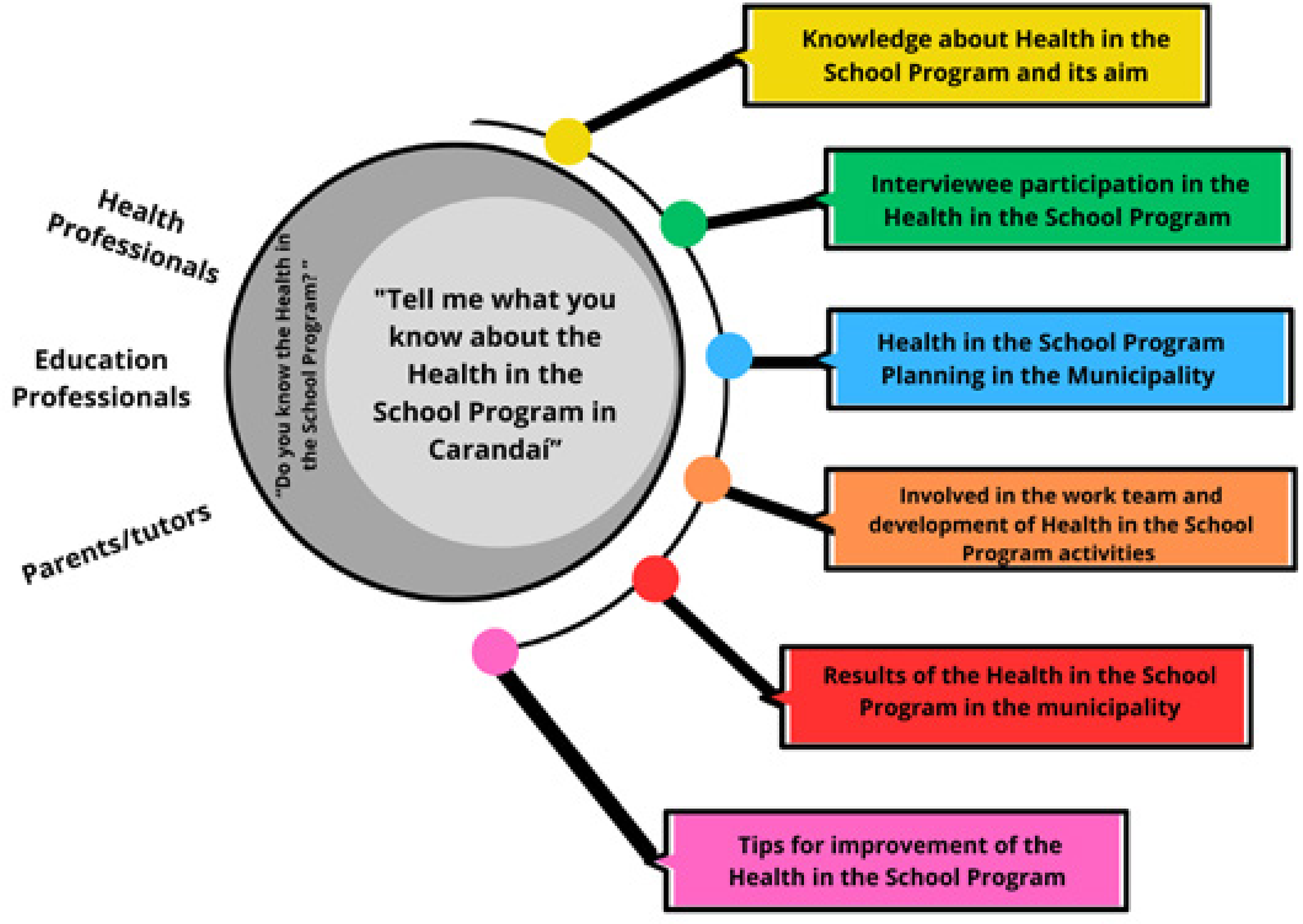 Source: image created by the authors using the Canva Pro® platform
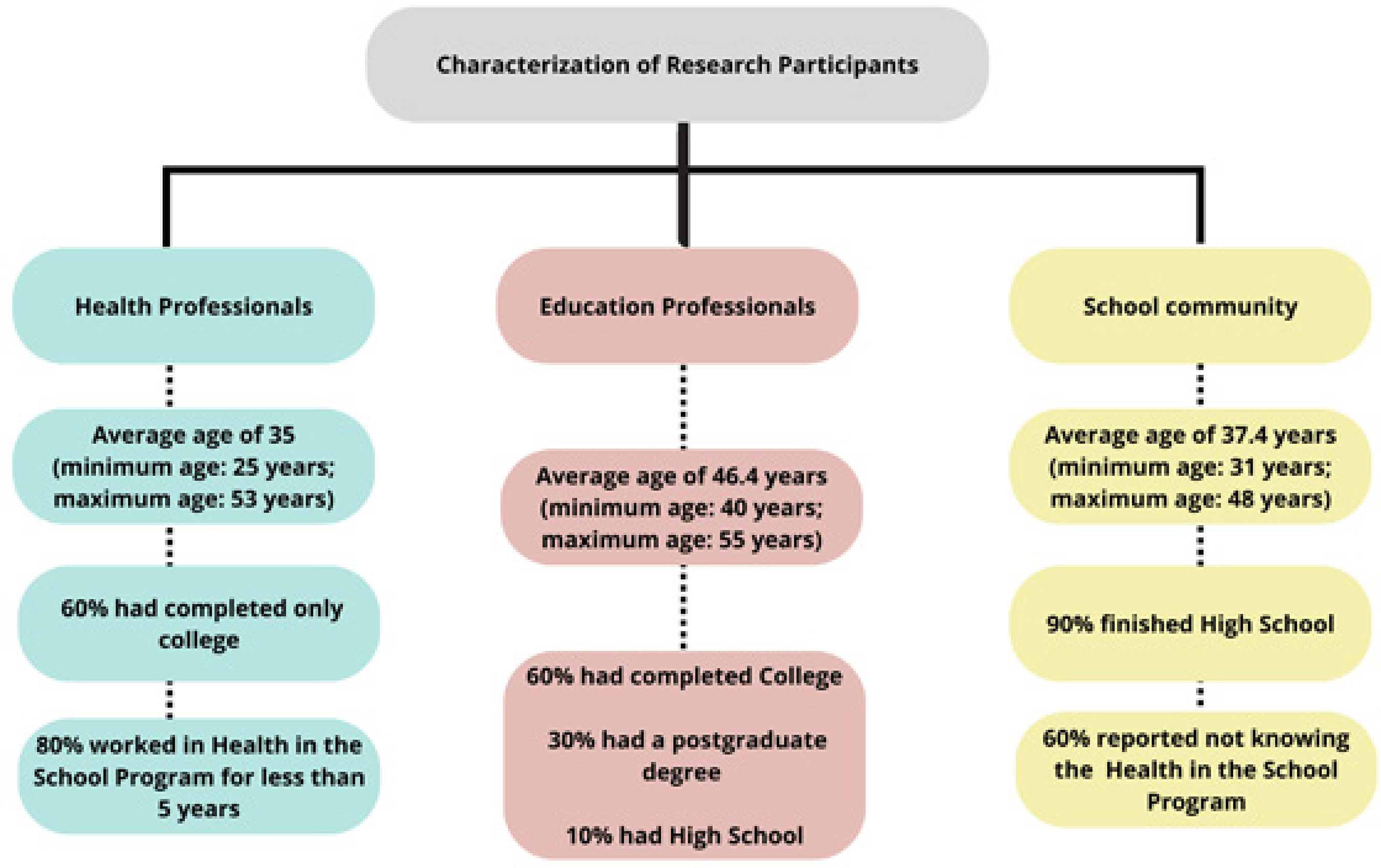 Source: image created by the authors using the Canva Pro® platform