Cardiovascular Risk Stratification and Low-Density Lipoprotein Cholesterol Target Achievement in Primary Health Care: A Cross-Sectional Study
Abstract
Background: Cardiovascular diseases (CVDs) remain the leading cause of mortality in Brazil. Effective dyslipidemia management is essential for preventing major adverse cardiovascular events (MACE); however, previous studies have reported low rates of lipid target achievement and inadequate statin prescribing in primary health care (PHC) settings.
Objective: To evaluate low-density lipoprotein cholesterol (LDL-C) target achievement and the appropriateness of statin prescriptions according to cardiovascular risk among patients receiving PHC in a medium-sized Brazilian city.
Methods: This cross-sectional study was conducted in 18 PHC units in Rio do Sul, Santa Catarina, Brazil, between January 13 and May 30, 2025. The study included 180 adults aged 30-59 years of both sexes who had been followed for at least 6 months and had a lipid profile assessment within the previous year. Cardiovascular risk was estimated using the Framingham Risk Score. Data were analyzed using the chi-square, Mann-Whitney, and Kruskal-Wallis tests. Statistical significance was set at p < 0.05.
Results: Among the 180 participants, 95 (52.7%) did not achieve LDL-C targets. LDL-C goal attainment was more frequent among low-risk (85.7%) and intermediate-risk (23.9%) individuals and less frequent among high-risk (15.1%) and very high-risk (0.0%) individuals. Cardiovascular risk was significantly associated with lipid control (p < 0.05). Median LDL-C was 106.8 mg/dL (Interquartile Range (IQR), 88.4-136.2), with significant differences across risk categories (p < 0.05). Among the 56 statin prescriptions identified, only 26 (46.4%) were consistent with guideline-recommended statin intensity.
Conclusion: The low rate of LDL-C target achievement and the high prevalence of inadequate statin therapy highlight the need for more effective lipid management strategies and structured interventions in PHC.
Keywords:
Heart Disease Risk Factors; LDL-Colesterol; Hydroxymethylglutaryl-CoA Reductase Inhibitors; Primary Health Care; Observational Study
Introduction
Cardiovascular diseases (CVDs) are chronic noncommunicable conditions characterized by slow progression and long asymptomatic periods.1 They remain the leading cause of premature morbidity and mortality worldwide. By 2030, around 23.6 million people are expected to die from CVD each year.2 In Brazil, nearly one-third of all deaths are attributed to CVD, imposing a substantial economic burden on the health care system. According to the Brazilian Society of Cardiology (SBC), the Brazilian Unified Health System (SUS) spends more than 1 billion reais annually on cardiovascular procedures.3
The Framingham Heart Study identified several major risk factors for CVD, including smoking, hypertension, diabetes mellitus, obesity, and dyslipidemia.4 Dyslipidemia, characterized by abnormal serum lipid concentrations, is a modifiable cardiovascular risk factor. Adequate control of cholesterol levels, particularly low-density lipoprotein cholesterol (LDL-C), plays a central role in both primary and secondary prevention of major adverse cardiovascular events (MACE).5
The therapeutic management of dyslipidemia is guided by individual cardiovascular risk, which is estimated using validated risk scores. Brazilian clinical guidelines recommend the Framingham global risk score, interpreted in conjunction with independent risk factors such as established atherosclerotic CVD (ASCVD), risk equivalents, and aggravating conditions. Cardiovascular risk estimation allows prediction of the likelihood of cardiac or cerebrovascular events within the subsequent 10 years.6,7
Cardiovascular Risk Stratification and Low-Density Lipoprotein Cholesterol Target Achievement in Primary Health Care: A Cross-Sectional Study. LDL-C: low-density lipoprotein cholesterol; PHC: primary health care.
Previous studies evaluating lipid target achievement were conducted in heterogeneous health care settings, limiting the applicability of their findings to primary health care (PHC) services in medium-sized cities.8,9 Because of the growing concern regarding population cardiovascular health and the need for effective strategies to decrease CVD-related morbidity and mortality, this study aimed to assess LDL-C target achievement and the appropriateness of statin prescriptions according to cardiovascular risk in PHC settings.
Methods
Study design
This cross-sectional observational study aimed to evaluate lipid target achievement according to individual cardiovascular risk among patients receiving care in the PHC system of the city of Rio do Sul, state of Santa Catarina, Brazil. The study was approved by the human research ethics committee on November 28, 2024 (approval number: 7,256,169). No external funding was received.
Study setting
The study was conducted in 18 PHC units in Rio do Sul, Santa Catarina, Brazil, between January 13 and May 30, 2025. These units were staffed by multidisciplinary teams predominantly coordinated by family and community physicians or general practitioners.
Study population
The study population consisted of adults aged 30-59 years of both sexes who were eligible for cardiovascular risk stratification using the Framingham Risk Score and were consecutively attended at the PHC units. Only individuals who had been followed within the city health care system for at least 6 months and had a recorded lipid profile within the previous 12 months were included, as this interval was considered sufficient to reflect potential therapeutic adjustments. Participation required written informed consent.
Participant selection
Participant recruitment began with the identification of patients evaluated within the previous year for a possible diagnosis of dyslipidemia at the PHUs of Rio do Sul, according to the predefined eligibility criteria. Data collection occurred during routine medical appointments using a sequential and proportional approach across the participating units. A total of 10 eligible patients per unit were included, reflecting a census-like sampling strategy during the study period. All identified patients agreed to participate and signed the informed consent form.
Sample
This study used a census-based design that included all patients meeting the eligibility criteria who attended the participating PHC units during the predefined data collection period. Therefore, no a priori sample size calculation was performed. Data collection followed a sequential and proportional approach across the units, resulting in the inclusion of 180 patients, with up to 10 eligible participants per PHC unit, reflecting routine clinical flow rather than a fixed sampling quota.
Variables
The primary outcome was the prevalence of patients achieving LDL-C targets according to individual cardiovascular risk. The variables assessed included age, sex, educational attainment, diabetes mellitus, cardiovascular risk stratifiers according to the Updated Cardiovascular Prevention Guideline of the SBC – 2019,10 hypertension, smoking status, family history of premature coronary artery disease (CAD), presence of significant CAD (history of acute myocardial infarction (AMI), stroke, or evidence of > 50% arterial obstruction), physical activity level, systolic blood pressure (SBP) and diastolic blood pressure (DBP), total cholesterol, high-density lipoprotein cholesterol (HDL-C), LDL-C, triglycerides, serum creatinine, estimated glomerular filtration rate (eGFR), overall cardiovascular risk, lifestyle modification (LSM), statin prescription, statin type, and adequacy of statin therapy. All independent variables were considered potential confounders.
Definition and measurement of variables
The primary outcome variable was LDL-C target achievement, defined according to the recommendations of the Updated Cardiovascular Prevention Guideline of the SBC – 2019. LDL-C goals were established according to cardiovascular risk stratification: < 130 mg/dL for low risk, < 100 mg/dL for intermediate risk, < 70 mg/dL for high risk, and < 50 mg/dL for very high risk.10 LDL-C values were obtained from the most recent laboratory tests available in the patients’ medical records.
In most cases, LDL-C was calculated using the Friedewald equation (LDL-C = total cholesterol − HDL-C − [triglycerides/5]), which is valid for triglyceride levels < 400 mg/dL.11 For triglyceride levels ≥ 400 mg/dL, the Martin-Hopkins equation was applied using an individualized correction factor to improve LDL-C estimation accuracy.12
Global cardiovascular risk was estimated using the SBC Calculator for Cardiovascular Risk Stratification, according to current national recommendations. This tool, based on the Framingham Risk Score, integrates clinical and laboratory variables to classify individuals into low-, intermediate-, high-, or very high-risk categories. Although the Framingham score may overestimate cardiovascular risk in some populations, its use was maintained because it is the method recommended by Brazilian national guidelines for cardiovascular risk stratification.10
Statin use was assessed using the following question: "Do you currently use any statin?" Participants reporting the use of simvastatin, atorvastatin, rosuvastatin, pravastatin, fluvastatin, pitavastatin, lovastatin, or statin therapy combined with ezetimibe were classified as statin users.
Statin prescriptions were verified through medical record review and evaluated for adequacy according to individual cardiovascular risk, based on the Framingham Global Risk Score adapted for the Brazilian population. Statins were categorized according to expected LDL-C-lowering potency as low-to-moderate intensity (e.g., simvastatin ≤ 40 mg or atorvastatin ≤ 20 mg) or high intensity (e.g., atorvastatin ≥ 40 mg or rosuvastatin ≥ 20 mg).
Kidney function was assessed using the eGFR calculated with the Chronic Kidney Disease Epidemiology Collaboration equation, which is recommended by clinical guidelines because of its superior accuracy in adult populations.13
Physical activity level was classified according to the World Health Organization 2020 recommendations based on weekly exercise duration and intensity. The categories were defined as follows: i) low, no regular physical activity or < 150 minutes/week of moderate activity or < 75 minutes/week of vigorous activity; ii) moderate, ≥ 150 minutes/week of moderate activity or ≥ 75 minutes/week of vigorous activity; and iii) high, ≥ 300 minutes/week of moderate activity or ≥ 150 minutes/week of vigorous activity.14
Bias assessment
To minimize information bias, all interviewers underwent prior training and used standardized instruments for data collection and variable categorization. Data analysis followed rigorous procedures to verify consistency and completeness, and records lacking sufficient information for cardiovascular risk calculation were excluded. Potential selection bias resulting from the exclusion of incomplete records was acknowledged; however, this was mitigated through evaluation of missing data patterns, which did not indicate systematic losses. Nevertheless, underreporting and incomplete documentation cannot be entirely excluded, as these are inherent limitations of studies based on secondary data. The combined use of participant interviews and review of both electronic and physical medical records was intended to decrease information bias and minimize incomplete data capture.
Data collection
Data were collected in person through participant interviews and simultaneous review of electronic and physical medical records. A structured questionnaire developed by the authors was used (Appendix A), including sociodemographic, clinical, and therapeutic variables. All interviewers received prior training to ensure standardization of participant approach and data collection procedures.
Missing data handling
Participants with missing essential data required for cardiovascular risk calculation were excluded from the analysis, and no data imputation procedures were performed. Before exclusion, missing data patterns were evaluated and considered nonsystematic, preserving the validity of the statistical analyses and minimizing bias associated with inappropriate imputation methods. Although formal comparisons between included and excluded records were not performed, the assessment of missingness patterns suggested no evidence of systematic bias.
Statistical analysis
Data were analyzed using the IBM SPSS Statistics for Windows, version 22.0 (IBM Corp., Armonk, N.Y., USA). Categorical variables were expressed as absolute and relative frequencies. Continuous variables were described as median (IQR), since all continuous variables showed nonnormal distribution according to the Kolmogorov-Smirnov test.
Extreme outliers were defined as values exceeding three times the IQR above the third quartile (Q3) or below the first quartile (Q1) and were excluded only when considered capable of substantially distorting the analyses, while preserving true clinical variability, particularly for triglyceride and creatinine values.
In addition to descriptive analyses of overall prevalence, subgroup analyses were performed according to LDL-C target achievement and cardiovascular risk categories. Statistical comparisons were conducted using Pearson's chi-square test for categorical variables, including adjusted residual analysis (values ≥ 1.96 considered significant), and the Mann-Whitney or Kruskal-Wallis tests for nonparametric continuous variables. Because of the small size of some cardiovascular risk subgroups, post-hoc pairwise comparisons following the Kruskal-Wallis test were not systematically performed, and the test was interpreted as an omnibus comparison. Statistical significance was set at p < 0.05.
Results
The study sample included 180 patients, predominantly women, with a median age of 47 years. Most participants had completed high school education and reported low levels of physical activity. Hypertension and diabetes mellitus were highly prevalent in the study population (Table 1).
Approximately half of the participants did not achieve LDL-C targets. Individuals who achieved lipid control were significantly younger and had a lower prevalence of hypertension and diabetes mellitus compared with those who did not achieve target levels (p < 0.05). In addition, participants with adequate lipid control presented lower levels of total cholesterol, LDL-C, and triglycerides as well as lower SBP and DBP values (p < 0.05 for all comparisons). HDL-C levels did not differ significantly between groups (Table 1).
No participant had documented complementary examinations for the assessment of subclinical ASCVD, such as coronary artery calcium scoring or carotid ultrasonography.
Cardiovascular risk was significantly associated with lipid control (p < 0.05). The highest proportion of LDL-C target achievement was observed among low-risk individuals, with a progressive decrease across the intermediate-, high-, and very high-risk categories (Figure 1).
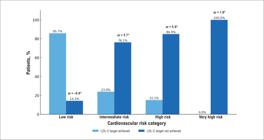
LDL-C Target Achievement According to Cardiovascular Risk Category. ar: adjusted residual; LDL-C: low-density lipoprotein cholesterol. p < 0.05 according to Pearson's chi-square test.
When analyzed according to cardiovascular risk strata, a progressive increase in lipid concentrations was observed with increasing cardiovascular risk. Total cholesterol, LDL-C, and triglyceride levels were significantly higher among individuals classified as intermediate to very high risk, whereas HDL-C levels were significantly lower in higher-risk groups. LDL-C levels > 190 mg/dL were observed exclusively among individuals classified as high cardiovascular risk (Table 2).
LSM was recommended for most participants, particularly those at higher cardiovascular risk. Statin use was relatively low and consisted predominantly of low- or moderate-intensity regimens. Some individuals achieved LDL-C targets exclusively through nonpharmacological measures, which may explain the discrepancy between the proportion of patients receiving statins and those with controlled LDL-C levels. Although statin prescription rates increased according to cardiovascular risk category, the use of high-intensity statins remained uncommon, especially among individuals at high and very high cardiovascular risk (Table 3).
Discussion
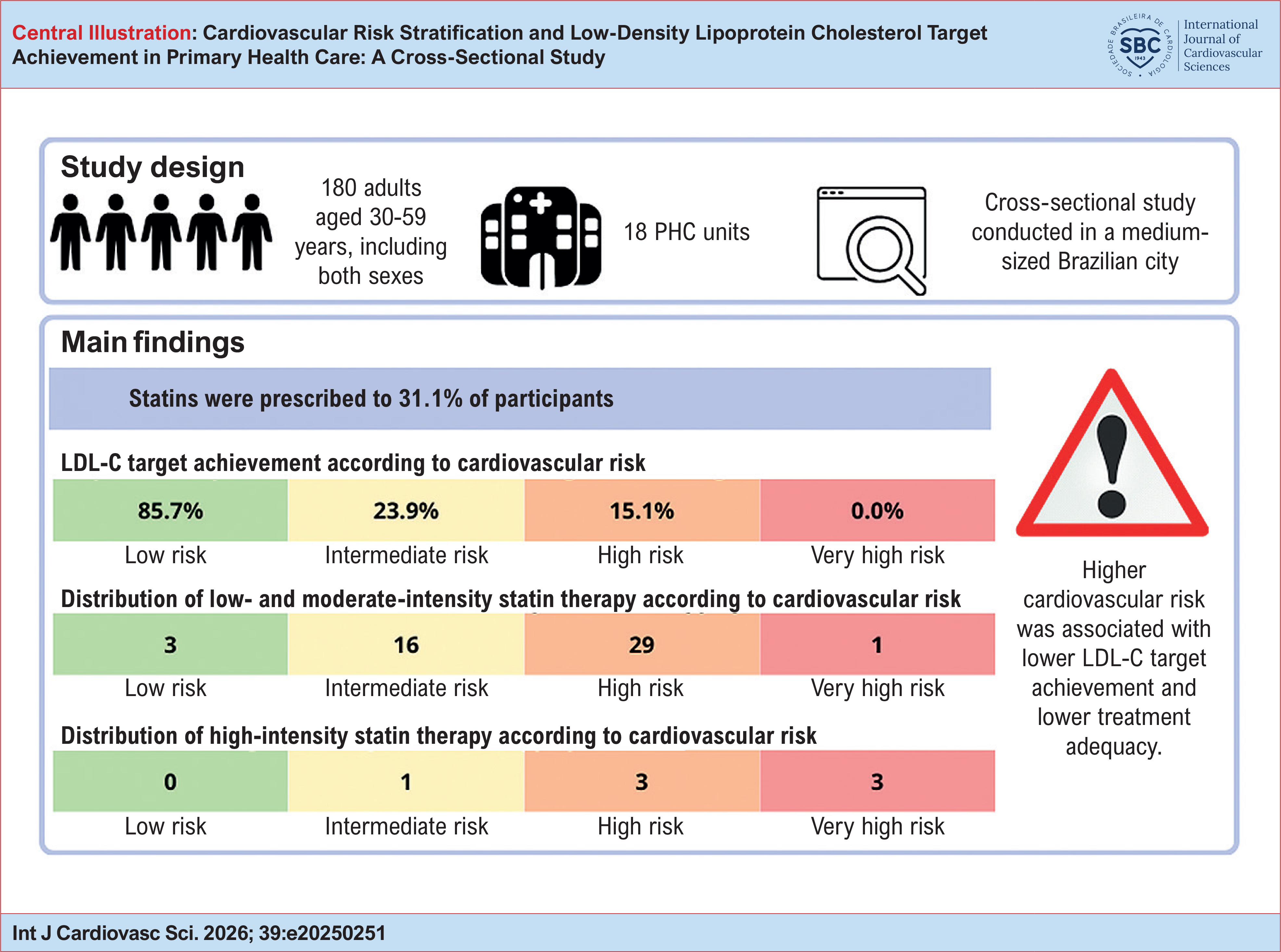
This study demonstrated an extremely low proportion of LDL-C target achievement among patients classified as intermediate, high, and very high cardiovascular risk. Sociodemographic characteristics and preexisting comorbidities were associated with lipid target attainment. Individuals who failed to achieve LDL-C goals showed a higher prevalence of hypertension and diabetes mellitus, in addition to higher total cholesterol, triglyceride, and LDL-C levels, along with lower HDL-C concentrations. Together, these findings characterize a metabolic profile strongly associated with increased cardiovascular risk. Furthermore, statin prescription rates were notably low, particularly among higher-risk individuals. The use of high-intensity statins was uncommon, and fewer than half of prescriptions were consistent with current guideline recommendations. These findings highlight a substantial gap between evidence-based recommendations and routine clinical practice in PHC. Central Illustration displays the main findings of the study.
In the present study, 52.7% of participants did not achieve the recommended LDL-C targets. Among individuals classified as low cardiovascular risk, 85.7% achieved adequate LDL-C levels without lipid-lowering therapy. In contrast, only 14.0% of patients classified as high or very high risk achieved the LDL-C goals recommended by the Brazilian Guideline on Dyslipidemias and Atherosclerosis Prevention – 2025.15 Similar findings have been reported in previous Brazilian studies. The ELSA-Brasil study, which included 14,648 participants, demonstrated that 45.5% had increased LDL-C levels, whereas only 14% achieved values consistent with their cardiovascular risk category.16 Likewise, a study conducted in southern Brazil involving 1,451 post-AMI patients found that only 30% achieved mean LDL-C levels below 70 mg/dL, and approximately 20% achieved decreases greater than 50% from pre-AMI levels.8 This scenario is likely multifactorial and may involve underestimation of cardiovascular risk, inadequate prescribing practices, limited availability of lipid-lowering therapies such as ezetimibe and PCSK9 inhibitors within the public health care system, and poor treatment adherence.17,18
Despite the well-established efficacy of statins in decreasing LDL-C levels, a substantial proportion of patients remain outside recommended therapeutic targets.19 In the present study, statin prescription rates were markedly lower than expected, particularly among individuals at higher cardiovascular risk. High-intensity statin therapy was rarely prescribed, and fewer than half of prescriptions were considered guideline-concordant. Similar findings have been described in larger population-based studies. The WHO-PREMISE study, which evaluated secondary cardiovascular prevention in low- and middle-income countries, reported low statin prescription rates, especially among patients with CAD. In Brazil, only 28.6% of patients with CAD and 16.9% of those with cerebrovascular disease were receiving statin therapy.20 Another Brazilian study demonstrated that among individuals with a previous diagnosis of AMI (n = 11,628), only 9.8% were receiving statins and merely 1.2% used high-intensity regimens. Among patients with a history of stroke (n = 25,925), 5.5% were using statins and only 0.36% were receiving high-intensity therapy.21 The underuse of statins has been attributed to several factors, including insufficient implementation of evidence-based guidelines, physician inertia, limited medication availability, and inadequate longitudinal follow-up in PHC.20
In addition, no participant was receiving combination lipid-lowering therapy, such as ezetimibe or PCSK9 inhibitors. This finding may reflect both the limited availability of these medications within SUS and therapeutic inertia among health professionals as well as administrative barriers related to the incorporation of new technologies at the local level.22,23 Although the present study did not directly assess medication availability, this limitation prevents precise differentiation between these contributing factors. Nevertheless, these findings reinforce the need for further investigations addressing medication accessibility and clinical decision-making in real-world settings.
Prolonged exposure to increased LDL-C levels is a major determinant of increased ASCVD risk, which is directly proportional to both the magnitude and duration of cumulative LDL-C exposure.24,25 A meta-analysis of 21 randomized clinical trials including 184,012 patients with a mean follow-up of 4.4 years demonstrated, through meta-regression analysis, that the cardiovascular benefits of LDL-C decrease progressively increase over time. For every 1 mmol/L decrease in LDL-C, the relative risk of MACE decreased by 12% during the first year, 20% during the third year, 23% during the fifth year, and up to 29% during the seventh year of treatment.26 Another study based on causal inference models demonstrated that early and sustained LDL-C decrease provides greater lifetime cardiovascular protection. Initiating a 50% LDL-C decrease (approximately 67.7 mg/dL) at 30 years of age substantially decreases the risk of MACE by 80 years of age, whereas initiating the same intervention at 60 years yields a considerably smaller cumulative benefit. Moreover, a 33% decrease initiated at 40 years of age was more effective than a 50% decrease started at 55 years of age, emphasizing the importance of early intervention.27 Therefore, the implementation of effective population-based and clinical strategies prioritizing early prevention and broader access to potent and combination lipid-lowering therapies is essential to decrease the global burden of ASCVD.27
Study limitations
This study has several limitations. First, the cross-sectional design precludes causal inference between the analyzed variables, and the absence of robust clinical outcomes prevents direct evaluation of the relationship between lipid control and MACE. In addition, the relatively short data collection period may not have captured potential seasonal variations in health-related behaviors. Longitudinal studies are warranted to evaluate the impact of LDL-C target achievement on cardiovascular outcomes.
Potential biases may also have resulted from the inclusion of only patients with complete medical records and the use of secondary data sources. These limitations were mitigated through standardized researcher training, verification of data completeness, and the combined use of participant interviews and review of both electronic and physical medical records.
The relatively small sample size may have decreased statistical power and limited estimate precision, particularly within the very high-risk subgroup. This finding likely reflects the patient distribution commonly observed in PHC settings, where very high-risk individuals are less prevalent and are often followed in specialized care services. Therefore, findings related to this subgroup should be interpreted cautiously. Furthermore, the sample size and low event frequency in certain strata limited the feasibility of performing robust multivariable analyses. The unfavorable ratio between the number of events and explanatory variables could have compromised model stability and estimate accuracy; therefore, bivariate analyses were preferred, acknowledging the limitation in identifying independent predictors of LDL-C target nonachievement.
Additionally, it was not possible to evaluate treatment adherence, duration of medication use, statin intolerance, or LSMs. These factors directly influence LDL-C target achievement, making it impossible to determine whether the low prescription rate and insufficient treatment intensity were primarily related to physicians, patients, or health care system barriers.
Finally, the study was conducted in a single city, which limits the generalizability of the findings to other Brazilian regions given the epidemiological and structural heterogeneity of PHC across the country. Nevertheless, the results provide important situational indicators that may support local health care interventions and guide future investigations.
Nevertheless, the sample size was sufficient to identify consistent patterns of lipid control and treatment adequacy across different cardiovascular risk strata, providing a representative overview of the local clinical reality. Importantly, the study was based on real-world data obtained from PHC units, reflecting routine clinical practice in medium-sized Brazilian cities. The inclusion of patients undergoing both primary and secondary cardiovascular prevention reinforces the importance of early intervention targeting modifiable cardiovascular risk factors.
Future perspectives
Considering the gaps identified, several opportunities exist to improve both clinical practice and future research. The implementation of treat-to-target management protocols supported by reminder systems or clinical decision-support tools may help PHC teams identify high-risk individuals and intensify treatment in a structured manner. Simple interventions, such as electronic checklists, may facilitate recognition of the need for high-intensity statin therapy and improve longitudinal follow-up.
Continuous monitoring of local performance indicators is essential to improve quality of care. Metrics such as the proportion of high-risk patients receiving potent statin therapy and the percentage achieving LDL-C targets may allow objective evaluation of therapeutic performance. Regular feedback to multidisciplinary teams may support timely adjustments and promote continuous improvement in cardiovascular care.
Expanding continuing education programs for PHC professionals, particularly emphasizing the proven benefits of intensive LDL-C lowering, in addition to implementing adherence-support strategies involving pharmacists, may optimize lipid management. Patient education, combined with facilitated access to laboratory testing and follow-up assessments 6-12 weeks after treatment adjustment, is also essential for therapeutic success.
From a research perspective, prospective multicenter studies with larger and more regionally representative samples are needed to confirm these findings and strengthen external validity. Future investigations should include direct measures of medication adherence, such as dispensing and treatment persistence data, as well as qualitative analyses involving both health professionals and patients to identify barriers to appropriate prescription and use of lipid-lowering therapies. Moreover, cost-effectiveness analyses evaluating the incorporation of ezetimibe and PCSK9 inhibitors for patients refractory to statin therapy may help inform public health policies aimed at optimizing resource allocation and expanding access to treatment.
Conclusion
Most patients evaluated did not achieve the LDL-C targets recommended according to their cardiovascular risk classification. Statin prescription rates were low, with a predominance of low- and moderate-intensity regimens and no use of combination lipid-lowering therapy. These findings suggest inadequate lipid control, particularly among individuals at higher cardiovascular risk, reflecting suboptimal therapeutic management in PHC settings.
The results of this study reinforce the need for more effective interventions aligned with current clinical guidelines for dyslipidemia management, including appropriate cardiovascular risk stratification, optimization of statin therapy, and implementation of structured strategies to improve lipid control in PHC.
-
Sources of Funding
There were no external funding sources for this study.
-
Study Association
This article is part of the undergraduate thesis submitted by Gabriel Olivo Leandro at Centro Universitário para o Desenvolvimento do Alto Vale do Itajaí (UNIDAVI).
-
Ethics Approval and Consent to Participate
This study was approved by the Ethics Committee of Centro Universitário para o Desenvolvimento do Alto Vale do Itajaí (UNIDAVI) under protocol number 7.256.169. All procedures performed in this study were in accordance with the ethical standards of the institutional research committee and with the 1975 Helsinki Declaration, as revised in 2013. Informed consent was obtained from all participants included in the study.
-
Use of Artificial Intelligence
The authors did not use any artificial intelligence tools in the development of this work.
Availability of Research Data
The data cannot be made publicly available because this study used individual patient health records from public primary care units. Due to privacy and ethical constraints, the data cannot be shared publicly.
References
-
1 Malta DC, Szwarcwald CL, Machado ÍE, Pereira CA, Figueiredo AW, Sá ACMGN, et al. Prevalence of Altered Total Cholesterol and Fractions in the Brazilian Adult Population: National Health Survey. Rev Bras Epidemiol. 2019;22(Suppl 02):E190005.SUPL.2. doi: 10.1590/1980-549720190005.supl.2.
» https://doi.org/10.1590/1980-549720190005.supl.2 -
2 Kralj V, Biloš IB. Morbidity and Mortality from Cardiovascular Diseases. Cardiol Croat. 2013;8(10):373-8. doi: 10.15836/ccar.2013.373.
» https://doi.org/10.15836/ccar.2013.373 -
3 Oliveira GMM, Brant LCC, Polanczyk CA, Malta DC, Biolo A, Nascimento BR, et al. Cardiovascular Statistics - Brazil 2023. Arq Bras Cardiol. 2024;121(2):e20240079. doi: 10.36660/abc.20240079.
» https://doi.org/10.36660/abc.20240079 -
4 Andersson C, Nayor M, Tsao CW, Levy D, Vasan RS. Framingham Heart Study: JACC Focus Seminar, 1/8. J Am Coll Cardiol. 2021;77(21):2680-92. doi: 10.1016/j.jacc.2021.01.059.
» https://doi.org/10.1016/j.jacc.2021.01.059 -
5 Alloubani A, Nimer R, Samara R. Relationship between Hyperlipidemia, Cardiovascular Disease and Stroke: A Systematic Review. Curr Cardiol Rev. 2021;17(6):e051121189015. doi: 10.2174/1573403X16999201210200342.
» https://doi.org/10.2174/1573403X16999201210200342 -
6 D’Agostino RB Sr, Vasan RS, Pencina MJ, Wolf PA, Cobain M, Massaro JM, et al. General Cardiovascular Risk Profile for Use in Primary Care: The Framingham Heart Study. Circulation. 2008;117(6):743-53. doi: 10.1161/CIRCULATIONAHA.107.699579.
» https://doi.org/10.1161/CIRCULATIONAHA.107.699579 -
7 Faludi AA, Izar MCO, Saraiva JFK, Chacra APM, Bianco HT, Afiune A Neto, et al. Atualização da Diretriz Brasileira de Dislipidemias e Prevenção da Aterosclerose – 2017. Arq Bras Cardiol. 2017;109(2 Supl 1):1-76. doi: 10.5935/abc.20170121.
» https://doi.org/10.5935/abc.20170121 -
8 Bernardi A, Olandoski M, Erbano LO, Guarita-Souza LC, Baena CP, Faria-Neto JR. Achievement of LDL-Cholesterol Goals after Acute Myocardial Infarction: Real-World Data from the City of Curitiba Public Health System. Arq Bras Cardiol. 2022;118(6):1018-25. doi: 10.36660/abc.20210328.
» https://doi.org/10.36660/abc.20210328 - 9 Silva AL, Santos BN, Sousa LM, Maia KA. The Analysis of Cardiovascular Risk Stratification and Achievement of Therapeutic LDL-cholesterol Goals in a University Outpatient Clinic. Rev Soc Bras Clin Med. 2025;23(1):41-8.
-
10 Précoma DB, Oliveira GMM, Simão AF, Dutra OP, Coelho OR, Izar MCO, et al. Updated Cardiovascular Prevention Guideline of the Brazilian Society of Cardiology - 2019. Arq Bras Cardiol. 2019;113(4):787-891. doi: 10.5935/abc.20190204.
» https://doi.org/10.5935/abc.20190204 - 11 Friedewald WT, Levy RI, Fredrickson DS. Estimation of the Concentration of Low-Density Lipoprotein Cholesterol in Plasma, without use of the Preparative Ultracentrifuge. Clin Chem. 1972;18(6):499-502.
-
12 Martin SS, Blaha MJ, Elshazly MB, Toth PP, Kwiterovich PO, Blumenthal RS, et al. Comparison of a Novel Method vs the Friedewald Equation for Estimating Low-Density Lipoprotein Cholesterol Levels from the Standard Lipid Profile. JAMA. 2013;310(19):2061-8. doi: 10.1001/jama.2013.280532.
» https://doi.org/10.1001/jama.2013.280532 -
13 Levey AS, Stevens LA, Schmid CH, Zhang YL, Castro AF 3rd, Feldman HI, et al. A New Equation to Estimate Glomerular Filtration Rate. Ann Intern Med. 2009;150(9):604-12. doi: 10.7326/0003-4819-150-9-200905050-00006.
» https://doi.org/10.7326/0003-4819-150-9-200905050-00006 -
14 Bull FC, Al-Ansari SS, Biddle S, Borodulin K, Buman MP, Cardon G, et al. World Health Organization 2020 Guidelines on Physical Activity and Sedentary Behaviour. Br J Sports Med. 2020;54(24):1451-62. doi: 10.1136/bjsports-2020-102955.
» https://doi.org/10.1136/bjsports-2020-102955 -
15 Rached FH, Miname MH, Rocha VZ, Zimerman A, Cesena FHY, Sposito AC, et al. Brazilian Guideline on Dyslipidemias and Prevention of Atherosclerosis - 2025. Arq Bras Cardiol. 2025;122(9):e20250640. doi: 10.36660/abc.20250640.
» https://doi.org/10.36660/abc.20250640 -
16 Lotufo PA, Santos RD, Figueiredo RM, Pereira AC, Mill JG, Alvim SM, et al. Prevalence, Awareness, Treatment, and Control of High Low-Density Lipoprotein Cholesterol in Brazil: Baseline of the Brazilian Longitudinal Study of Adult Health (ELSA-Brasil). J Clin Lipidol. 2016;10(3):568-76. doi: 10.1016/j.jacl.2015.12.029.
» https://doi.org/10.1016/j.jacl.2015.12.029 -
17 Nascimento RCRM, Guerra AA Jr, Alvares J, Gomes IC, Godman B, Bennie M, et al. Statin Use in Brazil: Findings and Implications. Curr Med Res Opin. 2018 Oct;34(10):1809-17. doi: 10.1080/03007995.2018.1451312.
» https://doi.org/10.1080/03007995.2018.1451312 -
18 Ray KK, Haq I, Bilitou A, Manu MC, Burden A, Aguiar C, et al. Treatment Gaps in the Implementation of LDL Cholesterol Control among High- and Very High-Risk Patients in Europe between 2020 and 2021: The Multinational Observational SANTORINI Study. Lancet Reg Health Eur. 2023;29:100624. doi: 10.1016/j.lanepe.2023.100624.
» https://doi.org/10.1016/j.lanepe.2023.100624 -
19 Faria-Neto JR, Yarleque C, Vieira LF, Sakane EN, Santos RD. Challenges Faced by Patients with Dyslipidemia and Systemic Arterial Hypertension in Brazil: A Design of the Patient Journey. BMC Cardiovasc Disord. 2022;22(1):237. doi: 10.1186/s12872-022-02669-8.
» https://doi.org/10.1186/s12872-022-02669-8 - 20 Mendis S, Abegunde D, Yusuf S, Ebrahim S, Shaper G, Ghannem H, et al. WHO Study on Prevention of REcurrences of Myocardial Infarction and StrokE (WHO-PREMISE). Bull World Health Organ. 2005;83(11):820-9.
-
21 Machline-Carrion MJ, Girotto AN, Nieri J, Pereira PM, Monfardini F, Forestiero F, et al. Assessing Statins Use in a Real-World Primary Care Digital Strategy: A Cross-Sectional Analysis of a Population-Wide Digital Health Approach. Lancet Reg Health Am. 2023;23:100534. doi: 10.1016/j.lana.2023.100534.
» https://doi.org/10.1016/j.lana.2023.100534 - 22 Brasil. Ministério da Saúde. Secretaria de Ciência, Tecnologia e Insumos Estratégicos. Portaria n° 34, de 28 de agosto de 2018. Torna Pública a Decisão de Não Incorporar a Ezetimiba para o Tratamento da Dislipidemia no âmbito do Sistema Único de Saúde (SUS). Diário Oficial da União. 2018 ago 28.
-
23 Marcolino MAZ, Decker SRDR, Bertoldi EG, Polanczyk CA. The Challenge of Incorporating High-Cost Technologies: An Analysis of PCSK9 Inhibitors. Arq Bras Cardiol. 2021;117(5):997-8. doi: 10.36660/abc.20210840.
» https://doi.org/10.36660/abc.20210840 -
24 Ueda P, Gulayin P, Danaei G. Long-Term Moderately Elevated LDL-Cholesterol and Blood Pressure and Risk of Coronary Heart Disease. PLoS One. 2018;13(7):e0200017. doi: 10.1371/journal.pone.0200017.
» https://doi.org/10.1371/journal.pone.0200017 -
25 Domanski MJ, Tian X, Wu CO, Reis JP, Dey AK, Gu Y, et al. Time Course of LDL Cholesterol Exposure and Cardiovascular Disease Event Risk. J Am Coll Cardiol. 2020;76(13):1507-16. doi: 10.1016/j.jacc.2020.07.059.
» https://doi.org/10.1016/j.jacc.2020.07.059 -
26 Wang N, Woodward M, Huffman MD, Rodgers A. Compounding Benefits of Cholesterol-Lowering Therapy for the Reduction of Major Cardiovascular Events: Systematic Review and Meta-Analysis. Circ Cardiovasc Qual Outcomes. 2022;15(6):e008552. doi: 10.1161/CIRCOUTCOMES.121.008552.
» https://doi.org/10.1161/CIRCOUTCOMES.121.008552 -
27 Ray KK, Ference BA, Séverin T, Blom D, Nicholls SJ, Shiba MH, et al. World Heart Federation Cholesterol Roadmap 2022. Glob Heart. 2022;17(1):75. doi: 10.5334/gh.1154.
» https://doi.org/10.5334/gh.1154
Edited by
-
Editor responsible for the review:
Glaucia Maria Moraes de Oliveira