Low-Dose Colchicine for Secondary Prevention: A Systematic Review and Meta-Analysis of Randomized Clinical Trials
Introduction
Inflammation is recognized as a probable causal factor in recurrence of atherosclerotic events, making it a promising therapeutic target.1,2 Plasma C-reactive protein, a marker of systemic inflammation, has been shown to predict the risk of cardiovascular events regardless of cholesterol and other traditional risk factors.3,4 In the Antiinflammatory Therapy with Canakinumab for Atherosclerotic Disease (CANTOS) trial, inhibition of interleukin-1β demonstrated a reduction in cardiovascular events.5 Afterwards, colchicine, an inexpensive anti-inflammatory drug, emerged as a promising treatment to target residual inflammatory risk. Its primary mechanism involves inhibiting the NLRP3 inflammasome, which plays a crucial role in atherosclerosis-associated inflammation by producing pro-inflammatory cytokines like interleukin-1β.6
The Efficacy and Safety of Low-Dose Colchicine after Myocardial Infarction (COLCOT) and the Colchicine in Patients with Chronic Coronary Disease (LoDoCo2) trials demonstrated a reduction in major adverse cardiovascular events (MACE).7,8 A meta-analysis of these two major trials and several smaller randomized controlled trials (RCTs) concluded that colchicine reduces MACE, myocardial infarction (MI), coronary revascularization, and stroke in secondary prevention, although it did not improve cardiovascular mortality.9 Consequently, colchicine is now recommended for secondary prevention by European guidelines for managing acute and chronic coronary syndromes and by American guidelines for chronic coronary disease.10-12
In 2024, three major trials were published, all demonstrating no significant reduction in cardiovascular events. The Long-term colchicine for the prevention of vascular recurrent events in non-cardioembolic stroke (CONVINCE) and Colchicine in patients with acute ischaemic stroke or transient ischaemic attack (CHANCE-3) trials included patients with ischemic cerebrovascular events, broadening the context for colchicine in atherosclerotic disease.13,14 Additionally, the most recently published Colchicine in Acute Myocardial Infarction (CLEAR-SYNERGY) trial, the largest study to date on colchicine use after a cardiovascular event, failed to show a benefit in any measured outcome.15
Therefore, we conducted a meta-analysis incorporating recent data to assess the efficacy and safety of low-dose colchicine for secondary prevention of atherosclerotic disease, including patients with a prior cardiovascular or cerebrovascular event.
Methods
This meta-analysis was conducted following the Preferred Reporting Items for Systematic Reviews and Meta-Analyses (PRISMA) guidelines.16 The protocol was registered in the international prospective register of systematic reviews (PROSPERO CRD42025648326).
A systematic search of electronic databases (MEDLINE and the Cochrane Library) was conducted on February 14, 2025, to identify RCTs comparing colchicine with placebo or usual care for secondary prevention. The key search string incorporated the intervention ("colchicine"), outcome observed ("cardiovascular outcome*" OR "CVOT" OR "MACE" OR "myocardial infarct*" OR "heart infarct*" OR "heart attack*" OR "MI" OR "AMI" OR "myocardial infarction" OR "stroke" OR "brain infarct*" OR "brain ischemia" OR "cerebrovascular accident*" OR "stroke"), and study type ("randomized controlled trial") (Supplementary Table 1 for full search strategy). RCTs were included if they were compared colchicine with placebo or usual care in adults (≥ 18 years) and if they reported at least one of the following clinical outcomes during a minimum of 30 days of follow-up: cardiovascular death, MI, stroke, or all-cause mortality.
The primary outcome was a composite measure of cardiovascular mortality, MI, or stroke. Most studies reported MACE as a composite of different outcomes, including cardiovascular mortality, MI, cardiac arrest, ischemia-driven urgent revascularization, ischemic stroke, or any new stroke. To account for these variations, we reported both our primary outcome and the MACE definitions used in the included studies (Supplementary Table 2). Other secondary outcomes included the individual components of our primary outcome, unstable angina (including unstable angina, hospitalization for angina, or ischemia-driven urgent revascularization), all-cause mortality, non-cardiovascular mortality, gastrointestinal symptoms (nausea, vomiting, diarrhea, abdominal pain, gastrointestinal hemorrhage, and hospitalization for gastrointestinal causes), hematologic effects (anemia, thrombocytopenia, neutropenia, and myelosuppression), and infections (pneumonia and serious or fatal infections). Data on study outcomes were collected based on the longest follow-up period available.
Two authors (RBS and AFO) independently screened titles and abstracts and removed duplicates. Full-text articles were subsequently assessed for eligibility. Any disagreements were resolved by consensus or, if necessary, with the intervention of a third reviewer (JF). For each included trial, summary data, including study characteristics and outcome measures, were extracted by one investigator (RBS) and validated by a second investigator (AFO).
Risk of bias was assessed by two reviewers (RBS and AFO) using the Cochrane Collaboration's revised Risk of Bias 2 tool.17 We evaluated five domains of bias: bias due to the randomization process, deviations from intended interventions, missing outcome data, measurement of the outcome, and selection of the reported result (Supplementary Figure 1).
Statistical analysis
A meta-analysis was conducted to calculate the odds ratio for events in the colchicine and control groups using an inverse-variance random-effects model. The odds ratios were reported with 95% confidence intervals. A two-sided p value of less than 0.05 was considered statistically significant. Sensitivity analyses were performed using Peto's fixed-effect method and a leave-one-out approach. A third sensitivity analysis was also conducted, including only major trials (> 1000 participants) to investigate the impact of small-study effects and potential publication bias. Heterogeneity was assessed using Higgins’ I² statistic. According to published guidelines, heterogeneity was considered low (I2 = 25%–49%), moderate (I2 = 50%–74%), and high (I2 ≥ 75%).18 Subgroup analyses for the primary endpoint were conducted based on disease presentation (acute vs chronic) and the duration of colchicine treatment (≤ 3 months vs > 3 months). Publication bias was examined through inverted funnel plot techniques and Egger's test. All statistical analyses were performed using Review Manager (RevMan), version 5.3 (Nordic Cochrane Center, Cochrane Collaboration, Copenhagen) and Medcalc statistical software, version 23.1.6.
Results
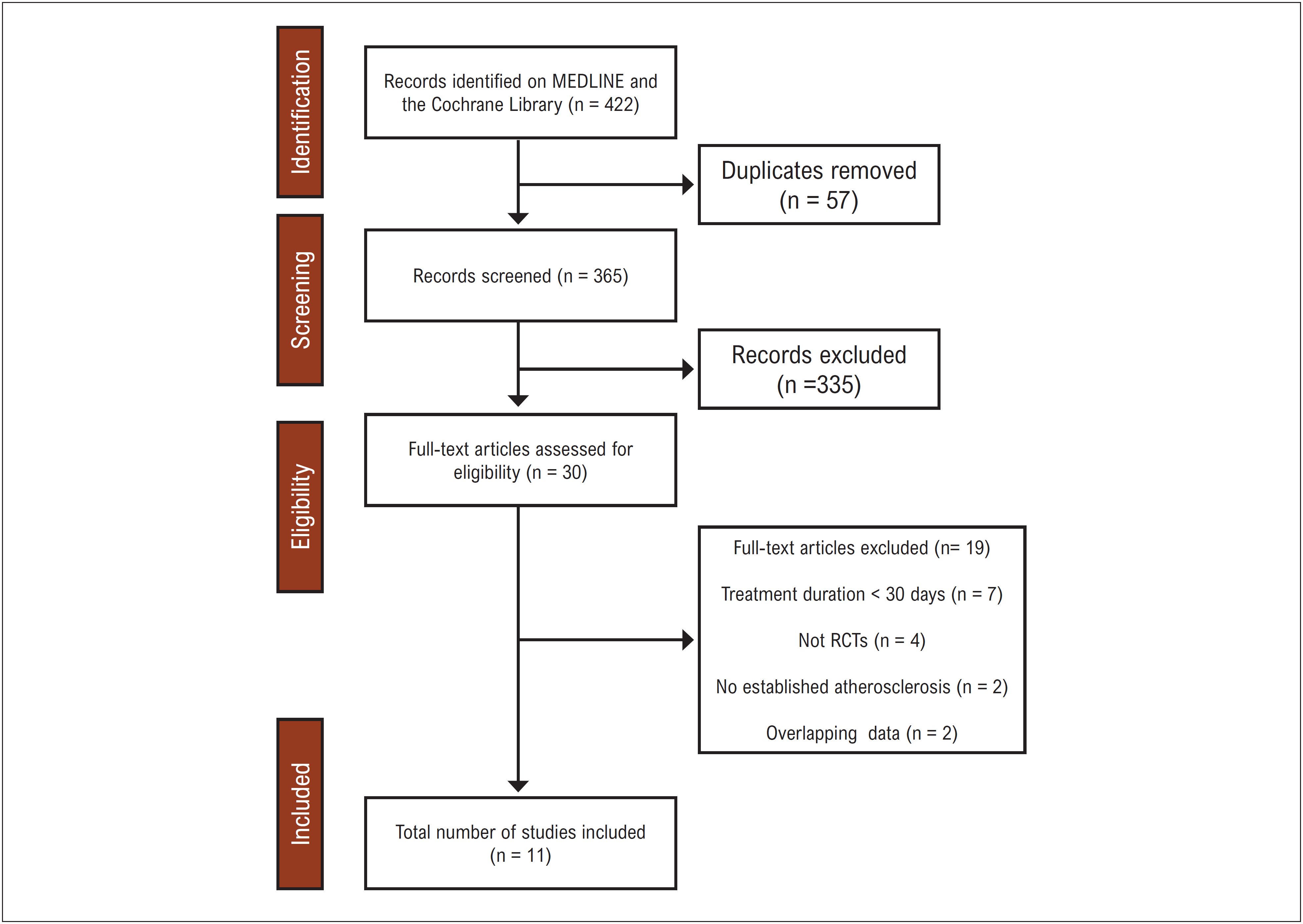
A total of 11 RCTs met the inclusion criteria and were extracted following the search strategy. Figure 1 displays the PRISMA flow diagram, and Supplementary Table 3 details articles excluded after full-text review. The overall risk of bias for the primary outcome was assessed as low across all studies. Most trials employed a placebo-controlled, double-blind design, except for LoDoCo,19 COLIN,20 and CONVINCE,13 which followed an open-label design. Additionally, to reduce the risk of bias in outcome reporting, LoDoCo19 and CONVINCE13 engaged blinded, independent investigators for outcome assessment.
These trials involved 30,753 patients with a follow-up period of more than 1 month. Of these, 15,381 patients (50%) received colchicine, median dose of 0.5 mg daily. The study populations included patients following an acute event in 9 trials, with 6 after acute coronary syndrome,7,15,20-23 2 after ischemic stroke or transient ischemic attack,13,14 and 1 including both.24 Two trials included patients with chronic coronary syndrome,8,19 as shown in Table 1.
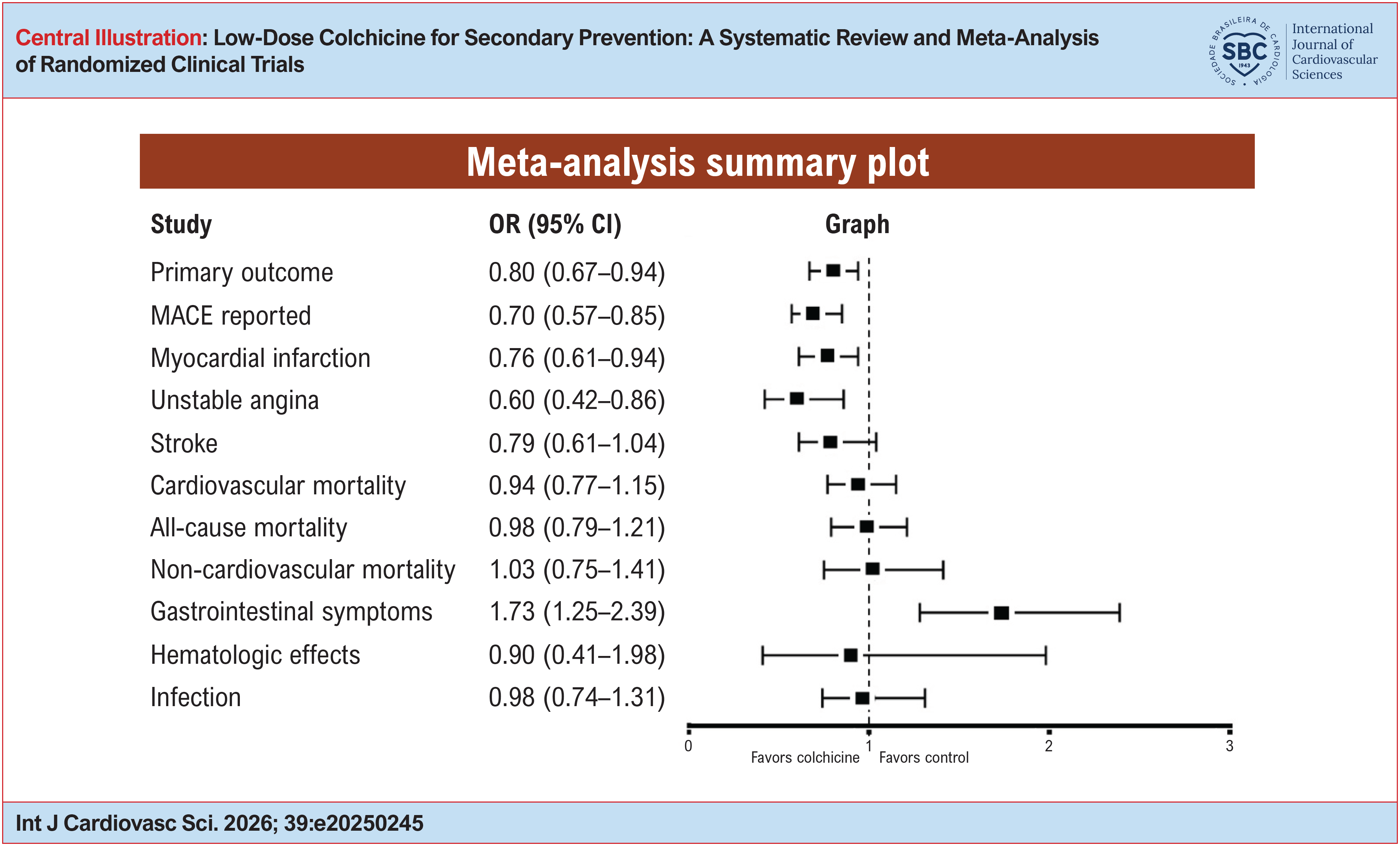
Baseline patient characteristics are listed in Table 2. The mean age ranged from 57 to 67 years, and most patients were male (> 70%). Risk factors were similar between studies and between groups. Most patients received secondary prophylaxis with antiplatelet agents and statins (> 90%). Discontinuation of colchicine during the study period was as high as 25.9% (Supplementary Table 4). Treatment with colchicine in secondary prevention compared to placebo or usual care was associated with a significant reduction in the primary outcome of cardiovascular death, MI, and stroke, with a relative risk reduction of 20% and moderate heterogeneity between groups (Central Figure, Supplementary Figure 2). The effect of colchicine on the primary outcome was similar between different clinical settings (chronic or acute previous event) and follow-up duration (≤ 3 months vs > 3 months) (Supplementary Figure 3). MACE, as reported by each study, was also significant lower in the colchicine group, with a relative risk reduction of 30% and moderate heterogeneity (Central Figure and Supplementary Figure 2).
Single event analysis demonstrated a reduced relative risk of 24% for MI and of 40% for unstable angina. No significant benefit was found for stroke, cardiovascular mortality, or all-cause mortality (Central Figure and Supplementary Figure 4).
Regarding safety profile, colchicine had no impact on non-cardiovascular mortality. However, the colchicine group reported a higher incidence of gastrointestinal symptoms. Other adverse events, including hematologic effects and infections were similar across groups (Central Figure and Supplementary Figure 5).
Visual inspection of the funnel plots showed asymmetry, and Egger's test was significant for the primary outcome, MACE defined by the RCTs, MI, and stroke, suggesting the possibility of publication bias (Supplementary Figure 6).
The benefit of colchicine regarding the primary outcome, MACE defined by the RCTs, and MI was consistent in a sensitivity analysis including only major trials (Supplementary Table 5). Sensitivity analyses excluding individual studies in a leave-one-out approach did not significantly affect the odds ratio for the primary outcome. Additionally, Peto's fixed-effects method yielded similar results across all outcomes (Supplementary Table 6).
Discussion
This meta-analysis included 11 RCTs involving 30,753 patients and incorporated the most recent studies on colchicine for secondary prevention among patients with a prior cardiovascular or cerebrovascular event. Colchicine was associated with a reduction in MACE, MI, and unstable angina. However, no benefit was observed in the risk of stroke or cardiovascular mortality.
Prior evidence indicates that colchicine is associated with favorable effects on non-fatal endpoints. However, the three most recent trials have yielded negative results. It is important to note that the CHANCE-3 trial had only a 3-month follow-up and that the CONVINCE study was terminated early due to the COVID-19 pandemic and budget constraints, likely diminishing the statistical power of its intention-to-treat analysis.13,14 The CLEAR-SINERGY trial included the largest post-MI population and recorded a high number of events. However, compared to the COLCOT trial, the median time from MI to trial randomization was shorter (13.5 days vs 26.8 hours), potentially including early events after MI attributable to stent thrombosis or arrhythmic causes rather than atherosclerotic causes. Additionally, the rate of percutaneous coronary intervention was greater in the CLEAR-SINERGY trial (99.6% vs 92.7%).7,15
High discontinuation rates of colchicine, reaching up to 25.9% in the CLEAR-SINERGY trial, were largely driven by gastrointestinal adverse effects.15 As events occurring after treatment discontinuation were included in the intention-to-treat analysis, the true effects of colchicine may have been underestimated. To account for the impact of treatment discontinuation, some trials reported on-treatment analyses, which yielded similar results.7,13-15,23 The LoDoCo and LoDoCo2 trials, both of which demonstrated positive outcomes, used a run-in period to exclude patients intolerant to colchicine before randomization and subsequently reported lower discontinuation rates of approximately 11% after trial enrollment.8,19 However, these strategies may limit the generalizability of the findings.
This meta-analysis still demonstrates a 20% decrease in the relative risk of a composite outcome of cardiovascular death, MI, and stroke, primarily driven by reductions in non-fatal endpoints. The observed reductions in MACE, MI, and unstable angina were consistent with the findings of prior meta-analyses.9,25 However, these articles reported stroke risk reductions of 27% to 52%, which were not observed in our analysis of more recent data. Regarding safety outcomes, we also report that the colchicine group experienced a higher incidence of gastrointestinal symptoms, with no observed impact on other serious adverse effects or non-cardiovascular mortality. The findings on non-cardiovascular mortality are highly relevant, as concerns raised by a previous RCT have been overemphasized and are not supported by our study.23
The benefit identified for the primary outcome is consistent with prior studies on residual cholesterol risk that demonstrated 13% to 25% reductions in MACE.26-29 Risk reductions for MI and unstable angina were also similar. Still, our analysis did not show a benefit in stroke prevention, in contrast to some studies involving lipid-lowering therapies.26-28
Inflammation in atherosclerosis is a complex process, and a deeper understanding of its mechanisms may help identify which patients benefit most.30 To date, most trials have focused on patients after an acute event, resulting in less evidence for the treatment of chronic conditions and long-term care. Additionally, the benefit of drug therapy might be limited in patients with MI after revascularization.31-34 Ongoing studies in this field may eventually elucidate the role of colchicine in secondary prevention (ClinicalTrials.gov identifiers: NCT06095765 and NCT06472908). Nevertheless, additional investigations involving patients with stable clinical profiles and clearly defined inflammatory risk are warranted.
Several limitations should be considered. First, moderate to high heterogeneity was observed across studies, possibly reflecting differences in study methodology and population. Furthermore, the studies used varying definitions of MACE. To tackle this limitation, our primary endpoint had a consistent definition (cardiovascular mortality, MI, or stroke) and the magnitude of effect was similar regardless of the definition of MACE used. A significant Egger's test and asymmetry in the funnel plot suggests a degree of publication bias; therefore, we cannot exclude this influence on the results of our study. Nonetheless, sensitivity analyses were consistent across different outcomes. Moreover, the risk of bias was classified as low in different publications, but critical assessment of individual trials is always of great importance. Finally, the absence of individual patient data limited our ability to perform detailed subgroup analyses.
Conclusion
Colchicine was associated with significant efficacy in the secondary prevention of non-fatal outcomes, including MACE, MI, and unstable angina, among patients with prior cardiovascular or cerebrovascular events. No benefit was observed in reducing cardiovascular mortality or preventing stroke. Despite an increased risk of gastrointestinal symptoms, no significant impact on severe adverse events or non-cardiovascular mortality was observed. However, high discontinuation rates may limit the widespread use of colchicine in real-world clinical practice.
-
Sources of Funding
There were no external funding sources for this study.
-
Study Association
This study is not associated with any postgraduate programs.
-
Ethics Approval and Consent to Participate
This article does not contain any studies with human participants or animals performed by any of the authors.
-
Use of Artificial Intelligence
During the preparation of this work, the authors used ChatGPT to refine the English language. After using this tool/service, the authors reviewed and edited the content as needed and take full responsibility for the content of the published article.
Availability of Research Data
The underlying content of the research text is contained within the manuscript.
Acknowledgements
During the preparation of this work, the author(s) used ChatGPT to refine the language. After using this tool/service, the author(s) reviewed and edited the content as needed and take(s) full responsibility for the content of the publication.
This research did not receive any specific grant from funding agencies in the public, commercial, or not-for-profit sectors.
References
- 1 Cagnina A, Chabot O, Davin L, Lempereur M, Maréchal P, Oury C, et al. Atherosclerosis, an Inflammatory Disease. Rev Med Liege. 2022;77(5-6):302-9.
-
2 Hansson GK. Inflammation, Atherosclerosis, and Coronary Artery Disease. N Engl J Med. 2005;352(16):1685-95. doi: 10.1056/NEJMra043430.
» https://doi.org/10.1056/NEJMra043430 -
3 Kaptoge S, Di Angelantonio E, Lowe G, Pepys MB, Thompson SG, Collins R, et al. C-Reactive Protein Concentration and Risk of Coronary Heart Disease, Stroke, and Mortality: An Individual Participant Meta-Analysis. Lancet. 2010;375(9709):132-40. doi: 10.1016/S0140-6736(09)61717-7.
» https://doi.org/10.1016/S0140-6736(09)61717-7 -
4 Ridker PM, Cushman M, Stampfer MJ, Tracy RP, Hennekens CH. Inflammation, Aspirin, and the Risk of Cardiovascular Disease in Apparently Healthy Men. N Engl J Med. 1997;336(14):973-9. doi: 10.1056/NEJM199704033361401.
» https://doi.org/10.1056/NEJM199704033361401 -
5 Ridker PM, Everett BM, Thuren T, MacFadyen JG, Chang WH, Ballantyne C, et al. Antiinflammatory Therapy with Canakinumab for Atherosclerotic Disease. N Engl J Med. 2017;377(12):1119-31. doi: 10.1056/NEJMoa1707914.
» https://doi.org/10.1056/NEJMoa1707914 -
6 Aday AW, Ridker PM. Targeting Residual Inflammatory Risk: A Shifting Paradigm for Atherosclerotic Disease. Front Cardiovasc Med. 2019;6:16. doi: 10.3389/fcvm.2019.00016.
» https://doi.org/10.3389/fcvm.2019.00016 -
7 Tardif JC, Kouz S, Waters DD, Bertrand OF, Diaz R, Maggioni AP, et al. Efficacy and Safety of Low-Dose Colchicine after Myocardial Infarction. N Engl J Med. 2019;381(26):2497-505. doi: 10.1056/NEJMoa1912388.
» https://doi.org/10.1056/NEJMoa1912388 -
8 Nidorf SM, Fiolet ATL, Mosterd A, Eikelboom JW, Schut A, Opstal TSJ, et al. Colchicine in Patients with Chronic Coronary Disease. N Engl J Med. 2020;383(19):1838-47. doi: 10.1056/NEJMoa2021372.
» https://doi.org/10.1056/NEJMoa2021372 -
9 Andreis A, Imazio M, Piroli F, Avondo S, Casula M, Paneva E, et al. Efficacy and Safety of Colchicine for the Prevention of Major Cardiovascular and Cerebrovascular Events in Patients with Coronary Artery Disease: A Systematic Review and Meta-Analysis on 12 869 Patients. Eur J Prev Cardiol. 2022;28(17):1916-25. doi: 10.1093/eurjpc/zwab045.
» https://doi.org/10.1093/eurjpc/zwab045 -
10 Byrne RA, Rossello X, Coughlan JJ, Barbato E, Berry C, Chieffo A, et al. 2023 ESC Guidelines for the Management of Acute Coronary Syndromes. Eur Heart J. 2023;44(38):3720-826. doi: 10.1093/eurheartj/ehad191.
» https://doi.org/10.1093/eurheartj/ehad191 -
11 Vrints C, Andreotti F, Koskinas KC, Rossello X, Adamo M, Ainslie J, et al. 2024 ESC Guidelines for the Management of Chronic Coronary Syndromes. Eur Heart J. 2024;45(36):3415-537. doi: 10.1093/eurheartj/ehae177.
» https://doi.org/10.1093/eurheartj/ehae177 -
12 Virani SS, Newby LK, Arnold SV, Bittner V, Brewer LC, Demeter SH, et al. 2023 AHA/ACC/ACCP/ASPC/NLA/PCNA Guideline for the Management of Patients with Chronic Coronary Disease: A Report of the American Heart Association/American College of Cardiology Joint Committee on Clinical Practice Guidelines. Circulation. 2023;148(9):e9-e119. doi: 10.1161/CIR.0000000000001168.
» https://doi.org/10.1161/CIR.0000000000001168 -
13 Kelly P, Lemmens R, Weimar C, Walsh C, Purroy F, Barber M, et al. Long-Term Colchicine for the Prevention of Vascular Recurrent Events in Non-Cardioembolic Stroke (CONVINCE): A Randomised Controlled Trial. Lancet. 2024;404(10448):125-33. doi: 10.1016/S0140-6736(24)00968-1.
» https://doi.org/10.1016/S0140-6736(24)00968-1 -
14 Li J, Meng X, Shi FD, Jing J, Gu HQ, Jin A, et al. Colchicine in Patients with Acute Ischaemic Stroke or Transient Ischaemic Attack (CHANCE-3): Multicentre, Double Blind, Randomised, Placebo Controlled Trial. BMJ. 2024;385:e079061. doi: 10.1136/bmj-2023-079061.
» https://doi.org/10.1136/bmj-2023-079061 -
15 Jolly SS, d’Entremont MA, Lee SF, Mian R, Tyrwhitt J, Kedev S, et al. Colchicine in Acute Myocardial Infarction. N Engl J Med. 2025;392(7):633-42. doi: 10.1056/NEJMoa2405922.
» https://doi.org/10.1056/NEJMoa2405922 -
16 Page MJ, McKenzie JE, Bossuyt PM, Boutron I, Hoffmann TC, Mulrow CD, et al. The PRISMA 2020 Statement: An Updated Guideline for Reporting Systematic Reviews. BMJ. 2021;372:n71. doi: 10.1136/bmj.n71.
» https://doi.org/10.1136/bmj.n71 -
17 Sterne JAC, Savović J, Page MJ, Elbers RG, Blencowe NS, Boutron I, et al. RoB 2: A Revised Tool for Assessing Risk of Bias in Randomised Trials. BMJ. 2019;366:l4898. doi: 10.1136/bmj.l4898.
» https://doi.org/10.1136/bmj.l4898 -
18 Higgins JP, Thompson SG, Deeks JJ, Altman DG. Measuring Inconsistency in Meta-Analyses. BMJ. 2003;327(7414):557-60. doi: 10.1136/bmj.327.7414.557.
» https://doi.org/10.1136/bmj.327.7414.557 -
19 Nidorf SM, Eikelboom JW, Budgeon CA, Thompson PL. Low-Dose Colchicine for Secondary Prevention of Cardiovascular Disease. J Am Coll Cardiol. 2013;61(4):404-10. doi: 10.1016/j.jacc.2012.10.027.
» https://doi.org/10.1016/j.jacc.2012.10.027 -
20 Akodad M, Lattuca B, Nagot N, Georgescu V, Buisson M, Cristol JP, et al. COLIN Trial: Value of Colchicine in the Treatment of Patients with Acute Myocardial Infarction and Inflammatory Response. Arch Cardiovasc Dis. 2017;110(6):395-402. doi: 10.1016/j.acvd.2016.10.004.
» https://doi.org/10.1016/j.acvd.2016.10.004 -
21 Akrami M, Izadpanah P, Bazrafshan M, Hatamipour U, Nouraein N, Drissi HB, et al. Effects of Colchicine on Major Adverse Cardiac Events in Next 6-Month Period after Acute Coronary Syndrome Occurrence; a Randomized Placebo-Control Trial. BMC Cardiovasc Disord. 2021;21(1):583. doi: 10.1186/s12872-021-02393-9.
» https://doi.org/10.1186/s12872-021-02393-9 -
22 Hennessy T, Soh L, Bowman M, Kurup R, Schultz C, Patel S, et al. The Low Dose Colchicine after Myocardial Infarction (LoDoCo-MI) Study: A Pilot Randomized Placebo Controlled Trial of Colchicine Following Acute Myocardial Infarction. Am Heart J. 2019;215:62-9. doi: 10.1016/j.ahj.2019.06.003.
» https://doi.org/10.1016/j.ahj.2019.06.003 -
23 Tong DC, Quinn S, Nasis A, Hiew C, Roberts-Thomson P, Adams H, et al. Colchicine in Patients with Acute Coronary Syndrome: The Australian COPS Randomized Clinical Trial. Circulation. 2020;142(20):1890-900. doi: 10.1161/CIRCULATIONAHA.120.050771.
» https://doi.org/10.1161/CIRCULATIONAHA.120.050771 -
24 Raju NC, Yi Q, Nidorf M, Fagel ND, Hiralal R, Eikelboom JW. Effect of Colchicine Compared with Placebo on High Sensitivity C-Reactive Protein in Patients with Acute Coronary Syndrome or Acute Stroke: A Pilot Randomized Controlled Trial. J Thromb Thrombolysis. 2012;33(1):88-94. doi: 10.1007/s11239-011-0637-y.
» https://doi.org/10.1007/s11239-011-0637-y -
25 Fiolet ATL, Poorthuis MHF, Opstal TSJ, Amarenco P, Boczar KE, Buysschaert I, et al. Colchicine for Secondary Prevention of Ischaemic Stroke and Atherosclerotic Events: A Meta-Analysis of Randomised Trials. EClinicalMedicine. 2024;76:102835. doi: 10.1016/j.eclinm.2024.102835.
» https://doi.org/10.1016/j.eclinm.2024.102835 -
26 Sabatine MS, Giugliano RP, Keech AC, Honarpour N, Wiviott SD, Murphy SA, et al. Evolocumab and Clinical Outcomes in Patients with Cardiovascular Disease. N Engl J Med. 2017;376(18):1713-22. doi: 10.1056/NEJMoa1615664.
» https://doi.org/10.1056/NEJMoa1615664 -
27 Schwartz GG, Steg PG, Szarek M, Bhatt DL, Bittner VA, Diaz R, et al. Alirocumab and Cardiovascular Outcomes after Acute Coronary Syndrome. N Engl J Med. 2018;379(22):2097-107. doi: 10.1056/NEJMoa1801174.
» https://doi.org/10.1056/NEJMoa1801174 -
28 Bhatt DL, Steg PG, Miller M, Brinton EA, Jacobson TA, Ketchum SB, et al. Cardiovascular Risk Reduction with Icosapent Ethyl for Hypertriglyceridemia. N Engl J Med. 2019;380(1):11-22. doi: 10.1056/NEJMoa1812792.
» https://doi.org/10.1056/NEJMoa1812792 -
29 Nissen SE, Lincoff AM, Brennan D, Ray KK, Mason D, Kastelein JJP, et al. Bempedoic Acid and Cardiovascular Outcomes in Statin-Intolerant Patients. N Engl J Med. 2023;388(15):1353-64. doi: 10.1056/NEJMoa2215024.
» https://doi.org/10.1056/NEJMoa2215024 -
30 Waksman R, Merdler I, Case BC, Waksman O, Porto I. Targeting Inflammation in Atherosclerosis: Overview, Strategy and Directions. EuroIntervention. 2024;20(1):32-44. doi: 10.4244/EIJ-D-23-00606.
» https://doi.org/10.4244/EIJ-D-23-00606 -
31 James S, Erlinge D, Storey RF, McGuire DK, Belder M, Eriksson N, et al. Dapagliflozin in Myocardial Infarction without Diabetes or Heart Failure. NEJM Evid. 2024;3(2):EVIDoa2300286. doi: 10.1056/EVIDoa2300286.
» https://doi.org/10.1056/EVIDoa2300286 -
32 Silvain J, Cayla G, Ferrari E, Range G, Puymirat E, Delarche N, et al. Beta-Blocker Interruption or Continuation after Myocardial Infarction. N Engl J Med. 2024;391(14):1277-86. doi: 10.1056/NEJMoa2404204.
» https://doi.org/10.1056/NEJMoa2404204 -
33 Butler J, Jones WS, Udell JA, Anker SD, Petrie MC, Harrington J, et al. Empagliflozin after Acute Myocardial Infarction. N Engl J Med. 2024;390(16):1455-66. doi: 10.1056/NEJMoa2314051.
» https://doi.org/10.1056/NEJMoa2314051 -
34 Jolly SS, d’Entremont MA, Pitt B, Lee SF, Mian R, Tyrwhitt J, et al. Routine Spironolactone in Acute Myocardial Infarction. N Engl J Med. 2025;392(7):643-52. doi: 10.1056/NEJMoa2405923.
» https://doi.org/10.1056/NEJMoa2405923
*Supplemental Materials
Supplementary Figure 1
Supplementary Table 2
Edited by
-
Editor responsible for the review:
Glaucia Maria Moraes de Oliveira