Intraosseous Versus Intravenous Vascular Access for Out-Of-Hospital Cardiac Arrest: A Meta-Analysis of Randomized Clinical Trials
Abstract
Background: Out-of-hospital cardiac arrest (OHCA) is a life-threatening emergency characterized by low survival rates. Vascular access is critical for drug administration during resuscitation. While intravenous (IV) access is the standard, intraosseous (IO) access may provide practical advantages in certain emergencies.
Objectives: This meta-analysis aimed to compare IO versus IV access in adult OHCA patients regarding their impact on survival and neurological outcomes.
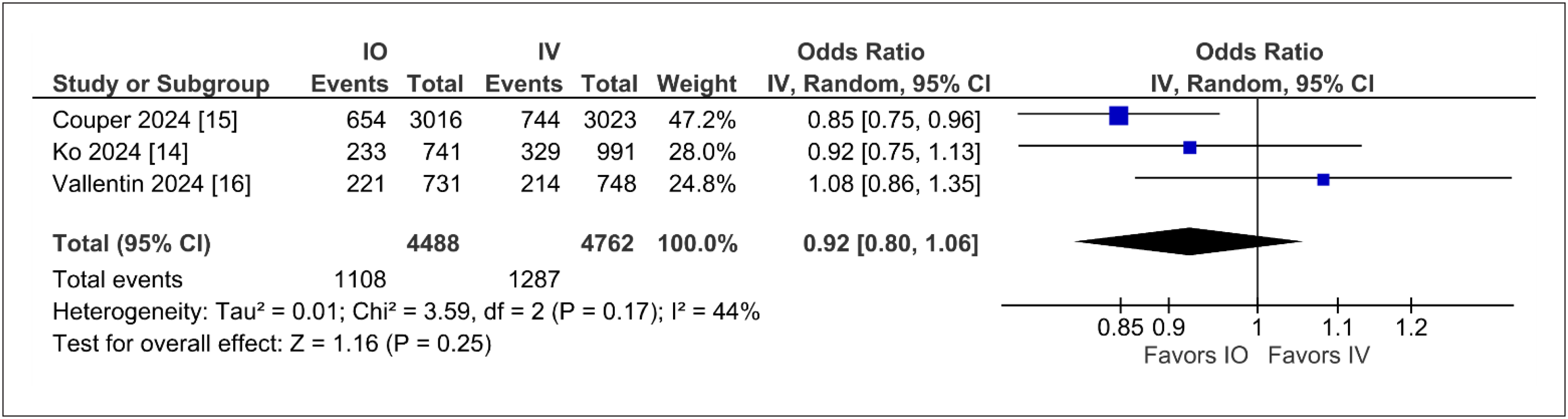
Methods: A systematic search of MEDLINE, Embase, and Cochrane CENTRAL through November 2024 was conducted, including randomized controlled trials (RCTs) comparing IO and IV access in adult patients with OHCA. Meta-analyses employed a random-effects model. A p-value < 0.05 was considered statistically significant. Analyses outcomes included survival with a favorable neurological outcome, survival to hospital discharge, return of spontaneous circulation (ROSC), and sustained ROSC. Subgroup analyses were conducted based on initial rhythm and bystander-performed cardiopulmonary resuscitation. The certainty of the evidence was determined using the GRADE approach. Results: Three RCTs involving 9,119 patients were included. IO access showed no significant differences compared to IV access in terms of survival with favorable neurological outcome (OR 1.07; 95% CI 0.88–1.30; p = 0.49; I² = 0%), survival to hospital discharge (OR 0.97; 95% CI 0.80–1.19; p = 0.80; I² = 0%), ROSC (OR 1.00; 95% CI 0.83–1.22; p = 0.97; I² = 64%), or sustained ROSC (OR 0.92; 95% CI 0.80–1.06; p = 0.25; I² = 44%).
Conclusions: IO and IV access yield comparable outcomes in OHCA patients, supporting their use based on clinical context and provider expertise. Further research is needed to confirm these findings across diverse healthcare settings.
Keywords:
Out-of-Hospital Cardiac Arrest; Vascular Access Devices; Meta-Analysis
Introduction
Cardiac arrest outside the hospital is a medical emergency with an alarmingly low survival rate. This event affects millions of people around the world, imposing a considerable burden on health systems due to the high costs of pre-hospital care, prolonged hospitalization, and the need for neurological rehabilitation for most survivors.1 Studies show that the effectiveness of pre-hospital care and intervention agility are directly associated with the chance of spontaneous circulation (ROSC) return and favorable neurological results.2
Vascular access is fundamental in the management of out-of-hospital cardiac arrest (OHCA). Currently, intravenous (IV) access is often the first choice method used for drug administration during cardiorespiratory resuscitation.3 However, its use may be limited in situations where its implementation is challenging and can result in delays in care and potential complications.4 In these cases, the use of intraosseous (IO) access is seen as a viable option due to its speed and ease of administering drugs directly into the bone marrow, making it promising for critical management scenarios in emergency contexts.5
However, uncertainties persist regarding the comparability of IO and IV routes in terms of effectiveness in improving return of spontaneous circulation (ROSC) and neurological outcomes. While some studies suggest that IO access may represent a promising alternative when IV access is not feasible, the available evidence remains inconclusive, particularly in critical scenarios such as OHCA.6 These limitations hinder the acceptance of IO as an equivalent option to IV, highlighting the need for further research to confirm its role in emergency vascular access.
This meta-analysis aims to synthesize the best available evidence on the effectiveness of IO versus IV access in patients who experienced OHCA and to inform and enhance clinical decision-making.
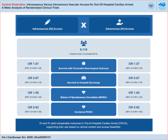
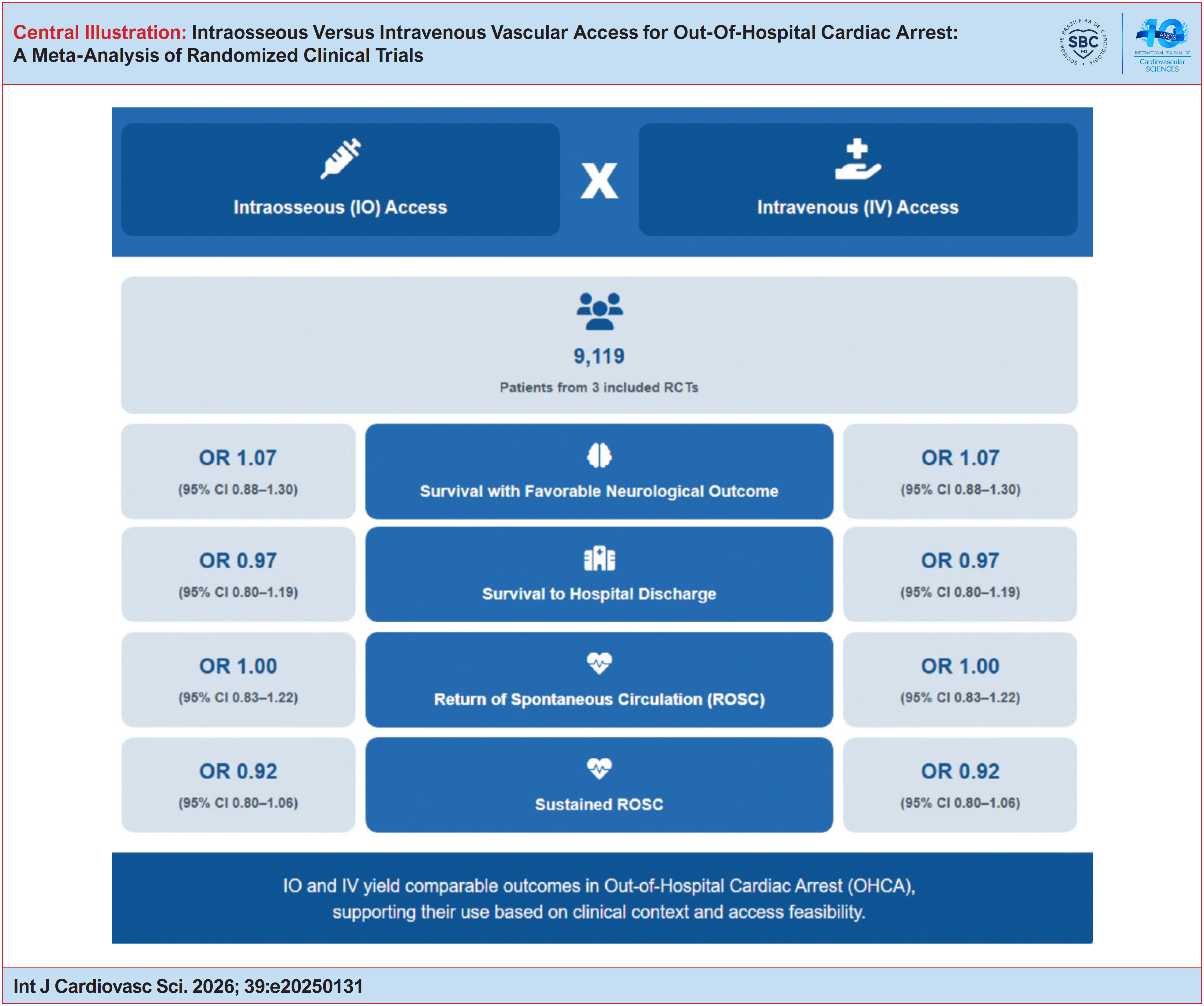
Illustration of intraosseous (IO) and intravenous (IV) vascular access routes in patients with out-of-hospital cardiac arrest (OHCA).
Material and methods
This meta-analysis was conducted and reported in accordance with the Cochrane Collaboration and the Preferred Reporting Items for Systematic Reviews and Meta-Analysis (PRISMA) statement guidelines.7,8 It is also registered in PROSPERO under registration number CRD42024609147. Modifications to that protocol are described in Supplementary Appendix 1.
Eligibility criteria
Inclusion in this meta-analysis was restricted to studies that met all the following eligibility criteria: (1) randomized controlled trials (RCTs); (2) comparing IO versus IV vascular access for OHCA in adults; and (3) focusing on outcomes such as return of spontaneous circulation, sustained return of spontaneous circulation, and survival to hospital discharge. There were no language restrictions.
Study selection and data extraction
We systematically searched MEDLINE, Embase, and Cochrane Central Register of Controlled Trials from inception to November 01, 2024. The search combined terms related to drug administration routes (such as ‘intraosseous’ and ‘intravenous’), out-of-hospital emergency settings (such as ‘prehospital’, ‘paramedic’, and ‘EMS’), and cardiac arrest (such as ‘cardiac arrest’ and ‘resuscitation’). The complete search strategies are described in Supplementary Table 1. The references from all studies, previous systematic reviews, and meta-analyses were also manually searched for additional studies.
Two researchers (M.S. and R.P.) independently screened records based on titles and abstracts to identify potentially eligible studies. Subsequently, the same reviewers independently assessed the full-text documents for eligibility and extracted data from the included studies using a pre-established data extraction table in Google Sheets (Google). Any disagreements were resolved through consensus.
Outcomes
The primary outcome was survival with favorable neurological outcomes. A score of 3 or less on the modified Rankin scale indicates a favorable neurologic outcome. Secondary outcomes included: return of spontaneous circulation, sustained return of spontaneous circulation, and survival to discharge. A subgroup analysis was conducted to investigate the likelihood of survival by initial rhythm (shockable or non-shockable) and bystander-performed cardiopulmonary resuscitation (CPR). Since these analyses were not prespecified in the PROSPERO protocol, they were considered exploratory and interpreted as hypothesis-generating.
Quality assessment
Quality assessment of RCTs was performed using the Cochrane Collaboration's tool for assessing risk of bias in randomized trials (RoB-2).9 Two authors conducted bias risk assessment independently (M.S. and R.P.). Discrepancies were resolved through consensus among the authors.
Certainty of Evidence
Two independent reviewers (M.S. and L.L.) evaluated the certainty of the evidence for the primary and secondary outcomes using the GRADE (Grading of Recommendations, Assessment, Development and Evaluations) framework.10
Publication bias
The publication bias was not assessed. According to Cochrane, tests for publication bias should be applied only when there are at least 10 studies in the meta-analysis.8,11
Statistical analysis
Treatment effects were compared using Odds Ratios (ORs) with 95% confidence intervals (CIs) for binary outcomes. Given the expected heterogeneity across studies, we used the DerSimonian and Laird random-effects model for all reported outcomes. We used the Cochran Q test and I2 statistics to assess heterogeneity; P values <0.1 and I2 >40% were considered significant.8 A p-value < 0.05 was considered statistically significant for all outcomes. To explore potential sources of heterogeneity, we performed sensitivity analyses using a leave-one-out approach, in which the meta-analysis was repeated sequentially after removing each study. With this method, we could evaluate the influence of individual trials on the overall pooled estimates and heterogeneity. Review Manager, version 5.3 software (The Cochrane Collaboration).
Results
Study selection and characteristics
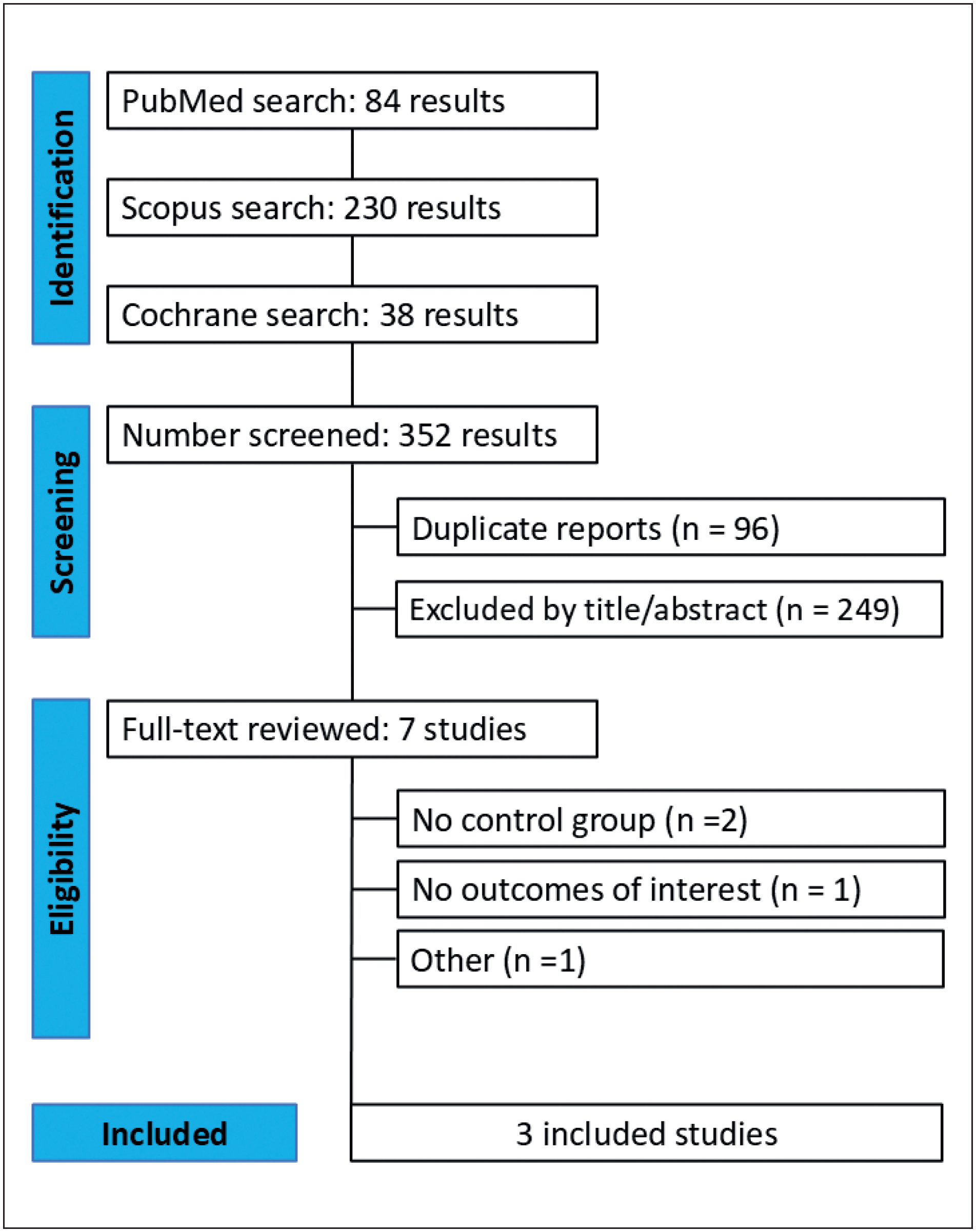
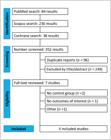
We initially identified 352 studies in three electronic databases. After screening, seven texts were selected for full-text review. After full-text review, four studies were excluded because they failed to meet the inclusion criteria: one12 did not address the outcomes of interest; two were secondary analyses; and the study by Daya et al.13 was excluded due to non-randomized route selection based on local EMS protocols, which compromised comparability and validity. Three studies14-16 that met the selection criteria were included. The flowchart for screening studies is shown in Figure 1.
This meta-analysis included 9,119 patients: 4,466 (49%) with IO vascular access and 4,725 (51%) with IV access. The baseline characteristics of the included RCTs are presented in Table 1.
Efficacy outcomes
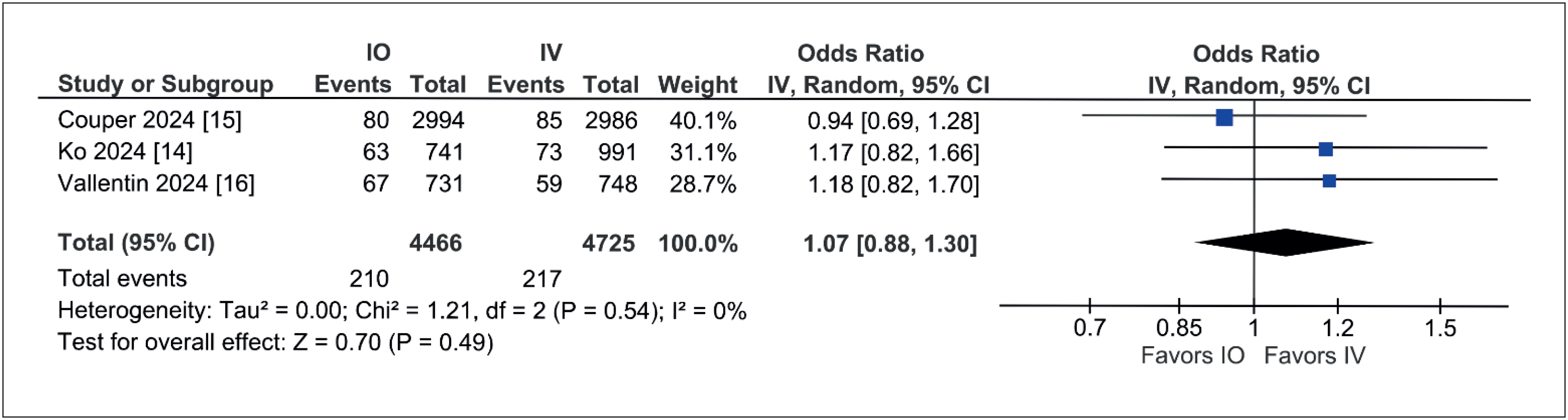
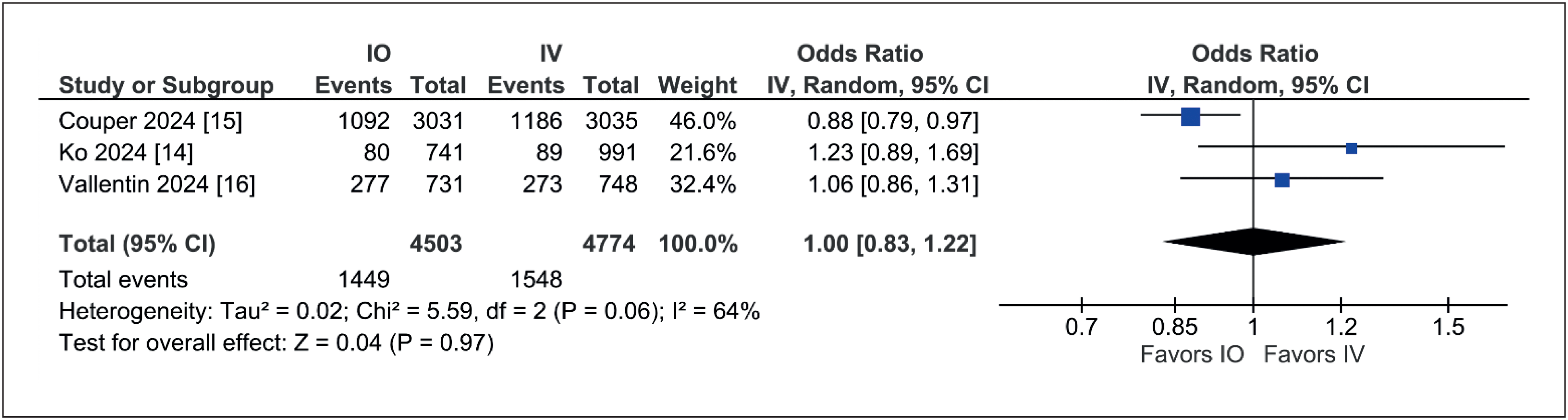
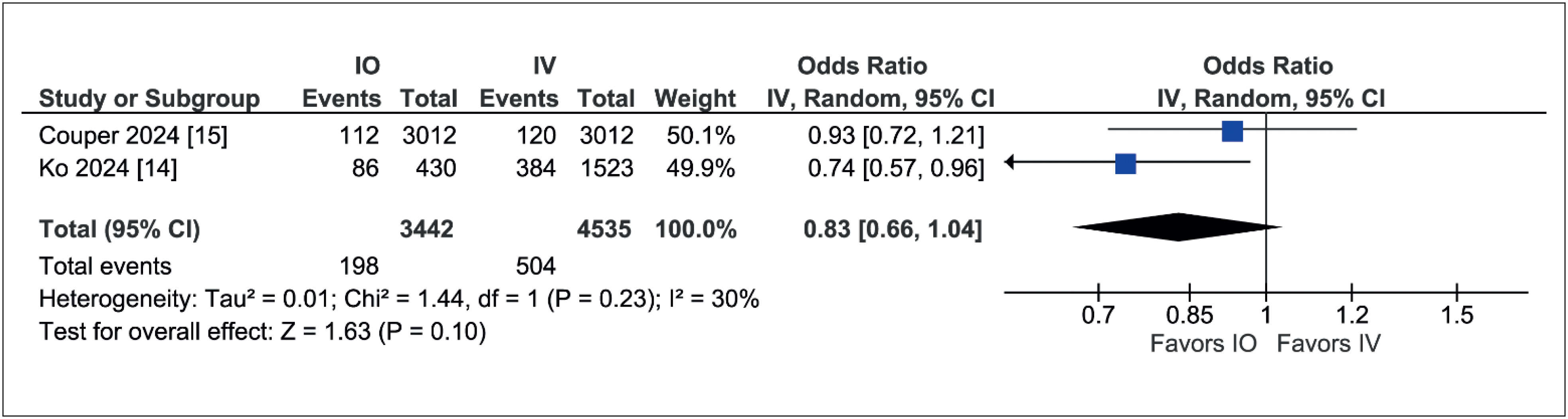
A random-effects model meta-analysis demonstrated that the IO drug route, compared to IV vascular access, was not associated with a statistically significant difference in the primary outcome, survival with favorable neurological outcomes (Figure 2). Similarly, no significant differences were observed for the secondary outcomes, including return of spontaneous circulation (Figure 3), sustained return of spontaneous circulation (Figure 4), and survival to hospital discharge (Figure 5).
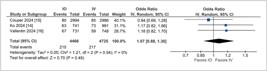
Forest plot for survival with favorable neurological outcomes. IV: Inverse Variance method; CI: Confidence Interval.
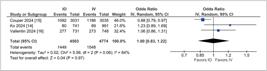
Forest plot for return of spontaneous circulation (ROSC). IV: Inverse Variance method; CI: Confidence Interval.
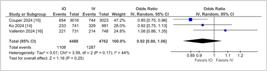
Forest plot for sustained return of spontaneous circulation. IV: Inverse Variance method; CI: Confidence Interval.
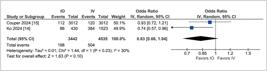
Forest plot for survival to hospital discharge. IV: Inverse Variance method; CI: Confidence Interval.
Subgroups
Subgroup analyses were conducted to evaluate patients with different initial rhythms (shockable and non-shockable) and those who did or did not receive bystander-performed CPR. There was no difference in the survival rate between the IO vs IV groups for those with initial shockable rhythm (OR 1.10; 95% CI 0.90 to 1.36 p = 0.35; I2 = 0%); non-shockable rhythm (OR 0.96; 95% CI 0.76 to 1.21; p=0.76; I2=0%); and bystander-performed CPR (OR 0.96; 95% CI 0.81 to 1.13; p=0.59; I2=0%.)
The findings from these analyses were consistent with the results of the overall combined analysis of all studies. These results are available in Supplementary Figure 1.
Sensitivity Analyses
Regarding the ROSC outcome, moderate heterogeneity was observed (I² = 64%). In leave-one-out sensitivity analyses, heterogeneity decreased to 0% when the PARAMEDIC-3 trial was excluded, indicating that this study contributed the most to the variability across trials.
Quality assessment
All three studies were considered to have a low risk of bias. Detailed assessments are provided in Supplementary Figure 2.
GRADE Certainty of Evidence
Mode-certainty evidence indicates that IO and IV access yield similar outcomes for ROSC, sustained ROSC, survival to discharge, and neurological survival. Detailed evidence certainty is summarized in Table 2.
Discussion
OHCA is a public health emergency, with survival outcomes heavily reliant on the speed and quality of prehospital care. Efficient drug administration is critical to restoring circulation and preventing irreversible brain damage.17,18 Early intervention, including cardiopulmonary resuscitation and defibrillation, is essential, as each minute without action reduces the likelihood of survival by approximately 10%.19,20 In this context, vascular access for drug delivery plays a pivotal role in patient management.
Currently, IV access is considered the gold standard due to its efficacy in drug delivery, which contributes to the return of spontaneous circulation and hospital survival.6 However, IO access has emerged as a viable alternative in emergencies where IV access is difficult or time-consuming. While IO access has proven effective in many scenarios, uncertainties remain regarding its comparison with IV access, particularly regarding pharmacokinetics, absorption, and its impact on clinical outcomes such as survival and neurological function.1,21,22
Studies suggest that drug distribution via IO access may be impaired in cases of low circulatory perfusion, while IV access allows for more efficient distribution.23 However, IO access has the advantage of being faster, especially when IV access is unfeasible.24 Furthermore, the choice between the two methods may depend on the access site (tibia or humerus), with the humerus being more effective for drug distribution.25
The findings from the PARAMEDIC-3 and Reades et al.12 studies contribute significantly to understanding vascular access strategies during OHCA. PARAMEDIC-3 demonstrated that IO and IV access had similar survival and neurological outcomes, but IO was associated with a lower ROSC rate.15 On the other hand, Reades et al. showed that tibial IO access offers clear advantages over IV and humerus IO, with higher first-attempt success (91%) and shorter time to access (4.6 minutes).12 These differences highlight that while IO is effective and rapid in emergencies, the choice of insertion site and the provider's experience play crucial roles in the success of the procedure.
Our meta-analysis, comprising 3 studies and 9,119 patients, compared the effects of IO and IV access in OHCA. The results showed that both methods yielded similar outcomes in terms of survival, favorable neurological outcomes, hospital discharge survival, ROSC, and sustained ROSC, as shown in the central figure. These findings suggest that IO access is equivalent to IV access in terms of clinical outcomes, allowing physicians to make decisions based on clinical circumstances, such as vascular access feasibility or available time.
An important consideration when interpreting ROSC findings is the lack of a uniform definition across the included trials. In the PARAMEDIC-3 trial, ROSC was defined as any return of spontaneous circulation after randomization, regardless of its duration. In contrast, the IVIO trial required ROSC to be sustained for at least 20 minutes, while the VICTOR trial used an even more restrictive definition, requiring circulation to be maintained for at least two hours. This variability in operational definitions likely contributed to the heterogeneity observed in the pooled analysis. In fact, our leave-one-out sensitivity analysis showed that heterogeneity decreased to 0% when the PARAMEDIC-3 trial was excluded, underscoring its influence on study-level variability.
Subgroup analyses showed no significant difference between IO and IV groups in patients with shockable and non-shockable initial rhythms, as well as with or without bystander-performed CPR. These results reinforce the equivalence between the approaches, highlighting the flexibility in choosing the access method based on patient conditions and healthcare provider availability. In critical scenarios, this flexibility can be crucial for patient survival.
Therefore, our meta-analysis indicates that while IV access remains the standard in many protocols, IO access provides an effective alternative, particularly in challenging situations.
Finally, cost-effectiveness and applicability in different healthcare contexts should be considered. Most of the trials included were conducted in high-income countries with well-established and advanced prehospital emergency systems, which may limit the extrapolation of our findings to low-resource settings, such as parts of Brazil. While IV access is universally available and inexpensive, IO access requires specific devices and training, which may represent an additional challenge in these contexts. Future studies should evaluate not only clinical outcomes but also economic and logistical aspects to inform decision-making across diverse healthcare systems better.
Limitations
This study has some limitations. The limited number of included studies restricts the generalizability of the findings. Moderate heterogeneity in outcomes, such as survival to hospital discharge and sustained ROSC, may reflect differences in intervention protocols, patient characteristics, or selection criteria. Additionally, most studies were conducted in high-resource settings, potentially limiting applicability to low-resource environments. Adequate training for IO access is essential to ensure the efficacy and safety of the procedure. Although IO insertion requires skill and practice, once mastered, this technique provides rapid and effective vascular access in emergencies, reducing response time compared to IV access. Another important limitation of our meta-analysis is the small number of eligible RCTs, which inevitably restricts the breadth and generalizability of the findings despite the methodological rigor of focusing exclusively on randomized evidence. Although observational studies were excluded from our review due to inherent biases, well-designed observational research may provide useful contextual information, particularly in populations or scenarios underrepresented in RCTs. Another limitation of our review is that subgroup analyses were not prespecified in the PROSPERO protocol. These analyses were therefore exploratory and should be interpreted as hypothesis-generating rather than confirmatory. Despite these limitations, the robust methodology supports the conclusion that IO and IV access are equivalent in OHCA management. Future studies with larger samples and consistent protocols across diverse settings, as well as the integration of randomized and high-quality observational data, are needed to strengthen these findings and provide a more comprehensive perspective.
Conclusion
This systematic review and meta-analysis demonstrated that IO access is comparable to IV access for clinical outcomes in patients with OHCA. Both methods showed no significant differences in survival with favorable neurological outcomes, ROSC, sustained ROSC, or survival to hospital discharge. These findings highlight the equivalence of IO and IV access, emphasizing the flexibility of either method based on clinical circumstances, such as vascular access difficulty or available time. While IV access remains the standard in many protocols, IO access is an effective alternative, especially in challenging situations. The results of this study can guide clinical decision-making in emergency settings, ensuring that the choice of vascular access method aligns with the patient's needs and available resources. Further research, particularly with larger and more diverse samples, is needed to strengthen these findings and address potential limitations.
-
Sources of funding
There were no external funding sources for this study.
-
Study association
This study is not associated with any thesis or dissertation work.
-
Ethics approval and consent to participate
This article does not contain any studies with human participants or animals performed by any of the authors.
-
Use of Artificial Intelligence
The authors did not use any artificial intelligence tools in the development of this work.
Data Availability Statement
The underlying content of the research text is contained within the manuscript.
References
-
1 Recher M, Baert V, Escutnaire J, Le Bastard Q, Javaudin F, Hubert H, et al. Intraosseous or Peripheral IV Access in Pediatric Cardiac Arrest? Results from the French National Cardiac Arrest Registry. Pediatr Crit Care Med. 2021;22(3):286-96. doi: 10.1097/PCC.0000000000002659.
» https://doi.org/10.1097/PCC.0000000000002659 -
2 Hasselqvist-Ax I, Riva G, Herlitz J, et al. Early cardiopulmonary resuscitation in out-of-hospital cardiac arrest. N Engl J Med. 2015;372(24):2307-2315. doi: 10.1056/NEJMoa1405796
» https://doi.org/10.1056/NEJMoa1405796 -
3 Panchal AR, Bartos JA, Cabañas JG, Donnino MW, Drennan IR, Hirsch KG, et al. Part 3: Adult Basic and Advanced Life Support: 2020 American Heart Association Guidelines for Cardiopulmonary Resuscitation and Emergency Cardiovascular Care. Circulation. 2020;142(16_suppl_2):S366-S468. doi: 10.1161/CIR.0000000000000916.
» https://doi.org/10.1161/CIR.0000000000000916 -
4 Nilsson FN, Bie-Bogh S, Milling L, Hansen PM, Pedersen H, Christensen EF, et al. Association of Intraosseous and Intravenous Access with Patient Outcome in Out-of-Hospital Cardiac Arrest. Sci Rep. 2023;13(1):20796. doi: 10.1038/s41598-023-48350-8.
» https://doi.org/10.1038/s41598-023-48350-8 -
5 Granfeldt A, Avis SR, Lind PC, Holmberg MJ, Kleinman M, Maconochie I, et al. Intravenous vs. Intraosseous Administration of Drugs during Cardiac Arrest: A Systematic Review. Resuscitation. 2020;149:150-7. doi: 10.1016/j.resuscitation.2020.02.025.
» https://doi.org/10.1016/j.resuscitation.2020.02.025 -
6 Zhang Y, Zhu J, Liu Z, Gu L, Zhang W, Zhan H, et al. Intravenous versus Intraosseous Adrenaline Administration in Out-of-Hospital Cardiac Arrest: A Retrospective Cohort Study. Resuscitation. 2020;149:209-16. doi: 10.1016/j.resuscitation.2020.01.009.
» https://doi.org/10.1016/j.resuscitation.2020.01.009 -
7 Moher D, Liberati A, Tetzlaff J, Altman DG; PRISMA Group. Preferred Reporting Items for Systematic Reviews and Meta-Analyses: The PRISMA Statement. PLoS Med. 2009;6(7):e1000097. doi: 10.1371/journal.pmed.1000097.
» https://doi.org/10.1371/journal.pmed.1000097 - 8 Higgins JPT, Thomas J, Chandler J, Cumpston M, Li T, Page MJ, editors. Cochrane Handbook for Systematic Reviews of Interventions. 2nd ed. Chichester: Wiley-Blackwell; 2019.
-
9 Higgins JP, Altman DG, Gøtzsche PC, Jüni P, Moher D, Oxman AD, et al. The Cochrane Collaboration's Tool for Assessing Risk of Bias in Randomised Trials. BMJ. 2011;343:d5928. doi: 10.1136/bmj.d5928.
» https://doi.org/10.1136/bmj.d5928 -
10 Schünemann H, Brożek J, Guyatt G, Oxman A. GRADE Handbook for Grading Quality of Evidence and Strength of Recommendations [Internet]. Hamilton: The GRADE Working Group; 2013 [cited 2025 Nov 07]. Available from: https://gdt.gradepro.org/app/handbook/handbook.html
» https://gdt.gradepro.org/app/handbook/handbook.html -
11 Sterne JA, Sutton AJ, Ioannidis JP, Terrin N, Jones DR, Lau J, et al. Recommendations for Examining and Interpreting Funnel Plot Asymmetry in Meta-Analyses of Randomised Controlled Trials. BMJ. 2011;343:d4002. doi: 10.1136/bmj.d4002.
» https://doi.org/10.1136/bmj.d4002 -
12 Reades R, Studnek JR, Vandeventer S, Garrett J. Intraosseous versus Intravenous Vascular Access during Out-of-Hospital Cardiac Arrest: A Randomized Controlled Trial. Ann Emerg Med. 2011;58(6):509-16. doi: 10.1016/j.annemergmed.2011.07.020.
» https://doi.org/10.1016/j.annemergmed.2011.07.020 -
13 Daya MR, Leroux BG, Dorian P, Rea TD, Newgard CD, Morrison LJ, et al. Survival after Intravenous versus Intraosseous Amiodarone, Lidocaine, or Placebo in Out-of-Hospital Shock-Refractory Cardiac Arrest. Circulation. 2020;141(3):188-98. doi: 10.1161/CIRCULATIONAHA.119.042240.
» https://doi.org/10.1161/CIRCULATIONAHA.119.042240 -
14 Ko YC, Lin HY, Huang EP, Lee AF, Hsieh MJ, Yang CW, et al. Intraosseous versus Intravenous Vascular Access in Upper Extremity among Adults with Out-of-Hospital Cardiac Arrest: Cluster Randomised Clinical Trial (VICTOR trial). BMJ. 2024;386:e079878. doi: 10.1136/bmj-2024-079878.
» https://doi.org/10.1136/bmj-2024-079878 -
15 Couper K, Ji C, Deakin CD, Fothergill RT, Nolan JP, Long JB, et al. A Randomized Trial of Drug Route in Out-of-Hospital Cardiac Arrest. N Engl J Med. 2025;392(4):336-48. doi: 10.1056/NEJMoa2407780.
» https://doi.org/10.1056/NEJMoa2407780 -
16 Vallentin MF, Granfeldt A, Klitgaard TL, Mikkelsen S, Folke F, Christensen HC, et al. Intraosseous or Intravenous Vascular Access for Out-of-Hospital Cardiac Arrest. N Engl J Med. 2025;392(4):349-60. doi: 10.1056/NEJMoa2407616.
» https://doi.org/10.1056/NEJMoa2407616 -
17 Lerner EB, Rea TD, Bobrow BJ, Acker JE 3rd, Berg RA, Brooks SC, et al. Emergency Medical Service Dispatch Cardiopulmonary Resuscitation Prearrival Instructions to Improve Survival from Out-of-Hospital Cardiac Arrest: A Scientific Statement from the American Heart Association. Circulation. 2012;125(4):648-55. doi: 10.1161/CIR.0b013e31823ee5fc.
» https://doi.org/10.1161/CIR.0b013e31823ee5fc -
18 Soar J, Böttiger BW, Carli P, Couper K, Deakin CD, Djärv T, et al. European Resuscitation Council Guidelines 2021: Adult Advanced Life Support. Resuscitation. 2021;161:115-51. doi: 10.1016/j.resuscitation.2021.02.010.
» https://doi.org/10.1016/j.resuscitation.2021.02.010 -
19 Ong MEH, Perkins GD, Cariou A. Out-of-Hospital Cardiac Arrest: Prehospital Management. Lancet. 2018;391(10124):980-8. doi: 10.1016/S0140-6736(18)30316-7.
» https://doi.org/10.1016/S0140-6736(18)30316-7 -
20 Deri Y, Berzon B, West D, Machloof M, Strugo R, Kaplan T, et al. The Impact of Prehospital and Hospital Care on Clinical Outcomes in Out-of-Hospital Cardiac Arrest. J Clin Med. 2022;11(22):6851. doi: 10.3390/jcm11226851.
» https://doi.org/10.3390/jcm11226851 -
21 Hamam MS, Klausner HA, France J, Tang A, Swor RA, Paxton JH, et al. Prehospital Tibial Intraosseous Drug Administration is Associated with Reduced Survival Following Out of Hospital Cardiac Arrest: A Study for the CARES Surveillance Group. Resuscitation. 2021;167:261-6. doi: 10.1016/j.resuscitation.2021.06.016.
» https://doi.org/10.1016/j.resuscitation.2021.06.016 -
22 Brebner C, Asamoah-Boaheng M, Zaidel B, Yap J, Scheuermeyer F, Mok V, et al. The Association of Intravenous vs. Humeral-Intraosseous Vascular Access with Patient Outcomes in Adult Out-of-Hospital Cardiac Arrests. Resuscitation. 2024;202:110360. doi: 10.1016/j.resuscitation.2024.110360.
» https://doi.org/10.1016/j.resuscitation.2024.110360 -
23 Feinstein BA, Stubbs BA, Rea T, Kudenchuk PJ. Intraosseous Compared to Intravenous Drug Resuscitation in Out-of-Hospital Cardiac Arrest. Resuscitation. 2017;117:91-6. doi: 10.1016/j.resuscitation.2017.06.014.
» https://doi.org/10.1016/j.resuscitation.2017.06.014 -
24 Tan BKK, Chin YX, Koh ZX, Md Said NAZB, Rahmat M, Fook-Chong S, et al. Clinical Evaluation of Intravenous Alone versus Intravenous or Intraosseous Access for Treatment of Out-of-Hospital Cardiac Arrest. Resuscitation. 2021;159:129-36. doi: 10.1016/j.resuscitation.2020.11.019.
» https://doi.org/10.1016/j.resuscitation.2020.11.019 -
25 Molin R, Hallas P, Brabrand M, Schmidt TA. Current Use of Intraosseous Infusion in Danish Emergency Departments: A Cross-Sectional Study. Scand J Trauma Resusc Emerg Med. 2010;18:37. doi: 10.1186/1757-7241-18-37..
» https://doi.org/10.1186/1757-7241-18-37.
*Supplemental Materials
Edited by
-
Editor responsible for the review:
Gláucia Maria Moraes de Oliveira