 Use of Active Compounds from Unconventional Edible Sources in Sustainable Food Packaging
Abstract
The growing demand for natural ingredients and environmentally responsible solutions has driven the use of bioactive compounds obtained from unconventional edible sources in the formulation of sustainable packaging. Phenolic compounds, flavonoids, and other natural metabolites are widely recognized for their properties of delaying lipid oxidation, reducing microbial proliferation, and minimizing food spoilage processes. In this context, this study aimed to review the use of bioactive compounds from unconventional natural sources, adding them as an innovative and sustainable alternative for the food industry. The study also highlights the main valued bioactive compounds, methods for evaluating antioxidant activity, strategies for incorporating these compounds into active films, and their overall contributions to sustainability. Unconventional edible sources, including underutilized species and agro-industrial by-products, present high levels of natural antioxidants, contributing to the valorization of waste and the construction of more sustainable production chains. When incorporated into polymer matrices, these compounds enable the development of active packaging capable of releasing protective substances in a controlled manner and improving food stability. This approach strengthens the integration between materials science, food chemistry, and technological innovation, highlighting the potential of these natural sources to replace petroleum-derived polymers. The adoption of these alternatives favors practices aligned with the circular economy, promotes consumer health, and adds value to traditionally underutilized materials. Thus, this review highlights the relevance of active compounds from unconventional edible sources for the development of biodegradable packaging, reinforcing their environmental, functional, and technological importance.
Keyword:
antioxidant; natural; food chemistry; biodegradability; sustainability
1. Introduction
The shelf life of food products directly influences perceived quality and consumer purchasing decisions. Among the main factors contributing to deterioration, lipid oxidation compromises sensory, nutritional, and safety attributes, reducing the commercial value of food. Therefore, incorporating antioxidants effectively slows these reactions, increases stability, and extends shelf life.1
Traditionally, synthetic antioxidants such as butylated hydroxytoluene (BHT) and butylated hydroxyanisole (BHA) have been widely used by the food industry. However, their association with potential health risks and the growing demand for natural ingredients have driven the search for renewable alternatives.2,3 Natural antioxidants can replace synthetic ones, protecting food and contributing to the prevention of chronic diseases.4
Natural antioxidants can be extracted from plants, fruits, and agro-industrial waste, offering health benefits, reducing environmental impact, and adding value to previously discarded by-products, in line with the principles of circular economy and sustainability.5,6 In addition, natural antioxidants are biocompatible, biodegradable, and antimicrobial, allowing for numerous applications in food products.1
The incorporation of plant extracts into biodegradable polymers enables the development of active and intelligent packaging capable of inhibiting deterioration and providing freshness indicators.7 In this scenario, unconventional edible sources stand out for their nutritional composition and bioactive potential, offering a promising alternative for extracting antioxidant and functional compounds, which are still under-exploited in the industry.8,9
In addition, growing environmental concerns about the disposal of conventional plastics have driven the development of biodegradable packaging. When combined with bioactive compounds, this packaging can act actively, releasing antioxidants in a controlled manner and protecting food during storage.10-13 The incorporation of natural bioactive compounds into polymeric matrices is an efficient strategy to enhance functionality and promote biodegradation, as these molecules modify the structural organization of the polymers through hydrophilic and hydrophobic interactions that affect its cohesion and wettability. Furthermore, the gradual release of antimicrobial bioactive compounds can reshape microbial dynamics and alter the response of the matrix to internal force variations, thereby favoring its degradation process.14
By exploring these alternative and sustainable resources, the research seeks to highlight their viability as raw materials for the development of more environmentally friendly and functionally improved packaging. Given this, the present study aims to review the potential for using natural antioxidants in the production of biodegradable and active packaging, valuing unconventional edible sources as a source of bioactive compounds and their contribution as a sustainable and innovative alternative for the food industry.
2. Bioactive Compounds with Antioxidant Properties
According to Boadi et al.,15 bioactive compounds are characterized as substances with biological activities, acting on metabolic processes in cells and performing antioxidant activities that are relevant for maintaining health. In addition, the antioxidant capacity of these compounds can also slow down or prevent the oxidation of biomolecules in food.16
According to Bruni et al.,1 various vegetables, fruits, herbs, and other plants contain bioactive compounds with antioxidant functions, whose action is mainly associated with polyphenols, carotenoids, anthocyanins, flavonoids, and vitamins. Fruits such as jabuticaba, jambolan, and grapes stand out for their content of phenolic pigments and anthocyanins,17-20 while vegetables such as carrots, broccoli, and beets have high concentrations of carotenoids, vitamin C, betalains, and sulforaphane.21-25
Edible flowers have also stood out as source of bioactive compounds, especially flavonoids, anthocyanins, and other phenolics responsible for high antioxidant activity, as well as antimicrobial, anticancer, and anti-aging effects, reinforcing the importance of these sources in the search for natural and sustainable alternatives.26,27 Several studies demonstrate the potential of using flower extracts, as evidenced by Clitoria ternatea L. applied in films based on soy protein isolate modified with chitin nanocrystals to act as a pH indicator.28 Similarly, Grzebieniarz et al.29 reported the use of Clitoria ternatea L. in multilayer biopolymer films intended for the oxidative protection of food. Furthermore, Rahmawati et al.30 highlighted the use of hibiscus flower (Hibiscus sabdariffa L.) in edible films produced from durian seeds (Durio zibethinus), demonstrating significant antioxidant activity.
Other studies also highlight the use of leaf extracts as sources of bioactive compounds for the development of active films. Mango leaf extracts incorporated into chitosan films provide high antioxidant activity,31 while bamboo leaf extracts enhance the thermal stability and structural organization of the films.32 Cashew leaves (Anacardium occidentale) are notable for containing isolated tannins with strong antimicrobial activity, and their incorporation into chitosan films improves both antifungal performance and barrier properties.33 Similarly, plasticized chitosan films enriched with ethanolic extract of Moringa oleifera exhibit increased mechanical strength and enhanced bioactive characteristics.34
In addition to traditionally explored compounds, proteins, peptides, and amino acids also represent important sources of bioactivity, exhibiting antioxidant, antimicrobial, and functional properties relevant for application in packaging systems.35,36 These compounds can be obtained from plant and animal proteins or agro-industrial by-products, and have gained prominence due to their high antioxidant capacity and significant antimicrobial activities, reinforcing their potential as functional agents in polymeric matrices designed for the development of active packaging.37-39
Although many natural sources contain bioactive compounds with antioxidant potential, the wide variation in extraction and analytical methods limit consistent comparisons across studies. Moreover, even with promising chemical profiles found in fruits, vegetables, and edible flowers, few studies have effectively linked composition to the functional performance of these compounds in real applications, and much of the research involving non-conventional species remains restricted to in vitro assays. Thus, there is a clear need for more standardized methodologies and for studies that integrate bioactivity with practical application to support the use of these compounds as natural alternatives to synthetic antioxidants.
3. Determination of Antioxidant Activity
The evaluation of antioxidant activity is essential to understand the functional potential of bioactive compounds present in unconventional edible sources, allowing the determination of the ability of these substances to neutralize reactive oxygen species and free radicals, processes directly related to the oxidative degradation of food and cellular aging. In the literature, several in vitro methods are widely used for this purpose, notably the quantification of total phenolic compounds, flavonoids, and radical scavenging assays, such as 2,2’-azino-bis(3 ethylbenzothiazoline-6-sulfonic acid) radical (ABTS•+) and 2-diphenyl-1 picrylhydrazyl radical (DPPH•) assays, as well as iron reduction methods (ferric reducing antioxidant power, FRAP) and evaluation of lipid peroxidation products (thiobarbituric acid reactive substances, TBARS). These tests are valued for their simplicity, speed, and low cost, providing comparable results between different biological and food matrices.17,40,41
In general, in vitro assays are widely used due to their simplicity and ease of application, although they operate based on chemical principles involving electron-transfer or hydrogen-atom-transfer mechanisms. However, several limitations must be considered, such as low specificity, the use of exogenous free radicals, solubility issues, interference from pigments and other reducing compounds, and the fact that these assays do not account for reaction kinetics. Nevertheless, methodological advances and the combined application of different assays allow for a more robust evaluation, balancing the individual interferences and limitations of each method and thus providing a broader understanding of the antioxidant potential of a food matrix.17
In this context, many studies apply combinations of antioxidant methods. For example, hydroethanolic extracts of sage and bay leaves (60 and 80%) exhibited strong antioxidant activity in the ABTS•+ and FRAP assays and were selected for the formulation of multilayer films designed to protect frozen French fries exposed for 20 days to a free-radical-rich gas flow, resulting in 40 and 31% reductions in lipid oxidation by TBARS.31 Similarly, mango leaf extracts incorporated into chitosan films also showed increased antioxidant activity according to ABTS•+, FRAP, and DPPH• assays, with activity proportional to the concentration added.42
The ABTS•+, DPPH•, FRAP, and TBARS methods, although widely used, rely on different principles and exhibit limitations that hinder direct comparison across studies. ABTS and DPPH tend to overestimate antioxidant activity in complex extracts, while FRAP does not distinguish between compounds with different reducing capacities. TBARS, on the other hand, is more relevant for lipid-based systems but requires greater operational control. Thus, these differences highlight the need to integrate the results of these assays with evaluations that consider antioxidant performance in polymeric materials and under real-use conditions.43
3.1. Total phenolic compound content
Phenolic compounds are secondary metabolites synthesized abundantly in the plant kingdom and widely studied, as they can act to reduce the risk of disease development due to their antioxidant action. Thus, frequent consumption of these compounds through food has been promoting the prevention of several chronic diseases.44
However, phenolic compounds are reactive chemical species, vulnerable to oxidation, conjugation, hydrolysis, polymerization, and complexation; they have different structures and physicochemical properties.45 The phenolic compounds most commonly found in food are phenolic acids, phenolic alcohols, flavonoids, and lignans.46
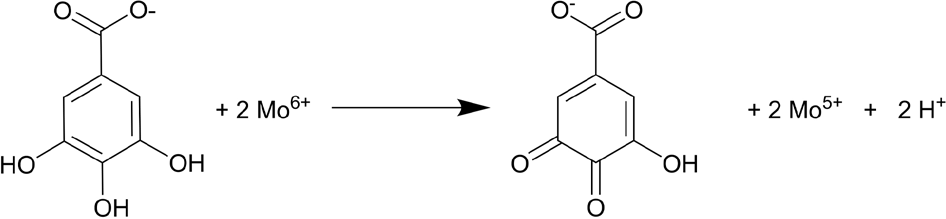
In general, the total phenolic content is determined using the Folin-Ciocalteu method, which employs a reagent based on redox reactions with phenolic compounds. This reagent contains sodium tungstate (Na2WO4·2H2O) and sodium molybdate (Na2MoO4·2H2O) dissolved in a strongly acidic medium composed of concentrated hydrochloric acid and phosphoric acid. Figure 1 illustrates the reaction between a reducing phenolic compound and the Folin-Ciocalteu reagent. In the presence of phenolic compounds, these metallic species are reduced to lower oxidation states (V and VI), forming mixed molybdenum-tungsten complexes. The formation of the reduced heteropolymetalate anion (PMoW11O40)4- is responsible for the characteristic coloration of the method.47-49
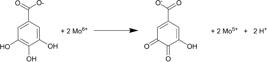
Reaction between a phenolic compound and Folin-Ciocalteu reagent (adapted from Boroski et al.49).
Natural extracts have shown promise as natural antioxidant agents in packaging due to the presence of phenolic compounds.50 Cookies coated with an antioxidant film composed of gum arabic and chitosan containing 0.1% grape seed extract showed an increase in total phenolic content, rising from 1.39 ± 0.01 μg gallic acid g-1 by dried weight in the control samples to 1.63 ± 0.03 μg gallic acid g-1 by dried weight in the coated cookies, demonstrating greater antioxidant capacity and potential to reduce peroxide formation during storage.51 In another study, Shiekh et al.33 reported that the simultaneous increase in total phenolics, evaluated by the Folin-Ciocalteu method, and DPPH• radical-scavenging activity indicates that the ethanolic extract of cashew peel releases compounds from the cellular matrix and provides antifungal action when incorporated into chitosan films. Thus, the presence of phenolic compounds reflects the antioxidant potential, highlighting the effectiveness of the coating in slowing oxidation and extending shelf life.50
In recent years, various chromatographic techniques have enabled the profiling of broad metabolic signatures, supporting the identification and quantification of key markers in plant species. Gas chromatography coupled with mass spectrometry (GC-MS) has been recommended for the analysis of primary metabolites such as amino acids, fatty acids, carbohydrates, and organic acids, while liquid chromatography (high-performance - HPLC or ultra-high-performance - UHPLC) coupled with mass spectrometry (MS), has been highlighted for the detection of secondary metabolites, including alkaloids, saponins, phenolic acids, flavonoids, and glycosides.52,53
The integration of untargeted analyses with targeted approaches using triple quadrupole mass spectrometers in multiple reaction monitoring (MRM) mode can substantially enhance the selectivity, sensitivity, and linearity of quantitative measurements.54 However, semiquantitative methodologies still constrain the reliable determination of absolute concentrations.52 In addition, a considerable proportion of metabolites may remain tightly bound to the sample matrix and may not be fully recovered through conventional extraction procedures, which can lead to an underestimation of both total metabolite content and the overall bioactive potential of the sample.17
Although it is one of the most widely used methods, the Folin-Ciocalteu assay exhibits low selectivity because it responds to various reducing agents, which may compromise the accuracy of phenolic quantification and its correlation with antioxidant activity. Moreover, studies evaluating how the structural features of phenolic compounds influence their stability and interactions with polymers in biodegradable films remain limited. Therefore, future investigations should integrate more specific chemical analyses with functional tests under realistic application conditions.
3.2. Flavonoids
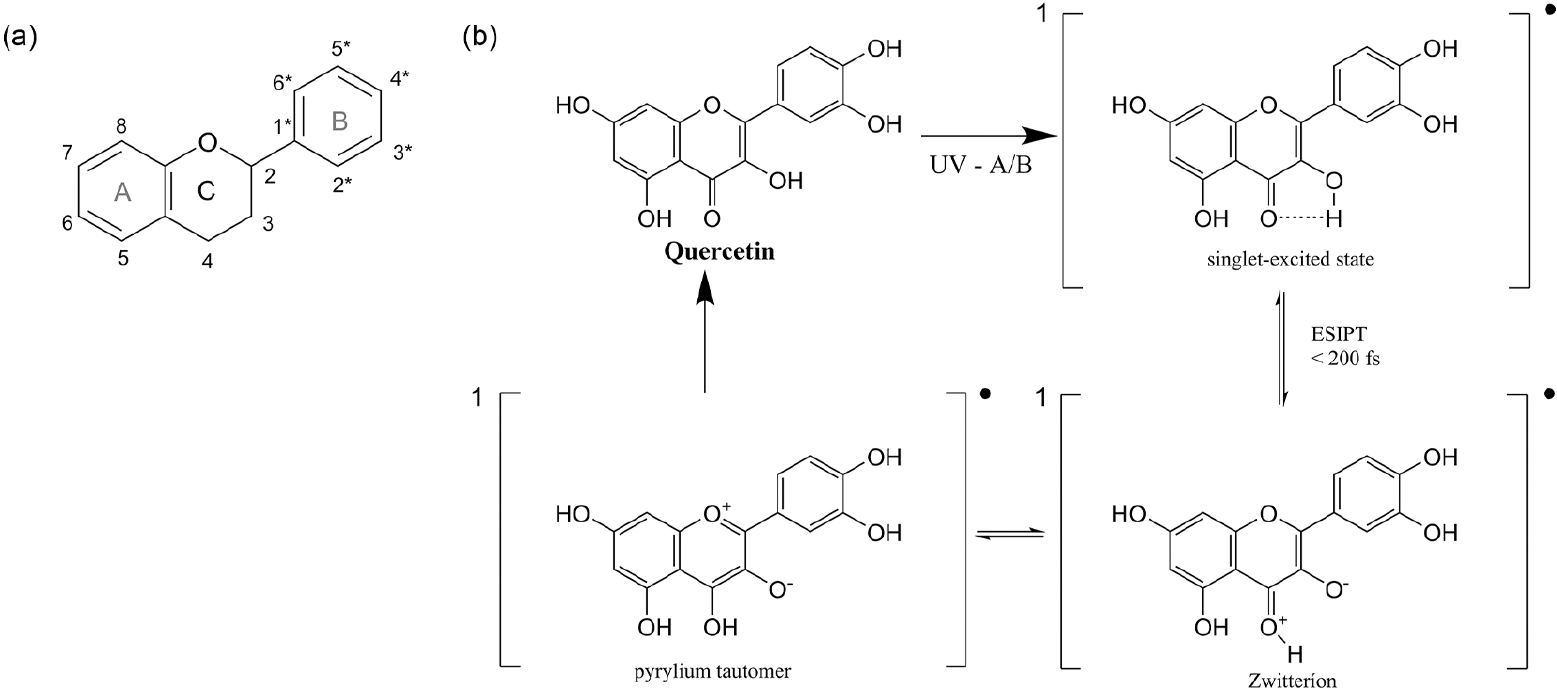
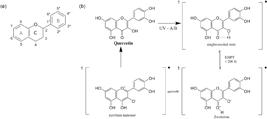
Flavonoids represent one of the most important groups of phenolic compounds present in plants, offering antioxidant, anti-inflammatory, and antiviral properties that provide health benefits.55 Structurally, flavonoids possess a C6-C3-C6 backbone composed of two aromatic rings (A and B) linked by an oxygenated pyran ring derived from the 2-phenylbenzopyran core (Figure 2a). This architecture allows extensive variation in substituents, giving rise to subclasses such as flavones, flavonols, flavanones, and anthocyanins, whose optical and redox properties arise from electronic conjugation and hydroxylation patterns. In addition, the six-membered oxygenated ring contributes to the stabilization of excited species and to the scavenging of free radicals generated in photoinduced processes.56,57
According to Arnoso et al.,59 flavonoids stand out as the most studied and explored group of phenolic compounds. They are found mainly in edible and inedible plants, aglycosylated (aglycone) and glycosylated. In edible plants, they are mainly present in coffee, fruits, vegetables, wine, and others. Thus, they are responsible for the specific pigments and flavors in foods.60
Among the flavonoids, quercetin (Figure 2b) stands out as one of the most efficient antioxidants due to its hydroxylation pattern, particularly the catechol group on the B-ring and the hydroxyl group at C3 conjugated to the carbonyl. This structural arrangement favors hydrogen donation and promotes extensive electronic delocalization of the resulting radical, stabilizing it through resonance across the entire C6-C3-C6 system. Additionally, its extended conjugation enables excited-state intramolecular proton transfer processes that dissipate energy and prevent the formation of reactive species, further enhancing its antioxidant efficiency.57
In addition, recent advances in the characterization of flavonoid chemical groups include the use of ultra-high-performance liquid chromatography coupled to high-resolution mass spectrometry (UHPLC-HRMS), which has opened new possibilities for investigating flavonoid profiles in a wide range of plant species.61,62 The soft ionization achieved by electrospray ionization (ESI), when combined with liquid chromatography mass spectrometry (LC/MS) analysis, produces stable ions of glycosylated flavonoids that can be readily fragmented in MS/MS experiments. The interpretation of MS/MS spectra relies on analyzing fragmentation patterns and comparing them with information available in the literature and public databases.63,64 The study by Chaiwarit et al.65 demonstrated the potential of LC-MS by identifying the flavonoid α-mangostin in mangosteen peel extract and highlighting it as the major contributor to the antibacterial activity of active packaging, since they associated that this compound acts through multiple mechanisms, including disruption of membrane permeability, inhibition of porins, and interference with essential metabolic pathways, while the lipophilicity of phenolic compounds present in the extract enhances their interaction with bacterial membranes, further strengthening the antimicrobial effect.
The study by Liu et al.66 reported that incorporating polyphenolic extracts from pomegranate peel and pulp into κ-carrageenan films significantly increased their tensile strength, reduced water vapor permeability, and improved UV-light barrier capacity, effects attributed to the formation of hydrogen bonds. Similarly, edible chitosan films containing different classes of flavonoids improved the shelf life and color of chilled beef without the need for synthetic preservatives.67 Furthermore, studies with chitosan and gelatin composite films have shown that the incorporation of flavonoids enhances their antioxidant and antibacterial properties, which are influenced by the number and position of hydroxyl groups in the flavonoids.68
The antioxidant activity of flavonoids depends on their molecular structure, yet many studies still focus only on total quantification without considering individual compositional profiles or stability after processing. Their incorporation into films may also influence mechanical and optical properties, an aspect that remains underexplored in literature. Consequently, there is a need for studies that integrate detailed structural characterization with assessments of stability and functional performance in applied systems.
3.3. Sequestration of the ABTS•+ radical
According to Carvalho et al.,69 the ABTS•+ method is based on an electron transfer reaction, in which the antioxidant capacity to capture the ABTS•+ radical cation is evaluated, causing a change in the color of the reaction medium (Figure 3). This method consists of using spectrophotometry to read at 734 nm in pure polyfunctional compounds or complex mixtures.70

Molecular structure of ABTS•+ radical scavenging and its formation by potassium persulfate (adapted from Hernández-Rodríguez et al.71).
The ABTS•+ radical is initially generated by oxidizing the ABTS reagent with potassium persulfate, producing a stable and intensely colored species. In the presence of an antioxidant, this radical is reduced back to its neutral form (ABTS), resulting in a decrease in color intensity proportional to the antioxidant activity of the sample. The percentage of inhibition is determined using Trolox as the standard, which allows the evaluation of both hydrophilic and lipophilic antioxidants under the same analytical conditions.49,72
Unconventional natural sources have been extensively studied as additives capable of imparting reducing properties to biodegradable films, enhancing their functionality.73 For example, sodium alginate films incorporated with cannabidiol isolate interacted with hydroxyl groups in the polysaccharide matrix, resulting in significant antioxidant activity of 21.94% in the ABTS•+ assay, demonstrating their potential for applications in active food packaging.74
Although the ABTS•+ method is widely used due to its sensitivity and its ability to assess both hydrophilic and lipophilic antioxidants, its results can vary considerably depending on experimental parameters such as pH, solvent type, and reaction time, which may hinder comparisons across studies. Moreover, the antioxidant activity measured by this assay does not always reflect the actual performance of these compounds in preventing oxidative processes in more complex matrices, such as foods or biodegradable films. Therefore, it is essential to strengthen the connection between in vitro responses and their effectiveness under practical application conditions.
3.4. Sequestration of the DPPH• radical
The chemical method of DPPH• radical scavenging seeks to evaluate antioxidant capacity quickly and easily (Figure 4) and is widely used for in vitro analysis of plant extracts.75
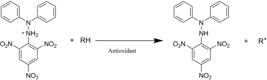
DPPH• is a stable radical composed of two six-carbon aromatic rings and a picryl-hydrazyl group. The latter contains an aromatic ring substituted with three nitro groups (NO2) and a hydrazine moiety. The nitrogen atom directly attached to the ring retains an unpaired electron, which is responsible for the radical character of the compound.49
The experimental procedure must be carried out in a protected environment from light to prevent alterations in reaction dynamics. In the assay, the stable DPPH• radical exhibits a characteristic violet color and a maximum absorbance around 517 nm (515-528 nm).77 When it comes into contact with extracts containing antioxidant compounds, radical scavenging occurs, leading to a decrease in absorbance within this range. This reduction happens because antioxidant molecules donate a hydrogen atom or transfer an electron to DPPH•, stabilizing the unpaired electron located on the nitrogen atom of the radical. As DPPH• is reduced, its violet color gradually shifts to yellow, a change that serves as an indicator of the antioxidant activity of the sample.49,78
Biodegradable cassava starch films incorporated with Baccharis dracunculifolia DC (Asteraceae) leaf powder showed antioxidant activity by the DPPH• method ranging from 0.10 to 3.95 μmol Trolox g-1, highlighting the potential of the plant matrix as a source of active phenolic compounds.79 Similarly, starch films incorporated with propolis extract (0.5-1.0%) reached values between 5 and 13 μmol Trolox g-1 by the same method.80 Thus, the different levels of antioxidant activity demonstrate the potential of unconventional natural sources in making biodegradable films active systems in food packaging.
Although the DPPH• method is widely used, its results can vary depending on factors such as the solvent, reaction time, and the structural characteristics of the antioxidants, which can hinder comparisons across studies. Moreover, the antioxidant activity measured in vitro does not always reflect the performance of these compounds when incorporated into biodegradable films, due to factors such as matrix interactions and stability. Therefore, studies that more clearly relate chemical composition to antioxidant action and that compare different evaluation methods are still needed.
3.5. Ferric reducing antioxidant power (FRAP)
According to Benzie and Devaki,81 FRAP is a method for determining antioxidant capacity that consists of reducing ferric ions through the action of reducing compounds present in the sample. This method is an alternative for determining iron reduction in biological fluids and aqueous solutions of pure compounds. In addition, it is a method constantly used in studies of antioxidant capacity in food and beverage extracts, being considered a simple and low-cost method.82
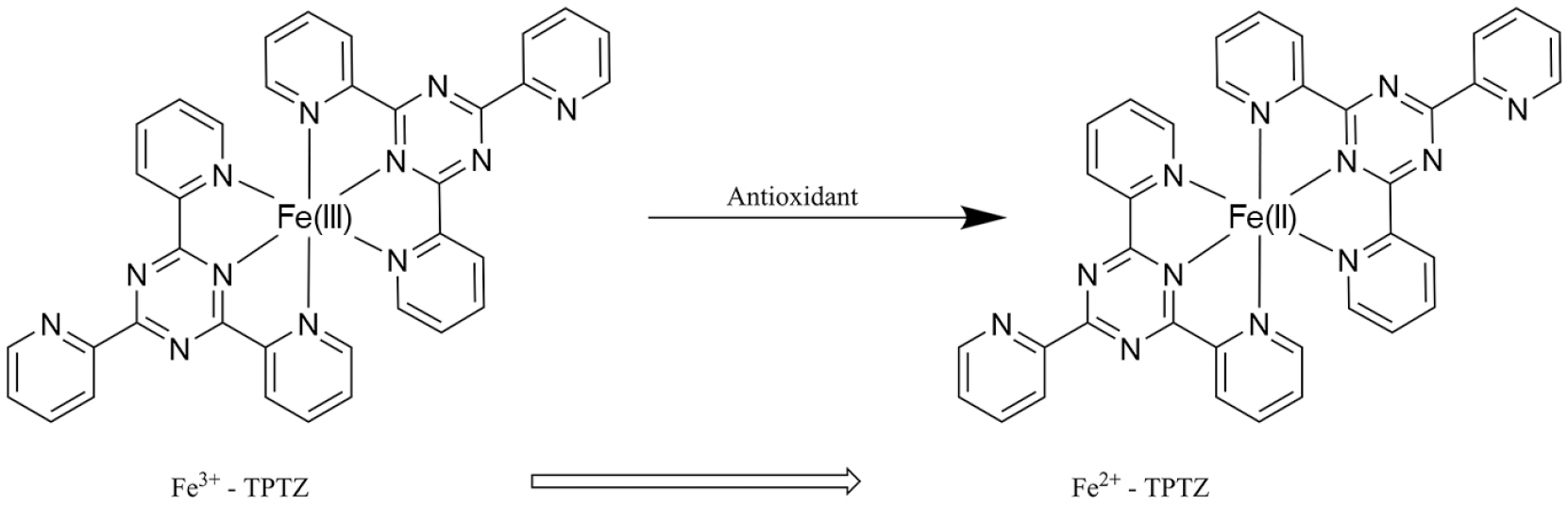
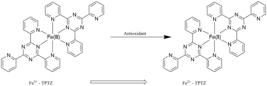
The FRAP assay is based on electron-transfer reactions in which the reagent contains the oxidized complex formed by ferric chloride (FeCl3) and tripyridyl triazine (TPTZ), with iron in the +III oxidation state (Fe3+). When exposed to reducing agents (antioxidants), this ferric complex is converted to its ferrous form (Fe2+), generating the intensely blue [Fe2+-TPTZ] complex (Figure 5). This electronic transition, which corresponds to the reduction of ferric to ferrous species and is analogous to the behavior observed in hexacyanoferrate-based systems, leads to a color change from the initial yellow to green and then blue, proportional to the reducing power of the compounds.49,83
Clitoria ternatea L. flowers are rich in bioactive compounds, notably phenols, flavonoids (such as anthocyanins, kaempferol, and myricetin), tannins, alkaloids, vitamins, proteins, and carbohydrates.86 Carboxymethylcellulose-based films showed a significant increase in antioxidant activity with the incorporation of the aqueous extract of Clitoria ternatea L. flowers, reaching the highest value by the FRAP method (index of time for 50% response (IT0.5) = 0.64 mg mL 1).87 This result highlights the potential of the bioactive compounds present in the extract to confer functional properties to the material, contributing to its application in active packaging systems.87,88
Although the FRAP assay is simple and widely used, it is limited to measuring reducing capacity through electron-transfer reactions, which may not capture all antioxidant mechanisms present in complex extracts. As a result, its outcomes can lead to restricted interpretations and may not accurately reflect the actual performance of antioxidants in biodegradable films or food matrices. Therefore, it is important to expand studies that compare different analytical methods and evaluate antioxidant behavior directly within applied systems.
3.6. Thiobarbituric acid reactive substances (TBARS)
The TBARS method is widely used to assess lipid peroxidation in foods and natural extracts. It is based on the reaction of thiobarbituric acid (TBA) with malondialdehyde (MDA), a secondary product of lipid oxidation, forming a pink dye complex that can be quantified spectrophotometrically. The intensity of the color is proportional to the concentration of MDA present in the sample, allowing the degree of lipid oxidation to be estimated.89,90 During the assay, the TBA-MDA complex is formed, as illustrated in Figure 6. The reaction principle involves the condensation of two molecules of TBA with MDA, resulting in a stable conjugated adduct whose extended structure enables strong visible absorption, producing the characteristic pink pigment.92

Reaction of thiobarbituric acid (TBA) with malondialdehyde (MDA) (adapted from Jîtcă et al.91).
For analysis, samples are usually prepared in an aqueous or lipid medium, adding TBA in an acidic medium and heating the mixture in a water bath for a specified time. After the reaction, the complex formed is cooled and the absorbance is measured at a specific wavelength, usually 532 nm, using spectrophotometry. The results can be expressed in µM of MDA, allowing comparisons between different samples and experimental conditions.93
The incorporation of zein sulfate-curcumin-quercetin-chondroitin nanoparticles into cold plasma-modified chitosan films reduced lipid oxidation (TBARS value) in packaged fish by 42.86% and extended shelf life at 4 °C to 8 days, twice that of conventional film. Thus, the incorporation of nanoparticles significantly increased the antioxidant activity of the film, which can be attributed to the high free radical scavenging capacity of curcumin and quercetin, presenting a promising alternative for the development of active packaging.94,95
The TBARS method is widely used to assess lipid peroxidation, but its results may vary depending on factors such as temperature, reaction time, and matrix characteristics. However, when evaluating the antioxidant activity of active films, there are still few studies that relate these results to the stability of the incorporated compounds or to the behavior of the materials under different storage conditions. Therefore, standardizing the assay and incorporating complementary methods are essential for obtaining a more reliable assessment of antioxidant effectiveness.
4. Unconventional Edible Sources Alternatives for Bioactive Compounds
In the food industry, various antioxidants such as vitamins, minerals, plant compounds, and enzymes have long been used to stabilize reactive forms of oxygen, slowing down the oxidation of lipids, especially unsaturated ones.96 In this context, several classes of plant-derived compounds, including polyphenols (such as flavonoids and phenolic acids) and carotenoids, stand out as promising candidates for new formulations aimed at reducing lipid oxidation and extending food shelf life.97 Polyphenols found in fruits and spices are effective in neutralizing free radicals,98,99 while carotenoids such as lycopene and β-carotene act in the deactivation of reactive oxygen species.100 Both groups have been highlighted as promising for use in active packaging systems.101 Examples include double-layer biopolymeric films incorporated with aqueous extracts of Clitoria ternatea flowers, whose high delphinidin content provides characteristic coloration and antioxidant activity, reinforcing their strong potential as active packaging materials, particularly for products susceptible to oxidation, such as vegetable fats.29
In Brazil, the most commonly used synthetic antioxidants are BHA, BHT, and tert-butylhydroquinone (TBHQ).1 However, studies have indicated a possible carcinogenic effect associated with excessive consumption of these compounds.96 In today’s diet, people have been consuming larger amounts of foods rich in unsaturated fats, which also contain BHA, BHT, and TBHQ in their formulation. Thus, the interest in natural antioxidants is aligned with the need to meet the desires of the consumers for healthier foods.102,103
Although Brazil stands out globally in grain production, according to Polmann et al.104 and Silva et al.,105 the country has one of the highest levels of biodiversity on the planet. According to Nelson,106 monocultures with tropical crops (corn and rice) have been affected by climate change and have consequently altered the food culture of the country, increasing the risk of food insecurity. The exploitation and consumption of other sustainable species, or even those that were consumed by our ancestors, is one of the alternatives to the long-term food production chain.107
Unconventional edible sources refer to plant species with edible parts of relevant nutritional value that are not yet widely cultivated or commonly available in major markets.108 These sources include plant species that are little known or infrequently consumed, often found in home gardens or wild environments, with restricted traditional use and nutritional and functional potential that remains underexplored.109 These criteria distinguish them from conventional crops and highlight their value as sustainable alternatives for promoting food security.1
According to Liberato et al.,110 some plant species present in our environment have high potential for human consumption, but due to a lack of knowledge, they are often undervalued, ignored, and categorized as shrubs or weeds. In this sense, some species are known as unconventional food plants (UFPs), which is the name given to this group of plants that are not conventionally cultivated and marketed but have edible parts and can be an important source of essential nutrients in the diet.109
Among unconventional food sources as alternatives for bioactive compounds, the UFPs are still little known or little used, due to low familiarity among the population and the loss of traditional knowledge. These species include fruits, leaves, roots, seeds, stems, or flowers of wild plants that grow spontaneously in nature, encompassing a large and interesting diversity, in addition to nutritional potential. In addition, these plants contain bioactive compounds that can benefit human health, highlighting their value as sustainable food sources.111
According to Barbosa et al.,112 beyond their nutritional components, UFPs are also cultivated and marketed for their social and ecological importance, particularly due to their strong association with family farming. As a result, several initiatives have been undertaken by public and private institutions to promote the inclusion of unconventional food plants in daily diets through expanded production, consumption, and commercialization.113 However, these benefits remain largely unknown to most of the population, which limits both their consumption and their market development.112
In view of the above, it is important to understand UFPs as promoters of food diversity. According to Durigon et al.,114 they are often used only for finishing and garnishing culinary dishes, but their potential goes far beyond these aspects and can meet various social demands and issues. Thus, they are considered strategies and can be incorporated into various sectors of daily life to promote food security and sovereignty, as well as to enhance agroecological practices, generate income, and supply the industrial demands of the food sector.115,116
Several UFPs stand out for their high potential as sources of bioactive compounds. “Ora-pro-nóbis” (Pereskia aculeata) is notable for its high leaf protein content, as well as carotenoids and soluble fibers, making it a promising alternative for developing functional ingredients in food products.117 Taioba (Xanthosoma sagittifolium) contains flavonoids, vitamin C, and minerals, and has considerable industrial potential as a starch source.118 Another relevant species is purslane (Portulaca oleracea), recognized for its content of omega-3 fatty acids (linolenic acid - ALA), tocopherols, and polyphenols, and considered a low-cost matrix for producing antioxidant extracts.119
According to de Oliveira et al.,8 unconventional edible sources in Brazil are used to refer to certain groups of cultivated, native, and wild plants that are little known to the general public but stand out for their gastronomic and nutritional potential. In this sense, some edible flowers are considered UFPs and have been explored and researched, characterized as functional foods due to their interesting nutrients (fiber, vitamins, and minerals) and antioxidant and anti-inflammatory properties.120
There is growing interest in the food industry in edible flowers, as many have great potential in terms of phytochemical compounds, especially polyphenols and compounds with antioxidant activity and therapeutic properties in the prevention of chronic noncommunicable diseases.121 Thus, they are an innovative food with various applications in the production chain and could be a strong potential niche market in Brazil.107
In addition to UFPs, other underexplored food matrices also stand out for their high concentrations of bioactive compounds and their potential for various industrial applications. An important example includes edible agro-industrial by-products, such as peels, seeds, stems, and leaves, commonly discarded during the processing of fruits and vegetables.122 Despite being underutilized, these materials are important sources of nutrients and secondary metabolites with functional properties. Beet by-products, for instance, contain high levels of betalains, natural pigments with notable antioxidant potential.123 Similarly, carrot pomace is a relevant source of β-carotene, a carotenoid associated with both antioxidant activity and provitamin A function.122 Therefore, the recovery of these metabolites from plant by-products has been widely highlighted as a sustainable strategy for producing high-value food ingredients.
Although these food sources exhibit notable nutritional value and antioxidant activity, additional research is needed to evaluate their stability, extract standardization, and feasibility for industrial-scale applications. Furthermore, chemical variability among species and the limited availability of toxicological studies or assessments of their interactions with polymeric matrices may restrict their use in active packaging. Therefore, expanding investigations that address both their bioactivity and safety is essential to support their application in food and packaging systems.
5. Active Packaging Based on Unconventional Natural Sources
Food packaging is essential for preserving sensory and nutritional characteristics, acting as a physical barrier against external factors.124 The environmental impacts associated with conventional plastics motivate the development of sustainable alternatives, such as active biodegradable films produced from biopolymers and food-grade additives.125,126 These films reduce the transfer of moisture, oxygen, and solutes and can be applied directly to food or as independent films, using mainly polysaccharides, proteins, and lipids to ensure biodegradability and functionality.127
The use of unconventional food sources, including agro-industrial waste and native plants, allows for the extraction of macromolecules and bioactive compounds, such as polyphenols, vitamins, proteins, lipids, and natural pigments, which confer technological properties to the films.73 These active packaging materials differ from conventional ones in that they incorporate substances capable of interacting with food or the environment, extending shelf life and preserving quality attributes. Natural antioxidants, for example, minimize the oxidation of lipids, pigments, and proteins, maintaining freshness and stability.128,129
In recent years, the exploitation of emerging natural resources, including antioxidants, pigments, polysaccharides, proteins, and essential oils from waste or unconventional sources, has intensified in the active packaging sector.73,101,130-134 In the formulation of films, polymers are solubilized or dispersed, enabling the addition of plasticizers, crosslinkers, antioxidants, or antimicrobials, which provide flexibility, mechanical strength, and barrier properties.124,135 Thus, enriched materials act synergistically, actively protecting food.126
Polysaccharides stand out for their biodegradability, renewability, and abundance, making them a promising alternative to synthetic plastics due to their ease of extraction, low cost, thermoplasticity, and excellent film-forming properties.136 They are widely used in biodegradable films, allowing modification of characteristics such as solubility, loads, and structure through variations in pH, temperature, and salts.137 For food applications, they must be classified as Generally Recognized as Safe (GRAS) substances, ensuring their safe use. These biopolymers provide an excellent oxygen barrier and have functional groups that allow the incorporation of natural dyes, antioxidants, and flavorings.137,138
The most commonly used plant-based proteins in packaging production include soy protein isolate, wheat gluten, corn zein, egg white, gelatin, and collagen, although alternative plant sources are also being studied.132 Edible films produced from plant proteins offer good film formation, an efficient gas barrier, and adequate mechanical properties, such as tensile strength and elongation.139 In addition, these proteins are compatible with vegan diets and provide additional benefits, such as functional diversity, potential for incorporation of active ingredients, and economic viability. The inclusion of plant extracts or residues can further increase the antimicrobial protection of the films, thanks to the presence of phenolic compounds.140
The incorporation of bioactive compounds into matrices composed of polysaccharides or proteins profoundly alters their internal structure and, consequently, their mechanical, thermal, and water vapor and gas barrier properties. Regarding thermal properties, these molecules interact with the matrix through hydrophobic forces and hydrogen bonding, bringing the chains closer together and reorganizing the polymer network. Phenolic compounds may also form covalent cross-links that increase rigidity and reduce intermolecular spacing. Mechanical properties are likewise influenced, as the same hydrophobic interactions and hydrogen bonds strengthen the matrix; the hydroxyl groups of phenolics contribute to this stability by interacting with hydrogen acceptors in proteins.141,142
Additionally, the incorporation of bioactive compounds into films has been widely investigated using Fourier-transform infrared spectroscopy (FTIR), a key technique for identifying intermolecular interactions and structural alterations at the molecular level.143 Changes in vibrational modes and shifts in functional bands allow the detection of chemical modifications resulting from the presence of plant extracts, which reorganize the polymeric matrix. This behavior was demonstrated by Hajirostamloo et al.,144 who showed that FTIR is effective for revealing the formation of new hydrogen bonds in films produced from soy protein isolate and Alyssum homolocarpum seed gum incorporated with carrot seed and pomegranate peel extracts, leading to intensified intermolecular interactions and improved physical and mechanical properties. Complementarily, Rahmawati et al.30 highlighted the use of FTIR in the characterization of edible films developed from durian (Durio zibethinus) seeds with added hibiscus flower (Hibiscus sabdariffa L.) extract, showing that film formation involved chemical blending processes with the incorporation of functional groups, emphasizing the contribution of polyphenols (OH groups) derived from phenolic compounds, known for their antioxidant activity.
Complementarily, differential scanning calorimetry (DSC) analysis allows the evaluation of the effects of bioactive compound incorporation on the thermal properties of films, detecting changes in glass transition (Tg), melting (Tm), and degradation temperatures. Modifications in these parameters indicate alterations in molecular mobility and thermal stability resulting from chemical interactions between the bioactives and the polymeric matrix. For instance, reductions in Tm may reflect weakened intermolecular interactions, whereas increases in Tg or Tm may suggest the formation of additional hydrogen bonds that restrict chain mobility. Studies on films containing antioxidant bamboo leaf extract demonstrated an increase in Tm and progressive changes in Tg due to the partial obstruction of interactions between macromolecules by short chains from the extract.32 Furthermore, thermograms exhibiting well-defined endothermic peaks or the absence of melting can provide insights into the miscibility, amorphous structure, and thermal stability of the samples, as observed in pectin films blended with various bioactive compounds.143,145
On the other hand, lipids, including fatty acids, acylglycerols, essential oils, and waxes, have been shown to be fundamental in improving the barrier, antimicrobial, antioxidant, and mechanical properties of edible films. The addition of lipids to films confers flexibility, hydrophobicity, and cohesion, which improves the film’s resistance to factors such as moisture and oxygen. In addition, lipids and essential oils have promising natural antimicrobial characteristics that can combat the growth of microorganisms and increase food safety.146 Edible lipid coatings are effective in maintaining food quality, as they act as barriers against moisture and, to a certain extent, also against oxygen.147 In addition, the hydrophobic interactions they promote contribute to reducing water vapor permeability, one of the main causes of food spoilage.148
Therefore, compounds from unconventional sources, such as agro-industrial waste and native plants, have been increasingly incorporated into edible films and coatings, showing great potential in extending the shelf life of food and adding value to this waste. Bioactive compounds with antioxidant, antimicrobial, and functional properties are essential for the creation of active packaging. Natural antioxidants, such as polyphenols and flavonoids, help preserve food freshness by slowing the oxidation of lipids and pigments. These sustainable alternatives are establishing themselves as effective solutions for optimizing the performance of biodegradable packaging.8
Furthermore, the incorporation of natural bioactive compounds into polymeric matrices has proven to be an effective strategy to enhance functionality and accelerate the biodegradation of these materials. These compounds can modify the structural organization of the polymer by establishing hydrophilic and hydrophobic interactions, which influence cohesion, wettability, and consequently, the physical performance of the material. Additionally, the presence of bioactives can enable the controlled release of antimicrobial molecules, capable of altering the microbial balance around the material and impacting its stability. The alteration in microbial dynamics, combined with the structural changes induced in the polymer, promotes disintegration and contributes to a more efficient degradation process.14
Table 1 presents a summary of recent studies that explored the use of different natural matrices to obtain macromolecules and bioactive compounds with potential application in active biodegradable packaging, highlighting the compounds of interest and their technological functions.
Application of biocomposites from unconventional sources in the production of active and sustainable packaging
Table 1 highlights the diversity of unconventional natural matrices applied in active biodegradable packaging. Comparative analysis of the studies shows that different classes of compounds play complementary roles in film formation and functionality. In general, polysaccharides, proteins, and lipids confer film formation, mechanical strength, and plasticization.150,153,158 Polysaccharides, such as pectin from Luffa cylindrica peel12 and tamarind seed peel150 tend to form more homogeneous films with good gelling capacity and light barrier properties, characteristics attributed to their highly hydrophilic structure and ability to form stable three-dimensional networks. In contrast, proteins from sources such as Clitoria ternatea flower and soy protein isolate28 exhibit superior mechanical performance, providing higher tensile strength and flexibility. Additionally, lipids, including carnauba wax and lipid fractions from fruits such as Acrocomia aculeata,152 act primarily as natural plasticizers, reducing polymer matrix rigidity and increasing hydrophobicity. Overall, these compounds are particularly effective in reducing water vapor permeability, making them especially suitable for packaging applications where moisture barrier properties are critical. Regarding bioactive compounds, phenolics, carotenoids, anthocyanins, and betalains play distinct and complementary roles, providing antioxidant, antimicrobial, and stimulus-responsive properties, highlighting the potential of these sources for active, intelligent, and sustainable films.157,159,160
Extracts rich in phenolic compounds, such as açai seed flour,107 hibiscus flower (Hibiscus sabdariffa L.),30 and Moringa oleifera,34 exhibit strong antioxidant activity while also enhancing the physical and structural properties of the polymer matrix. Carotenoids present in Brosimum gaudichaudii156 demonstrate stability and significant antioxidant capacity, in addition to acting as natural colorants, being particularly effective in protecting against lipid oxidation. On the other hand, anthocyanins from Clitoria ternatea flower28 and betalains from Celosia cristata157 stand out not only for their antioxidant activity but also for their sensitivity to pH variations and volatile compounds such as ammonia, making them ideal components for the development of intelligent packaging.
Overall, comparison across studies indicates that each class of compound contributes in a specific manner: polysaccharides provide film formation and homogeneity; proteins enhance mechanical strength; lipids improve barrier properties; and phenolic compounds and natural pigments exhibit antioxidant activity and the most promising functions for active and intelligent packaging. Thus, the use of unconventional natural sources rich in bioactives emerges as a versatile and sustainable approach, capable of enhancing the structural and functional properties of films and expanding the applications of biodegradable packaging in the food sector.
6. Contributions to Sustainability through the Valorization of Unconventional Edible Sources
The valorization of unconventional edible sources is a promising strategy for sustainability, transforming agro-industrial waste and food by-products into high value-added resources.122,161 The full use of these foods contributes to waste reduction and stimulates the creation of new products and materials with functional and nutritional properties, integrating circular economy practices and technological innovation. Thus, an effective approach to promoting ethical and environmentally balanced solutions in the food and packaging industry is evident.162
The packaging sector has great potential for transformation, driven by growing demand for sustainable solutions and concern about the environmental impacts of conventional materials.163 Bioplastics from renewable sources and agro-industrial waste are emerging as promising alternatives, capable of reducing waste and promoting sustainability. Although challenges related to production costs and durability still exist, technological innovations and the application of the circular bioeconomy make these materials viable.164 Agricultural by-products can be converted into biodegradable, ecological, and functional biopolymers, increasing production efficiency and preserving bioactive compounds. The continuous development of processes allows for cost reduction and resource optimization, strengthening industrial sustainability.165,166
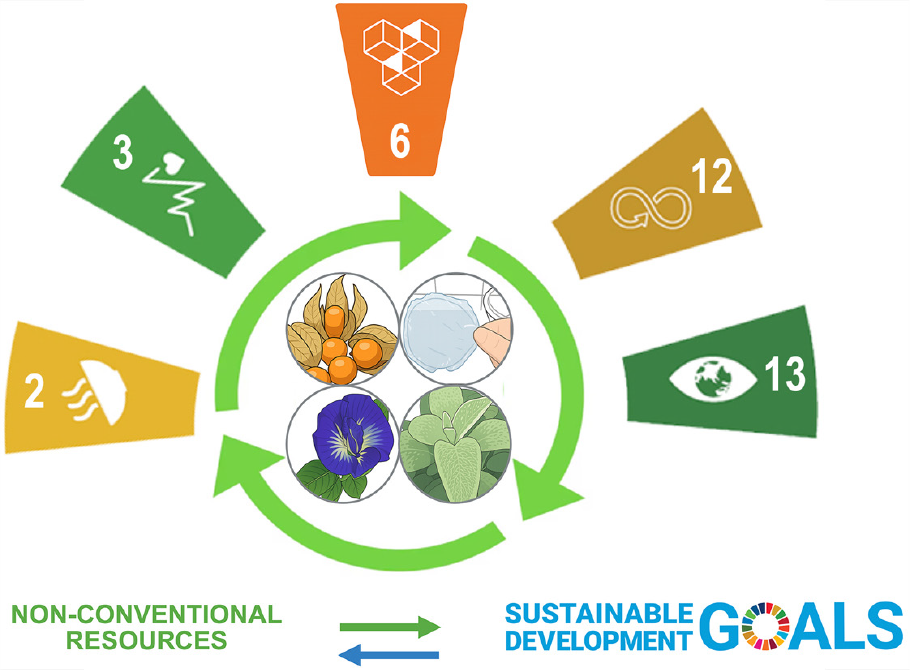
The study of materials derived from unconventional edible sources also directly contributes to the Sustainable Development Goals (SDGs), as highlighted in Figure 7, demonstrating the integration of science, technology, and sustainability to generate solutions with social, economic, and environmental impact. Plant residues such as peels, seeds, and leaves contain diverse chemical classes, including bioactive compounds such as phenolics, vitamins, fibers, structural polysaccharides, proteins, and lipids, which can be used in the development of more sustainable materials.1,167

Sustainable potential related to the valorization of unconventional edible sources for use in sustainable packaging.
Figure 7 highlights that the efficient use of plant by-products contributes to economically viable alternatives and food security, aligning with SDG 2 (Zero Hunger).1,167 The extraction of natural antioxidants from fruit and vegetable processing by-products directly supports the reduction of food waste and the more efficient use of agricultural resources.168,169 Furthermore, the incorporation of natural bioactive compounds into biopolymers and active packaging can reduce human exposure to potentially toxic synthetic antioxidant additives, while also emphasizing the importance of minimizing the use of petroleum-based packaging, thus supporting SDG 3 (Good Health and Well-Being).1,167 Natural antioxidants can replace synthetic additives both in food production and in the manufacture of active packaging.170 When incorporated into films, these compounds act directly to prevent oxidative reactions during storage, contributing to safer and more sustainable packaging systems.171
The development of new products and active packaging from unconventional sources also aligns with SDG 9 (Industry, Innovation, and Infrastructure) and SDG 12 (Responsible Consumption and Production). Transforming fibers, plant proteins, and starches into biopolymers, nanocellulose, and biodegradable films drives innovative and environmentally friendly solutions.172-174 In this way, naturally derived molecules can offer alternatives to petroleum-based polymers, enhancing environmental care and supporting circular economy practices.175 Polymers obtained from natural sources have the potential to functionally interact with food products, providing antioxidant, antimicrobial, and aromatic properties that improve food safety and quality.176 Beyond environmental benefits, innovation in biodegradable packaging based on natural polymers promotes the valorization of underutilized products and waste within the food chain.156
Minimizing the environmental impacts associated with plastics and underutilized plant waste contributes to SDG 13 (Climate Action). Bioplastics derived from polysaccharides and lignin have a lower carbon footprint, mitigating emissions related to the lifecycle of synthetic plastics and supporting adaptation to climate change.177-179 Therefore, the innovation of polymers derived from agricultural and food waste represents a strategic approach to sustainability by reducing dependence on non-renewable materials. Transforming agro-industrial by-products into high-value raw materials enables the development of biodegradable films and packaging, strengthening the circular economy and providing functional properties to foods.156,176,180
The valorization of unconventional edible sources underscores the importance of science aimed at protecting human health, mitigating climate change, and promoting a more balanced and resilient future. Awareness campaigns remain essential to enhance social responsibility and encourage more sustainable consumption and production practices.176 Studies rarely address, in an integrated manner, the variability of raw materials, technological feasibility, regulatory requirements, and environmental impacts. Therefore, future reviews should identify trends, highlight limitations, and provide recommendations to guide the development of sustainable packaging based on these resources.
7. Final Considerations
The findings indicate that unconventional edible sources represent a valuable alternative for obtaining natural antioxidant compounds, with the capacity to replace synthetic antioxidants. The incorporation of plant extracts from these sources into biodegradable polymers has great potential for the development of active and smart packaging. This packaging not only contributes to extending shelf life but also represents an innovative strategy for the use of bioactive compounds that are still largely unexplored in the industry. Thus, the use of unconventional sources reinforces sustainability, expands the functionality of packaging, and offers promising solutions for the food industry to the use of traditional polymers, which have a high environmental impact.
Acknowledgments
The authors would like to thank the CAPES and the CNPq for funding.
Data Availability Statement
Data will be made available on request.
References
-
1 Bruni, A. R. S.; Alves, E. S.; Campos, T. A. F.; Carvalho, L. C.; Santos Jr., O. O.; J. Braz. Chem. Soc. 2025, 36, e-20250074. [Crossref]
» Crossref -
2 Luo, M.; Zhang, R.-Y.; Zheng, Z.; Wang, J.; Ji, J.-B.; J. Braz. Chem. Soc. 2012, 23, 241. [Crossref]
» Crossref -
3 Ren, J.; Li, Z.; Li, X.; Yang, L.; Bu, Z.; Wu, Y.; Li, Y.; Zhang, S.; Meng, X.; Foods 2025, 14, 1095. [Crossref]
» Crossref -
4 Pruteanu, L. L.; Bailey, D. S.; Grădinaru, A. C.; Jäntschi, L.; Antioxidants 2023, 12, 860. [Crossref]
» Crossref -
5 Jaouhari, Y.; Travaglia, F.; Giovannelli, L.; Picco, A.; Oz, E.; Oz, F.; Bordiga, M.; Foods 2023, 12, 2183. [Crossref]
» Crossref -
6 Rahaman, M. M.; Hossain, R.; Herrera-Bravo, J.; Islam, M. T.; Atolani, O.; Adeyemi, O. S.; Owolodun, O. A.; Kambizi, L.; Daştan, S. D.; Calina, D.; Sharifi-Rad, J.; Food Sci. Nutr. 2023, 11, 1657. [Crossref]
» Crossref -
7 Deshmukh, R. K.; Akhila, K.; Ramakanth, D.; Gaikwad, K. K.; Int. J. Biol. Macromol. 2022, 201, 1. [Crossref]
» Crossref -
8 de Oliveira, I.; Salgado, J. M. R. T.; Lopes, J. K.; Carocho, M.; da Silveira, T. F. F.; Garcia, V. A. S.; Calhelha, R. C.; Santos Buelga, C.; Barros, L.; Heleno, S. A.; Sustainability 2025, 17, 6718. [Crossref]
» Crossref -
9 Peisino, M. C. O.; Zouain, M. S.; de Christo Scherer, M. M.; Schmitt, E. F. P.; Toledo e Silva, M. V.; Barth, T.; Endringer, D. C.; Scherer, R.; Fronza, M.; Waste Biomass Valorization 2020, 11, 4691. [Crossref]
» Crossref -
10 Almasi, H.; Jahanbakhsh Oskouie, M.; Saleh, A.; Crit. Rev. Food Sci. Nutr. 2021, 61, 2601. [Crossref]
» Crossref -
11 Vasile, C.; Baican, M.; Molecules 2021, 26, 1263. [Crossref]
» Crossref -
12 Li, M.; Liu, Y.; Liu, T.; Xue, J.; Qin, R.; Li, H.; Jiang, L.; Chem. Eng. J. 2025, 507, 160194. [Crossref]
» Crossref -
13 Li, S.; Liu, L.; Yang, S.; Wang, X.; Yuan, Y.; Yue, T.; Cai, R.; Wang, Z.; Food Hydrocoll. 2025, 158, 110559. [Crossref]
» Crossref -
14 Ordoñez, R.; Atarés, L.; Chiralt, A.; Compr. Rev. Food Sci. Food Saf. 2022, 21, 3910. [Crossref]
» Crossref -
15 Boadi, N. O.; Badu, M.; Kortei, N. K.; Saah, S. A.; Annor, B.; Mensah, M. B.; Okyere, H.; Fiebor, A.; Sci. African 2021, 12, e00801. [Crossref]
» Crossref -
16 Corrêa, R. C. G.; Garcia, J. A. A.; Correa, V. G.; Vieira, T. F.; Bracht, A.; Peralta, R. M. In Functional Food Ingredients from Plants; Ferreira, I. C. F. R.; Barros, L., eds.; Elsevier: London, UK, 2019, ch. 5. [Crossref]
» Crossref -
17 Friedrichsen, J. S. A.; de Campos, T. A. F.; da Silva, N. M.; dos Santos, P. D. S.; de Zangirolami, M. S.; Raspe, D. T.; da Silva, C.; Santos, O. O.; Food Chem. 2025, 494, 146152. [Crossref]
» Crossref -
18 Artilha-Mesquita, C. A. F.; Stafussa, A. P.; dos Santos, P. D. S.; Santos, O. O.; da Costa, S. C.; Madrona, G. S.; Plants 2024, 13, 2065. [Crossref]
» Crossref -
19 Tan, X.; Ding, M.; Wang, C.; Huang, L.; Bai, J.; Foods 2025, 14, 2207. [Crossref]
» Crossref -
20 Branco, I. G.; Moraes, I. C. F.; Argandoña, E. J. S.; Madrona, G. S.; dos Santos, C.; Ruiz, A. L. T. G.; de Carvalho, J. E.; Haminiuk, C. W. I.; Ind. Crops Prod. 2016, 89, 225. [Crossref]
» Crossref -
21 Alshehri, A. A.; Hamed, Y. S.; Kamel, R. M.; Shawir, S. M. S.; Sakr, H.; Ali, M.; Ammar, A.; Saleh, M. N.; El. Fadly, E.; Salama, M. A.; Abdin, M.; Int. J. Biol. Macromol. 2024, 255, 128346. [Crossref]
» Crossref -
22 Chhoden, T.; Aggarwal, P.; Singh, A.; Kaur, S.; Grover, S.; Biomass Convers. Biorefin. 2024, 15, 27575. [Crossref]
» Crossref -
23 Chhoden, T.; Singh, A.; Aggarwal, P.; Kaur, S.; J. Therm. Anal. Calorim. 2025, 150, 6049. [Crossref]
» Crossref -
24 González, F.; Quintero, J.; Del Río, R.; Mahn, A.; Molecules 2021, 26, 4042. [Crossref]
» Crossref -
25 Nirmal, N. P.; Mereddy, R.; Maqsood, S.; Food Chem. 2021, 356, 129611. [Crossref]
» Crossref -
26 Carboni, A. D.; Di Renzo, T.; Nazzaro, S.; Marena, P.; Puppo, M. C.; Reale, A.; Foods 2025, 14, 1719. [Crossref]
» Crossref -
27 Purohit, S. R.; Rana, S. S.; Idrishi, R.; Sharma, V.; Ghosh, P.; Futur. Foods 2021, 4, 100078. [Crossref]
» Crossref -
28 Koshy, R. R.; Reghunadhan, A.; Mary, S. K.; Pillai, P. S.; Joseph, S.; Pothen, L. A.; Curr. Res. Food Sci. 2022, 5, 743. [Crossref]
» Crossref -
29 Grzebieniarz, W.; Tkaczewska, J.; Juszczak, L.; Kawecka, A.; Krzyściak, P.; Nowak, N.; Guzik, P.; Kasprzak, M.; Janik, M.; Jamróz, E.; Food Chem. 2023, 413, 135612. [Crossref]
» Crossref -
30 Rahmawati, S.; Pathuddin; Nuryanti, S.; Dia Afrianti Sangkota, V.; Afadil; Anggraini; Syawaliah, N.; Mater. Today Proc. 2022, 65, 3109. [Crossref]
» Crossref -
31 Oudjedi, K.; Manso, S.; Nerin, C.; Hassissen, N.; Zaidi, F.; Food Control 2019, 98, 216. [Crossref]
» Crossref -
32 He, B.; Wang, W.; Song, Y.; Ou, Y.; Zhu, J.; Int. J. Biol. Macromol. 2020, 164, 1649. [Crossref]
» Crossref -
33 Shiekh, K. A.; Liangpanth, M.; Luesuwan, S.; Kraisitthisirintr, R.; Ngiwngam, K.; Rawdkuen, S.; Rachtanapun, P.; Karbowiak, T.; Tongdeesoontorn, W.; Polymers 2022, 14, 540. [Crossref]
» Crossref -
34 Chan-Matú, D. I.; Toledo-López, V. M.; Vargas, M. L. V.; Rincón-Arriaga, S.; Rodríguez-Félix, A.; Madera-Santana, T. J.; J. Food Meas. Charact. 2021, 15, 4813. [Crossref]
» Crossref -
35 Roy, S.; Ramakrishnan, R.; Afzia, N.; Ghosh, T.; Zhang, W.; Food Biosci. 2024, 62, 105288. [Crossref]
» Crossref -
36 Najafian, L.; Food Funct. 2023, 14, 5835. [Crossref]
» Crossref -
37 Nahar, L.; Habibi, E.; Gavril, G.-L.; Abdelfattah, G. M. M.; Wrona, M.; Nerín, C.; Guo, M.; Sarker, S. D.; Food Bioprod. Process. 2025, 150, 260. [Crossref]
» Crossref -
38 yadav, P.; Makkar, N.; Jain, M.; Prakash, R.; Int. J. Pept. Res. Ther. 2025, 31, 37. [Crossref]
» Crossref -
39 Zhang, R.; Wang, B.; Zhang, F.; Zheng, K.; Liu, Y.; Int. J. Food Microbiol. 2024, 419, 110751. [Crossref]
» Crossref -
40 Salgueiro, F. B.; Castro, R. N.; Quim. Nova 2016, 39, 1192. [Crossref]
» Crossref -
41 Erel, O.; Clin. Biochem. 2004, 37, 112. [Crossref]
» Crossref -
42 Rambabu, K.; Bharath, G.; Banat, F.; Show, P. L.; Cocoletzi, H. H.; Int. J. Biol. Macromol. 2019, 126, 1234. [Crossref]
» Crossref -
43 Danet, A. F.; In Antioxidants - Benefits, Sources, Mechanisms of Action; Waisundara, V., ed.; IntechOpen, 2021. [Crossref]
» Crossref -
44 Shavandi, A.; Bekhit, A. E.-D. A.; Saeedi, P.; Izadifar, Z.; Bekhit, A. A.; Khademhosseini, A.; Biomaterials 2018, 167, 91. [Crossref]
» Crossref -
45 Peeters, K.; Miklavčič Višnjevec, A.; Esakkimuthu, E. S.; Schwarzkopf, M.; Tavzes, Č.; Molecules 2021, 26, 6946. [Crossref]
» Crossref -
46 Maniglia, B. C.; Rebelatto, E. A.; Andrade, K. S.; Zielinski, A.; de Andrade, C. J.; Polyphenols; Springer International Publishing: Cham, 2021. [Crossref]
» Crossref -
47 Ciulu, M.; Cádiz-Gurrea, M. L.; Segura-Carretero, A.; Molecules 2018, 23, 2890. [Crossref]
» Crossref -
48 Platzer, M.; Kiese, S.; Herfellner, T.; Schweiggert-Weisz, U.; Eisner, P.; Antioxidants 2021, 10, 811. [Crossref]
» Crossref - 49 Boroski, M.; Visentainer, J. V.; Cottica, S. M.; Morais, D. R.; Antioxidantes: Princípios e Métodos Analíticos, 1st ed.; Appris: Curitiba, 2015.
-
50 Mirres, A. C. M.; Vieira, I. R. S.; Conte-Junior, C. A.; Food Humanity 2025, 5, 100841. [Crossref]
» Crossref -
51 Molnar, D.; Novotni, D.; Kurek, M.; Galić, K.; Iveković, D.; Bionda, H.; Ščetar, M.; Food Hydrocoll. 2023, 135, 108191. [Crossref]
» Crossref -
52 Pinc, M. M.; Dalmagro, M.; da Cruz Alves Pereira, E.; Donadel, G.; Thomaz, R. T.; da Silva, C.; Macruz, P. D.; Jacomassi, E.; Gasparotto Jr., A.; Hoscheid, J.; Lourenço, E. L. B.; Alberton, O.; Pharmaceuticals 2023, 16, 1173. [Crossref]
» Crossref -
53 D’Urso, G.; Capuano, A.; Fantasma, F.; Chini, M. G.; De Felice, V.; Saviano, G.; Lauro, G.; Casapullo, A.; Bifulco, G.; Iorizzi, M.; Plants 2025, 14, 2284. [Crossref]
» Crossref -
54 Wang, M.; Rao, T.; Gao, Y.; Ren, X.; Man, J.; Li, L.; Li, P.; Ma, F.; Zhang, J.; Sci. Hortic. 2024, 337, 113517. [Crossref]
» Crossref -
55 dos Santos, D. S.; Rodrigues, M. M. F.; Estação Científica 2017, 7, 29. [Crossref]
» Crossref -
56 Balasundram, N.; Sundram, K.; Samman, S.; Food Chem. 2006, 99, 191. [Crossref]
» Crossref -
57 Chandran, G. U.; Kumar, A. A.; Menon, S. K.; Sambhudevan, S.; Shankar, B.; Cellulose 2024, 31, 4733. [Crossref]
» Crossref -
58 Wang, T.; Li, Q.; Bi, K.; Asian J. Pharm. Sci. 2018, 13, 12. [Crossref]
» Crossref -
59 Arnoso, B. J. M.; da Costa, G. F.; Schmidt, B.; Nutr. Bras. 2019, 18, 39. [Crossref]
» Crossref -
60 Meregalli, M. M.; Puton, B. M. S.; Camera, F. D.; Amaral, A. U.; Zeni, J.; Cansian, R. L.; Mignoni, M. L.; Backes, G. T.; Arabian J. Chem. 2020, 13, 5800. [Crossref]
» Crossref -
61 Piccolella, S.; Crescente, G.; Candela, L.; Pacifico, S.; J. Pharm. Biomed. Anal. 2019, 175, 112774. [Crossref]
» Crossref -
62 de Rosso, M.; Panighel, A.; Dalla Vedova, A.; Flamini, R.; J. Mass Spectrom. 2020, 55, e4639. [Crossref]
» Crossref -
63 de Marchi, F.; de Rosso, M.; Flamini, R.; Metabolomics 2022, 18, 37. [Crossref]
» Crossref -
64 Vendramini, C. F.; de Campos, T. A. F.; da Silva, N. M.; Matiucci, M. A.; Alves, E. S.; dos Santos, P. D. S.; Barão, C. E.; de Oliveira, O.; Cardozo-Filho, L.; Feihrmann, A. C.; Processes 2025, 13, 397. [Crossref]
» Crossref -
65 Chaiwarit, T.; Kantrong, N.; Sommano, S. R.; Rachtanapun, P.; Junmahasathien, T.; Kumpugdee-Vollrath, M.; Jantrawut, P.; Molecules 2021, 26, 2265. [Crossref]
» Crossref -
66 Liu, Y.; Zhang, X.; Li, C.; Qin, Y.; Xiao, L.; Liu, J.; Int. J. Biol. Macromol. 2020, 147, 1076. [Crossref]
» Crossref -
67 Sutharsan, J.; Boyer, C. A.; Zhao, J.; Food Hydrocoll. 2023, 139, 108508. [Crossref]
» Crossref -
68 Chen, H.; Wang, Q.; Deng, Y.; Zhang, J.; Wang, Y.; Zhao, H.; Zhu, Y.; Zhang, Y.; Javed, M.; Zhuang, L.; Wang, G.; Int. J. Biol. Macromol. 2024, 282, 137449. [Crossref]
» Crossref -
69 Carvalho, N. C. C.; Monteiro, O. S.; da Rocha, C. Q.; Longato, G. B.; Smith, R. E.; da Silva, J. K. R.; Maia, J. G. S.; Foods 2022, 11, 2079. [Crossref]
» Crossref -
70 Henriquez, C.; Lissi, E.; Bol. Soc. Chil. Quim. 2002, 47 [Crossref]
» Crossref -
71 Hernández-Rodríguez, P.; Baquero, L. P.; Larrota, H. R. In Bioactive Compounds; Campos, M. R. S., ed.; Elsevier, 2019, p. 265. [Crossref]
» Crossref -
72 Sucupira, N. R.; Silva, A. B.; Pereira, G.; Costa, J. N.; J. Health Sci. 2015, 14, 25. [Link] accessed in December 2025
» Link -
73 Santos, L. G.; Martins, V. G.; Int. J. Biol. Macromol. 2024, 262, 130001. [Crossref]
» Crossref -
74 Sukhavattanakul, P.; Thanyacharoen, T.; Chuysinuan, P.; Techasakul, S.; Ummartyotin, S.; Emergent Mater. 2023, 6, 917. [Crossref]
» Crossref -
75 Martins, D.; Barros, L.; Carvalho, A. M.; Ferreira, I. C. F. R.; Food Chem. 2011, 125, 488. [Crossref]
» Crossref -
76 Nithya, P.; Madhavi, C.; J. Taibah Univ. Sci. 2017, 11, 40. [Crossref]
» Crossref -
77 Alves, C. Q.; David, J. M.; David, J. P.; Bahia, M. V.; Aguiar, R. M.; Quim. Nova 2010, 33, 2202. [Crossref]
» Crossref -
78 Silveira, A. C.; Kassuia, Y. S.; Domahovski, R. C.; Lazzarotto, M.; Método de DPPH Adaptado: uma Ferramenta para Analisar Atividade Antioxidante de Polpa de Frutos da Erva-Mate de Forma Rápida e Reprodutível; Embrapa: Brasília, 2018. [Link] accessed in December 2025
» Link -
79 Zanela, J.; Casagrande, M.; Radaelli, J. C.; Dias, A. P.; Wagner Jr., A.; Malfatti, C. R. M.; Yamashita, F.; Food Bioprocess Technol. 2021, 14, 1301. [Crossref]
» Crossref -
80 de Araújo, G. K. P.; de Souza, S. J.; da Silva, M. V.; Yamashita, F.; Gonçalves, O. H.; Leimann, F. V.; Shirai, M. A.; Int. J. Food Sci. Technol. 2015, 50, 2080. [Crossref]
» Crossref -
81 Benzie, I. F. F.; Devaki, M.; The Ferric Reducing/Antioxidant Power (FRAP) Assay for Non-Enzymatic Antioxidant Capacity: Concepts, Procedures, Limitations and Applications; John Wiley & Sons, Ltd: Chichester, UK, 2017. [Crossref]
» Crossref -
82 Gullón, B.; Gullón, P.; Lú-Chau, T. A.; Moreira, M. T.; Lema, J. M.; Eibes, G.; Ind. Crops Prod. 2017, 108, 649. [Crossref]
» Crossref -
83 Verruck, S.; Prudencio, E. S.; da Silveira, S. M.; Rev. Congr. Sul Bras. Eng. Aliment. 2018, 4 [Crossref]
» Crossref -
84 Proestos, C.; Komaitis, M. In Beer in Health and Disease Prevention; Preedy, V. C., ed.; Elsevier: London, UK, 2009, p. 464. [Crossref]
» Crossref -
85 Thaipong, K.; Boonprakob, U.; Crosby, K.; Cisneros-Zevallos, L.; Hawkins Byrne, D.; J. Food Compos. Anal. 2006, 19, 669. [Crossref]
» Crossref -
86 Azahar, S. S.; Raja, P. B.; Ibrahim, M. N. M.; Awang, K.; Zakeyuddin, M. S.; Hamidon, T. S.; Hussin, M. H.; J. Mol. Liq. 2024, 396, 124056. [Crossref]
» Crossref -
87 Szymański, M.; Pawlik, M.; Dobrucka, R.; Food Biosci. 2024, 62, 105047. [Crossref]
» Crossref -
88 Gonçalves, G. C. P.; Rosas, A. L. G.; Sousa, R. C.; Vieira, T. R. R.; Sousa, T. C. A.; Ramires, T.; da Silveira, T. F. F.; Barros, L.; da Silva, W. P.; Dias, Á. R. G.; Zavareze, E. R.; Meinhart, A. D.; Food Chem. 2024, 435, 137575. [Crossref]
» Crossref -
89 Abeyrathne, E. D. N. S.; Nam, K.; Ahn, D. U.; Antioxidants 2021, 10, 1587. [Crossref]
» Crossref -
90 Singh, S.; Singh, R. P.; Food Rev. Int. 2008, 24, 392. [Crossref]
» Crossref -
91 Jîtcă, G.; Fogarasi, E.; Ősz, B.-E.; Vari, C. E.; Tero-Vescan, A.; Miklos, A.; Bătrînu, M.-G.; Rusz, C. M.; Croitoru, M. D.; Dogaru, M. T.; Molecules 2021, 26, 5066. [Crossref]
» Crossref -
92 Ghani, M. A.; Barril, C.; Bedgood, D. R.; Prenzler, P. D.; Food Chem. 2017, 230, 195. [Crossref]
» Crossref -
93 Shen, J.; Zhang, M.; Yang, C.; Food Chem. 2024, 449, 139263. [Crossref]
» Crossref -
94 Yang, T.; Zhang, X.; Wang, F.; Zhang, L.; Yu, D.; Zhang, X.; Xia, G.; Wang, J.; Food Hydrocoll. 2026, 170, 111733. [Crossref]
» Crossref -
95 Yu, Z.; Yu, D.; Dong, J.; Xia, W.; Food Hydrocoll. 2022, 132, 107872. [Crossref]
» Crossref -
96 Esazadeh, K.; Ezzati Nazhad Dolatabadi, J.; Andishmand, H.; Mohammadzadeh-Aghdash, H.; Mahmoudpour, M.; Naemi Kermanshahi, M.; Roosta, Y.; Food Sci. Nutr. 2024, 12, 7004. [Crossref]
» Crossref -
97 Gutiérrez-del-Río, I.; López-Ibáñez, S.; Magadán-Corpas, P.; Fernández-Calleja, L.; Pérez-Valero, Á.; Tuñón-Granda, M.; Miguélez, E. M.; Villar, C. J.; Lombó, F.; Antioxidants 2021, 10, 1264. [Crossref]
» Crossref -
98 Ali, A.; Wu, H.; Ponnampalam, E. N.; Cottrell, J. J.; Dunshea, F. R.; Suleria, H. A. R.; Antioxidants 2021, 10, 721. [Crossref]
» Crossref -
99 Jawhara, S.; Microorganisms 2024, 12, 1570. [Crossref]
» Crossref -
100 Tufail, T.; Bader Ul Ain, H.; Noreen, S.; Ikram, A.; Arshad, M. T.; Abdullahi, M. A.; Food Sci. Nutr. 2024, 12, 8715. [Crossref]
» Crossref -
101 Singh, A. K.; Kim, J. Y.; Lee, Y. S.; Molecules 2022, 27, 7513. [Crossref]
» Crossref -
102 Grzesik, M.; Naparło, K.; Bartosz, G.; Sadowska-Bartosz, I.; Food Chem. 2018, 241, 480. [Crossref]
» Crossref -
103 Zeb, A.; J. Food Biochem. 2020, 44, e13394. [Crossref]
» Crossref -
104 Polmann, G.; Badia, V.; Danielski, R.; Ferreira, S. R. S.; Block, J. M.; Futur. Foods 2021, 4, 100099. [Crossref]
» Crossref -
105 Silva, J. F.; da Silva, L. A.; Alves, E. S.; Guedes, C. T.; de Souza, P. M.; dos Santos, S. S.; Visentainer, J. V.; Madrona, G. S.; Rossoni, D. F.; Scapim, M. R. S.; J. Braz. Chem. Soc. 2025, 36, e-20250046. [Crossref]
» Crossref -
106 Nelson, R.; Phytopathology 2020, 110, 245. [Crossref]
» Crossref -
107 Bezerra, J. A.; de Brito, M. M.; Res. Soc. Dev. 2020, 9, e369997159. [Crossref]
» Crossref -
108 Gaban, S. V. F.; Borges, O. M. A.; Nov. Tech. Nutr. Food Sci. 2020, 5 [Crossref]
» Crossref -
109 Milião, G. L.; de Oliveira, A. P. H.; Soares, L. S.; Arruda, T. R.; Vieira, É. N. R.; Leite Jr., B. R. C.; Futur. Foods 2022, 5, 100124. [Crossref]
» Crossref -
110 Liberato, P. S.; de Lima, D. V. T.; da Silva, G. M. B.; Environ. SMOKE 2019, 2, 102. [Crossref]
» Crossref -
111 Valente, M. A. S.; Oliveira, D. S.; Batista, Â. G.; Lucia, C. M. D.; Cardoso, L. M.; Front. Nutr. 2024, 11, 1368629. [Crossref]
» Crossref -
112 Barbosa, D. M.; dos Santos, G. M. C.; Gomes, D. L.; Santos, É. M. C.; da Silva, R. R. V.; de Medeiros, P. M.; Heliyon 2021, 7, e06731. [Crossref]
» Crossref -
113 Durigon, J.; Seifert Jr., C. A.; Rev. Arqueol. Pública 2022, 17, e022021. [Crossref]
» Crossref -
114 Durigon, J.; Madeira, N. R.; Ferreira Kinupp, V.; Rev. Bras. Agroecol. 2023, 18, 268. [Crossref]
» Crossref -
115 Karmakar, B.; Roy, S. In Traditional Foods: The Reinvented Superfoods; Roy, S.; Nisha, P., Chakraborty, R., eds; Springer Nature Switzerland: Cham, Switzerland, 2024. [Crossref]
» Crossref -
116 Rahayu, Y. Y. S.; Sujarwo, W.; Irsyam, A. S. D.; Dwiartama, A.; Rosleine, D.; J. Ethnobiol. Ethnomed. 2024, 20, 68. [Crossref]
» Crossref -
117 Nogueira Silva, N.; Silva, S.; Baron, D.; Oliveira Neves, I.; Casanova, F.; Foods 2023, 12, 2092. [Crossref]
» Crossref -
118 Duarte, S. P. A.; Teixeira-Costa, B. E.; do Rosário, R. C.; Amante, E. R.; Pires, M. B.; dos Santos, O. V.; Foods 2024, 13, 2415. [Crossref]
» Crossref -
119 Ghorani, V.; Saadat, S.; Khazdair, M. R.; Gholamnezhad, Z.; El-Seedi, H.; Boskabady, M. H.; Evidence-Based Complement. Altern. Med. 2023, 2023, 2075444. [Crossref]
» Crossref -
120 Prabawati, N. B.; Oktavirina, V.; Palma, M.; Setyaningsih, W.; Horticulturae 2021, 7, 66. [Crossref]
» Crossref -
121 Das, A.; Chaudhuri, D.; Sarkar, R.; Ghate, N. B.; Panja, S.; Mandal, N. In Nutritional Antioxidant Therapies: Treatments and Perspectives; Al-Gubory, K. H.; Laher, I., eds.; Springer International Publishing: Cham, 2017, p. 77. [Crossref]
» Crossref -
122 Ahmad, T.; Esposito, F.; Cirillo, T.; Food Biosci. 2024, 62, 105194. [Crossref]
» Crossref -
123 Fernando, G. S. N.; Wood, K.; Papaioannou, E. H.; Marshall, L. J.; Sergeeva, N. N.; Boesch, C.; ACS Sustainable Chem. Eng. 2021, 9, 8736. [Crossref]
» Crossref -
124 Bruni, A. R. S.; Friedrichsen, J. S. A.; de Jesus, G. A. M.; Alves, E. S.; da Costa, J. C. M.; Souza, P. R.; Santos Jr., O. O.; Bonafe, E. G.; Int. J. Biol. Macromol. 2023, 224, 1322. [Crossref]
» Crossref -
125 Caetano, K. S.; Lopes, N. A.; Costa, T. M. H.; Brandelli, A.; Rodrigues, E.; Hickmann Flôres, S.; Cladera-Olivera, F.; Food Packag. Shelf Life 2018, 16, 138. [Crossref]
» Crossref -
126 Olawade, D. B.; Wada, O. Z.; Ige, A. O.; Front. Chem. 2024, 12, 1441650. [Crossref]
» Crossref -
127 Friedrichsen, J. S. A.; Bruni, A. R. S.; Figueiredo, A. L.; dos Santos, E. O.; da Silva, G. A. R.; Gomes, E. S.; Silva, J. F.; Ientz, G. A. S.; Bulla, M. K.; Santos, O. O.; Res. Soc. Dev. 2022, 11, e468111335649. [Crossref]
» Crossref -
128 Kusznierewicz, B.; Staroszczyk, H.; Malinowska-Pańczyk, E.; Parchem, K.; Bartoszek, A.; Food Packag. Shelf Life 2020, 24, 100478. [Crossref]
» Crossref -
129 Domínguez, R.; Barba, F. J.; Gómez, B.; Putnik, P.; Bursać Kovačević, D.; Pateiro, M.; Santos, E. M.; Lorenzo, J. M.; Food Res. Int. 2018, 113, 93. [Crossref]
» Crossref -
130 Lv, Y.; Ai, Y.; Fang, F.; Liao, H.; Food Innov. Adv. 2023, 2, 203. [Crossref]
» Crossref -
131 Beikzadeh, S.; Khezerlou, A.; Jafari, S. M.; Pilevar, Z.; Mortazavian, A. M.; Adv. Colloid Interface Sci. 2020, 280, 102164. [Crossref]
» Crossref -
132 Thivya, P.; Gururaj, P. N.; Reddy, N. B. P.; Rajam, R.; Int. J. Biol. Macromol. 2024, 268, 131757. [Crossref]
» Crossref -
133 Flórez, M.; Cazón, P.; Vázquez, M.; Food Packag. Shelf Life 2022, 34, 100938. [Crossref]
» Crossref -
134, S.; Gaikwad, K. K.; Food Bioprocess Technol. 2025, 18, 4301. [Crossref]
» Crossref -
135 da Costa, J. C. M.; Bruni, A. R. S.; Jesus, G. A. M.; Alves, E. S.; de Oliveira S. Júnior, O.; Martins, A. F.; Bonafe, E. G.; J. Food Eng. 2023, 368, 111853. [Crossref]
» Crossref -
136 Martins, B. A.; de Albuquerque, P. B. S.; de Souza, M. P.; J. Polym. Environ. 2022, 30, 4023. [Crossref]
» Crossref -
137 Díaz-Montes, E.; Polysaccharides 2022, 3, 761. [Crossref]
» Crossref -
138 Teixeira-Costa, B. E.; Andrade, C. T.; Polysaccharides 2021, 3, 32. [Crossref]
» Crossref -
139 Linares-Castañeda, A.; Sánchez-Chino, X. M.; Gómez y Gómez, Y. M.; Jiménez-Martínez, C.; Martínez Herrera, J.; Cid-Gallegos, M. S.; Corzo-Ríos, L. J.; Int. J. Food Prop. 2023, 26, 3197. [Crossref]
» Crossref -
140 Mihalca, V.; Kerezsi, A. D.; Weber, A.; Gruber-Traub, C.; Schmucker, J.; Vodnar, D. C.; Dulf, F. V.; Socaci, S. A.; Fărcaş, A.; Mureşan, C. I.; Suharoschi, R.; Pop, O. L.; Polymers 2021, 13, 769. [Crossref]
» Crossref -
141 Benbettaïeb, N.; Karbowiak, T.; Debeaufort, F.; Crit. Rev. Food Sci. Nutr. 2019, 59, 1137. [Crossref]
» Crossref -
142 Prodpran, T.; Benjakul, S.; Phatcharat, S.; Int. J. Biol. Macromol. 2012, 51, 774. [Crossref]
» Crossref -
143 Shivangi, S.; Dorairaj, D.; Negi, P. S.; Shetty, N. P.; Food Hydrocoll. 2021, 121, 107046. [Crossref]
» Crossref -
144 Hajirostamloo, B.; Mortazavi, S. A.; Molaveisi, M.; Dehnad, D.; J. Food Meas. Charact. 2022, 16, 2639. [Crossref]
» Crossref -
145 Shiam, M. A. H.; Islam, M. S.; Ahmad, I.; Haque, S. S.; J. Plast. Film Sheeting 2025, 41, 195. [Crossref]
» Crossref -
146 Zubair, M.; Pradhan, R. A.; Arshad, M.; Ullah, A.; Macromol. Mater. Eng. 2021, 306, 2000799. [Crossref]
» Crossref -
147 Milani, J. M.; Nemati, A.; J. Packag. Technol. Res. 2022, 6, 11. [Crossref]
» Crossref -
148 Friedrichsen, J. S. A.; Bruni, A. R. S.; Alves, E. S.; Saqueti, B. H. F.; Figueiredo, A. L.; de Souza, P. R.; Mikcha, J. M. G.; Scapim, M. R. S.; Bonafe, E. G.; Santos, O. O.; ACS Food Sci. Technol. 2024, 4, 365. [Crossref]
» Crossref -
149 Romani, V. P.; Martins, V. G.; da Silva, A. S.; Martins, P. C.; Nogueira, D.; Carbonera, N.; J. Appl. Polym. Sci. 2022, 139, 51579. [Crossref]
» Crossref -
150 Thivya, P.; Bhosale, Y. K.; Anandakumar, S.; Hema, V.; Sinija, V. R.; Waste Biomass Valorization 2021, 12, 5779. [Crossref]
» Crossref -
151 Xie, C.; Wang, F.; He, Z.; Tang, H.; Li, H.; Hou, J.; Liu, Y.; Jiang, L.; Int. J. Biol. Macromol. 2023, 242, 125045. [Crossref]
» Crossref -
152 da Silva, A. O.; Cortez-Vega, W. R.; Prentice, C.; Fonseca, G. G.; Int. J. Biol. Macromol. 2020, 155, 1157. [Crossref]
» Crossref -
153 Tongnuanchan, P.; Benjakul, S.; Prodpran, T.; Food Chem. 2012, 134, 1571. [Crossref]
» Crossref -
154 Devi, L. S.; Kalita, S.; Mukherjee, A.; Kumar, S.; Trends Food Sci. Technol. 2022, 129, 296. [Crossref]
» Crossref -
155 Jaśkiewicz, A.; Budryn, G.; Nowak, A.; Efenberger-Szmechtyk, M.; Foods 2020, 9, 1696. [Crossref]
» Crossref -
156 Silva, J. F.; Guedes, C. T.; Alves, E. S.; dos Santos, S. S.; Madrona, G. S.; Rossoni, D. F.; Scapim, M. R. S.; Cienc. Agrotecnol. 2025, 49. [Crossref]
» Crossref -
157 Wu, Y.; Tang, P.; Quan, S.; Zhang, H.; Wang, K.; Liu, J.; Int. J. Biol. Macromol. 2021, 191, 679. [Crossref]
» Crossref -
158 Gofferje, G.; Schmid, M.; Stäbler, A.; Int. J. Polym. Sci. 2015, 2015, 1. [Crossref]
» Crossref -
159 Yong, H.; Wang, X.; Zhang, X.; Liu, Y.; Qin, Y.; Liu, J.; Food Hydrocoll. 2019, 94, 93. [Crossref]
» Crossref -
160 Colín-Chávez, C.; Vicente-Ramírez, E. B.; Soto-Valdez, H.; Peralta, E.; Auras, R.; Food Bioprocess Technol. 2014, 7, 3504. [Crossref]
» Crossref -
161 Hamed, I.; Jakobsen, A. N.; Lerfall, J.; Compr. Rev. Food Sci. Food Saf. 2022, 21, 198. [Crossref]
» Crossref -
162 Bekavac, N.; Krog, K.; Stanić, A.; Šamec, D.; Šalić, A.; Benković, M.; Jurina, T.; Gajdoš Kljusurić, J.; Valinger, D.; Jurinjak Tušek, A.; Antioxidants 2025, 14, 714. [Crossref]
» Crossref -
163 Petrenko, L.; Puzko, S.; Lavrenenko, V.; Gernego, I.; Eur. J. Sustainable Dev. 2024, 13, 63. [Crossref]
» Crossref -
164 Mohanta, Y. K.; Mishra, A. K.; Lakshmayya, N. S. V.; Panda, J.; Thatoi, H.; Sarma, H.; Rustagi, S.; Baek, K.-H.; Mishra, B.; Waste Biomass Valorization 2025, 16, 3331. [Crossref]
» Crossref -
165 Carvalho, A. C. F.; Ghosh, S.; Hoffmann, T. G.; Prudêncio, E. S.; de Souza, C. K.; Roy, S.; Clean. Waste Syst. 2025, 11, 100275. [Crossref]
» Crossref -
166 Mikus, M.; Galus, S. In Biopolymers, Recent Updates, Challenges and Opportunities, 1st ed.; Nadda, A.; Sharma, S.; Bhat, eds.; Springer Cham: Switzerland, 2022. [Crossref]
» Crossref -
167 Nações Unidas Brasil; Objetivos de Desenvolvimento Sustentável no Brasil - Sobre o nosso trabalho para alcançar os Objetivos de Desenvolvimento Sustentável no Brasil [Link] accessed in December 2025
» Link -
168 Kultys, E.; Kurek, M. A.; Molecules 2022, 27, 518. [Crossref]
» Crossref -
169 Panzella, L.; Moccia, F.; Nasti, R.; Marzorati, S.; Verotta, L.; Napolitano, A.; Front. Nutr. 2020, 7, 60. [Crossref]
» Crossref -
170 Sani, I. K.; Hassani, B.; Rasul, N. H.; Mansouri, E.; Eghbaljoo, H.; Kaveh, M.; Hassani, D.; Alizadeh Sani, M.; Khezerlou, A.; Gholizadeh, H.; Mamakani, Z. S.; Jafari, S. M.; Curr. Res. Food Sci. 2025, 11, 101222. [Crossref]
» Crossref -
171 Deng, H.; Su, J.; Zhang, W.; Khan, A.; Sani, M. A.; Goksen, G.; Kashyap, P.; Ezati, P.; Rhim, J.-W.; Int. J. Biol. Macromol. 2024, 273, 132926. [Crossref]
» Crossref -
172 Onyeaka, H.; Obileke, K.; Makaka, G.; Nwokolo, N.; Polymers 2022, 14, 1126. [Crossref]
» Crossref -
173 McKay, I.; Vargas, J.; Yang, L.; Felfel, R. M.; Materials 2024, 17, 4878. [Crossref]
» Crossref -
174 Pawde, S. V.; Kaewprachu, P.; Kingwascharapong, P.; Sai-Ut, S.; Karbowiak, T.; Jung, Y. H.; Rawdkuen, S.; Curr. Res. Food Sci. 2025, 10, 101104. [Crossref]
» Crossref -
175 von Vacano, B.; Mangold, H.; Vandermeulen, G. W. M.; Battagliarin, G.; Hofmann, M.; Bean, J.; Künkel, A.; Angew. Chem., Int. Ed. 2023, 62, e202210823. [Crossref]
» Crossref -
176 Barone, A. S.; Matheus, J. R. V.; de Souza, T. S. P.; Moreira, R. F. A.; Fai, A. E. C.; Compr. Rev. Food Sci. Food Saf. 2021, 20, 4881. [Crossref]
» Crossref -
177 Cruz, R. M. S.; Krauter, V.; Krauter, S.; Agriopoulou, S.; Weinrich, R.; Herbes, C.; Scholten, P. B. V.; Uysal-Unalan, I.; Sogut, E.; Kopacic, S.; Lahti, J.; Rutkaite, R.; Varzakas, T.; Foods 2022, 11, 3087. [Crossref]
» Crossref -
178 Lawoko, M.; Berglund, L.; Johansson, M.; ACS Sustainable Chem. Eng. 2021, 9, 5481. [Crossref]
» Crossref -
179 Lim, C.; Yusoff, S.; Ng, C. G.; Lim, P. E.; Ching, Y. C.; J. Environ. Chem. Eng. 2021, 9, 105895. [Crossref]
» Crossref -
180 Sah, M. K.; Ettarhouni, Z. O.; Pathak, R.; Gawad, J.; Bonde, C.; Arya, S. P.; Bhattarai, A.; ChemistrySelect 2025, 10, e00847. [Crossref]
» Crossref
Edited by
-
Editor handled this article:
Brenno A. D. Neto (Editor-in-Chief)