The association between insecure attachment styles, dissociation and PTSD symptoms: a systematic review
ABSTRACT
OBJECTIVE: To investigate the relationship between insecure attachment, PTSD, and dissociative symptoms.
METHODS: We conducted a systematic literature review following the Preferred Reporting Items for Systematic Reviews and Meta-Analyses (PRISMA) searching electronic databases including ISI Web of Science, Scopus, PubMed, and PTSD Pubs and nine observational studies were included. Our systematic review expands the literature by being the first to examine attachment typologies, including unresolved/disorganized attachment and dissociation symptoms in their relationship to PTSD symptoms.
RESULTS: Our results demonstrate that unresolved/disorganized attachment is significantly and positively associated with PTSD and dissociation symptoms.
CONCLUSION: This highlights the importance of assessing attachment types, more specifically, the unresolved/disorganized style, in conjunction with dissociative and PTSD symptoms, beyond simply investigating trauma history.
KEYWORDS
Insecure attachment; Parental bonding; Posttraumatic Stress; PTSD symptoms; Dissociative symptoms
RESUMO
OBJETIVO: Investigar a relação entre apego inseguro, TEPT e sintomas dissociativos.
MÉTODOS: Realizamos uma revisão sistemática da literatura seguindo as diretrizes PRISMA (Preferred Reporting Items for Systematic Reviews and Meta-Analyses), com a busca nas bases de dados eletrônicas como ISI Web of Science, Scopus, PubMed e PTSD Pubs. Nove estudos observacionais foram incluídos. Nossa revisão sistemática amplia a literatura ao ser a primeira a examinar tipologias de apego, incluindo apego não resolvido/desorganizado e sintomas dissociativos, em sua relação com sintomas de TEPT.
RESULTADOS: Nossos resultados demonstram que o apego não resolvido/desorganizado está significativamente e positivamente associado a sintomas de TEPT e dissociativos.
CONCLUSÃO: Isso destaca a importância de avaliar os tipos de apego, mais especificamente o estilo não resolvido/desorganizado, em conjunto com sintomas dissociativos e de TEPT, além da simples investigação do histórico de trauma.
PALAVRAS-CHAVE
Insecure attachment; Parental bonding; Posttraumatic Stress; PTSD symptoms; Dissociative symptoms
1. INTRODUCTION
The dissociation is associated with greater severity of PTSD symptoms1 and occur in the impair integration and consolidation of traumatic events2,3, 4. When the integration fails, it promotes a psychological split of contextual and conceptual memories5 that increases the disconnection with safe reality, and consequently, the PTSD symptoms. The psychological split is especially harmful when trauma occurs during early developmental stages6 through situations of developmental trauma like abuse, neglect, exposure to domestic violence, parental separation, or unstable caregiving. Also, during childhood, children develop attachment styles. The attachment styles moderate the vulnerability to PTSD and dissociation7,8 and predicts greater severity of these symptoms9,10. Nonetheless, the relationship between PTSD and dissociative symptoms is still unclear.
Attachment theory11 posits that early attachment figures function as a secure base. When there are no potentially traumatic events between the child and the attachment figure, the child typically explores the environment and returns in search of safety and emotional regulation. Currently there are four main attachment styles: one secure and tree insecures. The insecure attachment are anxious, also called ambivalent, avoidant12 and disorganized13. Anxious and avoidant attachment styles, although maladaptive, maintain coherence with "organized" strategies of proximity to caregivers14. In contrast, disorganized attachment in children reflects a breakdown in these strategies.
To date, no systematic review has been identified in major scientific databases that examine the association between insecure attachments, including disorganized attachment, PTSD symptoms, and dissociation in adults. The present study aims to address this gap by conducting a systematic review of evidence on the associations within this relationship.
2. METHODS
2.1 Search Strategy
We conducted a systematic literature review in accordance with the Preferred Reporting Items for Systematic Reviews and Meta-Analyses (PRISMA) guidelines15. Searches were performed in the following eletronic databases: ISI Web of Science, Scopus, PubMed, and PTSD Pubs with no restrictions on language or publication date. The search was conducted on May 8, 2025, using the following search terms: ("Posttraumatic Stress" OR PTSD OR PTSS) AND (attachment OR "parental bonding") AND (Dissociati*). The asterisk indicates that all terms starting with these roots were included. The advanced search was performed across all topics.
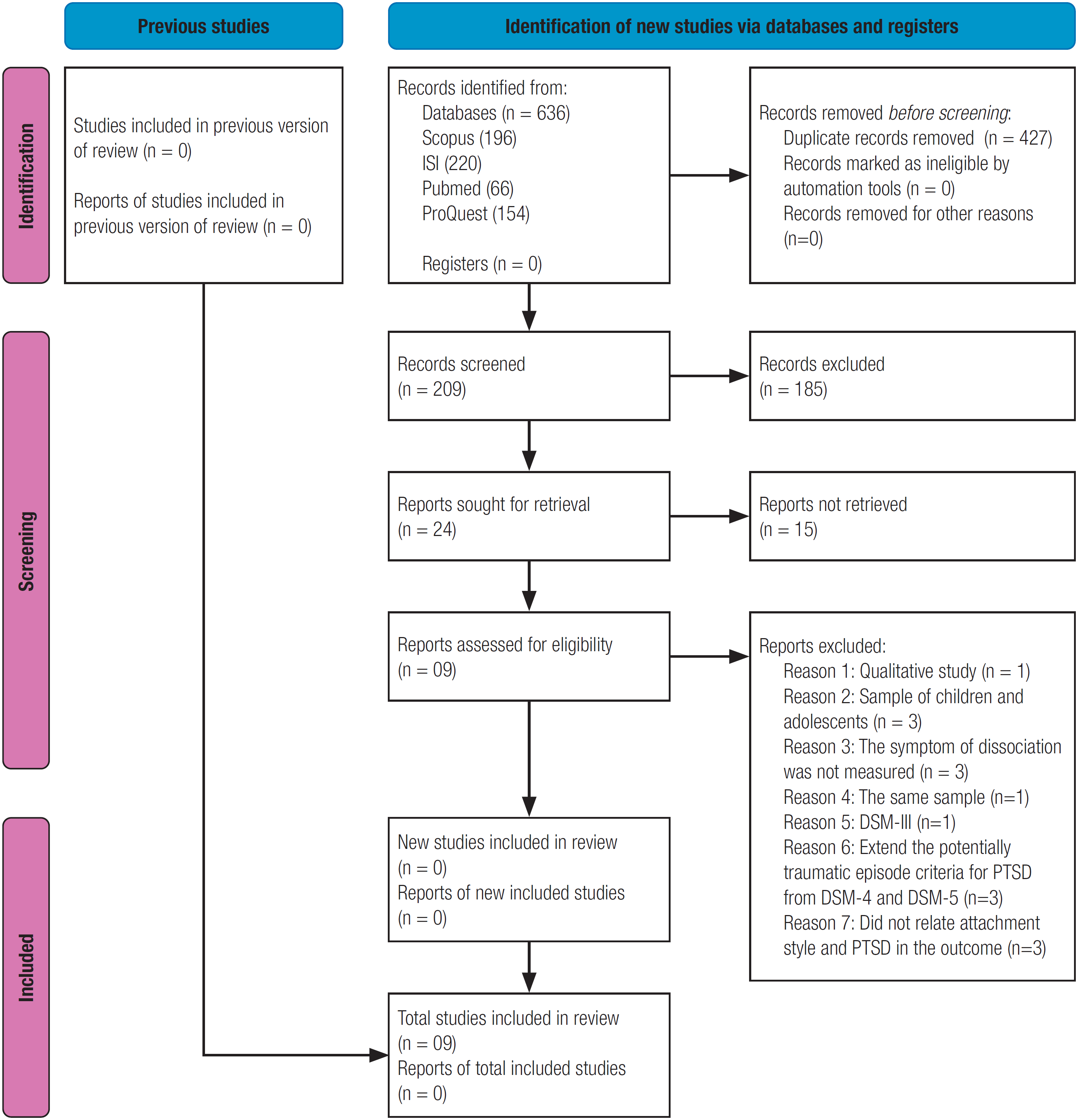
The abstracts of all identified studies were screened, and articles that did not meet the eligibility selection criteria were excluded. Full-text articles were then retrieved and assessed for inclusion. The study selection process is detailed in the flowchart presented in Figure 1.

Two researchers conducted a blinded and independent review (T.R. and J.B.), and their results were compared. Any disagreement was resolved by a senior researcher (H.S.). Data extraction was performed by the first author (T.R.). The review protocol was registered in PROSPERO (CRD42024611063).
2.2 Selection of studies
A total of 636 studies were assessed. After removing 427 duplicates, 209 studies were excluded based on title and abstract screening. Subsequently, 24 full-text articles were assessed for eligibility, and nine observational studies that met the inclusion criteria were included in the final review (Figure 1).
2.3 Definitions, Inclusion and Exclusion Criteria
We used Population, Exposure, Comparator, and Outcomes (individuals exposed to trauma, of both sexes, aged 18 years or older. Exposure (E): Insecure PECO) framework16 to formulate inclusion criteria for observational studies: Participants (P): Adults and elderly attachment styles. Comparator (C): - Outcome (O): Dissociative and PTSD symptoms.
Included studies investigated the relationship between attachment styles in adult PTSD patients and dissociative symptoms using observational designs. Studies were excluded if they involved animal models, children or adolescents, review articles, meta-analyses, randomized controlled trials, case series (N < 5), naturalistic studies, book chapters, dissertations, or theses.
2.4 Risk of Bias Assessment
After the search, we assessed the methodological quality of the selected observational studies using the Cochrane ROBINS-E tool17. The ROBINS-E is designed to evaluate the risk of bias in observational studies, particularly cohort and case-control studies. The ROBINS-E tool was adapted solely by excluding items related to follow-up, as these were not applicable to the cross-sectional design. All other items in the evaluation were applied in all included studies. Two researchers (T.R. and H.S.) conducted a blinded independent data extraction and risk of bias assessment. Any disagreements were resolved by a senior researcher (M.M.).
2.5 Instruments for assessing PTSD and dissociative symptoms
All studies assessed dissociation and PTSD symptoms as separable, for this reason, in this systematic review, both dissociative symptoms and PTSD symptoms are treated as primary outcomes, examined independently in relation to insecure attachment styles.
2.6 Instruments for assessing attachment styles
Substantial methodological heterogeneity was observed across studies in terms of attachment measures. The included studies employed a variety of instruments to assess attachment styles, differing in both measurement approaches and interpretive frameworks. These instruments typically classify attachment either as fixed categories or along a dimensional continuum, for example, reflecting degrees of anxious and secure traits’18. Most instruments assessed adult attachment styles, except for the Adult Attachment Interview (AAI), which evaluates both adult attachment and broader familial attachment patterns. This heterogeneity complicates direct comparison across studies and likely contributes to variability in nomenclature in the observed associations with posttraumatic stress disorder and dissociation outcomes. We decided to quantify it according to the frequency of the associations, without establishing any equivalence based on similarities. All assessments were based on the theoretical framework of anxious, avoidant, and disorganized attachment styles12, 13.
3. RESULTS
This systematic review found that insecure attachment, specially unresolved/disorganized attachment discourse suggests the association with the PTSD and dissociation symptoms. The sample size of all studies ranged from 27 to 296, with a total of 1,273 participants. All studies provided data on the mean age of participants, which ranged from 19 to 59.93. Of the nine included studies, four reported predominantly Caucasian ethnicity. The most frequent type of trauma was sexual abuse, with five studies and 415 participants, followed by Adverse Childhood Experiences (ACEs), with two studies and 370 participants, approximately 65% of the sample of studies included in this review. The remaining measures used and relevant details of the characteristics of the individual studies are reported in Table 1.
Description of Observational Studies Investigating Attachment Styles, PTSD and Dissociative Symptoms.
3.1 Risk of Bias Assessment
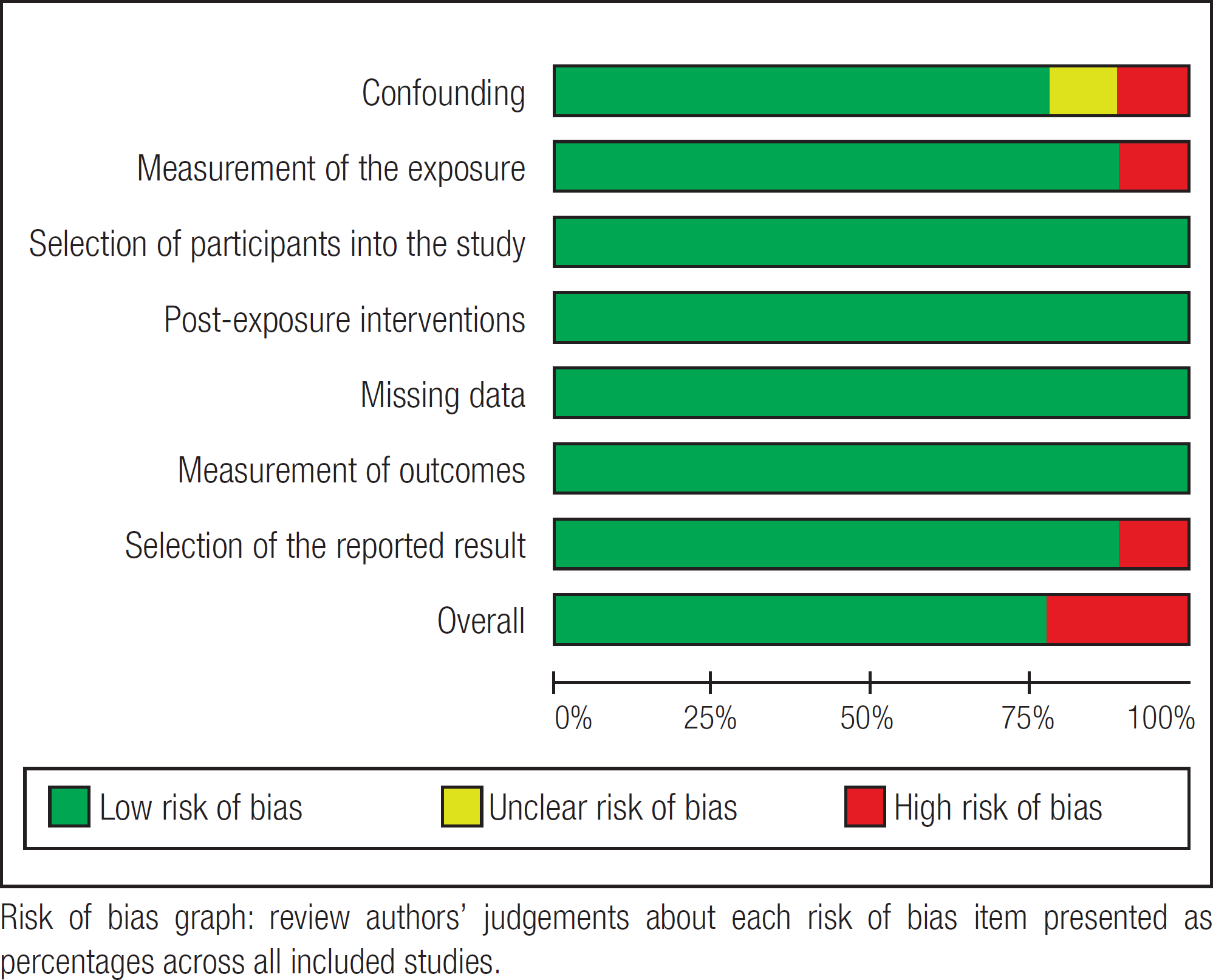
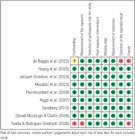
The overall risk of bias was determined following the guidance of the ROBINS-E tool: the highest level of risk assigned to any domain determined the overall risk. Regarding the methodological quality of the selected studies, two were classified as "high risk" for potential bias. One of the "high-risk" studies demonstrated "some concerns" in the domain "1. Risk of bias due to confounding" due to the lack of control for other types of trauma that might have occurred. Additionally, it was classified as "high risk" in the domain "7. Risk of bias in the selection of the reported result" because it claimed that the p-value for the PCL-C was significant and that a relationship existed between PTSD symptoms and disorganized attachment, despite the p-value not being significant (p = 0.083).
The other study was classified as "high risk" in the domain "1. Risk of bias due to confounding" for not controlling for other socio-demographic factors, such as previous trauma, the heterogeneity of study participants, and the nature of exposure to the terrorist attack. It was also rated "high risk" in the domain "2. Risk of bias in the measurement of exposure" for inadequately assessing participant's types of trauma, relying solely on a questionnaire developed by the authors that included three open-ended questions, potentially leading to recall bias. Seven studies did not present any risk of bias in any domain of this assessment. This systematic evaluation ensures a comprehensive understanding of the reliability and validity of the studies included in the review.
3.2 Association between attachment styles and PTSD and dissociation symptoms
The results were organized according to the instrument used in each study, preserving the original categories of attachment styles identified. Eight articles found a significant association between attachment dissociation PTSD association between attachment styles and PTSD and dissociation symptoms, three of which were unresolved/disorganized. One19 found no significant relationship between attachment styles, PTSD, and dissociation symptoms.
3.2.1 Adult Attachment Interview – AAI (George, Kaplan & Main, 1985)
The AAI was used in four studies. Of these, three20,21,22 identified a significant association between PTSD and dissociation symptoms with the unresolved/disorganized attachment classification. One19 found no significant relationship between attachment styles, PTSD, and dissociation symptoms.
3.2.2 Experiences in Close Relationships (ECR) and Experiences in Close Relationships – Revised (ECR-R) (Brennan, Clark & Shaver, 1998)
The ECR and ECR-R scales were used in three studies, two of which23,24 found a significant association between higher levels of PTSD and dissociation with the insecure attachment style, without specifying subtypes. However, the sample23 was represented by 69% anxious attachment. One25 found a significant association only with PTSD symptoms, but not with dissociation symptoms.
3.2.3 Relationship Questionnaire – RQ (Bartholomew & Horowitz, 1991)
In the RQ, a study26, found a significant association between increased PTSD symptoms and dissociation with the preoccupied and fearful attachment styles.
3.2.4 Attachment Style Questionnaire – ASQ (Feeney, Noller & Hanrahan, 1994)
In the ASQ, a study27 found a significant association between PTSD symptom severity and dissociation with Adult Attachment, without specifying the specific subtype.
Across the reviewed studies, associations between insecure attachment and trauma and dissociation outcomes differed according to both the assessment strategy used and whether findings were evaluated in terms of frequency or consistency. Interview-based measures, particularly the Adult Attachment Interview, most frequently identified unresolved/disorganized attachment as associated with PTSD and dissociation, although this pattern was not observed uniformly in only one study. In contrast, self-report dimensional measures such as the ECR showed greater consistency, with anxious attachment associated with PTSD and dissociation whenever assessed. These findings underscore that frequency and consistency are conceptually distinct, as a pattern may appear more often across studies without being uniformly replicated; nevertheless, unresolved/disorganized attachment remained the most frequently associated with PTSD and dissociation symptoms pattern in the reviewed literature.
4. DISCUSSION
This review investigated the relationship between attachment styles, PTSD symptoms, and dissociation. Our results demonstrate that insecure attachment is significantly and positively associated with PTSD and dissociation symptoms best understood as context-specific of observational studies. This association between insecure attachment and PTSD symptoms is corroborated by systematic reviews28,29 and a meta-analysis30. Our systematic review expands the literature by being the first to examine attachment typologies, including unresolved/disorganized attachment and dissociation symptoms in their relationship to PTSD symptoms. Unresolved/disorganized attachment was specifically the most associated with PTSD and dissociation symptoms among the other typologies.
Despite this association, unresolved/disorganized attachment is still underappreciated in scientific studies evaluating PTSD and dissociation symptoms. Previous studies28,29,30 show that anxious attachment is more associated with PTSD symptoms. We understand that association between attachment dissociation PTSD the underestimation of unresolved/disorganized attachment in these studies may have influenced this association, since our review found that unresolved/disorganized attachment was more frequently associated with PTSD and dissociation symptoms than anxious attachment. To date, unresolved/disorganized attachment has been studied more in studies with children and adolescents such as the observational study31 and meta-analysis32 as well as in narrative reviews33,34.
The association between PTSD symptoms and dissociation with unresolved/disorganized attachment is understood through the attachment figure's frightening behavior35, which simultaneously maintains the ambiguity between fear and protection. This behavior hinders emotional regulation in disorganized attachment13. Therefore, in childhood attachment disorganization, the psychological needs of are not adequately met by caregivers who are often abusive, neglectful, or traumatized. Only in this typology does this contradictory relationship with the attachment figure occur, and consequently, the strategies used in disorganized attachment are freezing or withdrawing in a strange situation36. Thus, the unpredictable emotional reaction of the attachment figure is an early experience of attachment trauma and may contribute to attachment disorganization37 and increased vulnerability to PTSD.
Childhood attachment disorganization predisposes to pathological dissociation38. Freezing states and memory fragmentation are a consequence of the constant feeling of fear of the attachment figure. Defense strategies such as disengagement and barriers to affection emerge in contexts of traumatic loss, real threat, or extreme inconsistency39,40. The lack of coherent approach and boundary strategies makes it difficult to learn an organized strategy between approaching and avoiding. These findings are consistent with psychic fragmentation in response to trauma in disorganized attachment41,42. Thus, disorganized attachment is the predictor of a higher risk of dissociation in adults, especially if the environment remains traumatic43,35.
Among the studies that did not assess unresolved/disorganized attachment25, 24,23, 26, 27 anxious attachment was more frequently associated with PTSD and dissociation. Fear in anxious attachment also promotes states of dissociation, as in disorganized attachment. The difference lies in the structural dissociation41,43, that generally occurs in disorganized attachment44, while dissociation in anxious attachment arises in response to hyperarousal attachment45. In anxious attachment, the bond with the caregiver is marked by an intense fear of abandonment, while in disorganized attachment, the relationship is shaped by fear of the caregiver themselves, often due to experiences of abuse. The association between anxious attachment and dissociation is less common compared to disorganized attachment46. Probably for this reason, we were unable to find an association between anxious attachment and dissociation in all the studies included in this review25 and although fearful attachment uniquely predicted dissociation, this effect was not mediating on childhood trauma and dissociation26.
Notably, we found in our sample that 44% of women had experienced sexual abuse and 30% had been exposed to other Adverse Childhood Experiences (ACEs). These findings are in line with the previous literature showing that the risk of developing PTSD is significantly higher in cases of interpersonal trauma47, and among individuals with insecure attachment patterns48, 25,49, 50.
When compared to men, women are twice as likely to develop PTSD51,52 and dissociation shortly after the trauma53 and insecure attachment and attachment disorganization are also related to abuse54,55.
The present study has some limitations. First, the differences in attachment assessment strategies, sample characteristics, and analytical approaches limit direct comparability across studies and preclude causal inferences. Some of the studies included in this review used the term insecure attachment and adult attachment without identifying which specific subtypes (e.g., avoidant, ambivalent, disorganized) were linked to PTSD and dissociative symptoms. This lack of detail may have affected the interpretation of the results. While many contemporary classifications of attachment styles broadly align with Ainsworth's original framework12, differences in how attachment is assessed—ranging from self-report tools to interviews and from categorical to dimensional models—made direct comparisons difficult. This issue has also been raised in earlier research e.g.30,28,56 which highlighted how measurement approach can influence outcomes related to PTSD. To address this gap, future studies should explore equivalence across existing assessment methods, including longitudinal designs that follow attachment patterns from childhood into adulthood, as well as analyses that map newer instruments onto the foundational classifications proposed by Ainsworth12,13. Furthermore, the widespread use of self-report instruments for assessing both attachment and psychopathological symptoms is subject to memory biases, social desirability biases, and limitations in the participants’ mentalization capacity, particularly in populations with a history of trauma.
The second limitation relates to the study designs. The evidence presented here comes primarily from cross-sectional and cohort studies, which restricts our ability to draw conclusions about causality. Also, due a total of nine studies were included, which limits the generalizability of the findings. Although, each included study reported statistically significant associations between specific insecure attachment patterns and PTSD or dissociative symptoms within their respective samples. While the direction of these associations aligns with attachment-based theoretical models of trauma vulnerability, the available evidence does not support causal interpretations or broad generalization. Longitudinal research, particularly involving individuals with unresolved or disorganized attachment styles, is needed to better understand the directionality of these associations.
A third limitation is that our results found an underrepresentation of men who suffered sexual abuse. Men are not generally investigated for this type of trauma. Similarly, we did not find Latin American, African, or Asian ethnicities in the sample of studies included in this review. The predominance of white women in most of the included samples restricts the generalization of the findings to male populations and culturally diverse contexts. Considering that attachment styles—especially disorganized attachment, which is most strongly associated with the investigated outcomes—are shaped by specific sociocultural contexts, the low ethnic and cultural diversity may have influenced the magnitude and direction of the observed associations. Future studies should prioritize more heterogeneous samples, multimethod strategies, and designs that allow for greater precision in assessing these associations.
There are important clinical implications for our findings. This highlights the importance of assessing attachment types, more specifically, the unresolved/disorganized style, in conjunction with dissociative and PTSD symptoms, beyond simply investigating trauma history. The unresolved/disorganized attachment style should also be considered in treatment plans and psychotherapeutic relationships within evidence-based practices, because when disorganized attachment is treated, traumatic memories become more easily integrated and dissociative defenses more difficult to access41. Currently, attachment theory remains underutilized in treatments for PTSD symptoms57,26,58 despite evidence that its incorporation can enhance therapeutic outcomes59.
5. CONCLUSION
In conclusion, this review suggests consistent associations between insecure attachment, particularly the unresolved/disorganized style, and PTSD and dissociation symptoms. The association between attachment, dissociation and PTSD suggests underscore the relevance of attachment-informed approaches in both the assessment and treatment of PTSD symptoms and support the integration of attachment theory into clinical protocols for individuals with trauma histories.
DATA AVAILABILITY STATEMENT
The data that support this study are available from the authors upon request.
6. ACKNOWLEDGEMENTS
We are deeply grateful to our advisor W.B., whose attentive and generous guidance was fundamental to every stage of this work. We express our sincere gratitude to University for its institutional support. We extend special thanks to all members of the laboratory, who contributed directly and indirectly with dedication, ideas, and daily collaboration. Finally, we thank the reviewers for their valuable suggestions and careful reading, which strengthened the quality of this manuscript.
10. REFERENCES
- 1 Misitano A, Moro AS, Ferro M, Forresi B. The dissociative subtype of post-traumatic stress disorder: a systematic review of the literature using latent profile analysis. J Trauma Dissociation. 2022;1–17.
- 2 Brown A, Addis D, Romano T, Marmar C, Bryant R, Hirst W, et al. Episodic and semantic components of autobiographical memories and imagined future events in post-traumatic stress disorder. Memory. 2014;22(6):595–604.
- 3 Ehlers A, Clark D. A cognitive model of posttraumatic stress disorder. Behaviour Research and Therapy. 2000;38(4):319–45.
- 4 Hayes JP, Hayes SM, Mikedis AM. Quantitative meta-analysis of neural activity in posttraumatic stress disorder. Biol Mood Anxiety Disord. 2012 Dec 18;2(1):9.
- 5 Schauer M, Elbert T. Dissociation following traumatic stress: Etiology and treatment. Zeitschrift für Psychologie/Journal of Psychology. 2010;218(2):109–27.
- 6 Choi K, Seng J, Briggs E, Munro-Kramer M, Graham-Bermann S, Lee R, et al. The dissociative subtype of posttraumatic stress disorder (PTSD) among adolescents: Co-occurring PTSD, depersonalization/derealization, and other dissociation symptoms. J Am Acad Child Adolesc Psychiatry. 2017;56(12):1062–72.
- 7 Bonanno G. Loss, trauma, and human resilience: Have we underestimated the human capacity to thrive after extremely aversive events? American Psychologist. 2004;59(1):20–8.
- 8 Mikulincer M. Attachment, caregiving, and sex within romantic relationships: A behavioral systems perspective. 2006. 23–44 p.
- 9 Mikulincer M, Shaver PR, Horesh N, Avitzur E. Attachment bases of posttraumatic stress disorder: a prospective study of trauma survivors. J Pers Soc Psychol. 2006;91(2):294–307.
- 10 Maunder RG, Hunter JJ. Attachment and psychosocial function in post-traumatic stress disorder: a systematic review. Psychol Med. 2001;31(3):407–15.
- 11 Bowlby J. Attachment and loss. Vol. 1. Attachment. Basic Books.; 1969.
- 12 Ainsworth M, Blehar M, Waters E, Wall S. Patterns of attachment: A psychological study of the strange situation. Erlbaum; 1978.
- 13 Main M, Solomon J. Discovery of an insecure-disorganized/disoriented attachment pattern. In T. B. Brazelton & M. W. Yogman (Eds.) Affective development in infancy. Ablex Publishing.; 1986. 95–124 p.
- 14 Zagaria A, Baggio T, Rodella L, Leto K. Toward a definition of attachment trauma: Integrating attachment and trauma studies. European Journal of Trauma & Dissociation. 2024;8(3).
- 15 Page M, McKenzie J, Bossuyt P, Boutron I, Hoffmann T, Mulrow C, et al. The PRISMA 2020 statement: An updated guideline for reporting systematic reviews. BMJ. 372(71).
- 16 Morgan R, Whaley P, Thayer K, Schünemann H. Identifying the PECO: A framework for formulating good questions to explore the association of environmental and other exposures with health outcomes. Environ Int. 2018;121(1):1027–31.
- 17 Higgins J, Morgan R, Rooney A, Taylor K, Thayer K, Silva R, et al. A tool to assess risk of bias in non-randomized follow-up studies of exposure effects (ROBINS-E). Environ Int. 2024;186(108602).
- 18 Ravitz P, Maunder R, Hunter J, Sthankiya B, Lancee W. Adult attachment measures: A 25-year review. J Psychosom Res. 2010 Oct;69(4):419–32.
- 19 Pierrehumbert B, Torrisi R, Glatz N, Dimitrova N, Heinrichs M, Halfon O. The influence of attachment on perceived stress and cortisol response to acute stress in women sexually abused in childhood or adolescence. Psychoneuroendocrinology. 2009 Jul;34(6):924–38.
- 20 RIGGS SA, PAULSON A, TUNNELL E, SAHL G, ATKISON H, ROSS CA. Attachment, personality, and psychopathology among adult inpatients: Self-reported romantic attachment style versus Adult Attachment Interview states of mind. Dev Psychopathol. 2007 Jan 22;19(01).
- 21 Stovall-McClough KC, Cloitre M. Unresolved attachment, PTSD, and dissociation in women with childhood abuse histories. J Consult Clin Psychol. 2006 Apr;74(2):219–28.
- 22 de Baggis C, Jiménez Naharro M, Pallini S. The children of the Argentinean desaparecidos: Traumatic attachment-related experiences. Child Youth Serv Rev. 2022 Jun;137:106478.
- 23 Mozafari AR, Shaw AB, Lynch SM. The Influence of Interpersonal Violence and Adult Attachment on Incarcerated Women's Mental Health and Parenting Self-Perception. J Aggress Maltreat Trauma. 2024 Feb 22;33(2):200–19.
- 24 Jacquet-Smailovic M, Martin-Krumm C, Tarquinio C. Effets médiateurs de la symptomatologie de stress post-traumatique et des symptômes de dissociation somatoforme sur la relation entre l'attachement et la qualité de vie liée à la santé après un infarctus du myocarde. Annales Médico-psychologiques, revue psychiatrique. 2024 Feb;
- 25 Huang YL, Fonagy P, Feigenbaum J, Montague PR, Nolte T. Multidirectional Pathways between Attachment, Mentalizing, and Posttraumatic Stress Symptomatology in the Context of Childhood Trauma. Psychopathology. 2020;53(1):48–58.
- 26 Sandberg DA. Adult Attachment as a Predictor of Posttraumatic Stress and Dissociation. Journal of Trauma & Dissociation. 2010 Jun 28;11(3):293–307.
- 27 Twaite JA, Rodriguez-Srednicki O. Childhood Sexual and Physical Abuse and Adult Vulnerability to PTSD: The Mediating Effects of Attachment and Dissociation. J Child Sex Abus. 2008 Aug 13;13(1):17–38.
- 28 Barazzone N, Santos I, McGowan J, Donaghay-Spire E. The links between adult attachment and post-traumatic stress: A systematic review. Psychology and Psychotherapy: Theory, Research and Practice. 2019 Mar 30;92(1):131–47.
- 29 Lim BH, Hodges MA, Lilly MM. The Differential Effects of Insecure Attachment on Post-Traumatic Stress: A Systematic Review of Extant Findings and Explanatory Mechanisms. Trauma Violence Abuse. 2020 Dec 1;21(5):1044–60.
- 30 Woodhouse S, Ayers S, Field AP. The relationship between adult attachment style and post-traumatic stress symptoms: A meta-analysis. J Anxiety Disord. 2015 Oct;35:103–17.
- 31 Bosquet Enlow M, Egeland B, Carlson E, Blood E, Wright RJ. Mother–infant attachment and the intergenerational transmission of posttraumatic stress disorder. Dev Psychopathol. 2014 Feb 23;26(1):41–65.
- 32 Cushing T, Robertson S, Mannes J, Marshall N, Carey MJ, Duschinsky R, et al. The relationship between attachment and posttraumatic stress in children and adolescents: A meta-analytic review. Dev Psychopathol. 2024 Aug 31;36(3):1055–69.
- 33 Jacobvitz D, Reisz S. Disorganized and unresolved states in adulthood. Curr Opin Psychol. 2019 Feb;25:172–6.
- 34 Thomson P. Loss and Disorganization from an Attachment Perspective. Death Stud. 2010 Oct 25;34(10):893–914.
- 35 Main M, Hesse E. Parents’ unresolved traumatic experiences are related to infant disorganized attachment status: Is frightened and/or frightening parental behavior the linking mechanism? In M T Greenberg, D Cicchetti, & E M Cummings (Eds) Attachment in the preschool years: Theory, research, and intervention The University of Chicago Press. 1990;191–182.
- 36 Main M, Solomon J. Procedures for identifying infants as disorganized/disoriented during the Ainsworth Strange Situation. Procedures for identifying infants as disorganized/disoriented during the Ainsworth Strange SituationThe University of Chicago Press. 1990;121–60.
- 37 Schuengel C, Bakermans-Kranenburg MJ, Van IJzendoorn MH. Frightening maternal behavior linking unresolved loss and disorganized infant attachment. J Consult Clin Psychol. 1999;67(1):54–63.
- 38 Liotti G. A Model of Dissociation Based on Attachment Theory and Research. Journal of Trauma & Dissociation. 2006 Nov 21;7(4):55–73.
- 39 Bowlby J. Separation: Attachment and loss. Vol. (Vol. 2). Basic Books; 1973.
- 40 Bowlby J. Attachment and loss: Loss, sadness and depression. Vol. 3. Basic Books; 1980.
- 41 Liotti G. Trauma, dissociation, and disorganized attachment: Three strands of a single braid. Psychotherapy: Theory, Research, Practice, Training. 2004;41(4):472–86.
- 42 VAN IJZENDOORN MH, SCHUENGEL C, BAKERMANS–KRANENBURG MJ. Disorganized attachment in early childhood: Meta-analysis of precursors, concomitants, and sequelae. Dev Psychopathol. 1999 Jun 1;11(2):225–50.
- 43 Dutra L, Bureau JF, Holmes B, Lyubchik A, Lyons-Ruth K. Quality of Early Care and Childhood Trauma. Journal of Nervous & Mental Disease. 2009 Jun;197(6):383–90.
- 44 Farina B, Liotti M, Imperatori C. The Role of Attachment Trauma and Disintegrative Pathogenic Processes in the Traumatic-Dissociative Dimension. Front Psychol. 2019 Apr 26;10.
- 45 Kong SS, Kang DR, Oh MJ, Kim NH. Attachment insecurity as a mediator of the relationship between childhood trauma and adult dissociation. Journal of Trauma & Dissociation. 2018 Mar 15;19(2):214–31.
- 46 OGAWA JR, SROUFE LA, WEINFIELD NS, CARLSON EA, EGELAND B. Development and the fragmented self: Longitudinal study of dissociative symptomatology in a nonclinical sample. Dev Psychopathol. 1997 Dec 1;9(4):855–79.
- 47 Breslau N. Epidemiologic studies of trauma, posttraumatic stress disorder, and other psychiatric disorders. Canadian Journal of Psychiatry. 2002;47(10):923–9.
- 48 Aspelmeier JE, Elliott AN, Smith CH. Childhood sexual abuse, attachment, and trauma symptoms in college females: The moderating role of attachment. Child Abuse Negl. 2007 May;31(5):549–66.
- 49 Mikulincer M, Shaver P. An attachment perspective on interpersonal and intergroup conflict. In J P Forgas, A W Kruglanski, & K D Williams (Eds), The psychology of social conflict and aggression Psychology Press. 2011;19–35.
- 50 Muller RT, Thornback K, Bedi R. Attachment as a Mediator between Childhood Maltreatment and Adult Symptomatology. J Fam Violence. 2012 Apr 29;27(3):243–55.
- 51 Fetzner MG, McMillan KA, Sareen J, Asmundson GJG. What is the association between traumatic life events and alcohol abuse/dependence in people with and without PTSD? Findings from a nationally representative sample. Depress Anxiety. 2011 Aug;28(8):632–8.
- 52 Pietrzak RH, Goldstein RB, Southwick SM, Grant BF. Prevalence and Axis I comorbidity of full and partial posttraumatic stress disorder in the United States: Results from Wave 2 of the National Epidemiologic Survey on Alcohol and Related Conditions. J Anxiety Disord. 2011 Apr;25(3):456–65.
- 53 Olff M, Langeland W, Draijer N, Gersons BPR. Gender differences in posttraumatic stress disorder. Psychol Bull. 2007;133(2):183–204.
- 54 Cyr C, Euser EM, Bakermans-Kranenburg MJ, Van Ijzendoorn MH. Attachment security and disorganization in maltreating and high-risk families: A series of meta-analyses. Dev Psychopathol. 2010 Feb 26;22(1):87–108.
- 55 Fearon R, Belsky J. Handbook of attachment: Theory, research, and clinical applications. 3rd ed. 2016. 291–313 p.
- 56 Roisman G, Holland A, Fortuna K, Fraley R, Clausell E, Clarke A. The Adult Attachment Interview and self-reports: Current status and future directions. In J. Cassidy & P. R. Shaver (Eds.), Handbook of attachment: Theory, research, and clinical applications; 2007. 598–635 p.
- 57 Pearlman LA, Courtois CA. Clinical applications of the attachment framework: Relational treatment of complex trauma. J Trauma Stress. 2005 Oct;18(5):449–59.
- 58 Parnell L. Attachment-focused EMDR: Healing relational trauma. W W Norton & Company. 2013;2013.
- 59 Meyer B, Pilkonis P. Attachment style. In J.C. Norcross (Ed.), Psychotherapy relationships that work: Therapist contributions and responsiveness to patients. Oxford University Press. 2002;367–82.
Edited by
-
Handling Editor:
Marcia Cristina Dourado