 Depletion of energy reserves and regeneration capacity of germinated Eugenia brasiliensis Lam. Seeds
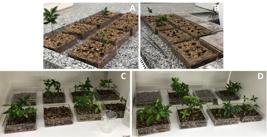
Recalcitrant seeds of Eugenia species have the capacity to regenerate germination even after the embryonic axis is lost. Though the seeds have high energy reserves, simultaneous germination is not common, indicating self-regulation of germination processes in these seeds. Since Eugenia seeds can regenerate after seedling elimination, the aim of this study was to determine the temporal extent of this self-regulation period, from germination to different stages of seedling development. The roots and shoots/aerial parts of Eugenia brasiliensis Lam. seedlings grown in an environment with or without continuous light were removed from the seeds when the shoots reached ≤ 5 cm, 6.0 ± 1.0 cm, 8.0 ± 1.0 cm, 12.0 ± 1.0 cm, and ≥ 13.5 cm, after which they were re-sown in a substrate moistened with water for a new germination event. Regeneration after seedling development demonstrated that seedlings that reached up to 12 cm for those grown in the dark and up to 8 cm for those grown in the light favored the regenerative capacity of the seeds. Therefore, this indicates that E. brasiliensis seeds are capable of remaining in the soil for extended periods while maintaining the ability to produce new plants, even under unfavorable environmental conditions after initial germinations of these seeds.
Index terms:
propagation strategy; recalcitrant seeds; self-regulation of germination
 Thumbnail
 Thumbnail
 Thumbnail
 Thumbnail
 Thumbnail