 FRAGMENTARY LOGIC AND SOCIO-SPATIAL SELF-SEGREGATION ON THE METROPOLITAN COAST OF FORTALEZA
Abstract
The current process of urban space production is shaped by socio-spatial fragmentation. Drawing on Lefebvre's spatial theory, space is understood as a product of the urbanization of society and, as a comprehensive concept, it points to new spatial contents and forms that redirect socio-spatial processes. The analysis focuses on the metropolitan coastline of Fortaleza, specifically the beaches of Porto das Dunas and Marambaia (Aquiraz), and Cumbuco and Icaraí (Caucaia). The aim is to analyze the reproduction of the metropolitan coastal urban space of Fortaleza under a fragmentary logic, considering the dimensions of leisure and dwelling from 1970 to the present day. Based on the methodological procedures adopted particularly the identification and qualification of real estate agents associated with the economic vector of tourism, as well as the analysis of advertising and cartographic materials - we argue that the fragmentary logic of coastal urban reproduction has been deepened by the imposition of habitat. This urban phenomenon renews the process of segregation, making it possible to identify socio-spatial self-segregation. This process is associated with the intensification of differentiation, reinforced by the growing presence of real estate developments in areas of coastal urban expansion, as well as by the increasing segmentation of spatial practices of leisure and dwelling in private and enclosed spaces.
Keywords:
Socio-spatial Fragmentation; Socio-spatial Self-segregation; Leisure; Housing; Fortaleza Metropolis.
Resumo
O atual processo de produção do espaço urbano é orientado pela fragmentação socioespacial. Associado à teoria espacial lefebvriana, assume a compreensão do espaço como produto mediante a urbanização da sociedade e, como conceito continente, aponta para novos conteúdos e formas espaciais que redirecionam processos socioespaciais. A análise é direcionada para o litoral metropolitano de Fortaleza, nas praias de Porto das Dunas e Marambaia (Aquiraz) e nas praias de Cumbuco e Icaraí (Caucaia). O objetivo consiste em analisar a reprodução do espaço urbano litorâneo metropolitano de Fortaleza sob a lógica fragmentária, considerando as dimensões do lazer e do habitar, de 1970 até os dias atuais. A partir dos procedimentos metodológicos adotados, especificamente, com a identificação e qualificação dos agentes imobiliários associados ao vetor econômico do turismo, materiais publicitários e cartográficos, afirmamos que a lógica fragmentária de reprodução do urbano litorâneo é aprofundada devido a imposição do habitat. Tal fenômeno urbano atualiza o processo de segregação, possibilitando apontar para a autossegregação socioespacial. Esse processo está associado com a exacerbação da diferenciação acentuada pela maior inserção de empreendimentos imobiliários nas áreas de expansão urbana litorânea, bem como ao maior nível de segmentação das práticas espaciais do lazer e do habitar em espaços privados e fechados.
Palavras-chave:
Fragmentação Socioespacial; Autossegregação Socioespacial; Lazer; Habitar; Fortaleza Metrópole.
Résumé
Le processus actuel de production de l'espace urbain est guidé par la fragmentation socio-spatiale. Associé à la théorie spatiale lefebvrienne, il considère l'espace comme un produit de l'urbanisation de la société et, en tant que concept continu, il met en avant de nouveaux contenus et formes spatiales qui réorientent les processus socio-spatiaux. L'analyse porte sur le littoral métropolitain de Fortaleza, les plages de Porto das Dunas et Marambaia (Aquiraz) et les plages de Cumbuco et Icaraí (Caucaia). L'objectif est d'analyser la reproduction de l'espace urbain côtier métropolitain de Fortaleza sous l'angle de la logique fragmentaire, en tenant compte des dimensions des loisirs et de l'habitat, de 1970 à nos jours. À partir des procédures méthodologiques adoptées, notamment l'identification et la qualification des agents immobiliers associés au vecteur économique du tourisme, des supports publicitaires et cartographiques, nous affirmons que la logique fragmentaire de reproduction de l'urbain côtier est approfondie en raison de l'imposition de l'habitat. Ce phénomène urbain actualise le processus de ségrégation, permettant de pointer vers l'autoségrégation socio-spatiale. Ce processus est associé à l'exacerbation de la différenciation accentuée par la plus grande insertion des projets immobiliers dans les zones d'expansion urbaine côtière, ainsi qu'au niveau plus élevé de segmentation des pratiques spatiales de loisirs et d'habitation dans des espaces privés et fermés.
Mots-clés:
Fragmentation Socio-spatiale; Auto-ségrégation Socio-spatiale; Loisir; Habitat; Métropole Du Fortaleza
INTRODUCTION
This article is based on the analyses of Vieira (2024) and Vieira and Pereira (2024), which emphasize the socio-spatial processes involved in the expansion of the coastal urban fabric of the metropolis of Fortaleza. In this sense, we focus on the renewal of the urbanization process.
The relationship between Fortaleza’s society and the sea underwent a profound transformation in the twentieth century. Leisure practices and residential patterns drove the process of urbanization from the city center toward the coast, especially in the 1930s and 1940s (Dantas, 2020; Paiva, 2013; Pereira, 2012). In the second half of the twentieth century, coordinated actions by public authorities, urban planners, and the real estate market intensified socio-spatial differentiation (Dantas, 2020; Tavares, 2022), particularly in the neighborhoods of Praia de Iracema, Mucuripe, and Meireles.
This process initially took place in the city of Fortaleza and later expanded to other coastal municipalities in the Metropolitan Region, such as Caucaia and Aquiraz. From this perspective, following Carlos (2015), we understand Fortaleza’s coastal area as both a means, a condition, and an expression of urbanization, since it is (re)produced on the basis of exchange value.
Given the existing literature on the coastal urban space of Fortaleza, what is new in terms of content and form? As a working hypothesis, we argue that socio-spatial fragmentation currently guides the production of coastal urban space in the metropolis of Fortaleza, diversifying and deepening socio-spatial differentiation and self-segregation.
Accordingly, the main objective of this article is to analyze the reproduction of the metropolitan coastal urban space of Fortaleza under a fragmentary logic, focusing on the dimensions of leisure and dwelling from the last third of the twentieth century to the present (1970-present). The analysis centers on the beaches of Icaraí and Cumbuco (Caucaia), and Porto das Dunas and Marambaia (Aquiraz).
In this sense, we invite the reader to bring their geographical imagination closer to the coastline of these two municipalities, without neglecting the prime areas of Fortaleza itself (the beaches of Iracema, Meireles, and Mucuripe). This approach allows us to examine the notion of fragmentary logic in contemporary urbanism and to establish spatial references for the process.
In the first section, we discuss the concept of urban restructuring, with emphasis on Soja (1993) and Sposito (2018), in order to articulate the current production of urban space and the role of hegemonic real estate agents operating in Caucaia and Aquiraz, drawing on the analyses of Cunha (2023), Gadino et al. (2022), and Pereira, Dantas, and Gomes (2016).
Based on the concept of socio-spatial fragmentation (Sposito and Sposito, 2020; Sposito, 2024), we ardue that this notion captures the essence of the current phase of urbanization. The multiple spatial strategies adopted by different agents seek to rationalize the production of space, thereby making the urban fabric increasingly segmented, divided, disjointed, and intensifying socio-spatial differentiation. In the case of Latin American cities and metropolises, this process is further reinforced by the weight of social inequality (Carlos, 2007; Prévôt Schapira and Pineda, 2008).
The main agents were identified through the National Register of Legal Entity (CNPJ) on the website of the Ceará State Environmental Superintendence (SEMACE). From the environmental licensing processes, we selected three types of information: the location of the project, the associated CNPJ, and the name of the project. This data were then cross-referenced with open data from the Federal Revenue Service, including the number of partners, number of administrators, the presence of foreign partners, and the company's share capital. In the second section, we emphasize the spatial strategies of separation and segmentation pursued by hegemonic agents, which constitute a fragmentary logic in the (re)production of urban space (Calixto, 2021; Legroux, 2021). This logic tends toward a form of homogenization - always relative - and toward self-segregation, following the analysis by Sposito and Góes (2013). Here, it is important to stress our emphasis on spatial forms.
In this section, we seek to identify the relationship between the quantitative and qualitative dimensions of coastal urban space, as proposed by Sposito (2016). To this end, we use cartographic materials and secondary data from the 2000, 2010, and 2022 Demographic Censuses, specifically regarding occupied permanent and occasional private households. When combined with advertising materials, these data allow us to show how leisure practices and swelling in closed, private spaces play a significant role in shaping the production of coastal urban space.
URBAN RESTRUCTURING, SOCIO-SPATIAL DIFFERENTIATION, AND SOCIO-SPATIAL FRAGMENTATION
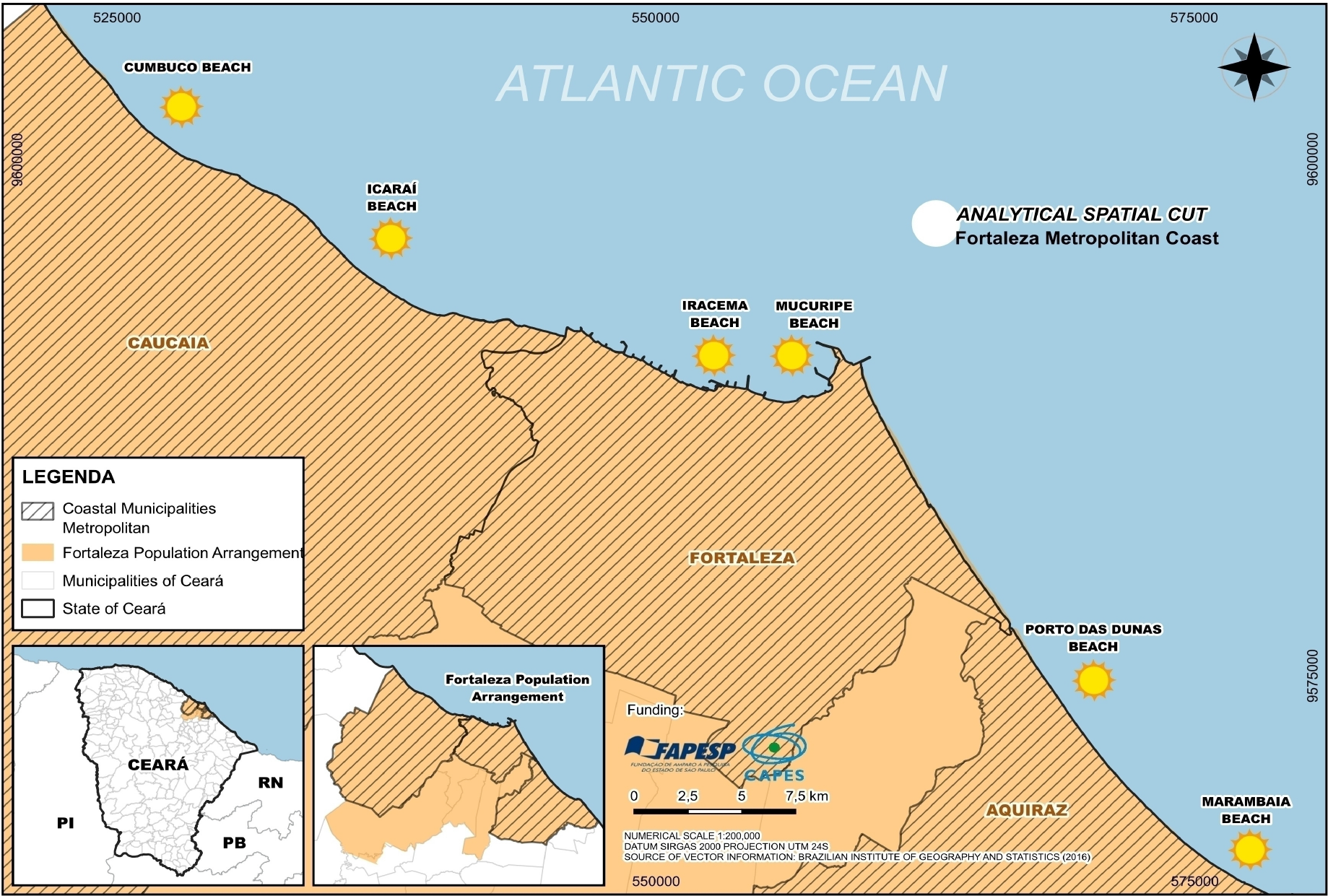
Fortaleza, Aquiraz, and Caucaia belong to the Fortaleza Population Arrangement and form part of the metropolitan urban agglomeration (Figure 1). These municipalities host the main tourist facilities, hotels, and large real estate developments in the region. Compared to other coastal municipalities in Ceará, this arrangement concentrates 78.49% of occupied permanent private households and 57.09% of occasional-use households (IBGE, 2022).
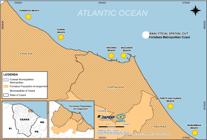
Coastal municipalities of the Fortaleza Population Arrangement. Source: IBGE (2016) and compiled by the author.
To elucidate the current transformations in this urban and coastal context, we draw on Soja's (1993) concept of restructuring, as it conveys the notion of a “slowing down” or rupture in long-term trends, implying a complex and unresolved mixture of continuity and change. However, how can we grasp and interpre, in space and time, this complex and unresolved mixture of continuity and change? It is important to note that these transformations are procedural and open-ended and were already announced in the fin-de-siècle context described by Soja (1993).
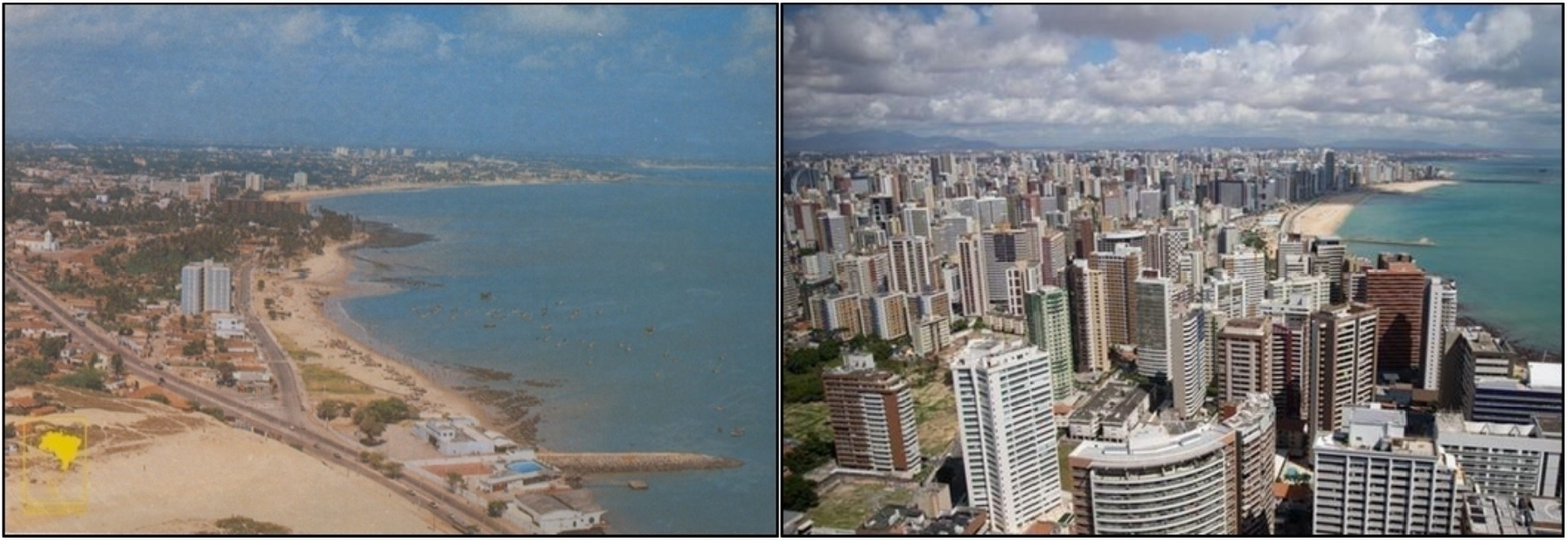
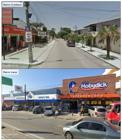
As a starting point, we take the appropriation of Fortaleza's beachfront areas from the 1940s onward, particularly in the neighborhoods of Praia de Iracema, Meireles, and Mucuripe, by the middle class. This shift was driven, to a certain extent, by the expansion of mediumand high-end residential construction, combined with the growth of tourist flows and the increased supply of commercial and hotel buildings. Tavares (2022) highlights this process: in the 1970s, there were 24 buildings along the city's waterfront, whereas in 2000 there were 140 (Figure 2).
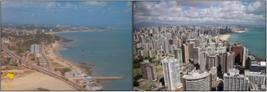
Comparison of the Mucuripe coastal area in Fortaleza between 1970 and 2024. Source: Fortaleza Nobre, available in the Digital Collection of Fortaleza, and Diário do Nordeste (2024).
During this period, the expansion of local construction companies' areas of operation was intensified by the Housing Finance System (SFH), with Colmeia LTDA, Diagonal, and Imobiliária Jereissati LTDA standing out (Rufino, 2012). At the same time, Fortaleza became part of both national and international tourism circuits (Dantas, 2020).
Thus, it can be argued that, in this coastal area of Fortaleza, the consolidation of leisure, housing, and tourism activities intensified the subdivision and use of urban land. In addition, the growth and diversification of real estate groups occurred mainly at the end of the twentieth century, signaling a new phase in the production of urban space associated with real estate and financial capital. These changes were marked by contradictions and conflicts, as was exemplified by the removal of informal settlements in Mucuripe, Praia de Iracema, and Moura Brasil (Cavalcante, 2017; Silva, 1992; Silva, 2018).
The redirection of real estate capital and tourist flows toward the extension of Fortaleza’s metropolitan coastline took place at the end of the twentieth century. In Caucaia, on Icaraí Beach, the first horizontal condominiums and summer clubs were built between the 1960s and 1970s, and in subsequent decades the transformation of rural land into urban land intensified towards Cumbuco Beach. In Aquiraz, a similar process of appropriation and subdivision of urban land occurred mainly in the 1980s. Particularly noteworthy are the Beach Park beach bar and, later, the implementation of the water park (Cavalcante, 2012; Cunha, 2017; Pereira, 2013). The types of residential buildings vary, but most are single-family houses and multi-family horizontal condominiums, in addition to the prevalence of occasional-use dwellings occupied during periods of leisure (Pereira, 2013). As in Fortaleza, the horizontal residential condominiums in Caucaia were built by local construction companies, with the participation of public authorities (Silveira, 2011).
This form of urban expansion is accompanied by contradictions. The fishing village of Praia do Cumbuco, for example, analyzed by Cavalcante (2012), was reorganized into lots in the 1980s and 1990s under the responsibility of a local construction company (Cumbuco LTDA). Approximately 40 fishing families left the site, and some of them moved to other coastal locations, such as the urban community of Parazinho.
Thus, everyday life is shaped by forms imposed by vertical organized economic actions. These transformations signals the expansion of socio-spatial differentiation when we consider the growing influence of real estate agents in the production of urban space, which leads to conflicts with traditional ways of life.
This process constitutes a logic of standardization that establishes limits and imposes controls on action. This is not a new phenomenon, especially when we consider socio-spatial segregation as a longstanding and striking process in Brazilian cities and metropolises. The needs of human life are confronted by the rationality of profit and growth, which is expressed through the reproduction of space (Carlos, 2015). In this context, socio-spatial fragmentation widens and deepens existing inequalities.
Prévot-Schapira (2001) notes that the notion of socio-spatial fragmentation emerged in the literature in the late 1980s, in studies dedicated to understanding urban transformations. The author identifies three dimensions: spatial components, social dimensions, and political dimensions. Indeed, contemporary fragmentation has a dual determination - social and spatial (Sposito and Góes, 2013).
Sposito (2024a) argues that one of the fundamental elements for understanding socio-spatial fragmentation lies in the growing trend toward the expansion and dispersion of urban fabrics, accompanied by changes in spatial practices and by imaginary content (Magrini, 2013). In our case, there involves a reinforcement of the imaginary surrounding coastal urban space, based on spatial practices of leisure and dwelling. In addition, the emergence of investments aimed at middleand high-income groups in areas of urban expansion (Sposito, 2024b) constitutes another key element of this process. On the metropolitan coast of Fortaleza, as shown by Pereira (2012) and Pereira and Cunha (2018), improvements in road infrastructure, the expansion of tourist flows, and the diversity of strategies and real estate capital agents (Table 1) provide important evidence confirm socio-spatial fragmentation.
Agents operating in the tourist real estate sector in Caucaia and Aquiraz (1) in 2025. Source: Ceará State Environmental Superintendence (SEMACE), compiled by the author.
In summary, three main economic strategies adopted by the identified agents can be highlighted:
-
1.The Beach Park group. Located in Porto das Dunas (Aquiraz), the groups’s activities were initially linked to beach huts in the 1980s. Today, the mobilization of capital by this group is associated not only with leisure but also with real estate development. The group operates through different CNPJs (Corporate Taxpayer Identification Numbers), although these entities share the same partners and the same amount of investment capital. This arrangement constitutes a strategy for managing real estate assets, enabling greater control over profits and financial management, and is commonly known as a holding company (Cunha, 2011).
-
2.The Vila Galé Group. Of Portuguese origin, this group operates in several coastal and tourist areas, such as Touros (Rio Grande do Norte), Cabo de Santo Agostinho (Pernambuco), Barra de Santo Antônio (Alagoas), Camaçari and Ondinas (Bahia), and Angra dos Reis and Rio de Janeiro (Rio de Janeiro). In the CNPJ associated with the venture, one of the partners is of foreign origin, reinforcing the idea that tourism also promotes greater coordination and interaction between domestic and foreign real estate agents. This group holds two environmental licenses associated with the same CNPJ; however, these licenses refer to different stages of the same project, reflecting a phased implementation strategy based on fluctuations in demand and the appreciation of urban land.
-
3.The Aquiraz Riviera Condominium and the Tao Inn Condominiums. These developments are classified as building condominiums (as a legal category), allowing for the existence of both exclusive private property (apartments) and shared common areas (fractional ownership) (Pereira, 2011). The purchase of a unit or seasonal rental is associated with exclusive ownership, constituting an economic strategy aimed at generating differential income in relation to other forms of property. The Aquiraz Riviera Group diversifies its real estate portfolio beyond the condominium model, including resorts, beach clubs (which combine gastronomy and other recreational and entertainment activities), and hotels in Marambaia Beach (Aquiraz).
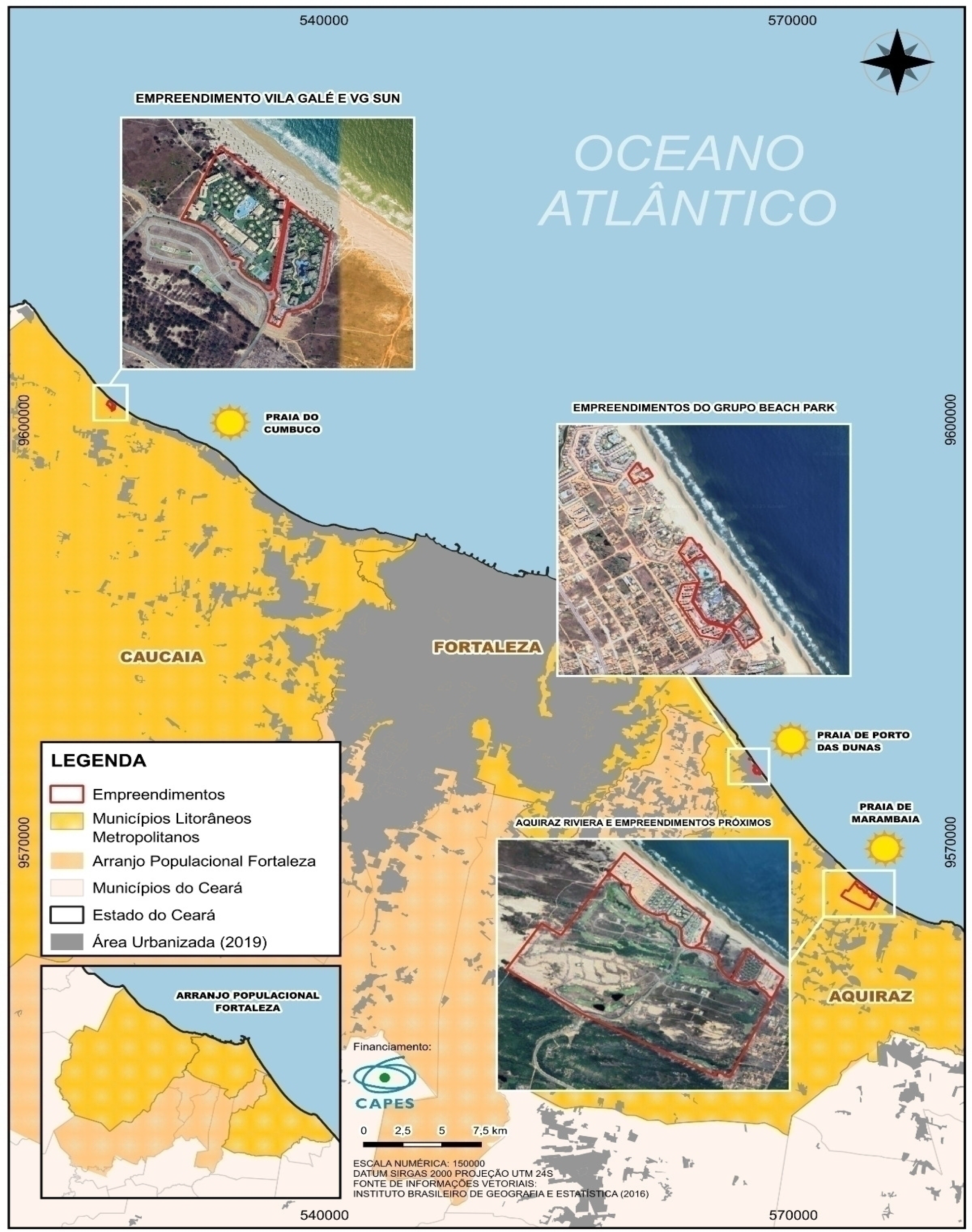
This differentiation in management strategies aims to increase the profitability of real estate activities and is associated with greater possibilities for coordination and interaction among economic agents and for real estate asset management. From Abramo's perspective (1999), these agents belong to developer capital, since they own urban land parallel to the shoreline (Figure 3), have the capacity to substantially alter land use, and are able to mobilize other forms of capital (construction and financial) to carry out investments. According to the author, this dynamic takes place in the form of a real estate circuit. In the present case, it constitutes a superior real estate circuit, given the scale of real estate production and the volume of investments involved.
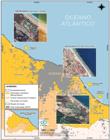
Real estate developments parallel to the beach in Caucaia and Aquiraz. Source: Images from Google Earth Pro (2023), compiled by the author.
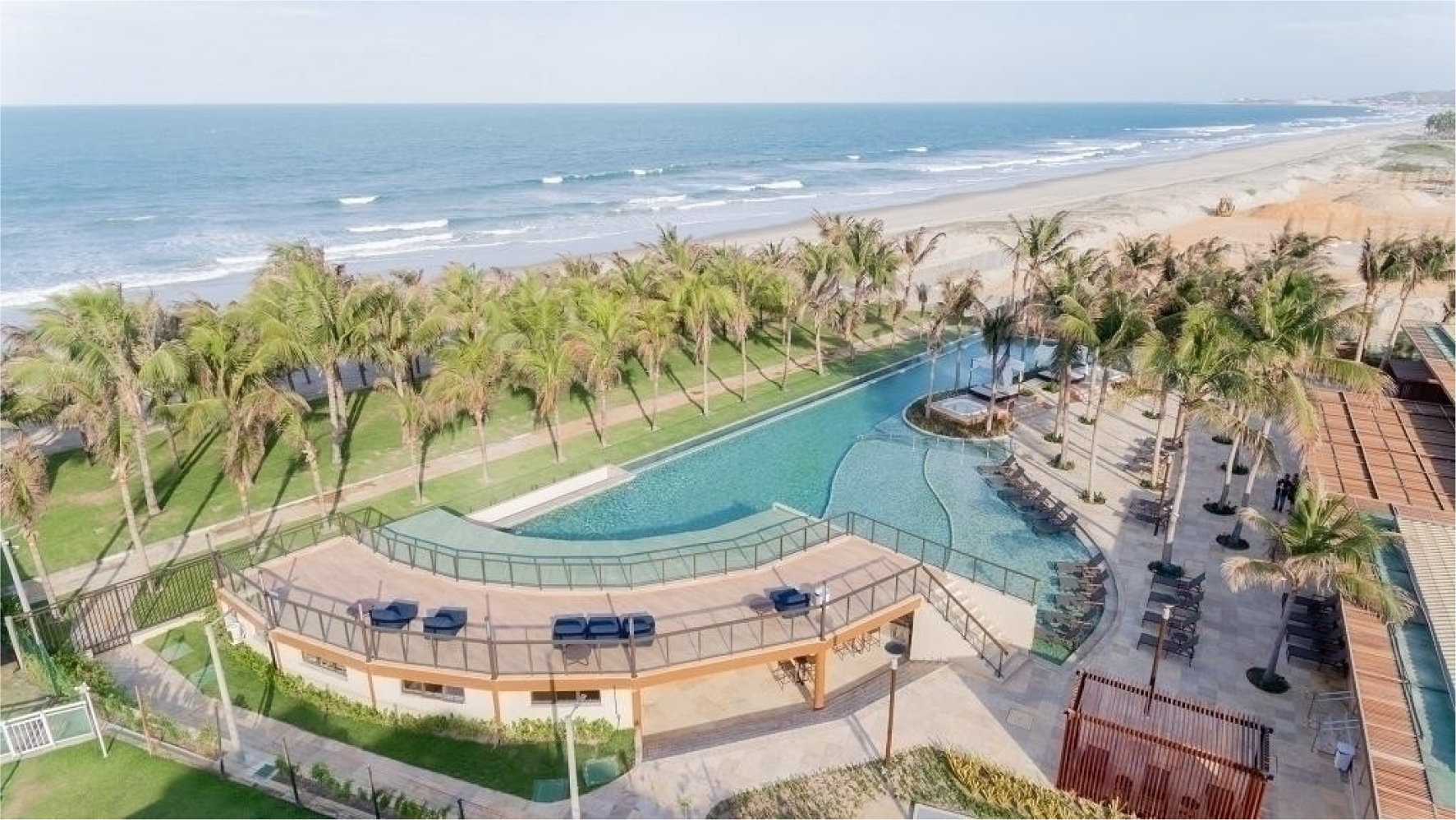
Other economic groups also operate in both Caucaia and Aquiraz (such as Carmel Cumbuco Resort, Wai Wai Cumbuco Eco Residence, Golf Ville Resort, and VS Sun Cumbuco), offering differentiated leisure activities, including, for example, the golf course at Bela Vista Aquiraz Riviera (Figure 4).
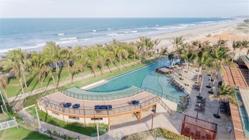
Bela Vista Aquiraz Riviera on Marambaia Beach in Aquiraz. Source: Diário do Nordeste, August 14, 2024. Source: Diário do Nordeste, August 14, 2024.
This reflection is based on two ideas concerning fragmentation put forward by Prévot-Schapira (2000):
-
1.The emergence of residential areas occupied by higher-income social groups, surrounded by walls and equipped with their own urban services, green spaces, and sport facilities, among other amenities for exclusive use, which together promote a disconnection from the surrounding urban environment.
-
2.Social and morphological homogenization based on the distinction between those who own real estate, thereby dissolving the organic ties between different parts of the city.
Sposito (2024a) argues that socio-spatial fragmentation does not refer only to the separation of urban forms, but is also associated with the exacerbation of differences, in a context in which collective interests carry less weight than individuality. In the coastal areas mentioned, the intensity of private appropriation and the economic profitability of real estate products exert a significant influence on the production of urban space.
In the following section, we focus on understanding fragmentary logic and the reproduction of urban space, especially in areas of urban expansion where the segmentation of spatial forms and practices is most intense and most clearly observable.
FRAGMENTARY LOGIC AND SELF-SEGREGATION OF LEISURE AND COASTAL LIVING
Fragmentary logic can be understood as a new way of structuring urban space, intensified by renewed forms of land and real estate valorization in areas of urban expansion, where new habitats are established (Sposito, 2024b), often without spatial continuity with the consolidated urban core (Barata-Salgueiro, 1997). It was during the 1980s and 1990s that this spatial logic gained greater prominence in cities (Legroux, 2021). To fully grasp this process, it is necessary to move beyond the idea of the city as a unified spatial entity (Sposito, 2010).
In the metropolitan context of Fortaleza, the analyses carried out by Dantas, Silva, and Costa (2009) corroborate this interpretation, particularly in relation to the process of metropolization of space.
By assuming the reproduction of the coastal urban area under a fragmentary logic, the notions of urban society and the fragmented city (Lefebvre, 2004) become central to understanding contemporary forms of urban life.
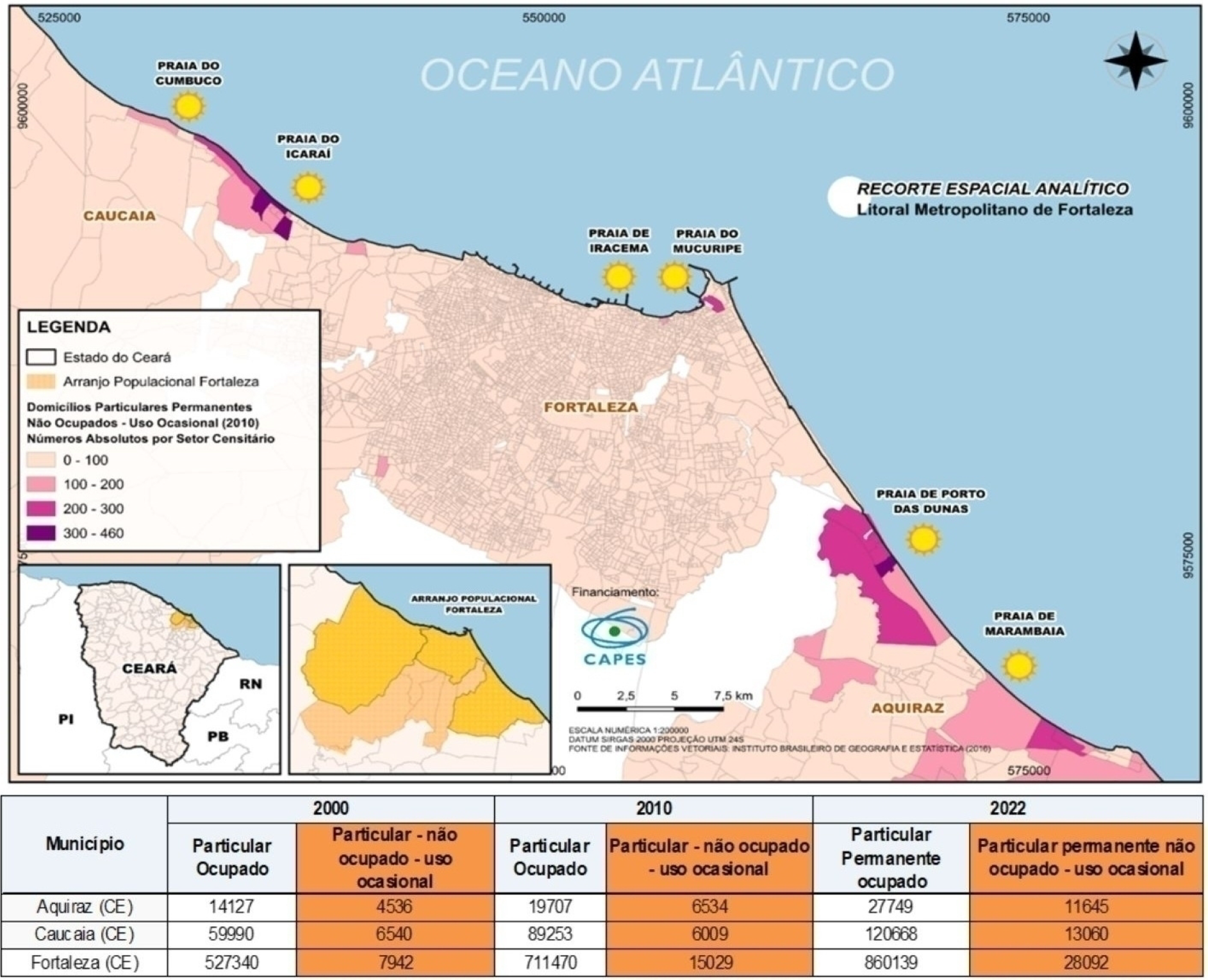
In terms of spatial forms, on the beaches of Cumbuco, Icaraí, and Porto das Dunas, real estate development is directed toward two main segments: permanent occupied residences and occasional-use residences. The latter is intended for individuals who already own a primary residence and use a second for leisure purposes (Dantas, 2020; Pereira, 2012; Pereira, 2013; Vieira, 2024) (Figure 5).
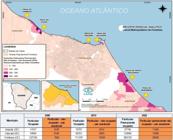
Number of occasional-use households on the metropolitan coast of Fortaleza and their distribution by census tract in 2010. Source: Demographic Censuses of 2000, 2010, and 2022, compiled by the author.
On the coast of Caucaia and Aquiraz, there is a notable predominance, by census tract, of occasional-use households when compared to Fortaleza (Praia de Iracema, Meireles, and Mucuripe), even though the latter has a higher absolute number of such dwellings. This configuration reinforces the idea that these areas of coastal urban expansion are more strongly influenced by this type of residence.
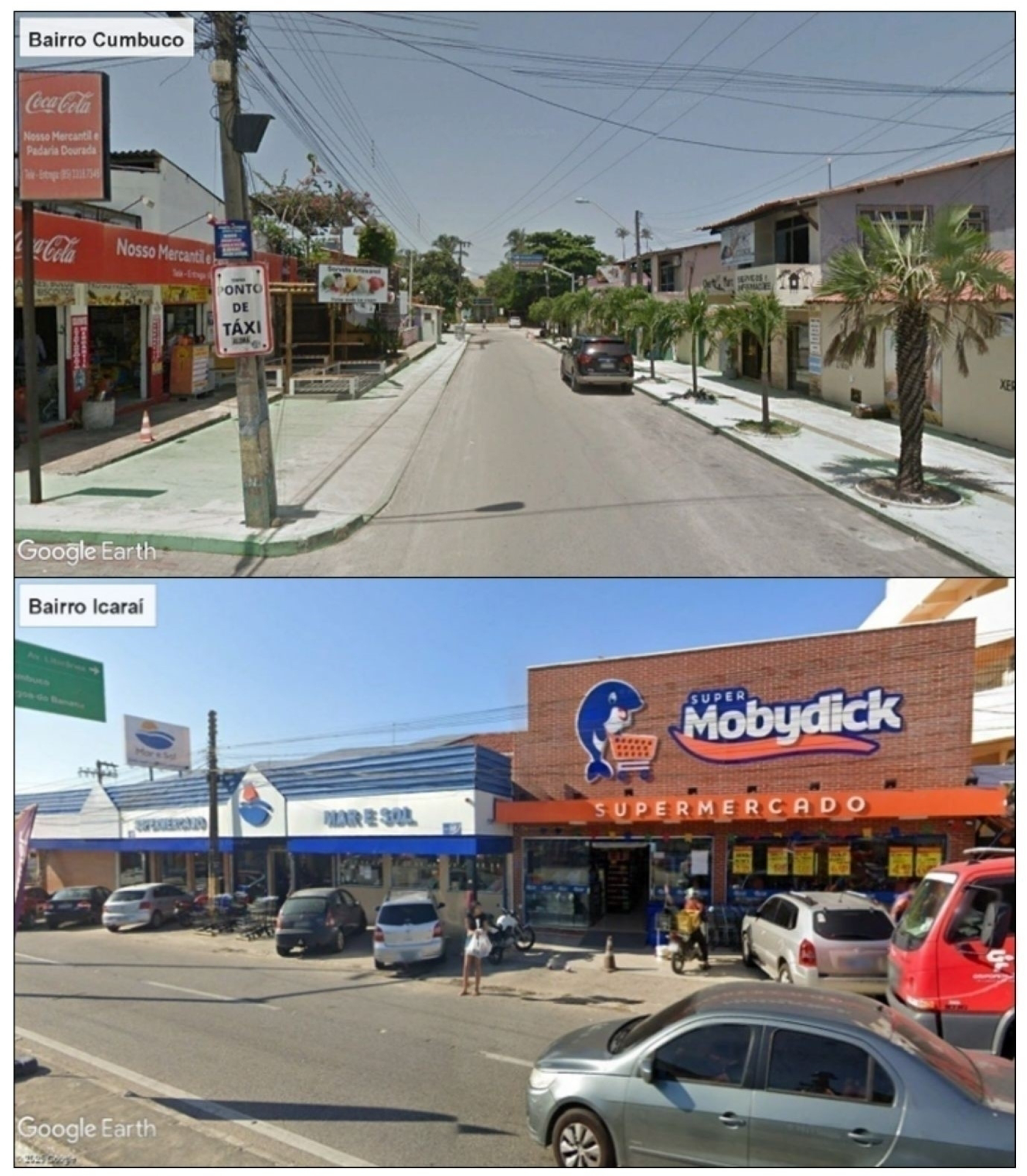
In these locations, the tertiary sector is well represented - through bars, restaurants, and supermarkets - as is road infrastructure, which suggests that these areas function as commercial centers and exert a certain degree of centrality (Figure 6), as noted by Abate (2022) and Sposito (2013; 2022). This was one of the factor that, in recent decades (2000 and 2010), contributed to the predominance of primary residences owned by the middle class over second homes in the Icaraí neighborhood.
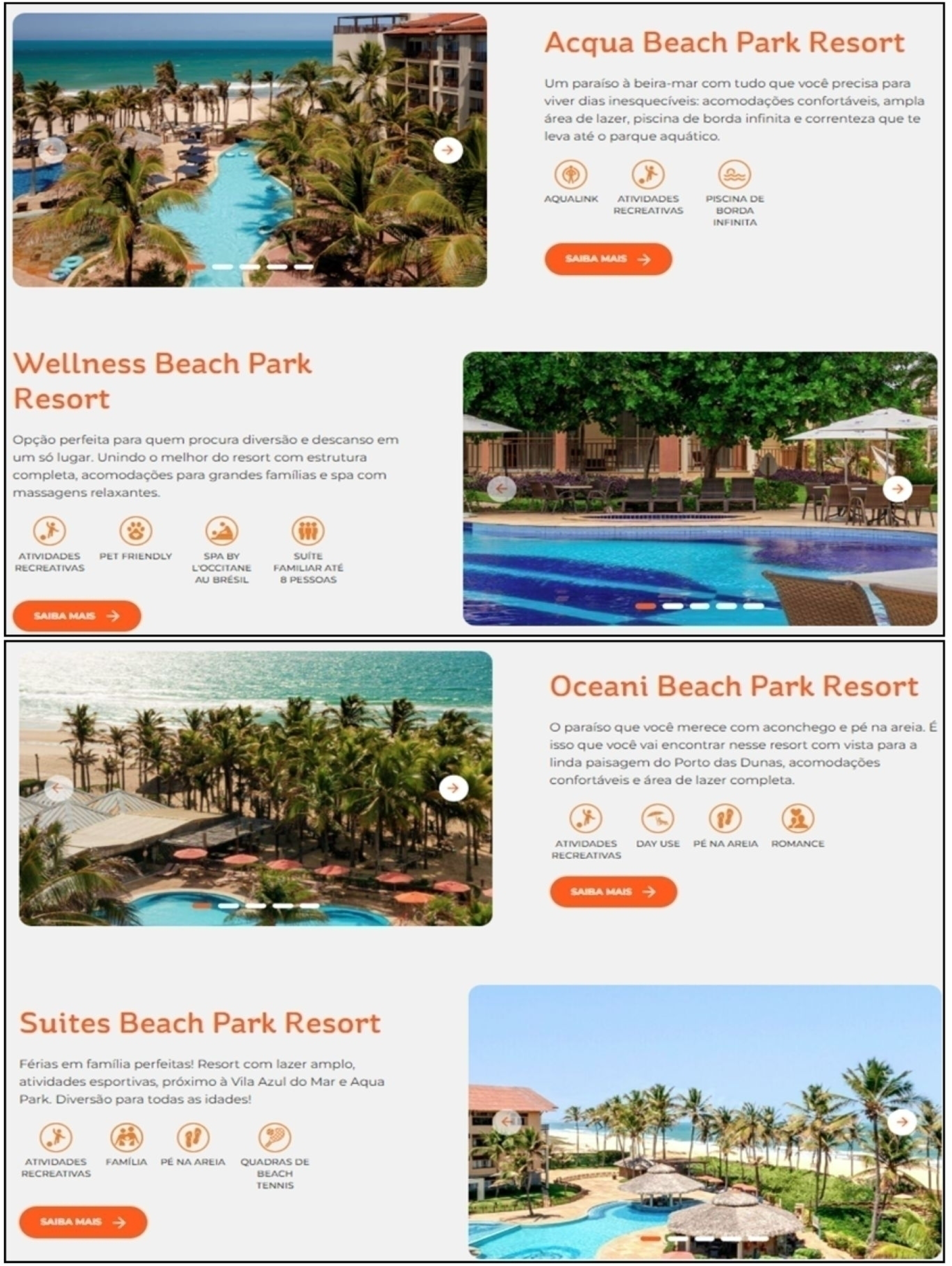
The strategies adopted by real estate agents to attract both permanent and occasional residents are closely associated with a wide range leisure activities. The different “attractions” offered reflect a search for differentiation in real estate production, with the Beach Park Group serving as a representative example (Figure 7).

Different exclusive services offered at different Beach Park Group developments. Source: Beach Park, available at https://beachpark.com.br/experiencias/resorts-e-hoteis/.
The leisure activities offered illustrate the provision of differentiated services among enterprises belonging to the same economic group. They highlight the contradiction between public and private spaces in two main ways:
-
1.The beach, as a public space, allows leisure activities to be enjoyed by people from different socioeconomic backgrounds and within a certain degree of spatial proximity. In gated and private developments, by contrast, these activities are carried out by middleand high-income groups in the same spaces as their occasional or permanent residence (Figure 8).
-
2.The location of these developments in areas of coastal urban expansion both enables and reinforces the segmentation of socioeconomic profiles. In addition, they are particularly suited to those who have private vehicles, since these areas are characterized by a lack of, or insufficient, public transportation.
Sposito et al. (2023) and Sposito and Góes (2013) draw attention to the growing distance from the city and its denial, marked by the exacerbation of differences and the by the introduction of security devices and walls. In the case examined here, the existence of barriers and walls is relative, since access to the beach is legally guaranteed. However, this condition is under strain, as exchange value carries increasing weight in the current reproduction of urban space, whose unlimited expansion is primarily oriented toward consumption.
These closed and private spaces are not intended for everyone; they involve a relative degree of selectivity in terms of use and occupation, being accessible only to those who have the economic means to live there, occupy them occasionally and/or permanently, and enjoy the leisure services offered internally. Thus, can we say that we are facing a process of socio-spatial segregation?
Carlos (2020) argues that, under the rationality of capitalism in the production of urban space, socio-spatial segregation is experienced by urban society as a whole. The alienation of the city as a product leads individuals to experience urban life in a privatized way, since it is driven by exchange value. Sposito (2013) points out that the application of this concept becomes particularly relevant when forms of differentiation lead to radical spatial separation, producing a relative rupture between parts of the city and the urban whole.
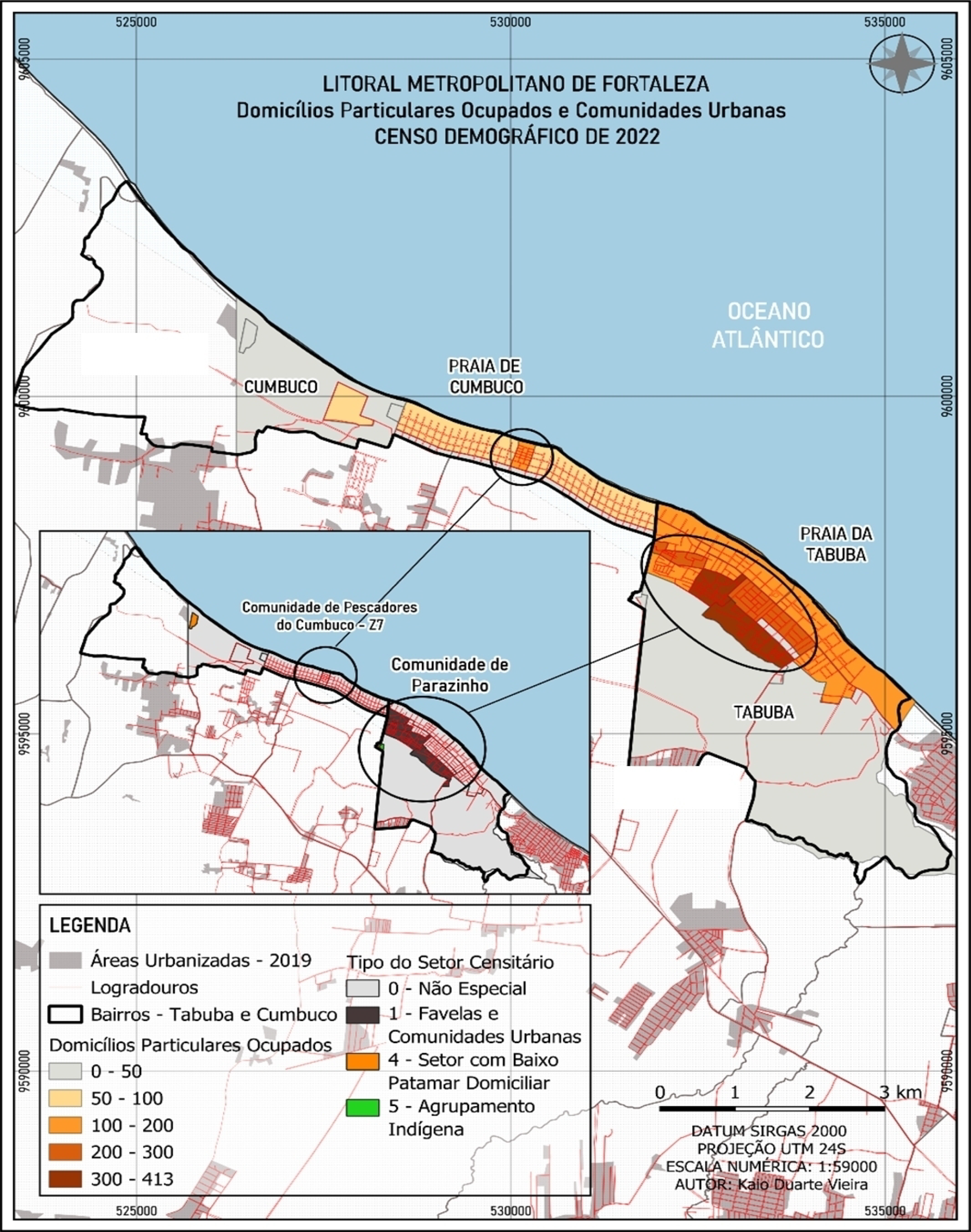
Socio-spatial segregation is generally used to refer to the residential areas of the less affluent social groups, who live in places with insufficient and nonexistent services. This, however, is not the topological content found here. The real estate developments under analysis are occupied by and targeted at higher-income groups and are not limited to offering residential products alone. Nevertheless, in some coastal areas, there is a relative spatial proximity to lower-income groups (Figure 9).
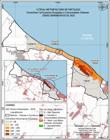
The metropolitan coastline of Fortaleza, specifically in the municipality of Caucaia: the beaches of Cumbuco and Tabuba. Source: IBGE (2022) and prepared by the author.
The relationship between continuity and contiguity is fundamentally altered. Spatial contiguity is intensified in areas of coastal urban expansion (along the coasts of Caucaia and Aquiraz), and when spatial proximity is established, there is a discontinuity in social content. Thus, we agree with Sposito (2013) in arguing that socio-spatial segregation becomes insufficient for understanding these new relations of proximity, contiguity, and spatial practices.
At present, segregation has not been eliminated; on the contrary, it has become more complex and profound. In dialogue with Sposito and Goés (2013), and based on the notion of socio-spatial fragmentation, we understand it as a broader concept that points to new levels and contents of socio-spatial differentiation and segregation.
Given the socio-spatial fragmentation inherent in the current production of urban space, the meaning of segregation is renewed and expanded in the sphere of housing. Its applicability is no longer restricted solely to the poorest urban dwellers. New forms of segmentation in urban space are also produced by higher-income groups, who have the opportunity to occupy these closed and private spaces, as is the case here. Souza (2006), writing about Barra da Tijuca, points to processes of self-segregation in exclusive condominiums that combine housing, consumption, services, and leisure. Prévôt Schapira and Pineda (2008) refer to this phenomenon as ciudad cerrada or ciudad privatizada.
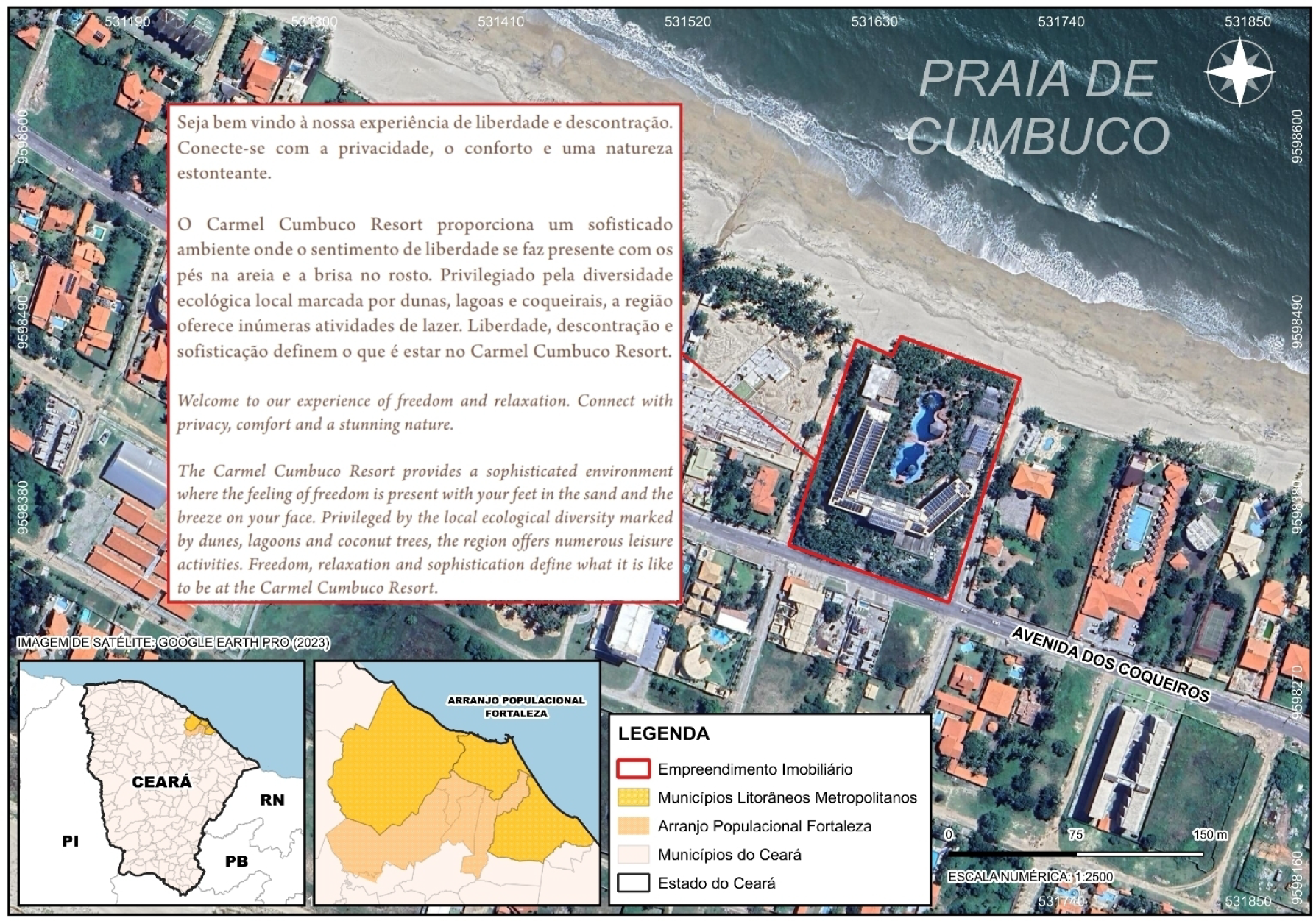
Sposito and Góes (2013) refer to this process as socio-spatial self-segregation. It concerns socio-economic groups with more favorable conditions who choose isolation and partial separation from the city as a whole. Here, the elements of opportunity and choice are present, unlike socio-spatial segregation, which is imposed. In the present case, socio-spatial self-segregation has a dual residential dimension, involving both primary and secondary residences, both linked to leisure (Figure 10).
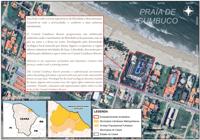
Location of the Carmel Cumbuco Resort and information for guests from the resort's services directory. Source: Image from Google Earth Pro (2023 and, information from the resort's service directory, compiled by the author.
The combination of freedom, privacy, and comfort associated with natural beauty is shaped by leisure practices carried out in enclosed and private spaces, which in some cases are physically separated from the beach. This produces a form of relative homogenization that, in turn, intensifies self-segregation. In our view, this process is particularly intense and complex on the metropolitan coast of Fortaleza.
Unlike the form of self-segregation analyzed by Sposito and Góess (2013), which manifests itself primarily through permanent residence (the first property), second homes are aimed at income groups that have the capacity to acquire and manage two or more properties. These dwellings are occupied mainly during leisure time. In addition, they may generate income, since they can be rented out and advertised on platforms such as Airbnb and Booking. Thus, the appropriation of increasingly extensive areas of the coastal urban fabric is not accompanied by an increase in population density or by a more balanced spatial distribution of the population.
Segmentation aimed at specific publics and the individualization of leisure and dwelling practices are driven by ideals of freedom, privacy, security, and comfort. Secchi (2007) points to the growing weight of individualism, focused on conquering ever greater space for the private dimensions of existence. In this way, a relationship is established between the extension of the urban fabric and the predominance of exchange value in the production of urban space.
CONCLUSION
On the coast of this metropolis undergoing socio-spatial fragmentation, there is a strengthening of spatial practices of leisure and dwelling in enclosed and private spaces. At the same time, the urban fabric is becoming increasingly disjointed, a condition that is intensified by the logic of fragmentation.
Socio-spatial self-segregation emerges as a contemporary process that deepens and complements the idea of socio-spatial segregation. The former reveals the valorization of separation by those who have the opportunity to choose in an urban society driven by exchange value. Both processes simultaneously involve movements of radical rupture and relative integration in ways of living in the city and the metropolis.
Thus, the initial hypothesis is reinforced by the dual dimension of socio-spatial segregation and self-segregation in leisure and housing. Both processes are linked to residential use and the occupation of urban space, and even when combined with other dimensions of urban life, housing remains the common element that makes them effective.
The practice of leisure and permanent and/or occasional dwelling, shaped by private and segmented urban forms parallel to the shoreline, is particularly evident in the current period. This points to a progressive dynamic of valorization of coastal urban land. To a certain extent, socio-spatial segregation is strengthened and made more complex by the expansion of the urban fabric, as this expansion is not accompanied by greater social integration into the metropolitan space, increased social interaction, or a reduction of inequalities.
This process is further intensified when occasional-use residences are taken into account, since they reinforce the practice of using enclosed and private spaces. We have observed an updating of real estate products through the strengthening of tourism, which forms part of the various economic strategies of hegemonic agents. Taken together, these dynamics represent a greater rationalization and homogenization of urban space. Living is reduced to habitat. This broadens the scale of the debate on renewed urban life in the metropolis, which is experienced and perceived according to exclusive and fragmented logics.
ACKNOWLEDGEMENTS
We would like to thank Professors Alexandre Queiroz Pereira (master's advisor) and Maria Encarnação Beltrão Sposito (doctoral advisor) for their support of this research. We also gratefully acknowledge the financial support provided by Coordination for the Improvement of Higher Education Personnel (CAPES) and the São Paulo Research Foundation (FAPESP).
NOTES
-
1
This table refers to companies whose CNPJs (Corporate Taxpayer Identification Numbers) appear in records available on the website of the Ceará State Environmental Superintendence (SEMACE) (https://mobile.semace.ce.gov.br/consulta). The database was filtered to include only current and ongoing environmental licensing processes, encompassing both operating projects and projects undergoing environmental regularization in Caucaia and Aquiraz. The municipality of Fortaleza does host resort or large real estate complex projects. The economic activities selected were as follows: 30.02 - Tourist and Leisure Complex, including Theme Parks; 30.02 - Tourist and Leisure Complex, including Theme Parks (Housing Units), 30.02 - Tourist and Leisure Complex, including Theme Parks (Tourist Developments); 30.03 - Hotels; and 30.04 - Inns and Hostels, according to the codes established in COEMA Resolution No. 07 of September 12, 2019. It is important to note that environmental licenses are public documents made available by SEMACE. Full access to each license is available in cases of ongoing proceedings, allowing any interested party to identify the declared area of the development. In addition, for Agents 1 and 2, a CPF (Individual Taxpayer Number) is associated with the environmental license; for this reason, this information has been preserved by the environmental agency. In the column “Number of Members and Administrators,” the number of asterisks (*) indicates the number of foreign partners.
DATA AVAILABILITY
Not applicable.
REFERENCES
- ABRAMO, Pedro. A dinâmica imobiliária: elementos para o entendimento da espacialidade urbana. In: CADERNOS IPPUR/UFRJ, Rio de Janeiro, ano III, n. especial, p. 47-70, dez. 1999. Rio de Janeiro: UFRJ, 1999.
-
BARATA-SALGUEIRO, Teresa. Lisboa, metrópole policêntrica e fragmentada. Finisterra, Lisboa, v. 32, n. 63, p. 179-190, 1997. DOI: 10.18055/Finis1784.
» https://doi.org/10.18055/Finis1784. - CALIXTO, Maria José Martins da Silva. Da lógica centro-periferia à lógica socioespacial fragmentária em uma cidade média. Mercator, Fortaleza, v. 20, e20028, 2021.
- CARLOS, Ana Fani Alessandri. Diferenciação socioespacial. Revista Cidades, Presidente Prudente, v. 4, n. 6, 2007.
- CARLOS, Ana Fani Alessandri. A reprodução do espaço urbano como momento da acumulação capitalista. São Paulo: Contexto, 2015.
- CAVALCANTE, Eider de Olivindo. Modernização seletiva do litoral: conflitos, mudanças e permanências da localidade do Cumbuco (CE). 2012. 138 f. Dissertação (Mestrado em Geografia) - Centro de Ciências, Universidade Federal do Ceará, Fortaleza, 2012.
- CAVALCANTE, Eider de Olivindo. Os meandros do habitar na metrópole: expansão urbana e controle territorial na produção do litoral de Fortaleza. 2018. 269 f. Tese (Doutorado em Geografia) - Universidade Federal do Ceará, Fortaleza, 2018.
- CUNHA, Douglas Sergio da. Planejamento sucessório e patrimonial por meio de holding familiar. 2011. 102 f. Dissertação (Mestrado em Planejamento e Controle de Gestão) - Universidade Federal de Santa Catarina, Florianópolis, 2011.
- CUNHA, Gabriela Bento. Urbanização litorânea e planejamento na metrópole: a produção do espaço urbano de Fortaleza. 2017. 146 f. Dissertação de Mestrado (Mestrado em Geografia) - Universidade Federal do Ceará, Fortaleza, 2017.
- CUNHA, Gabriela Bento. Metropolização litorânea no nordeste brasileiro: a era dos complexos turístico-imobiliários e a produção do espaço. 2023. 166 f. Tese (Doutorado em Geografia) - Universidade Federal do Ceará, Fortaleza, 2023.
-
DANTAS, Eustógio Wanderley Correia. Mar à vista: estudo da maritimidade em Fortaleza. 3. ed. Fortaleza: Imprensa Universitária, 2020. E-book. (Estudos da Pós-Graduação). Available at: http://www.repositorio.ufc.br/handle/riufc/56707 Access on: 20 abr. 2025.
» http://www.repositorio.ufc.br/handle/riufc/56707 -
GADINO, Isabel et al. Tendencias y efectos socioambientales del desarrollo inmobiliario turístico en zonas costeras de Sudamérica: el caso de Región Este, Uruguay. EURE, Santiago, v. 48, n. 145, p. 1-23, 2022. Available at: https://www.eure.cl/index.php/eure/article/view/3969 Access on: 25 jul. 2025.
» https://www.eure.cl/index.php/eure/article/view/3969 - HARVEY, David. Do gerenciamento ao empresariamento: a transformação da administração urbana no capitalismo tardio. Espaço e Debates, São Paulo, n. 39, p. 48-64, 1996.
- HARVEY, David. A condição pós-moderna: uma pesquisa sobre as origens da mudança cultural. São Paulo: Loyola, 1992.
-
IBGE. Arranjos populacionais e concentrações urbanas do Brasil. 2. ed. Rio de Janeiro: IBGE, 2016. 167 p. ISBN 9788524044069. Available at: https://www.ibge.gov.br/apps/arranjos_populacionais/2015/ Access on: 3 ago. 2025.
» https://www.ibge.gov.br/apps/arranjos_populacionais/2015/ - LEGROUX, Jean. A lógica urbana fragmentária: delimitar o conceito de fragmentação socioespacial. Caminhos de Geografia, Uberlândia, v. 22, n. 81, p. 235-248, 2021.
- LEFEBVRE, Henri. A revolução urbana. 2. reimpr. Belo Horizonte: Editora UFMG, 2004.
- MAGRINI, Maria Angélica de Oliveira. Vidas em enclaves: imaginário das cidades inseguras e fragmentação socioespacial em contextos não metropolitanos. 2013. 488 f. Tese (Doutorado) - Universidade Estadual Paulista, Presidente Prudente, 2013.
- PAIVA, Ricardo Alexandre. Sobre a relação turismo e urbanização. Pós FAUUSP/USP, São Paulo, v. 20, n. 33, p. 126, 2013.
- PEREIRA, Alexandre Queiroz. A urbanização vai à praia: contribuições da vilegiatura marítima à metropolização no nordeste do Brasil. 2012. 350 f. Tese (Doutorado em Geografia) - Universidade Federal do Ceará, Fortaleza, 2012.
- PEREIRA, Alexandre Queiroz; CUNHA, Gabriela Bento. Empreendimentos turístico-imobiliários e a modernização dos litorais metropolizados, Fortaleza-Ceará. Sociedade e Território, Natal, v. 30, n. 2, p. 169-193, 2018.
-
PEREIRA, Alexandre Queiroz; DANTAS, Eustógio Wanderley Correia; GOMES, Iara Rafaela. Lazer na praia: segunda residência e imobiliário turístico no Nordeste. Fortaleza: Imprensa Universitária, 2016. E-book. Available at: http://www.repositorio.ufc.br/handle/riufc/19471 Access on: 20 abr. 2025.
» http://www.repositorio.ufc.br/handle/riufc/19471 -
PEREIRA, Tarlei Lemos. Responsabilidade civil em condomínios edilícios. Brasília, 2011. Available at: http://dspace.stj.jus.br/dspace/handle/2011/40093 Access on: 28 jul. 2011.
» http://dspace.stj.jus.br/dspace/handle/2011/40093 -
PRÉVÔT SCHAPIRA, M.-F.; CATTANEO PINEDA, R. Buenos Aires: la fragmentación en los intersticios de una sociedad polarizada. Revista EURE - Revista de Estudios Urbano Regionales, [S. l.], v. 34, n. 103, 2008. DOI: 10.4067/S0250-71612008000300004. Available at: https://www.eure.cl/index.php/eure/article/view/1365 Access on: 20 de abril de 2025.
» https://doi.org/10.4067/S0250-71612008000300004.» https://www.eure.cl/index.php/eure/article/view/1365 -
RUFINO, Maria Beatriz Cruz. Incorporação da metrópole: centralização do capital no imobiliário e nova produção do espaço em Fortaleza. 2012. Tese (Doutorado) - Universidade de São Paulo, São Paulo, 2012. Available at: http://www.teses.usp.br/teses/disponiveis/16/16137/tde-22062012-143019/ Access on: 20 abr. 2025.
» http://www.teses.usp.br/teses/disponiveis/16/16137/tde-22062012-143019/ - SECHI, Bernardo. A cidade contemporânea e seu projeto. In: REIS FILHO, Nestor; PORTAS, Nuno; TANAKA, Marta (org.). Dispersão urbana: diálogo sobre pesquisas Brasil-Europa. São Paulo: FAU, 2007. p. 111-139.
- SILVA, José Borzacchiello da. Quando os incomodados não se retiram: uma análise dos movimentos sociais em Fortaleza. Fortaleza: Multigraf, 1992.
- SILVA, Regina Balbino da. O lazer popular nos espaços à beira-mar em Fortaleza-CE. 2018. 163 f. Dissertação (Mestrado em Geografia) - Universidade Federal do Ceará, Fortaleza, 2018.
- SILVEIRA, Bruno Rodrigues. O morar permanente na praia: moradia e vilegiatura na localidade praiana do Icaraí-CE. 2011. 127 f. Dissertação (Mestrado em Geografia) - Universidade Federal do Ceará, Fortaleza, 2011.
- SOJA, Edward. Geografias pós-modernas. Rio de Janeiro: Zahar, 1993.
- SOUZA, Marcelo Lopes de. O desafio da fragmentação do tecido sociopolítico-espacial. In: A prisão e a ágora. Rio de Janeiro: Bertrand Brasil, 2006. p. 466-511.
- SPOSITO, Maria Encarnação Beltrão. Segregação socioespacial e centralidade urbana. In: VASCONCELOS, Pedro de Almeida; CORRÊA, Roberto Lobato; PINTAUDI, Silvana Maria (org.). A cidade contemporânea: segregação espacial. São Paulo: Contexto, 2013. p. 61-93.
- SPOSITO, M. Encarnação Beltrão. Oportunidades e desafios da pesquisa urbana comparada. In: FIRKOWSKI, Olga et al. (Org.). Estudos urbanos comparados: oportunidades e desafios da pesquisa urbana comparada. 1ª edição. San Miguel de Tucumán: Universidad Nacional de Tucumán, 2016, v. p. 25-60.
- SPOSITO, Maria Encarnação Beltrão. Fragmentação socioespacial e consumo na periferia de São Paulo. Tlalli, Cidade do México, n. 8, p. 56-85, 2022.
- SPOSITO, Maria Encarnação Beltrão. Fragmentación socioespacial y urbanización contemporánea. Estudios Socioterritoriales, v. 35, p. 9-32, 2024a.
- SPOSITO, Maria Encarnação Beltrão. Condição urbana periférica sob a lógica fragmentária. Problèmes d’Amérique Latine, v. 126, p. 81-106, 2024b.
- SPOSITO, Eliseu Savério; SPOSITO, Maria Encarnação Beltrão. Fragmentação socioespacial. Mercator, Fortaleza, v. 19, p. 1-12, 2020.
- SPOSITO, Maria Encarnação Beltrão et al. Fragmentação socioespacial e urbanização brasileira: escalas, vetores, ritmos, formas e conteúdos. In: ENCONTRO NACIONAL DA ANPUR, 20., 2023, Belém. Anais… Belém: UFPA, 2023. p. 1-11.
- TAVARES, Isabella Freires. Parcerias públicas e privadas e a incorporação imobiliária na orla de Fortaleza-CE. 2023. 163 f. Dissertação (Mestrado em Geografia) - Universidade Federal do Ceará, Fortaleza, 2023.
- VIEIRA, K. D. O litoral habitado: uso residencial na costa oeste cearense. 2024. 153 f. Dissertação (Mestrado em Geografia) - Universidade Federal do Ceará, Fortaleza, 2024.
- VIEIRA, K. D.; PEREIRA, Alexandre Queiroz. Usos residenciais, lazer e fragmentação do litoral oeste da metrópole fortalezense. In: CAPEL, Horacio et al. (org.). A geografia ibero-americana no contexto contemporâneo: um balanço crítico. Rio de Janeiro: Letra Capital, 2024. v. 2. p. 459-485.
Edited by
-
Editors in Charge
Alexandra Maria OliveiraAlexandre Queiroz Pereira Eduardo Von Dentz