 TOURISM PRESSURE AND TOURISM CARRYING CAPACITY LIMITS IN JERICOACOARA VILLAGE, CEARÁ, BRAZIL
Abstract
The village of Jericoacoara, located within the Jericoacoara National Park (PARNA), has been suffering from an overload of tourist visitation that compromises environmental preservation, local biodiversity, and carrying capacity. Given this context, this article aims to estimate the tourist carrying capacity of the village of Jericoacoara, in the state of Ceará, in light of the intensification of tourism that has occurred since the 2010s. Methodologically, we adopted the method of measuring physical, real, and effective carrying capacity proposed for natural parks, considering tourist visitation data, total visitation area, total daily opening hours to the public, average length of stay of visitors, and limiting factors, based on conditions in 2019. The results indicate that the current visitation scenario exceeds the actual and effective capacity of the site, even considering a hypothetical scenario of sustainable tourism, with a 20% reduction in tourist flow. Even so, in this scenario, there is a greater approximation between the number of visitors and the estimated sustainable limits. The conclusion was that there is a need for intervention aimed at the sustainable management of the village, through coordination between the government, the local community, and the tourism sector.
Keywords:
Mass Tourism; Environmental Quality; Recreational Activities; Conservation Unit; Coastal Zone.
Resumo
O A vila de Jericoacoara, inserida no Parque Nacional de Jericoacoara (PARNA), vem sofrendo uma sobrecarga de visitação turística que compromete a preservação ambiental, a biodiversidade local e a capacidade de suporte. Diante desse contexto, este artigo tem como objetivo estimar a capacidade de carga turística da vila de Jericoacoara, no Estado do Ceará, frente à intensificação do turismo ocorrido a partir da década de 2010. Metodologicamente, adotou-se o método de mensuração de capacidade de carga física, real e efetiva proposto para parques naturais, considerando dados de visitação turística, área total de visitação, tempo total diário de abertura ao público, tempo médio de permanência dos visitantes e fatores limitantes, com base nas condições de 2019. Os resultados indicam que o cenário atual de visitação ultrapassa a capacidade real e efetiva do local, mesmo considerando um cenário hipotético de turismo sustentável, com redução de 20% no fluxo turístico. Ainda assim, nesse cenário, observa-se uma maior aproximaria entre o número de visitantes e os limites sustentáveis estimados. Concluiu-se que há necessidade de intervenções voltadas à gestão sustentável da vila, por meio de articulações entre o poder público, a comunidade local e o setor turístico.
Palavras-chave:
Turismo de massa; Qualidade ambiental; Atividades Recreativas; Unidade de Conservação; Zona Costeira.
INTRODUCTION
The village of Jericoacoara, located in the municipality of Jijoca de Jericoacoara, in the state of Ceará, has stood out on the national and international tourism scene for its natural landscape, rustic architectural style, cultural diversity, and unique local way of life, since it can only be accessed via unpaved trails with four-wheel drive vehicles and buggies through a field of migratory dunes inland (MEIRELES; DANTAS; DA SILVA, 2011). These aspects have made it a benchmark for beach, sun, sea, and adventure tourism (MOLINA, 2007), especially in the 1990s.
The village of Jericoacoara also has environmental importance in the state scenario because it is located in an Environmental Protection Area (APA) - federal decree number 90.379/1984 - and is surrounded by the Jericoacoara National Park, under Normative No. 04, of the Decree of February 4, 2002 (MEIRELES; DANTAS; DA SILVA, 2011). As a result, the natural attractions in the village of Jericoacoara began to be explored by visitors from within the state of Ceará, from other states in Brazil, and from other countries. This factor can lead to disorderly tourism, with the creation of various economic activities in the village to meet the intense flow of tourists. According to Oliveira (2019), in this scenario, Jericoacoara adopted the slogan “Tropical Paradise,” a fact that made the city emerge as one of the ten most beautiful landscapes in the world and made it the “number one” destination in South America.
Between 2009 and 2019, the pre-pandemic period, tourism in the village grew significantly, driven by the inauguration of Jericoacoara Airport (Comandante Ariston Pessoa Regional Airport), built in 2017, which facilitated access and further boosted the flow of tourists to the region. During this period, the number of tourists increased from 90,080 in 2009 to 113,598 passengers via the airport in 2019 (CEARÁ, 2025). However, despite the strengthening of tourism in the 2010s and still being one of the most sought-after and representative destinations in Ceará, the village faces challenges related to environmental and social impact. These problems primarily include groundwater pollution, the advance of dunes, and transformations in the physical and human aspects of the locality, often caused by a demand for visitation beyond its physical capacity. In addition, in the early 2020s, the village faced new challenges, such as land invasions, the implementation of tourist taxes, and administrative conflicts, which gained media attention. This current problem in the village of Jericoacoara is exacerbated when tourism within protected areas is considered as promoting a connection between visitors and nature, which is an important part of the global tourism industry (Leung et al., 2019).
It is in this context that the issue of tourist carrying capacity arises-a topic that began in the 1960s with the growth of global tourism and debates about overtourism (RUSCHMANN, 1997; BUTLER, 2020; BERTOCCHI et al., 2020) - as an interest and concern for possible effects on the environmental dimension in local communities, especially residents in protected areas, who suffer from the intensification of tourism.
Thus, the concept of carrying capacity has evolved - initially applied to the capacity of forests and animal reproduction for natural systems to absorb population growth without compromising the environment - to the idea of tourist carrying capacity, used to estimate the effects of tourism on a given space or environment (ZACARIAS, 2013; YUSOH, 2021). This means that studies on carrying capacity must consider the point at which infrastructure and natural conditions become too scarce to meet the needs of a population group, whether resident or not (CIFUENTES et al., 1999; ZACARIAS, 2013).
Based on this overview, the guiding question of the research is: what are the limits of the tourist carrying capacity of the village of Jericoacoara, Ceará, in view of the intensification of tourism in the 2010s? Thus, the objective of this study is to estimate the tourist carrying capacity of the village of Jericoacoara in view of the intensification of tourism in the 2010s. Specifically, the objectives are to measure the tourist carrying capacity in a context of disorderly tourism growth and to assess the tourist carrying capacity for a situation of adopting sustainable tourism. The hypothesis defended is that the intensification of tourism in the village of Jericoacoara exceeded the limits of the region's tourist carrying capacity, which has resulted in pressure on local infrastructure and natural ecosystems.
The rationale for this study is based on recent research analyzing the impact of increased visitor numbers and tourist traffic in certain locations, highlighting the formation of degraded areas and the consequent displacement of wildlife, especially in areas of trails and roads (FIDELUS-ORZECHOWSKA et al., 2021; DONÁZAR et al., 2022). Cases such as that of Cotacachi Cayapas National Park, Ecuador, illustrate the effects of this phenomenon, where excessive visitation has resulted in the saturation of trails and exceeding acceptable limits for ecological changes (ZAMBRANO; MURILLO, 2023). Thus, exceeding the tourist carrying capacity in protected areas can trigger the deterioration of water quality, compromising local biodiversity and affecting the survival of aquatic species (LEE; CHANG, 2015).
It is important to note that the assessment of tourist carrying capacity should not be used as a factor restricting the development of a specific tourist region, but rather as an instrument to align tourism with conditions of environmental balance and sustainability (SILVA et al., 2013). This aspect becomes even more relevant in protected areas facing intensified tourism activity, such as the village of Jericoacoara, where growing concerns about environmental sustainability and climate change require a precise understanding of carrying capacity limits. Thus, this study seeks to provide insights that reconcile the preservation of ecosystems with the promotion of the sustainable use of natural resources and local infrastructure.
METHODOLOGY
STUDY AREA
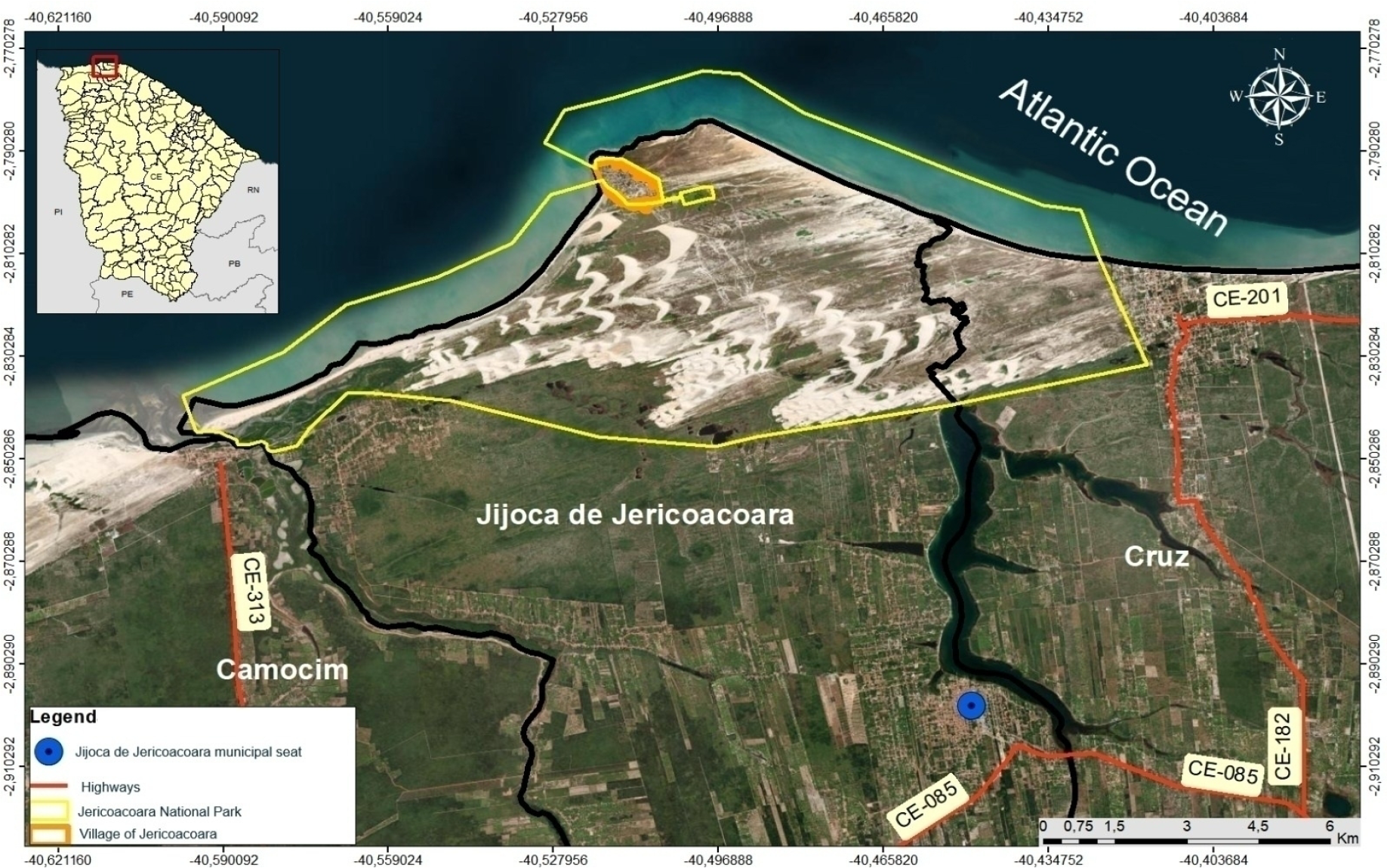
The municipality of Jijoca de Jericoacoara is located on the far west coast of the state of Ceará, approximately 300 km from the state capital, Fortaleza. It is a coastal municipality with a strong tourist vocation due to the village of Jericoacoara, recognized as one of the main tourist destinations in the state. The village of Jericoacoara is located within the Jericoacoara National Park (PARNA) - a federal conservation area - characterized by sensitive coastal environments, such as beaches, mobile and fixed dunes, interdune lagoons, and underground aquifers.
The village of Jericoacoara has a total area of 938,400 m2 and has three main streets with the highest tourist traffic. These streets are home to commercial establishments that meet the demands of visitors and serve as a hub connecting the other secondary streets in the town, namely: Rua Principal, covering 8,624 m2; Rua do Forró, covering 6,672 m2; and Rua São Francisco, covering 4,672 m2 (Figure 1). Thus, the sum of these three streets totals 19,968 m2 dedicated to tourist traffic, which corresponds to 2.12% of the total area of the village.
Location of the village of Jericoacoara, in Jijoca de Jericoacoara, Ceará. Source: Prepared by the authors.
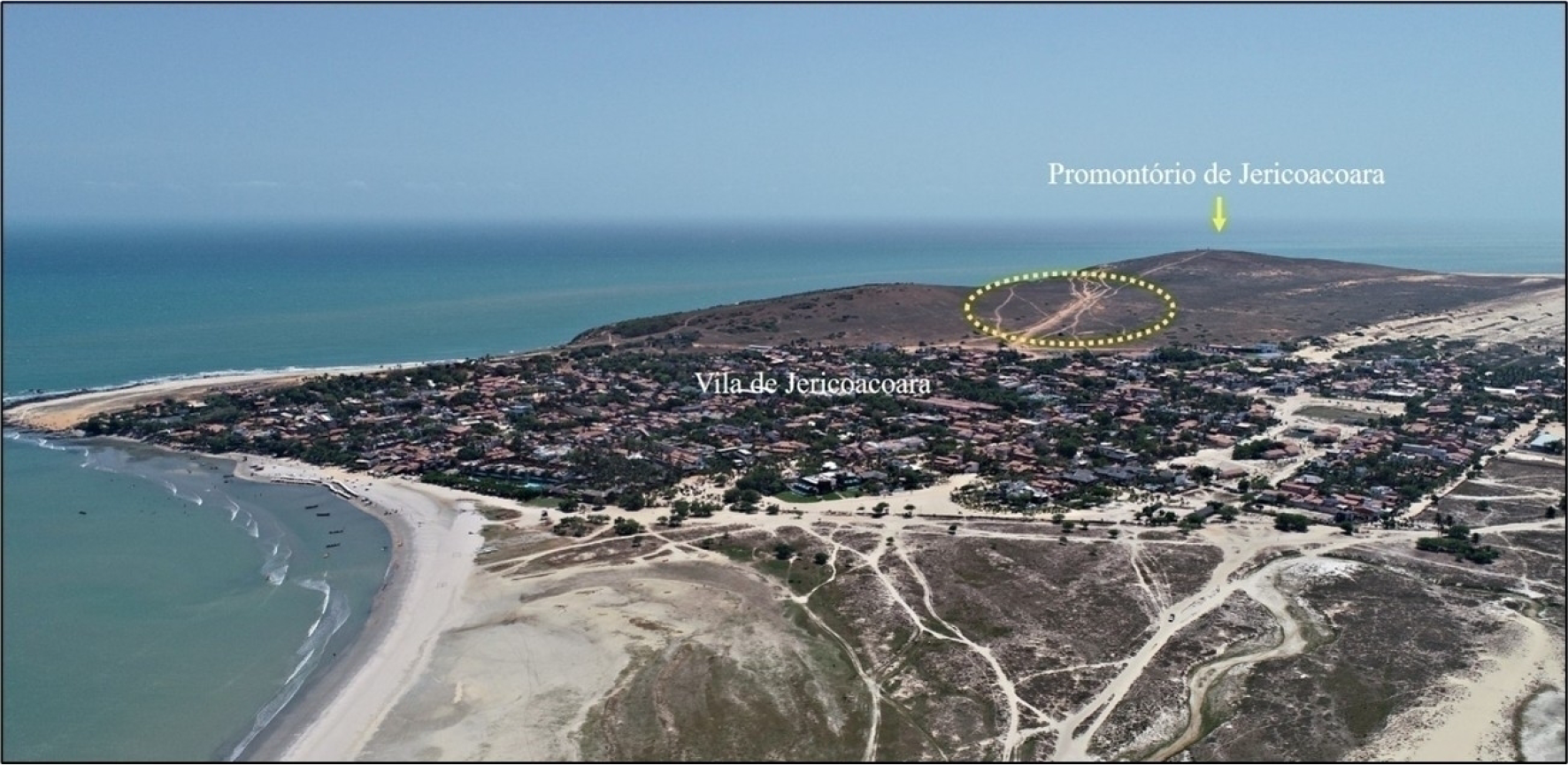
The area has intense tourist activity, concentrated mainly in the village, where the main services, tourist facilities, and visitor support infrastructure are located. The village of Jericoacoara (Figure 2), a former fishing village, is located 18 km from the municipal seat and is built mainly on a wind-deflation surface, with the sea as its northern boundary. Jericoacoara can be reached via Fortaleza Airport or Jericoacoara Airport, two fixed points that drive traffic towards the village.
Overhead view of the village of Jericoacoara between its rocky promontory, the sea, and the dunes. Source: Prepared by the authors.
CARRYING CAPACITY
Specialized literature provides methodologies for assessing the tourist carrying capacity of a study location (RUSCHMANN; PAOLUCCI; MACIEL, 2008). The method chosen in this research was developed by Cifuentes (1992; 1999), widely used in national and international literature, which allows the integration and quantification of physical, biotic, and infrastructure factors. Thus, the method allows for the integration and quantification of physical carrying capacity (PCC), actual carrying capacity (ACC), and total or effective carrying capacity (TCC). It is worth noting that PCC will always have a greater magnitude than ACC, which, in turn, will be greater than or equal to TCC (Table 1).
When calculating the PCC, the relationship between opening hours and visiting time, the space available for visits, and the space required per visitor are taken into account. The PCC is calculated using Equation 1 (Zacarias, 2013).
Where: S = Total area of the attraction; su = Average area occupied by a visitor; T = Total time the area is available for public visitation; t = Average time required to complete the visit.
For the total visitation time (T), the total time that the village is available for visitation or to receive tourists in a given period was considered. The time required for tourists to visit the location (t) was estimated based on the length of the visitor's stay in the village, corresponding to the time required for tourists to visit, use, and enjoy the main attractions and physical spaces offered by the locality, such as restaurants, bars, snack bars, craft shops, beach huts, and others (Table 2).
Variables and descriptors for physical load capacity indicators. Source: Prepared by the authors.
Physical capacity was corrected based on a series of environmental factors that act as limitations to visitation, called correction factors. This indicator is calculated using Equation 2. These are factors that limit the number of people who have access to a given recreational area. Equation 3 is used to calculate the limiting or correction factors of the attraction (ZACARIAS, 2013).
Where RCC is the indicator of the maximum number of tourists who can visit a given area, using correction factors; PCC = Physical Carrying Capacity; FL1 to FLn = Limiting or correction factors for PCC.
Where: q = limiting quantity of the factor considered; Q = maximum quantity at which the limiting factor is considered.
Limiting factors associated with the physical and structural aspects of the village of Jericoacoara were considered, with emphasis on the availability, quality, and management of water resources. The assessment focused on the groundwater resources that supply the village. Thus, the determination of the carrying capacity related to the use of water resources took into account not only the number of visitors, but also the floating population of daily workers and the resident population.
Considering the relevance of groundwater resources to the functioning of the village, the following were defined as limiting factors (FL): available water reserves (FL1), the ratio between the volume of water consumed and sewage produced (FL2); the coverage rate of the sanitary sewage network (FL3), and the capacity of the Sewage Treatment Plant (ETE) in the village of Jericoacoara (FL4) (Table 3). This last factor refers to the average flow supported by the ETE, whose extrapolation of limits compromises treatment efficiency and can cause soil and groundwater contamination.
Calculation of Limiting Factors (LF) for the calculation of RCC. Source: Prepared by the authors.
These factors were selected because human activity intensifies the use of water resources and the generation of solid waste, especially in contexts of expanding forms of production and the consumer market. In contrast, sanitation systems remain insufficient in many cases, which increases the likelihood of environmental problems (BACHSTEIN, 2016).
Finally, Effective Carrying Capacity (ECC) is considered, which incorporates factors related to the dimensions of human resources, infrastructure, and equipment available to support visitation and meet management objectives. At this stage, the management capacity of the local administration is evaluated, so that the ECC results from the reduction of the Actual Carrying Capacity (ACC) based on the existing effective management conditions (MELO et al., 2006). It is calculated using Equation 4.
Where CM = Area management capacity.
Management Capacity (CC) is defined based on the percentage ratio between installed capacity and adequate capacity (Cordeiro; Körössy; Selva, 2013). These elements are part of the management component and deal with the level of visitation that can be controlled in the area. Thus, Effective Carrying Capacity applies a reduction factor to Actual Carrying Capacity due to limitations in reception infrastructure and the capacity to manage the expected number of users (Ruschnmann, Paolucci, & Maciel, 2008; Cordeiro, Körössy, & Selva, 2013). CM is calculated using Equation 5.
A series of aspects related to the management of the village of Jericoacoara were surveyed, which are directly linked to the sustainable management of the environment, as presented in Table 4.
Requirements used to calculate the carrying capacity of the village of Jericoacoara. Source: Prepared by the authors.
It is important to note that the original application of the method proposed by Cifuentes et al. (1999) occurred in an area with characteristics distinct from those of the village of Jericoacoara, notably with a lower degree of anthropization. Thus, it was necessary to make methodological adaptations for calculating carrying capacity in the context analyzed.
Where CA: Components Served; CT: Total Components
RESULTS AND DISCUSSION
This section measures the actual and effective physical carrying capacity, considering the current scenario of disorderly tourism in the village of Jericoacoara. Next, a hypothetical scenario of sustainable tourism is presented, in which a 20% reduction in the influx of visitors to the village is considered.
Considering the recent process of intensification and disorder of tourist activity, as well as other surveys carried out in the village by the Municipality of Jijoca de Jericoacoara and the Chico Mendes Institute for Biodiversity Conservation, it is estimated that in December 2019, the high season due to the end-of-year festivities and holidays, the village of Jericoacoara recorded an average daily flow of 11,919 people. A total of 357,570 paying visitors, subject to the Sustainable Tourism Tax (TTS), were estimated throughout the month, with an occupancy rate of practically 100% of accommodation facilities. Among this contingent, individuals classified as tourist stock, that is, those who remained continuously in the village, correspond to the resident population, estimated at approximately 3,000 residents, according to IBGE (2010) data, who demand water resources, consume services, and generate solid waste and effluents throughout the entire period analyzed (Table 5).
Tourist flow in the village of Jericoacoara (December 2019). Source: Prepared by the authors.
In the macro scenario of sustainable tourism, a high season context was considered based on a total of 357,570 visitors. Applying a 20% reduction in tourist flow resulted in approximately 286,056 visitors throughout the month, which corresponds to an average daily flow of 9,535 tourists. In this scenario, the reduction in relation to the macro scenario of disorderly tourism is 71,514 visitors in the monthly period.
In this context, the presence of disorderly tourism in the village is associated with locations characterized by intense tourist visitation. According to Oliveira (2019), July 2018, the village of Jericoacoara received around 120,000 tourists, a number approximately 40 times higher than the resident population, estimated at 3,000 inhabitants. In many cases, disorderly tourism stems from the promotion of multiple tourist activities in the region, which attracts a large contingent of professionals to work in the local economy, amplifying the pressure on existing infrastructure (energy and basic sanitation) and natural resources (groundwater). The area selected for the study corresponds to the total space of the village, while the micro-scenarios refer to the average spatial occupation by tourists, namely: micro-scenario 1, with an average occupation of 3 m2; micro-scenario 2, of 5 m2; and micro-scenario 3, of 10 m2 (Table 6). Considering the size of the study area (938,400 m2), the average time required for visitation (9 hours), and the total time available for visitation, the Physical Carrying Capacity varies according to the average space occupied by each visitor. It should be noted that the number of visits used in the analysis is based on the records of payments made to the village's TTS, corresponding to the official data on entrance vouchers provided by the Municipality of Jijoca de Jericoacoara.
Physical carrying capacity of the village of Jericoacoara according to micro-scenarios of spatial occupation (2019). Source: Prepared by the authors.
In the micro-scenario where each visitor occupies an average of 3 m2, the PCC reaches 938,400 people/month. When considering an average occupancy of 5 m2 per visitor, this figure drops to 501,105 people/month, corresponding to the months preceding the peak tourist season. In micro-scenario 3, where each individual occupies an average of 10 m2, the PCC decreases to 250,552 people/month, representing the low season, marked by lower visitation intensity in the locality.
When analyzing the daily flow of individuals in the village, it can be observed that, in scenario 1, the PCC of the village is 31,280 visitors/day, considering an average space of 3 m2. In scenario 2, with an increase in the area occupied to 5 m2, the maximum PCC is reduced to 16,703 visitors/day. In scenario 3, in which each person occupies an average of 10 m2, the maximum PCC decreases to 8,351 visitors/day.
It is important to note that, although the figures presented are high and theoretical in nature, they represent the cumulative total of visitors who can occupy the analyzed area in a single day, considering the spatial boundaries of the village. Thus, the PCC results should not be considered in isolation by space management, since ample spatial availability alone is not a determining factor for the development of local tourism (ARANGUNEN et al., 2008; ZACARIAS, 2013).
Furthermore, when comparing the PCC with the average daily flow of visitors recorded by the Municipality of Jijoca de Jericoacoara in 2019, different scenarios can be observed. In scenario 1, there is still room for growth, since the village could receive up to 16,361 visitors/day without exceeding its estimated physical limit. In scenario 2, this margin is reduced to 1,784 visitors/day, indicating that the available space is close to saturation. In scenario 3, the PCC is exceeded, requiring a reduction of approximately 6,568 visitors/day to avoid overloading the local infrastructure and intensifying environmental impacts.
Next, limiting and correction factors were incorporated into the RCC calculation, considering the most relevant aspects for the development of economic activities in the tourist location studied. For the disorderly tourism scenarios, the RCC was 11,936 visitors for an occupancy of 3 m2/person, 6,374 visitors for 5 m2/person, and 3,184 visitors for 10 m2/person (Table 7). These values reflect the direct influence of limiting factors on the reduction of the area's capacity for use (ZACARIAS, 2013).
Estimated actual and effective cargo capacity according to micro-scenarios (2019). Source: Prepared by the authors.
Based on these calculations, the average number of visitors in micro-scenario 1 was 14,919 people/day, a figure significantly higher than the RCC in all scenarios analyzed. This result indicates that the village cannot support an increase in tourist flow without exceeding sustainable limits, considering current visitation levels. Thus, continuous monitoring of visitor flow is necessary to avoid overloading the village's infrastructure and natural resources, especially in the long term, given the growing trend in tourist demand for the village of Jericoacoara.
To calculate the CCE, the RCC value associated with Management Capacity was used. The measurement of the CM, 0.67, considered the presence or absence of nine essential requirements in the village. It was found that only three were not present: signage, environmental information, and public restrooms, while the others were available (Table 8).
Jericoacoara is undergoing significant public and private investment, especially in the real estate market, while also becoming a mass tourism destination. This situation requires facilities capable of supporting the development of local tourism. However, there is still a lack of basic infrastructure, such as public restrooms for seasonal visitors, whose stay does not exceed one day, as well as environmental information and adequate signage, factors that can intensify the feeling of congestion/crowding and overload in the local space and visitor support infrastructure.
In the three scenarios analyzed, it was found that the average daily visitation to the village in December 2019 exceeded the daily CCE. The values obtained for the CCE in scenario 1 were 7,997 people/day, in scenario 2, 4,271 people/day, and in scenario 3, 2,135 people/day, compared to a monthly average of approximately 14,919 visitors.
CARRYING CAPACITY IN THE CONTEXT OF SUSTAINABLE TOURISM
In the hypothetical scenario of sustainable tourism, which predicts a 20% reduction in tourist flow, the number of visitors to the village would be approximately 376,056 per month. In this context, considering average occupancy rates of 3 m2, 5 m2, and 10 m2 per visitor, the PCC remains unchanged in relation to the disorderly tourism scenario, since it depends on the available area. However, there is a reduction in the daily average number of visitors to around 12,535 people/day (Table 9).
Sustainable tourism: physical carrying capacity according to micro-scenarios (2019). Source: Prepared by the authors.
Based on these estimates, the average number of visitors in micro-scenario 1 was 12,535 people/day, remaining above RCC and CCE in all hypothetical sustainable tourism scenarios (Table 10). This result reinforces the need for the village and municipal authorities to adopt sustainable strategies for maintaining the tourist activities developed to mitigate the physical impacts on the local natural system, such as the dunes and coastal lagoons, environments that are in high demand by tour operators in the village of Jericoacoara.
Estimated actual and effective cargo capacity according to micro-scenarios (2019). Source: Prepared by the authors.
An occupancy of around 9,000 visitors/day approaches the limit of the town's exploitable water resources. Considering a per capita demand of 120 L/inhabitant/day, the estimated capacity is 9,673 inhabitants/day. Above this value, there is a risk of compromising aquifer recharge and the functioning of the WWTP, with reduced treatment efficiency and potential contamination of the aquifer. The situation highlights environmental stress associated with high water consumption and an undersized sanitary sewage system, with the WWTP operating above its capacity and compromising the quality of the village's water resources.
The negative impacts of tourism development in the village do not depend, to a large extent, on the number of people who engage in it, but on the way in which these activities are carried out. This characteristic meant that for a long time, carrying capacity was a stagnant and discredited concept, mainly due to disbelief in its real applications and the difficulties in assimilating the “magic number” as a strategy for managing the impacts caused by visits to a given destination.
The intensification of tourism in the village of Jericoacoara over the years has led to the overuse of natural resources and logistical support infrastructure, making them progressively scarcer in the face of increased demand from the resident and seasonal population (CIFUENTES et al., 1999; ZACARIAS, 2013). In this sense, effects resulting from the increase in the number of visitors and traffic in the locality can be observed, with the degradation of sensitive areas and the scaring away of wildlife (FIDELUS-ORZECHOWSKA et al., 2021; DONÁZAR et al., 2022; BRAGA AND PAULA, 2024).
This situation can be exemplified by the near extinction of the Sunset Dune, where the intense daily flow of visitors, associated with the constant traffic of people going up and down the dune, accelerated the process of sand migration, culminating in its near disappearance.
The case of the village of Jericoacoara, a tourist region located within a Nature Conservation Unit, highlights the need to discuss mechanisms capable of minimizing the effects of exceeding the local carrying capacity. This condition manifests itself in the saturation of existing trails for tourist trips and access to the village, in the possible deterioration of water quality, and in exceeding environmentally acceptable limits, compromising local biodiversity, a situation similar to that observed in Cotacachi Caypas National Park in Ecuador (ZAMBRANO; MURILLO, 2023; LEE; CHANG, 2015).
The study of carrying capacity in the village of Jericoacoara should not be interpreted as an obstacle to regional economic development. Its results should be understood in light of a critical discussion between local development and environmental preservation (SILVA et al., 2012; BRAGA and PAULA, 2024), with sustainability as a fundamental pillar for building a less predatory relationship with nature and for reducing socio-environmental and land conflicts associated with the maximization of profits for a few.
Although visitation flows within carrying capacity tend to reduce impacts on natural resources, this cannot be assumed as a rule. Guarantees of this nature are not possible because impacts are not always associated with the number of visitors, but rather with their behavior. Given the clear limitations inherent in applying a carrying capacity methodology based on numerical standards, it should be emphasized that its use should be considered as a resource that aims to suggest a desirable level of visitation. In this regard, determining a maximum number of visitors should not be seen as a guarantee of sustainability for the territory, but rather as a way to increase the possibilities for its prudent use (CORDEIRO; KÖRÖSSY; SELVA, 2013).
CONCLUSION
Studies on carrying capacity are particularly important in natural areas and tourist destinations with high visitor numbers, such as the village of Jericoacoara, a region with high demand for real estate investment and mass tourism. Thus, this study achieved its objective of estimating the tourist carrying capacity of the village of Jericoacoara, given the intensification of tourism in the 2010s, thereby answering the research question.
Among the results achieved, it can be seen that in the current scenario of the village, with disorderly and uncontrolled tourism, the average monthly number of visitors is significantly above the actual and effective carrying capacity, revealing a reduction in the quality of this destination in Ceará. This shows that visitation is above the village's sustainable support limit. When considering the hypothetical scenario of sustainable tourism, with a 20% reduction in the number of visitors, the monthly average still remained above the actual and effective carrying capacity, reinforcing the need to seek sustainable strategies to maintain the tourist activities developed in the village and minimize impacts on local biodiversity.
The limitations of the study include the fact that the data used refer to the pre-pandemic period, based on visitation records provided by the Municipality of Jijoca de Jericoacoara, which may have undergone significant changes after 2023. Despite methodological criticisms, the approach remains a valid tool for estimating a desirable level of visitation.
In this context, tourism in the village of Jericoacoara must be restructured in a strategic and integrated manner between public entities, ICMBio, the local community, and the third sector (private organizations that operate in areas of public interest), including the improvement of visitation control, the definition of differentiated use zones, and environmental education actions. Also noteworthy is the need to strengthen water use enforcement, expand sewage coverage, implement sustainable public restrooms, and improve solid waste management, with a view to reducing sources of contamination and expanding the village's management capacity.
For future studies, it is suggested that the study of carrying capacity be deepened, considering the current biophysical and seasonal particularities of the village of Jericoacoara. Thus, research on coastal erosion, water quality, aquifer salinization, biodiversity, and solid waste management is a priority, especially in a scenario of climate change and coastal adaptation strategies. Complementarily, we suggest the installation of environmental monitoring that involves multiple variables but allows for data-based territorial management.
ETHICAL USE OF GENERATIVE ARTIFICIAL INTELLIGENCE IN ACADEMIC PRODUCTION
To improve the cohesion, clarity, and fluidity of the academic text, the ChatGPT model (GPT-4, OpenAI, February 2026) was used. All contributions from the tool were reviewed by the authors, ensuring alignment with the principles of scientific rigor and ethics. The authors assume full responsibility for the veracity, accuracy, and integrity of the information presented in this manuscript.
ACKNOWLEDGEMENTS
The authors thank the State University of Ceará (UECE) and National Council for Scientific and Technological Development - CNPq (Productivity PQ 309102/2022-7).
DATA AVAILABILITY
Not applicable.
REFERENCES
- ARANGUNEN, J.; MONCADA, J.A.; NAVEDA, J.; RIVAS, D.; LUGO, C. Evaluación de la capacidad de carga turística en la playa Conomita, Municipio Guanta, Estado Anzoátegui. Revista de Investigación, Caracas, Venezuela, v. 32, n. 64, p. 31 - 61, 2008.
- BACHSTEIN, G. S. Análise do esgotamento sanitário no litoral do Paraná na perspectiva da (in) justiça ambiental: estudo de caso do município de Pontal do Paraná - PR. Dissertação de Mestrado. Programa de Pós-Graduação em Meio Ambiente e Desenvolvimento. Universidade Federal do Paraná, 2016
-
BERTOCCHI, D.; CAMATTI, N.; GIOVE, S.; BORG, J. V. D. Venice and overtourism: simulating sustainable development scenarios though a tourism carrying capacity model. Sustainability, v. 12, n. 512, p. 1-15, 2020. https://doi.org/10.3390/su12020512
» https://doi.org/10.3390/su12020512 -
BRAGA, F. L. P.; Paula, D. P. “Sol, praia, mar, vento e trabalho”: caracterização produtiva das cidades turísticas costeiras do Ceará-Brasil entre 2010 e 2019. Finisterra, 59(127), 2024). https://doi.org/10.18055/Finis36741
» https://doi.org/10.18055/Finis36741 -
BRAGA, F. L. P.; PAULA, D. P. Efeitos caudatários dos arranjos produtivos locais em regiões turísticas do Brasil (2010-2023). Ateliê Geográfico, Goiânia, v. 18, n. 2, p. 250-274, 2024. https://doi.org/10.5216/ag.v18i2.78821
» https://doi.org/10.5216/ag.v18i2.78821 -
BUTLER, R.W. Tourism carrying capacity research: a perspective article. Tourism Review, v. 75, n. 1, p. 207-211, 2020. https://doi.org/10.1108/TR-05-2019-0194
» https://doi.org/10.1108/TR-05-2019-0194 -
CEARÁ. Secretaria de Turismo do Estado do Ceará (SETUR). Indicadores Turísticos do Ceará: 2015/2024, 2025. Disponível em: https://www.setur.ce.gov.br/wp-content/uploads/sites/59/2025/03/Indicadores-Turisticos-2010-2024.pdf Acesso em 15 de setembro de 2025.
» https://www.setur.ce.gov.br/wp-content/uploads/sites/59/2025/03/Indicadores-Turisticos-2010-2024.pdf - CIFUENTES ARIAS, M. et al. Capacidad de Carga Turísticade las Áreas de Uso Público del Monumento Nacional Guayabo, Costa Rica. WWF Centroamérica, 1999.
- CIFUENTES ARIAS, M.; MESQUITA, C. A. B.; MÉNDEZ, J.; MORALES, M. E.; AGUILAR, N.; CANCINO, D.; GALLO, M.; JOLÓN, M.; RAMÍREZ, C.; RIBEIRO, N.; SANDOVAL, E.; TURCIOS, M. A. Determinación de capacidad de carga turística en áreas protegidas. 28p., Centro Agronómico Tropical de Investigación y Enseñanza, Turrialba, Costa Rica. ISBN: 9977-57-129-5, 1992.
- CORDEIRO, I. D.; KÖRÖSSY, N.; SELVA, V. Determinação da capacidade de carga turística a partir do método cifuentes et al. (1992): Aplicação à praia dos Carneiros (Tamandaré/PE) BRASIL. Revista Turismo - Visão e Ação, v. 15, n. 1, Camboriú, Brasil, p. 57-70, 2013.
-
DONÁZAR, J. A.; CORTÉS-AVIZANDA, A.; ARRONDO, E.; DELGADO-GONZÁLEZ, A.; CEBALLOS, O. Hidden effects of high numbers of tourists in protected areas: displacement of foraging top scavengers. Ibis, v. 165, n. 1, p. 305-311, 2022. Disponível em: https://doi.org/10.1111/ibi.13121
» https://doi.org/10.1111/ibi.13121 -
FIDELUS-ORZECHOWSKA, J.; GORCZYCA, E.; BUKOWSKI, M.; KRZEMIEŃ, K. Degradation of a protected mountain area by tourist traffic: case study of the Tatra National Park, Poland. Journal of Mountain Science, v. 18, n. 10, p. 2503-2519, 2021. Disponível em: https://doi.org/10.1007/S11629-020-6611-4
» https://doi.org/10.1007/S11629-020-6611-4 - INSTITUTO Brasileiro de Geografia e Estatística (IBGE). Censo Demográfico 2010, Rio de Janeiro: IBGE, 2010.
-
LEE, H.; CHANG, Z. Y. A model for predicting tourist carrying capacity and implications for fish conservation. Environmental Biology of Fishes, v. 98, n. 3, p. 871-884, 2015. Disponível em: https://doi.org/10.1007/S10641-014-0335-7
» https://doi.org/10.1007/S10641-014-0335-7 - LEUNG, Y.; SPENCELEY, A.; HVENEGAARD, G.; BUCKLEY, R. (eds.). Turismo e gestão da visitação em áreas protegidas. Diretrizes para sustentabilidade. Série Diretrizes para melhores Práticas para Áreas Protegidas, n. 27, Gland, Suiça: UICN. 2019. 120 pp.
- MACIEL, N. A. L.; PAOLUCCI, L.; RUSCHMANN, D. V. M.; Capacidade de carga no planejamento turístico: estudo de caso da Praia Brava - Itajaí frente à implantação do Complexo Turístico Habitacional Canto da Brava. Revista Brasileira de Pesquisa em Turismo, v. 2, n. 2, p. 41-63, jul. 2008.
- MEIRELES, A.J.A.; DANTAS, E.W.C.; SILVA, E.V. da. Parque Nacional de Jericoacoara: trilhas para a sustentabilidade. Fortaleza, Edições UFC, 2011.
- MELO, R. S. et al. Estimativa da capacidade de carga recreativa dos ambientes recifais da Praia do Seixas (Paraíba, Brasil). Turismo-Visão e Ação, v. 8, n. 3, p. 411-422, 2006.
- MOLINA, F. S. Turismo e produção do espaço - o caso de Jericoacoara, Ce. Dissertação de mestrado do programa de Pós-Graduação em Geografia Humana da Universidade de São Paulo, 2007.
- OLIVEIRA, J. M. Transformação da Paisagem Costeira em Jericoacoara, Ceará: ocupação, exploração e preservação em Unidades de Conservação. Tese de Doutorado do Curso de Doutorado em Geografia do Programa de Pós-Graduação em Geografia do Centro de Ciências e Tecnologias da Universidade Estadual do Ceará, Fortaleza, 2019.
- RUSCHMANN, D. V. D. M. et. al. A proteção ambiental como instrumento de estratégia empresarial - o caso da Ilha João da Cunha - SC. In: Anais do IV Encontro Nacional Sobre Gestão Empresarial e Meio Ambiente. São Paulo: USP/FGV, p. 92-106. 1997.
- RUSCHMANN, D. V. M.; PAOLUCCI, L.; MACIEL, N. A. L. Capacidade de carga no planejamento turístico: estudo de caso da Praia Brava - Itajaí frente à implantação do complexo turístico habitacional Canto da Brava. Revista Brasileira de Pesquisa em Turismo, v. 2, n. 2, art. 3, p. 41-63, 2008.
- SILVA, I. R.; BITTENCOURT, A. C. S. P.; ALENCAR, C. M. M. de; SOUZA FILHO, J. R. de. Capacidade de carga social das praias dos municípios de Camaçari, Mata de São João e Entre Rios, Bahia, Brasil. Cadernos de Geociências, v. 10, n.1, p.53-59, 2013.
-
YUSOH, M. P. B.; MAPJABIL, J.; HANAFI, N.; IDRIS, M. A. B. M. Tourism carrying capacity and social carrying capacity: a literature review. SHS Web of Conferences 124, 02004, p. 1-11, 2021. https://doi.org/10.1051/shsconf/202112402004
» https://doi.org/10.1051/shsconf/202112402004 -
ZACARIAS, D. A. Avaliação da capacidade de carga turística para gestão de praias em Moçambique: o caso da Praia do Tofo. Revista da Gestão Costeira Integrada, v. 13, n. 2, p. 205-214, 2013. https://doi.org/10.5894/rgci345
» https://doi.org/10.5894/rgci345 -
ZAMBRANO, R. F.; MURILLO, J. F. M. Capacidad de carga turística y límite de cambio aceptable como base para el manejo sostenible de las actividades turísticas en el parque nacional cotacachi cayapas - ecuador. Cuadernos de Turismo, 2023. Disponível em: https://doi.org/10.6018/turismo.571491
» https://doi.org/10.6018/turismo.571491
Edited by
-
Editors in Charge
Alexandra Maria OliveiraAlexandre Queiroz Pereira Eduardo Von Dentz